Oxycheilinus digramma
Uncommon but reliable on Red Sea reefs like Marsa Alam, this wrasse turns up year-round in 25-29 C water.
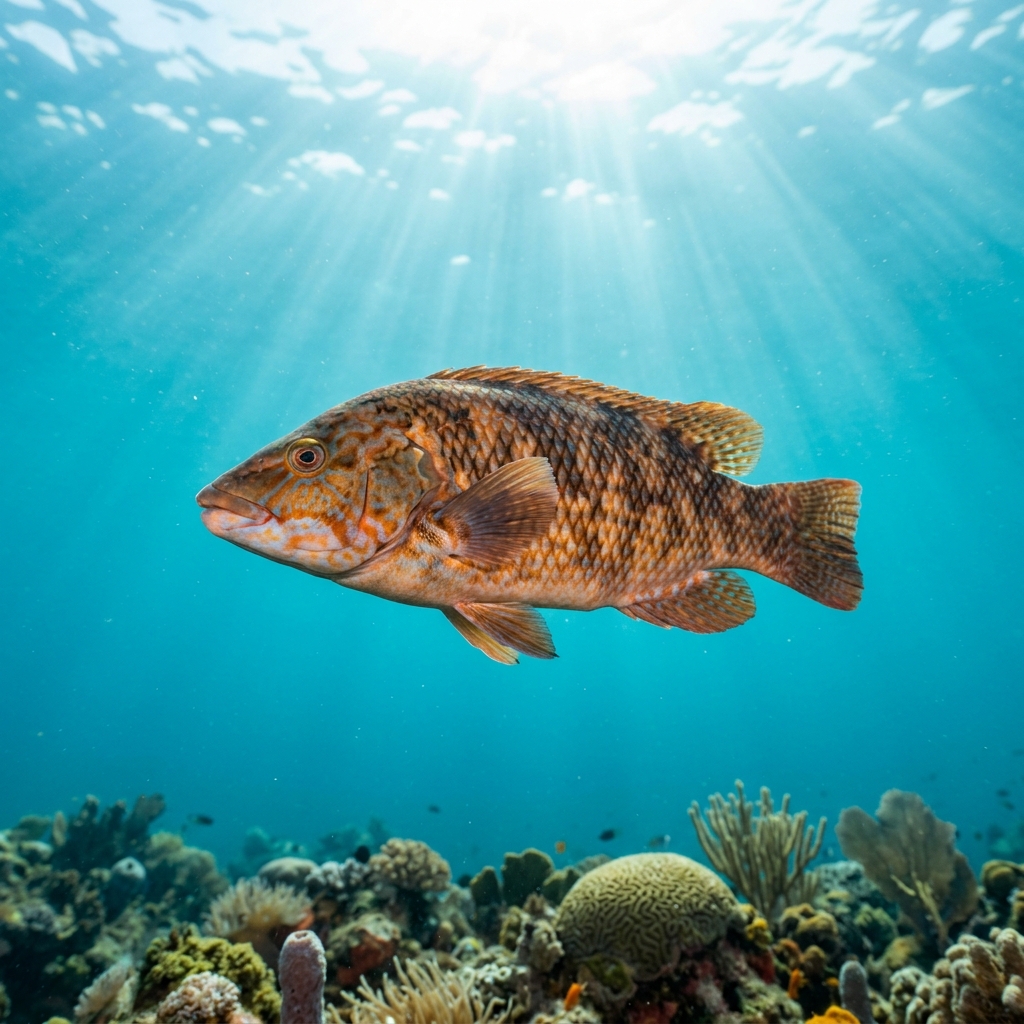
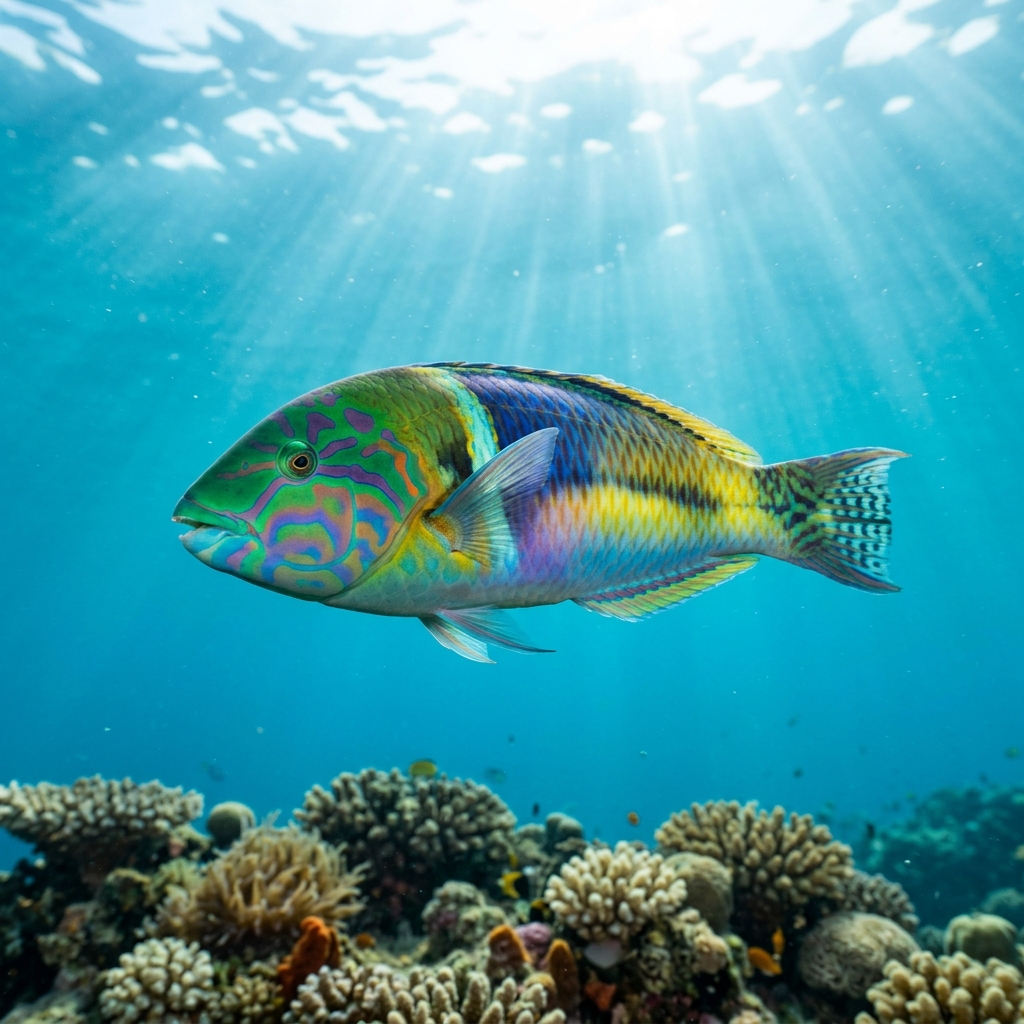
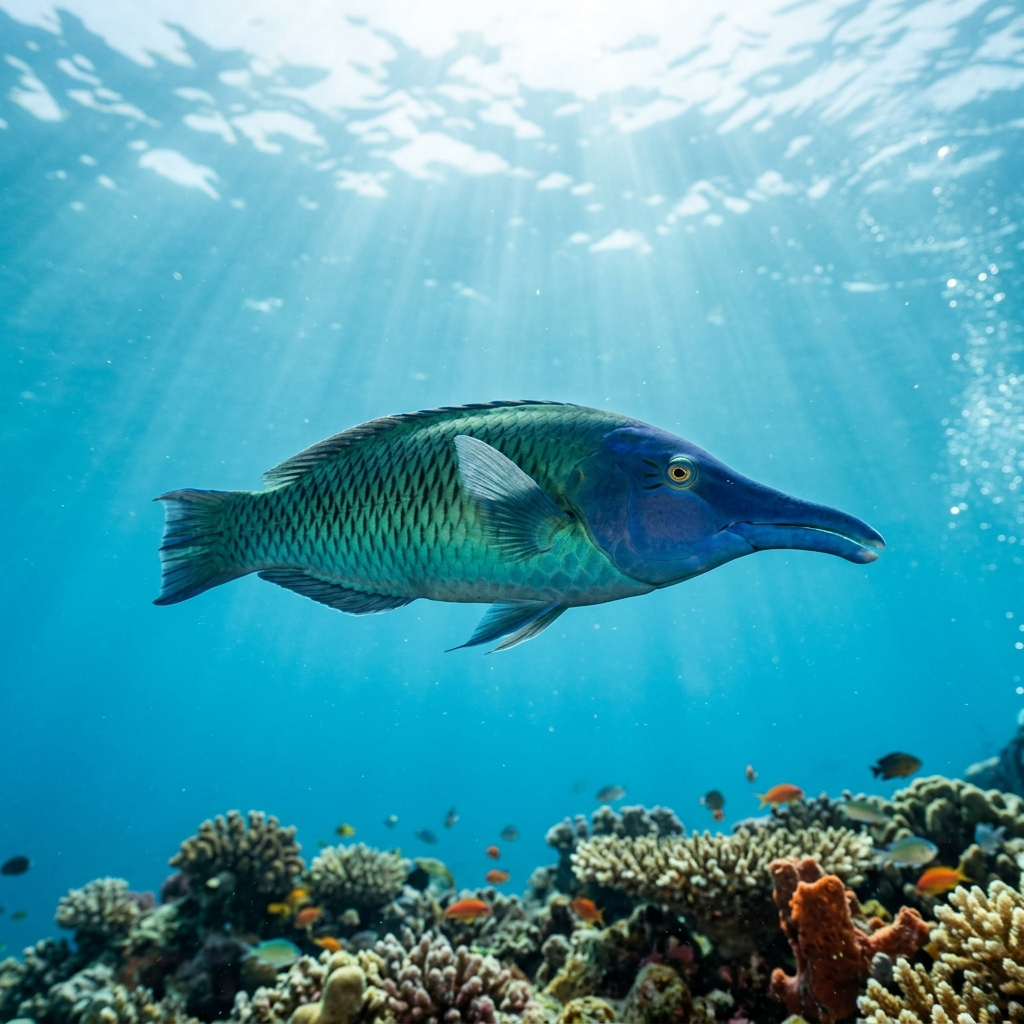
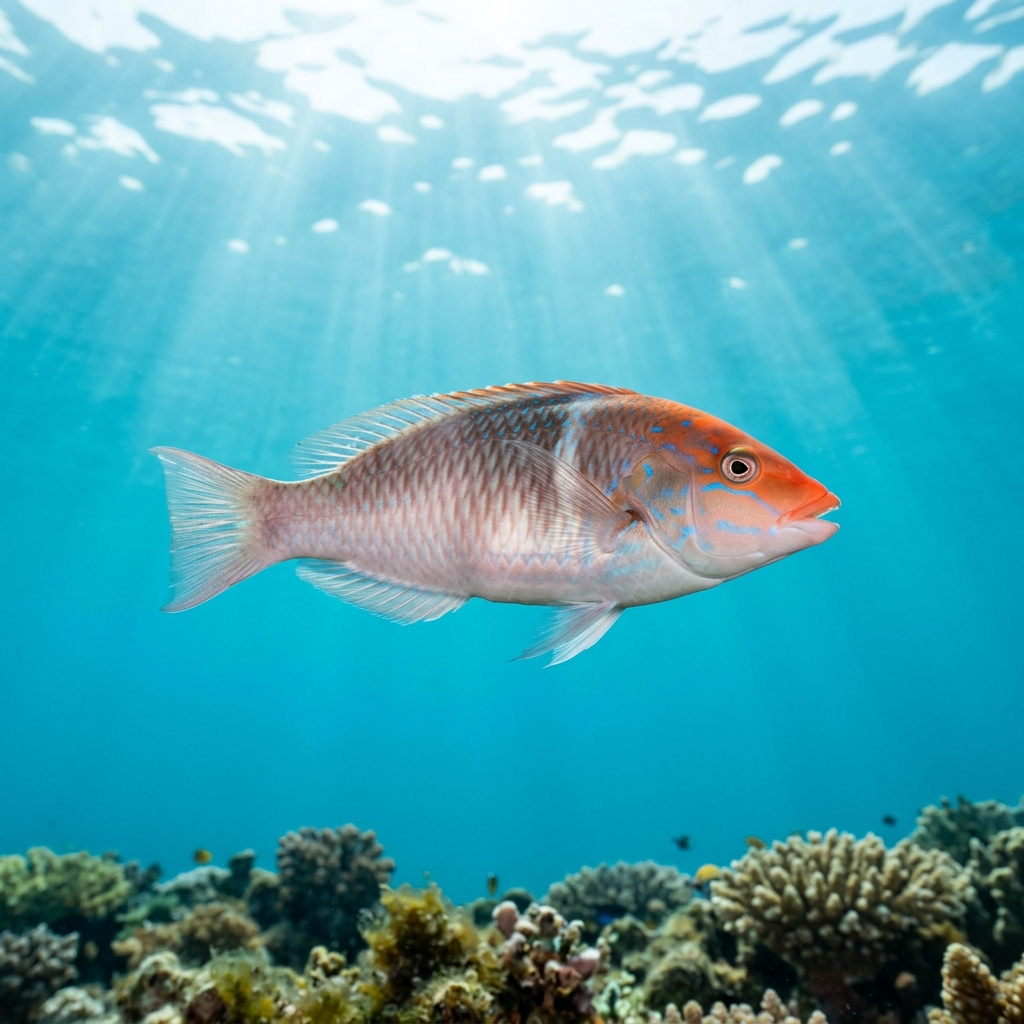
Grows to around 28 cm, with an elongated body and a pointed, slightly downturned snout typical of this wrasse group. Look for pinkish-red stripes radiating across the cheek below the eye, set against a greenish to olive body that can flush blotchy or pale depending on mood. Colour shifts a fair bit between individuals, so the diagonal cheek lines are the mark to lock onto rather than overall body tone.
Usually spotted cruising alone over reef flats and rubble patches, picking off small invertebrates and fish rather than sticking to one patch of coral. It tends to keep a cautious distance from divers, hovering or darting off into cover rather than approaching, so a slow, low-profile approach gives the best look. Most sightings come from open reef edges and slopes rather than deep in coral thickets.
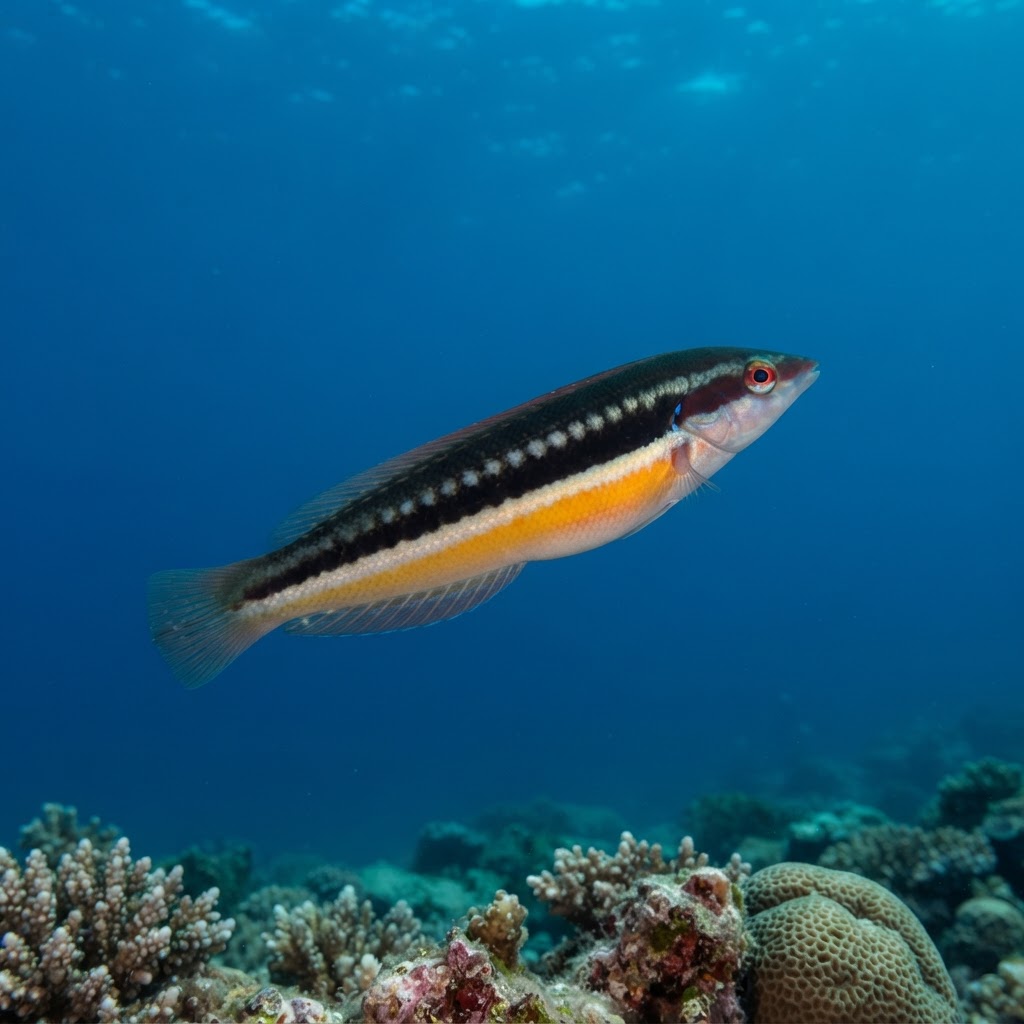
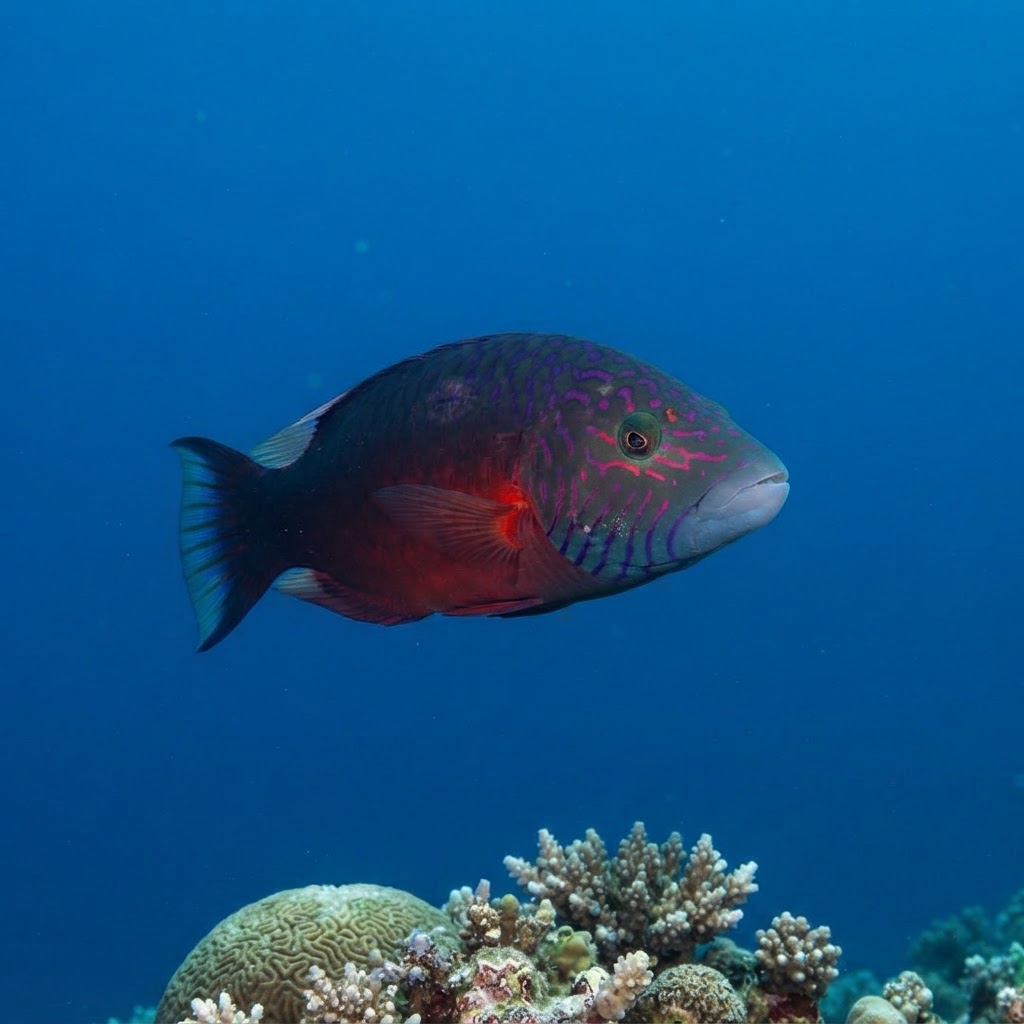
Like many wrasses, it can change sex and colour pattern as it matures, so the fish you photograph at 20 cm may look quite different from one glimpsed at full size on the same reef.
No clear seasonal pattern shows up in the data, and with a comfort range of roughly 25.4 to 29.1 C it sits happily on tropical reefs all year. Plan around your destination's general dive season rather than a specific month for this species.
Reef neighbours a diver could mistake it for. Use the identification notes above to tell them apart.
Most consistently logged in Egypt, particularly Marsa Alam and the Deep South and the Red Sea Riviera around South Sinai, where it turns up as a steady if uncommon reef sighting. Beyond the Red Sea it has strong reported numbers across Indonesia (Sulawesi and Bali), the Philippines' Visayas region, Malaysia's east coast peninsula, and Queensland reefs in Australia.
Mapping where Cheeklined Maori Wrasse is logged…
Egypt's Red Sea is the strongest area, especially Marsa Alam and the Deep South, South Sinai, and the Red Sea Riviera. It's also a regular find across Indonesia's Sulawesi and Bali, the Philippines' Visayas, Malaysia's east coast, and Queensland, Australia.
There's no strong seasonal signal for this species, and it sits comfortably in 25.4 to 29.1 C water, so it's present on tropical reefs year-round. Time your trip around your destination's usual dive season rather than chasing a specific month.
Look for a slender, elongated wrasse around 28 cm with a pointed snout and pinkish-red diagonal stripes across the cheek. Body colour varies from greenish to blotchy pale, so the cheek stripes are the most reliable feature to check.
They typically reach about 28 cm in length, making them a mid-sized reef wrasse rather than one of the bulky Maori wrasse relatives.
Yes, like many wrasses they can shift sex and colour pattern as they grow, so pattern and shade can vary noticeably between individuals of different ages on the same reef.
Site and sighting data is aggregated from diver logs, iNaturalist and GBIF. For taxonomy and conservation status:
Bird Wrasses
3,632 sites