Chaetodontoplus melanosoma
Spot Black Velvet Angelfish in Sulawesi and the Banda Sea. Warm 26-29 °C Indonesian reefs, uncommon but real, here's how to find and ID one.
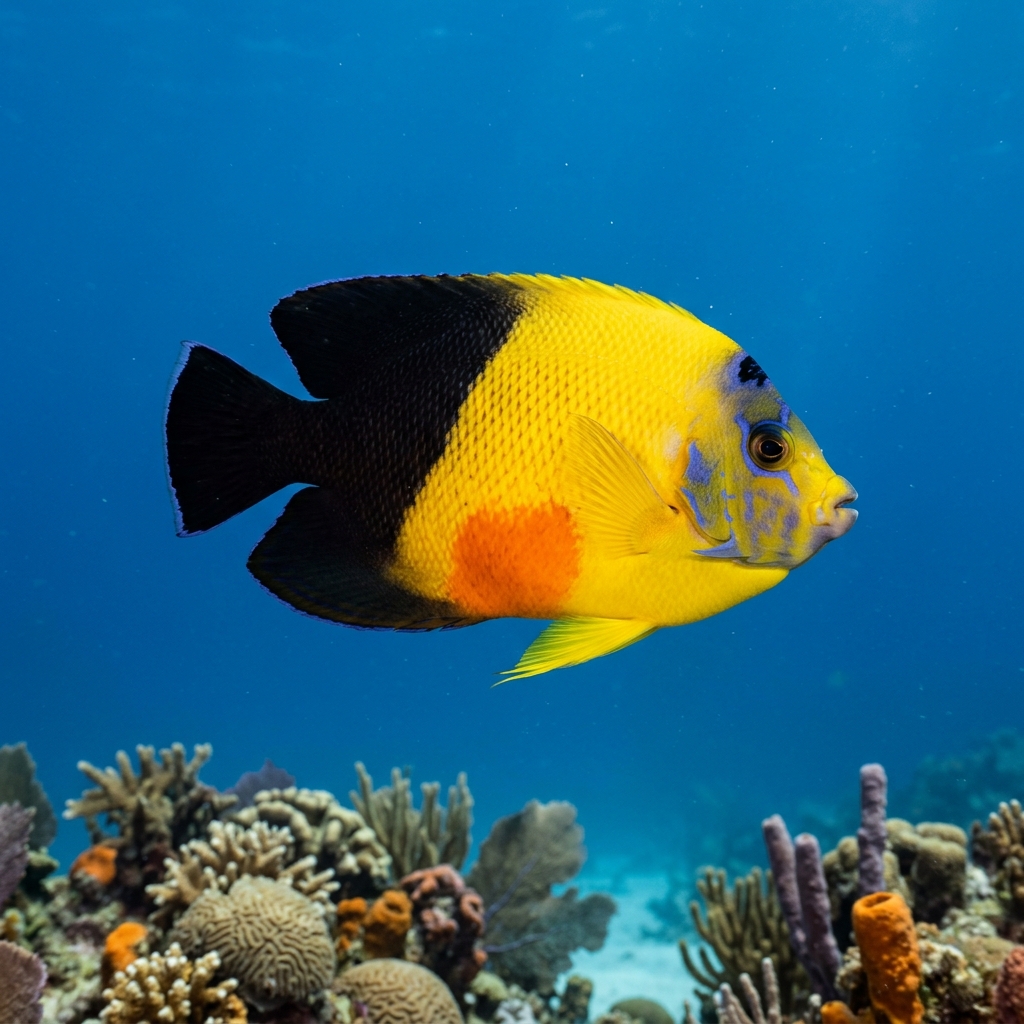
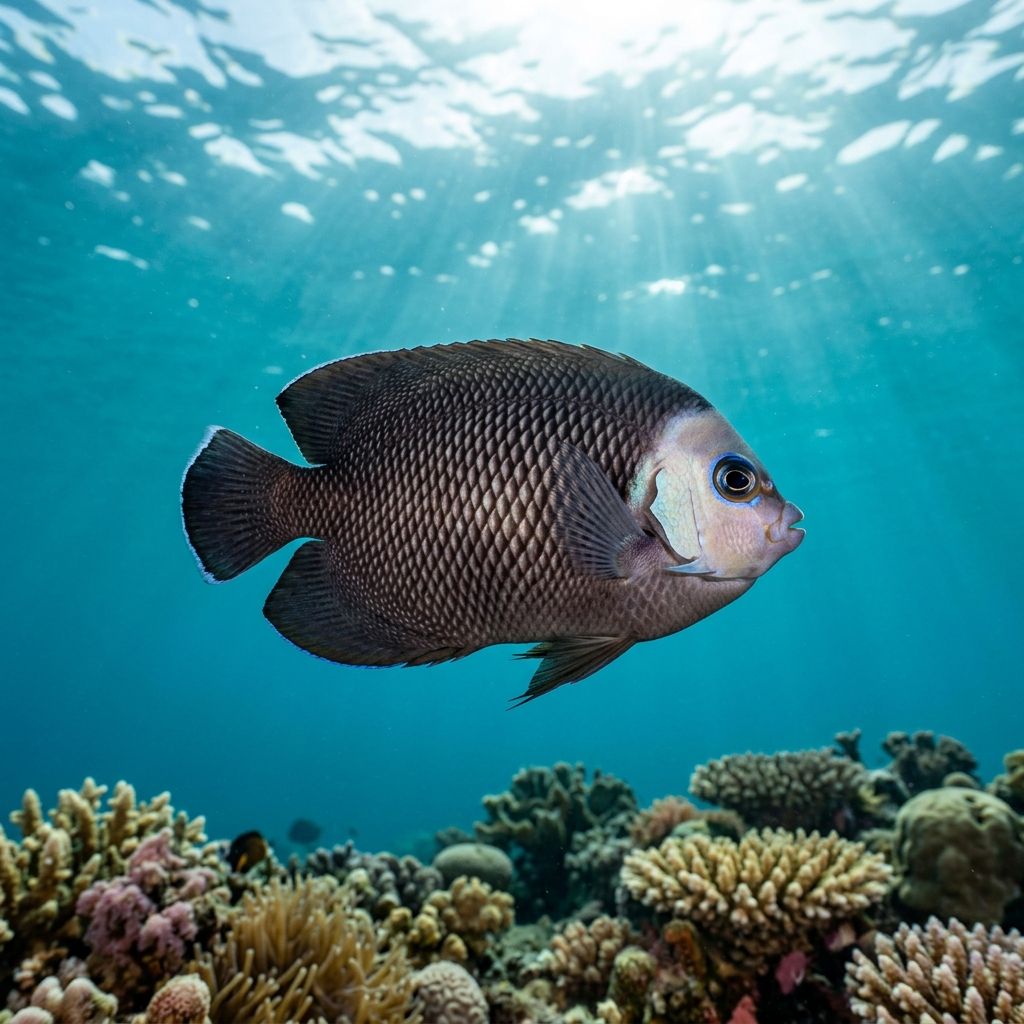
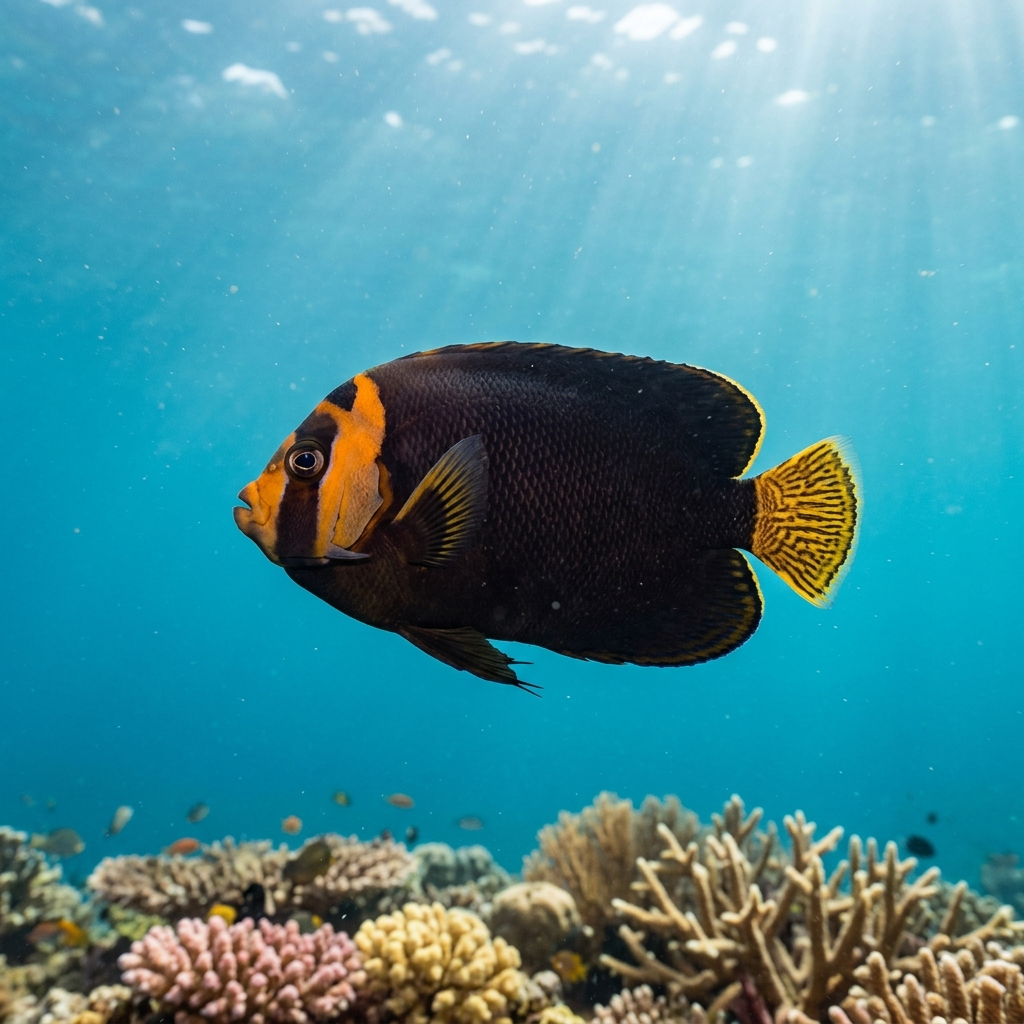
A compact, disc-shaped angelfish dressed almost entirely in deep black, giving it that velvet quality that earns its name. The tail fin is strikingly yellow-orange, creating a sharp contrast against the dark body that makes it pop even in dim reef light. The face is pale to whitish, and the body is trimmed with thin yellow or white edging on the fins. Juveniles look quite different, typically showing bold white and black banding that fades as they mature into adult colouration.
When encountered, black velvet angelfish are typically seen moving cautiously around coral-rich reef structure, often staying close to ledges or overhangs where they can duck for cover. They tend to be shy around divers and will retreat if approached too directly, so slow movement and patience pay off. Sightings are solitary or in pairs rather than groups.
Like many angelfishes, black velvet angelfish are protogynous hermaphrodites, meaning females can transition to males when the dominant male in a social group is absent. This shapes the small harems or pairs you encounter on the reef.
There is not enough seasonal sighting data to pinpoint a peak period, so treat it as a year-round possibility. The observed water temperature range of 26.5 to 29.4 °C fits the consistently warm tropical reefs of Indonesian waters throughout the year.
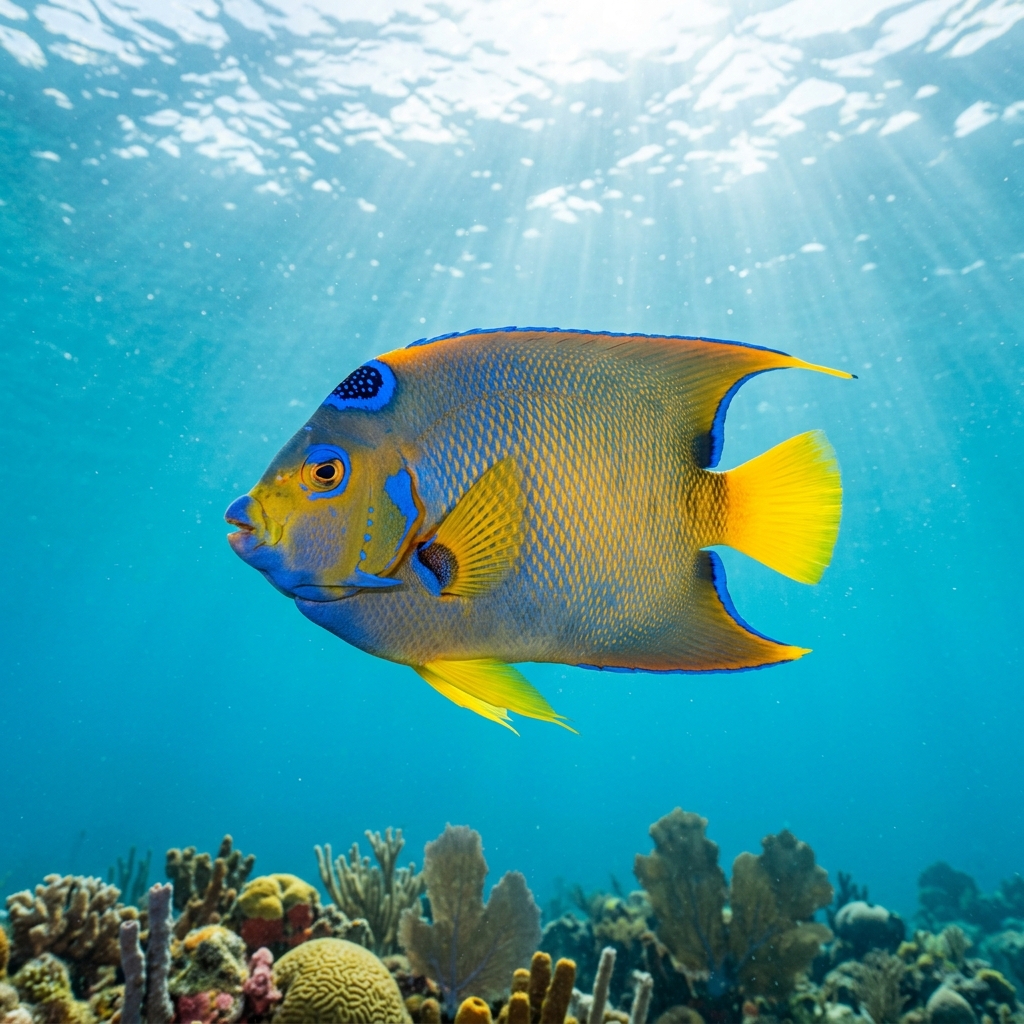
Reef neighbours a diver could mistake it for. Use the identification notes above to tell them apart.
All logged sightings come from Indonesia, making it firmly an Indonesian endemic encounter. Sulawesi and the Nusa Tenggara and Banda Sea region account for the bulk of observations, with an additional record from Maluku and Papua. If you're planning a dedicated search, the Coral Triangle waters of eastern Indonesia are your best bet.
Mapping where Black Velvet Angelfish is logged…
All recorded sightings are from Indonesia. The strongest concentrations come from Sulawesi and the Nusa Tenggara and Banda Sea region, with records also from Maluku and Papua. Eastern Indonesia's Coral Triangle is the place to look.
There is no clearly defined season based on current data, so sightings can occur year-round. Indonesian waters stay within the species' preferred temperature range of roughly 26 to 29 °C throughout the year, meaning no single season stands out.
Look for a disc-shaped angelfish with an almost entirely black body, a bright yellow-orange tail fin, and a pale whitish face. That black-and-yellow contrast is distinctive and visible from a distance on the reef. Juveniles are banded black and white and look quite different.
Precise size data for this species is limited, but like most members of the angelfish family they are moderate-sized reef fish. In the water they appear roughly hand-sized, with the typical deep, laterally compressed disc shape shared by pomacanthids.
No. The species is currently assessed as Least Concern on the IUCN Red List, meaning it faces no immediate elevated threat of extinction. Maintaining healthy coral reef ecosystems in Indonesia supports the habitat this species depends on.
Site and sighting data is aggregated from diver logs, iNaturalist and GBIF. For taxonomy and conservation status:
Rock Beauty
1,573 sites