Chaetodon zanzibarensis
Spot the Zanzibar Butterflyfish across Seychelles, Mozambique and South Africa. Uncommon but year-round, in waters from 21 to 28 °C.
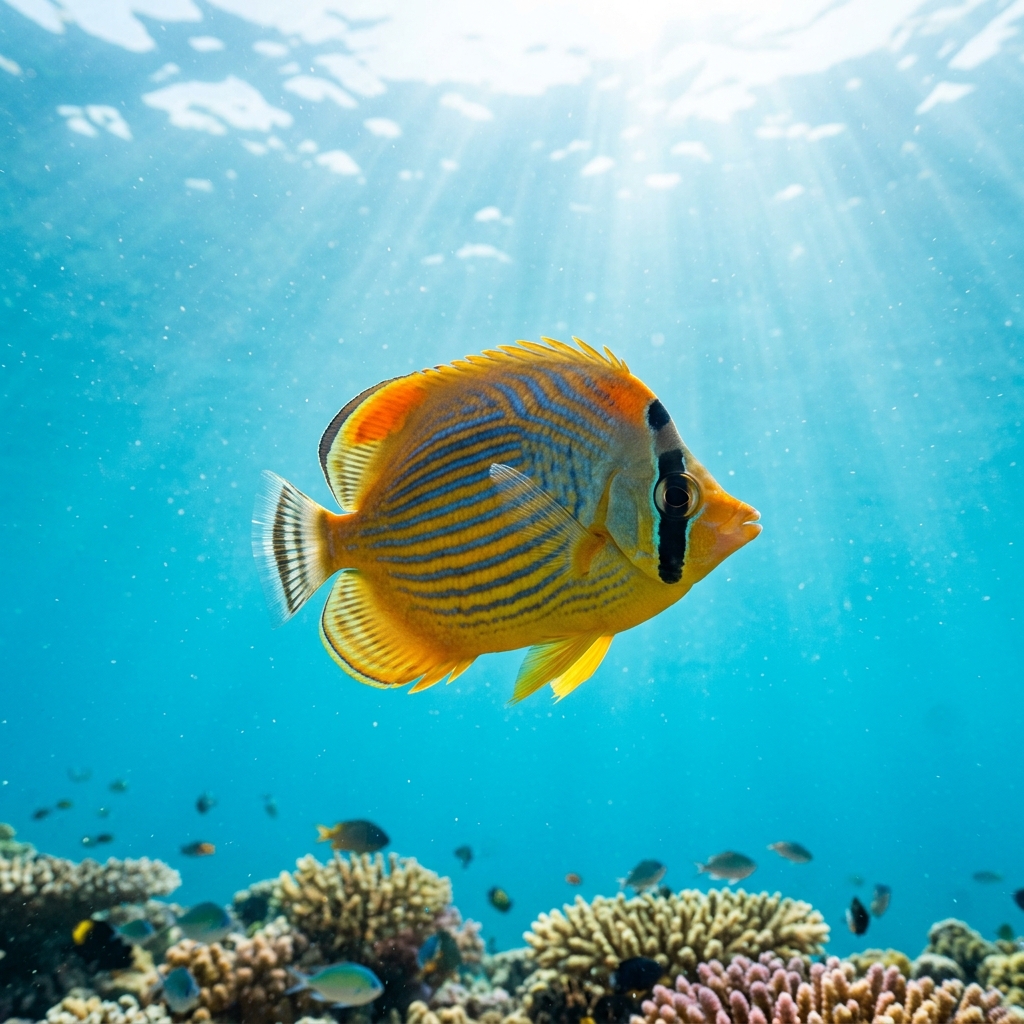
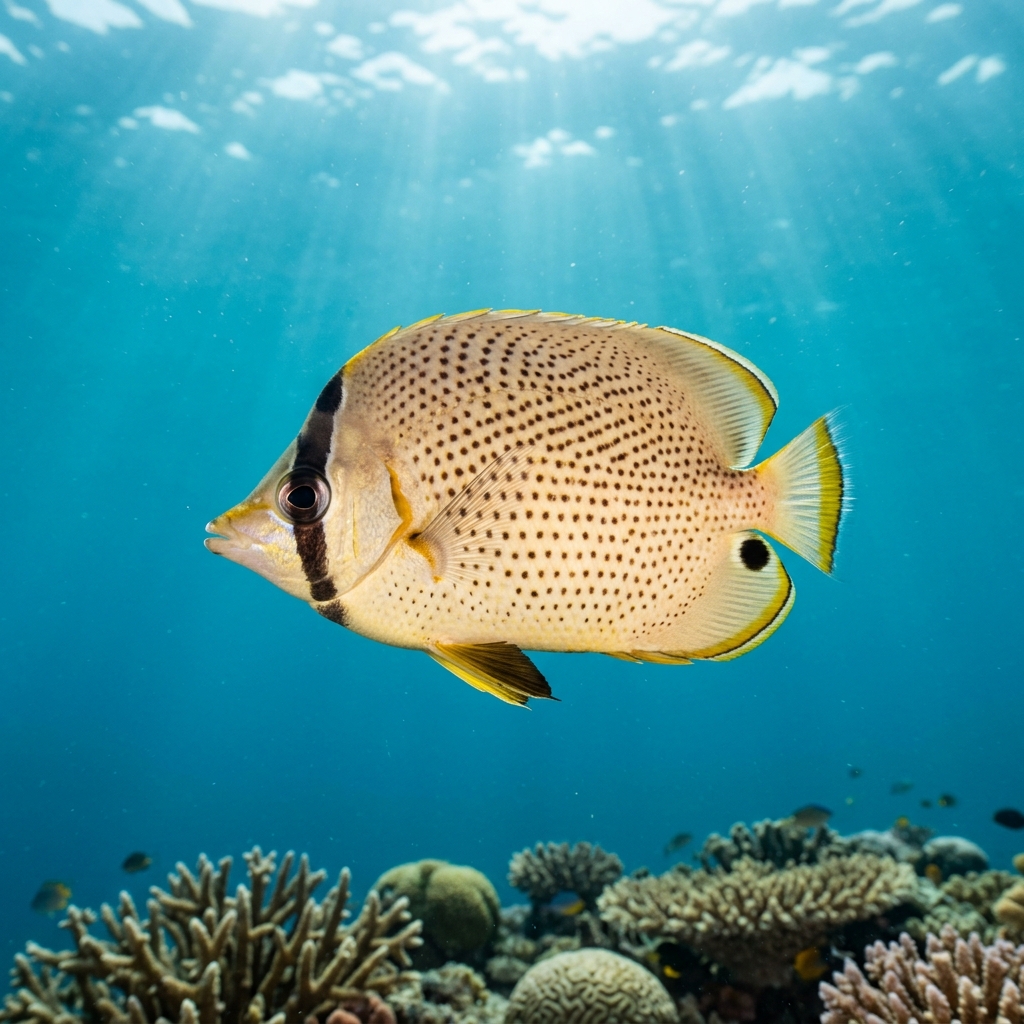
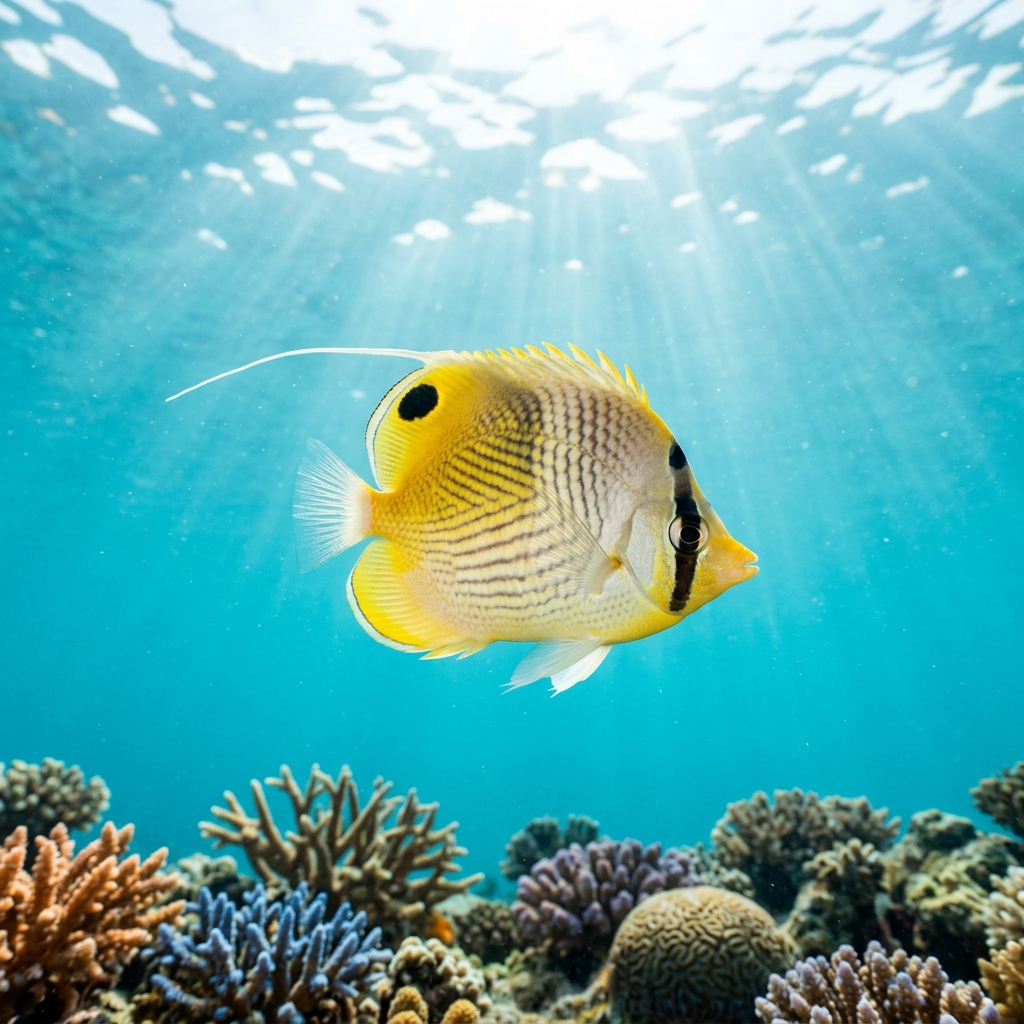
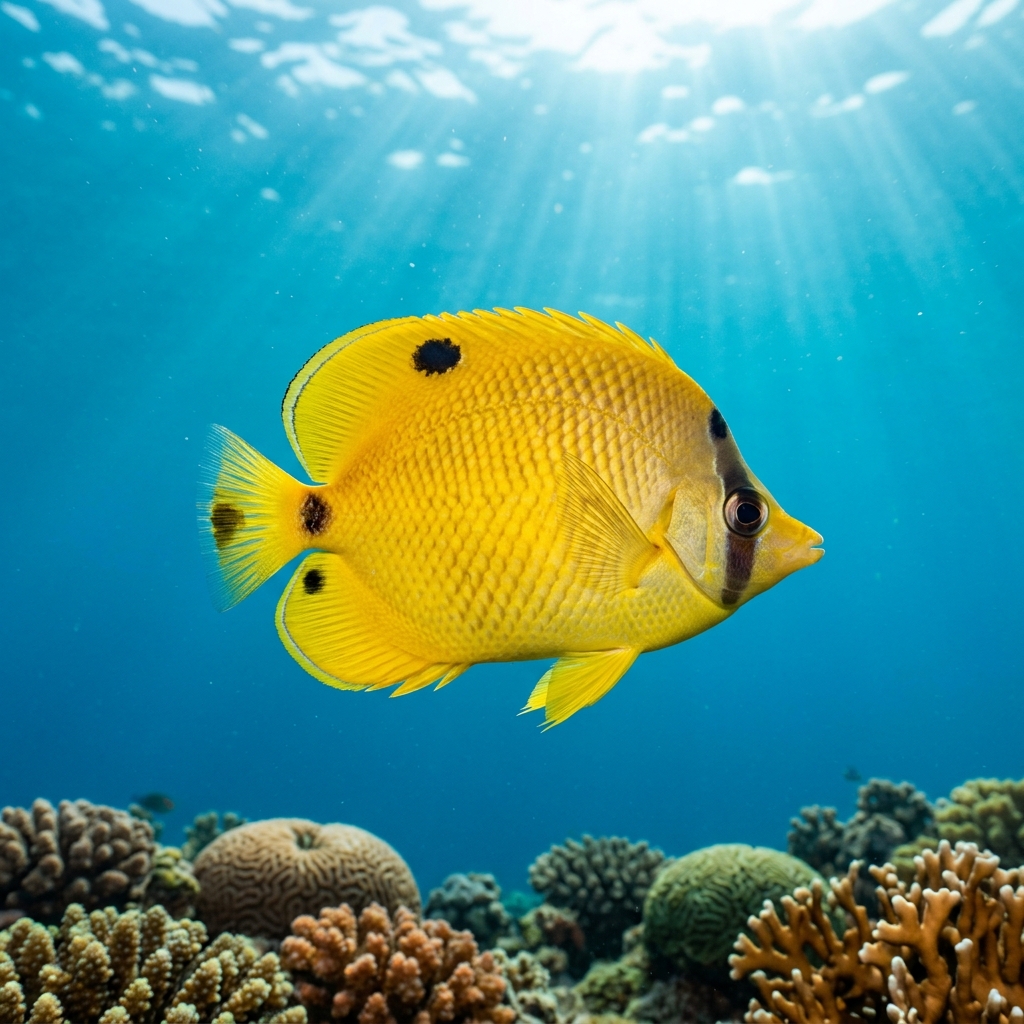
A compact, disc-shaped butterflyfish with a vivid yellow body and a bold black bar running through the eye. The rear portion of the body and the dorsal fin are dusted with dark scale edges, giving a scalloped or latticed appearance that sets it apart from most plain-yellow relatives. Look for the dark spot or blotch near the tail base as a quick clincher underwater. It is a small fish, staying close to the reef structure rather than swimming in open water.
You will typically spot it alone or in a loose pair, working its way methodically over coral heads and picking at coral polyps with its small, pointed snout. It tends to stay low on the reef rather than venturing into the water column, and will often keep a coral head between itself and an approaching diver rather than bolting. Approach slowly and it usually continues feeding, giving you a relaxed look.
Like many butterflyfish, the Zanzibar butterflyfish is thought to have a strong fidelity to its home reef patch, meaning that if you note its exact location on a dive, there is a reasonable chance of relocating it on a return visit.
No strong seasonal pattern has emerged from the sighting data, so this species is treated as year-round. It has been observed across a temperature range of roughly 21 to 28 °C, which spans the cooler South African waters as well as the warmer Seychelles reefs.
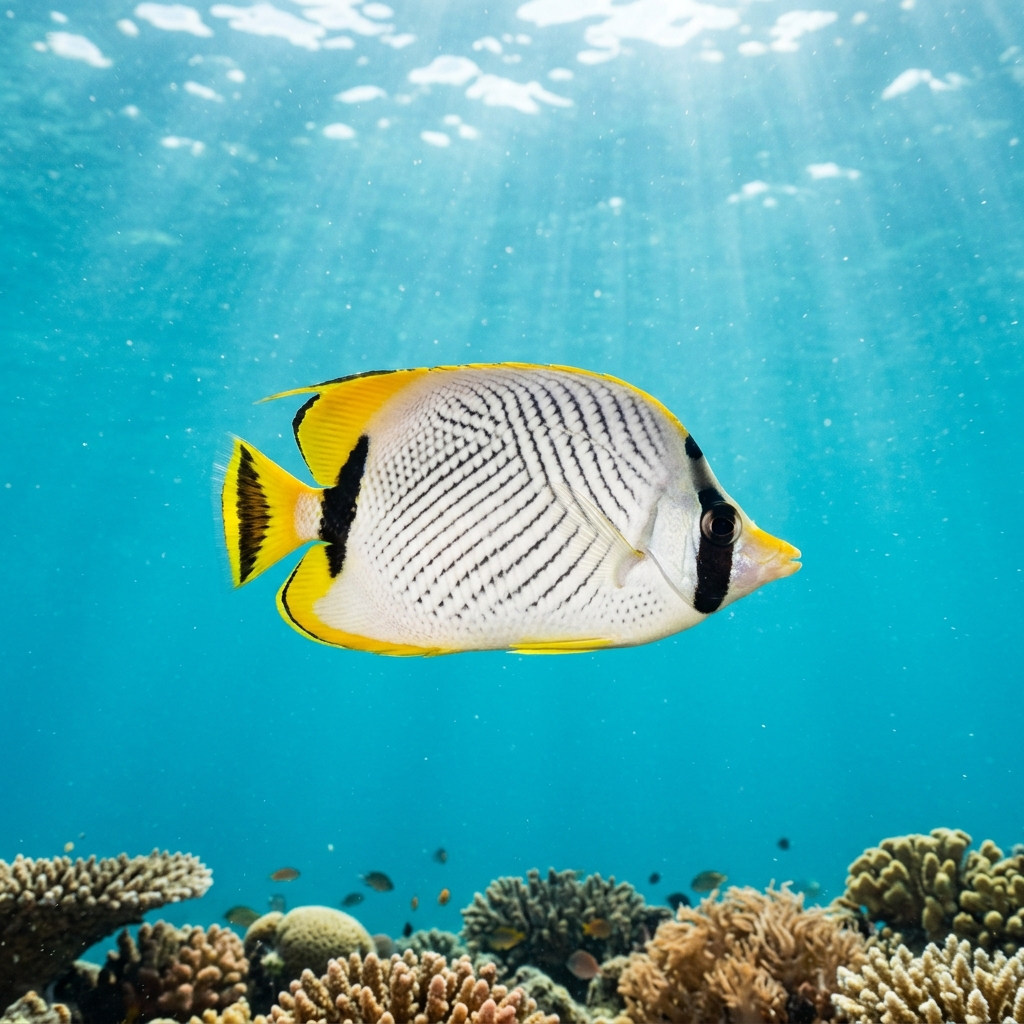
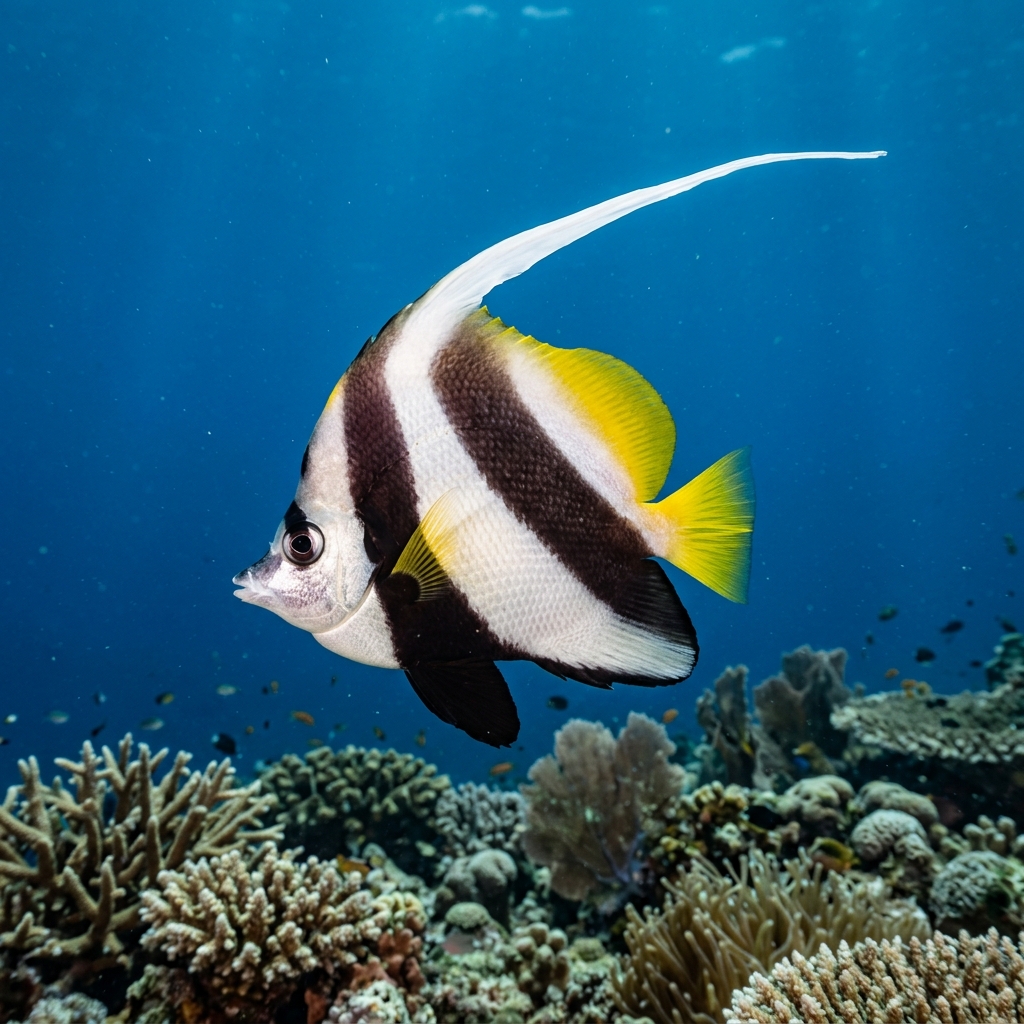
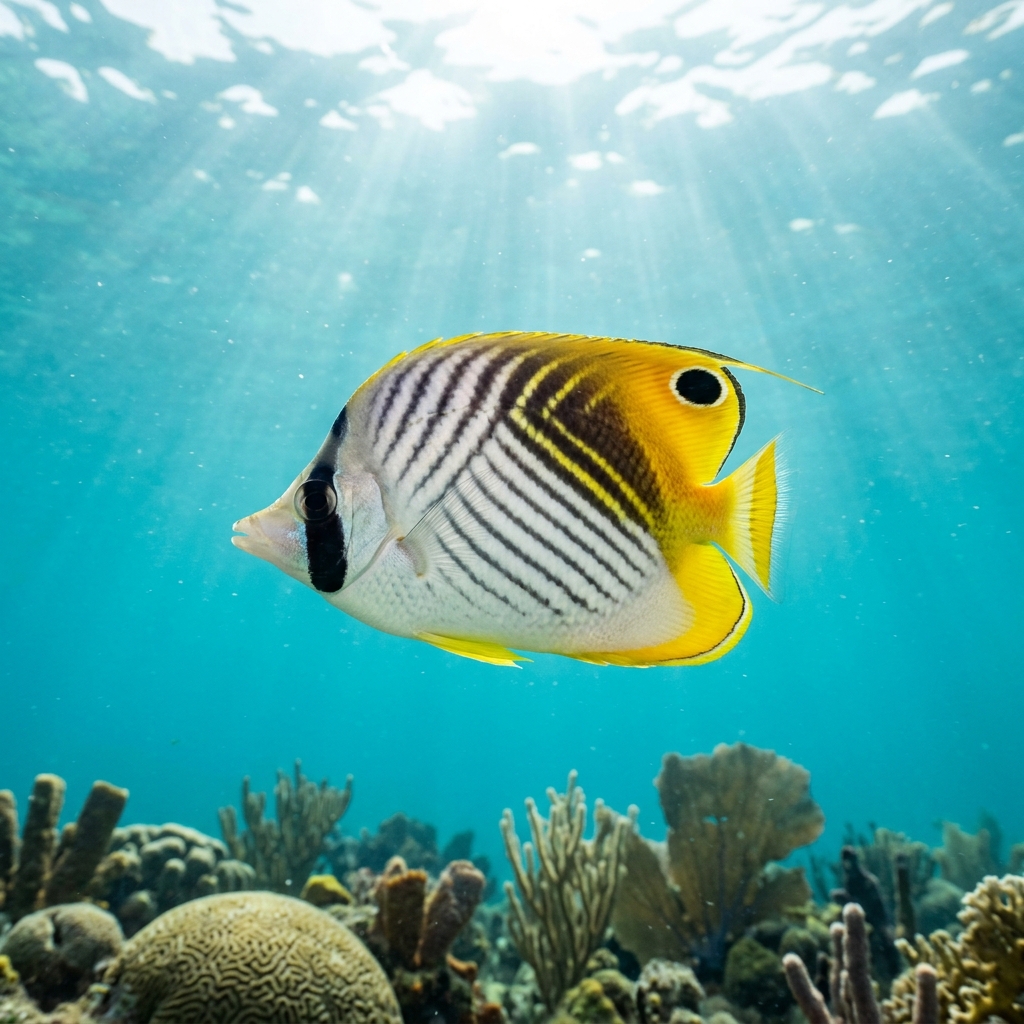
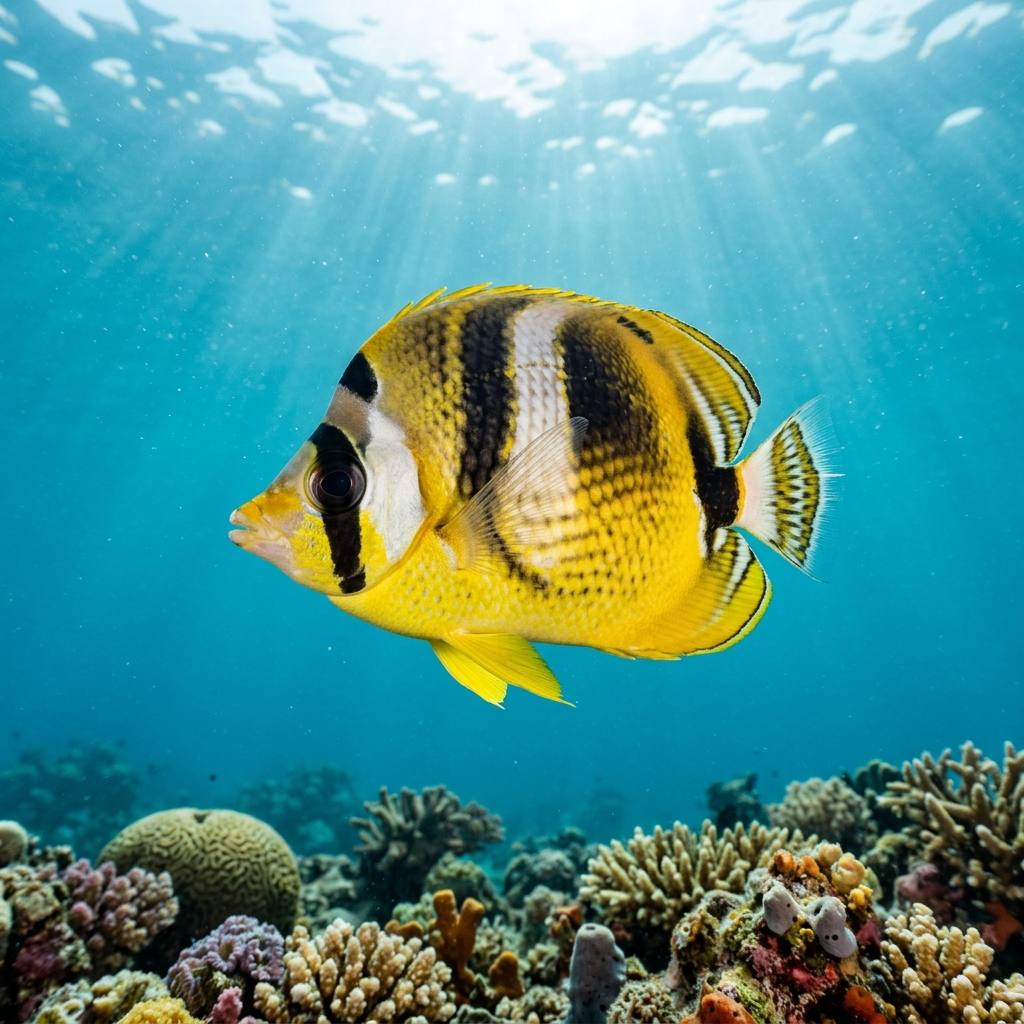
Reef neighbours a diver could mistake it for. Use the identification notes above to tell them apart.
Most sightings come from the Seychelles, particularly around Praslin and La Digue, where it is logged across a large number of sites. Beyond the Seychelles, Ponta do Ouro in Mozambique and the KwaZulu-Natal South Coast in South Africa are the next best bets, with a handful of records from Réunion rounding out its known range.
Mapping where Zanzibar Butterflyfish is logged…
The best-documented sites are around Praslin and La Digue in the Seychelles, which accounts for the large majority of known sightings. Ponta do Ouro in Mozambique and the KwaZulu-Natal South Coast in South Africa also offer real chances, with occasional records from Réunion.
Sighting data does not point to any particular season, so it can be encountered year-round. It tolerates water temperatures from around 21 °C in South Africa up to about 28 °C in the tropical Seychelles, suggesting it is active across different seasonal conditions.
Key in on the bright yellow body combined with a dark lattice or scalloped pattern across the rear of the body and dorsal fin. The black eye bar is shared with many butterflyfish, but that distinctive dark patterning on the yellow flanks and a dark tail-base blotch separate it from similar species in the same waters.
They are classed as Least Concern for conservation, so the population is considered stable. For divers, they read as uncommon rather than common at most sites, meaning a sighting is worth noting but not extraordinary, particularly in the Seychelles.
Site and sighting data is aggregated from diver logs, iNaturalist and GBIF. For taxonomy and conservation status: