Chaetodon unimaculatus
Spot the Teardrop Butterflyfish across Hawaii, Queensland and French Polynesia in water from 24-29°C. Know what to look for and when to go.
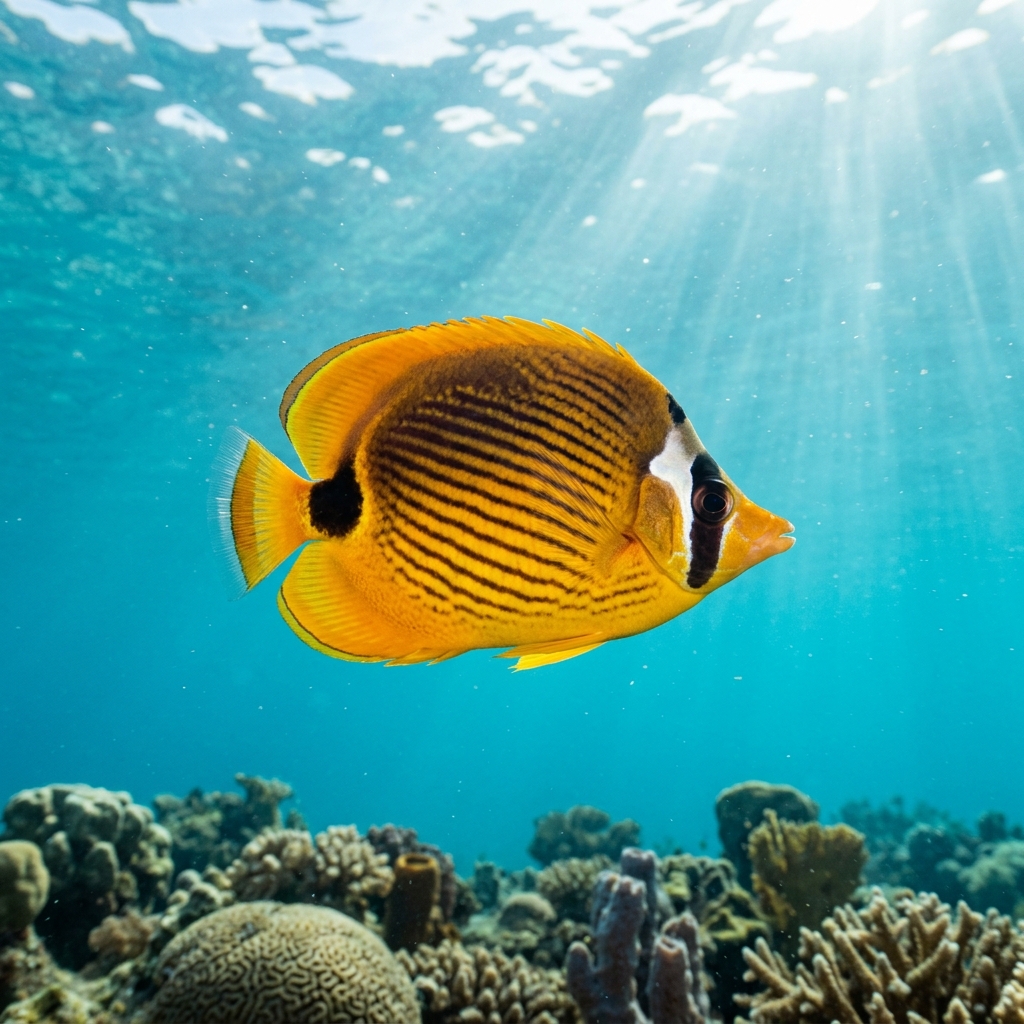
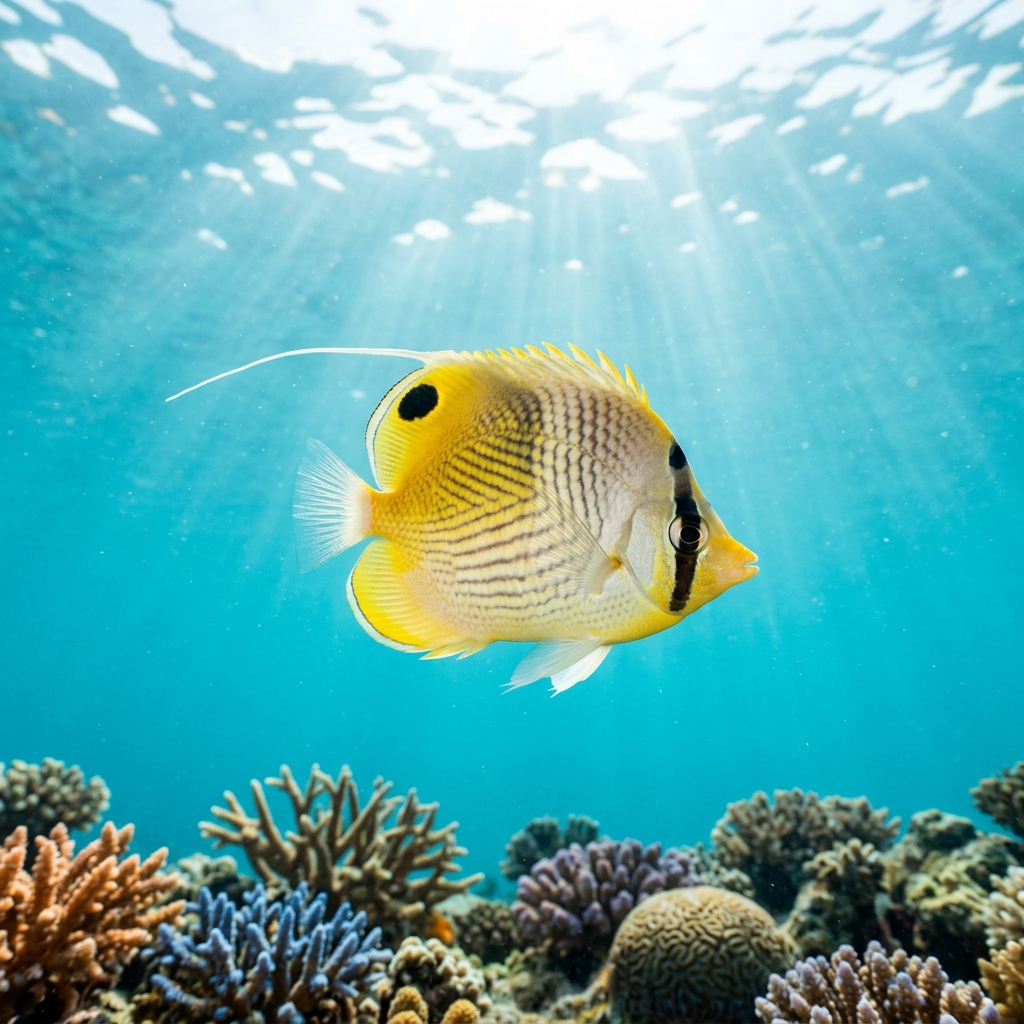
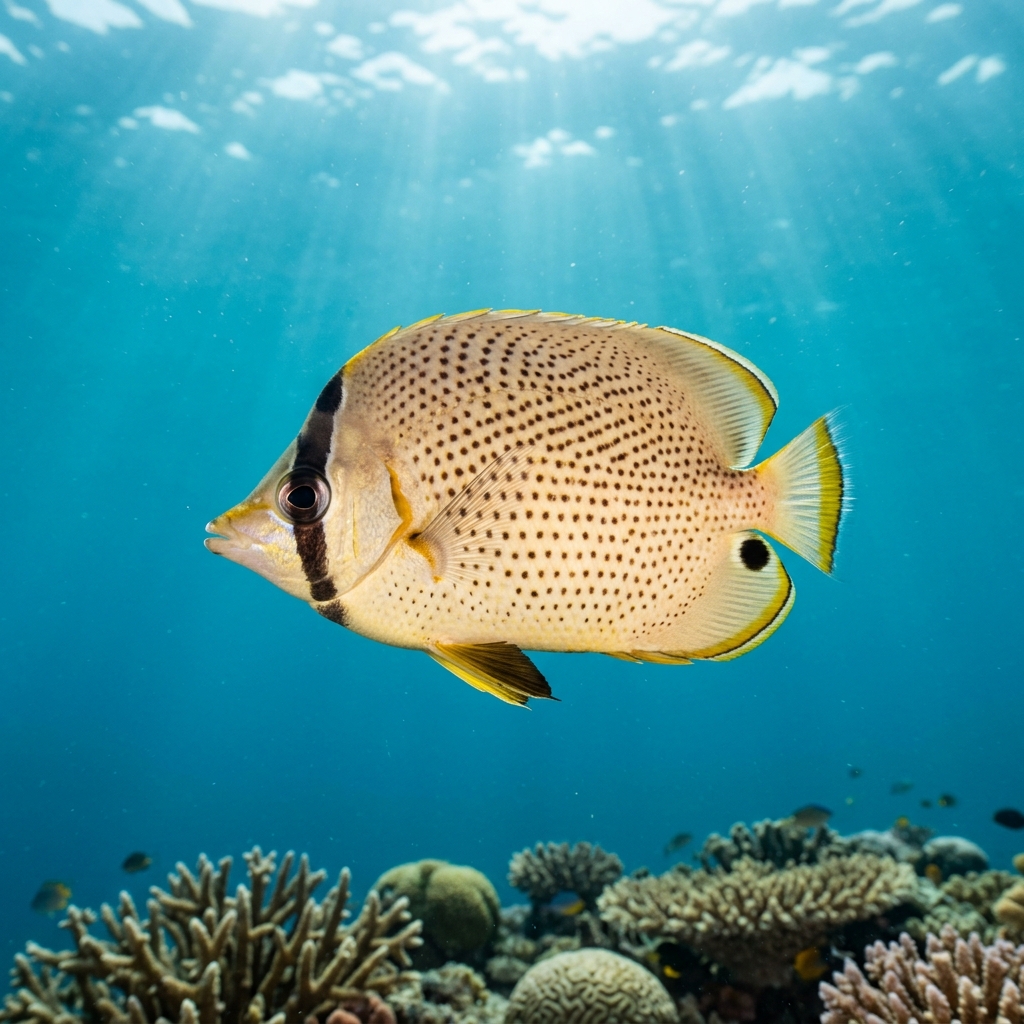
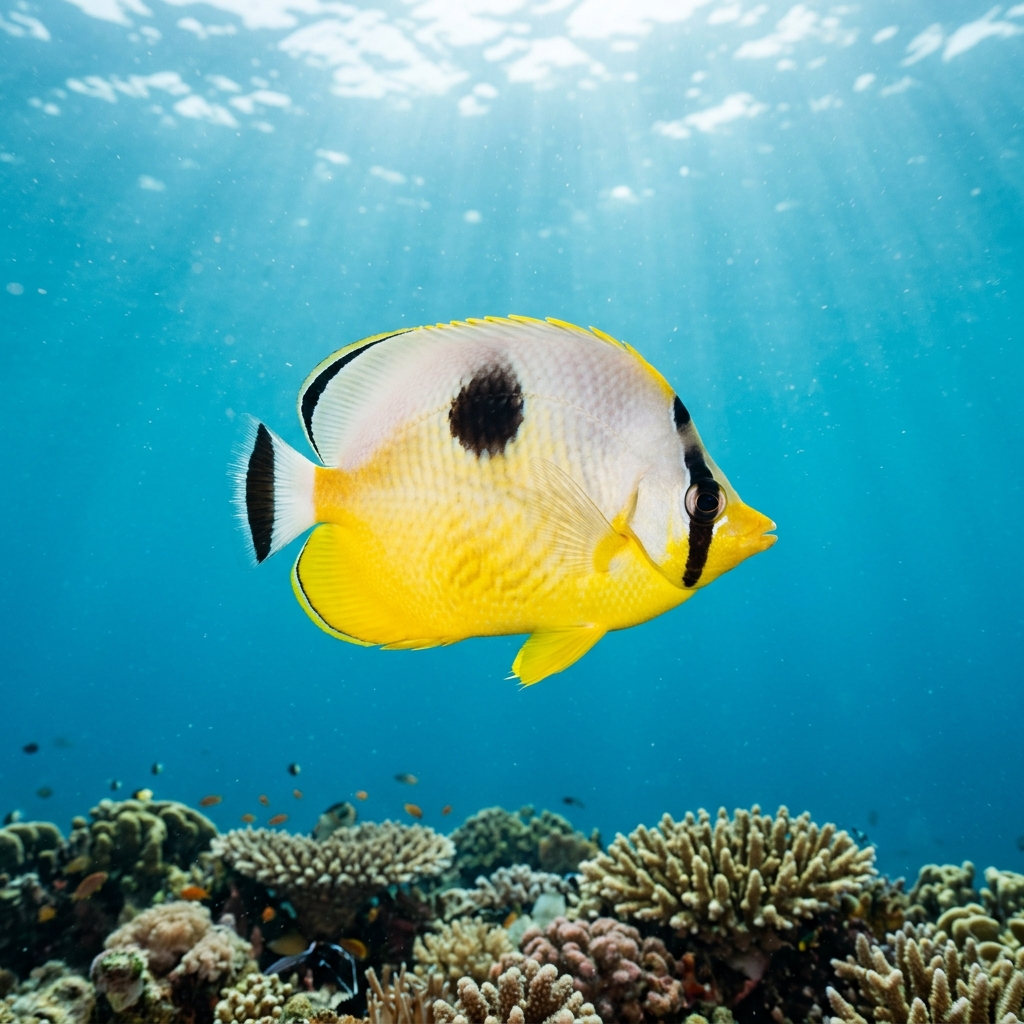
Look for a bright white disc-shaped body trimmed in yellow along the upper back and tail, with a bold black bar running through the eye. The name comes from a single teardrop-shaped black spot sitting high on the rear of the body near the dorsal fin, that spot is the clincher underwater and separates it from most other butterflyfish at a glance. Body size is modest, roughly palm-sized, giving it the classic flattened butterflyfish silhouette. Juveniles carry the same fundamental pattern, though the spot may appear slightly larger relative to their smaller body.
Teardrop butterflyfish are typically seen picking at coral and rubble, using their pointed snouts to probe for coral polyps and small invertebrates. They tend to move steadily along the reef rather than hovering, and usually appear singly or in loose pairs. They are not particularly skittish but will move away if approached quickly, so a slow, calm approach gives you the best look.
Like many butterflyfish, teardrop butterflyfish are thought to form long-term monogamous pairs, and spotting two individuals moving together is a good sign you're watching a bonded couple rather than two fish that happen to share the same patch of reef.
In the Northern Hemisphere, including Hawaii and Taiwan, sightings concentrate between November and March and again from May to August, suggesting a slight dip in records around April and September. In the Southern Hemisphere, including Queensland and French Polynesia, encounters are most frequent from May through October.
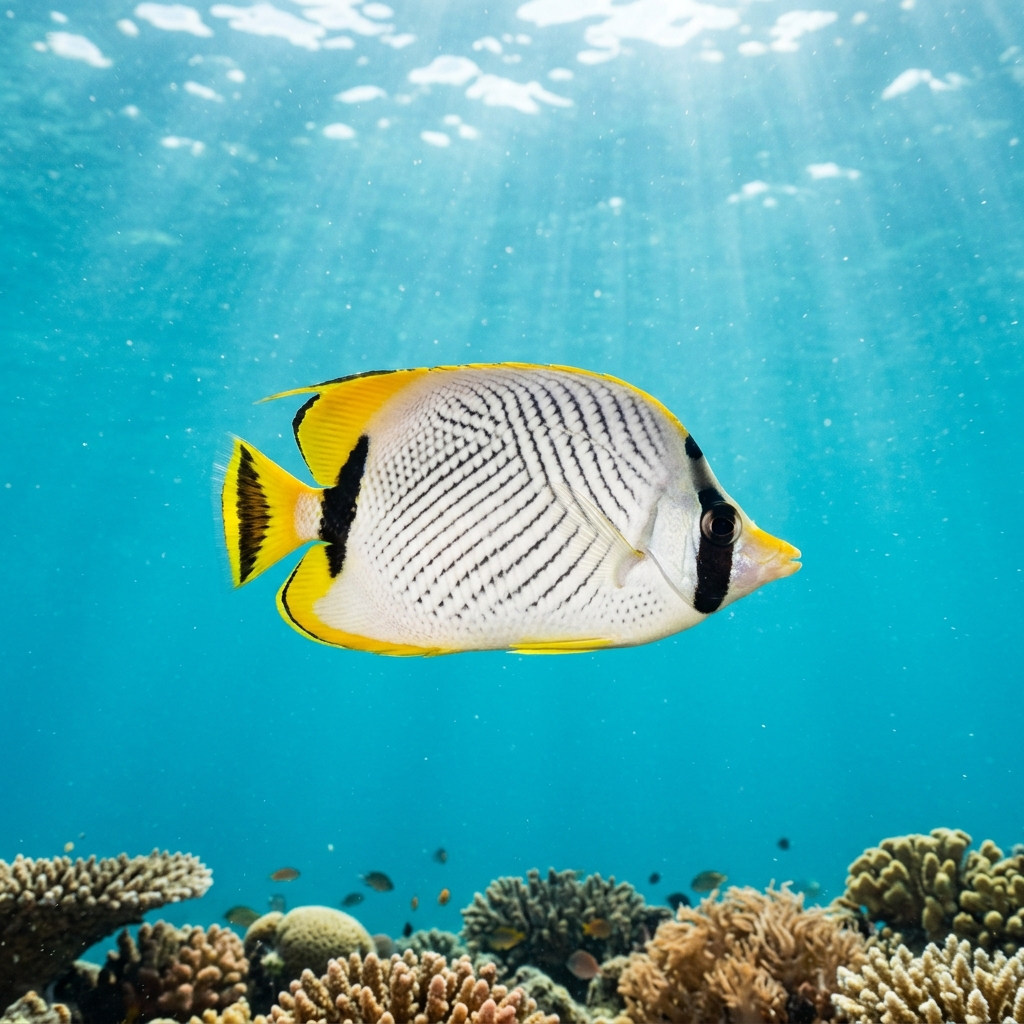
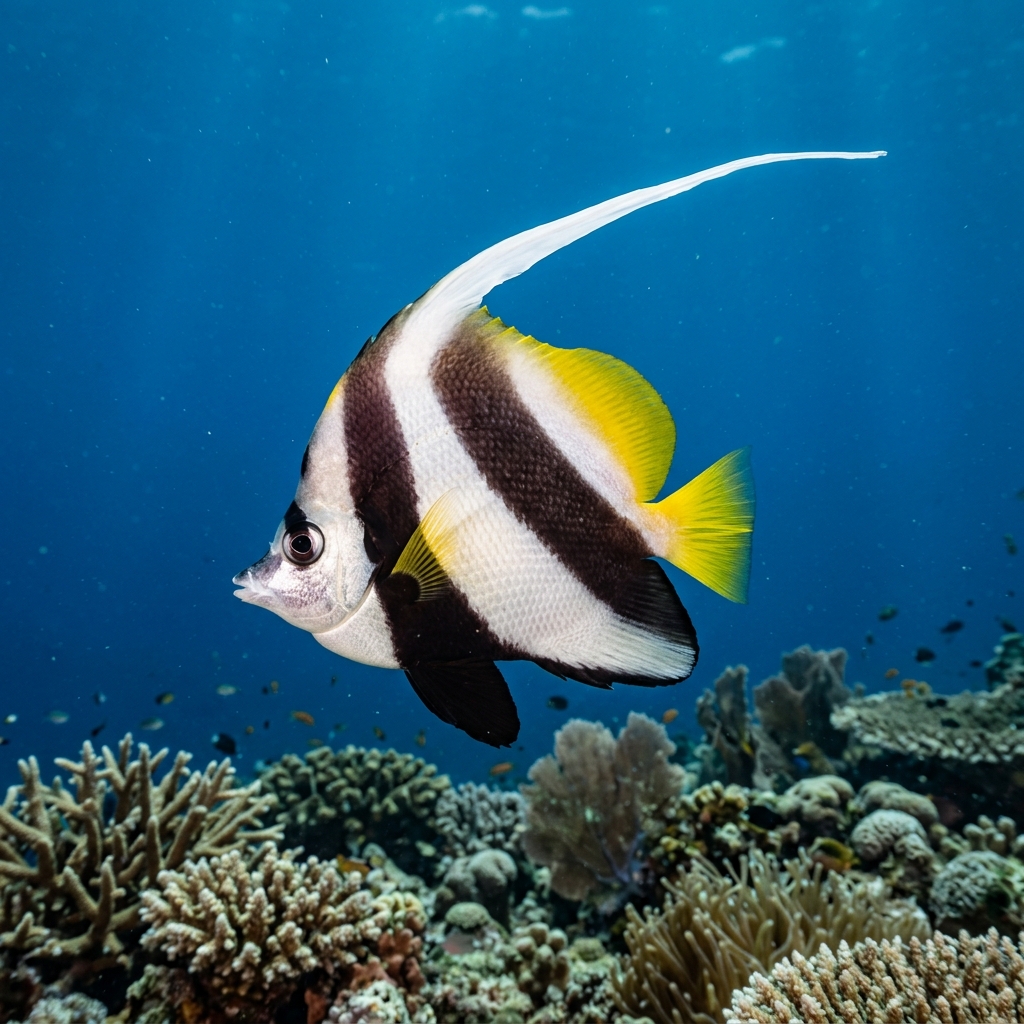
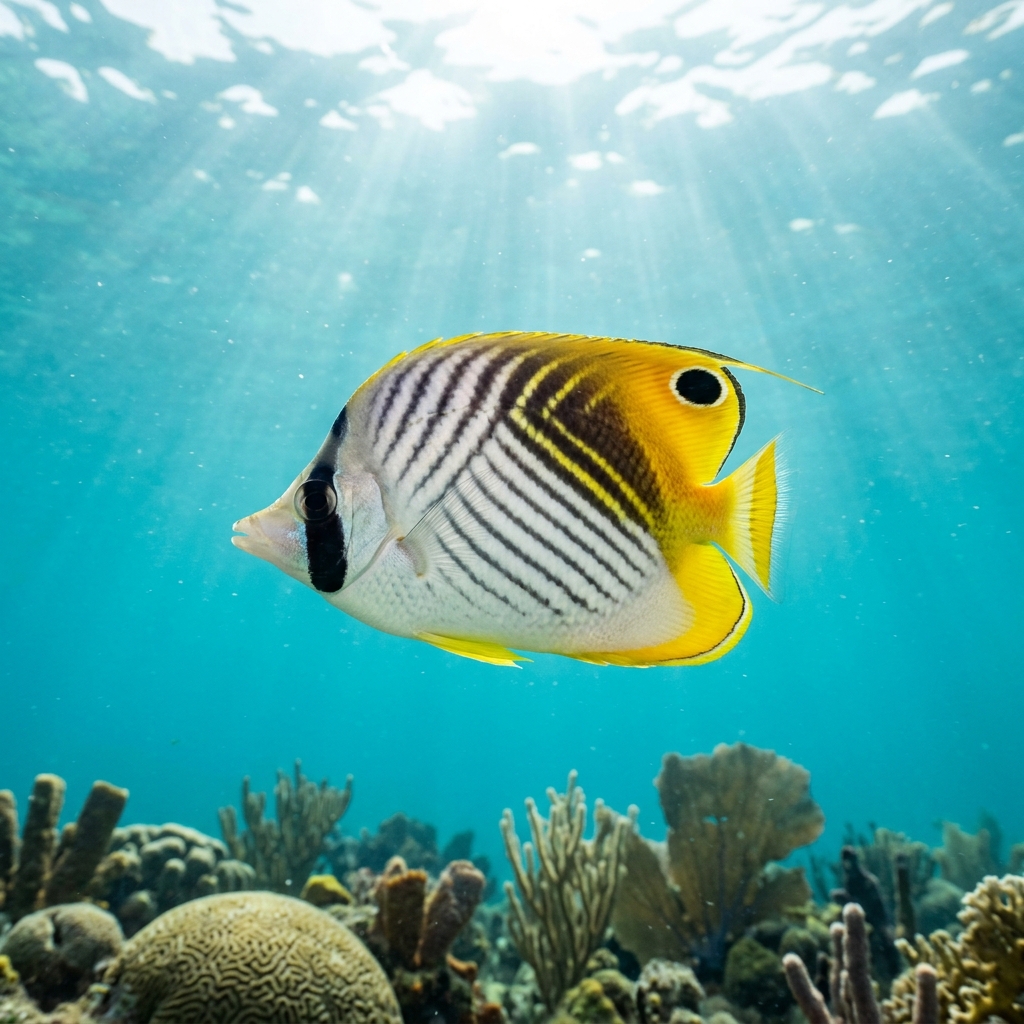
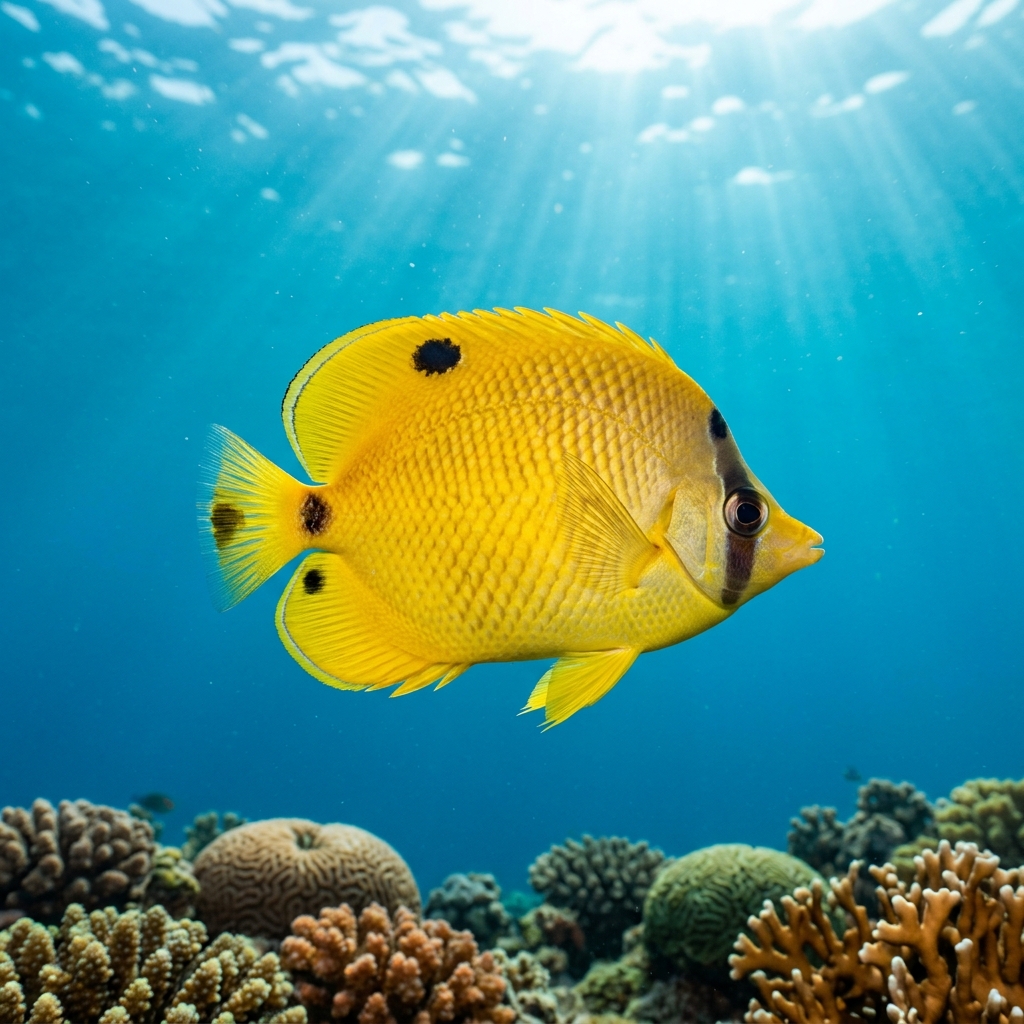
Reef neighbours a diver could mistake it for. Use the identification notes above to tell them apart.
Most commonly logged across Hawaii, Queensland (Australia), and French Polynesia (particularly around Tahiti and the Society Islands), with strong populations also recorded in Sulawesi and Bali in Indonesia. Vanuatu, Fiji, New Caledonia, and Taiwan round out the range, making this a widespread but patchily observed Indo-Pacific species. If you're diving the Great Barrier Reef or Hawaiian reefs, your chances of an encounter are as good as anywhere.
Mapping where Teardrop Butterflyfish is logged…
The most reliable places to encounter them are Hawaii, Queensland (Australia), and French Polynesia, particularly around Tahiti. Indonesia (Sulawesi and Bali) is also well represented, and they are recorded across Vanuatu, Fiji, New Caledonia, and Taiwan.
In the Northern Hemisphere, Hawaii and Taiwan, aim for November through March or May through August. In the Southern Hemisphere, including Queensland and French Polynesia, May to October sees the strongest sighting rates. The species favours warm tropical water between roughly 24 and 29°C, so it is present year-round on suitable reefs.
Focus on the single dark teardrop-shaped spot sitting high on the rear body near the dorsal fin, it is the species' defining mark. Combine that with the white disc body, yellow trim along the upper back, and a black bar through the eye and you have a reliable ID. Most confusable species either lack that spot entirely or show very different patterning.
Across the sites where divers log them, they are most often rated as uncommon rather than common. You can reasonably expect to see one on a dive in Hawaii or Queensland, but multiple sightings on a single dive are not typical. Rare ratings are also recorded at many sites, so spotting one is worth noting.
No. They are assessed as Least Concern on the IUCN Red List, reflecting a wide distribution and no current evidence of significant population decline. They are present across a broad stretch of the Indo-Pacific from Hawaii to Australia.
Site and sighting data is aggregated from diver logs, iNaturalist and GBIF. For taxonomy and conservation status: