Chaetodon bennetti
Spot the Bluelashed Butterflyfish across the Maldives, Philippines and Guam. Tips on its electric blue markings, rare sighting odds, and best Jan, Apr season.
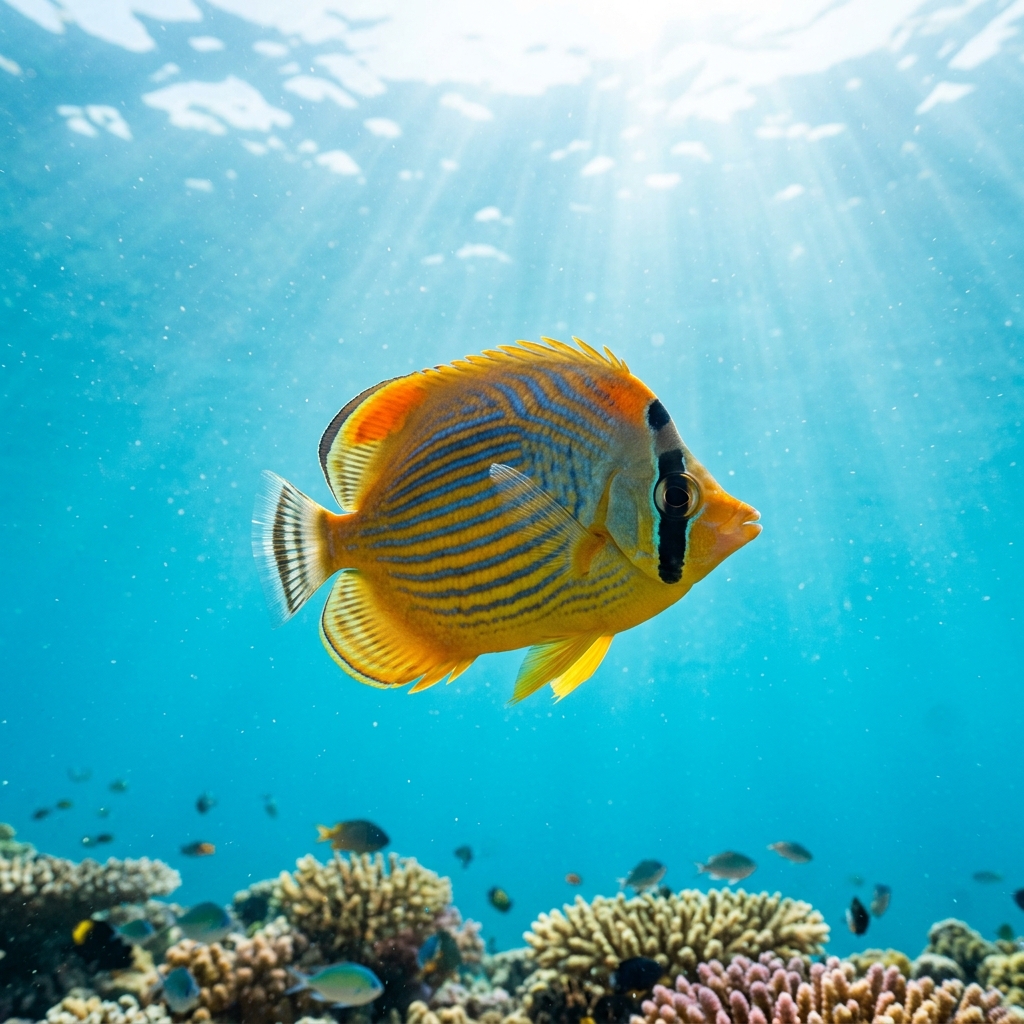
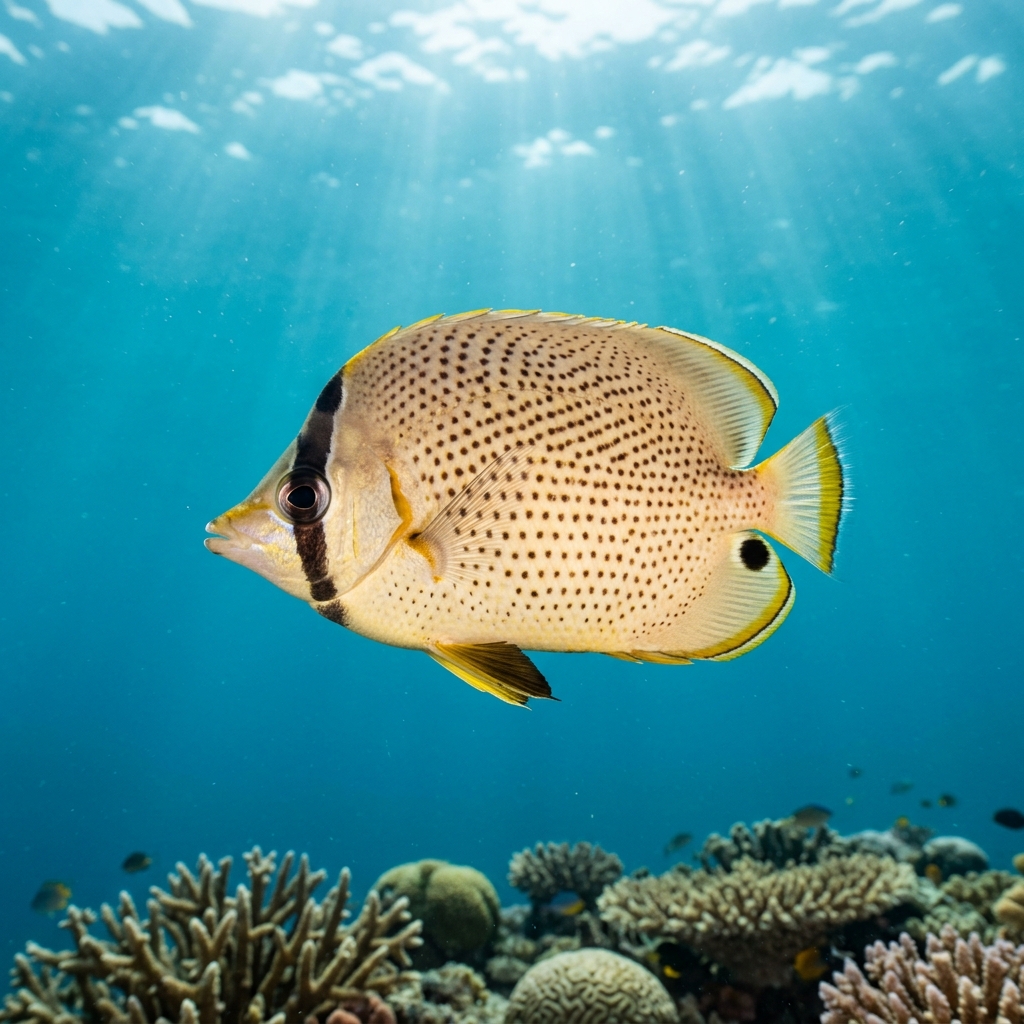
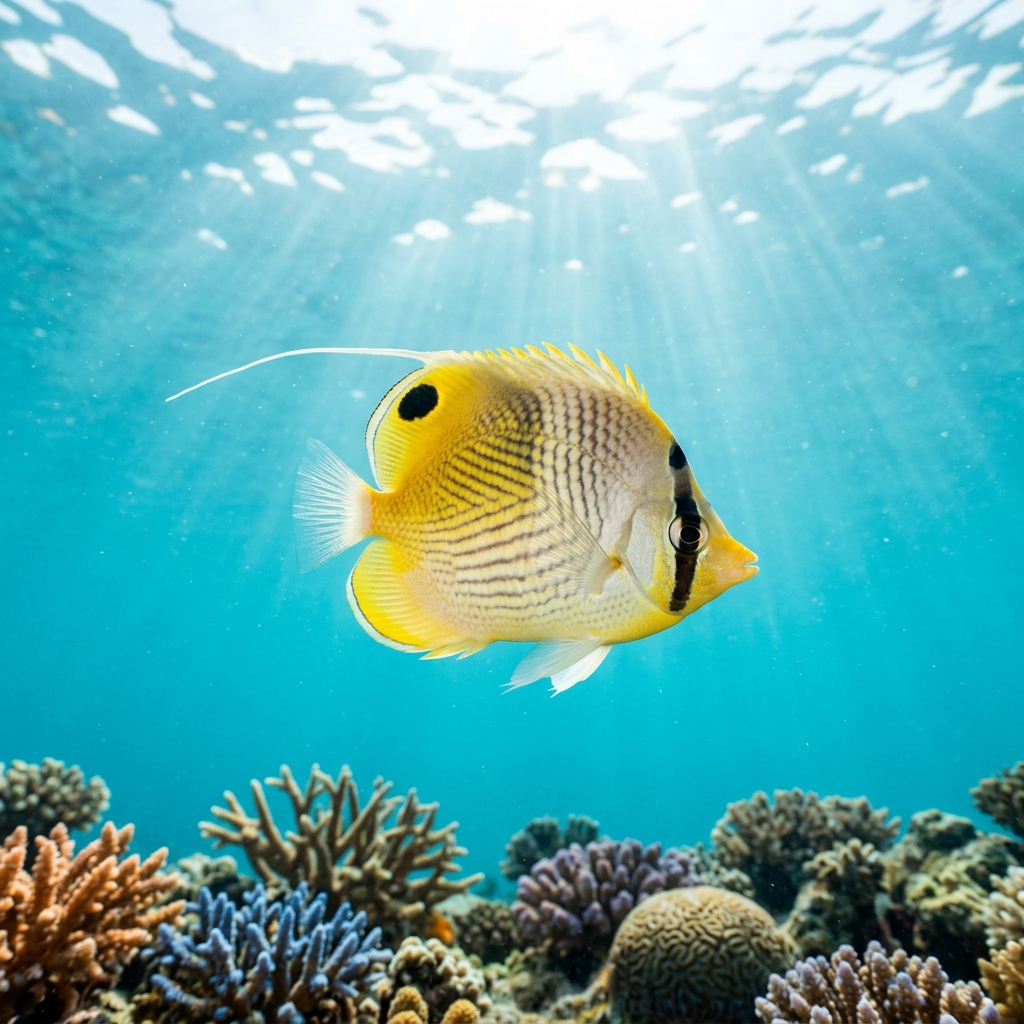
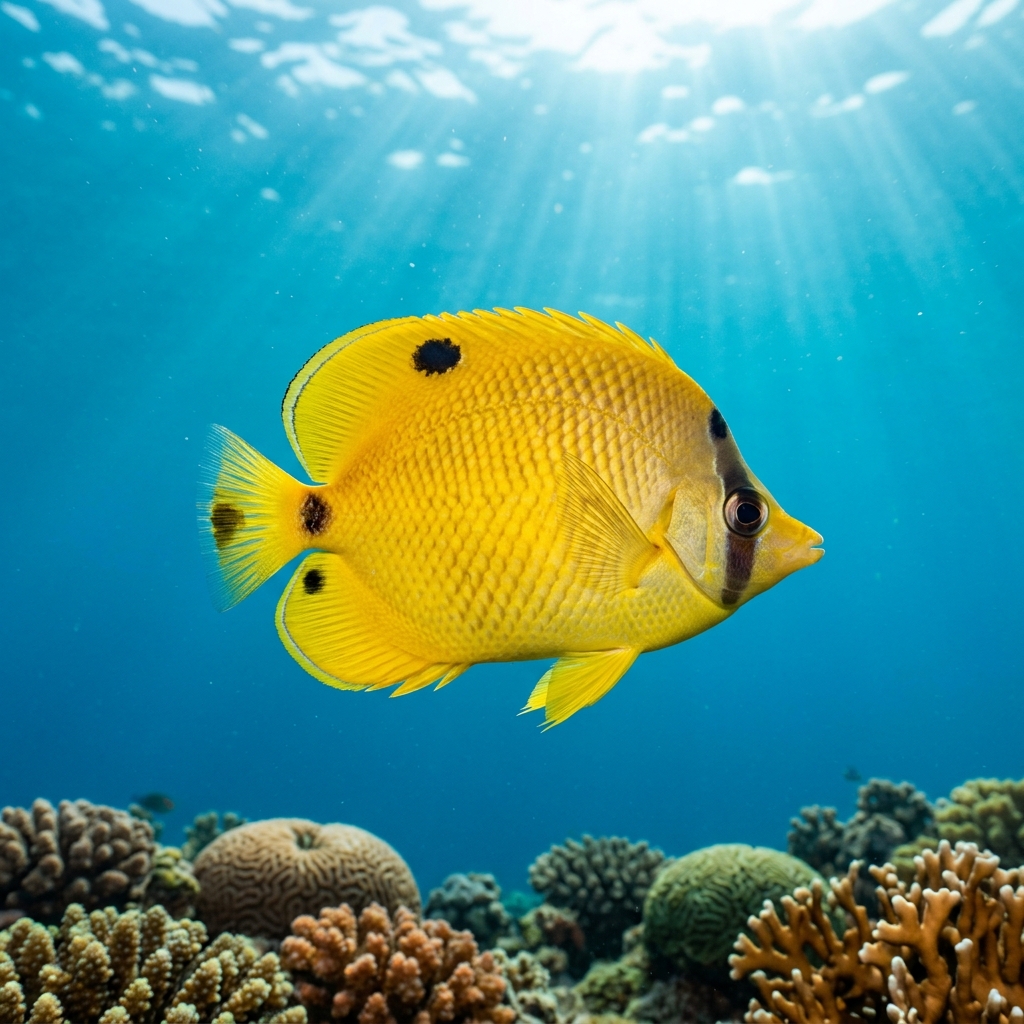
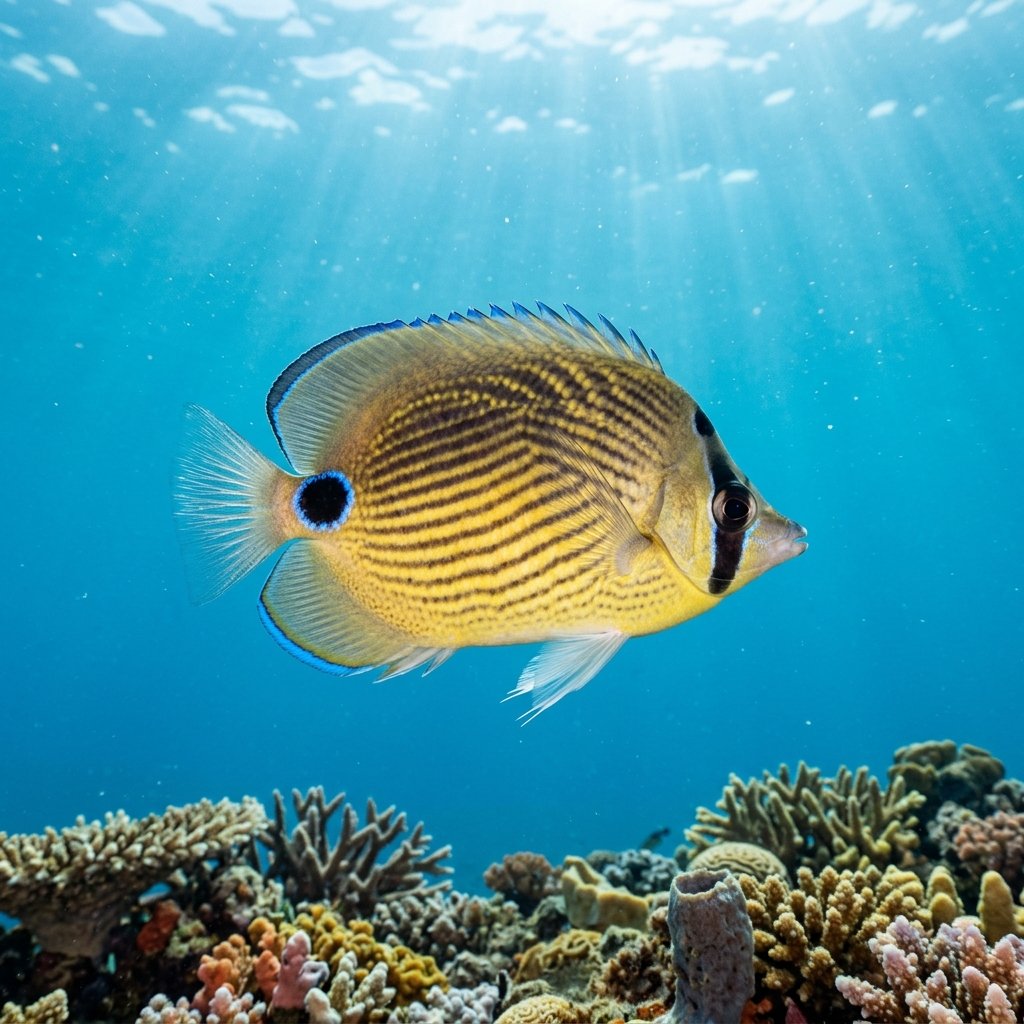
A bright yellow disc-shaped body makes this butterflyfish stand out, but the key mark is a bold dark spot on the rear flank encircled by a vivid electric-blue ring, unique among reef butterflyfishes. Two curved blue lines arc across the lower body, giving the species its name. At the water temperatures where it lives (22 to 29 °C) it tends to stay tight to the reef rather than swimming openly, so a still moment near coral structure is usually how divers spot it.
Encountered singly or in pairs rather than schools, this species works close to branching and plate corals, picking at coral polyps with its small pointed snout. It tends to be wary, retreating a short distance when approached, so slow, deliberate movements give divers the best look. Most observations are from reef-structure dives in daylight hours.
The distinctive blue-ringed ocellus (eye-like spot) on the rear flank is thought to misdirect potential predators away from the real eye, a trick shared by several butterflyfishes but executed here with unusually vivid colouration.
Northern hemisphere data points to January through April as the most productive window for sightings, so plan accordingly if diving Guam, Taiwan, or the Philippines. In year-round tropical destinations such as the Maldives and Indonesia, the species is recorded across all seasons within its 22 to 29 °C comfort range.
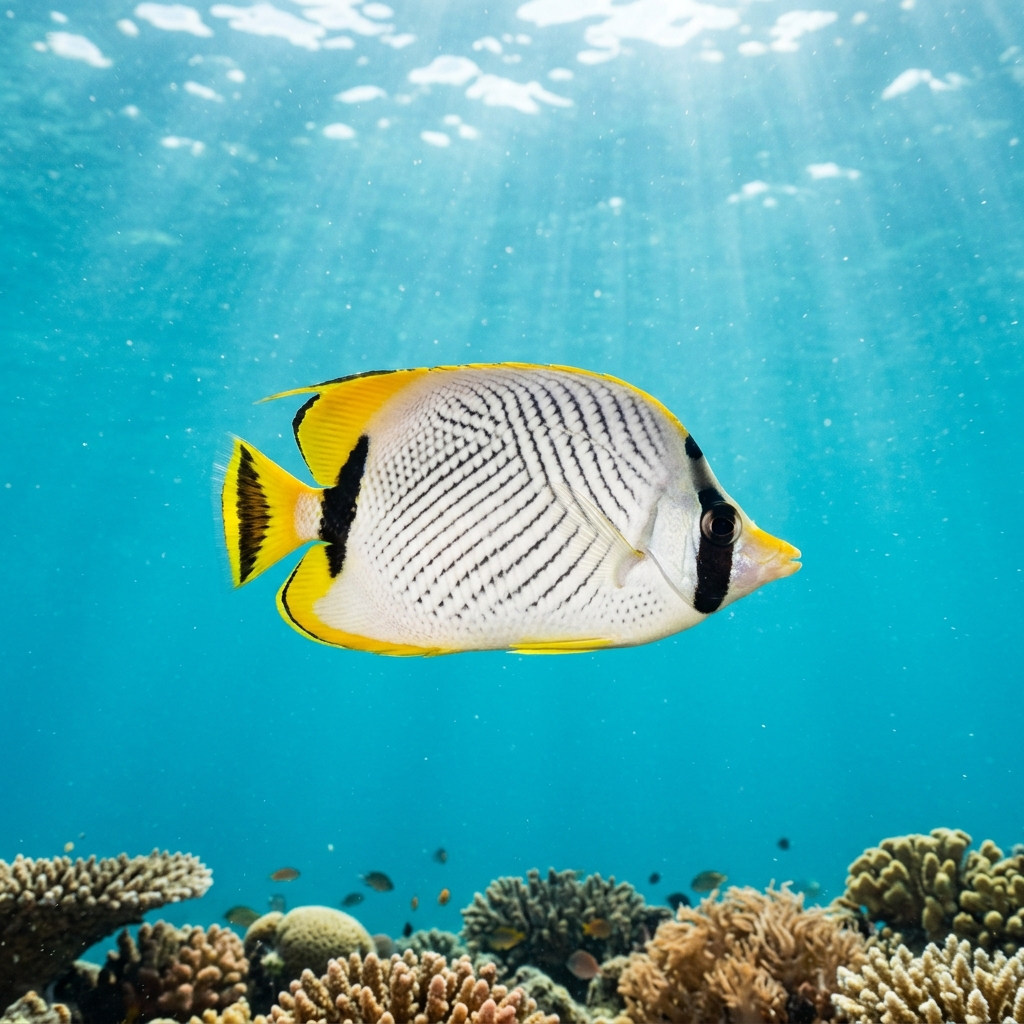
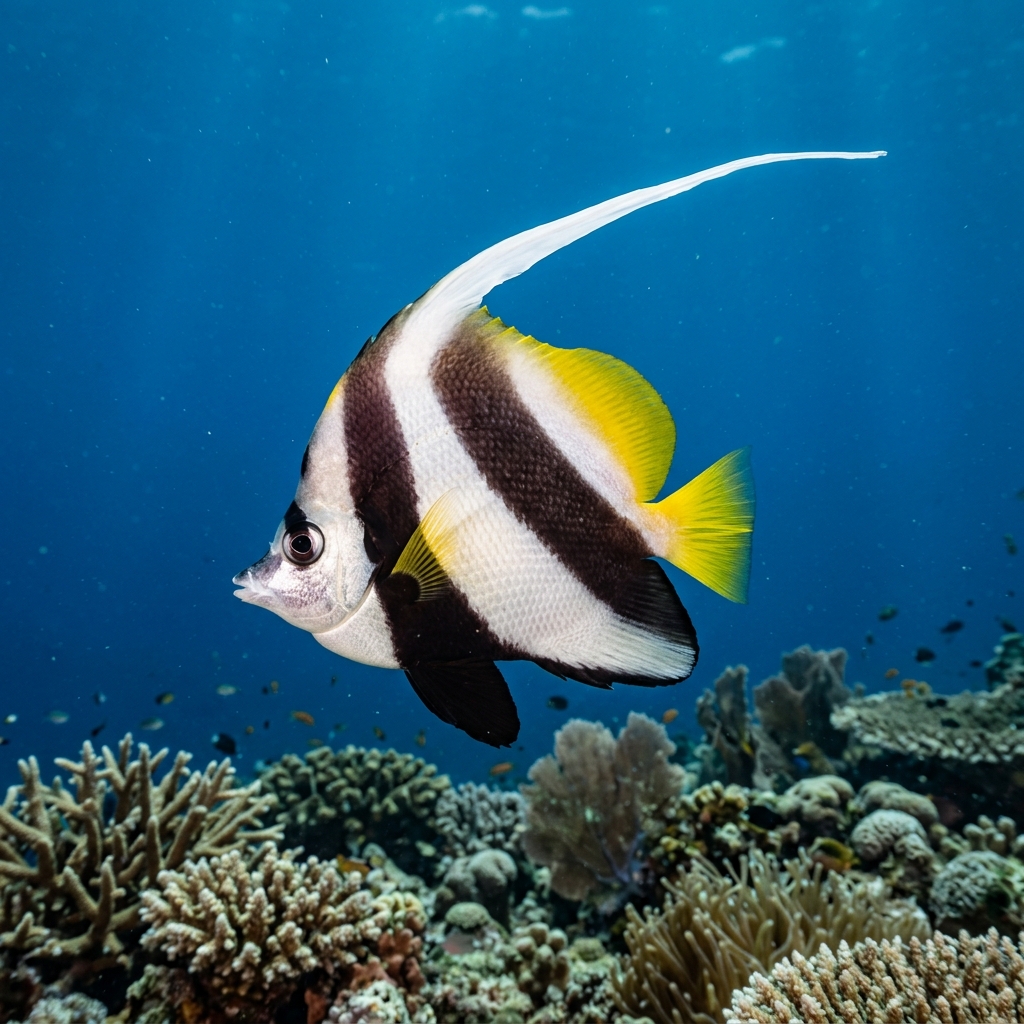
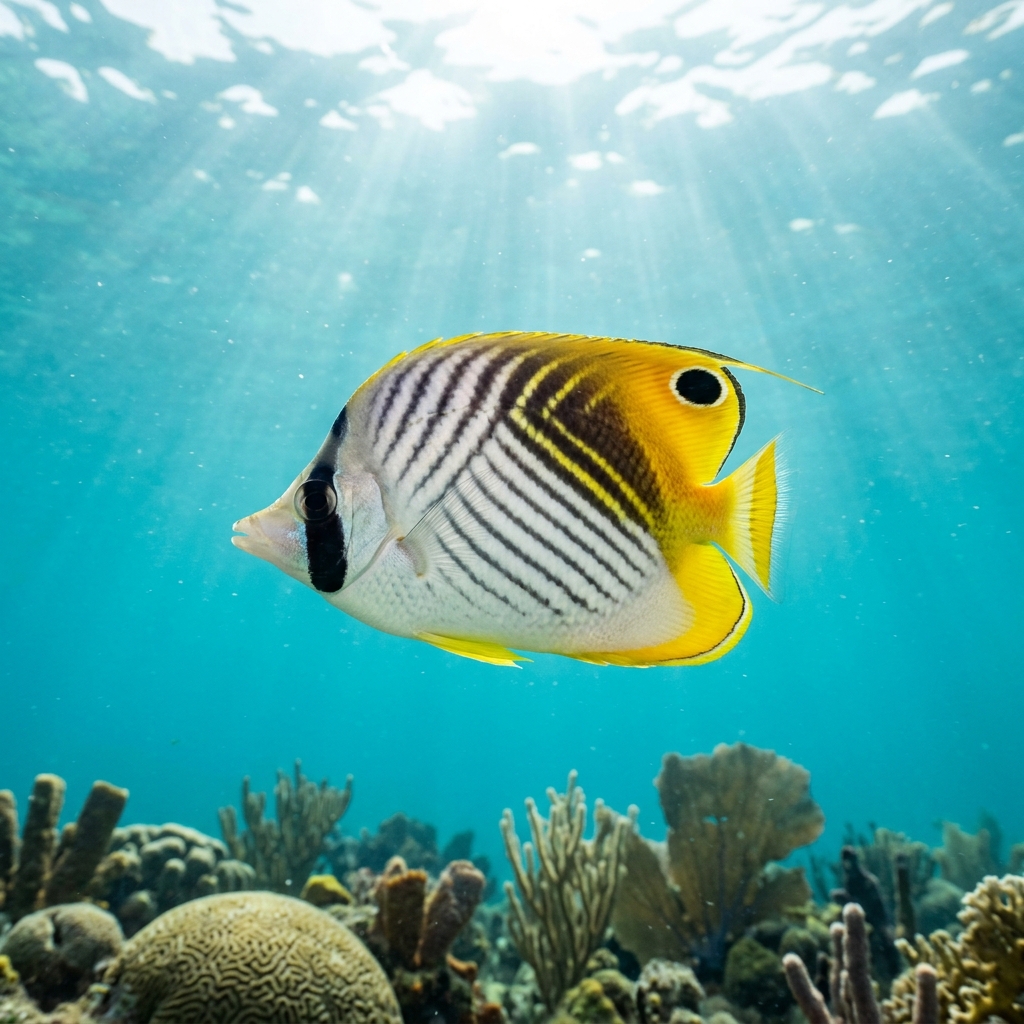
Reef neighbours a diver could mistake it for. Use the identification notes above to tell them apart.
Most sightings come from the Maldives (especially Male and Ari Atolls), the Philippines (Palawan and the Visayas), and Indonesia (Nusa Tenggara and the Banda Sea). Strong records also exist across Apra Harbor in Guam, Lanyu in Taiwan, the Rock Islands of Palau, and Taveuni in Fiji, making the central and western Indo-Pacific the core range to target.
Mapping where Bluelashed Butterflyfish is logged…
The best chances are in the Maldives (Male and Ari Atolls), the Philippines (Palawan, Apo Reef, and the Visayas), and Indonesia (Nusa Tenggara and Banda Sea). Good records also come from Apra Harbor in Guam, Lanyu in Taiwan, Taveuni in Fiji, and the Rock Islands of Palau.
In northern hemisphere destinations like Guam, Taiwan, and the Philippines, sightings concentrate between January and April. In equatorial sites such as the Maldives and Indonesia the species is present year-round wherever water temperatures stay in the 22 to 29 °C range.
Look for a bright yellow disc-shaped fish with two curved blue lines across the lower body and, most distinctively, a dark spot on the rear flank ringed with electric blue. That blue-ringed ocellus sets it apart from most other yellow butterflyfishes on the reef.
Sighting data from divers ranks it as rare at the majority of sites where it has been recorded, with only a handful of locations reporting it as common. Even at well-dived spots in the Maldives or Philippines, a sighting is a noteworthy moment rather than a routine encounter.
No, they pose no risk at all to divers or snorkellers. They are small, shy reef fish that typically retreat when approached rather than investigating divers.
Site and sighting data is aggregated from diver logs, iNaturalist and GBIF. For taxonomy and conservation status: