Ceratosoma tenue
Spot the Elongate Pantechnicon Dorid in Sulawesi, Durban, and the Philippines. A rare Indo-Pacific nudibranch found in warm 23-29°C waters.
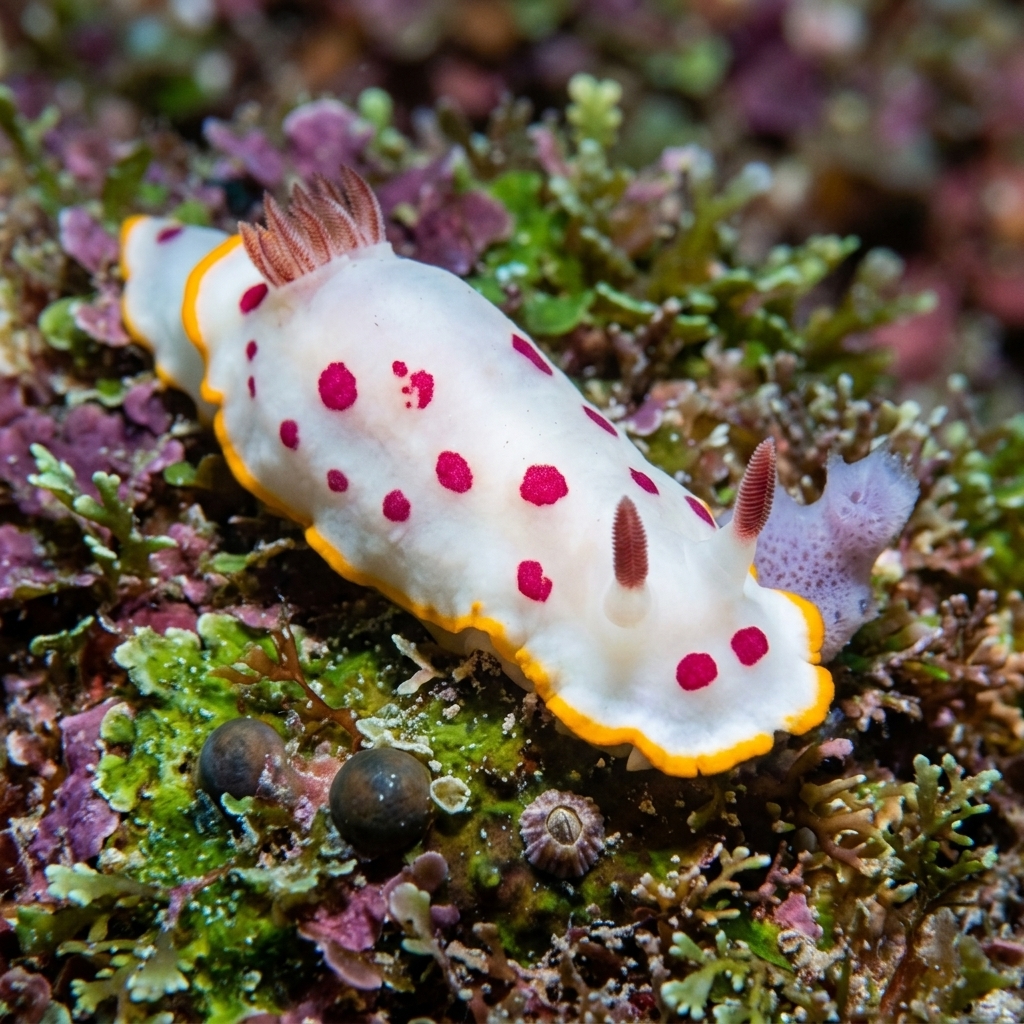
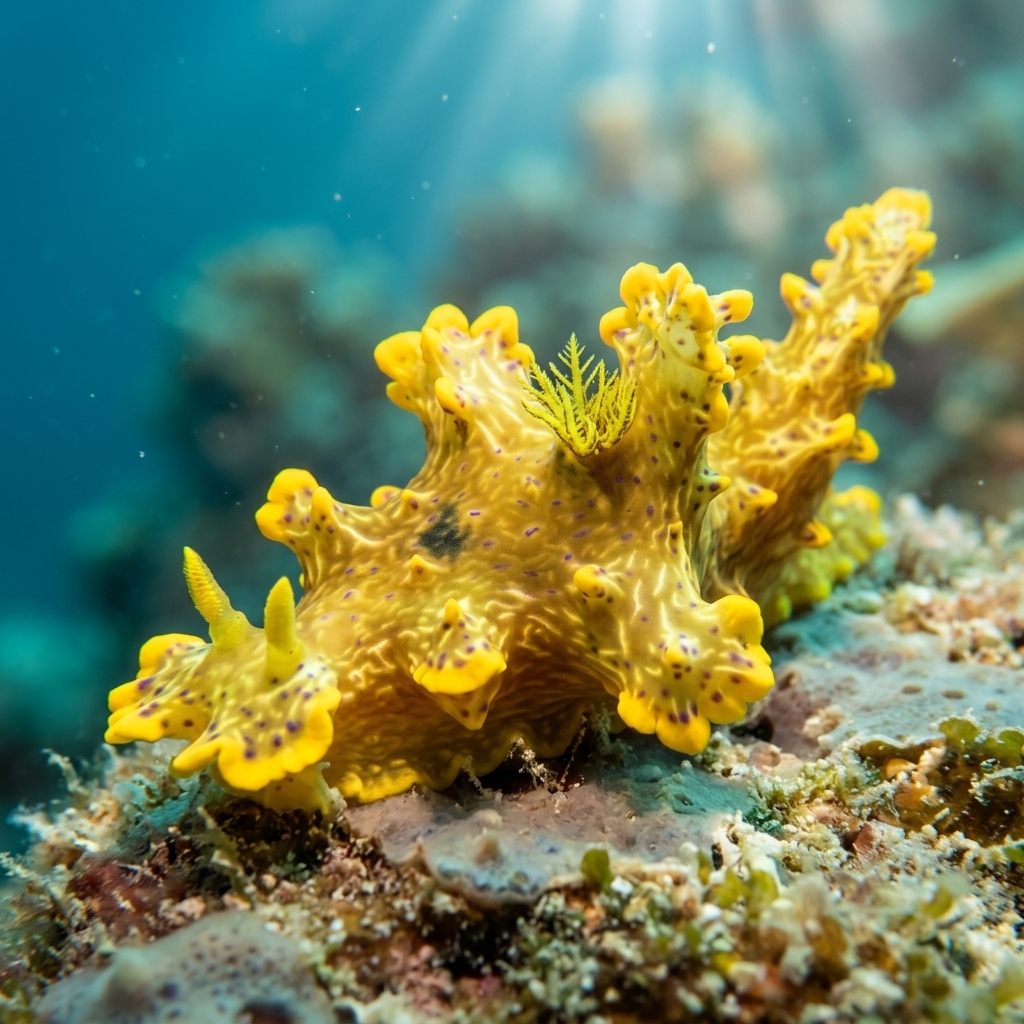
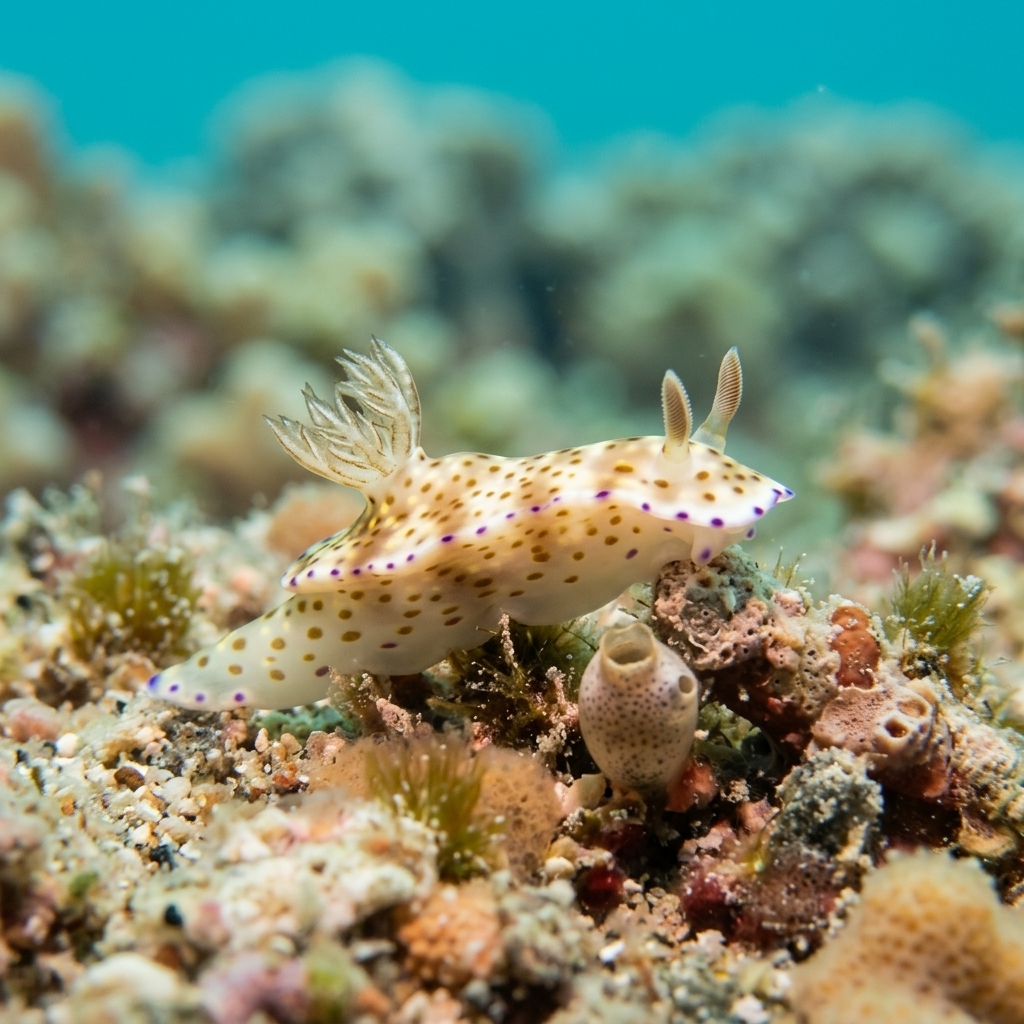
A slender, elongated dorid nudibranch with a narrow body that sets it apart from the broader, more rounded chromodorids it shares the reef with. The body carries a pale base colour with contrasting mantle markings, and the rhinophores (retractable chemical-sensing clubs at the head) and gill plume at the rear are typically tinged with deeper colour. Its noticeably narrow profile is the single most reliable underwater clue. Size data are limited, so treat anything matching this slim, elongated shape as a candidate worth photographing for confirmation.
Like most dorids, it is encountered crawling slowly across hard substrate, rubble, or sponge, often in shallow to mid-water reef zones. It tends to ignore divers entirely, continuing to move at its own pace, which makes for good photographic opportunities if you approach low and slow. Sightings are typically solitary.
Ceratosoma nudibranchs are known to sequester toxic compounds from the sponges they feed on, storing them in raised mantle lobes as a chemical defence against predators. The elongated body shape of this particular species is thought to reflect a specialised foraging niche among thin or encrusting sponge growth.
Southern Hemisphere sightings concentrate between August and October, pointing to late winter and spring as the most productive window for sites around Durban. For the tropical Indo-Pacific sites in Indonesia and the Philippines, the species sits within a warm 23 to 29°C band typical of those reefs year-round, so encounters are not tightly seasonal there.
Reef neighbours a diver could mistake it for. Use the identification notes above to tell them apart.
Most logged across Indonesia, with Sulawesi and Bali, Lombok and Java being the standout regions, followed by strong records throughout Durban and the North Coast of South Africa. The Philippines, particularly the Visayas and Luzon, add further sightings, and there are additional records from Hawaii and a handful of Australian sites.
Mapping where Elongate Pantechnicon Dorid is logged…
The species is most reliably logged in Indonesia, especially around Sulawesi and Bali, and along the Durban and North Coast region of South Africa. The Philippines, particularly the Visayas and Luzon, are also well-represented, with additional records from Hawaii and Australia.
Around South Africa, sightings concentrate from August through October. In tropical sites across Indonesia and the Philippines, the warm water temperatures year-round mean there is no single peak season, though overall encounters remain rare wherever you look.
Focus on the body shape: this species is notably slender and elongated compared to most dorids you will encounter on the same reef. The narrow mantle profile, combined with a pale base colour and distinct rhinophores, helps separate it from broader-bodied look-alikes such as the Splendid Goniobranch.
Rare is the most typical sighting frequency recorded by divers, with uncommon being the next most common rating. Even at its best sites in Sulawesi and Durban, you should not expect to see one on every dive. Searching sponge-covered rubble and hard reef at mid-depth gives the best odds.
Not at all. Like other Ceratosoma nudibranchs it may carry chemical defences derived from its sponge diet, but these pose no risk to divers. You can observe it closely without concern.
Site and sighting data is aggregated from diver logs, iNaturalist and GBIF. For taxonomy and conservation status:
Light-spotted Aegires
3,168 sites