Ceratosoma brevicaudatum
Find Short-tailed Ceratosoma along Australia's southern coast, Victoria, WA and NSW, in cooler waters from 14-23°C. Best sightings Oct, Apr.
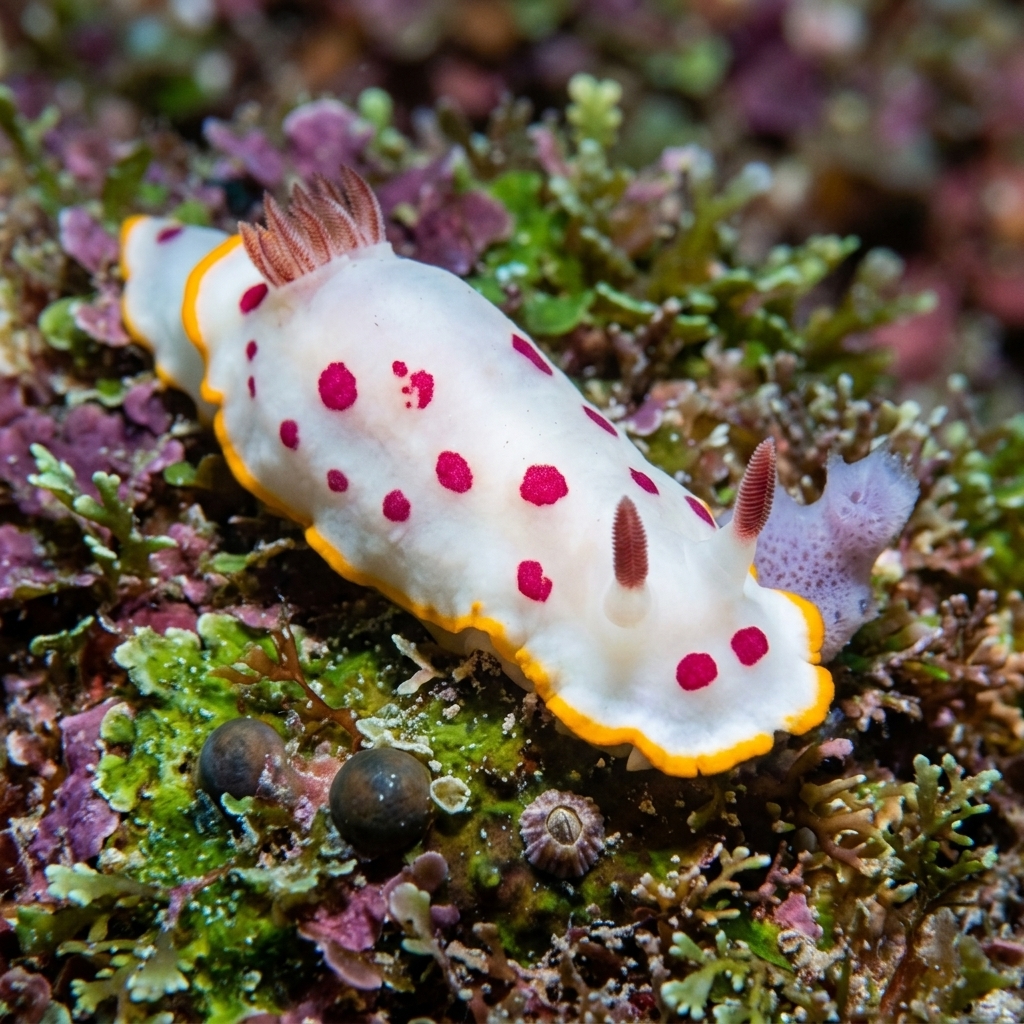
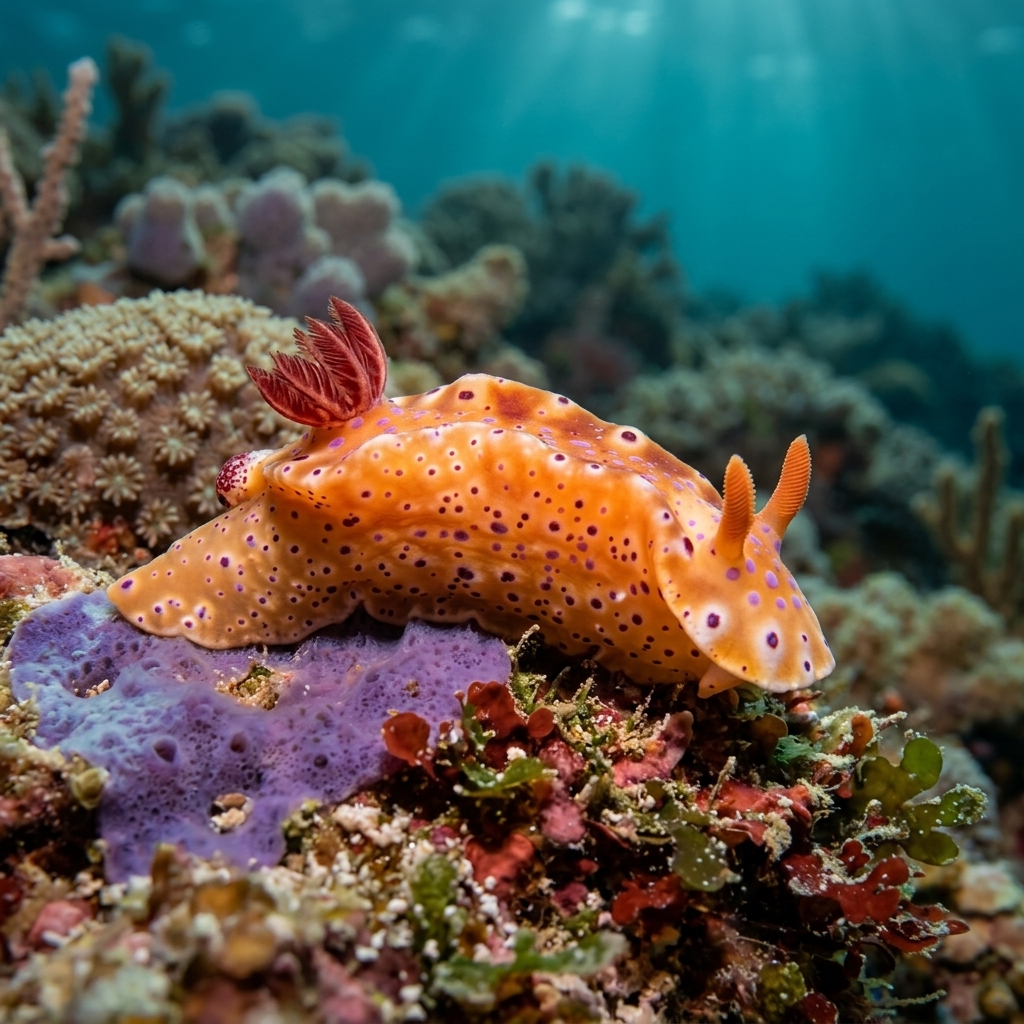
A robust, vividly coloured nudibranch built in the classic Ceratosoma mould: a raised, hump-backed mantle with prominent lateral lobes and a characteristically short tail process at the rear, the feature that gives it its name. Colouration typically combines bold orange or red with purple or white marginal banding, making it stand out sharply against encrusting sponge. The short posterior tail projection is the single most reliable underwater field mark; most other large chromodorids lack it entirely.
You'll most often spot one moving slowly across sponge-encrusted rock or reef rubble, picking its way between the encrusting growth it feeds on. It doesn't flee from divers; like most nudibranchs, it relies on chemical defences rather than speed, so it will simply continue on its way while you hover alongside. Sightings tend to be solitary, though pairs are sometimes found close together during mating.
Ceratosoma nudibranchs sequester defensive compounds from the sponges they eat and concentrate them in their prominent mantle lobes, advertising the fact with their bright colours, a textbook example of aposematism (warning colouration) in action.
Sightings concentrate between October and April, the Southern Hemisphere spring and summer, which aligns with the warmer end of the species' cool-water temperature range (14-23 °C).
Reef neighbours a diver could mistake it for. Use the identification notes above to tell them apart.
Essentially an Australian endemic in the data, logged at sites spread right around the southern rim of the continent. Victoria and Western Australia account for the greatest share of records, with New South Wales and South Australia also producing regular sightings. Tasmania adds a smaller but consistent cluster of records for divers exploring the island's cool-water reefs.
Mapping where Short-tailed Ceratosoma is logged…
It's an Australian species, most reliably found along the southern coast. Victoria and Western Australia have the strongest representation in diver records, followed by New South Wales and South Australia. Tasmania also produces sightings for divers willing to brave colder water.
Sightings peak between October and April, southern spring through summer. Water temperatures across its range sit between 14 and 23 °C, so cooler months are still possible but produce fewer logged encounters.
Look for a hump-backed nudibranch with vivid orange or red colouration and contrasting purple or white margins. The key field mark is the short, stubby tail projection at the rear of the mantle, it's subtle but distinctive once you know to look for it. Most similar-looking nudibranchs on southern Australian reefs lack that tail process entirely.
Expect an uncommon encounter, it's the most typical frequency across its logged sites, with a good portion of sites rating it as rare. It's not a species you can reliably plan a dive around, but patient observers on sponge-rich reef in Victoria or Western Australia do find them.
No. They pose no risk to divers whatsoever. Like other Ceratosoma, they sequester distasteful compounds from sponges as a defence against predators, but this has no relevance to humans who aren't touching or ingesting them.
Site and sighting data is aggregated from diver logs, iNaturalist and GBIF. For taxonomy and conservation status:
Light-spotted Aegires
3,168 sites