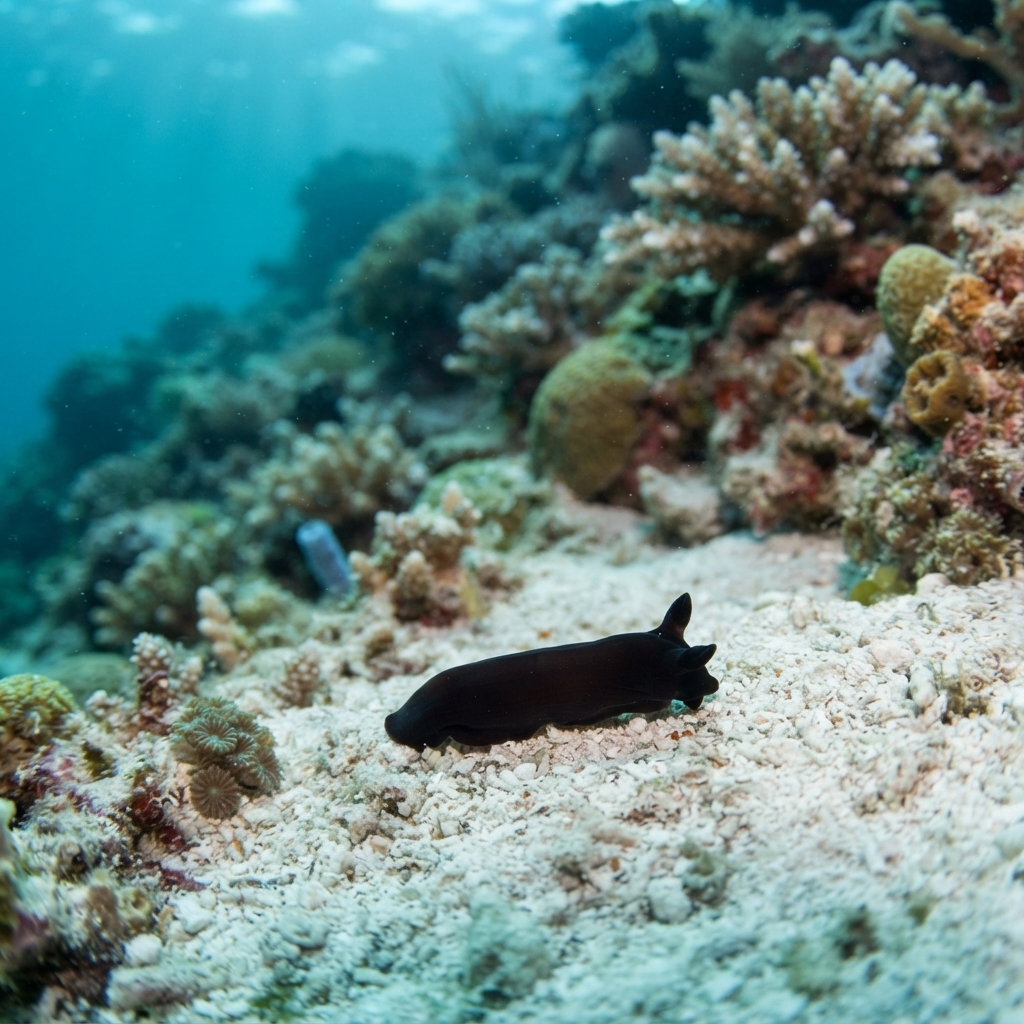
Nakamigawaia felis
Find Cat Aglaja on reefs in Grande-Terre, Guadeloupe and Grand Cayman, usually an uncommon find on shallow benthic dives year-round.
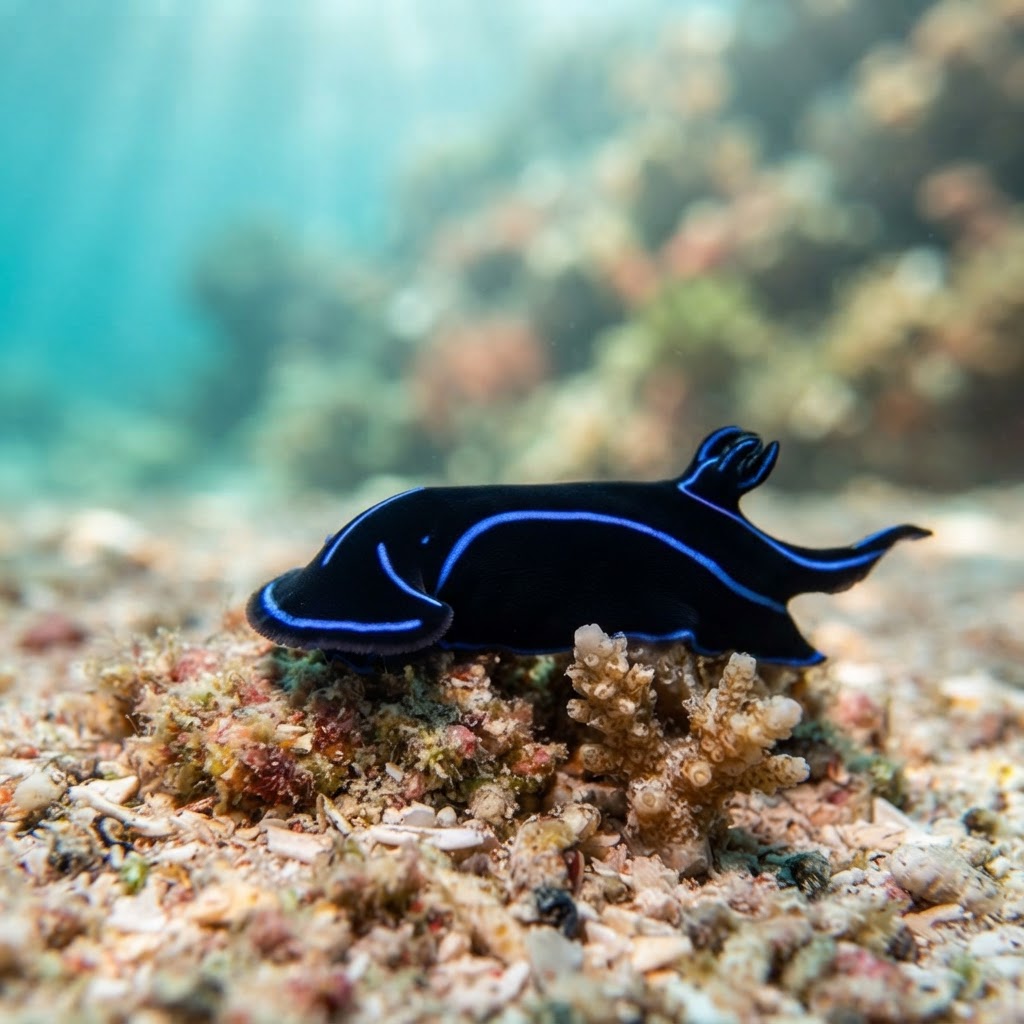
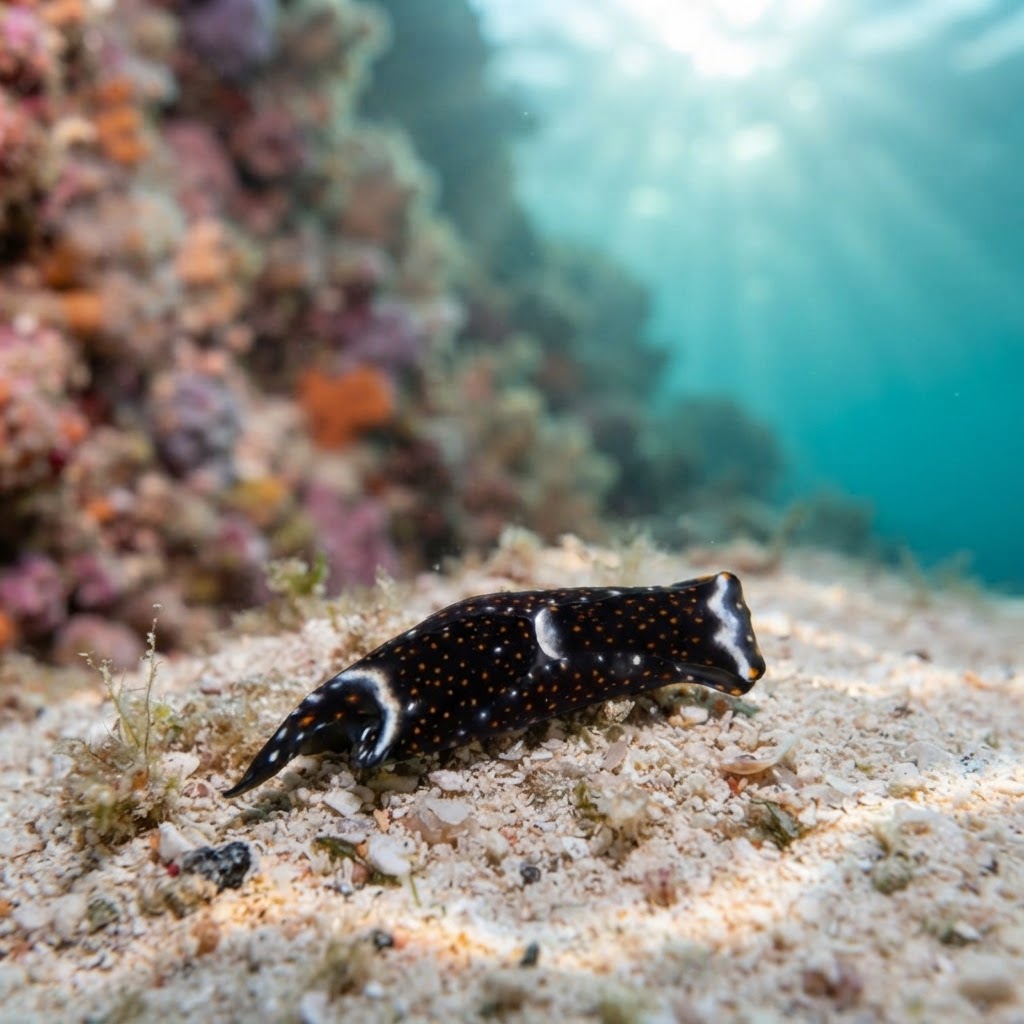
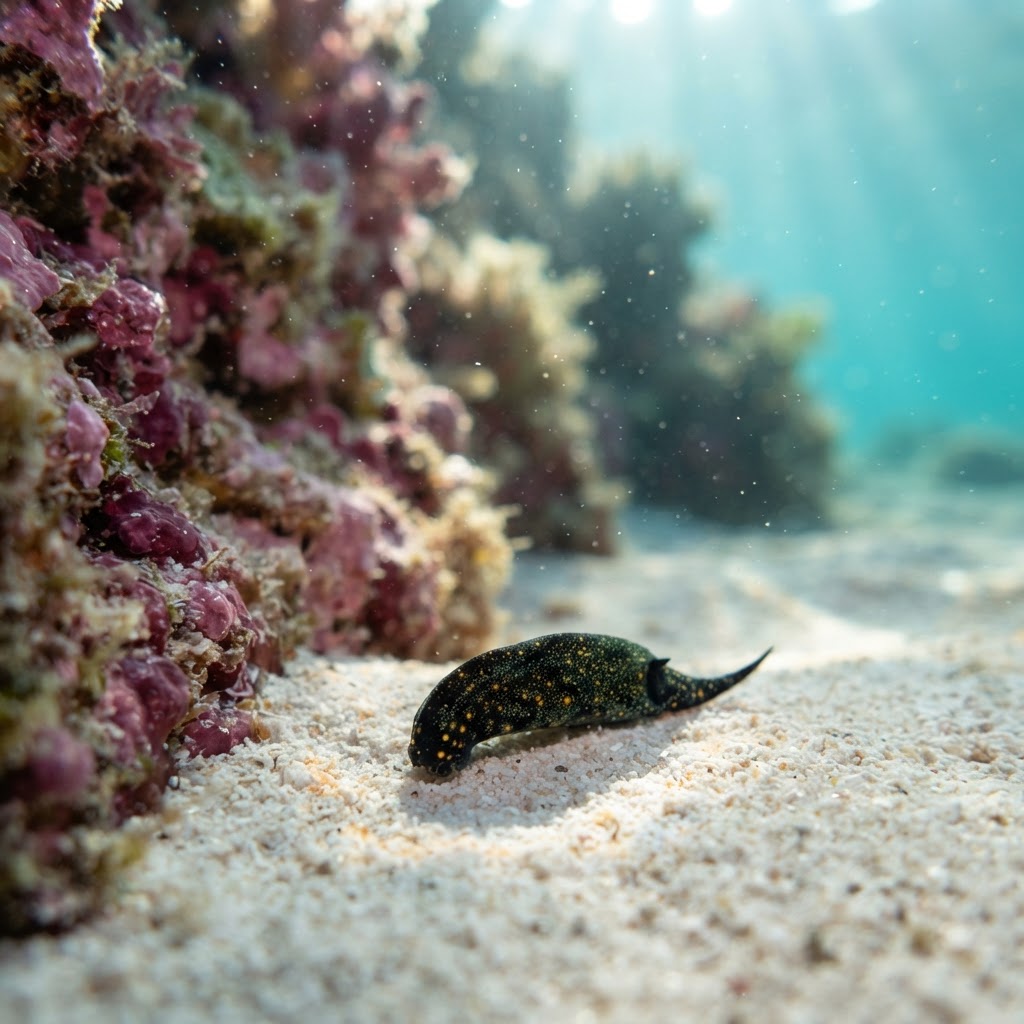
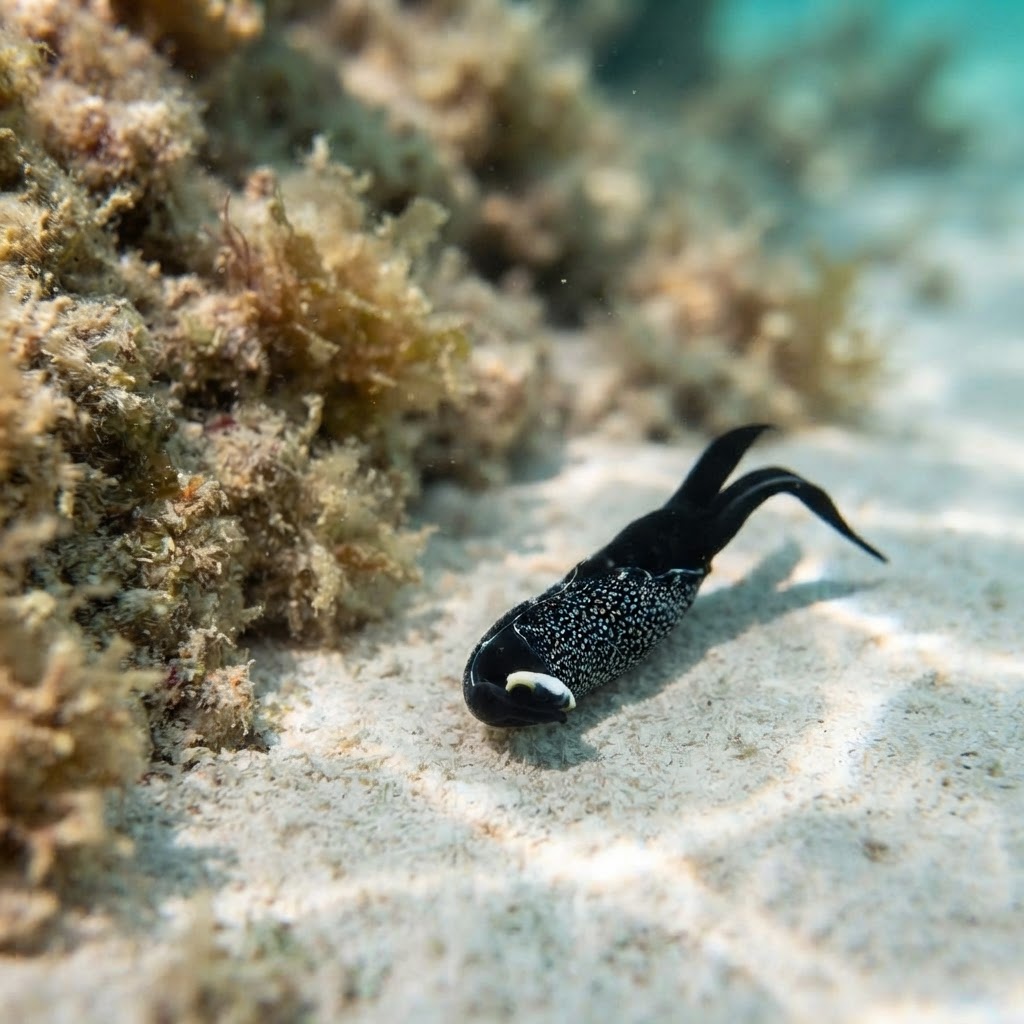
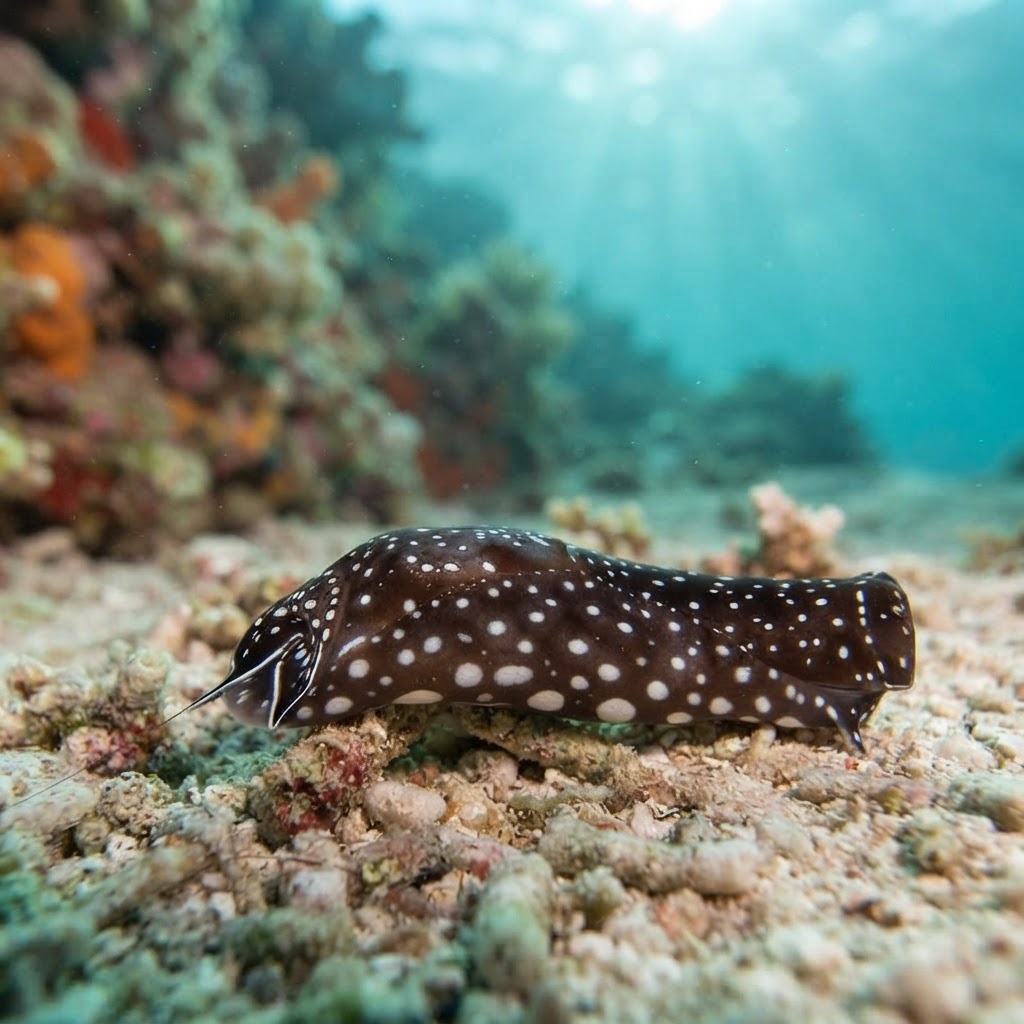
Look for a smooth, shield-shaped body without an external shell, moving slowly over sand or rubble on the seabed. Size in the water is not well documented for this species, so judge it by shape and setting rather than scale: a soft-bodied, rounded slug with a headshield (a flattened plate covering the head, used to plough through sediment) rather than obvious tentacles. It tends to blend into the substrate, so divers usually spot it by movement or a slight colour contrast against sand rather than any bold pattern.
Divers typically find it moving slowly across sand, rubble or mixed benthic substrate, ploughing along the bottom rather than swimming or climbing onto reef structure. It shows little reaction to divers, making it an easy subject for a close macro look once spotted, though its low profile and cryptic colouring mean it is often missed unless you are scanning the substrate closely. Most logs describe it as an uncommon to rare find even at sites where it turns up, so it rewards divers who slow down and check the sand rather than the reef wall.
Like other members of the Aglajidae family, it is a headshield slug that hunts by ploughing through soft sediment, and species in this family are known to be simultaneous hermaphrodites, able to mate as both sexes at once.
No clear seasonal pattern shows up in the sighting data, and the observed temperature range of roughly 25 to 31C matches warm Caribbean water year-round, so it is best treated as a possible find on any dive rather than a seasonal target.
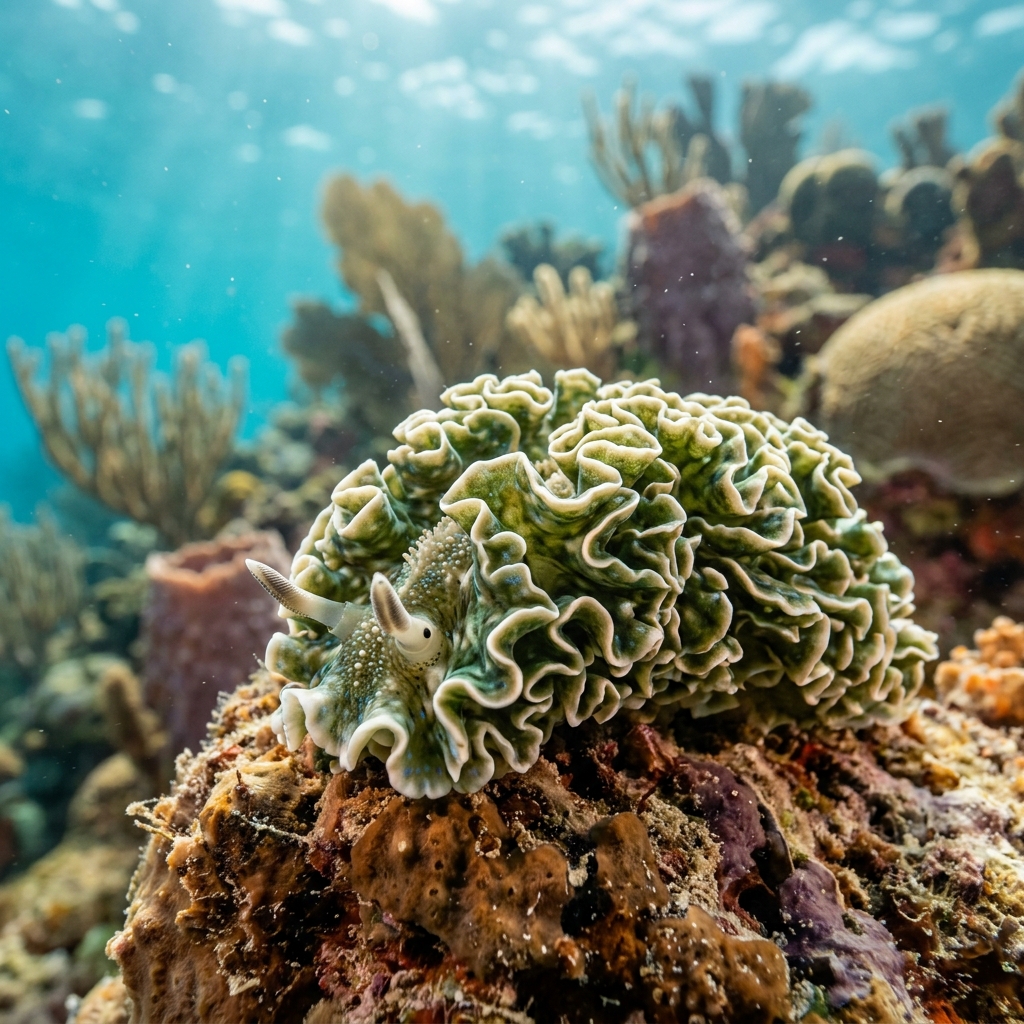
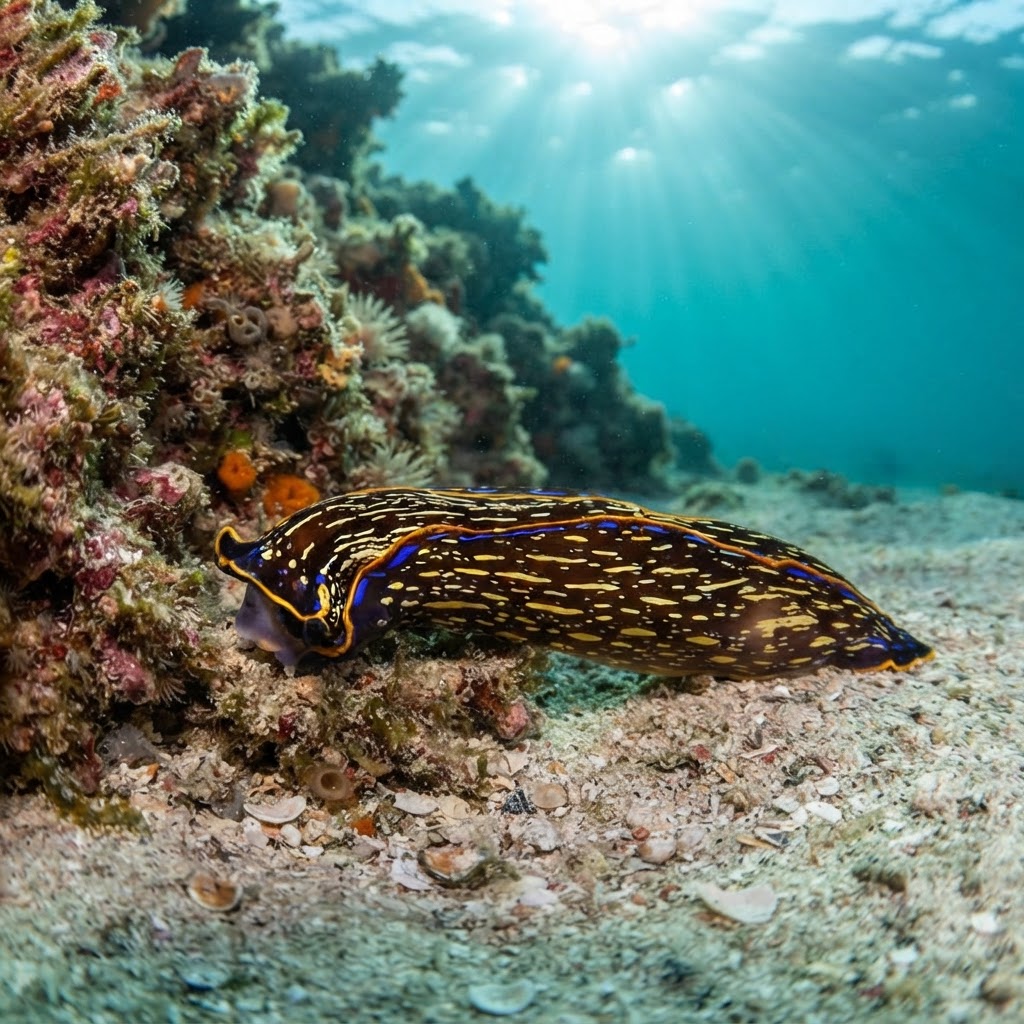
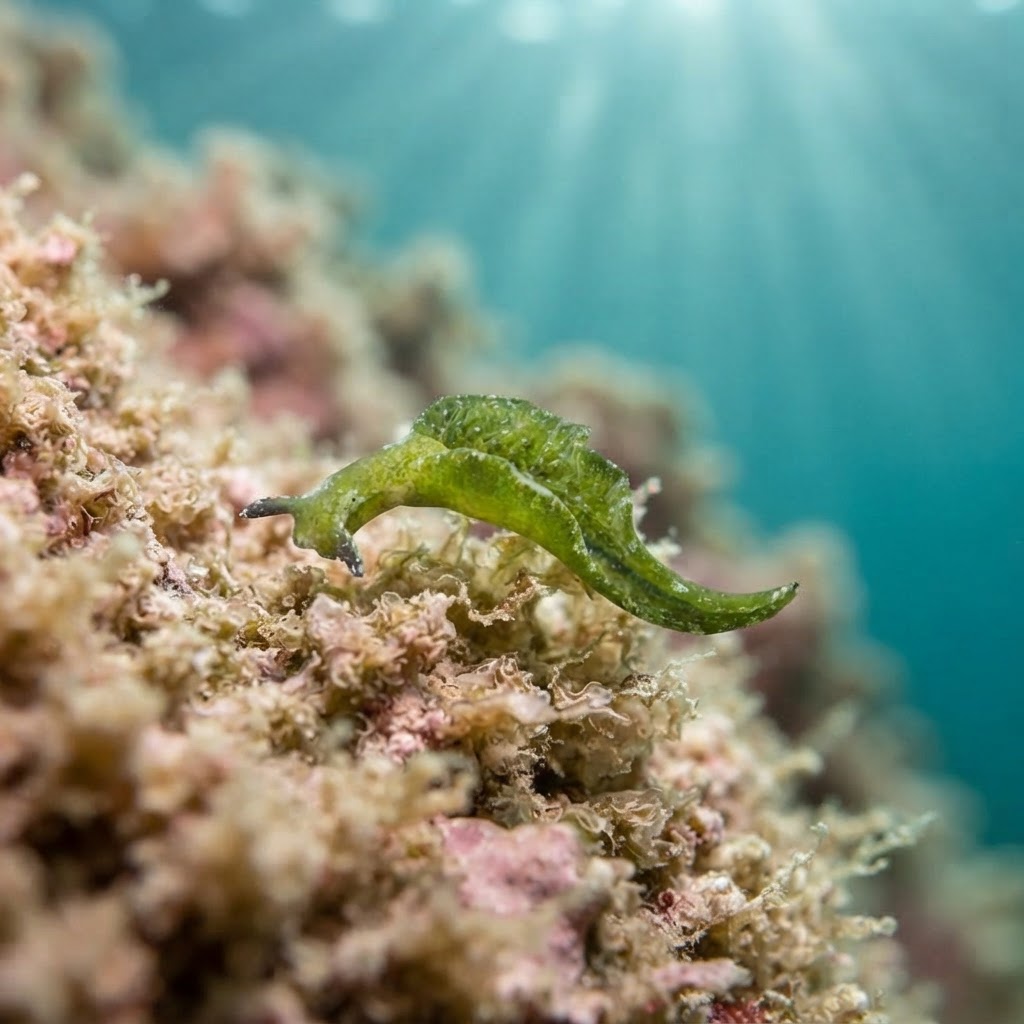
Reef neighbours a diver could mistake it for. Use the identification notes above to tell them apart.
Most consistently logged in Grande-Terre, Guadeloupe, which accounts for the bulk of sightings, with a second reliable population around Grand Cayman in the Cayman Islands. Outside these two spots in the Caribbean, confirmed sightings are sparse, so these are the two places to plan around.
Mapping where Cat Aglaja is logged…
The strongest logs come from Grande-Terre in Guadeloupe, with a second cluster around Grand Cayman in the Cayman Islands. Both are shallow, sandy or rubble-bottomed sites in the 1 to 18 metre range.
There is no detected seasonal peak, and the warm water it is found in (around 25 to 31C) is present year-round in Guadeloupe and the Cayman Islands, so sightings can happen on any dive.
Look for a smooth, shell-less slug with a flattened headshield, crawling slowly over sand or rubble rather than climbing on coral. It lacks bold markings, so spotting it usually comes down to noticing movement against a plain substrate.
No, it poses no known danger to divers. It is a slow-moving, benthic slug that can be observed closely without any risk.
Exact size data is not well documented for this species. Judge it by its shape and setting on the seabed rather than by scale.
As a member of the Aglajidae family, it likely shares the group's trait of being a simultaneous hermaphrodite, capable of acting as both male and female during mating.
Site and sighting data is aggregated from diver logs, iNaturalist and GBIF. For taxonomy and conservation status:
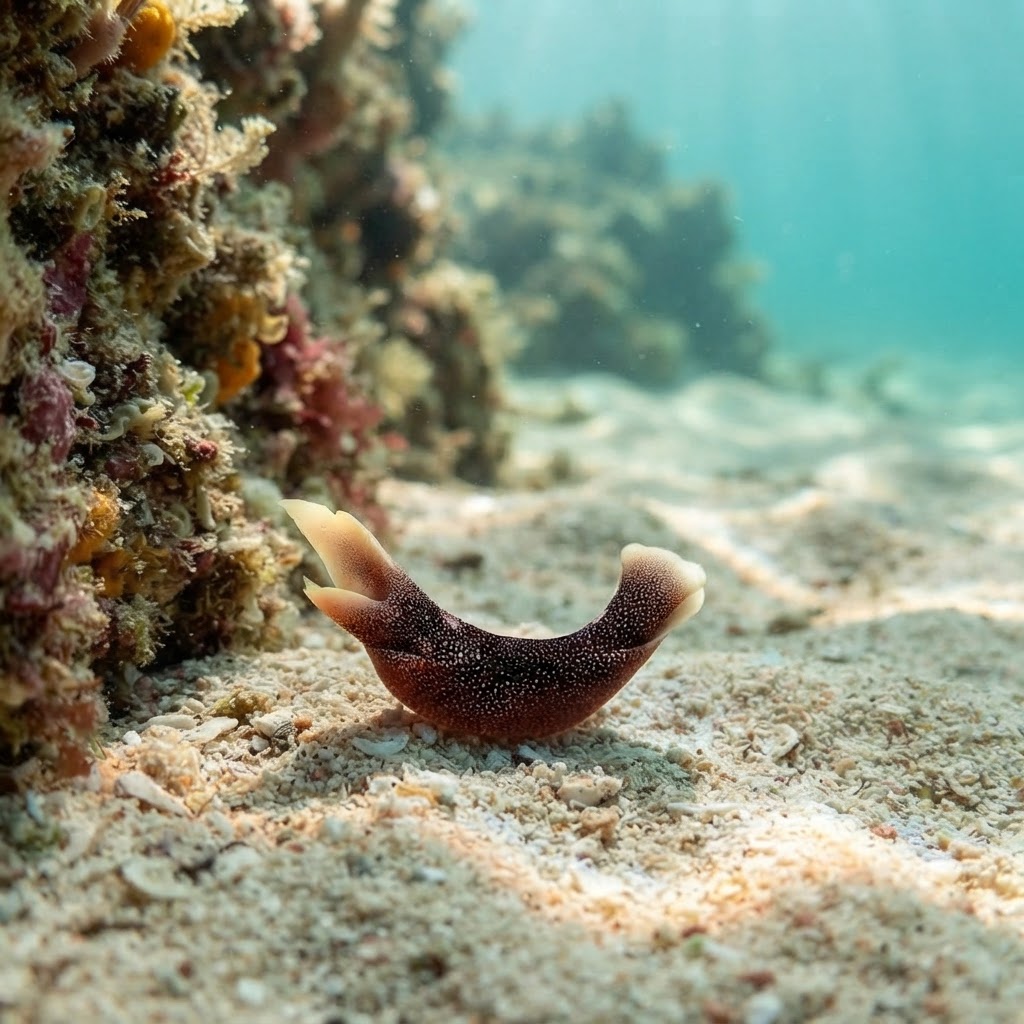
Chelidonura amoena
Elysia Timida
573 sites