Carminodoris nodulosa
A speckled dorid nudibranch turning up uncommon-but-steady on temperate reefs from Victoria to New South Wales, year-round.
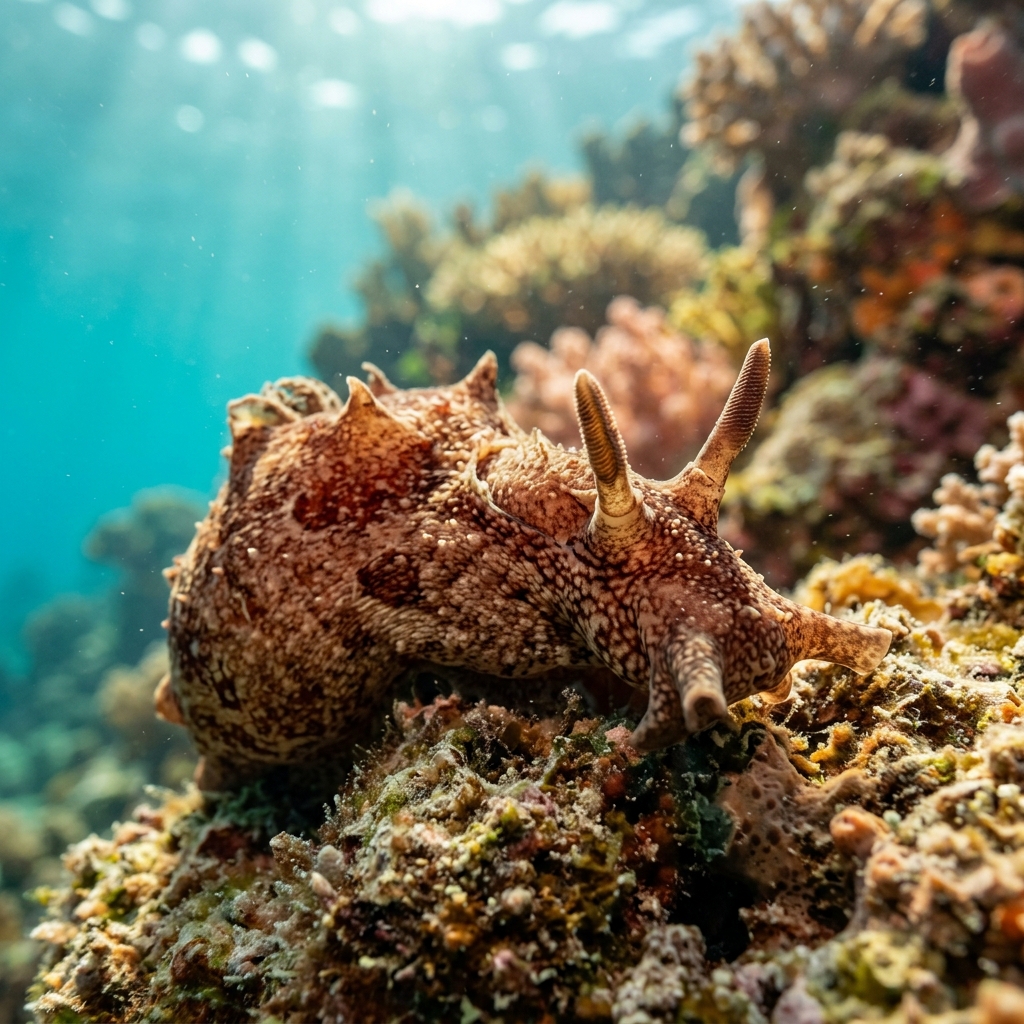
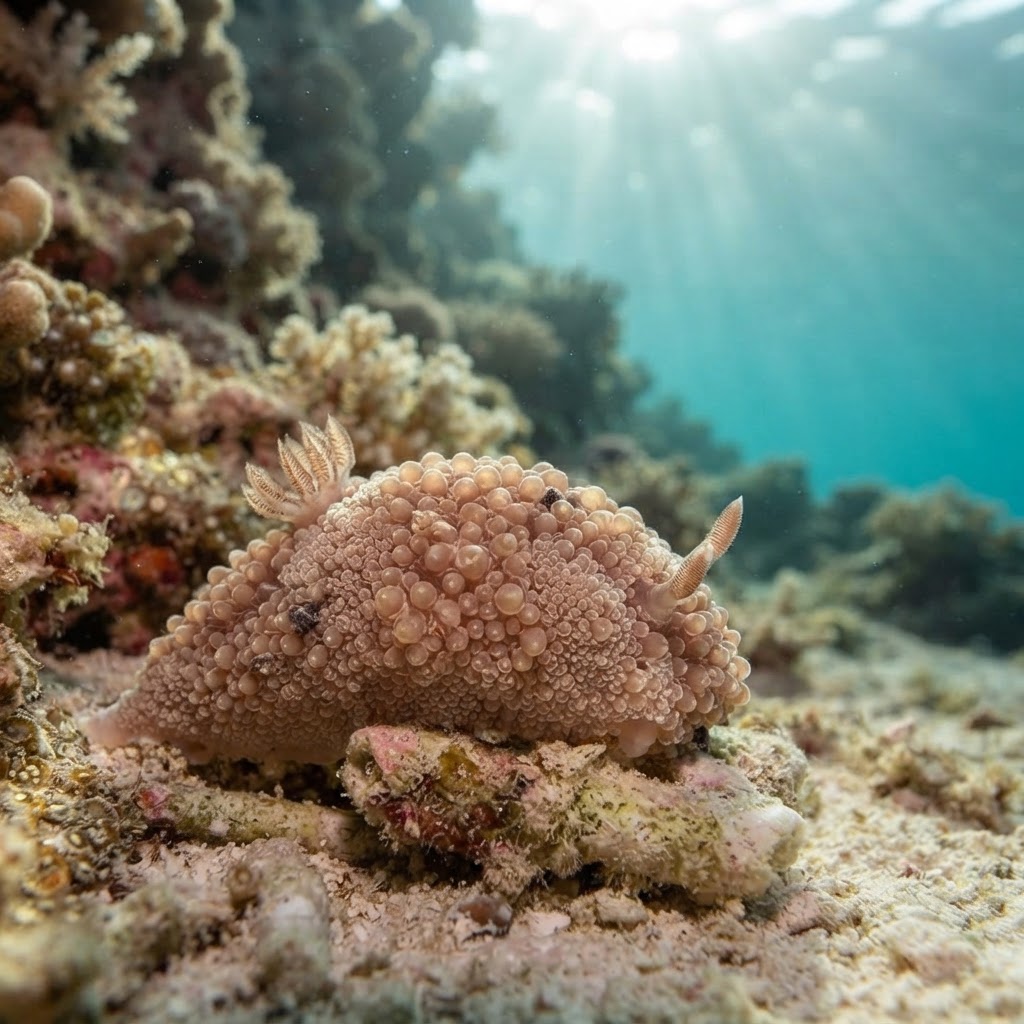
Look for a broad, oval nudibranch (a type of sea slug) with a warty, tubercle-covered mantle in mottled tones that break up its outline against reef rubble. The body sits low and firm-looking rather than soft, with the texture doing more work for identification than any bold colour pattern. Feathery gills cluster near the rear and short rhinophores (sensory tentacles) sit up front, both retractable if the animal is disturbed.
Divers typically find it moving slowly across rock, rubble, or algae-covered substrate, grazing rather than swimming or fleeing when approached. It's not a fast mover and rarely reacts much to a torch or a close look, making it an easy subject once spotted, though its mottled, textured body means it's often overlooked entirely until someone points it out.
Like other dorid nudibranchs, it likely feeds on sponges, using the mantle's warty texture and muted colouring as camouflage rather than relying on the bright warning colours seen in many reef nudibranchs.
Sightings don't show a clear seasonal pattern, and with a temperature range spanning roughly 14 to 25 C, it seems to tolerate a good spread of temperate conditions, so plan a dive at any time of year rather than chasing a season.
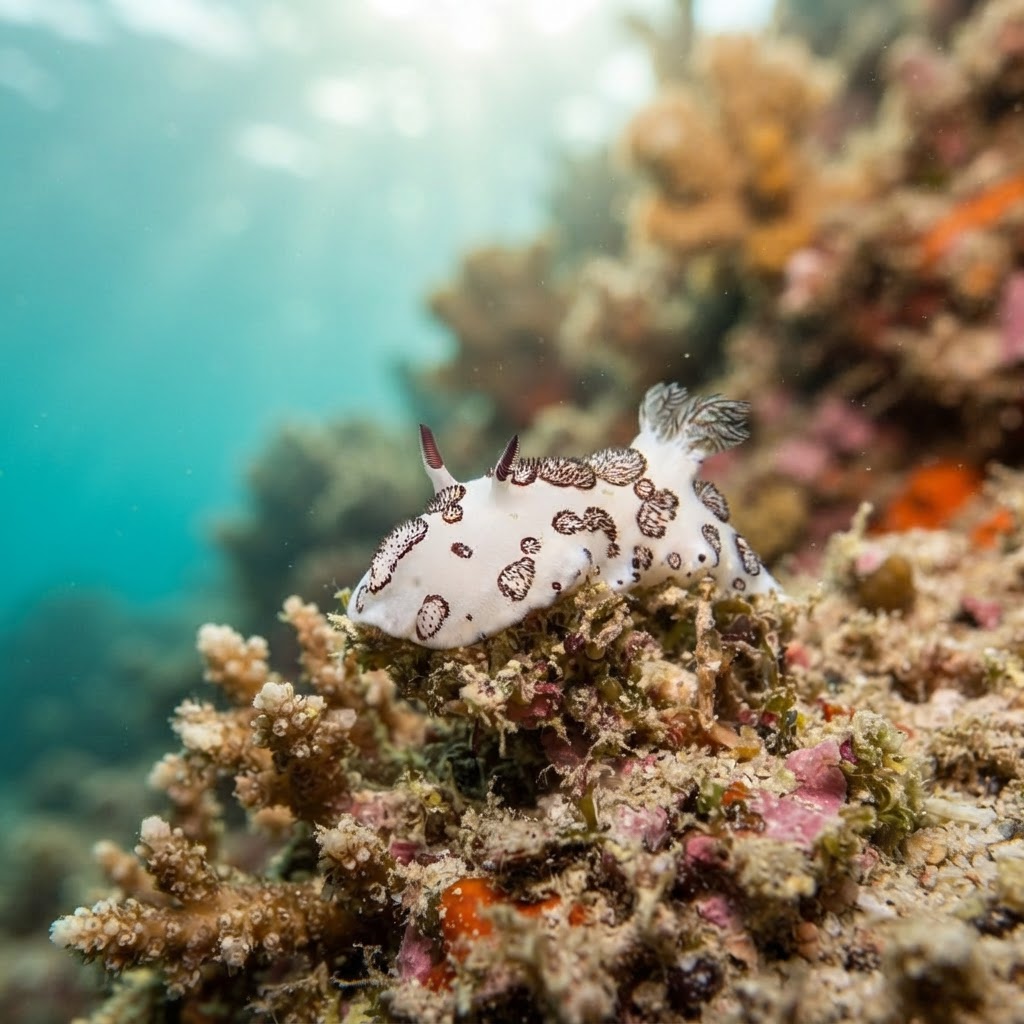
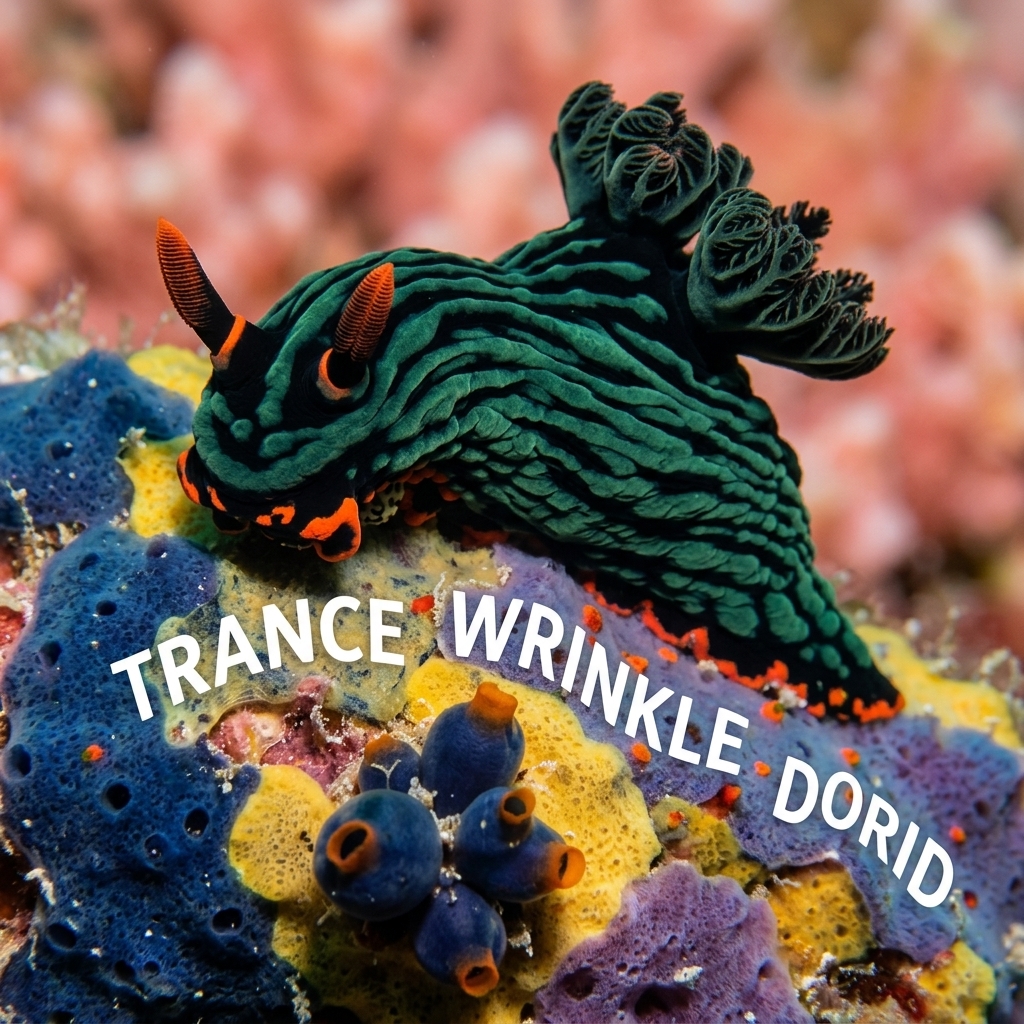
Reef neighbours a diver could mistake it for. Use the identification notes above to tell them apart.
This is very much a temperate-water find, most reliably logged across southeastern Australia, with Victoria and New South Wales the strongholds and a smaller but steady presence in Queensland. New Zealand divers also encounter it on both the South Island and North Island, though at a lower rate than the Australian sites.
Mapping where Knobbly Carminodoris is logged…
Southeastern Australia is the main hotspot, especially Victoria, New South Wales, and Queensland. It also turns up on New Zealand's South Island and North Island, though less frequently than in Australia.
There's no strong seasonal signal in the sightings, and it's been recorded across a wide temperature range, so it appears to be a year-round find on the reefs where it occurs.
Look for a warty, tubercle-covered oval body in mottled, muted colouring rather than a bold pattern. It moves slowly over rubble and rock, with feathery gills at the rear and short rhinophores up front.
Exact size data isn't available for this species, but as a dorid nudibranch it's likely a small, reef-scale animal typically measured in centimetres rather than something you'd notice from a distance.
No, this nudibranch poses no danger to divers. It has no means of stinging or biting and simply grazes slowly across the reef surface.
Like most dorid nudibranchs, it most likely grazes on sponges, using slow movement and camouflage rather than speed or defence to survive on the reef.
Site and sighting data is aggregated from diver logs, iNaturalist and GBIF. For taxonomy and conservation status:
Light-spotted Aegires
3,168 sites