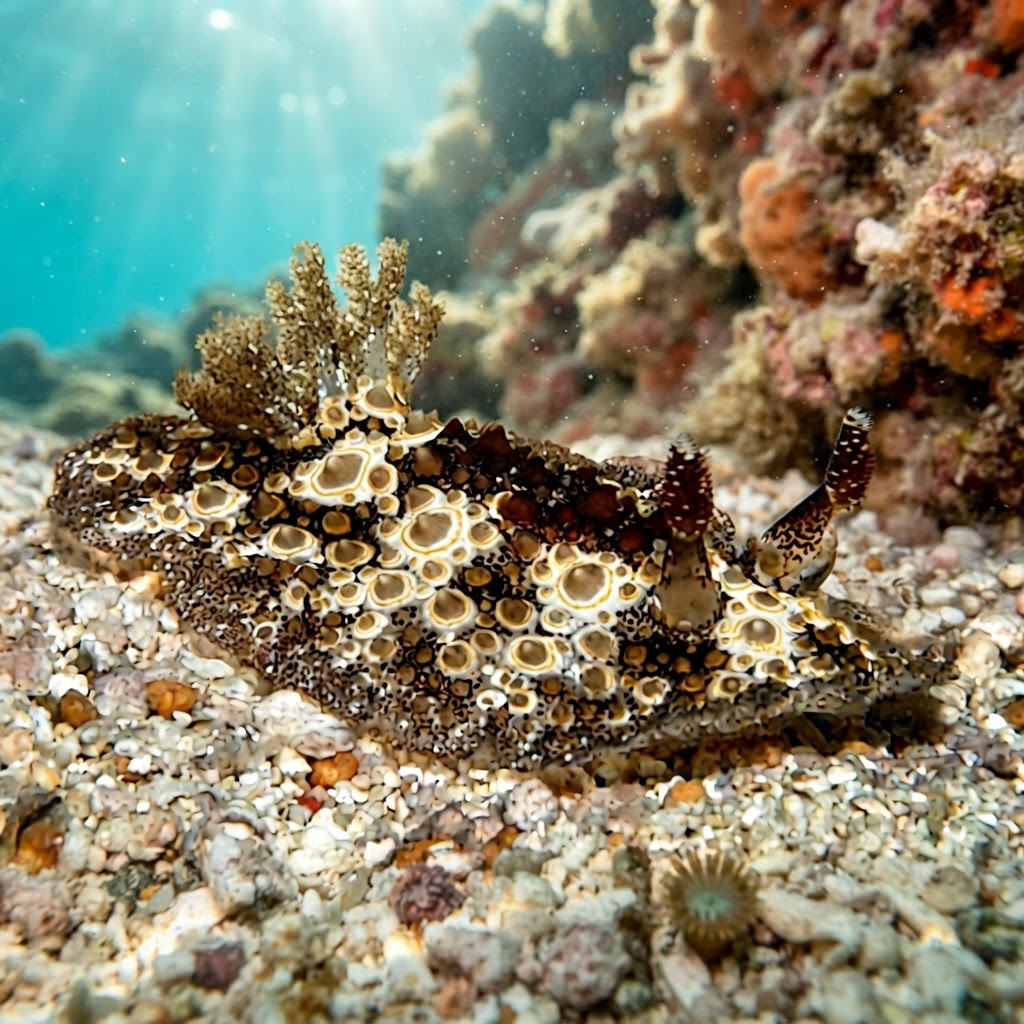
Carminodoris estrelyado
A rare nudibranch find in Bali and Mindanao, spotted on warm reefs between 25.6 and 31.6 C, year-round.
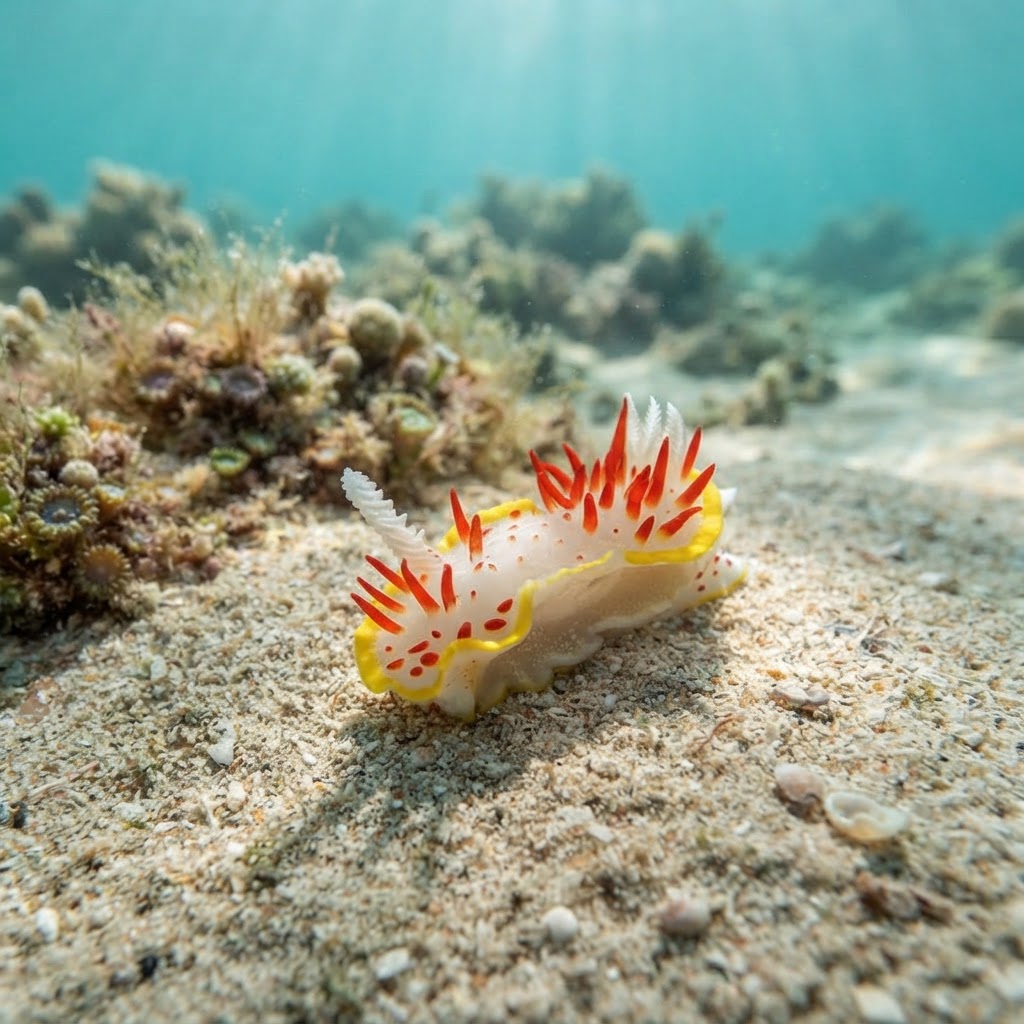
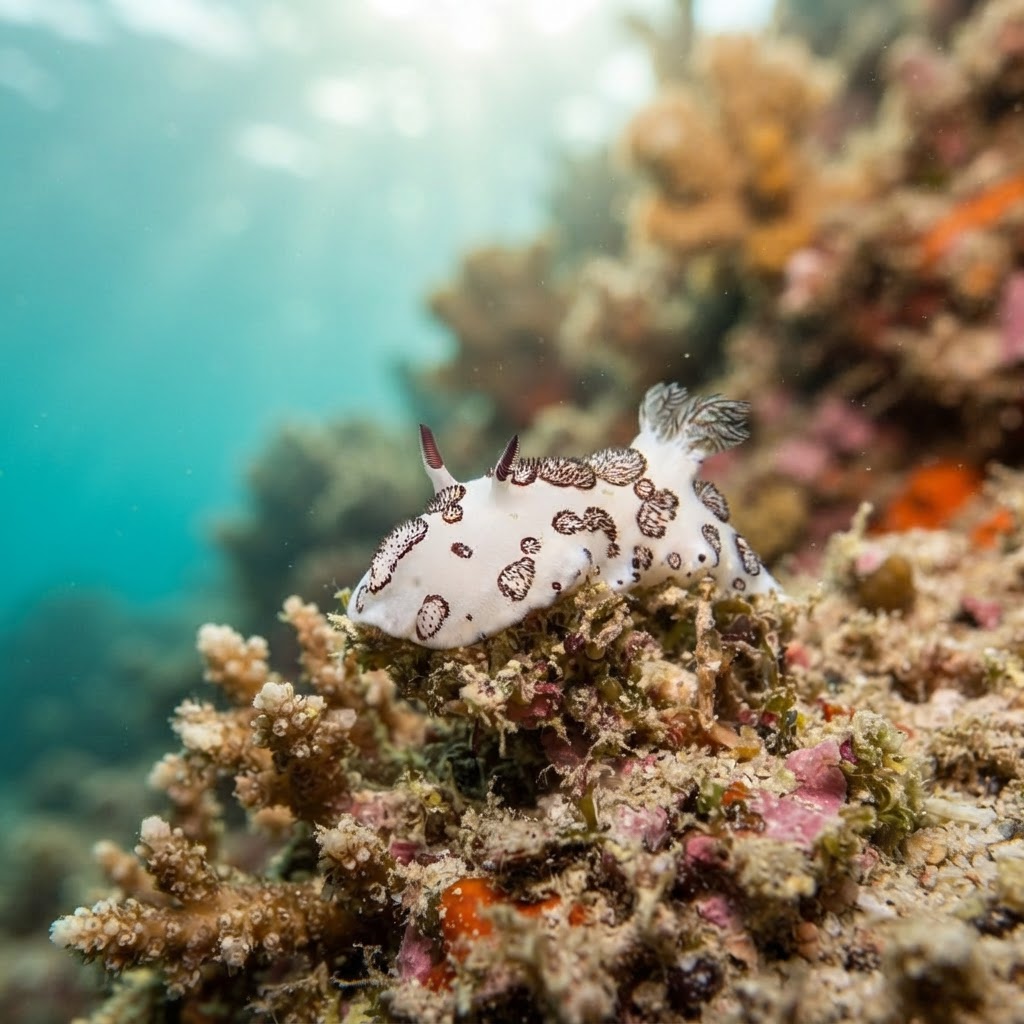
A compact nudibranch (sea slug) with the rough, warty-textured mantle typical of the Discodorididae family, giving it a matte rather than glossy surface. Reliable colour and pattern details are not documented for this species, so divers usually confirm the ID against known look-alikes on the reef using a macro lens or dive guide's help rather than a single defining mark. Look for it moving slowly across hard or rubble substrate rather than swimming.
Found grazing slowly across coral rubble and reef substrate, doing what most discodorid nudibranchs do: working over a patch of bottom in search of sponge to feed on. It shows no reaction to divers beyond continuing its slow crawl, making it an easy subject to photograph once spotted. Most logs come from daytime reef and muck dives rather than night dives.
Like other members of the Discodorididae family, it almost certainly feeds on sponges, using that diet to accumulate the chemical defences nudibranchs are known for rather than relying on speed or camouflage to avoid predators.
Sightings don't show a clear seasonal pattern, and the observed water temperature range of 25.6 to 31.6 C spans warm tropical reef conditions year-round in Bali and Mindanao, so any month is worth a look.
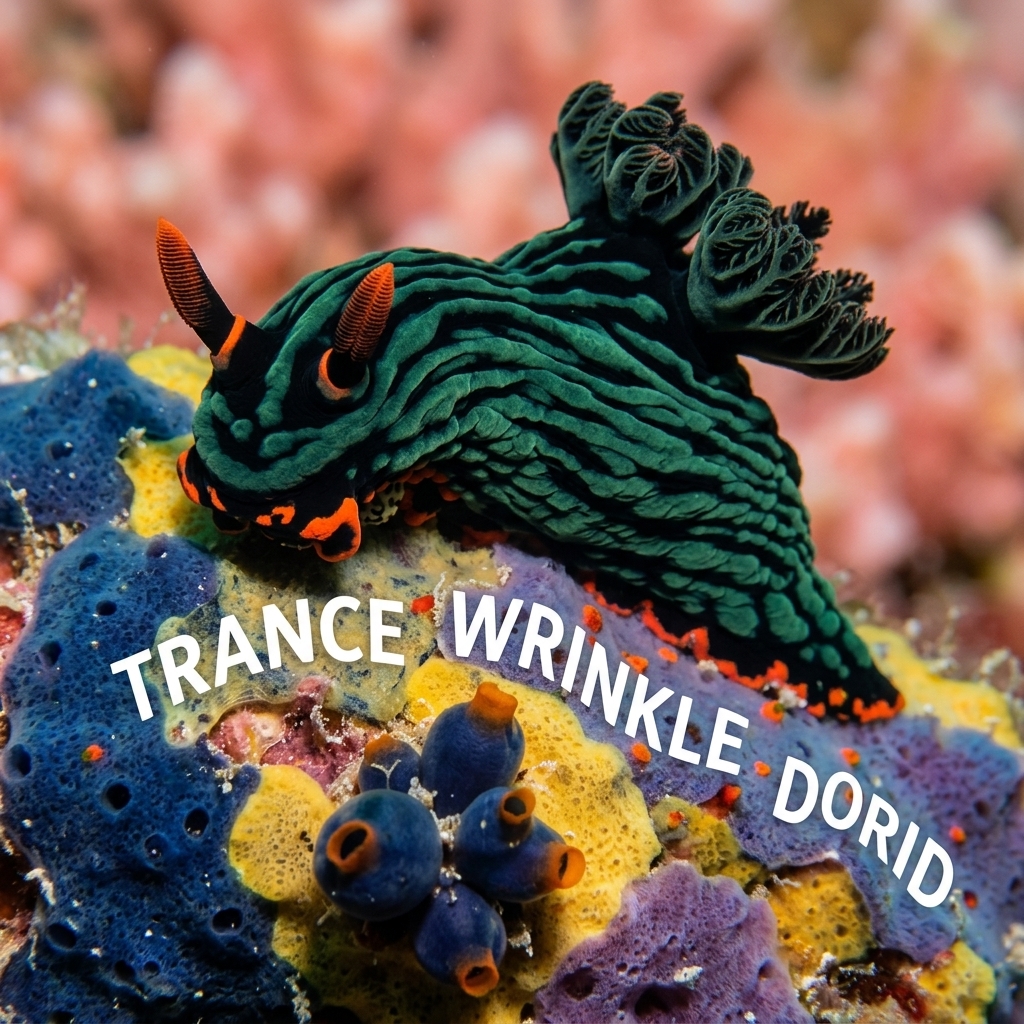
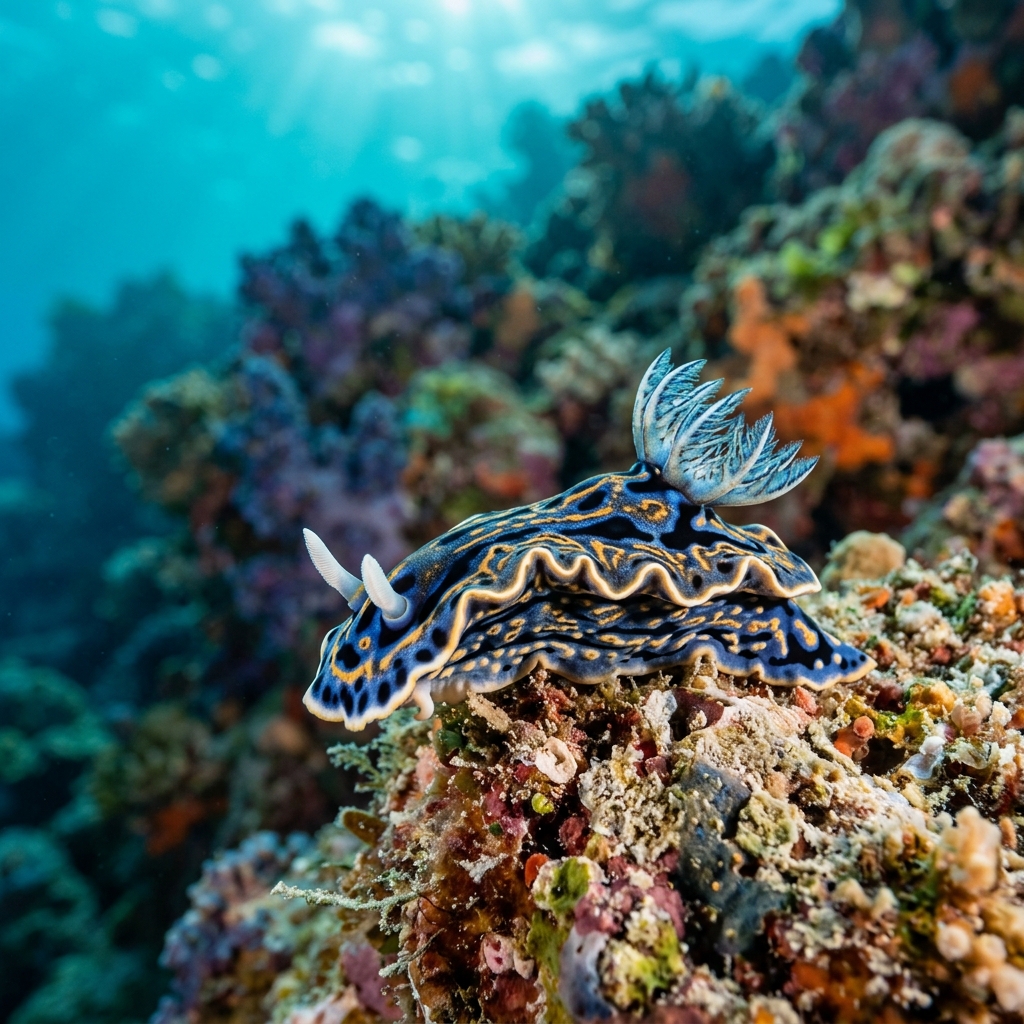
Reef neighbours a diver could mistake it for. Use the identification notes above to tell them apart.
Most reliably logged in Indonesia and the Philippines, with the strongest showing in Bali and on Mindanao, and a smaller presence recorded in Sulawesi. Divers searching muck and reef sites in these two regions have the best odds of a sighting.
Mapping where Carminodoris Estrelyado is logged…
It turns up most often in Indonesia and the Philippines, particularly around Bali and on Mindanao, with occasional records from Sulawesi. It's logged as uncommon to rare at the sites where it's found, so treat it as a bonus find rather than a guaranteed sighting.
There's no detected season in the sighting data, and it's recorded across a warm 25.6 to 31.6 C range, so it can appear on any dive trip to Bali or Mindanao regardless of month.
Look for a small, warty-textured nudibranch moving slowly over rubble or reef substrate. Detailed colour markings aren't well documented, so confirming the ID against similar dorid species on-site with a guide or reference photo is the safest approach.
No. It poses no threat to divers and, like most nudibranchs, relies on chemical defences against predators rather than any interaction with people.
As a member of the Discodorididae family, it very likely feeds on sponges, grazing slowly across the reef substrate to find them, which also fits the slow, deliberate crawling behaviour divers report seeing.
Site and sighting data is aggregated from diver logs, iNaturalist and GBIF. For taxonomy and conservation status:
Blue Dragon
3,163 sites