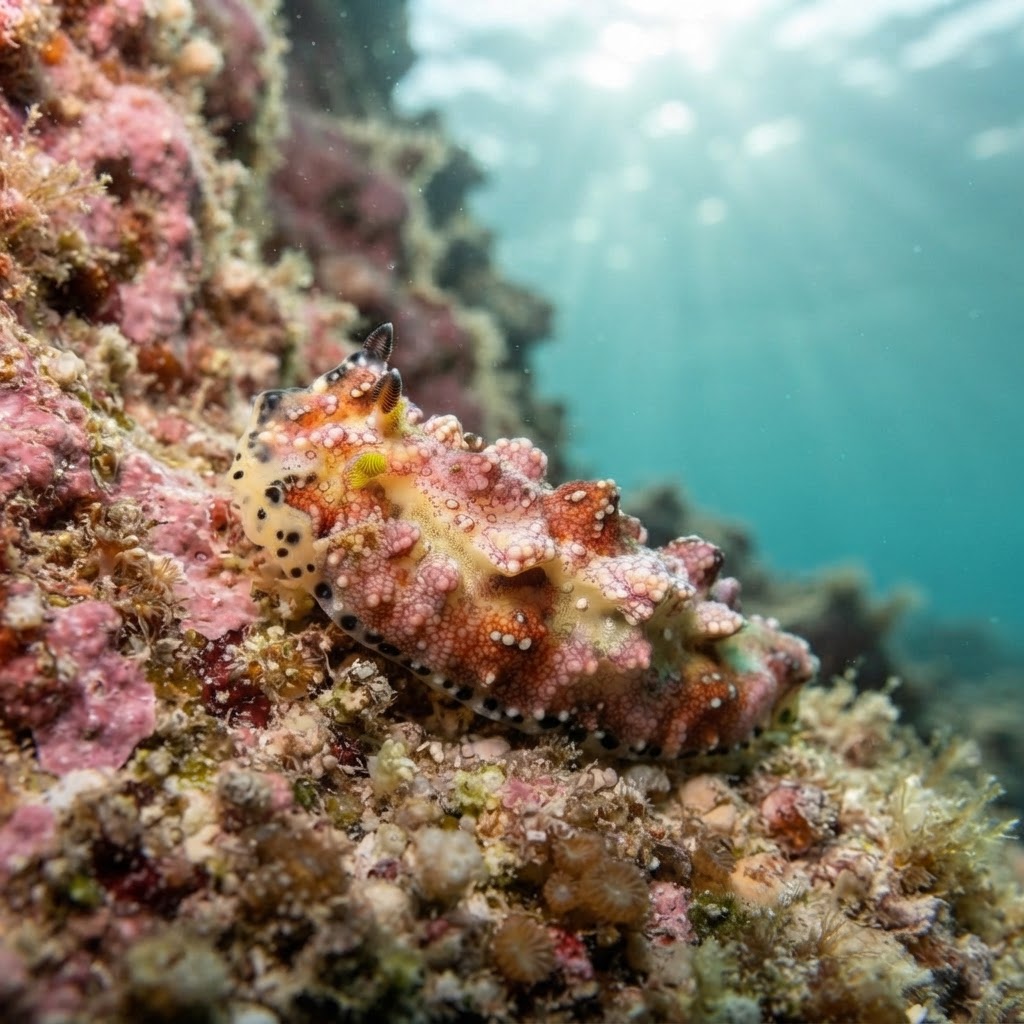
Phyllidiopsis cardinalis
A rare 4cm nudibranch logged in Nha Trang and Bali, on reefs between 25.5 and 31.5°C year-round.
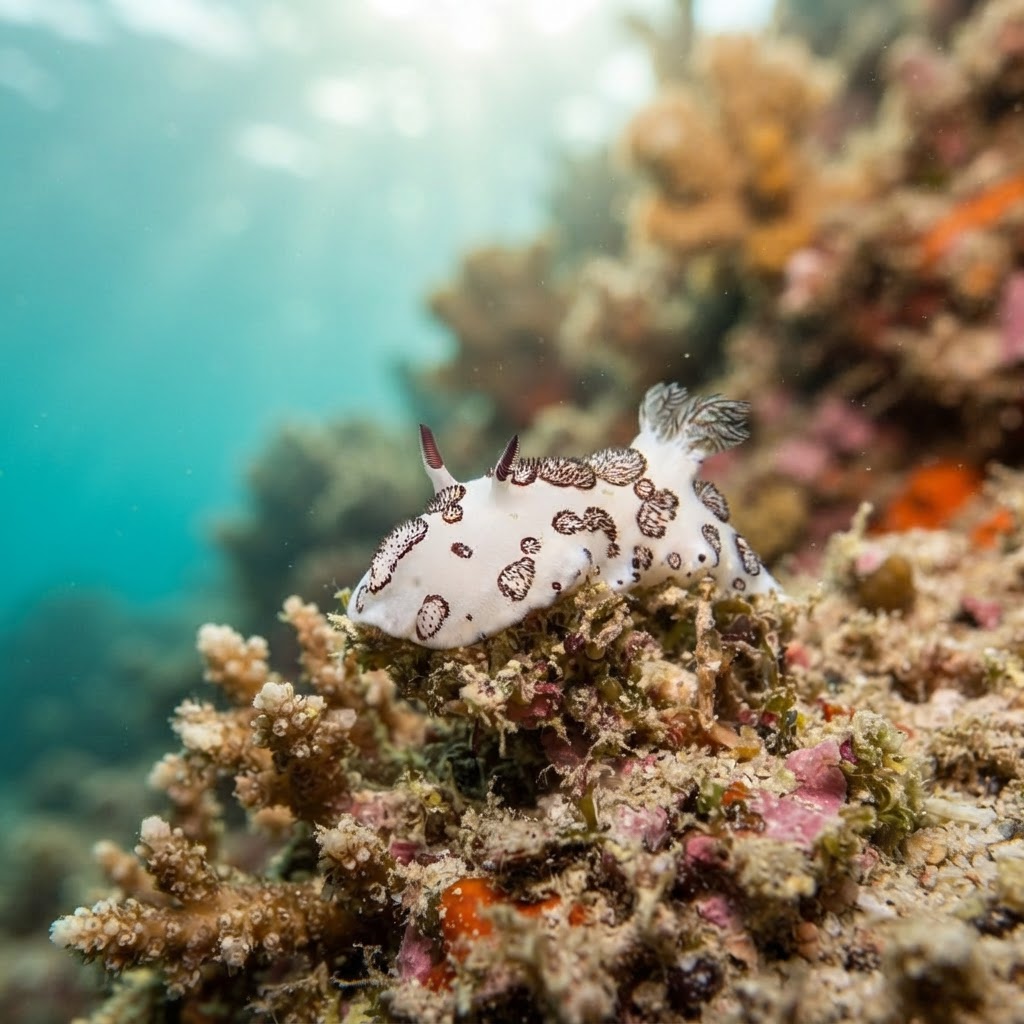
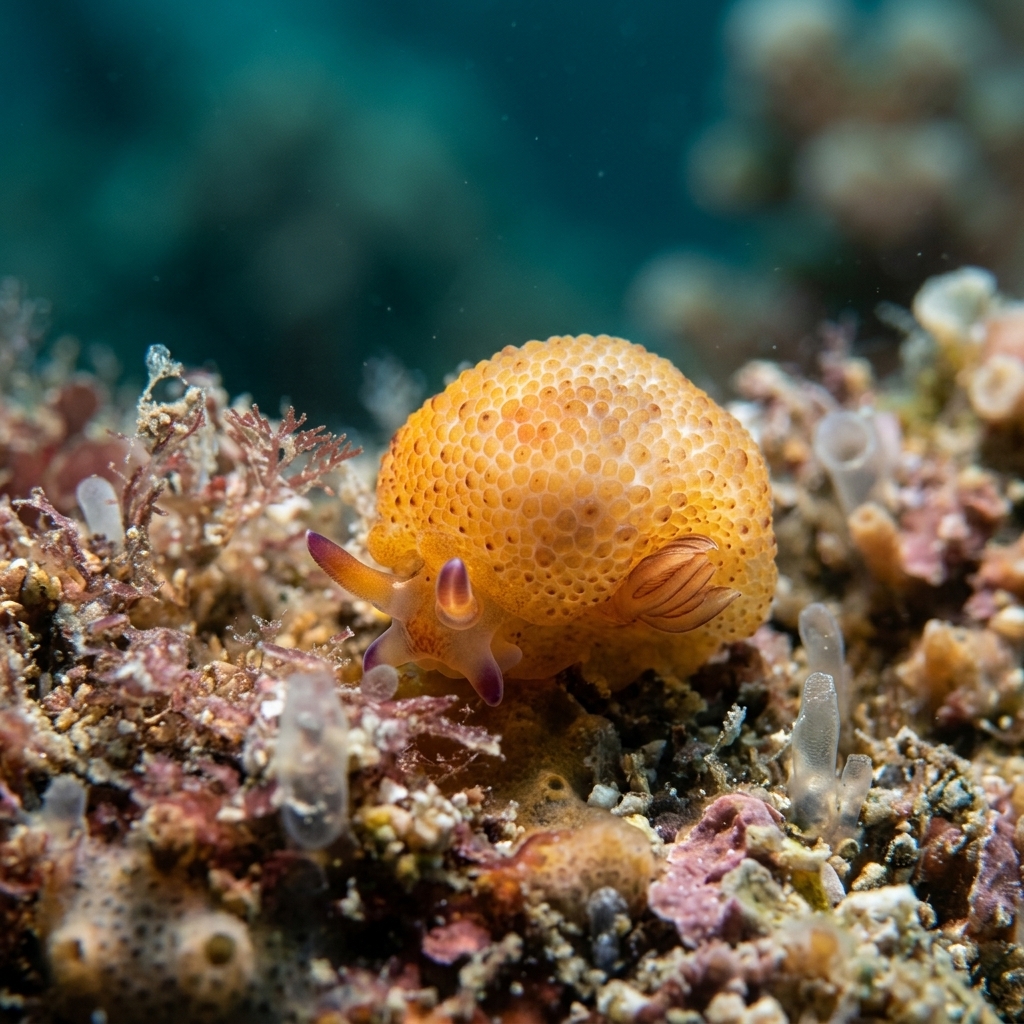
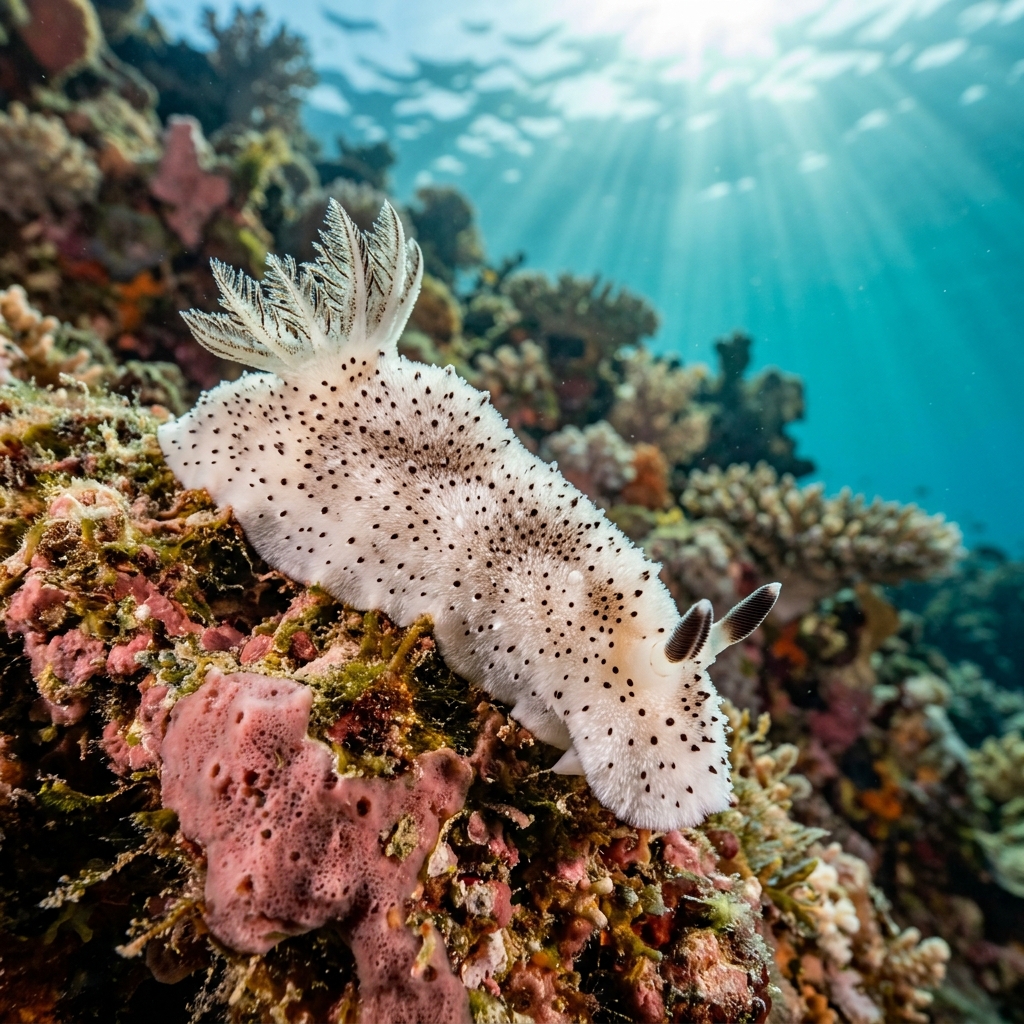
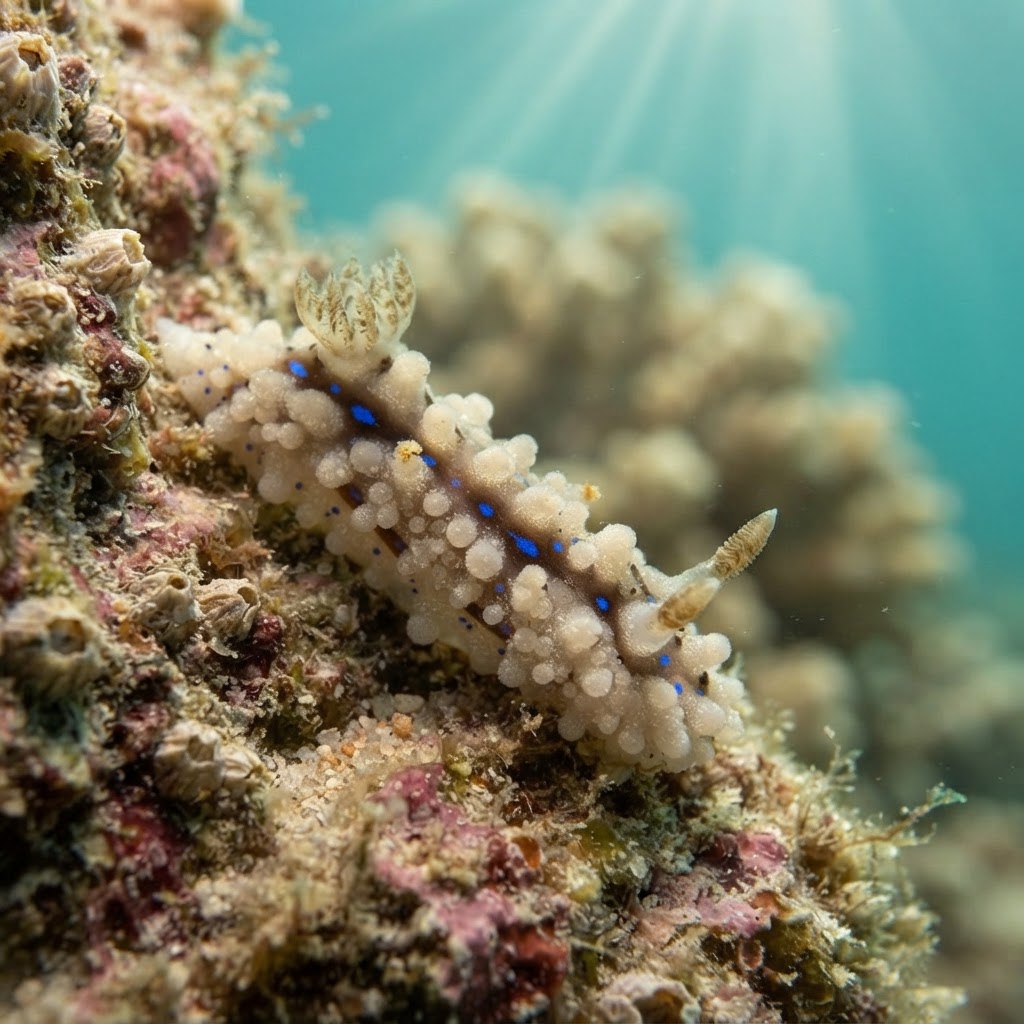
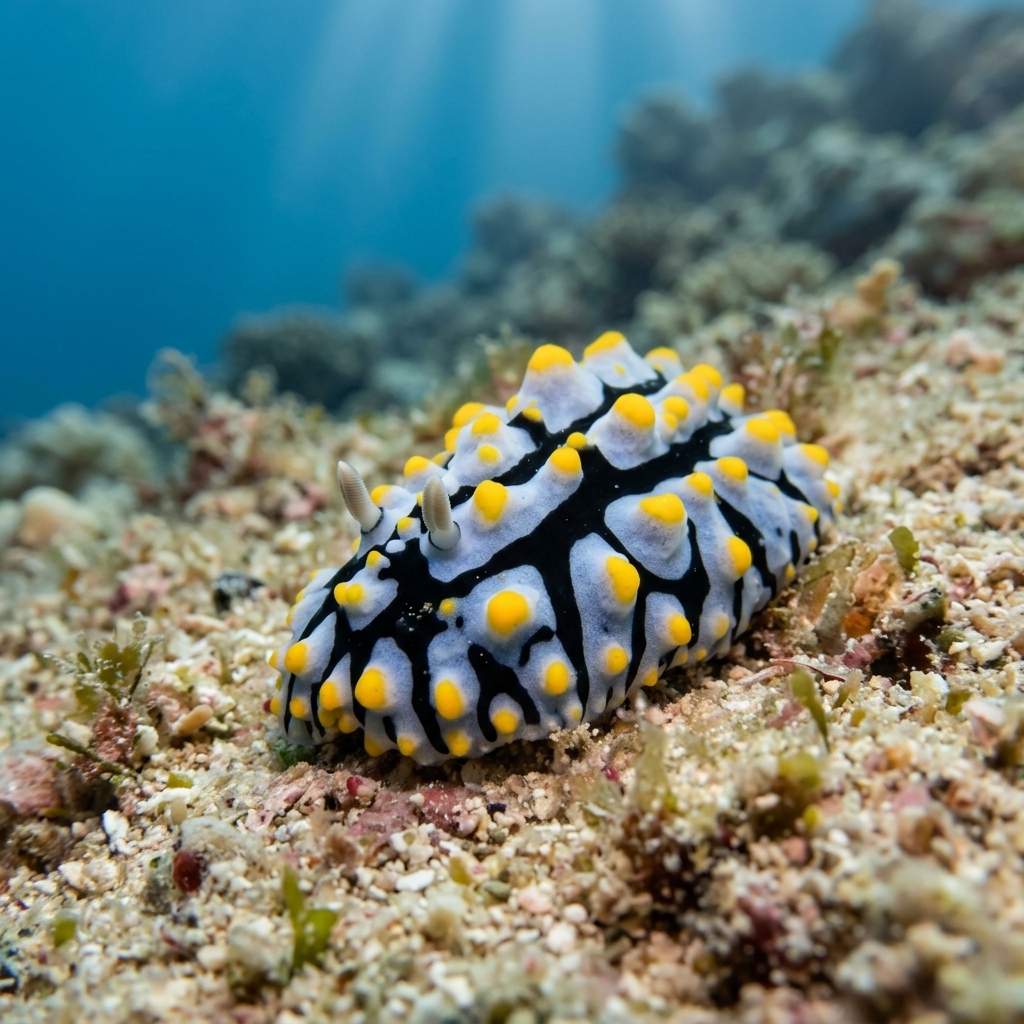
A small nudibranch topping out around 4 cm, with the raised, ridged (tuberculate) back typical of phyllidiid sea slugs rather than a smooth or frilly one. Look for its patterning against the reef substrate rather than any dramatic swimming behaviour, since like other phyllidiids it crawls slowly and stays low. Its compact, firm-bodied shape and colour pattern are the main clues separating it from softer-bodied dorid nudibranchs sharing the same reef.
Expect to find it moving slowly across hard substrate or sponge-covered reef, grazing in the unhurried, low-profile way typical of phyllidiid nudibranchs. It shows no particular reaction to divers, since like most sea slugs it has no eyes capable of noticing you and relies on chemical defences rather than fleeing. Most sightings come from divers scanning the reef bottom closely rather than spotting it in open water.
Phyllidiids in this family don't have external gills like many other nudibranchs; they breathe through the underside of their body, tucked against the substrate, which is part of why they move so slowly and stay close to the reef.
No clear seasonal pattern shows up in the sighting data, and its comfortable water-temperature range of 25.5 to 31.5°C spans the warm reefs of Nha Trang and Bali all year, so any month is fair game.
Reef neighbours a diver could mistake it for. Use the identification notes above to tell them apart.
Logged as a rare to uncommon find on reefs in Nha Trang, Vietnam and Bali, Indonesia, the two regions currently carrying confirmed sightings. Divers hunting nudibranchs in either of these Southeast Asian hubs have a shot at spotting it, though it is not a species you can plan a dive around finding.
Mapping where Cardinal Phyllidiopsis is logged…
Confirmed sightings come from Nha Trang in Vietnam and Bali in Indonesia. It shows up as a rare to uncommon find at reef sites in both regions rather than a guaranteed spot.
There's no detected season in the sighting data, and its warm-water niche of 25.5 to 31.5°C is present in Nha Trang and Bali year-round, so it can turn up on any dive.
Look for a small, roughly 4 cm nudibranch with a firm, ridged back rather than a smooth or feathery one, moving slowly across the reef bottom. Its compact tuberculate body shape is the main giveaway that separates phyllidiids from softer dorid nudibranchs nearby.
They reach around 4 cm, putting them firmly in the small end of the nudibranch size range that divers need to look closely to spot.
No. They're harmless to divers and pose no sting or bite risk, though as with any nudibranch it's best not to touch or handle them.
Unlike many nudibranchs with feathery external gills on their back, phyllidiids breathe through grooves on the underside of their body pressed against the substrate, which suits their slow, low-profile lifestyle.
Site and sighting data is aggregated from diver logs, iNaturalist and GBIF. For taxonomy and conservation status:
Blue Dragon
3,163 sites