Hypselodoris capensis
A small, colourful nudibranch turning up on cold-water reefs across the Western Cape, South Africa, year-round.
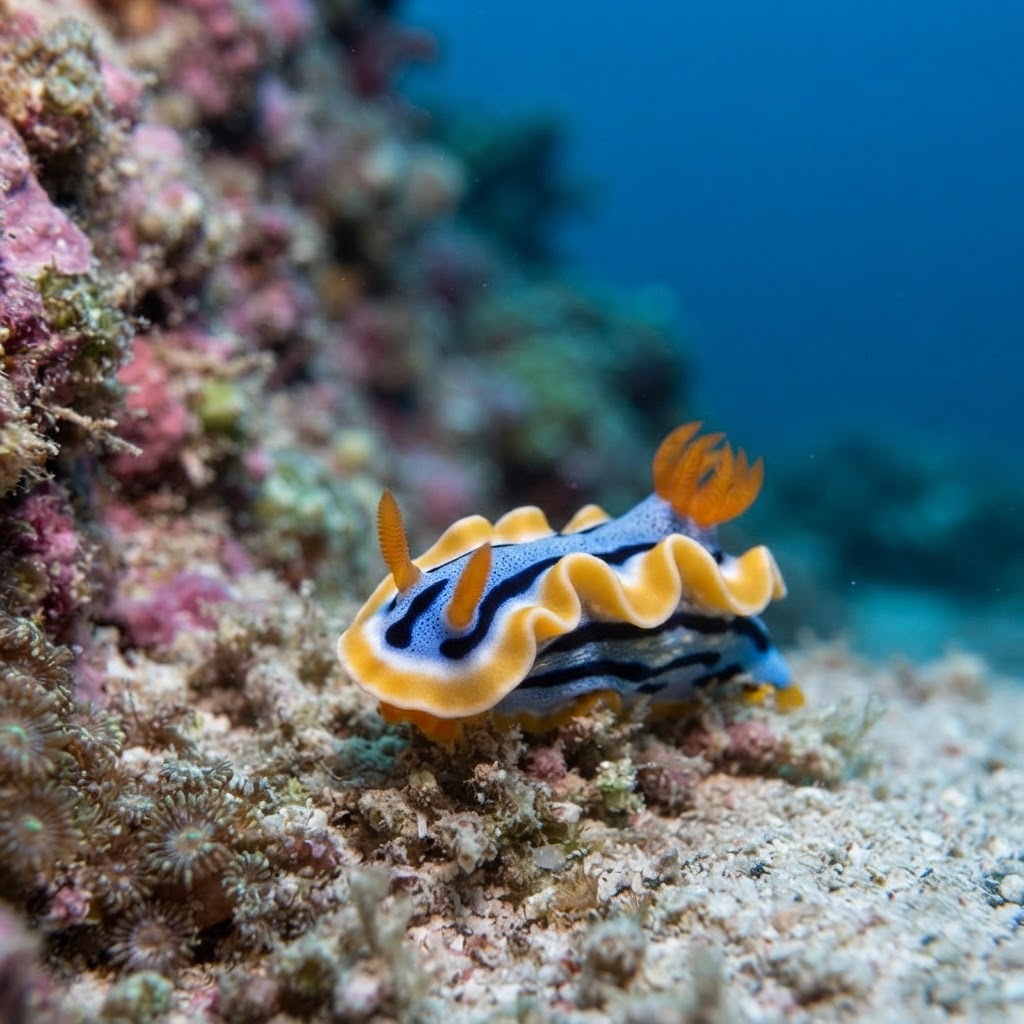
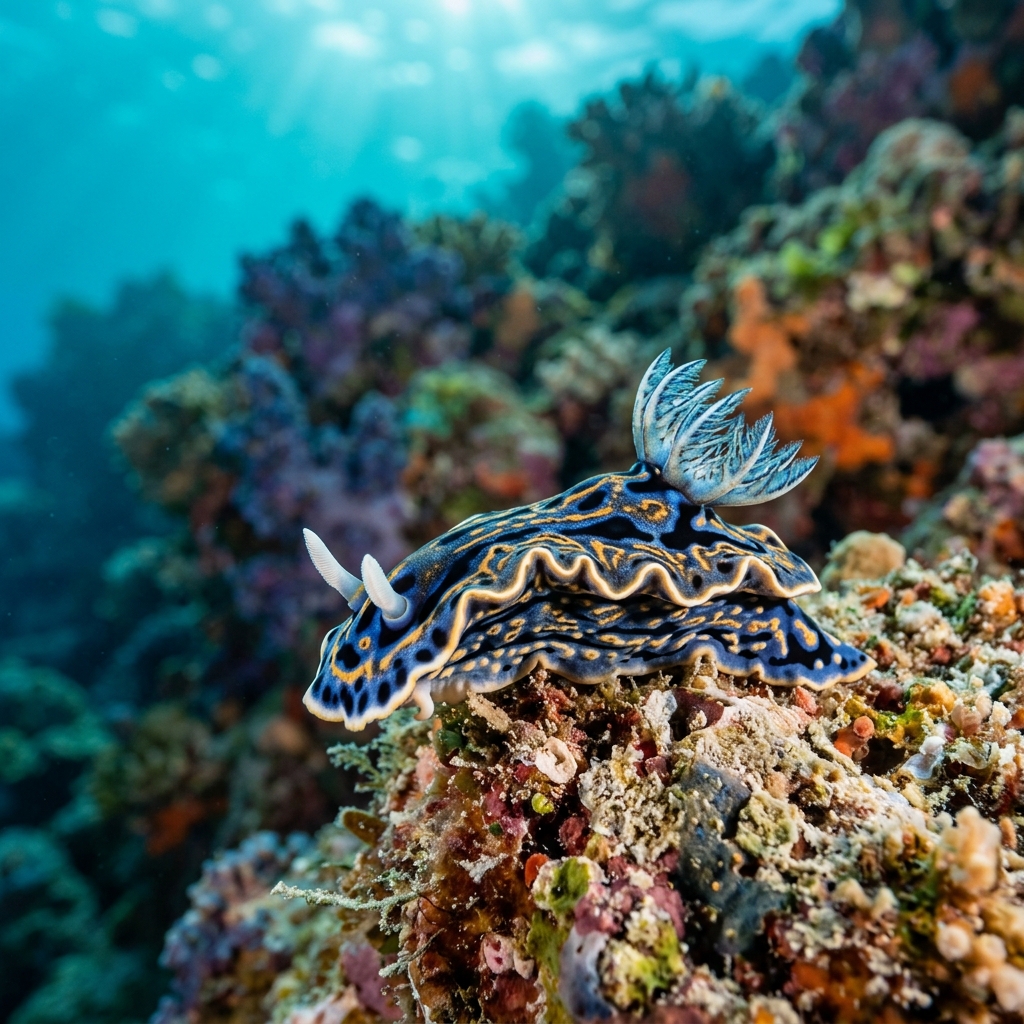
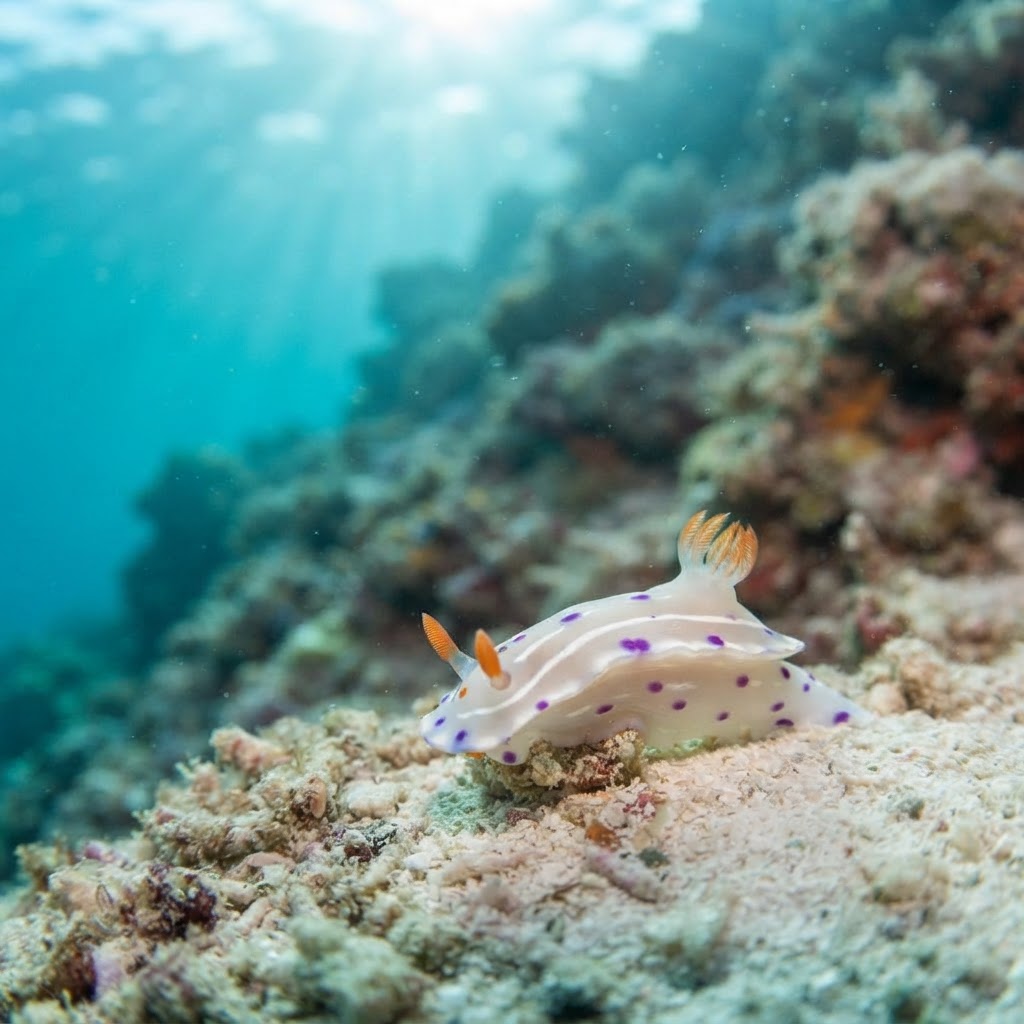
A small nudibranch, topping out around 3 cm, with a soft-bodied, elongated oval shape typical of dorid sea slugs. Look for a patterned mantle in contrasting colours with a smooth, slightly ruffled edge, plus a pair of feathery gills (rhinophores) near the head end used to sense the water. Its size and slow, gliding crawl across rock and reef surfaces make it easy to miss unless you're looking closely at the substrate.
Divers find it moving slowly over rock faces and reef structure, grazing as it goes rather than reacting to a torch or bubbles nearby. It doesn't flee or hide when approached, so a patient diver can get a close, steady look without disturbing it. Most sightings happen on the sort of low-key, textured reef where you're already moving slowly to spot small stuff.
Like other dorid nudibranchs, it likely feeds on sponges, extracting compounds from its prey that may help make it unpalatable to predators, which is part of why it can sit out in the open without much cover.
Sightings show no clear seasonal pattern, so it's logged across the year. It sits comfortably in the 13.5 to 19.5 C range typical of Western Cape water, which stays cool year-round, so timing your dive around the season matters less than slowing down and scanning the reef.
Reef neighbours a diver could mistake it for. Use the identification notes above to tell them apart.
This one is a Western Cape speciality: every logged sighting comes from South Africa, concentrated on the cold-water reefs around the Western Cape. If you're diving that coastline and taking your time on rock and reef surfaces, it's a realistic find rather than a rare one.
Mapping where Cape Dorid is logged…
It's essentially a Western Cape find, logged across dive sites along that stretch of South Africa's coast. Outside South Africa there's no meaningful record of it, so it's a target for divers specifically in Cape Town-area waters.
There's no strong season in the sighting data, so it turns up year-round on Western Cape reefs. The cool water it favours, roughly 13.5 to 19.5 C, is fairly stable there through the year.
Look for a small, soft-bodied slug around 3 cm long with a patterned mantle and a pair of feathery gills near the head. It moves slowly across rock and reef surfaces rather than swimming, which makes it easier to spot once you slow down and look closely.
They're small, typically around 3 cm long, so they're an easy one to swim straight past unless you're scanning the reef surface closely.
No, they pose no danger to divers. They have no means of stinging or biting and simply graze slowly over the reef.
Site and sighting data is aggregated from diver logs, iNaturalist and GBIF. For taxonomy and conservation status:
Light-spotted Aegires
3,168 sites