Trimma cana
A 1cm goby logged across Palau's Rock Islands, Sulawesi and the Visayas, best found by scanning coral rubble at close range.
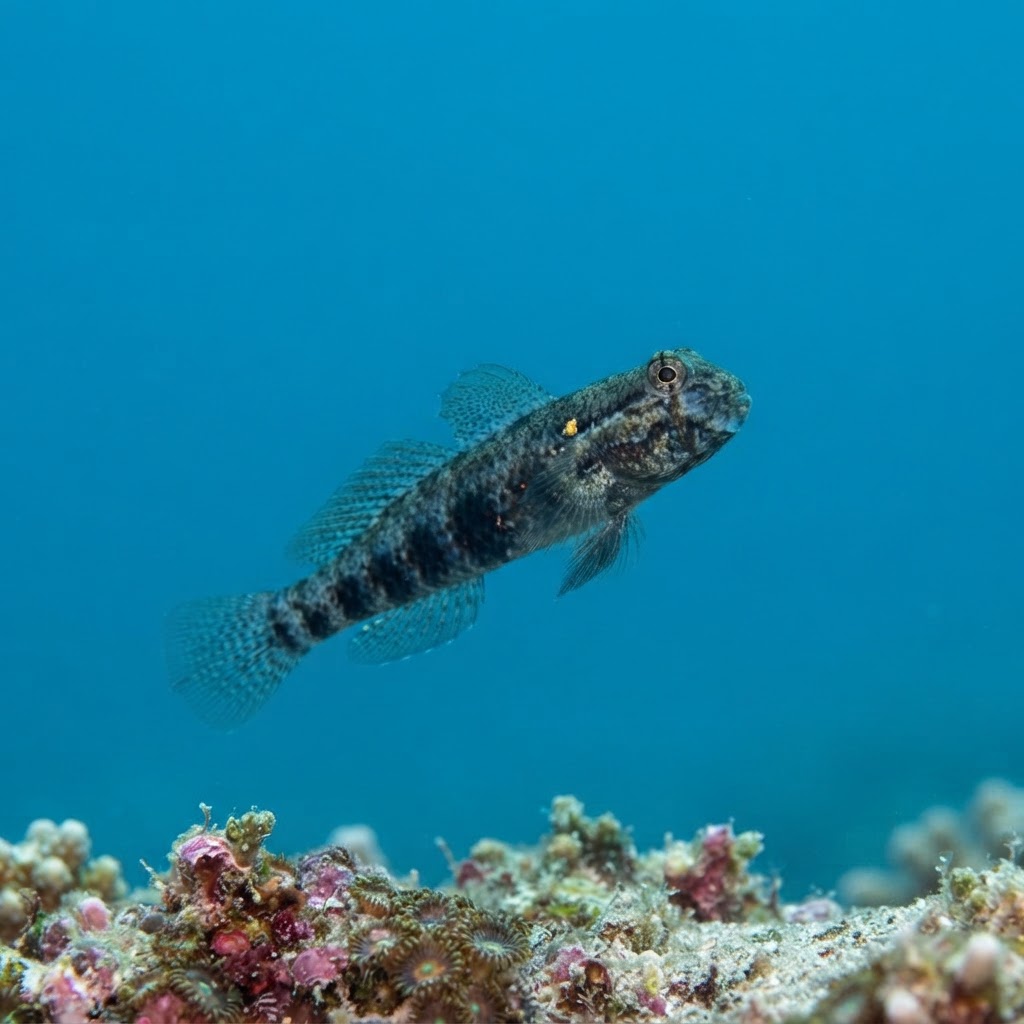
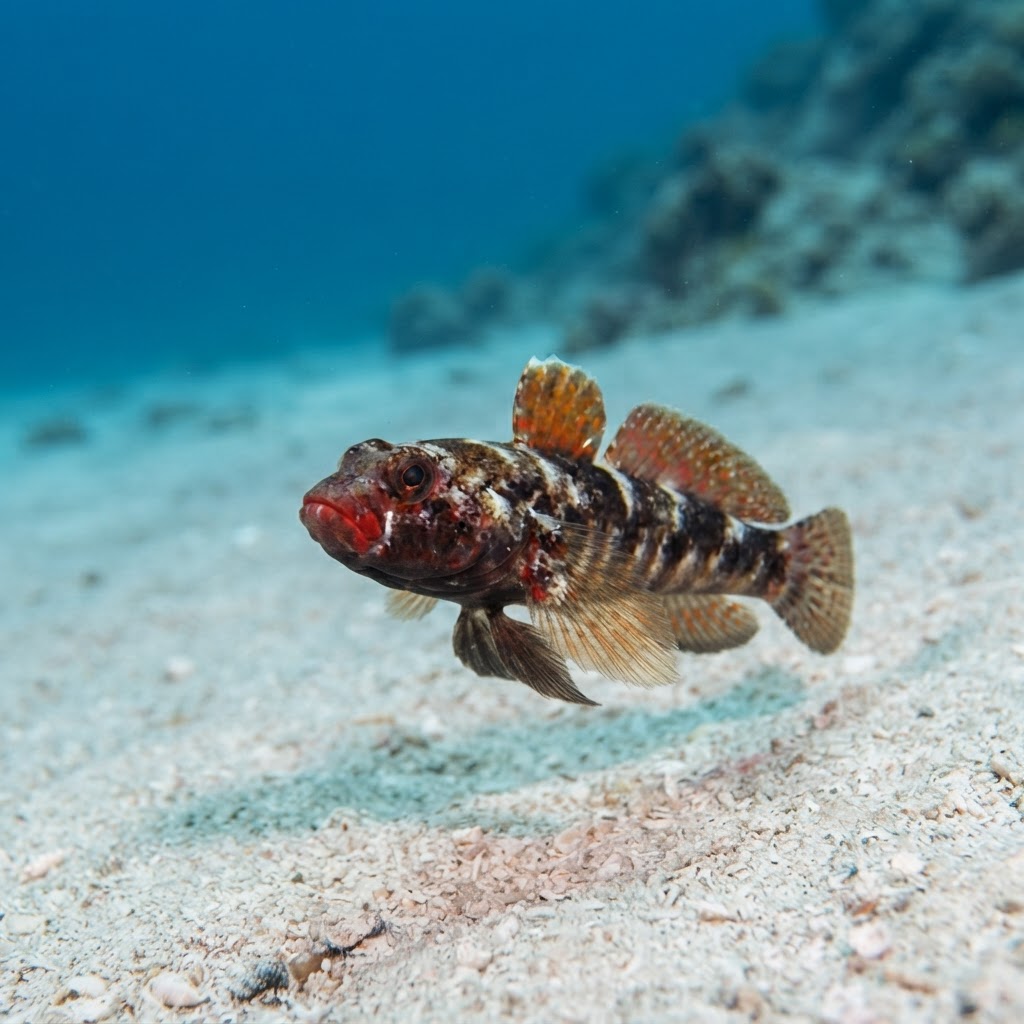
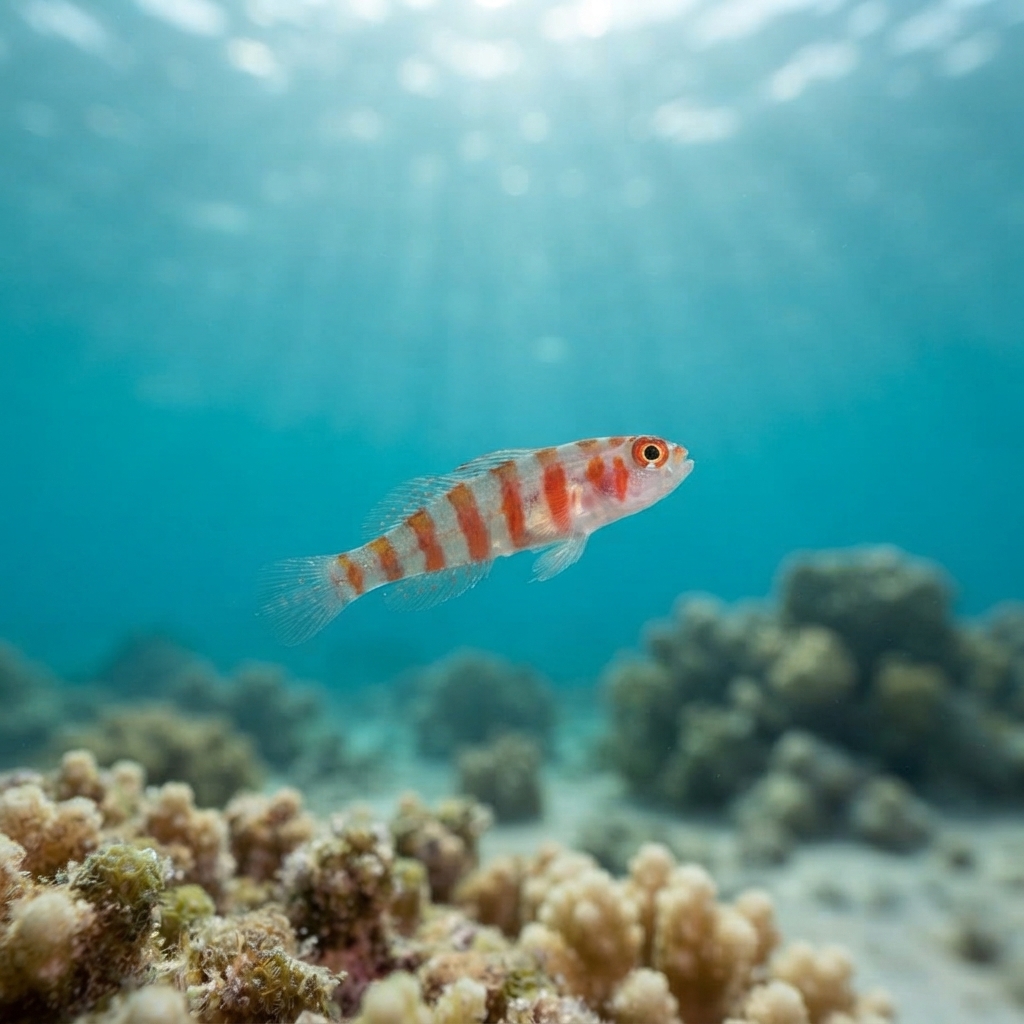
A hair-pin-sized goby, barely 1cm long, so spotting it means slowing right down and scanning bare coral rubble and dead coral heads at arm's length. Look for a translucent to pale body crossed with reddish-orange banding that gives it the candy-cane look, perched motionless with its head slightly raised. It rests propped on its pelvic fins rather than swimming freely, blending easily into the rubble texture it sits on.
Divers find it parked motionless on coral rubble or dead coral substrate, usually alone, holding position rather than darting about. It shows little reaction to a diver's presence beyond staying still, which actually helps once you have your eye tuned in, since chasing movement is the wrong strategy with a fish this size. Best looked for during a slow macro-focused pass over rubble patches rather than open reef.
Like other Trimma gobies, it is a simultaneous hermaphrodite, meaning individuals carry both male and female reproductive tissue and can switch sexual roles depending on which partner they pair with.
No clear seasonal pattern shows up in the sightings, and with water in its recorded range sitting between 26.3 and 29.0 C year-round across these reefs, it is effectively a year-round find rather than a seasonal one.
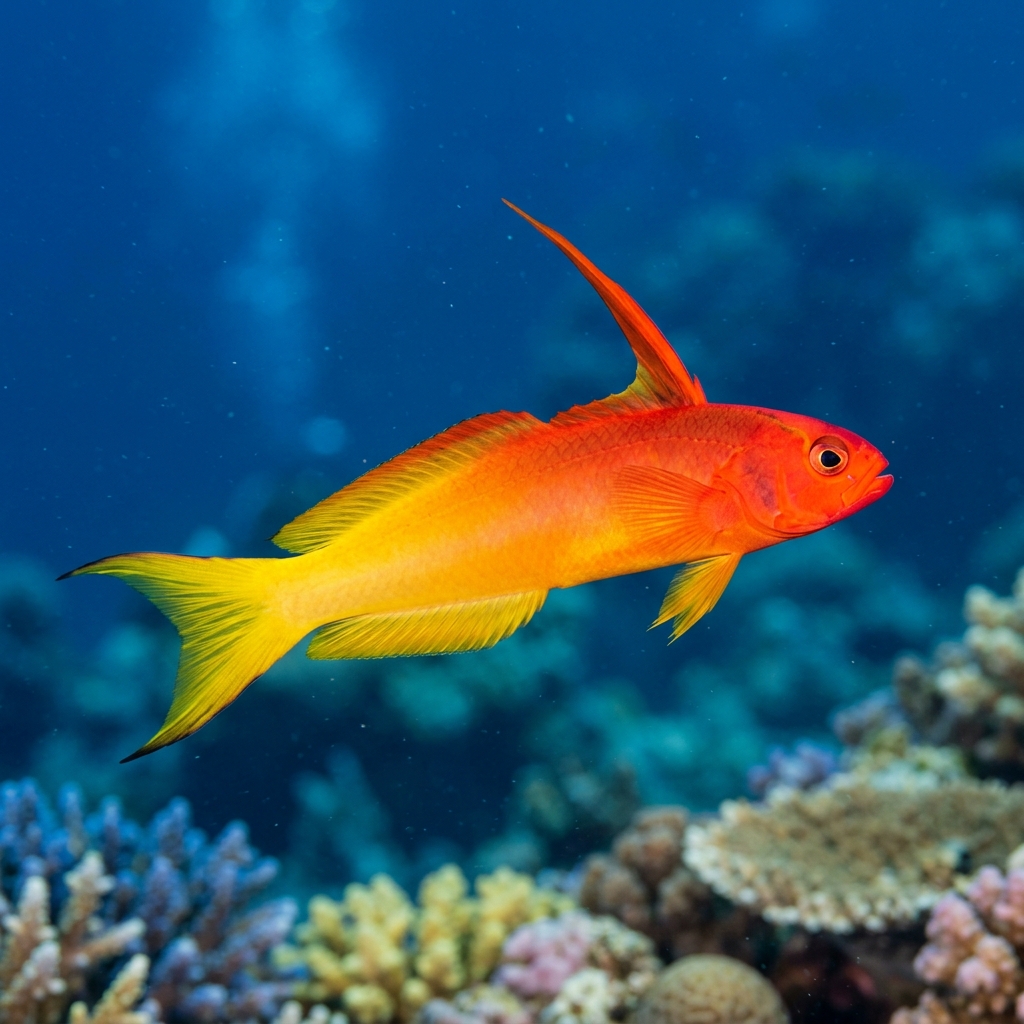
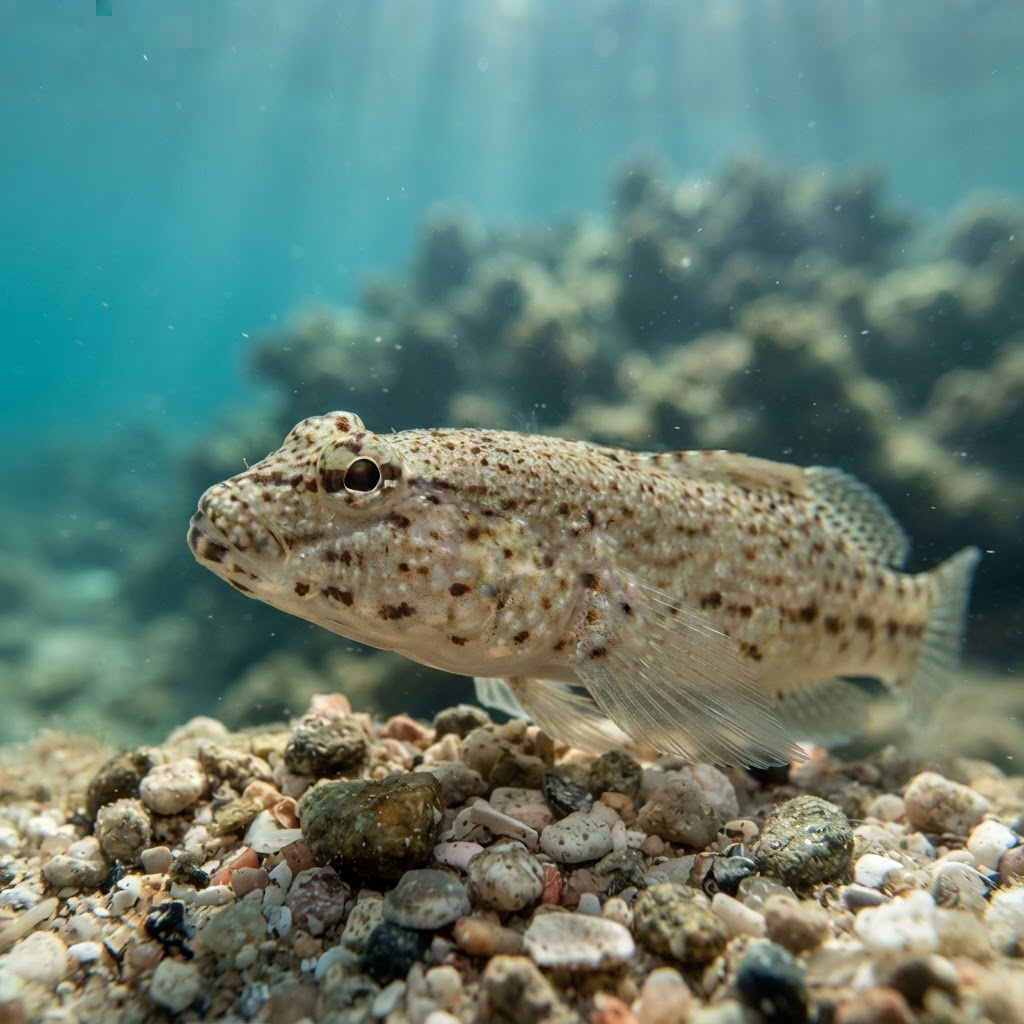
Reef neighbours a diver could mistake it for. Use the identification notes above to tell them apart.
Most reliably logged in Palau, especially around the Rock Islands and Peleliu, with strong numbers also coming from Sulawesi in Indonesia and the Visayas and Luzon regions of the Philippines. Papua New Guinea's Milne Bay turns up occasional records too, rounding out a range that sticks closely to classic Coral Triangle reef systems.
Mapping where Candy-cane Pygmy Goby is logged…
Palau's Rock Islands and Peleliu are the most consistent spots, with Sulawesi in Indonesia and the Visayas and Luzon regions of the Philippines also producing regular sightings. It has also been logged in Milne Bay, Papua New Guinea.
There is no strong seasonal signal in the sightings, and the warm 26.3 to 29.0 C water it favours holds steady year-round across its Coral Triangle range, so any month works.
Look for a near-transparent, 1cm-long goby with reddish banding sitting still on coral rubble or dead coral. It props itself up on its pelvic fins rather than hovering, which helps separate it from more active reef gobies.
Around 1cm, making it one of the smallest fish you are likely to try photographing on a reef. A steady hand and a macro lens with real magnification are essential.
It is a simultaneous hermaphrodite, carrying both male and female reproductive tissue at once, a trait shared across the Trimma genus that lets paired individuals switch sexual roles.
No. It is a harmless, stationary reef fish far too small to pose any risk, and it will not react aggressively to a diver nearby.
Site and sighting data is aggregated from diver logs, iNaturalist and GBIF. For taxonomy and conservation status:
Slender Goby
806 sites