Candiella lineata
Cold-water nudibranch logged from Norway's Østlandet to Welsh reefs, seen year-round in 8.5 to 14.5C water.
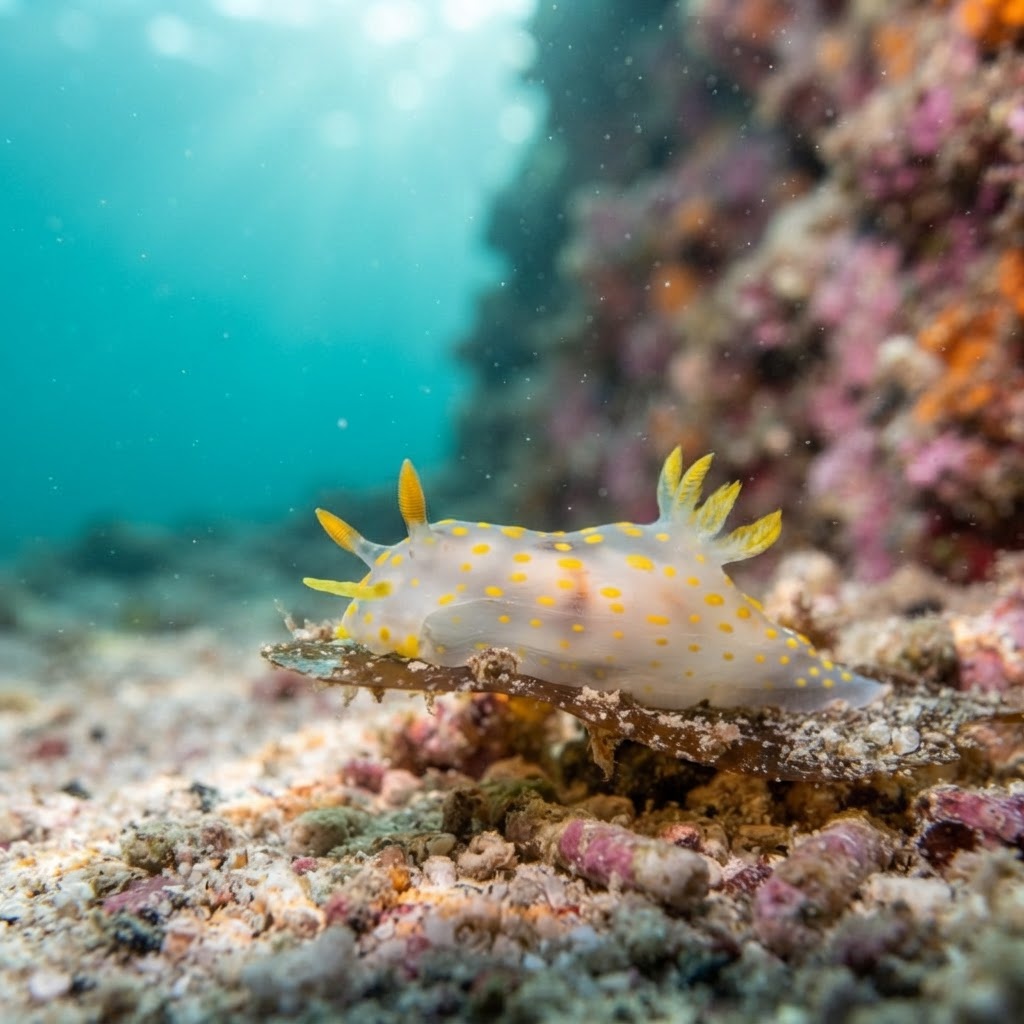
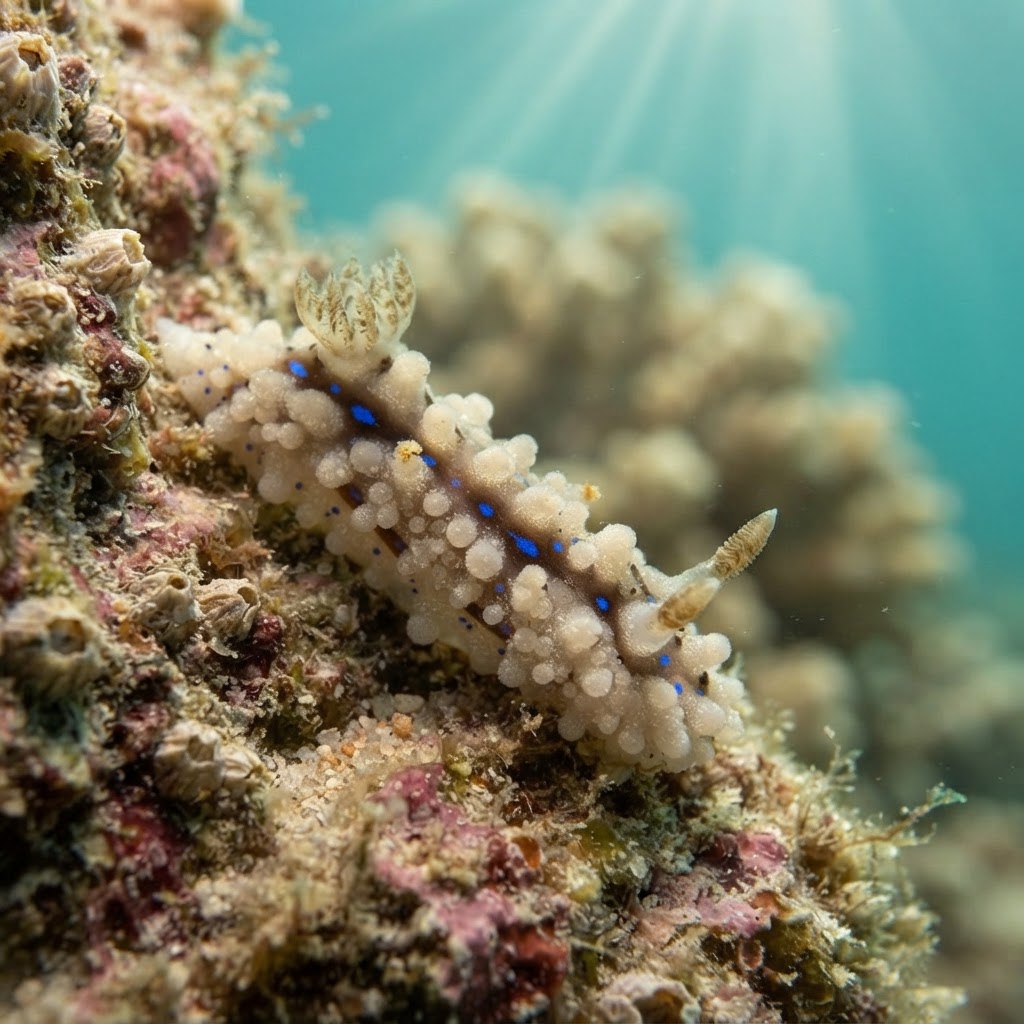
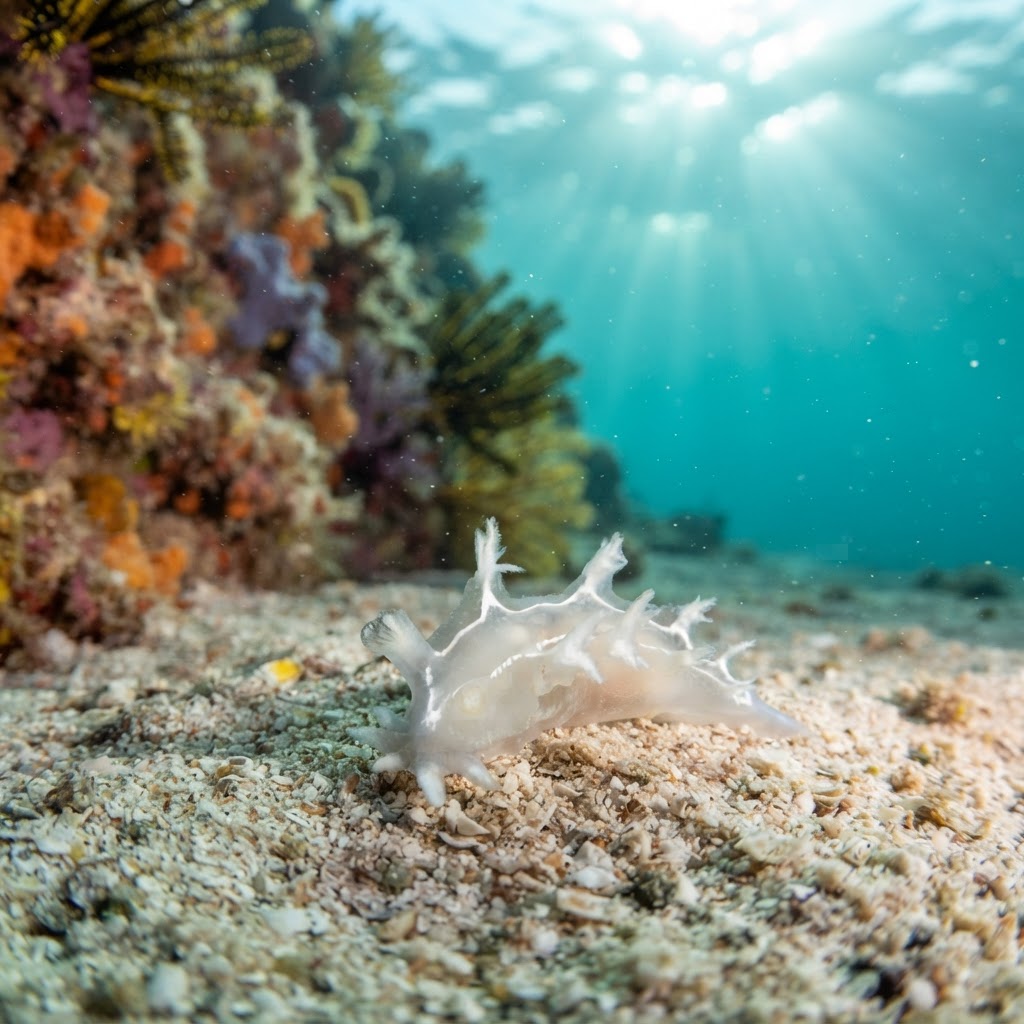
A small, elongated nudibranch (sea slug) with fine longitudinal stripes running down a soft, translucent-looking body, giving it the striped look its name refers to. It carries a cluster of feathery gills toward the rear and a pair of short, upright sensory horns (rhinophores) on the head, both features you look for when scanning kelp holdfasts and rocky rubble in cold water. Size in the water is small enough that divers usually spot it by scanning slowly rather than at a glance.
Divers typically find it moving slowly over rock, rubble and kelp holdfasts, grazing rather than swimming or fleeing, so it sits still enough for a close look once spotted. It shows no reaction to divers beyond the usual slow retraction of its gills if touched, and is logged across a wide range of sites rather than clustering around any single reef feature.
Like other tritoniid nudibranchs, it most likely feeds on soft corals or sea fans, using that diet to build the body chemistry it relies on for defence rather than fast escape.
Sightings don't show a clear seasonal pattern, and with a water-temperature niche of 8.5 to 14.5C, it's likely present across the diving year in these cold-water regions rather than tied to a summer bloom.
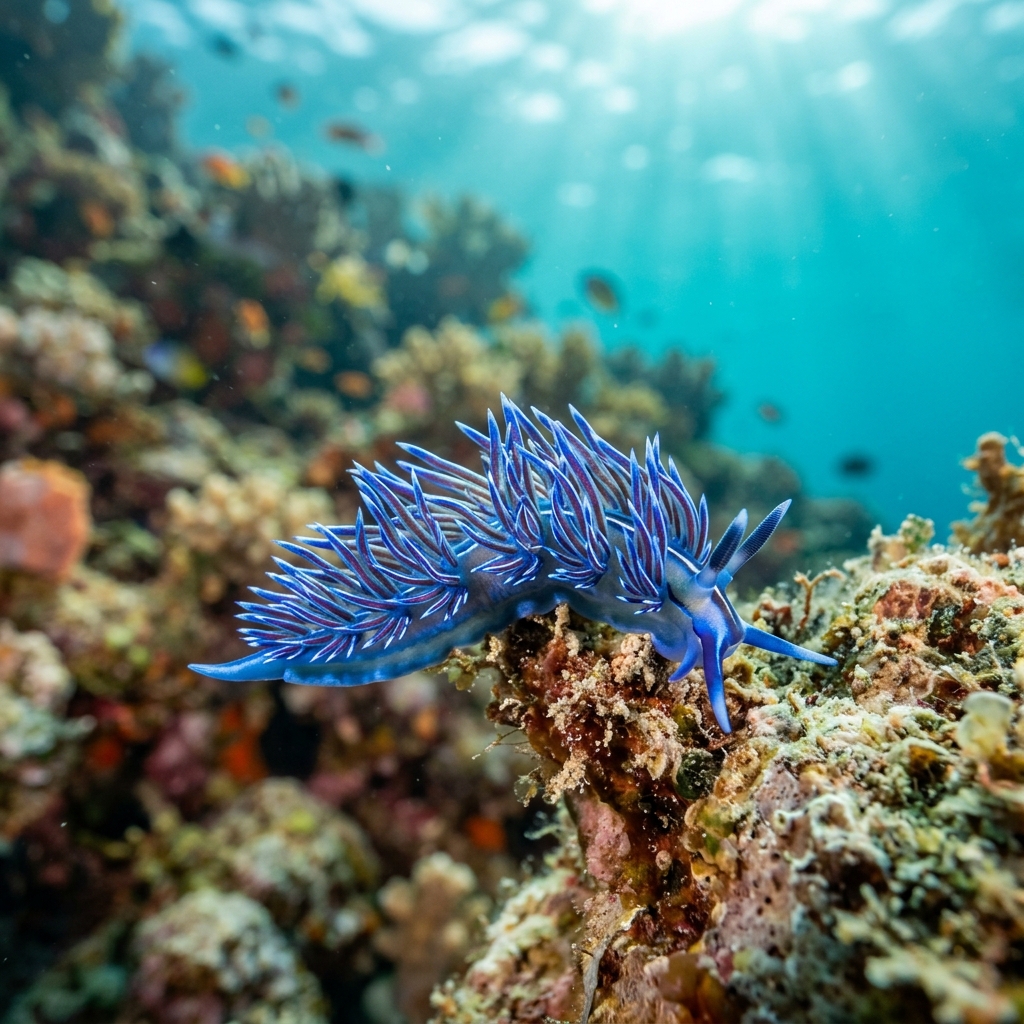
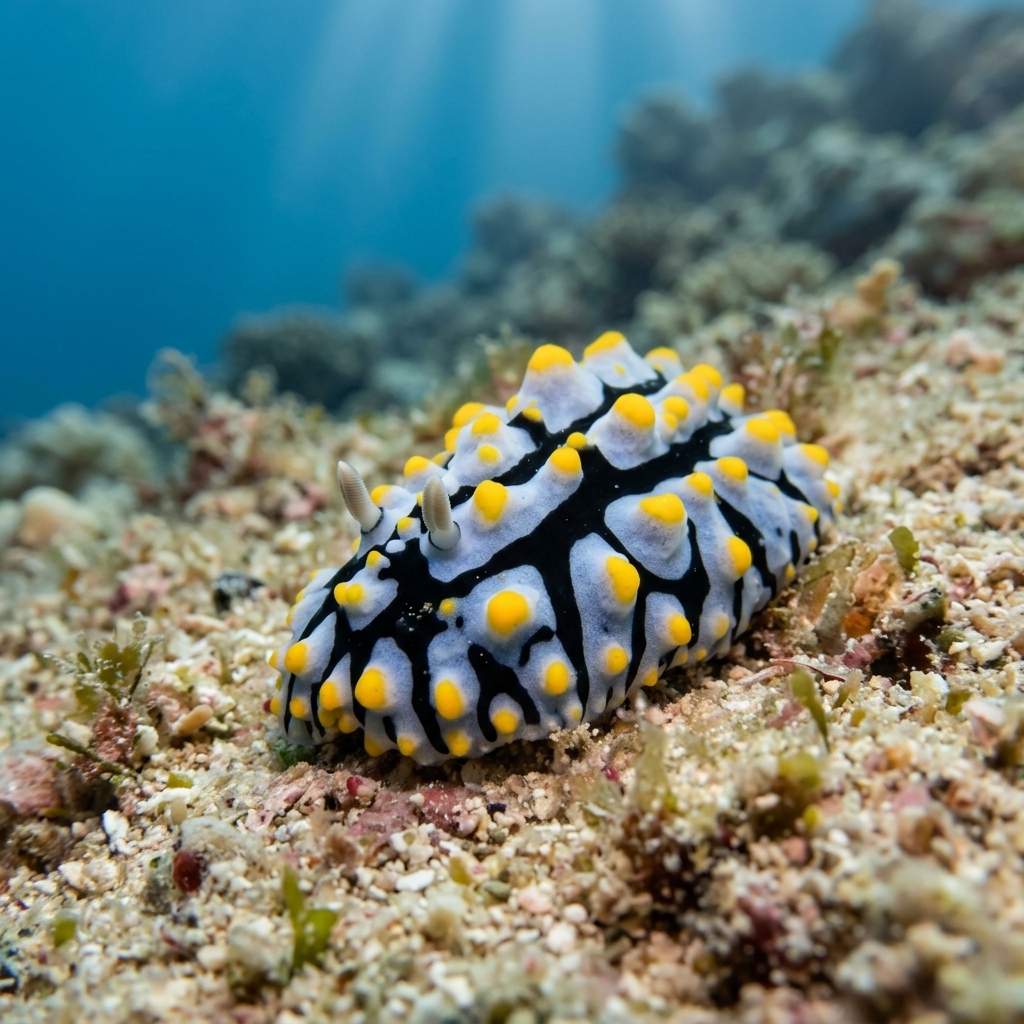
Reef neighbours a diver could mistake it for. Use the identification notes above to tell them apart.
This is a cold-water species with its strongest populations in Norway, especially around Østlandet, where it turns up most reliably of anywhere in the data. It's also a solid find in Wales and around Dublin in Ireland, with smaller but real numbers logged in Brittany, France, and a single Swedish site in Bohuslän.
Mapping where Lined Candiella is logged…
Norway is the strongest region, particularly Østlandet, followed by Wales in the UK and the Dublin area of Ireland. Smaller numbers are also logged in Brittany, France, and one site in Bohuslän, Sweden.
There's no detected season in the sighting data, so treat it as a year-round find in cold water between roughly 8.5 and 14.5C rather than a summer-only species.
Look for a small, striped, elongated nudibranch with feathery gills near the rear and short upright rhinophores on the head, usually found grazing slowly over rock or kelp holdfasts in cold water.
No, it poses no danger to divers and can be observed and photographed up close without any risk.
Sighting frequency varies by site: it's logged as uncommon at most locations, common at a good number of others, and rare at a smaller share, so persistence pays off when searching kelp and rubble.
Site and sighting data is aggregated from diver logs, iNaturalist and GBIF. For taxonomy and conservation status:
Light-spotted Aegires
3,168 sites