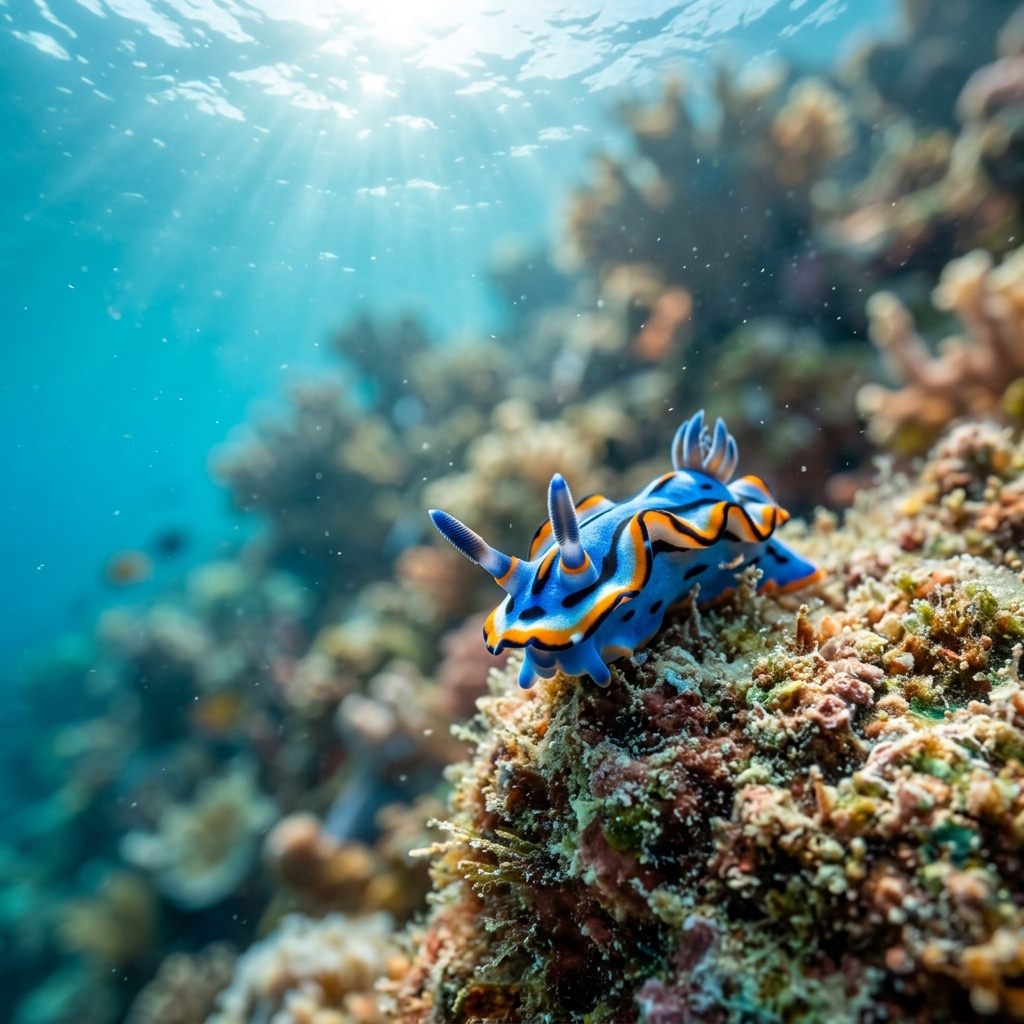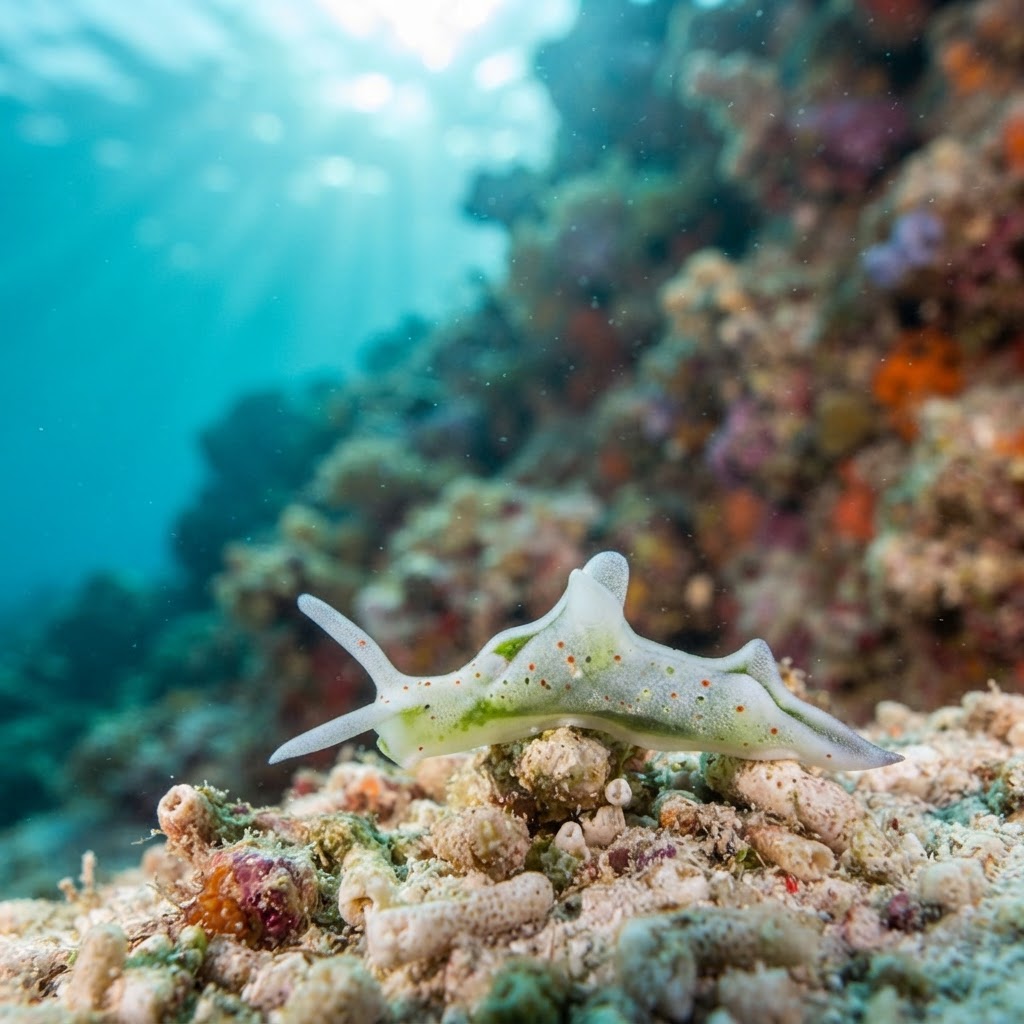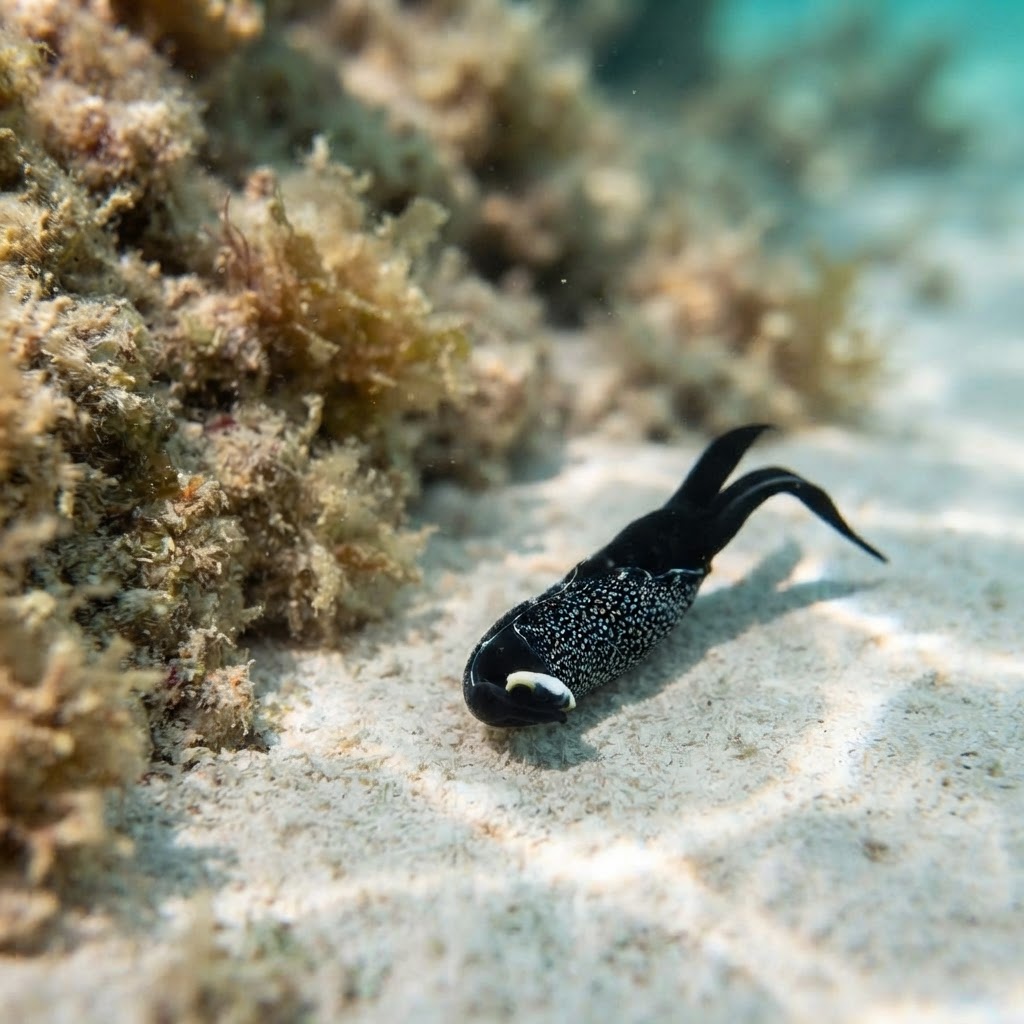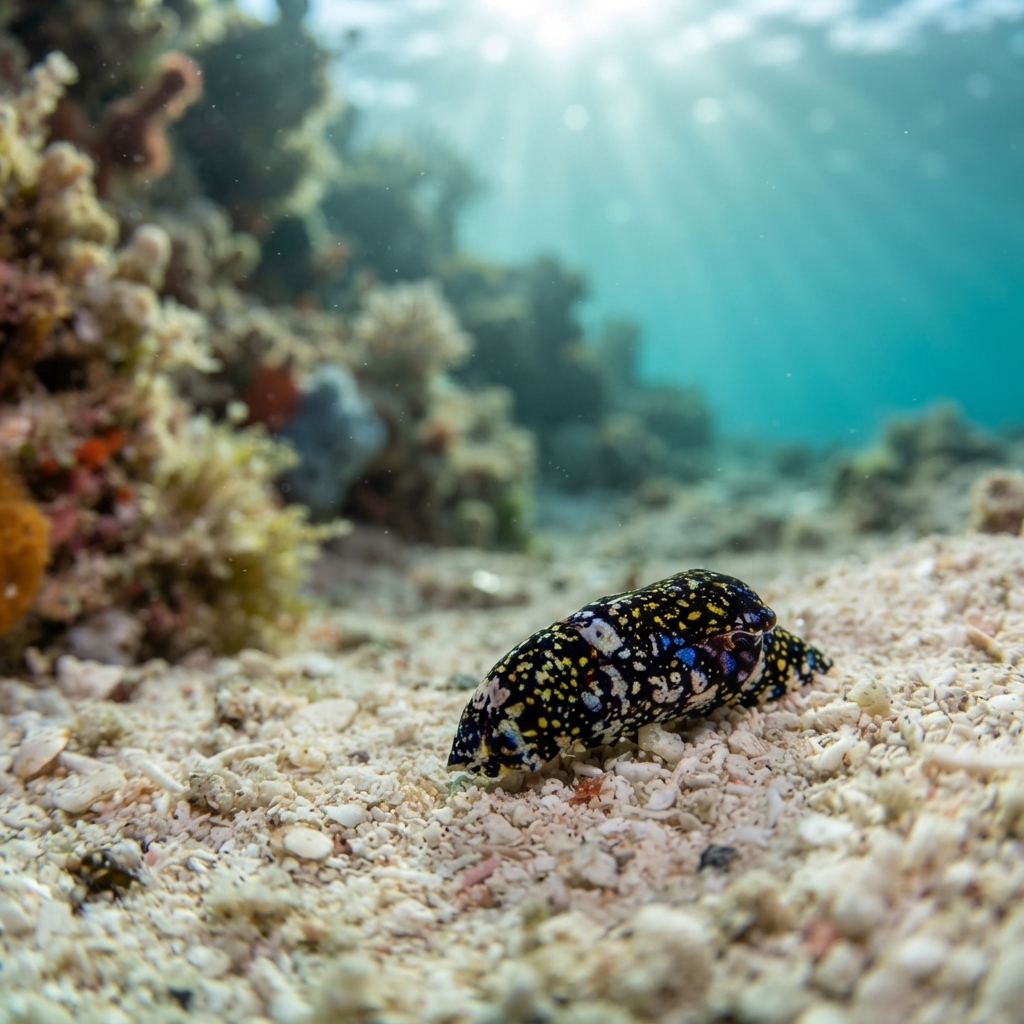
Camachoaglaja mariagordae
A little-known headshield slug turning up uncommonly across Grande-Terre, Guadeloupe, in warm 25-31C water year-round.
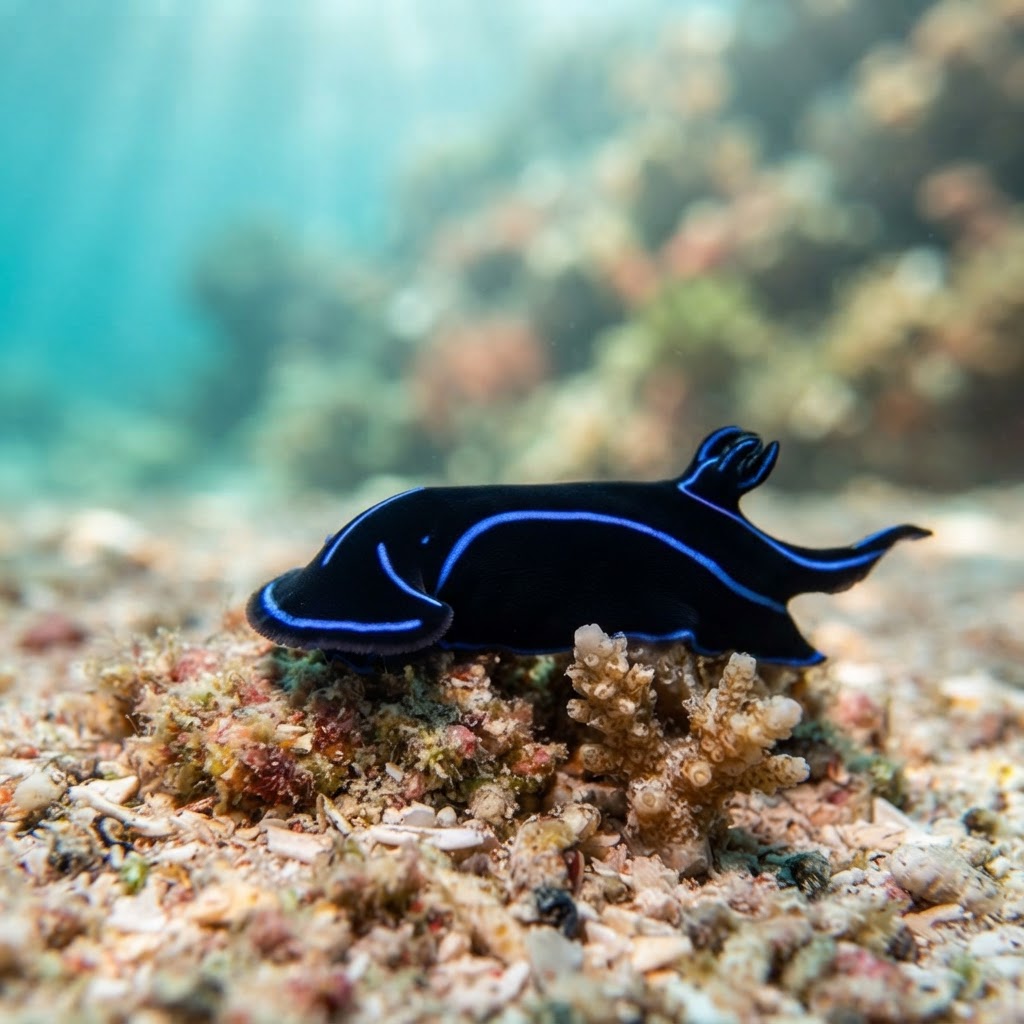
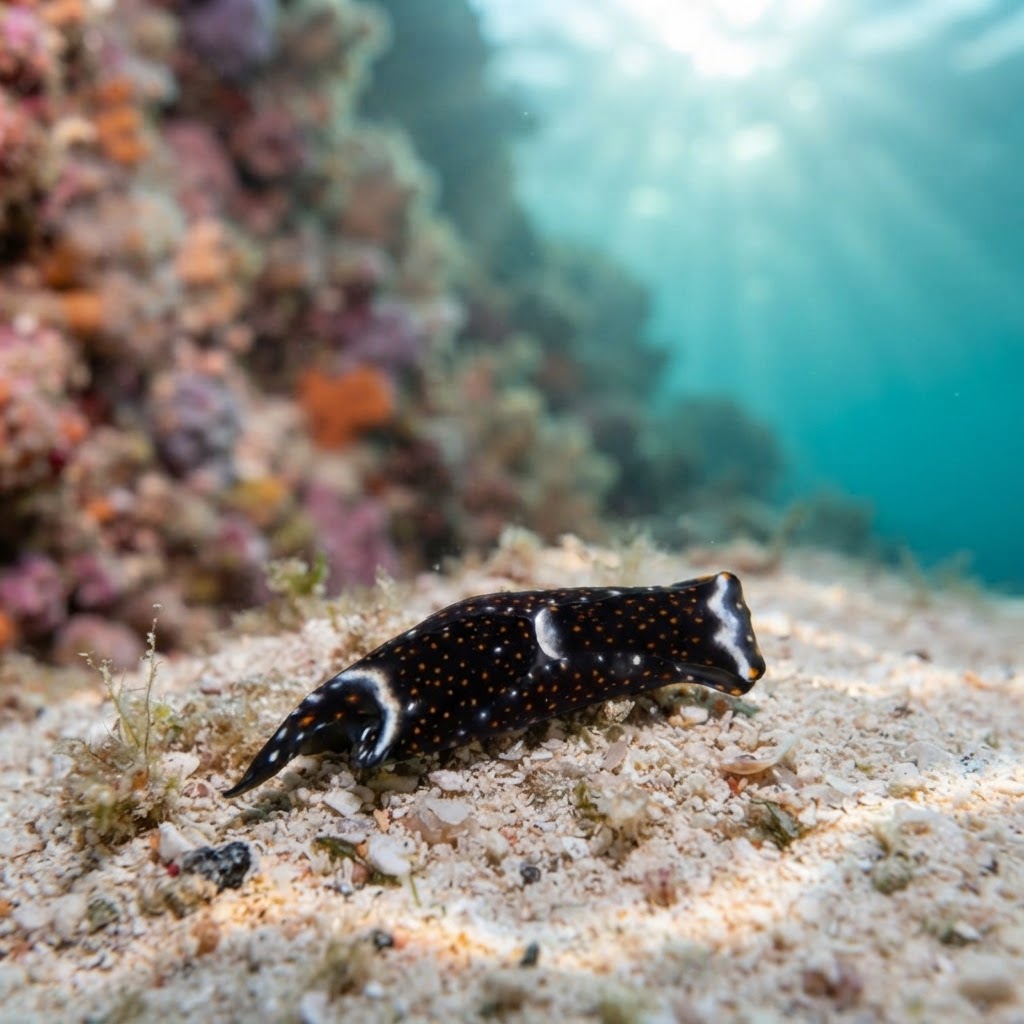
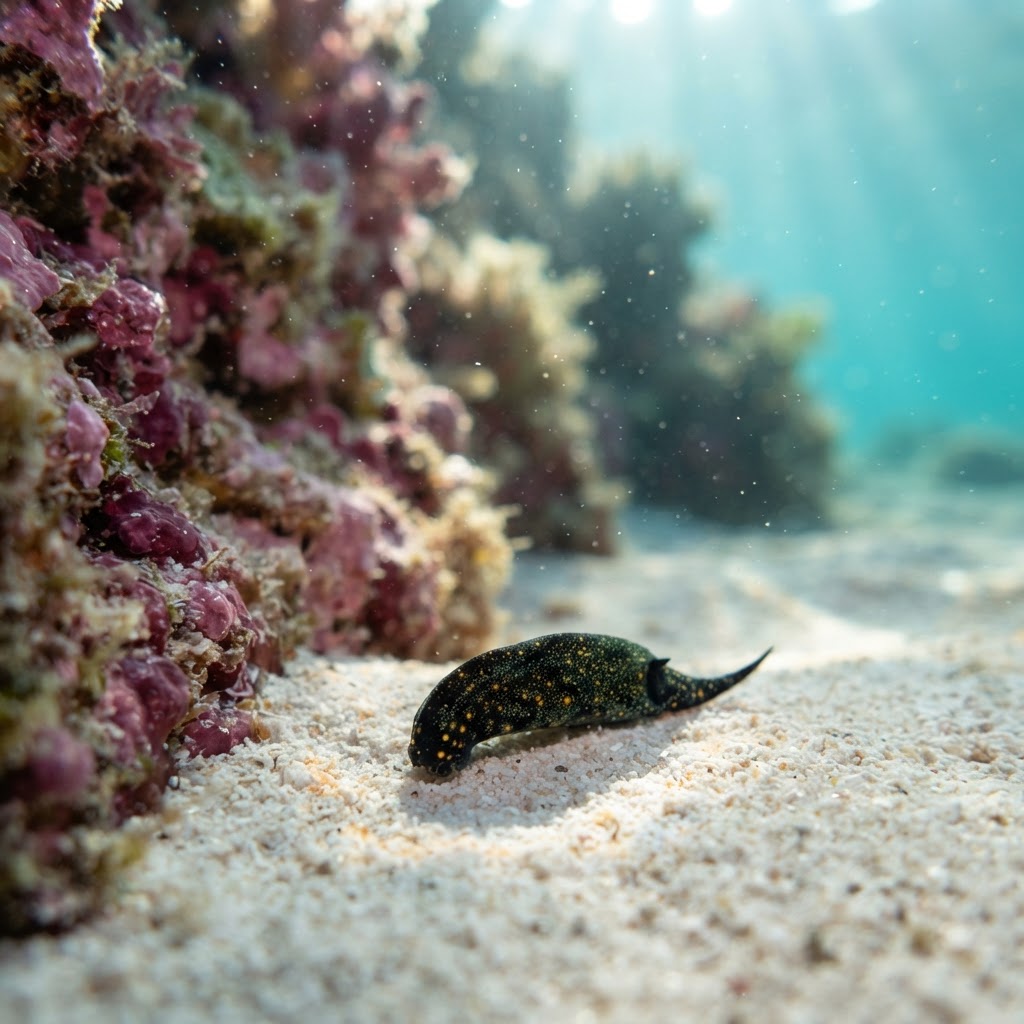
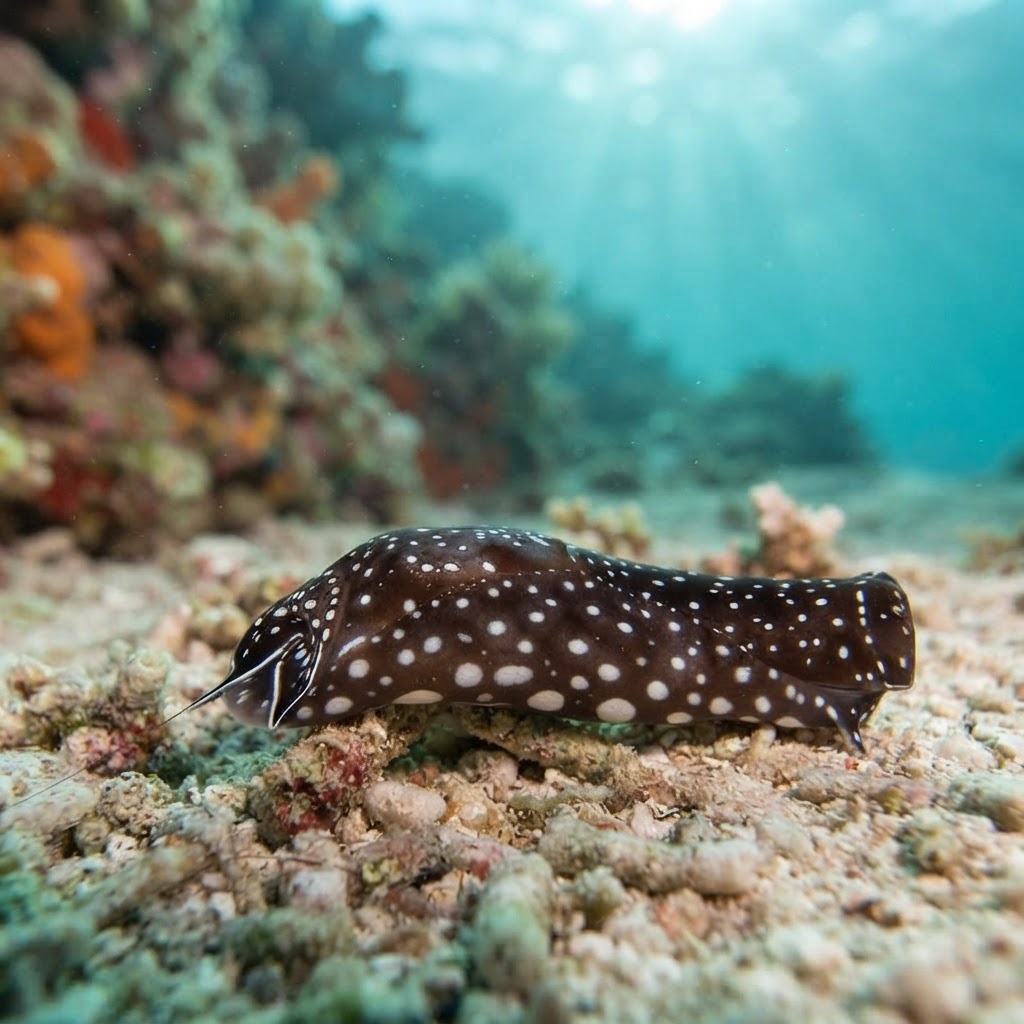
A soft-bodied sea slug with the rolled, shield-like head plate typical of the aglajid family, used for ploughing through sand as it hunts. Size and exact colouring are not well documented for this species, so divers should rely on the shape, low-lying gliding posture, and sandy or rubble habitat rather than a distinctive pattern. Look closely at the head shield and the way it moves in a slow, continuous glide over the substrate rather than climbing over rockwork like many nudibranchs.
Divers log this one moving slowly across sand and rubble patches, using its headshield to plough into the substrate as it searches for prey. It shows no interest in passing divers and rarely reacts to a light or a slow approach, so a careful macro diver can usually get a good long look without disturbing it. Most sightings come from open, sediment-rich areas rather than dense coral structure.
Aglajids like this one are predators that hunt other small molluscs and worms buried in sediment, tracking them by scent before engulfing them, a very different lifestyle from the algae-grazing nudibranchs divers more often notice.
Sightings don't show a clear season, and the observed water temperature range of roughly 25 to 31C fits a warm Caribbean reef all year, so it's reasonable to look for it on any dive trip to Guadeloupe or Grand Cayman regardless of month.
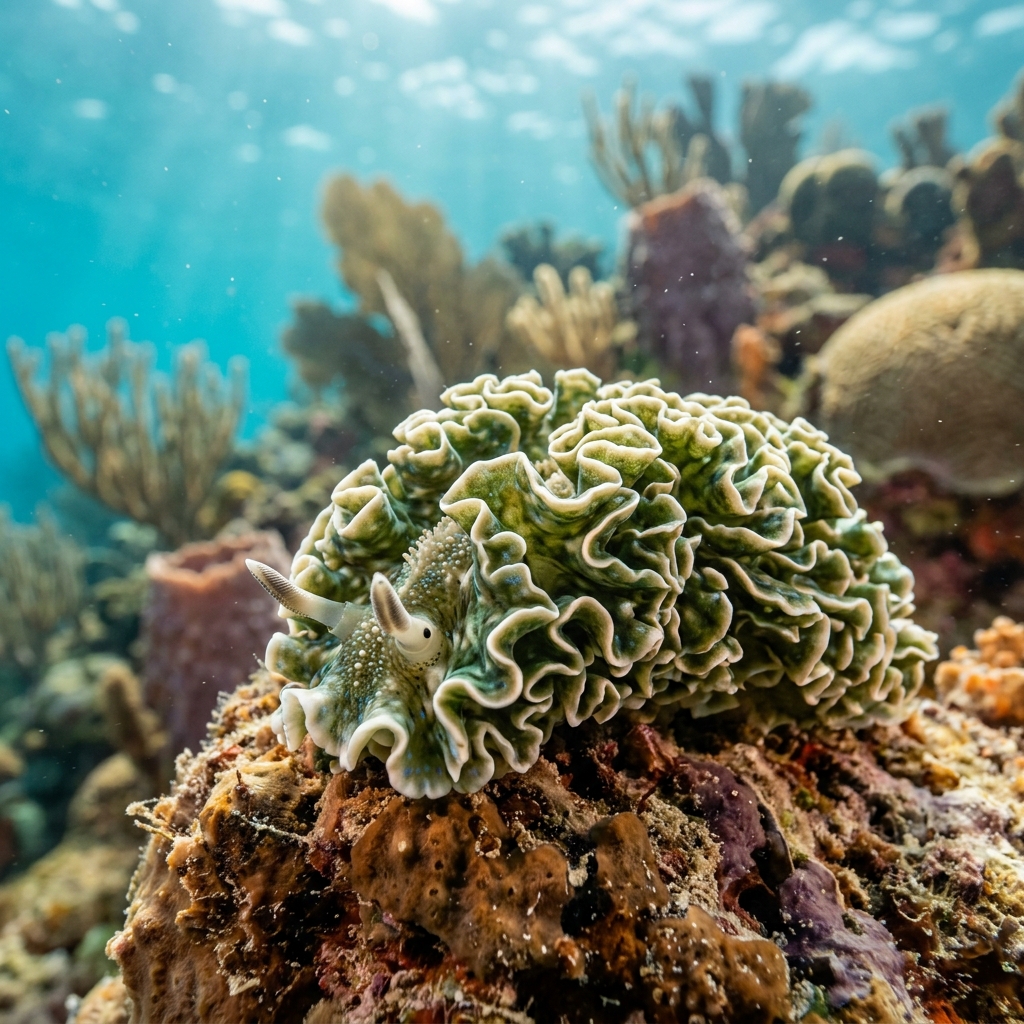
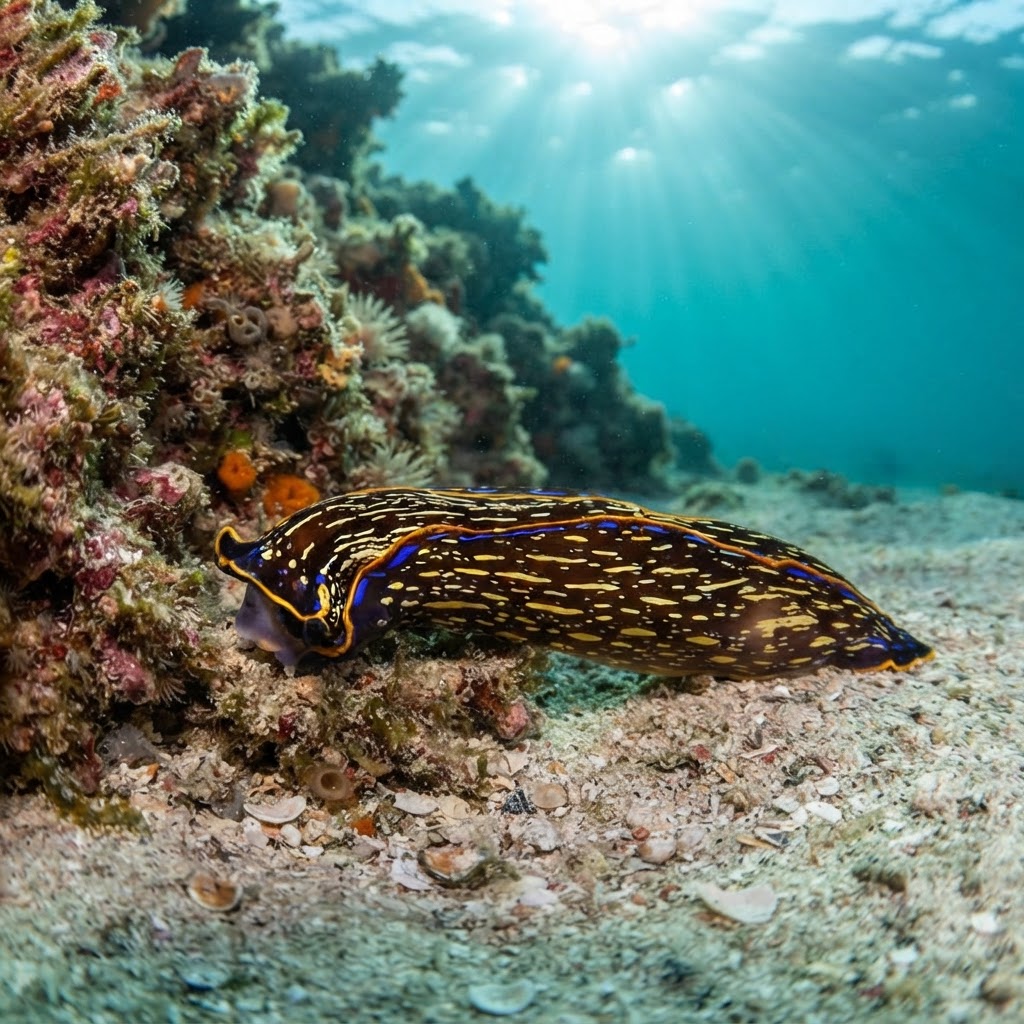
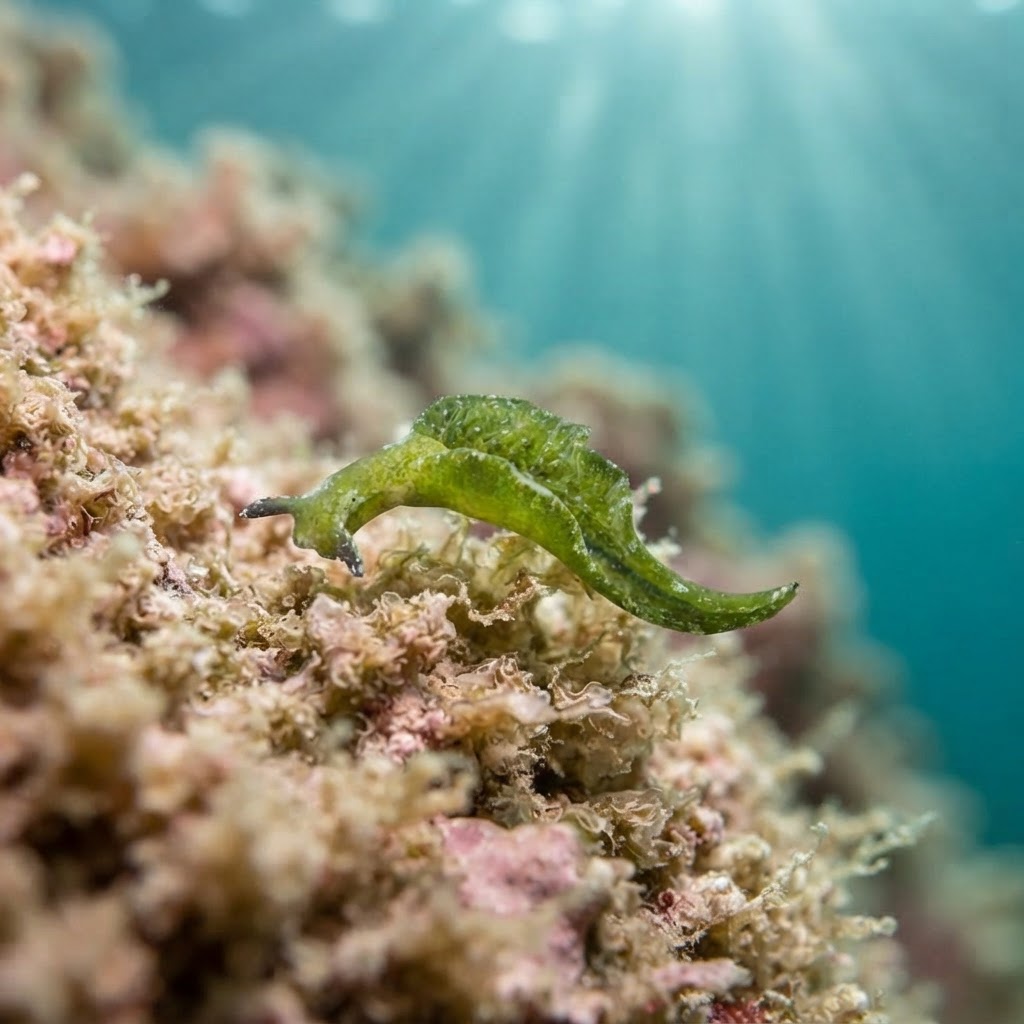
Reef neighbours a diver could mistake it for. Use the identification notes above to tell them apart.
Almost all logged sightings come from Grande-Terre in Guadeloupe, which is by far the strongest area for this species, with a couple of additional records from Grand Cayman in the Cayman Islands. Outside these two spots it has barely been recorded, so Guadeloupe is the place to focus a search.
Mapping where Camachoaglaja mariagordae is logged…
The most reliable area is Grande-Terre in Guadeloupe, where nearly all logged sightings come from. A small number of records also exist from Grand Cayman in the Cayman Islands, but Guadeloupe is by far the stronger bet.
There's no detected seasonal pattern, and the water it's found in stays warm year-round (roughly 25 to 31C), so any time of year on a Guadeloupe dive trip works about as well as any other.
Look for a soft-bodied slug with a rolled headshield gliding slowly over sand or rubble, rather than climbing on coral. Detailed colour and size records are sparse for this species, so habitat and its slow ploughing motion over sediment are your best clues.
Exact size data isn't available for this species, so there's no confirmed length range to give divers yet.
Like other aglajids, it's a predator, not a grazer. It ploughs through sand using its headshield to track and engulf buried worms and small molluscs, a hunting style quite different from the reef-grazing sea slugs most divers know.
Site and sighting data is aggregated from diver logs, iNaturalist and GBIF. For taxonomy and conservation status:
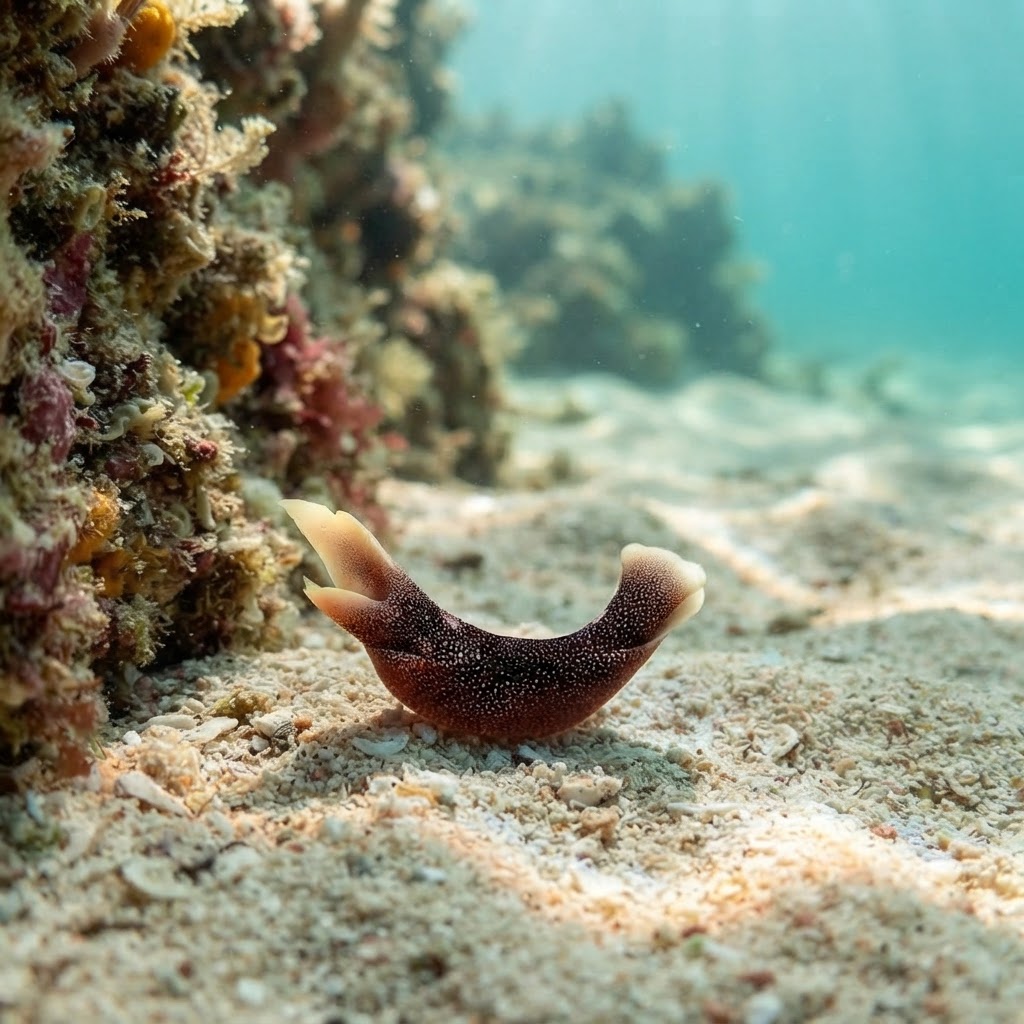
Chelidonura amoena
Elysia Timida
573 sites