Scorpaena guttata
Mottled red-brown and near invisible on the rocks, common at California sites in 18.9-22.4C water year-round.
Safety warning
Dorsal, anal and pelvic spines deliver a venomous sting that causes intense pain and swelling, similar to other scorpionfish stings. Keep hands and fins off rocky bottoms and ledges where it rests, and never touch or steady yourself on unfamiliar rock in areas where it's common.
If you're stung
Venomous spinesGeneral first-aid guidance, not a substitute for professional medical care. In an emergency, call your local emergency number.
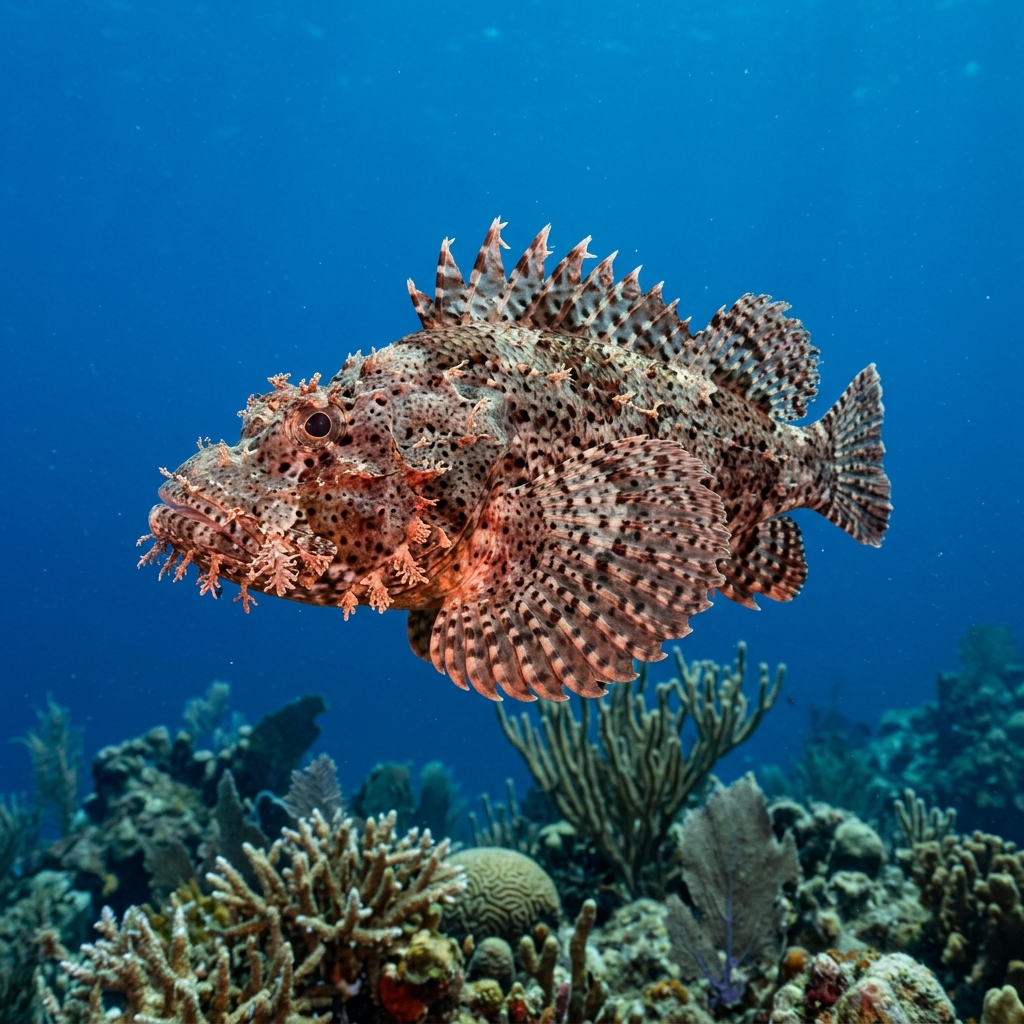
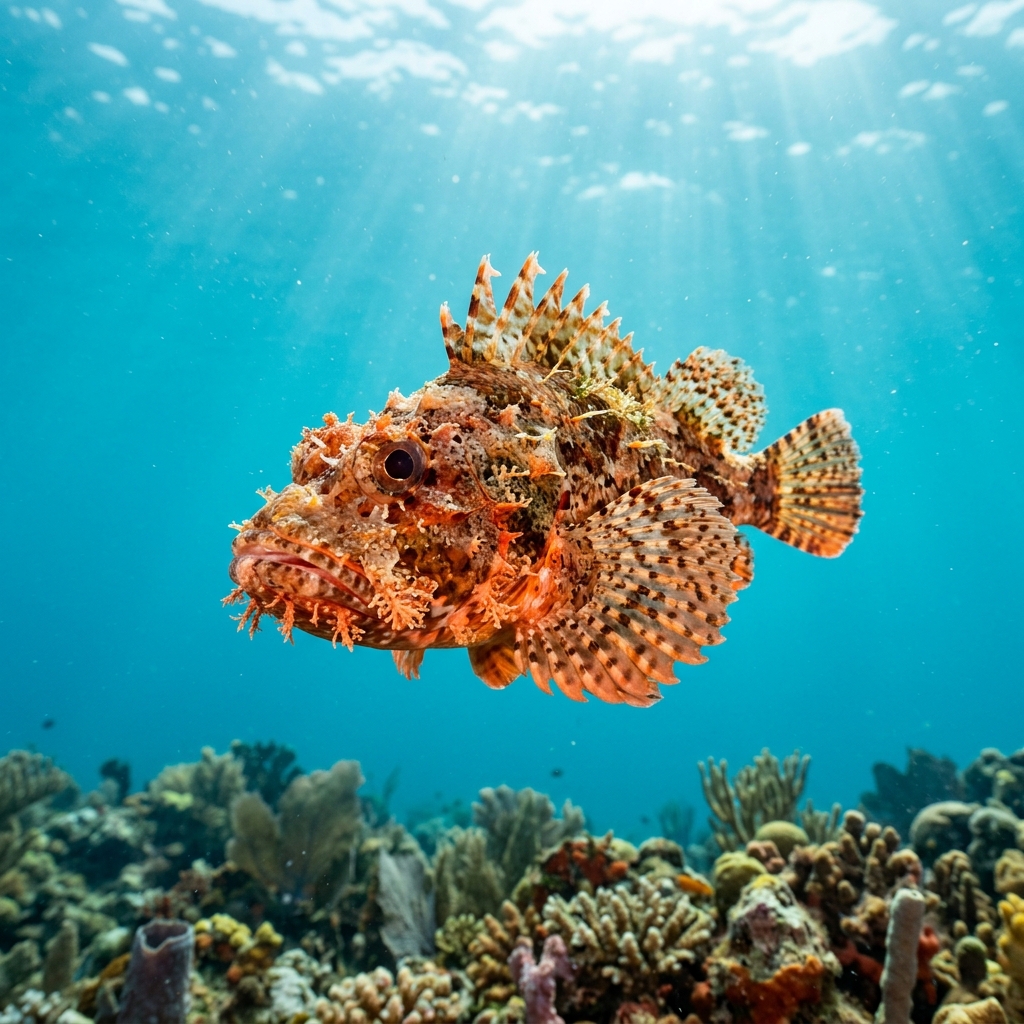
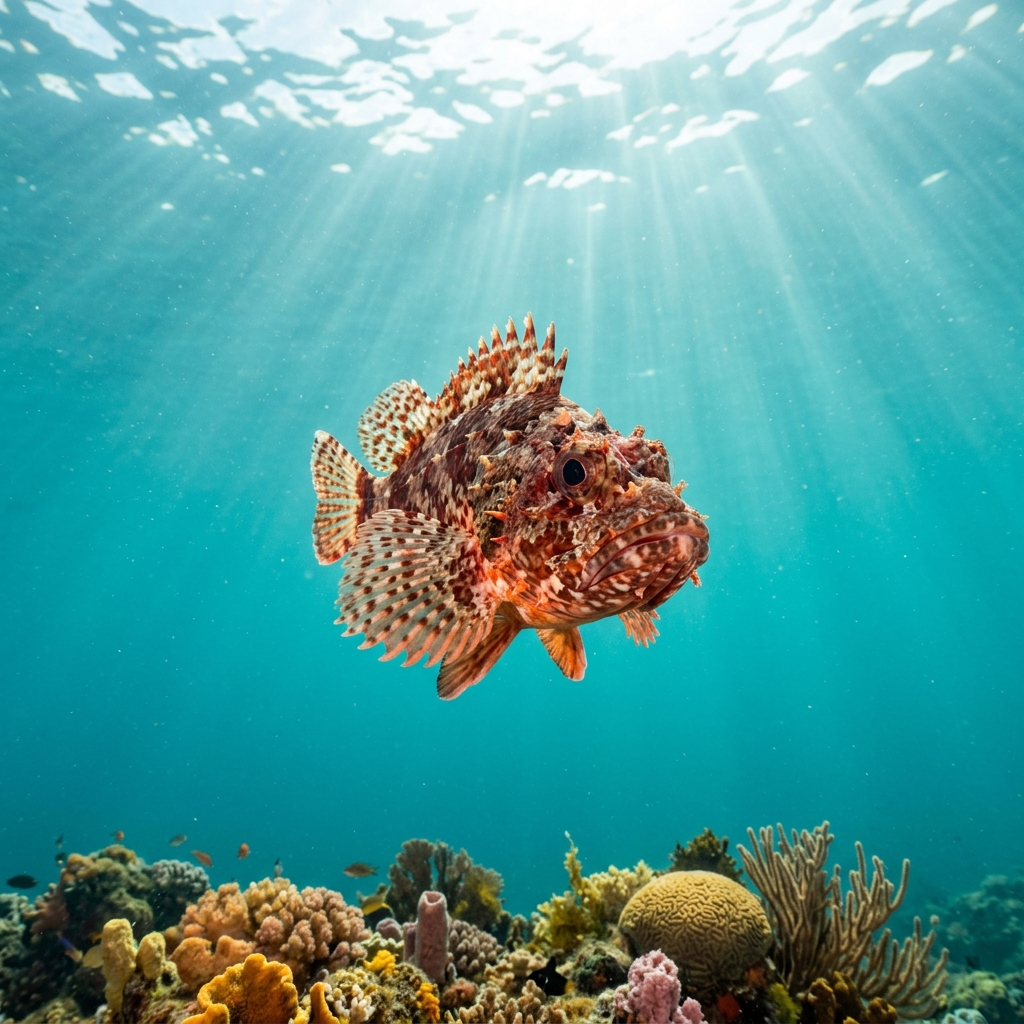
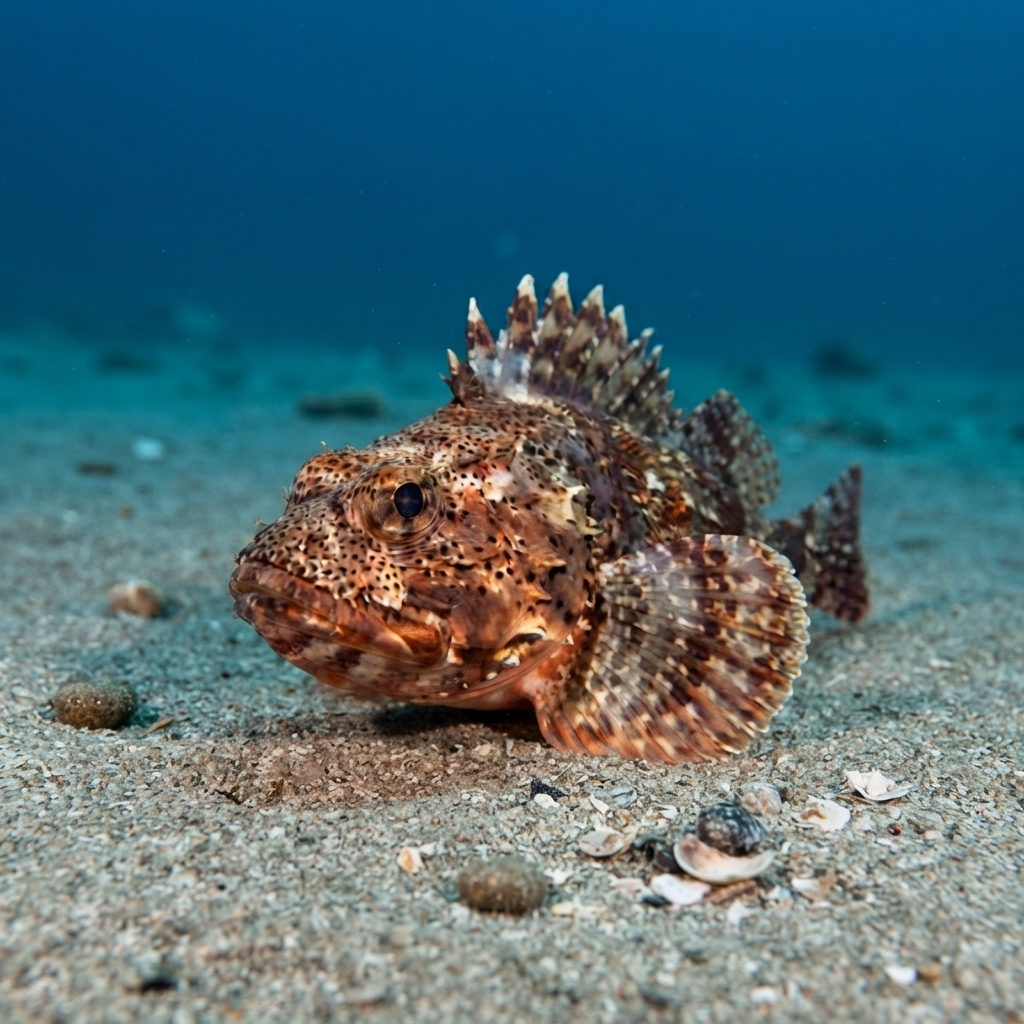
Squat, heavy-bodied fish around 30 cm long, covered in mottled red, brown and cream blotches that break up its outline against rock and rubble. Look for the oversized spiny head, fringed skin flaps (cirri) over the eyes, and the way it sits dead still on the bottom rather than swimming off. The dorsal fin carries a row of venomous spines that lie flat until disturbed, and colouring can shift slightly to match the substrate it's parked on.
Spends most of its time motionless on rock, rubble or sand, relying on camouflage rather than flight to avoid attention. Divers typically find it wedged against a ledge or half-buried in sediment during the day, ambushing small fish and crustaceans that wander too close. It tolerates close approach well, which is exactly why divers need to watch where they put their hands and knees.
Its camouflage is good enough that it's one of the easier scorpionfish to swim straight past, relying on divers not noticing it rather than on speed to stay safe.
Sightings are logged year-round with no clear seasonal pattern, matching its comfort range of roughly 18.9 to 22.4C, so any month of diving in its range gives a fair shot at finding one.
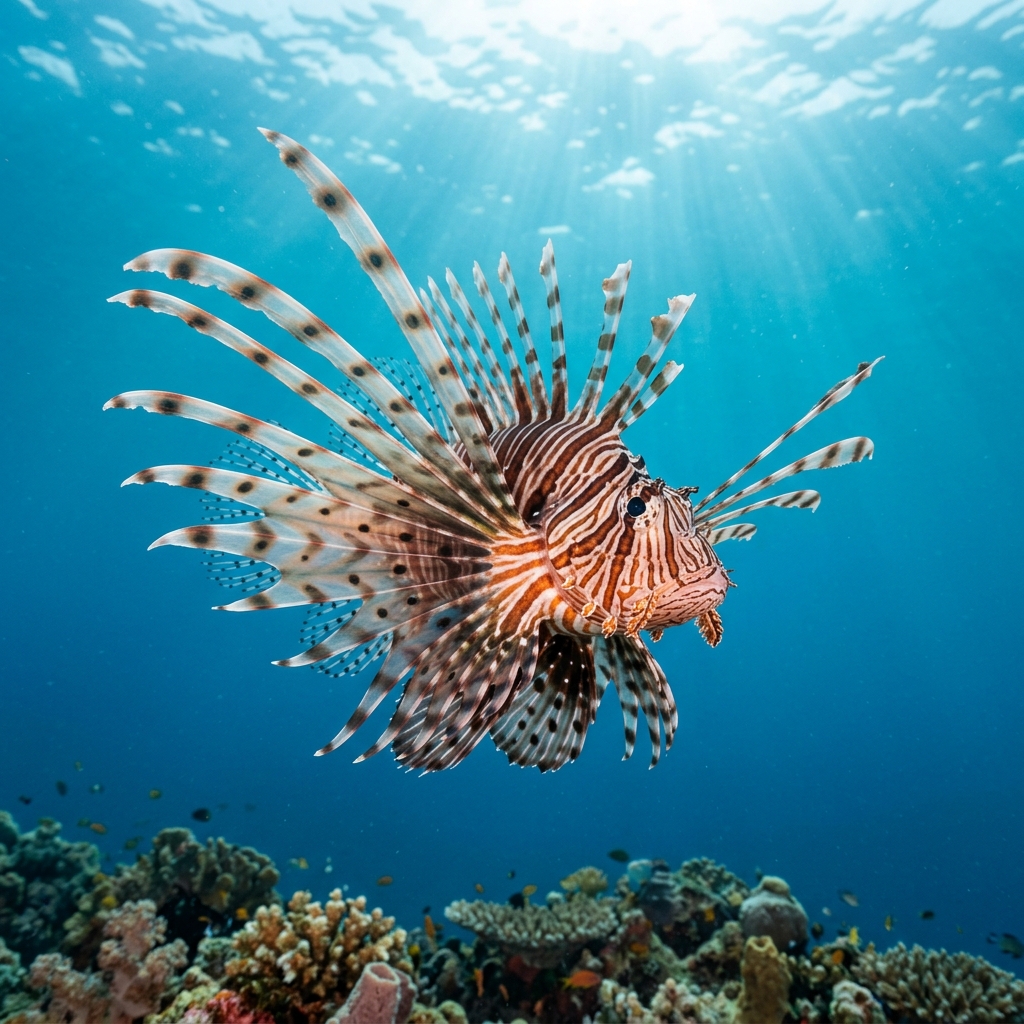
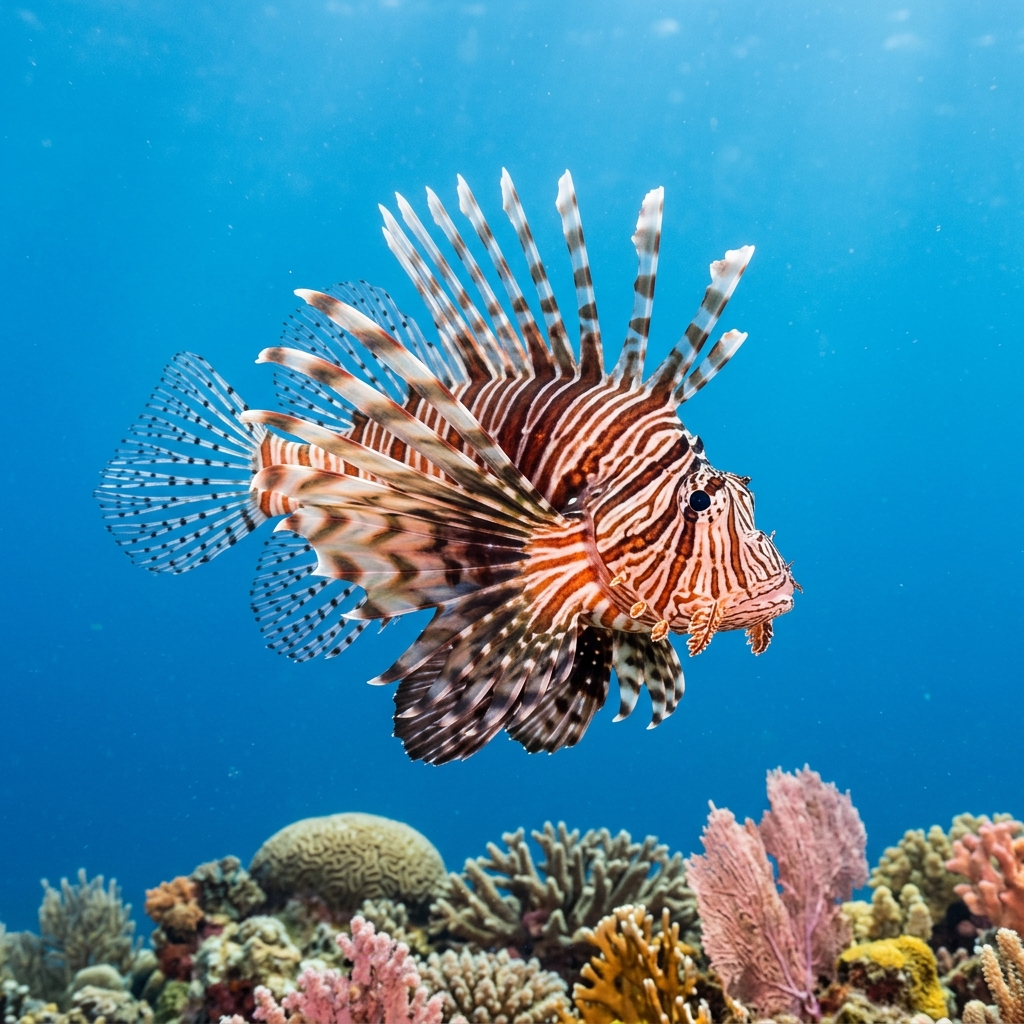
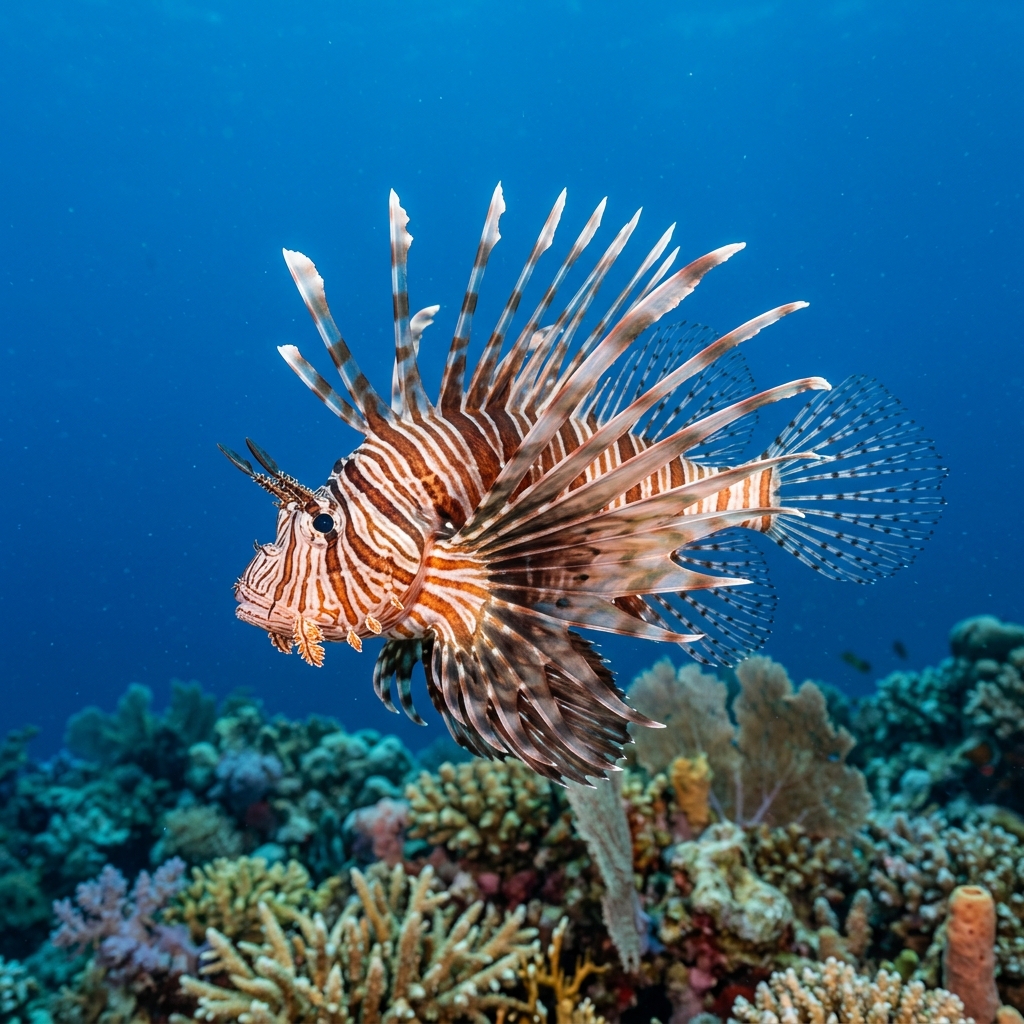
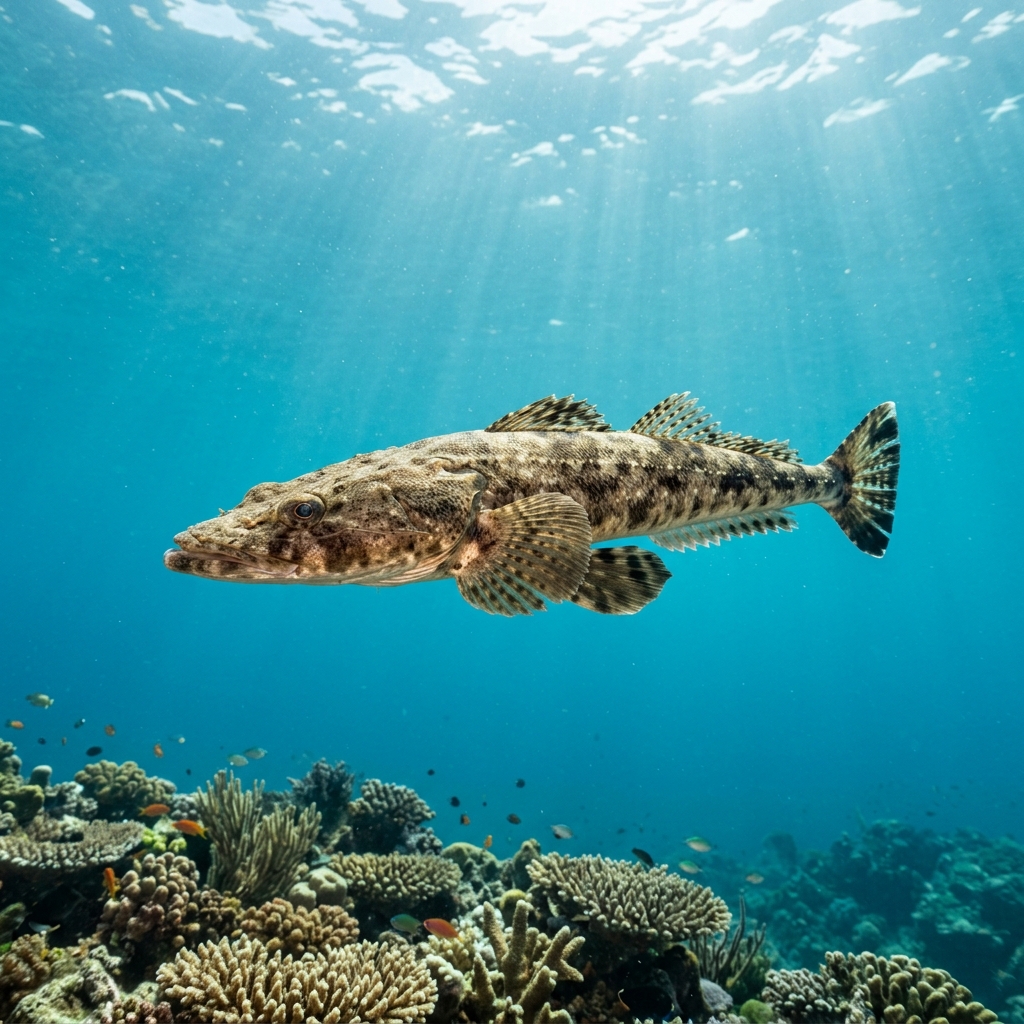
Reef neighbours a diver could mistake it for. Use the identification notes above to tell them apart.
Most reliably found along the California coast in the United States, with strong numbers logged from sites across the state, and a further population documented in Baja California, Mexico. It's one of the most consistently reported bottom-dwelling fish on the California mainland and island dive circuit.
Mapping where California Scorpionfish is logged…
California is the stronghold, with sightings logged at dive sites up and down the state's coast and islands. It's also found across the border in Baja California, Mexico.
There's no strong seasonal pattern in sightings, so it's a fair year-round target. It sits comfortably in water from about 19 to 22C, which covers most of the diving calendar in its range.
Yes. Its dorsal and other fin spines carry venom that causes a painful sting if touched or stepped on. It won't chase you, but its camouflage means it's easy to miss on rocky bottoms.
Look for a squat, mottled red-brown fish sitting still on rock or rubble, with a spiny oversized head and small fringed flaps over the eyes. Its blotchy pattern blends into the seabed, so it's often spotted by shape rather than colour.
They typically reach around 30 cm, a solid but not huge size for a bottom-dwelling scorpionfish. Most divers encounter them at or near this size resting on rock or sand.
Site and sighting data is aggregated from diver logs, iNaturalist and GBIF. For taxonomy and conservation status:
Madeira Rockfish
2,773 sites