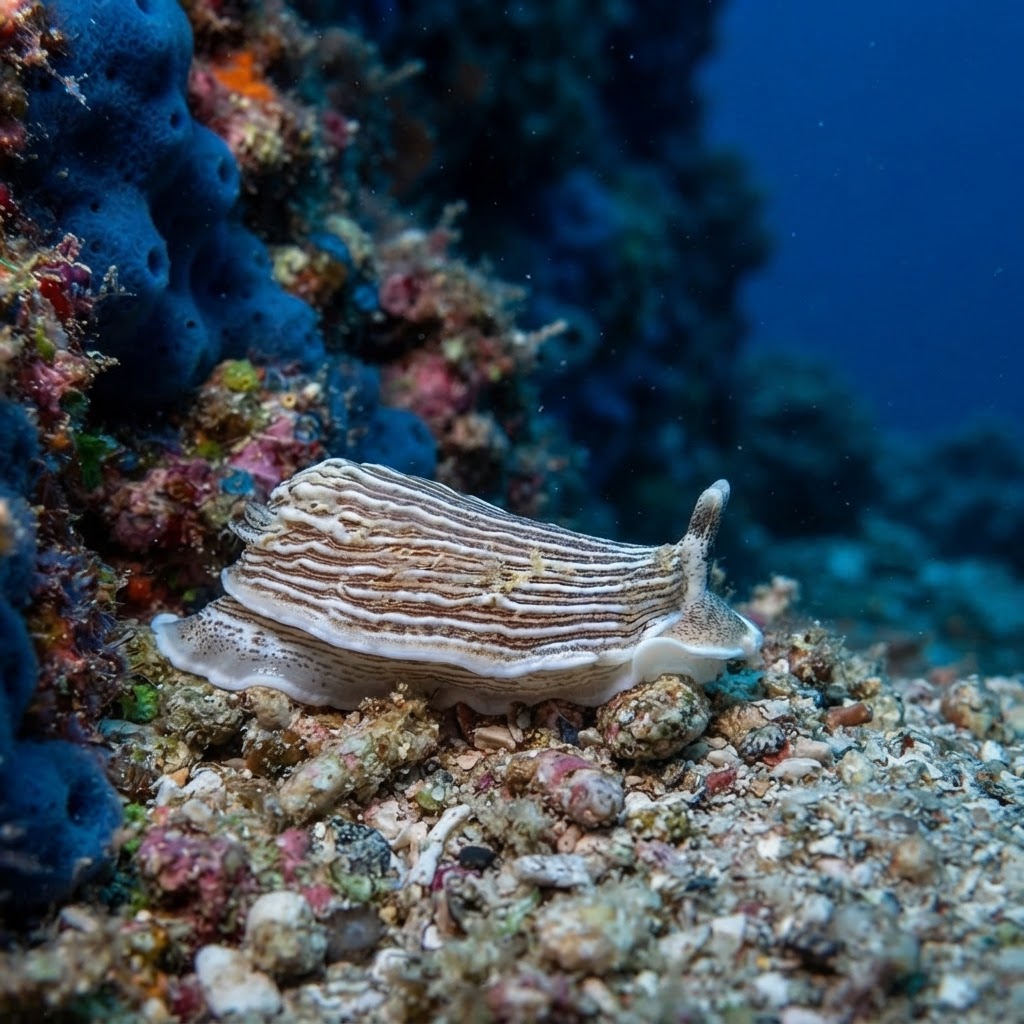
Armina californica
Ridged brown-and-white nudibranch found in the cold water of the Pacific Northwest, often at 8.7 to 18.9 C, year-round on the seafloor.
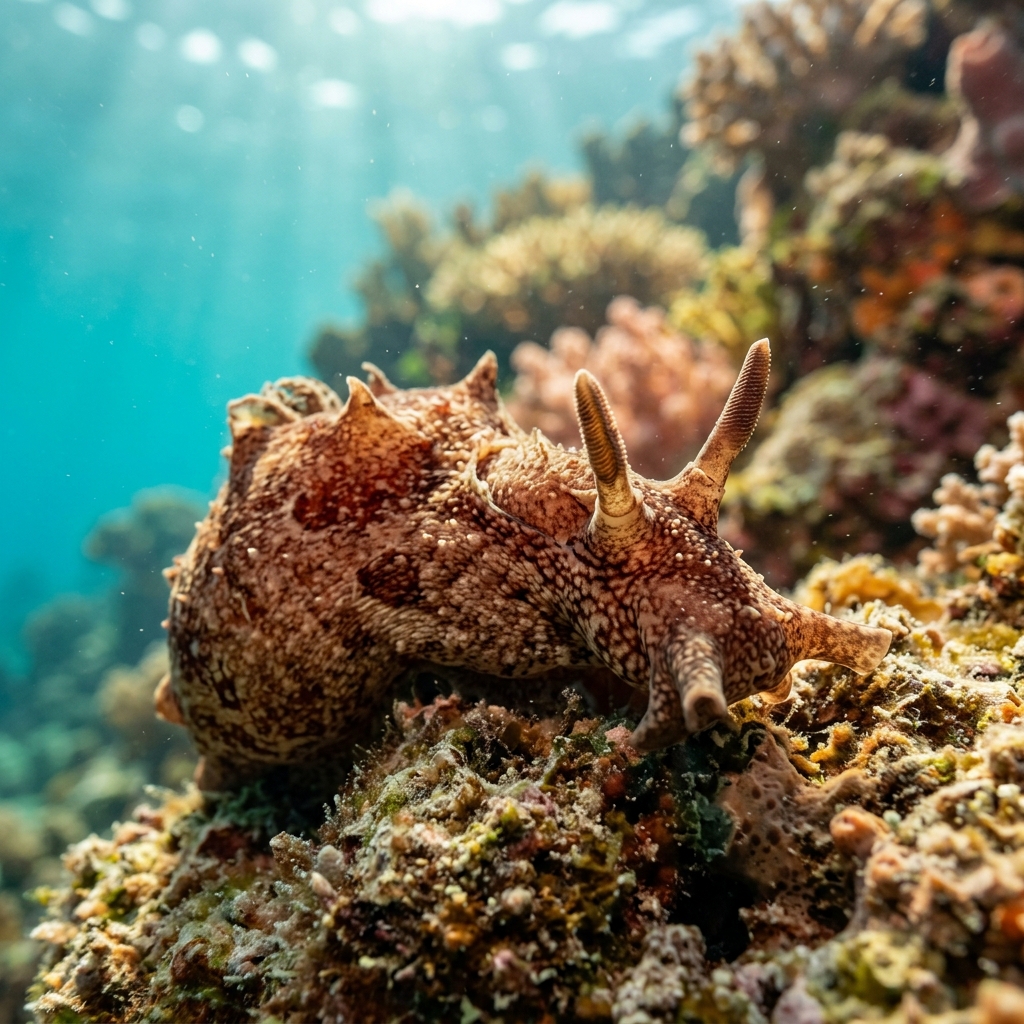
Small elongated slug, around 4 cm, with a body carrying distinct raised longitudinal ridges running its length, giving it a corduroy-like texture rather than the smooth or gilled look of most nudibranchs. Colouring runs brown to grey with pale cream or white stripes tracking the ridges, which is the main tell against smoother-bodied dorids. No feathery gills project from the back, and the head end is blunt and rounded, distinguishing it from frilly or horned look-alikes.
Found crawling slowly over sand and silty bottoms rather than on rock or reef structure, usually low down where divers doing a benthic-focused dive will spot it. It pays no attention to divers and will not react to a light or a close look, making it an easy subject for macro photography once found. Most logs describe it as an uncommon to common find rather than a rare specialty, so a slow scan of sandy patches on a dive is often enough to turn one up.
It hunts sea pens and burrowing anemones on soft sediment, tracking them across sand where most nudibranchs would have nothing to graze on.
Sightings show no clear seasonal pattern, so treat it as a year-round find. It sits comfortably in the 8.7 to 18.9 C range typical of Pacific coast diving, meaning cold water year-round rather than a summer warm-up is what keeps it around.
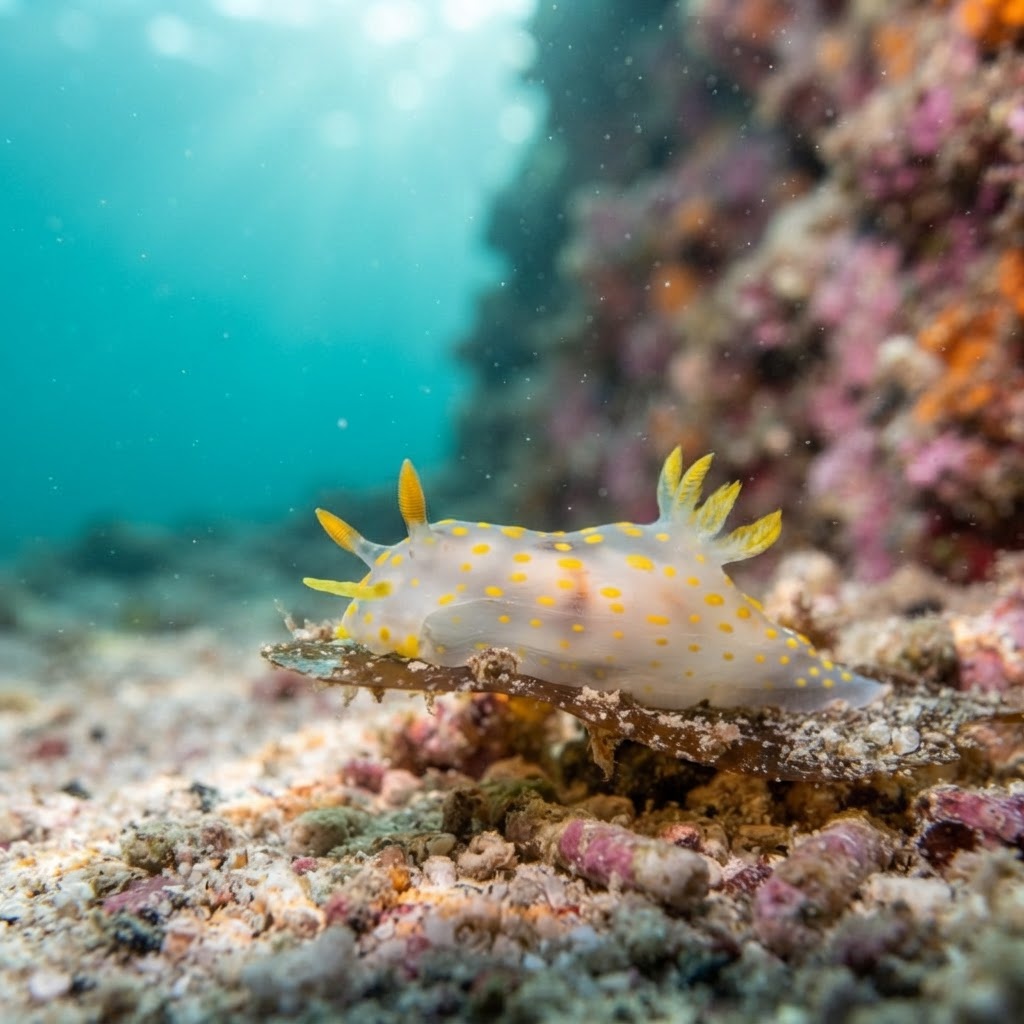
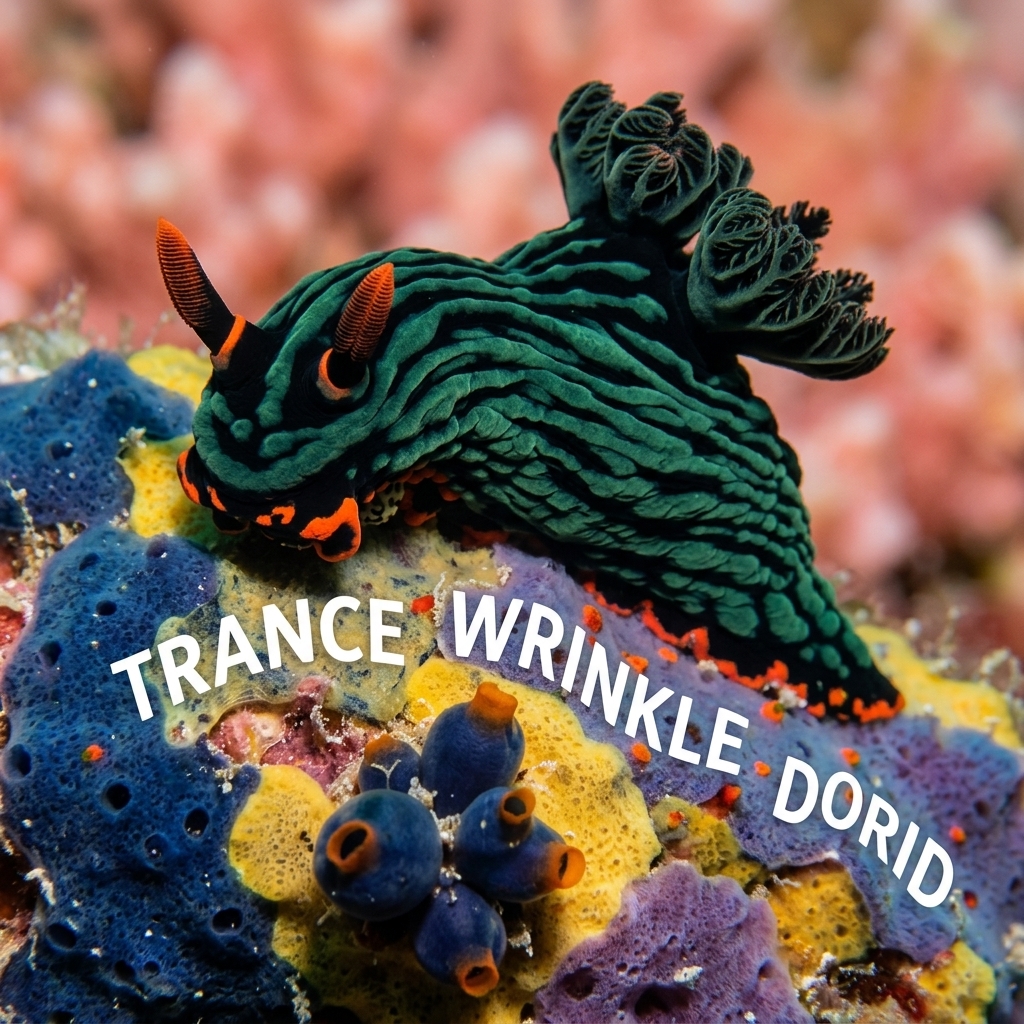
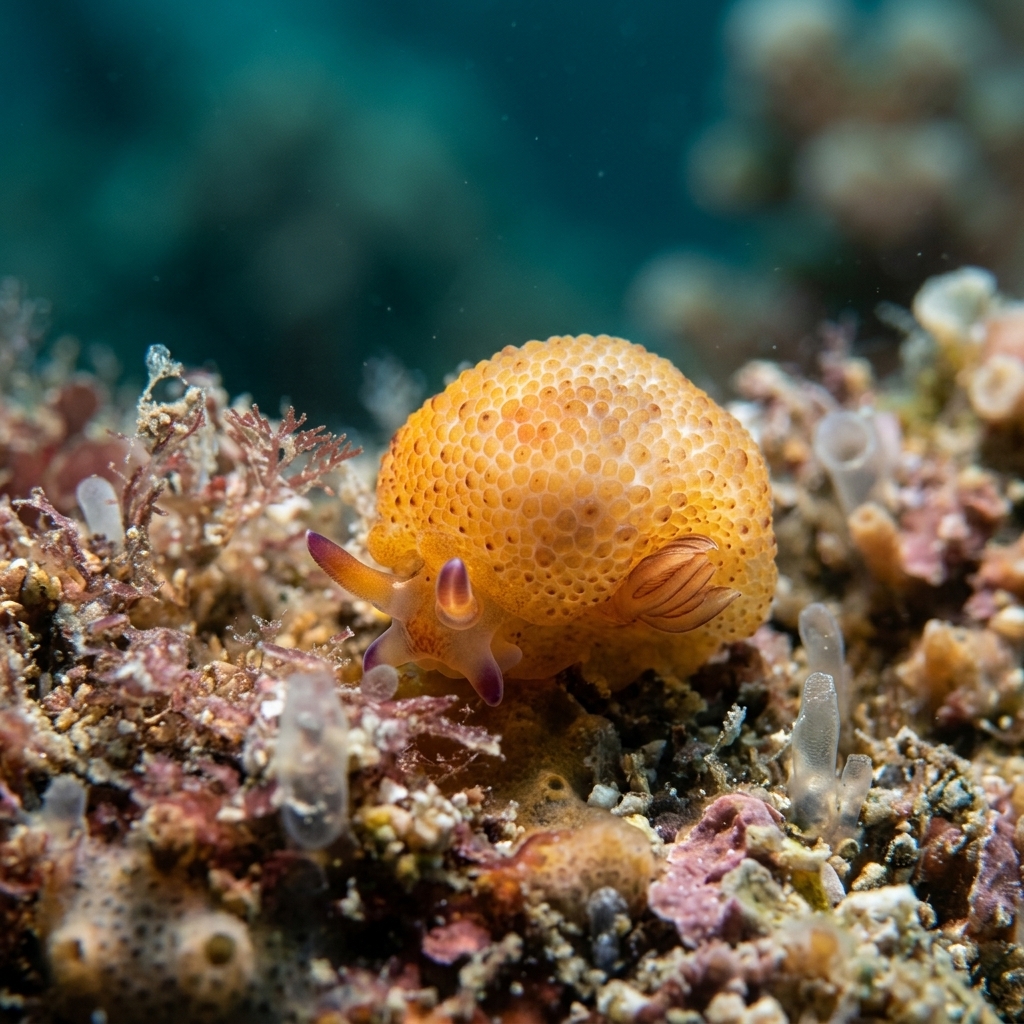
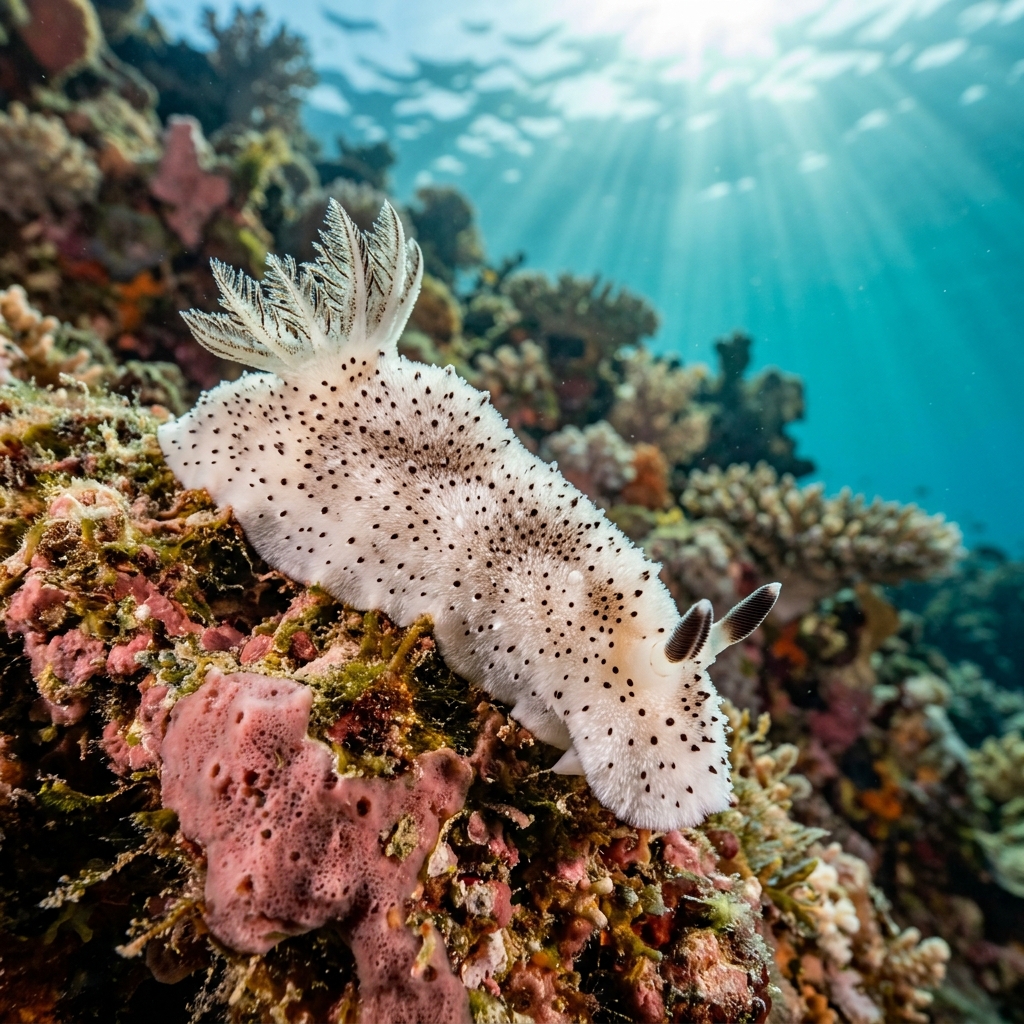
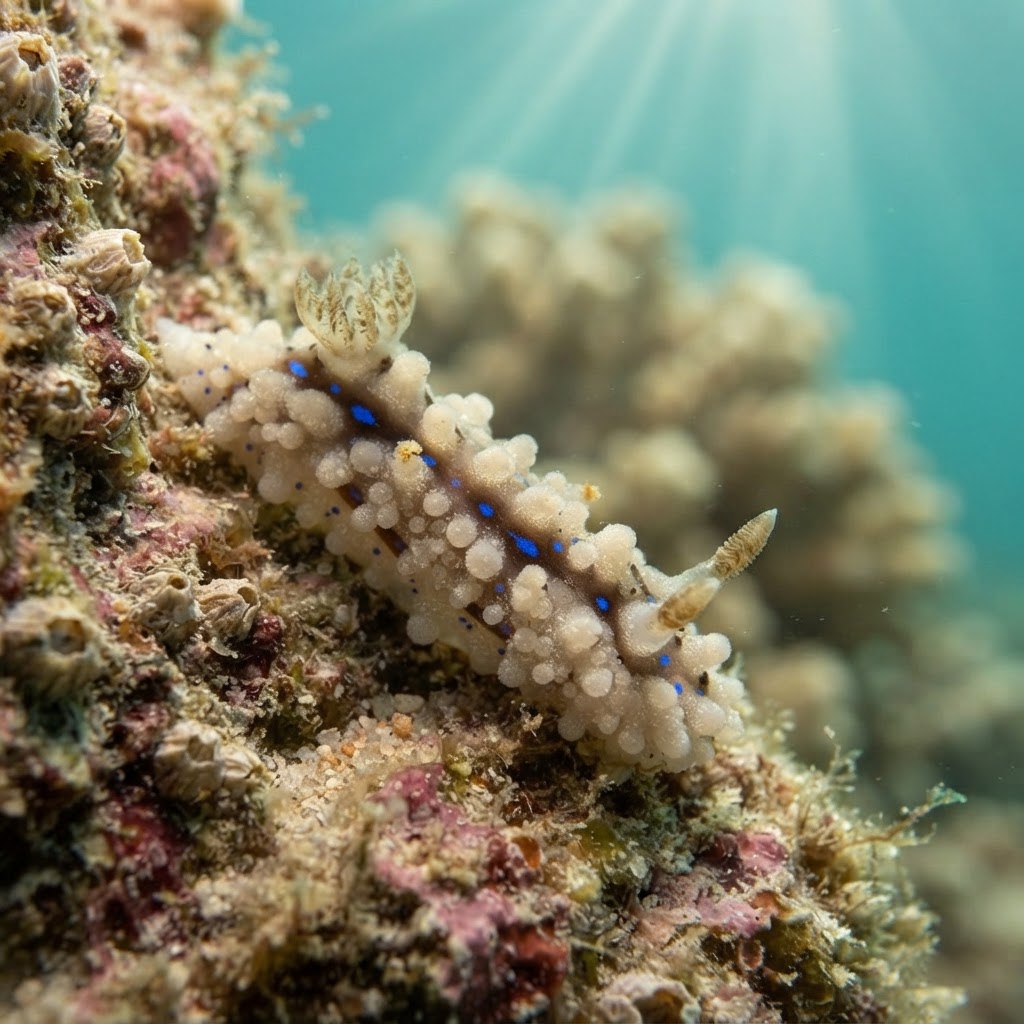
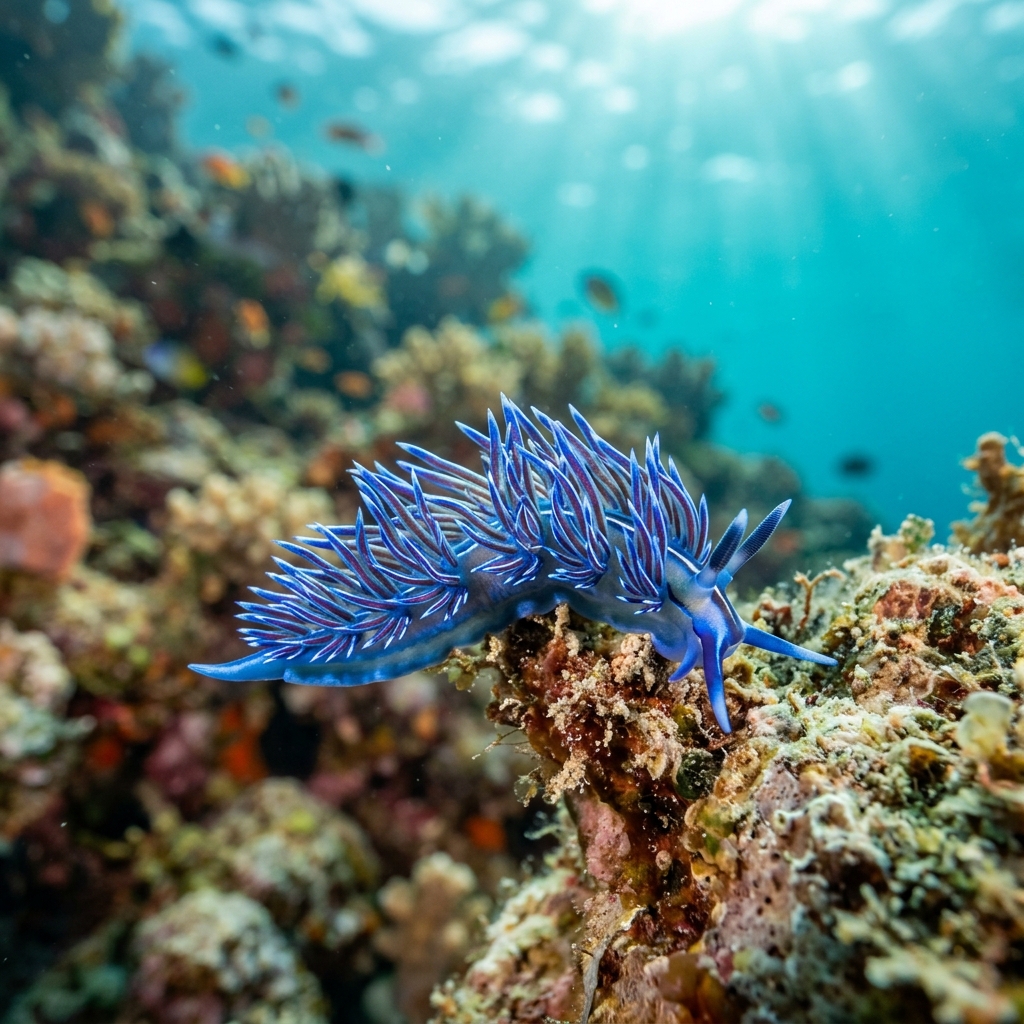
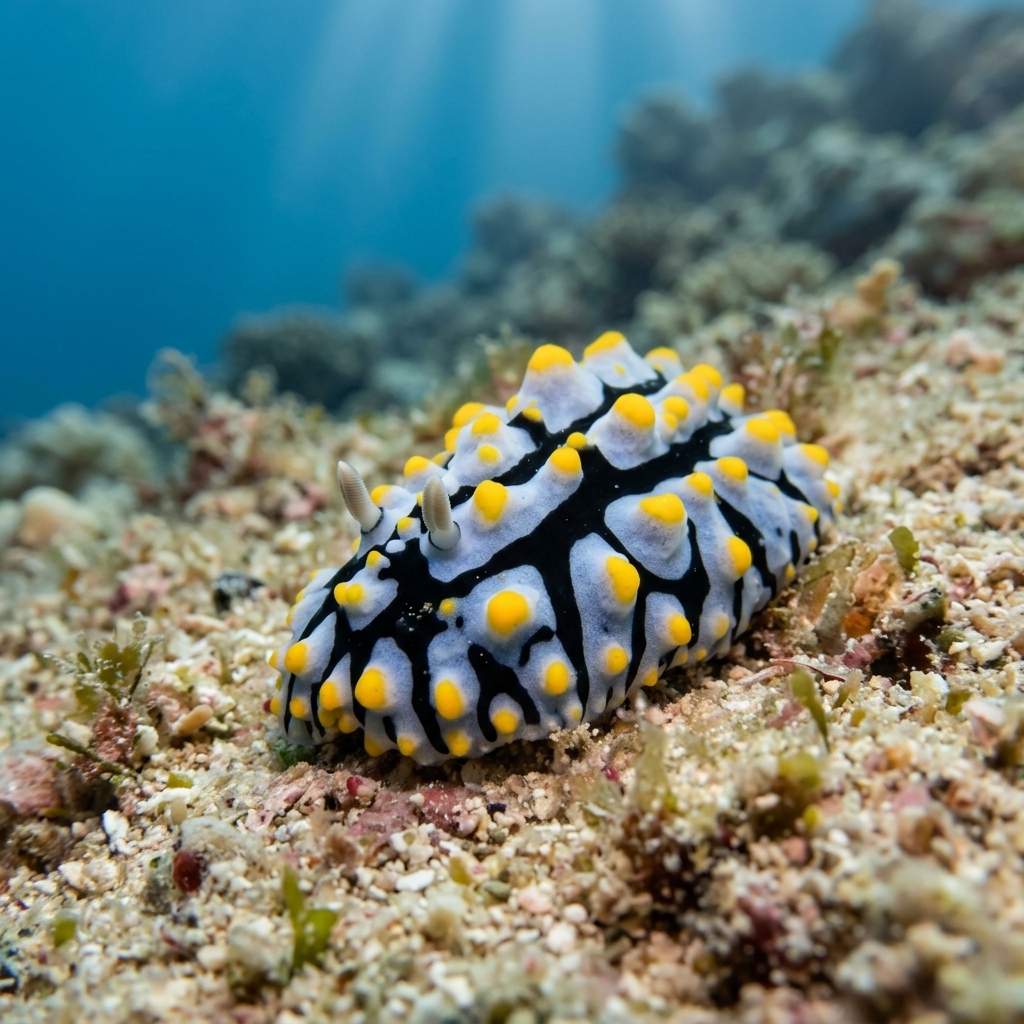
Reef neighbours a diver could mistake it for. Use the identification notes above to tell them apart.
Most reliably logged in the Pacific Northwest and California, with sites across Washington and Oregon making up the bulk of sightings and a further cluster in California. It also turns up in British Columbia, Canada, so divers working the cold-water coastline from BC down through the US Pacific Northwest into California have the best shot at it.
Mapping where California Armina is logged…
Best chances are along the Pacific Northwest coast of the United States and in California, with an additional record from British Columbia, Canada. It favours sandy seafloor rather than reef structure.
No strong season shows up in sighting data, so it is considered a year-round find in its cold-water range, generally between about 8.7 and 18.9 C.
Look for a small, ridged brown and cream slug around 4 cm long, crawling on sand rather than rock. The longitudinal ridges along its back are the key feature separating it from smoother or gilled nudibranch species.
It stays small, typically reaching around 4 cm in length, which is fairly typical for this group of nudibranchs.
It feeds on sea pens and burrowing anemones found on sandy or silty bottoms, which is why it turns up on soft sediment rather than hard reef.
No. It has no sting or venom of concern to divers and can be observed and photographed up close without any risk.
Site and sighting data is aggregated from diver logs, iNaturalist and GBIF. For taxonomy and conservation status:
Light-spotted Aegires
3,168 sites