Scarus perrico
A rare find off Baja California and the Galápagos, this parrotfish turns up in waters from 21 to 28.5C year-round.
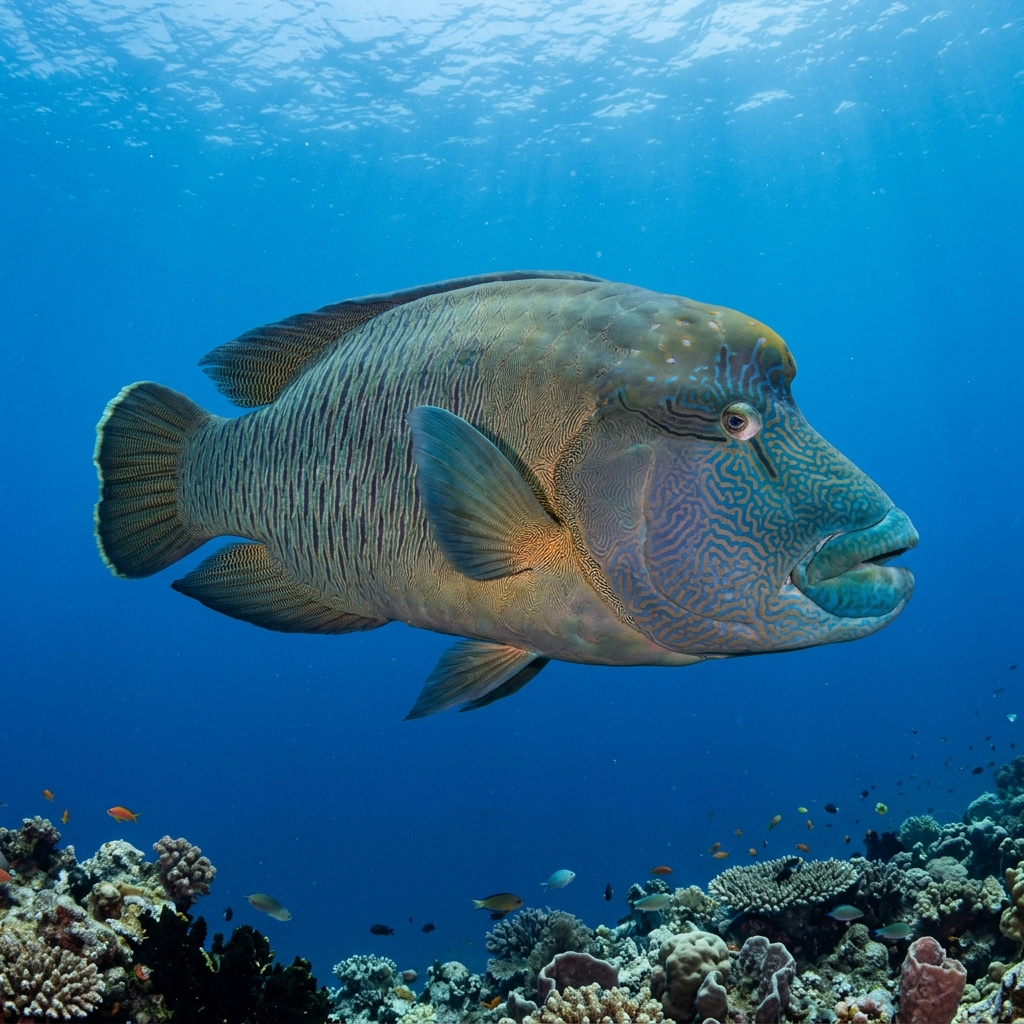
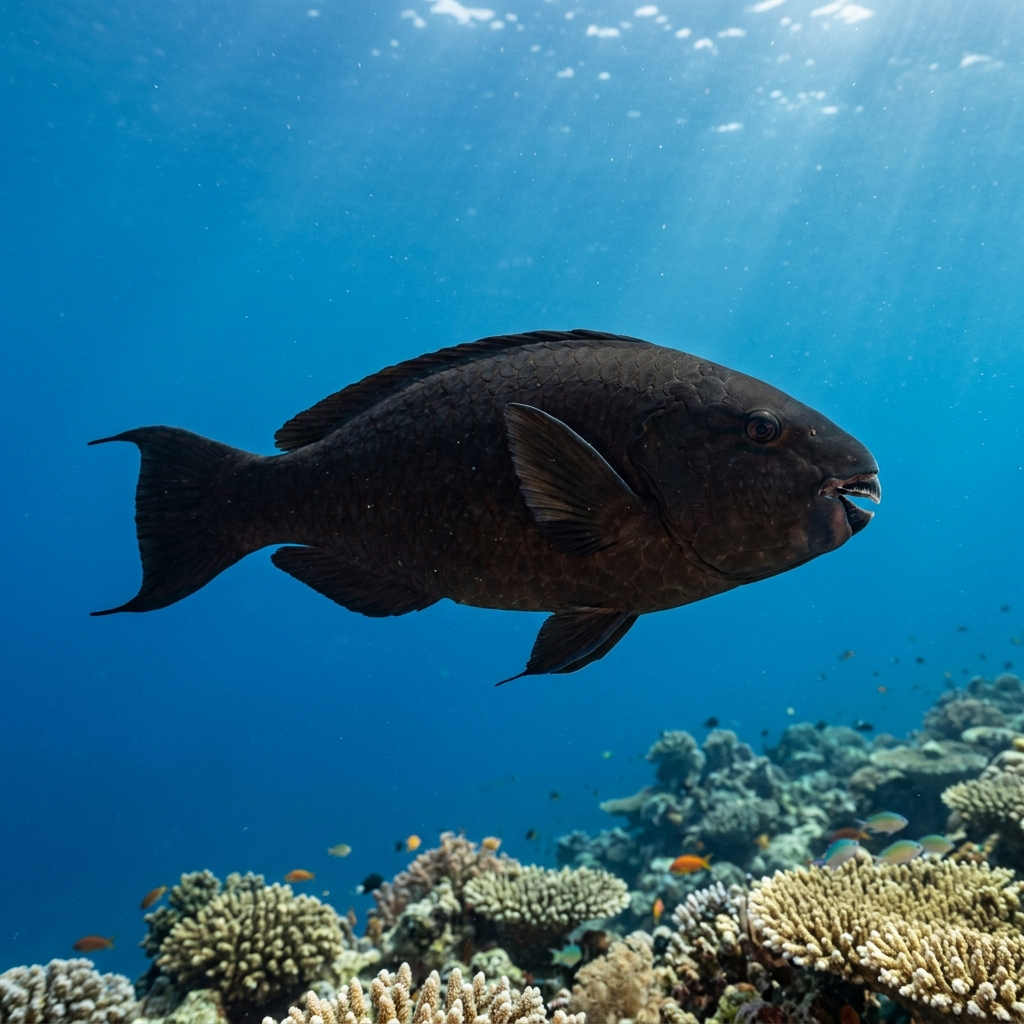
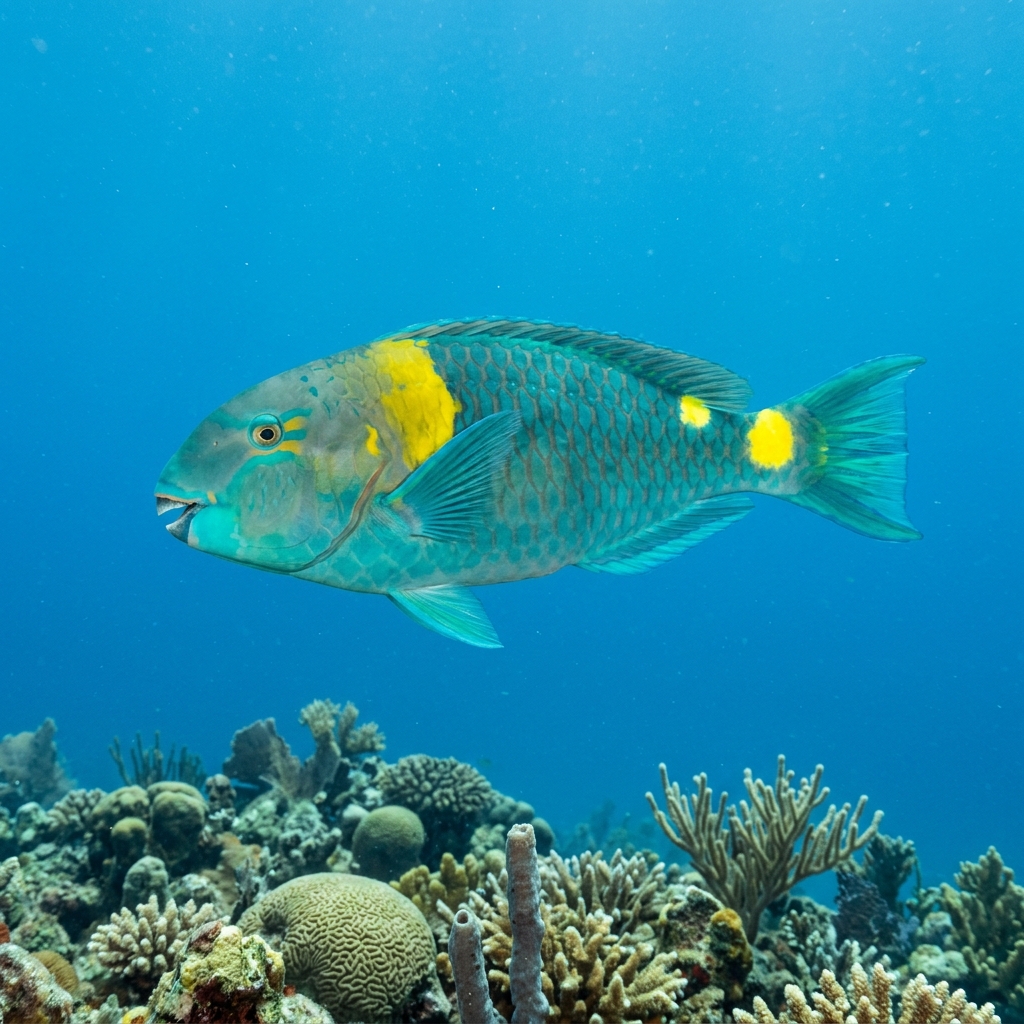
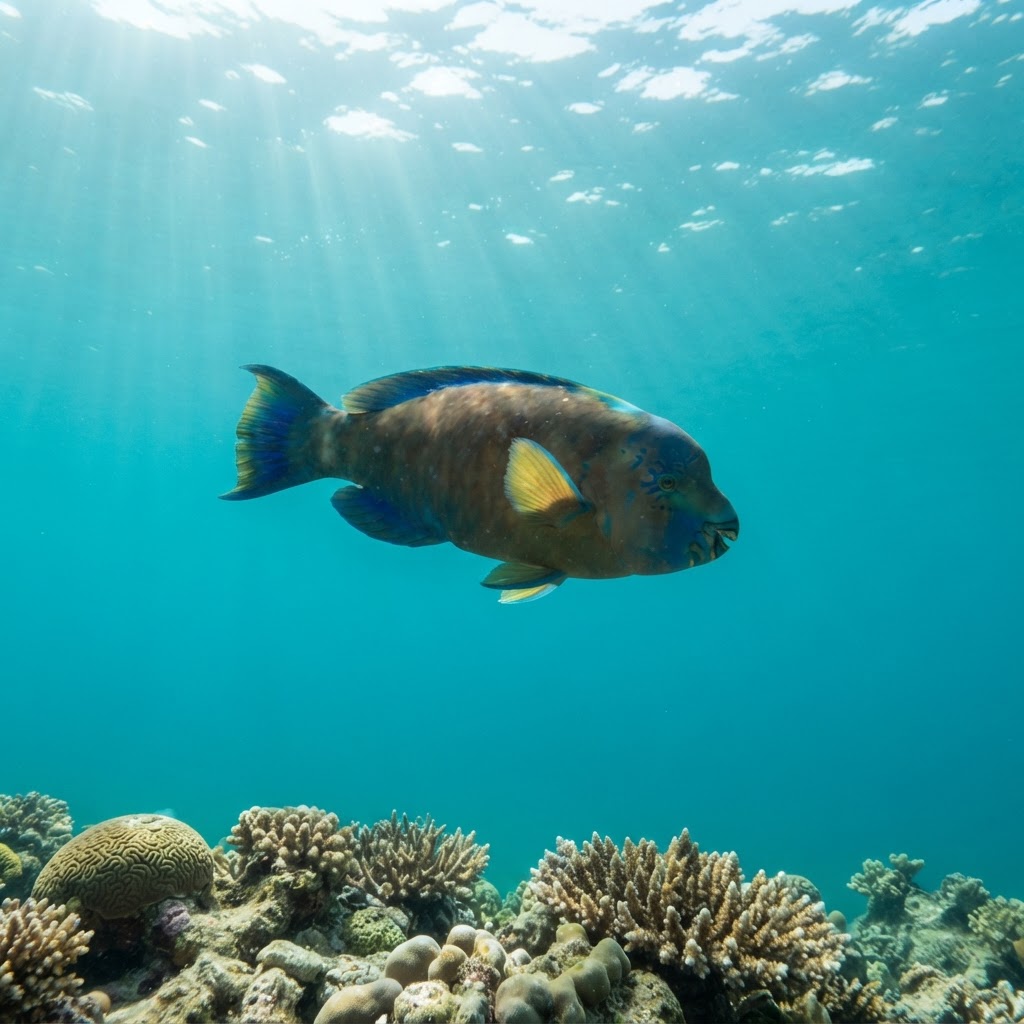
Look for a thickset, heavy-bodied parrotfish around half a metre long with a distinctive steep, bumped forehead that gives the species its name. The body runs grey-green to olive with faint scale outlines, and the fused, beak-like teeth plates are visible up close as it works over rock and reef surfaces. Its bulk and blunt profile set it apart from the slimmer wrasses it sometimes gets lumped in with.
Divers typically find it grazing slowly over rock and reef surfaces, using its fused beak to scrape algae rather than darting around open water. It tends to be unhurried and tolerant of divers at a respectful distance, more often spotted solo or in small numbers than in groups. Most logs describe it as an uncommon to rare encounter rather than a guaranteed sighting, so a calm, close pass along the rock is usually the best chance of a good look.
That bony, bumped forehead is thought to be used for headbutting during territorial or feeding disputes with other parrotfish, a trait shared with its Indo-Pacific relative the green humphead parrotfish.
There is no detected seasonal pattern in the sightings data, so treat this as a year-round encounter within its comfort range of roughly 21.1 to 28.5C. Divers in Baja California and the Galápagos report it across the calendar rather than in a tight window.
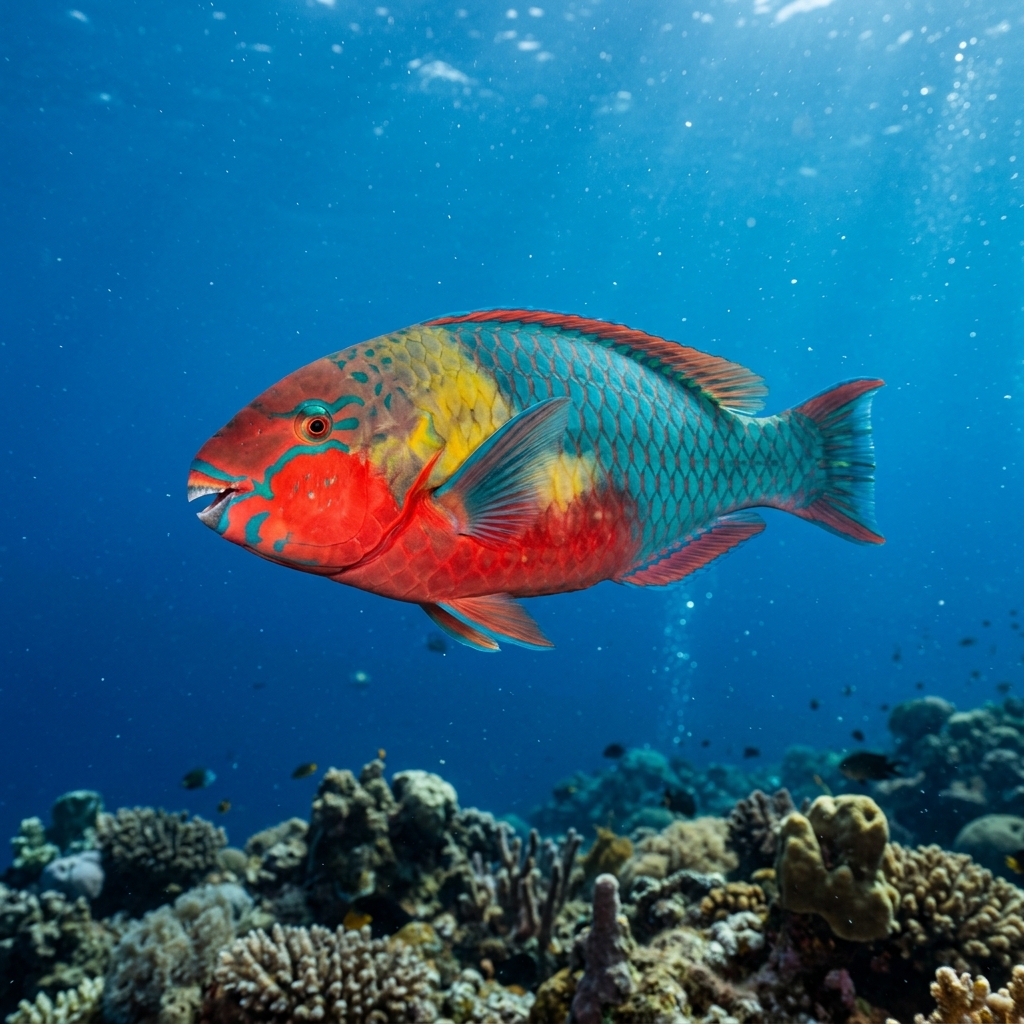
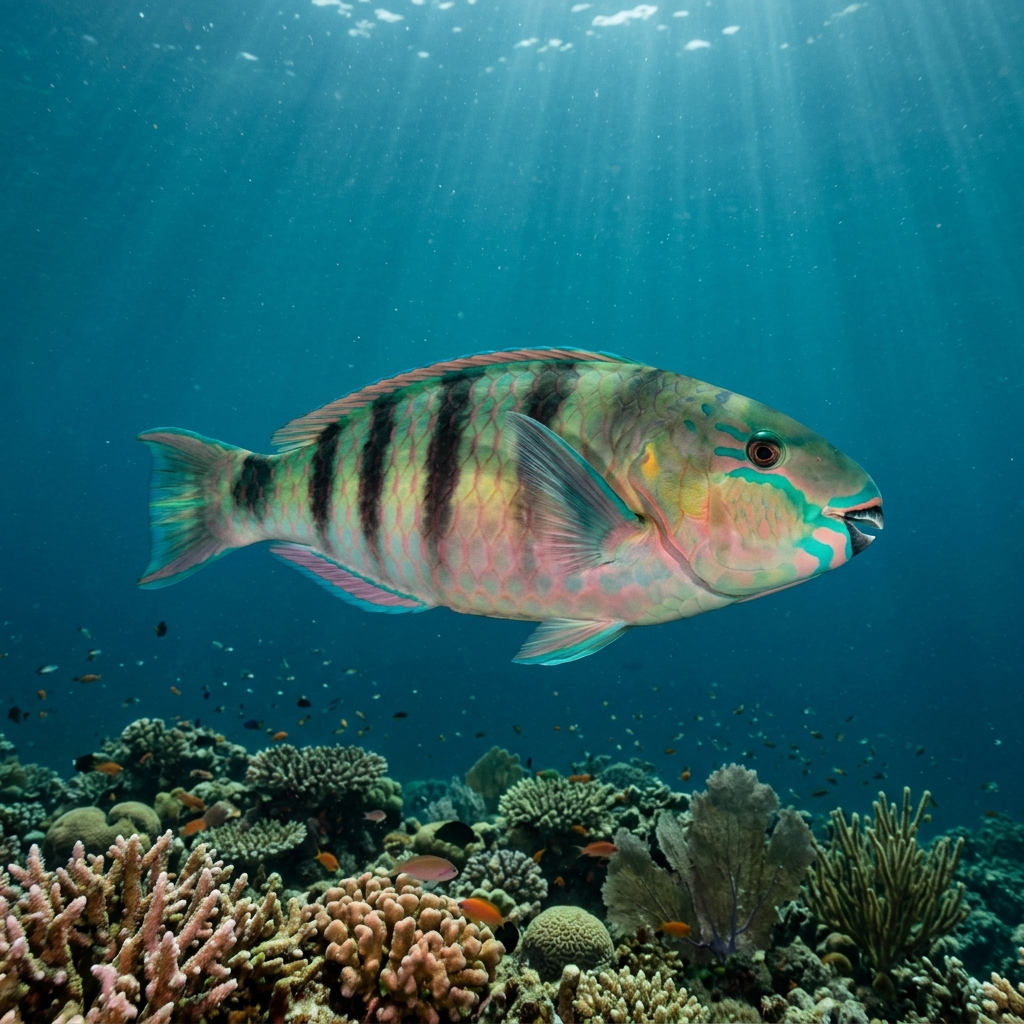
Reef neighbours a diver could mistake it for. Use the identification notes above to tell them apart.
This one is most reliably logged off Baja California in Mexico, which accounts for the bulk of recorded sightings, with the Galápagos Islands in Ecuador and Guanacaste in Costa Rica the next best bets. Beyond Baja, Mexico's Pacific Coast and Ecuador's Pacific Coast also turn up occasional records, but sightings anywhere are logged as rare to uncommon more often than common.
Mapping where Bumphead Parrotfish is logged…
Baja California in Mexico is the strongest region for sightings, followed by the Galápagos Islands in Ecuador and Guanacaste in Costa Rica. Mexico's and Ecuador's Pacific coasts also produce occasional records.
There is no clear seasonal pattern in the data, so sightings happen year-round. It is found in water from about 21.1 to 28.5C, which covers most of the diving calendar in its range.
Look for a stocky grey-green parrotfish around half a metre long with a noticeably steep, bumped forehead and a fused beak-like mouth. It moves slowly while grazing rock and reef surfaces rather than swimming in open water.
They typically reach around 53 centimetres in length, giving them a solid, heavy-bodied look compared with slimmer reef fish nearby.
The raised bony forehead is thought to be used for headbutting rivals during territorial disputes or feeding competition, a feature it shares with the green humphead parrotfish of the Indo-Pacific.
Site and sighting data is aggregated from diver logs, iNaturalist and GBIF. For taxonomy and conservation status:
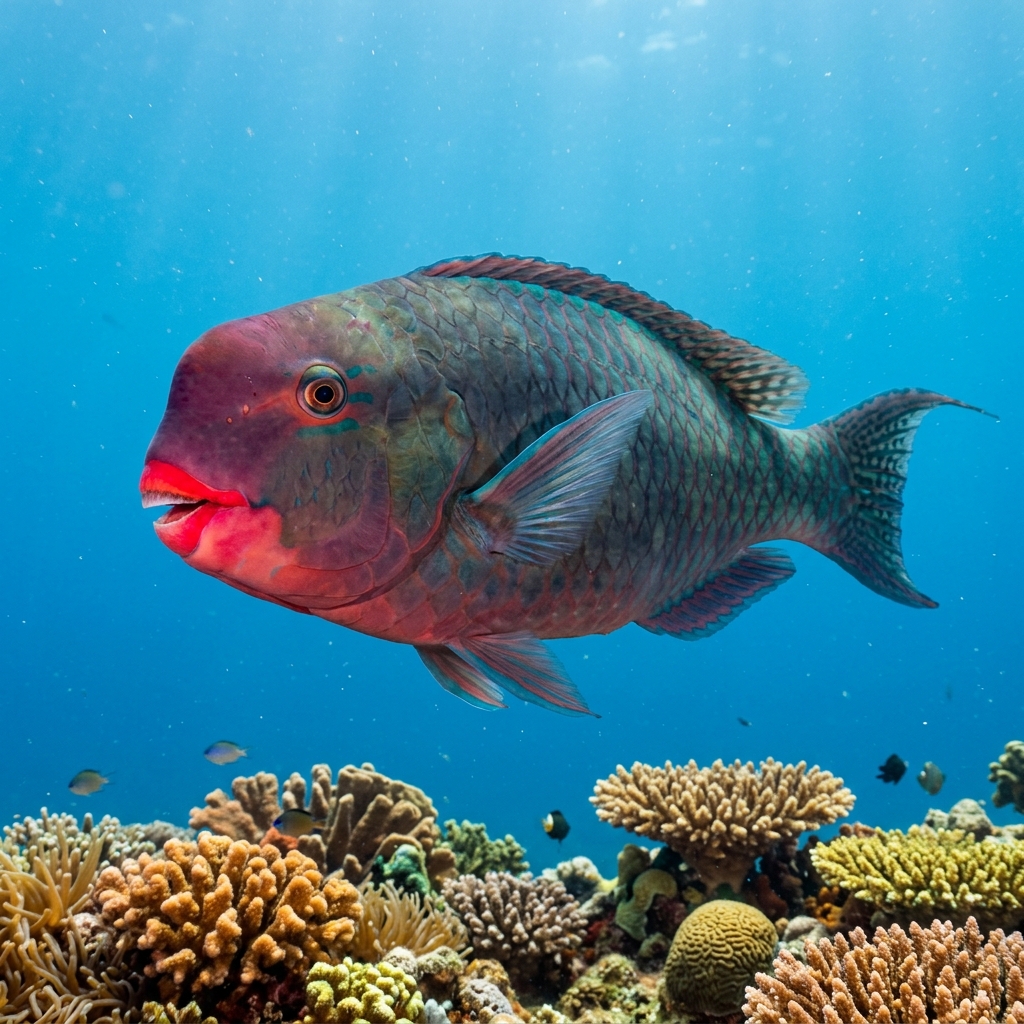
Redlip Parrotfish
2,789 sites