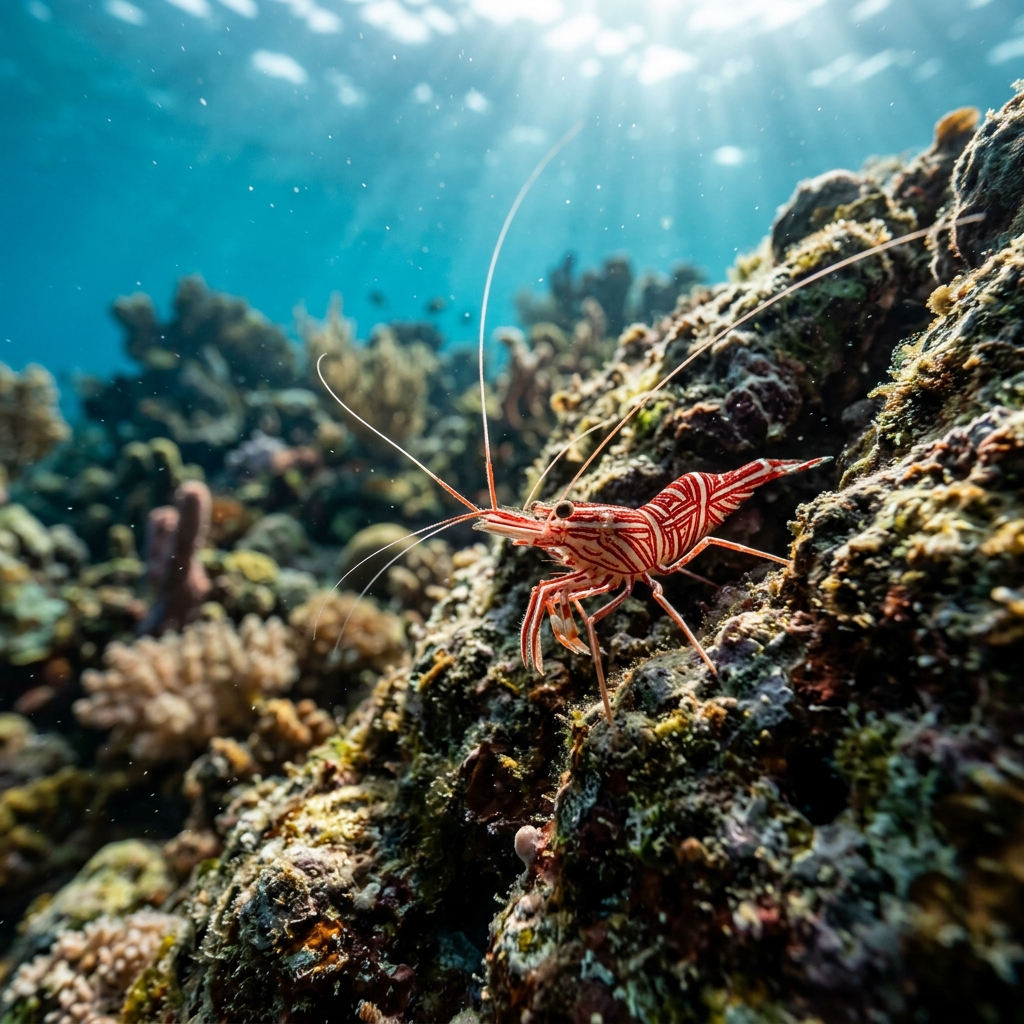
Gnathophyllum spp.
Rare, tiny and easy to miss: hunt for bumblebee shrimp in Luzon, Palawan and the Visayas year-round on tropical reefs.
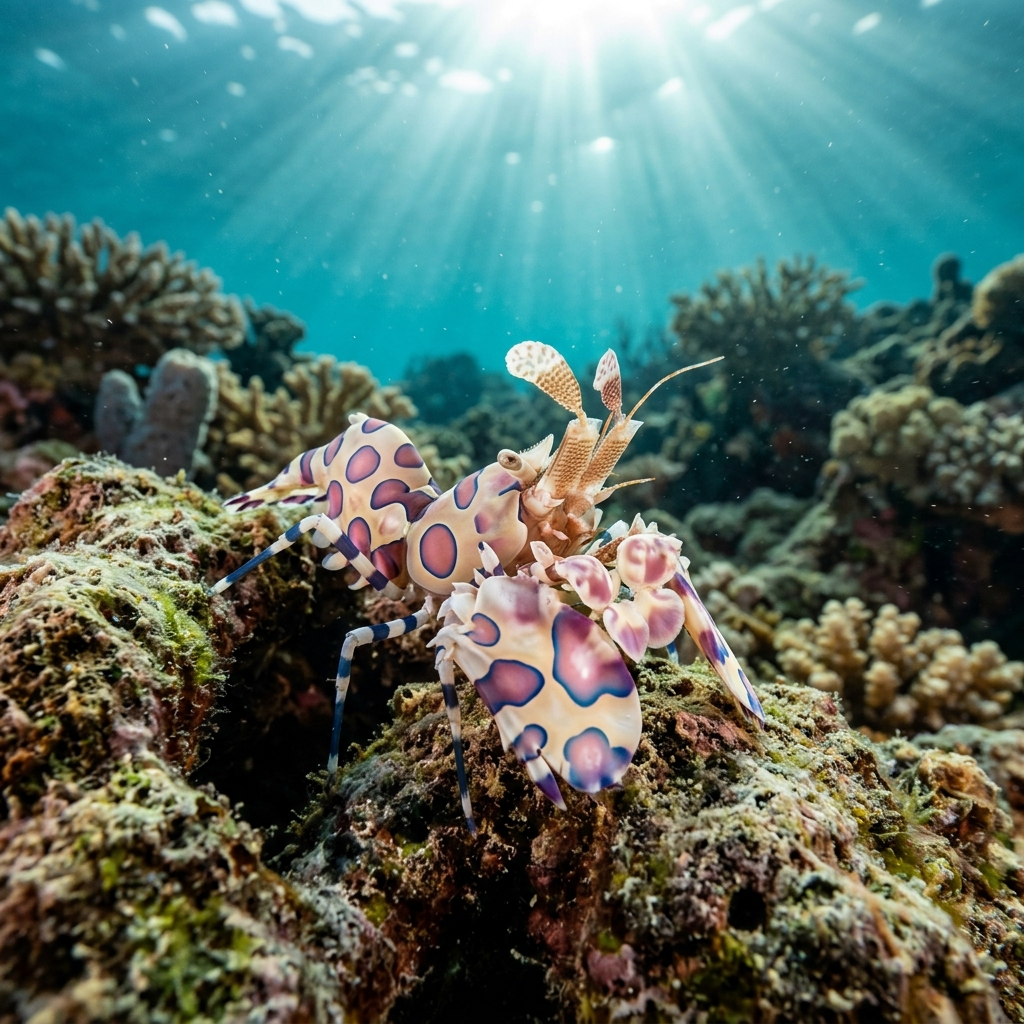
Tiny bodies, usually under two centimetres, banded in bold yellow, black and white in a pattern that mimics the insect for which the group is named. Stout and rounded rather than slender like most cleaner shrimp, with short antennae and a low, hump-backed profile. The colour pattern varies between species in the genus, but the yellow-black-white banding is the giveaway across the group.
Divers find these shrimp parked on sponges or hard coral, often working over the surface in short, deliberate movements rather than darting about. They are logged as rare even at sites where they occur, so sightings tend to come from divers doing a slow, close look at coral heads and sponge patches rather than mid-water scanning. They show little concern for divers, mostly because they rely on their small size and banding to go unnoticed rather than on fleeing.
Species in this genus are known to feed on the tube feet and soft tissue of echinoderms such as sea stars and sea cucumbers, a specialised diet that ties their presence to having the right host nearby.
No clear seasonal pattern shows up in the data, and with a comfortable range of roughly 14 to 29 C this genus turns up on tropical and subtropical reefs throughout the year. Treat any dive trip to its range countries as a fair chance, rather than planning around a particular month.
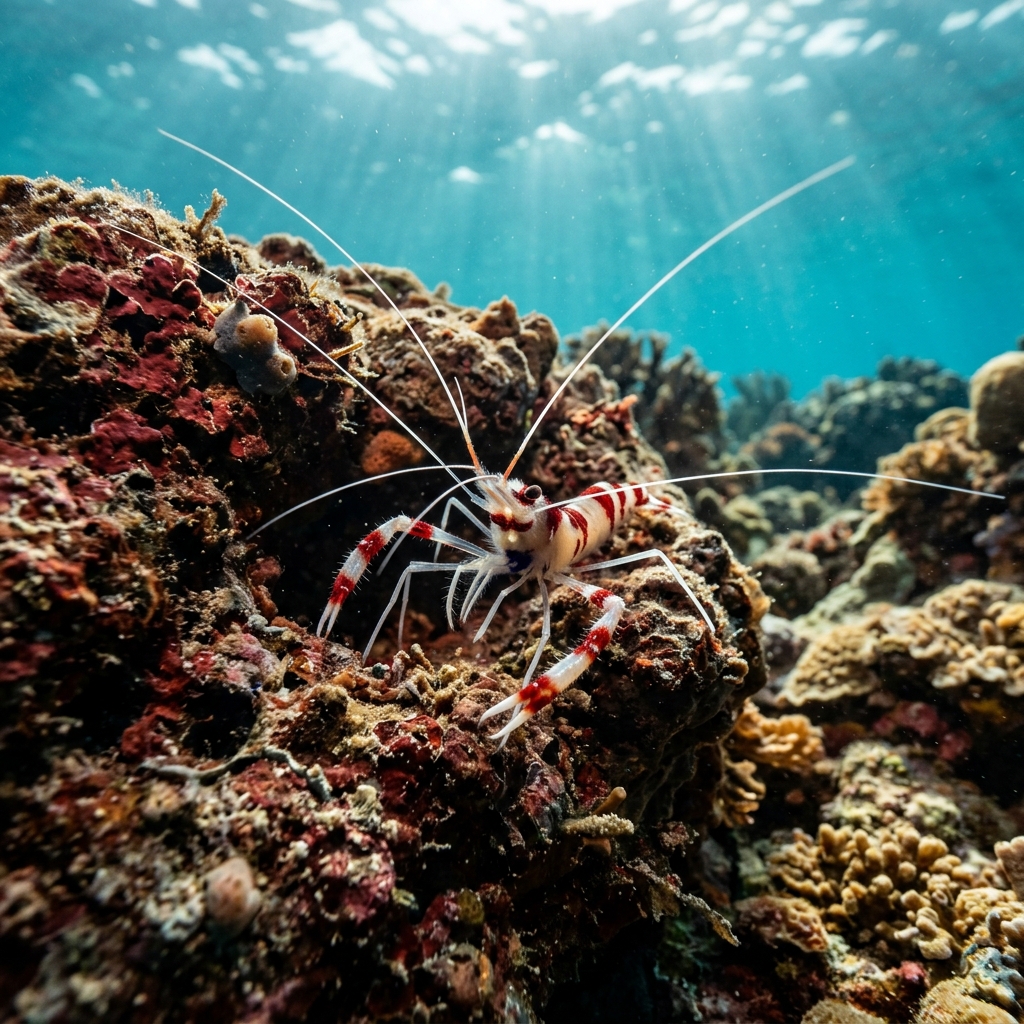
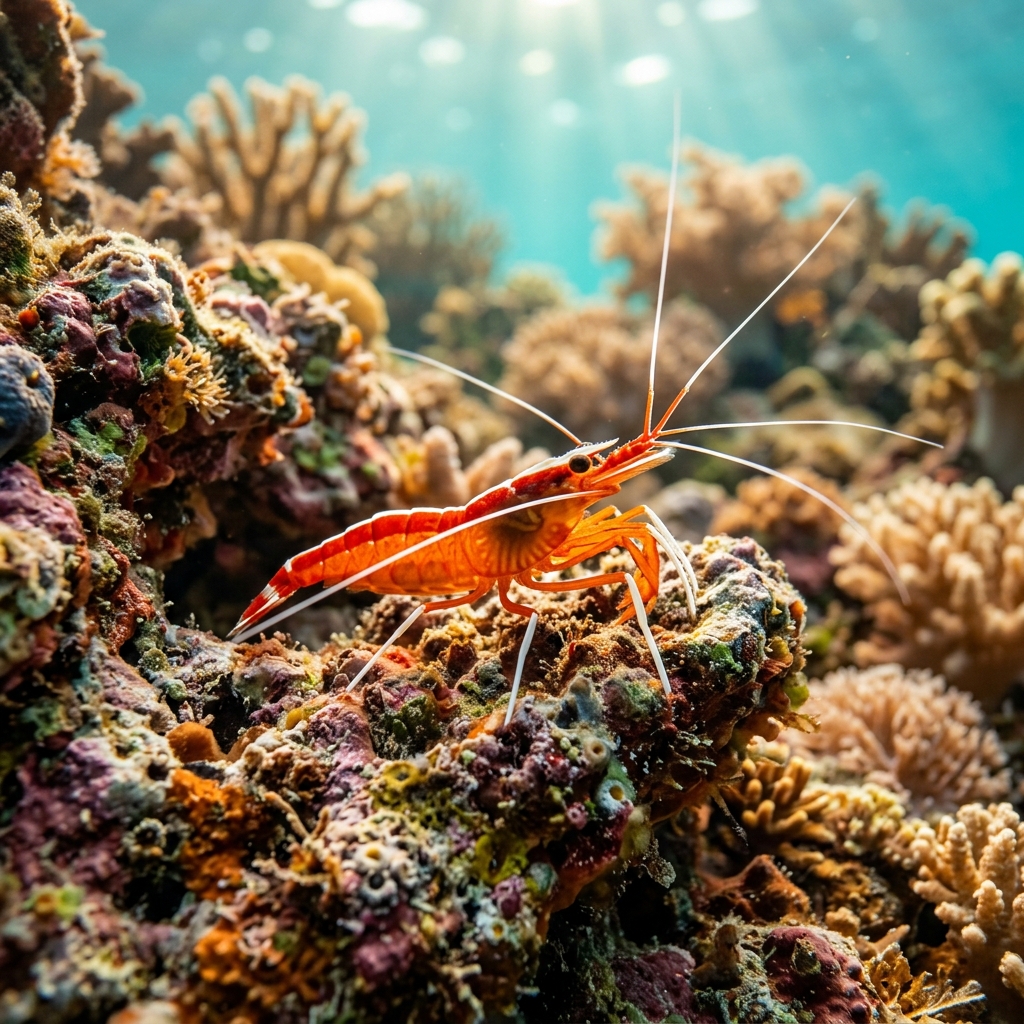
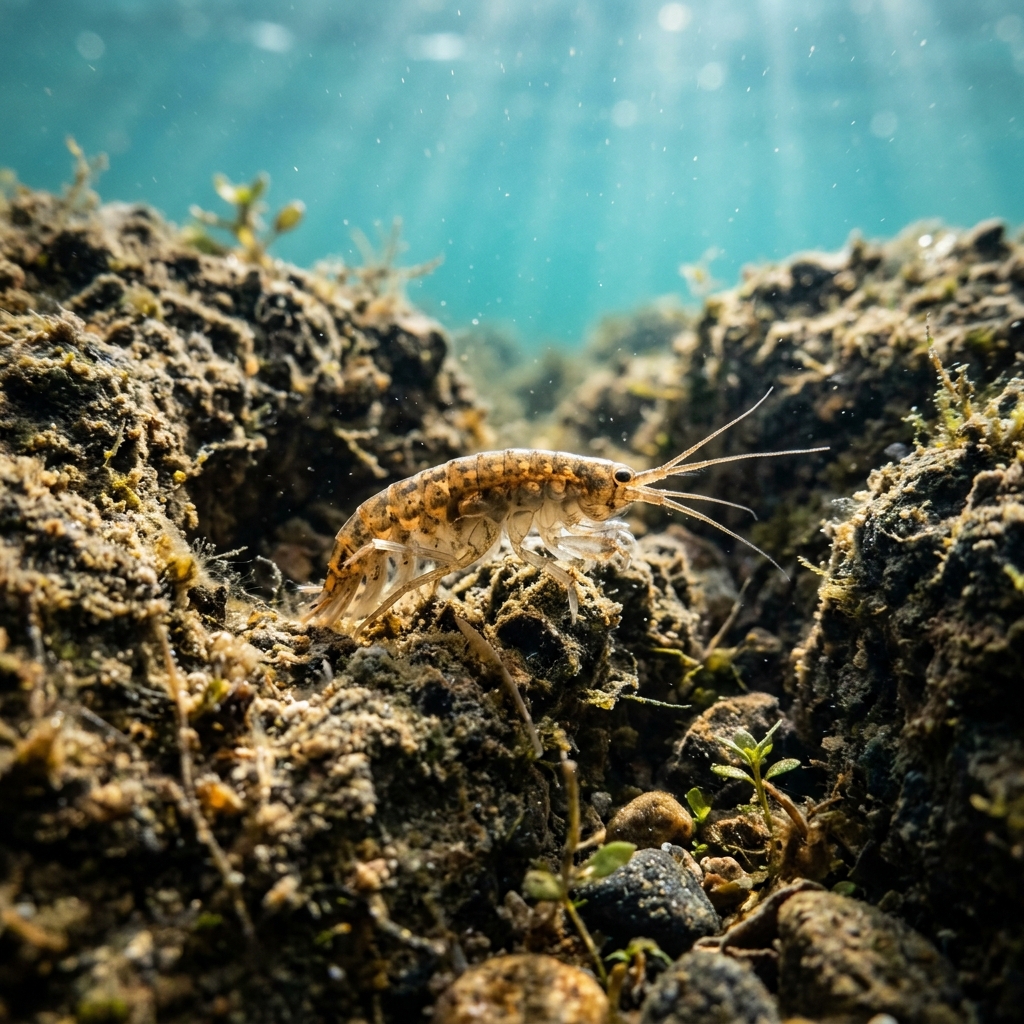
Reef neighbours a diver could mistake it for. Use the identification notes above to tell them apart.
Most commonly logged in the Philippines, with strong showings across Luzon, Palawan, Mindanao and the Visayas, and a reliable presence in Indonesia's Sulawesi. Beyond the Coral Triangle, divers also log them in Australia, Cuba, Venezuela, Colombia, the Bahamas and Florida, so both Indo-Pacific and Caribbean reefs are in play.
Mapping where Bumblebee Shrimp is logged…
The Philippines is the strongest area, especially Luzon, Palawan, Mindanao and the Visayas, with Sulawesi in Indonesia also productive. Smaller numbers turn up in Australia, Cuba, Venezuela, Colombia, the Bahamas and Florida.
There is no strong season in the sighting data, and the species tolerates a wide temperature range from about 14 to 29 C. That points to a year-round presence on reefs within its range rather than a narrow window.
Look for a tiny, rounded shrimp under two centimetres banded in yellow, black and white, usually sitting still on a sponge or coral head. The stocky shape and bold banding separate it from slimmer cleaner shrimp species nearby.
They stay small, generally under two centimetres, which is part of why sightings are logged as rare even where they occur. Divers usually need to be looking closely at a coral head or sponge to spot one.
Several species in this genus feed on the tube feet and tissue of sea stars and sea cucumbers, a diet that ties their whereabouts to specific echinoderm hosts on the reef.
Site and sighting data is aggregated from diver logs, iNaturalist and GBIF. For taxonomy and conservation status:
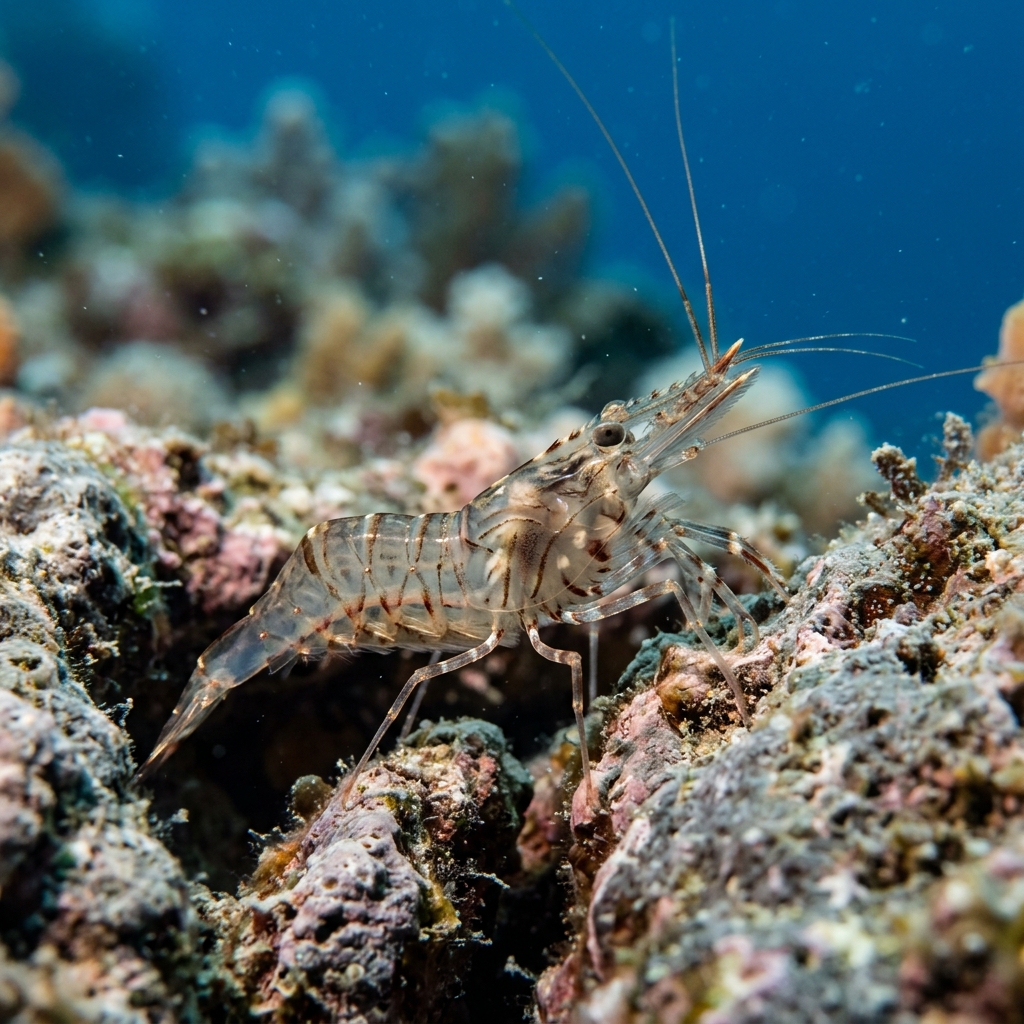
Rockpool Prawn
2,179 sites