Lactophrys trigonus
Boxy, hard-shelled reef oddball found on Yucatán and Florida reefs at 23-28 C, most often logged as an uncommon sighting.
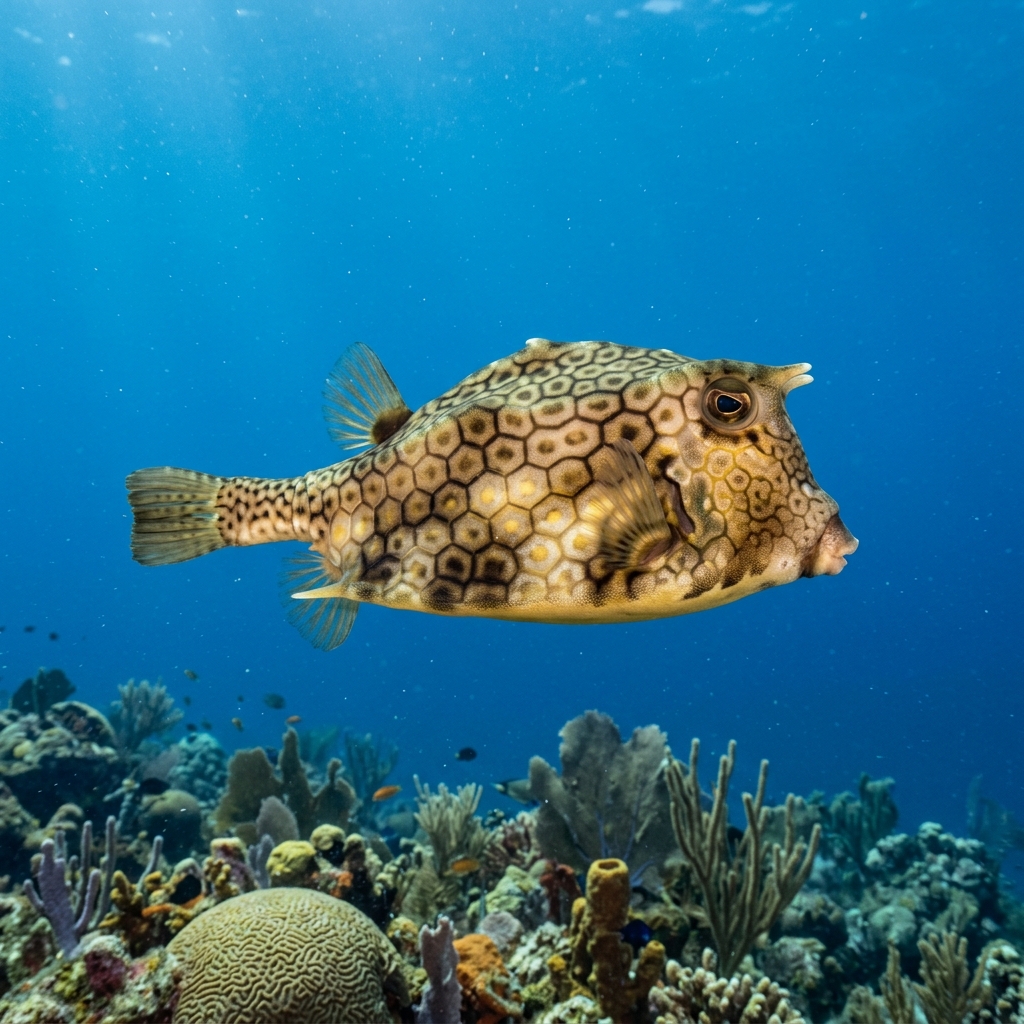
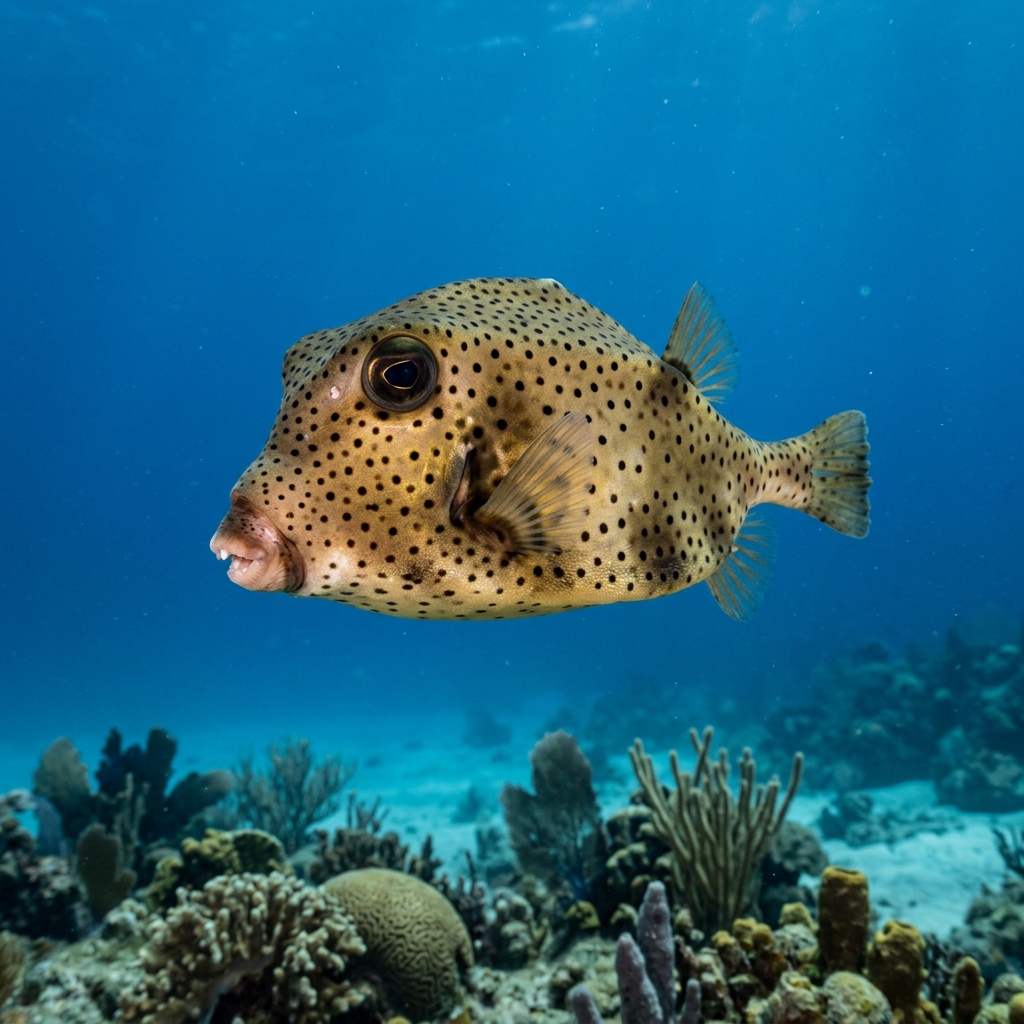
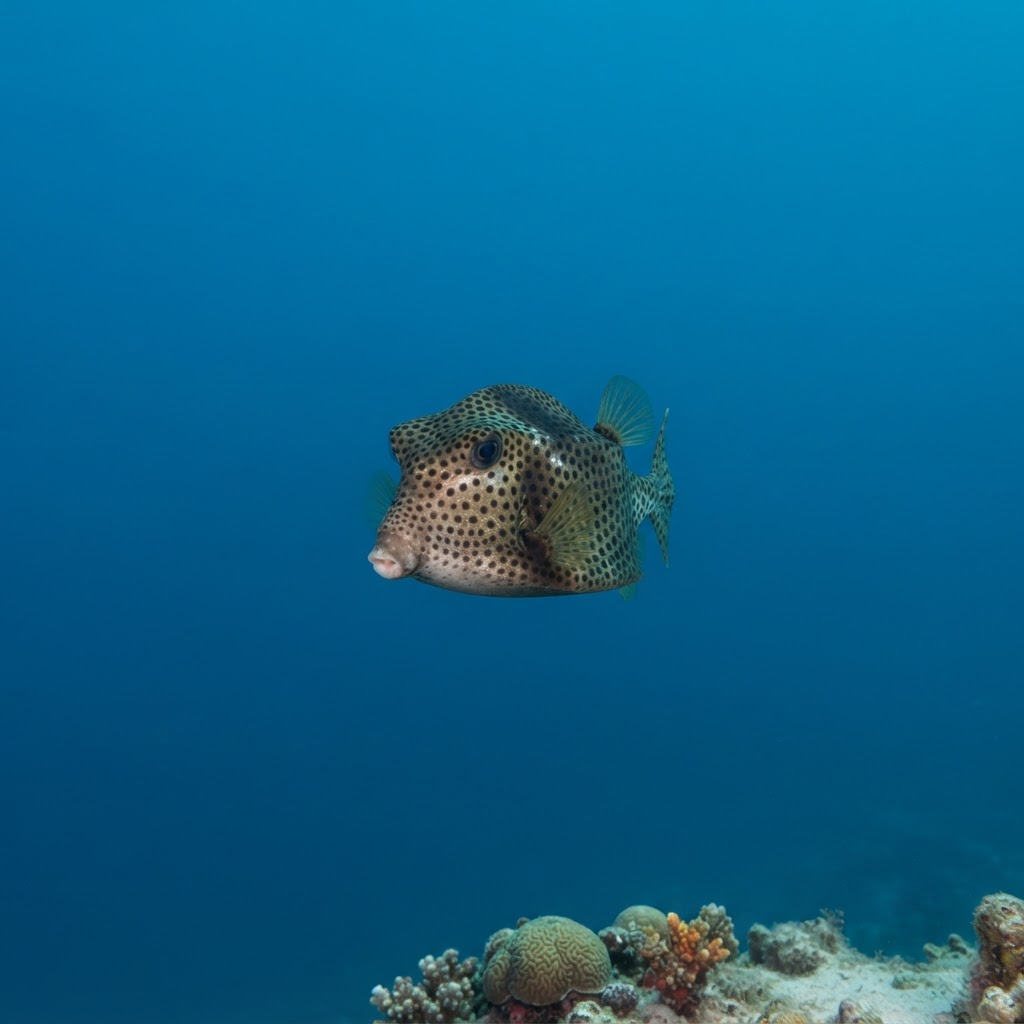
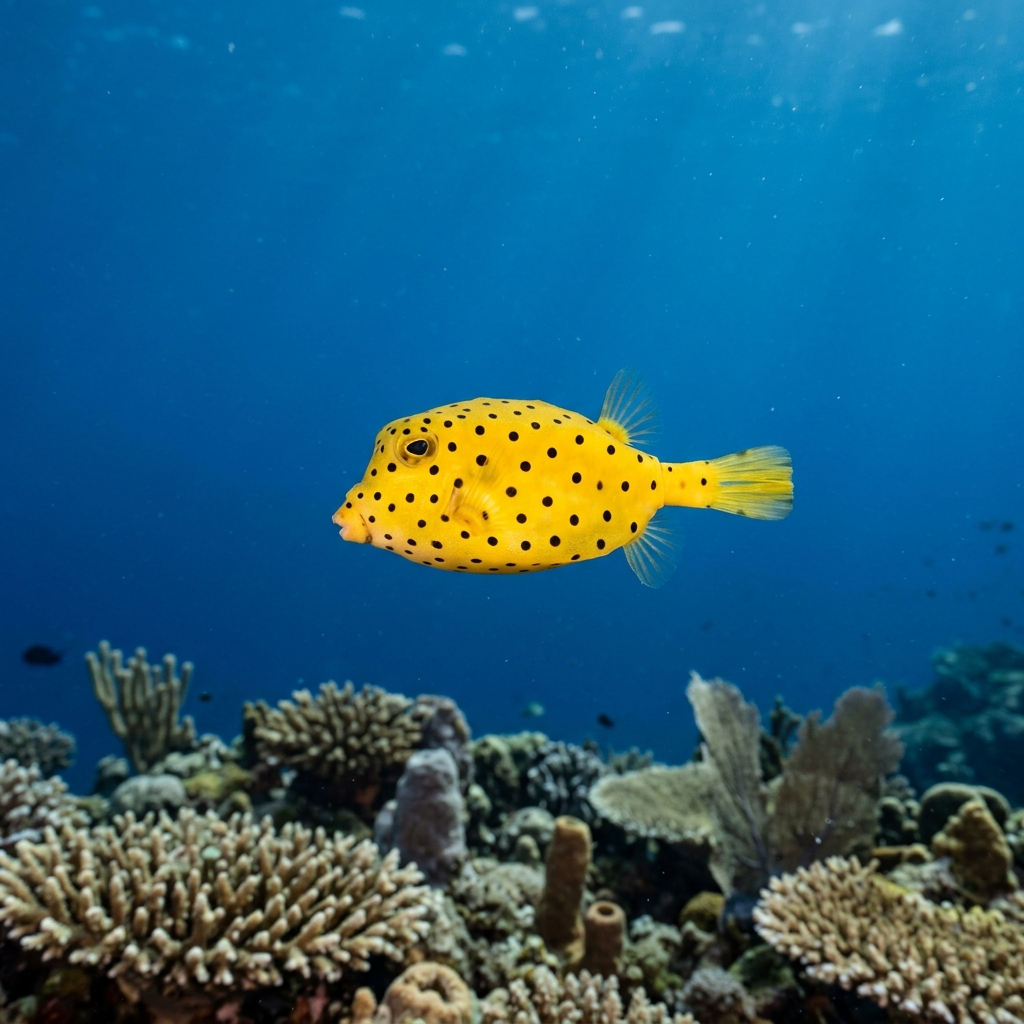
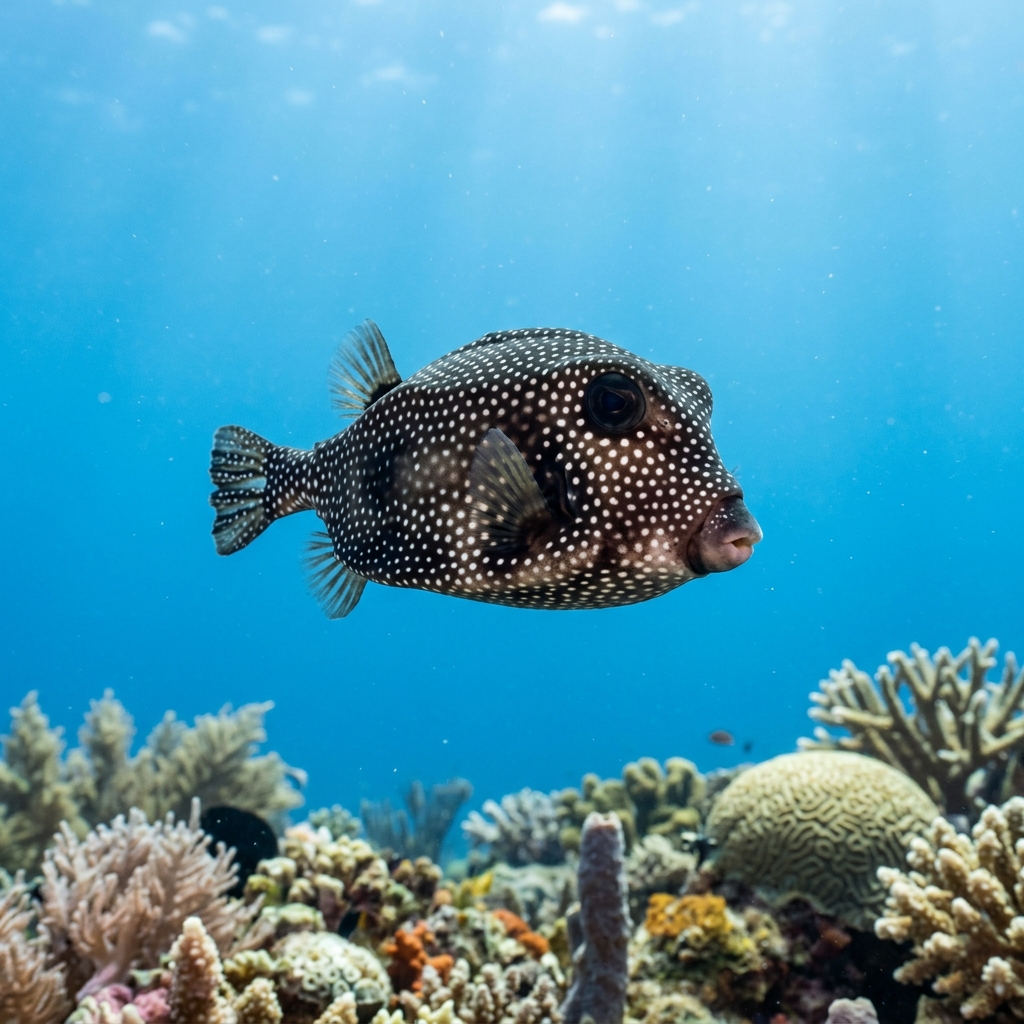
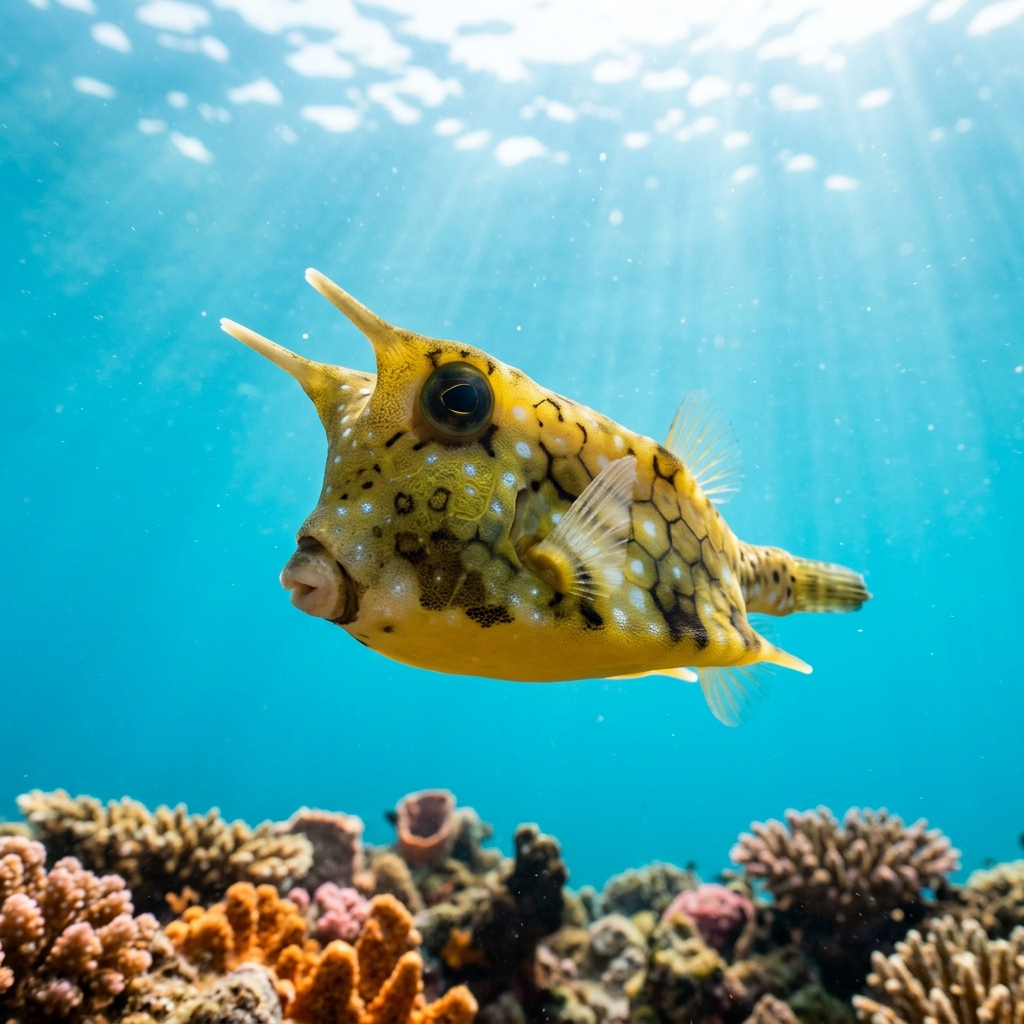
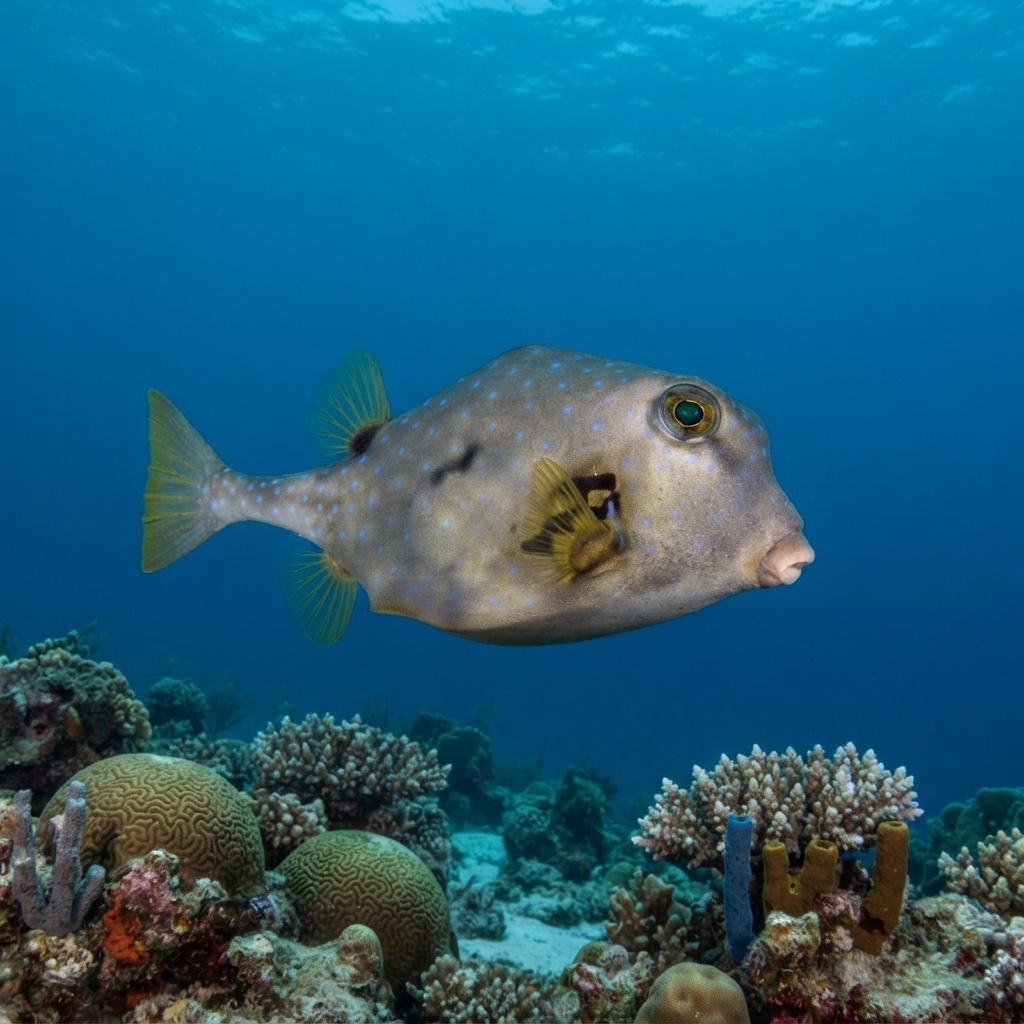
Boxy, angular body encased in a rigid bony shell rather than flexible scales, with a noticeable ridge running along the back that gives it a hump-shouldered look. Colour runs from olive-brown to yellowish-tan, often with faint pale spotting scattered across the flanks. It swims with small, almost fluttery fin movements rather than a fish's usual body flex, which is often the first thing that gives it away at a distance. Adults reach around 38 cm, noticeably bulkier than most reef boxfish you'll cross paths with.
Usually seen ambling slowly over sand patches or low reef structure, picking at the bottom for small invertebrates rather than schooling or patrolling open water. It tends to be unbothered by divers, holding its ground or drifting off at an unhurried pace rather than bolting, which makes it an easy subject for a steady photo. Most sightings come from daytime dives on shallow to mid-depth reef edges rather than deep wall sections.
That rigid box-shaped shell is fused bony plates rather than true scales, so instead of darting away from a threat it relies on being awkward and unpleasant to swallow.
No clear seasonal pattern shows up in the sightings, and its comfort range of roughly 23 to 28 C matches warm Caribbean and western Atlantic reefs year-round, so any month is a reasonable bet.
Reef neighbours a diver could mistake it for. Use the identification notes above to tell them apart.
Most consistently logged on reefs in the Yucatán Peninsula in Mexico and along Florida in the United States, with a strong secondary presence in Grande-Terre, Guadeloupe, and Fernando de Noronha in Brazil. Divers also report it around Arashi and Boca Catalina in Aruba and Lighthouse Reef in Belize, generally as an uncommon find rather than a given.
Mapping where Buffalo Trunkfish is logged…
Best chances are on reefs in Mexico's Yucatán Peninsula and along Florida, with further sightings around Grande-Terre in Guadeloupe, Fernando de Noronha in Brazil, and Aruba's Arashi and Boca Catalina sites.
There's no strong seasonal pattern in the sightings, and warm reef temperatures between about 23 and 28 C hold year-round across its range, so it's a reasonable spot on any given dive.
Look for a boxy, hard-shelled body with a raised ridge along the back, olive-brown to yellowish colouring, and faint pale spotting. It moves with small fluttering fins rather than a typical body-flex swim.
They grow to around 38 cm, making them one of the bulkier boxfish a diver is likely to encounter on a reef.
No, they pose no threat to divers and are generally unbothered by a calm approach, making them easy to observe and photograph at close range.
Site and sighting data is aggregated from diver logs, iNaturalist and GBIF. For taxonomy and conservation status:
Honeycomb Cowfish
1,691 sites