Hemigrapsus takanoi
Tucked under rocks in Zeeland's cold, shallow water, this small crab is a reliable find year-round for divers who know where to look.
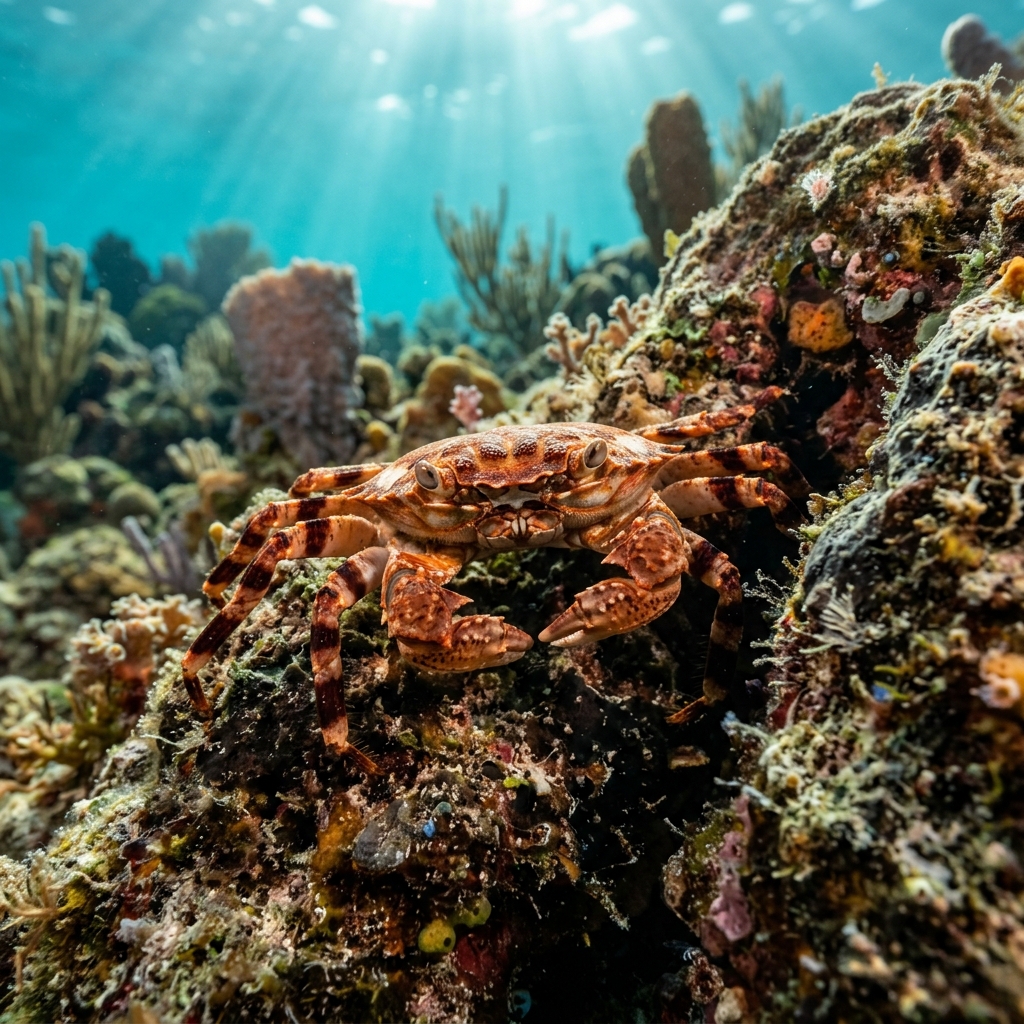
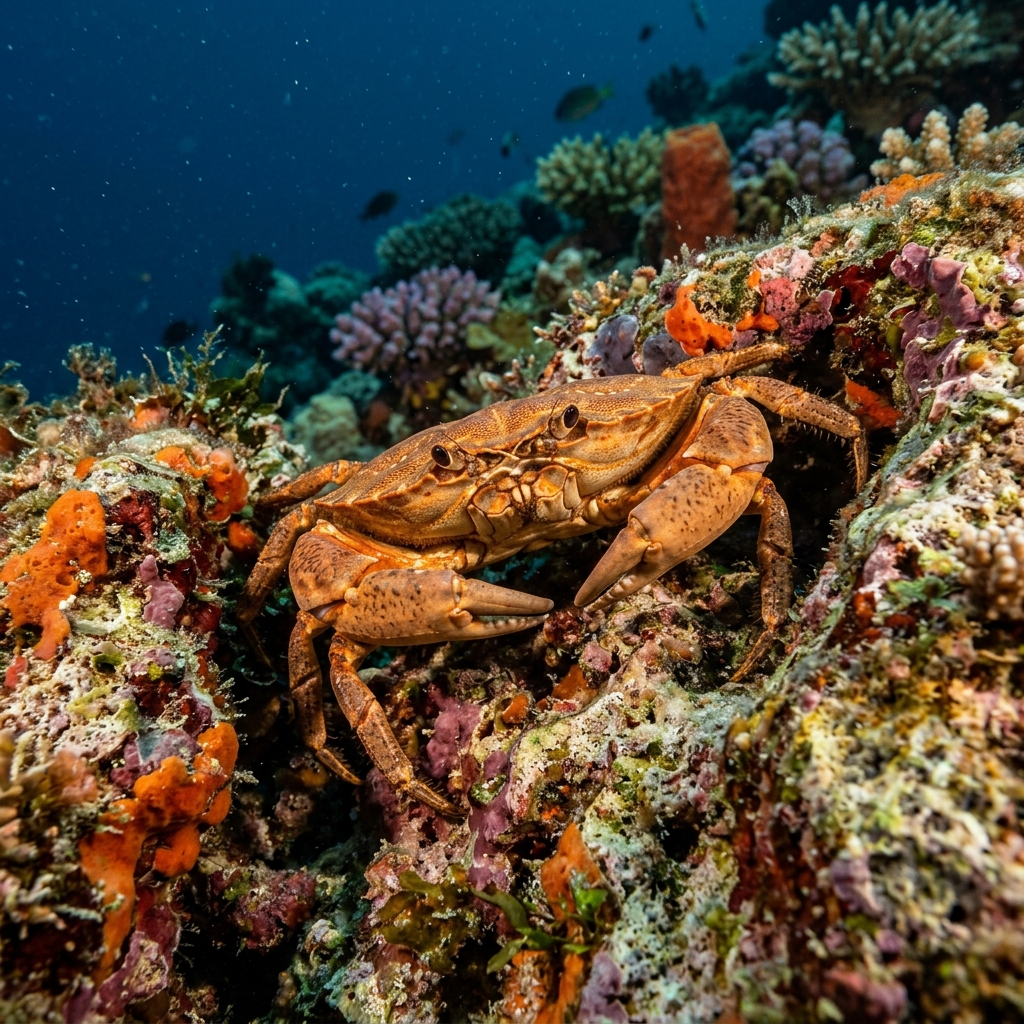
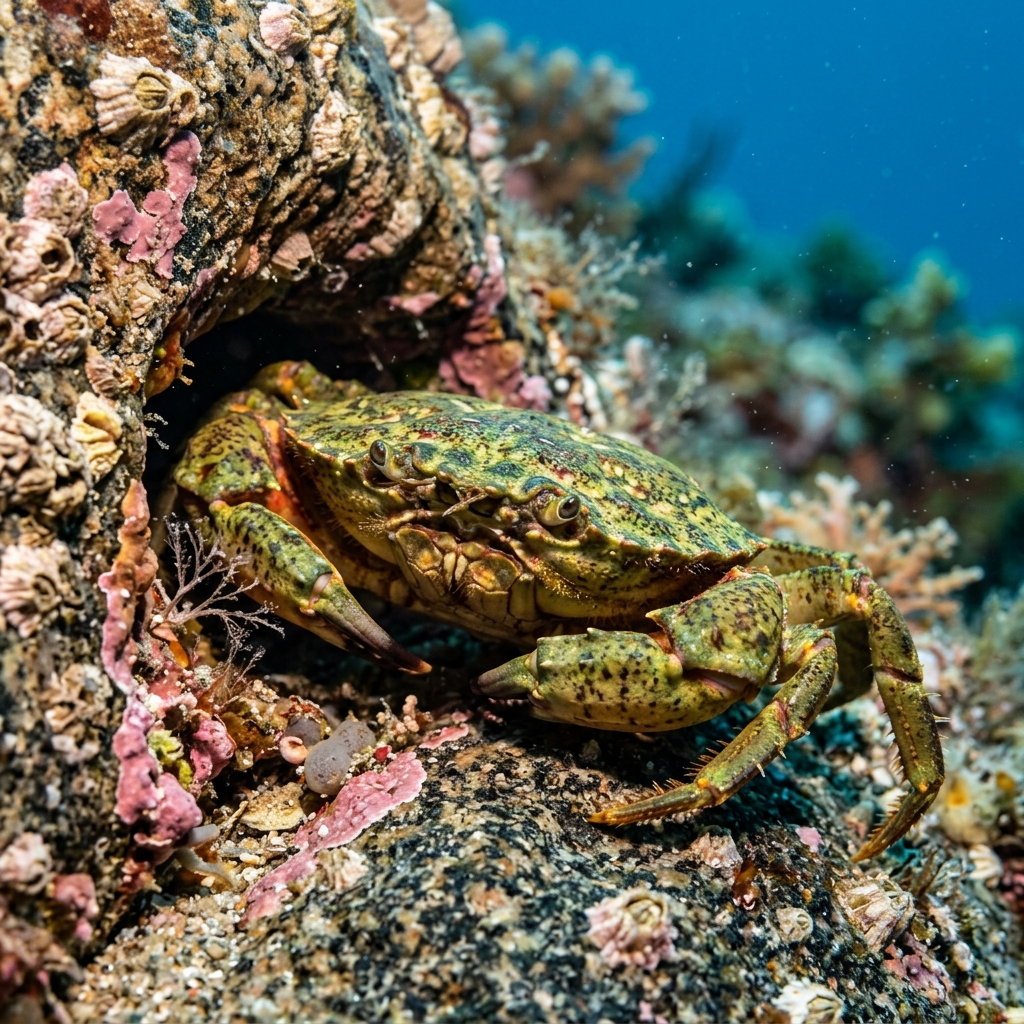
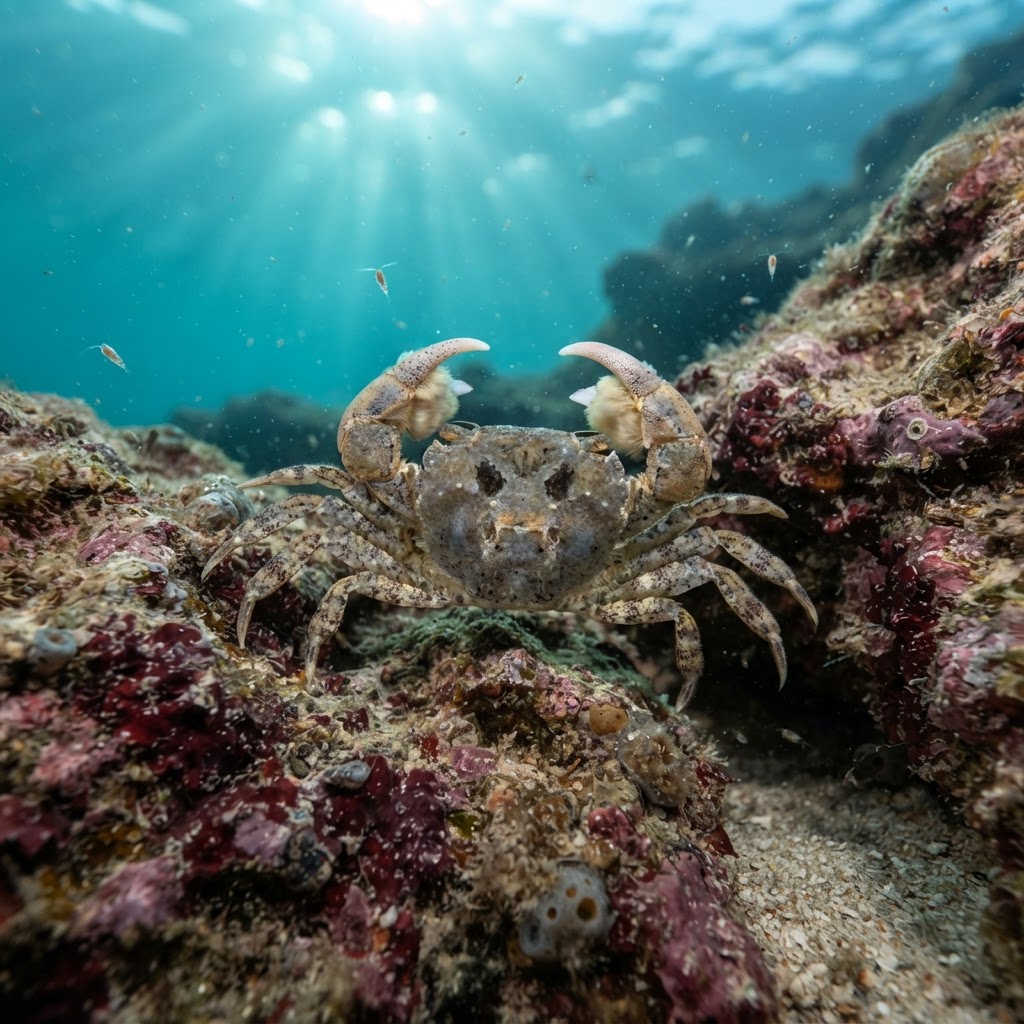
Small, squarish crab, usually only a few centimetres across the shell, with a mottled brown to greenish carapace that blends into rock and gravel. The giveaway is the tuft of stiff bristles at the base of the claw fingers, visible if you get close and steady your torch. Claws are otherwise pale and roughly equal in size, and the shell has three teeth along each side edge just behind the eyes.
Found wedged under rocks, in shell debris, or tucked into mussel beds rather than out in the open, so divers usually spot it by turning over loose rubble carefully. It reacts to disturbance by freezing or scuttling deeper into cover rather than fleeing across open ground. Most sightings are opportunistic, picked up while looking at other life on the same low-relief bottom.
It's a non-native species in Europe, first recorded on the continent in the early 2000s after arriving with shellfish or ballast water, and has since spread through Dutch and German coastal habitats where it now competes with native shore crabs for the same rubble and mussel-bed niches.
Sightings run year-round with no clear seasonal peak in the data, which fits its tolerance for cold water from roughly 8 to 14 C, well within the range Zeeland and Schleswig-Holstein hold for most of the diving season.
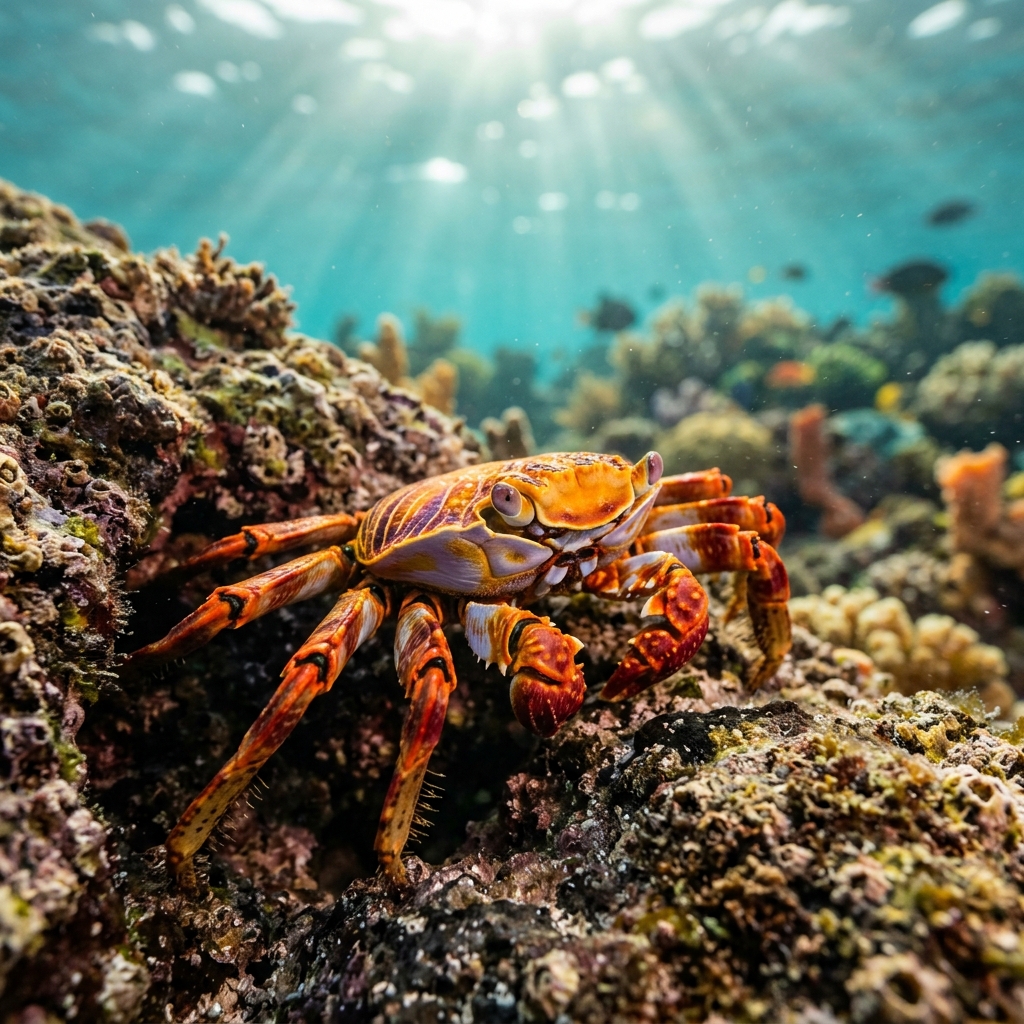
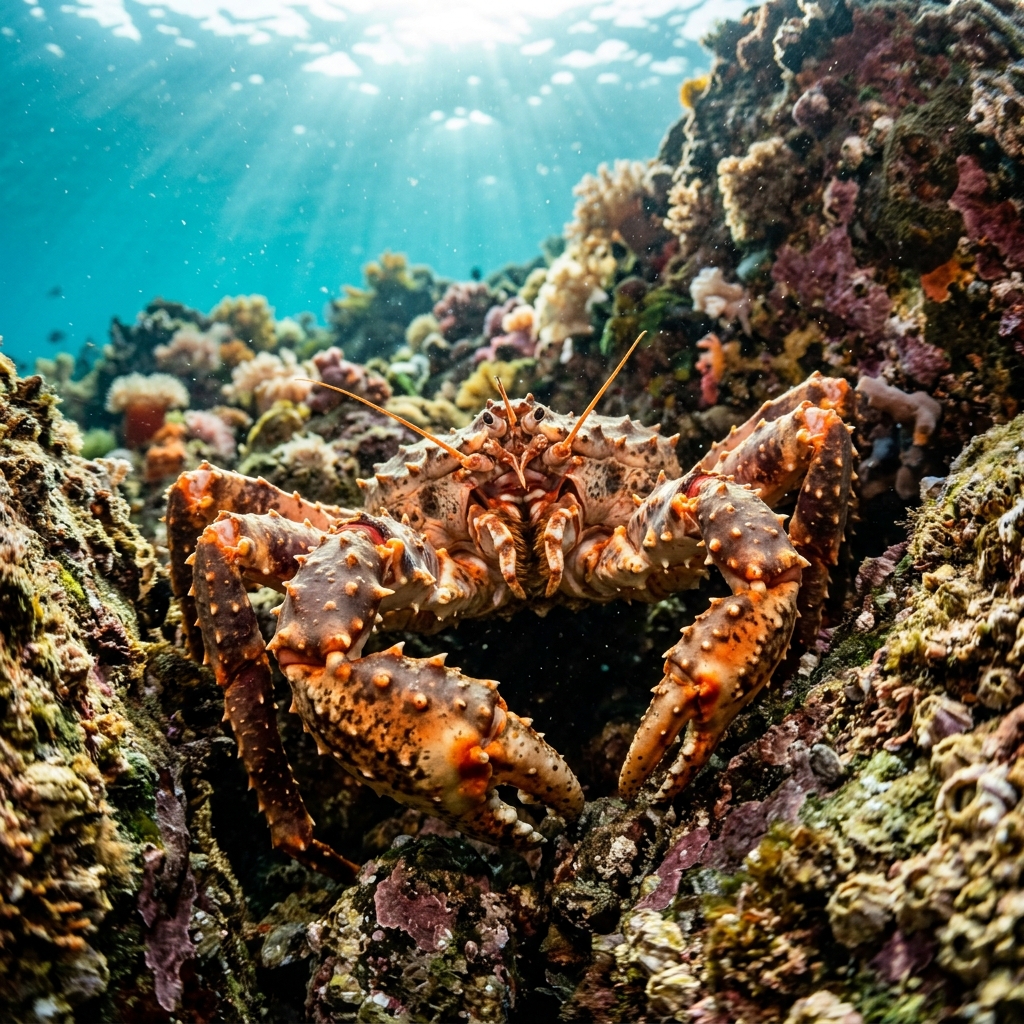
Reef neighbours a diver could mistake it for. Use the identification notes above to tell them apart.
Most logged in Zeeland in the Netherlands, where it turns up in strong numbers across a wide spread of sites, with a smaller but reliable presence in Schleswig-Holstein, Germany. It favours cold, shallow, rock and shell-rubble bottoms typical of Dutch and north German coastal diving rather than open water.
Mapping where Brush-clawed Shore Crab is logged…
Zeeland in the Netherlands is the strongest area, with dozens of sites reporting it, and it's also logged fairly widely along the Schleswig-Holstein coast in Germany. Look on rocky or shell-covered bottoms rather than sand or open water.
There's no strong seasonal pattern in the sightings, so it's considered a year-round find. Its comfort range of roughly 8 to 14 C matches the water temperatures typical of Dutch and German coastal dive seasons.
Check the claws first: a small tuft of bristles sits at the base of the fingers, which is the clearest field mark. The shell is mottled brown or green, squarish, and only a few centimetres across, usually seen tucked under rocks or shell rubble.
They're small, generally a few centimetres across the carapace, easy to miss unless you're scanning rubble and rock crevices closely.
No, they pose no threat to divers. They retreat into cover rather than confront anything that disturbs their rock or rubble hideout.
Site and sighting data is aggregated from diver logs, iNaturalist and GBIF. For taxonomy and conservation status:
European Green Crab
2,469 sites