Cheilinus lunulatus
A reef fixture across South Sinai and Marsa Alam, comfortable in 25-29C water and logged year-round on Red Sea reefs.
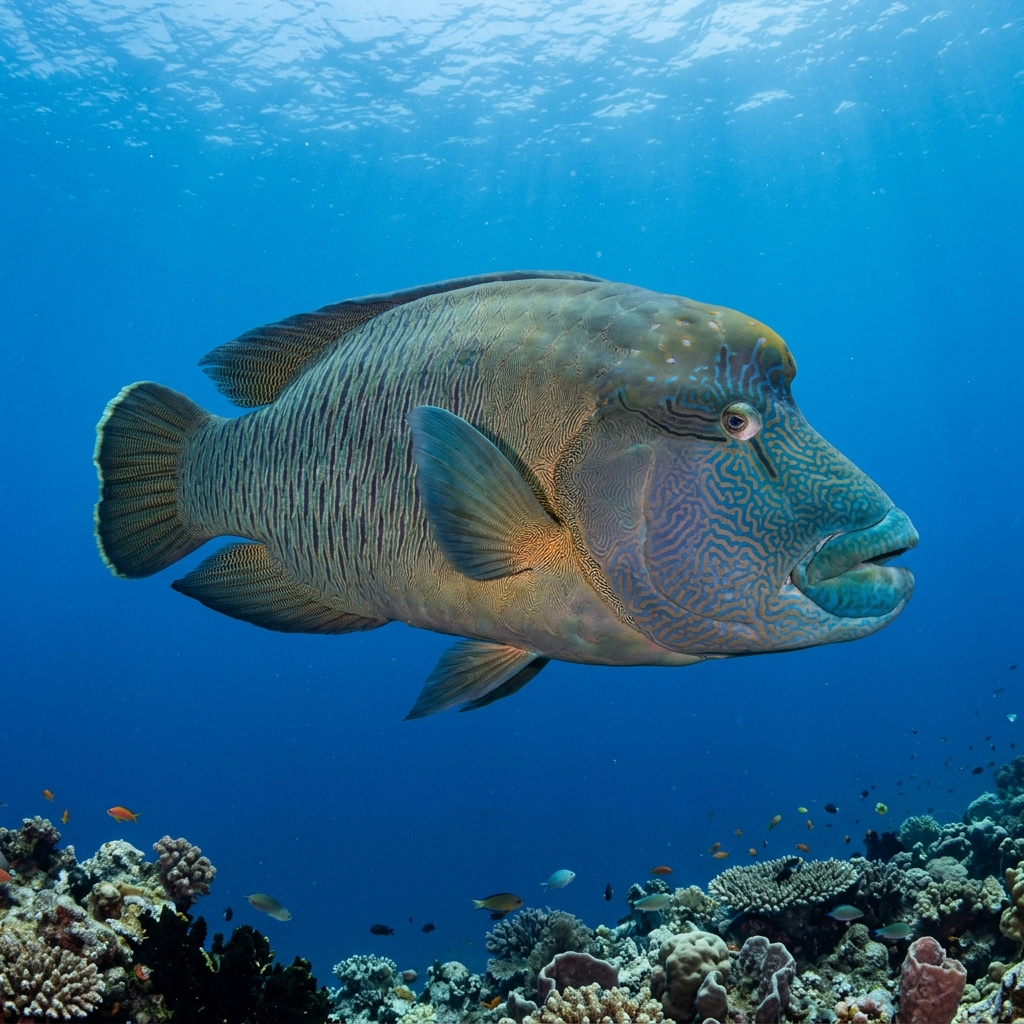
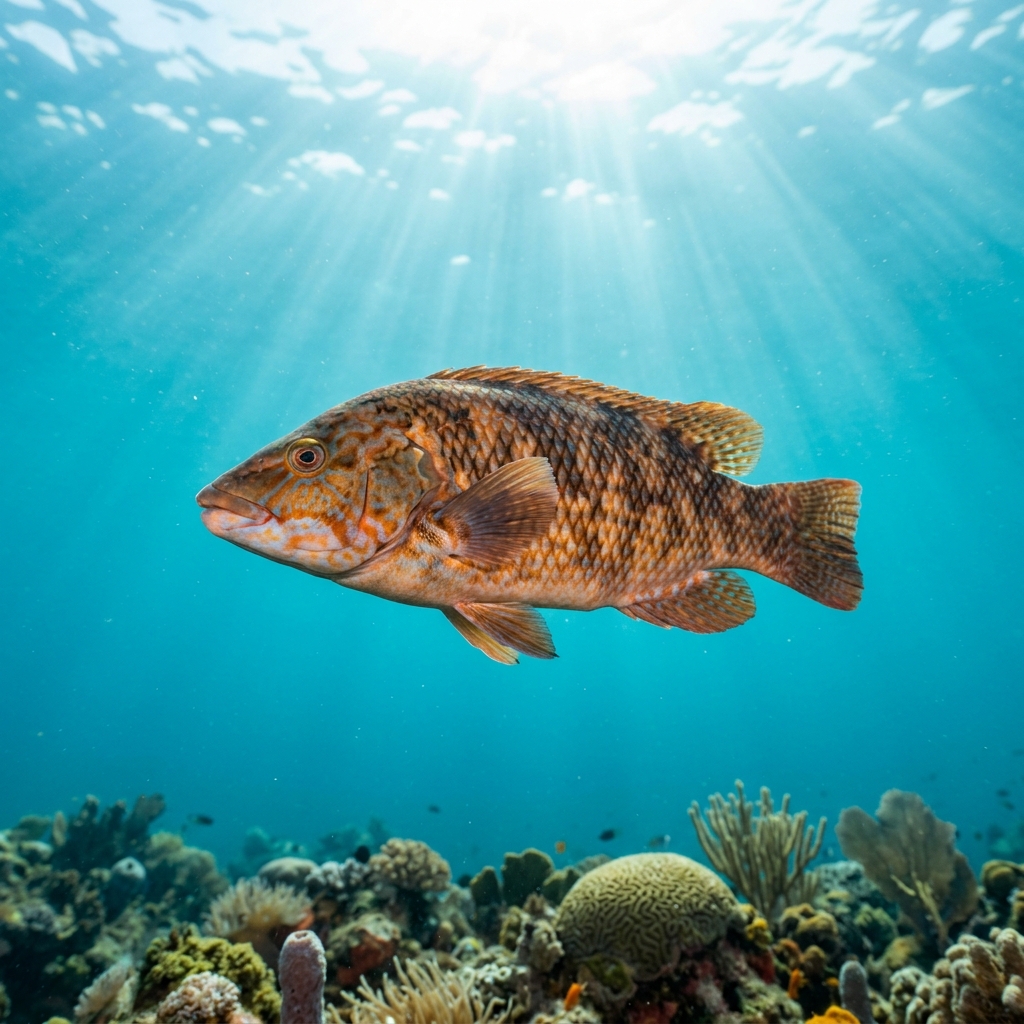
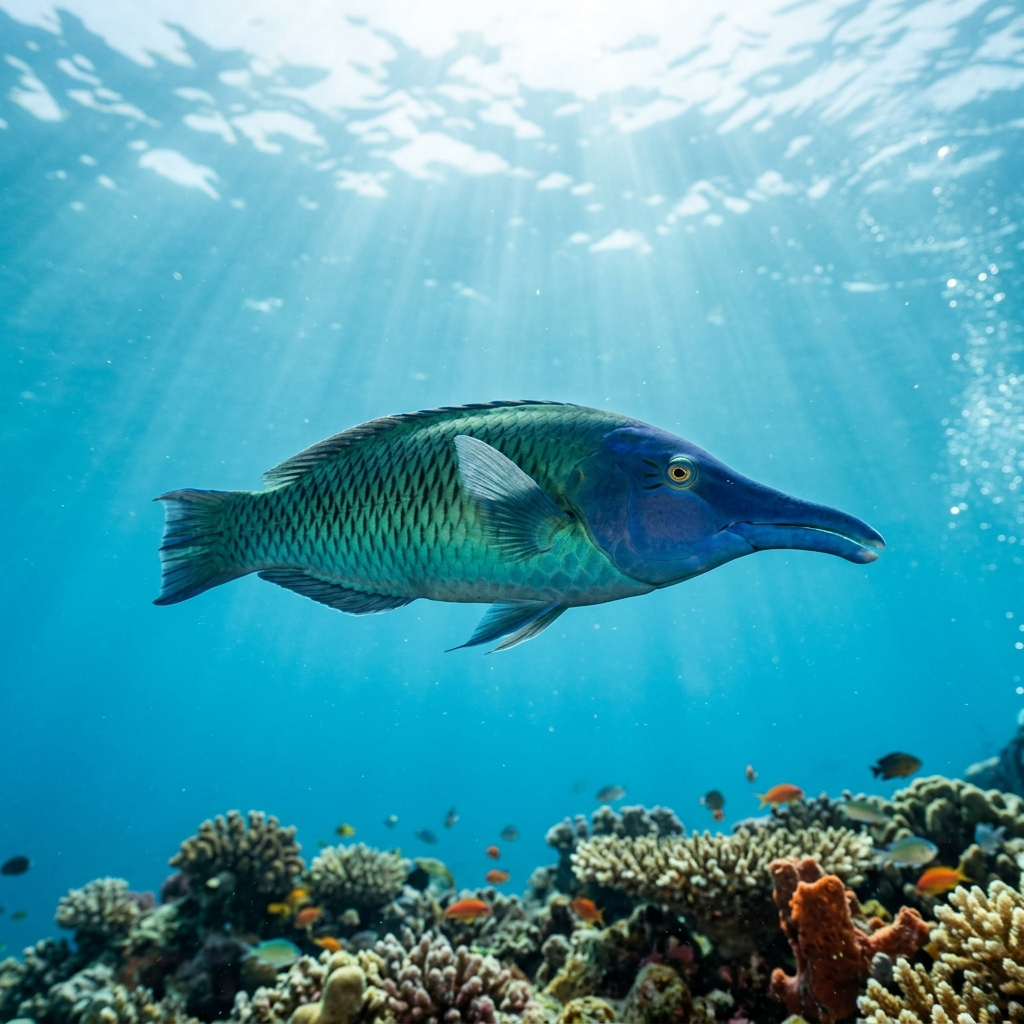
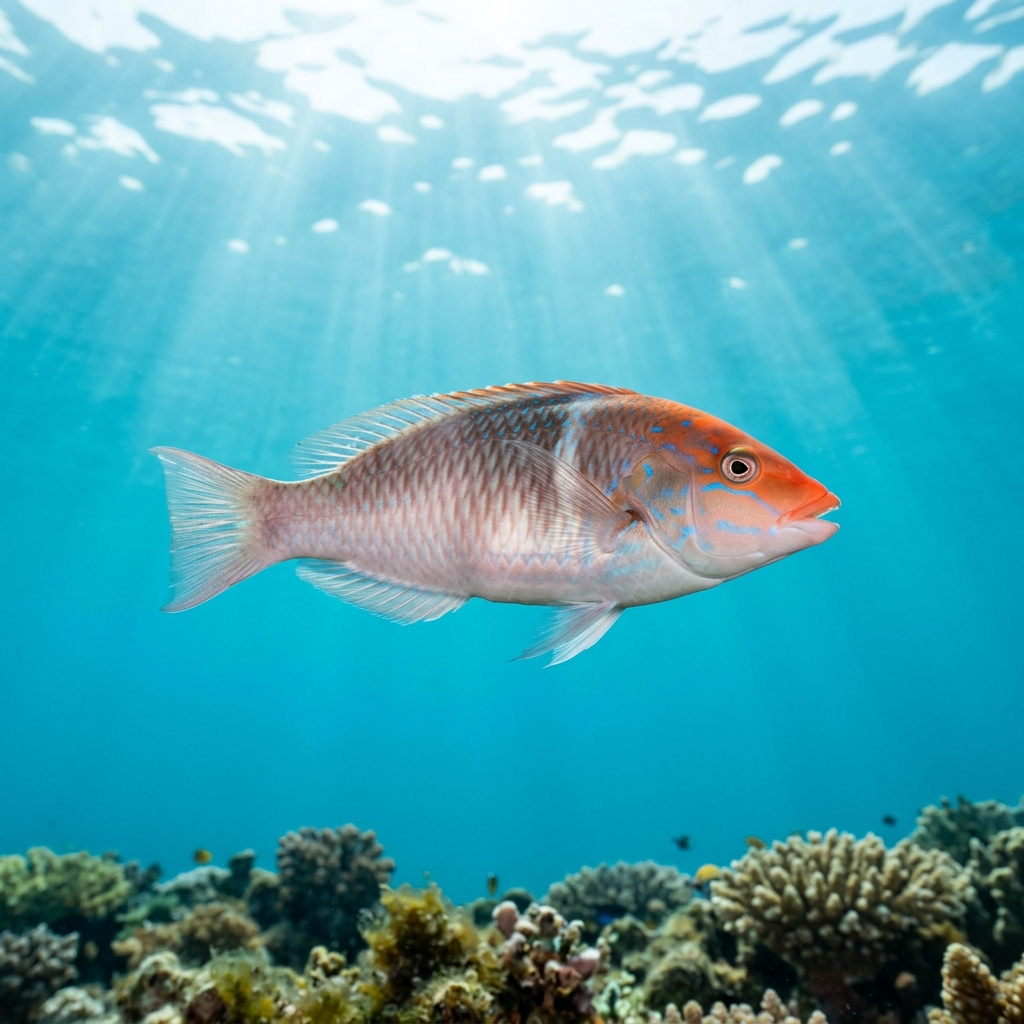
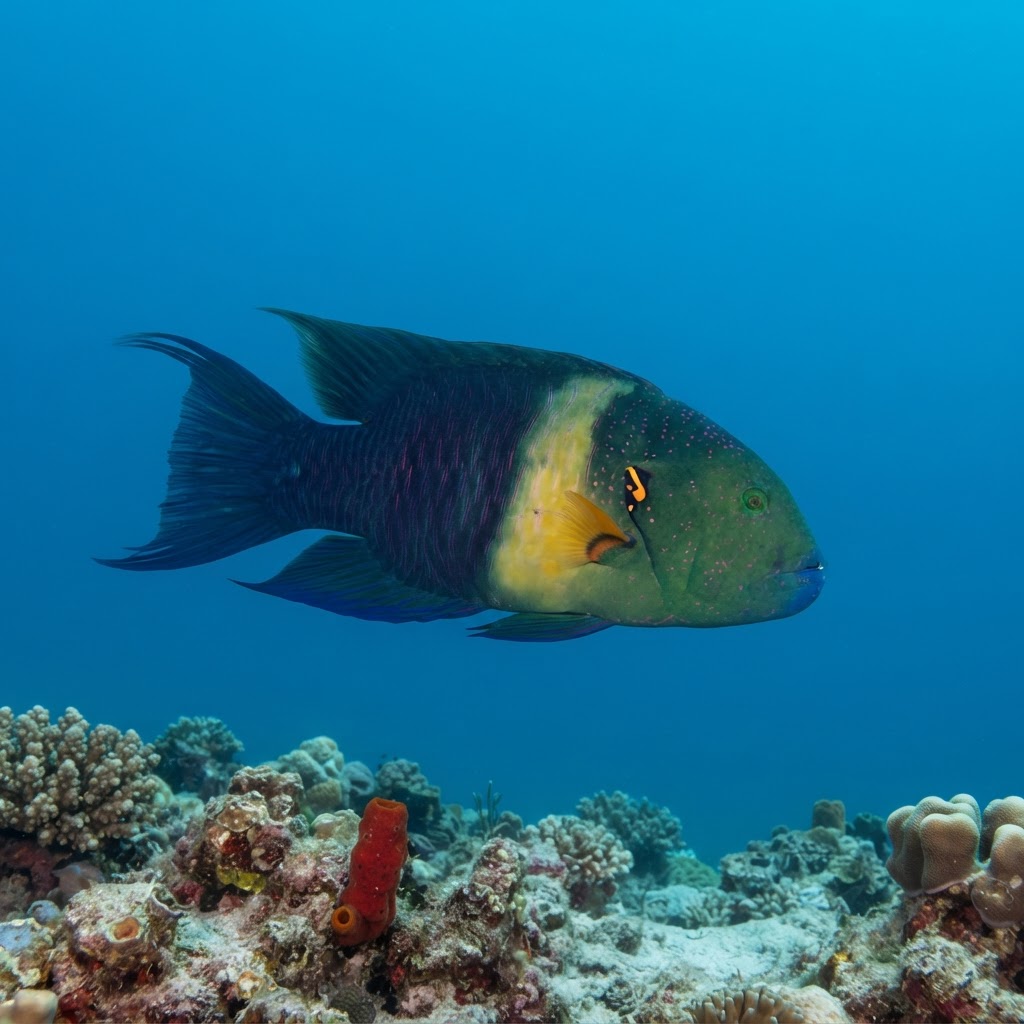
Chunky, football-shaped wrasse to about 35 cm with a blunt head and thick lips typical of the genus. Body colour runs from olive-green to brownish-grey, broken up by pale scribbled markings on the face and a lighter patch behind the head. Look for the squared-off tail (the source of its name) and the slow, deliberate way it moves compared with smaller, darting wrasses on the same reef.
Usually seen cruising slowly over reef flats and rubble patches, nosing into crevices and sand for a meal rather than schooling or chasing anything down. It tends to hold its ground or drift off at an easy pace rather than bolt, making it an easy fish to get a good look at without any special effort. Sightings run from shallow reef tops down to around 30 metres, with no strong pattern tying it to a particular time of day.
Like other large wrasses, broomtail wrasse crush hard-shelled prey such as molluscs and crustaceans with powerful jaws, making them a useful check on invertebrate numbers on the reefs they patrol.
No clear seasonal pattern shows up in the sightings, and its comfort range of roughly 25 to 29 C matches Red Sea and Gulf water for most of the year, so divers log it in every season.
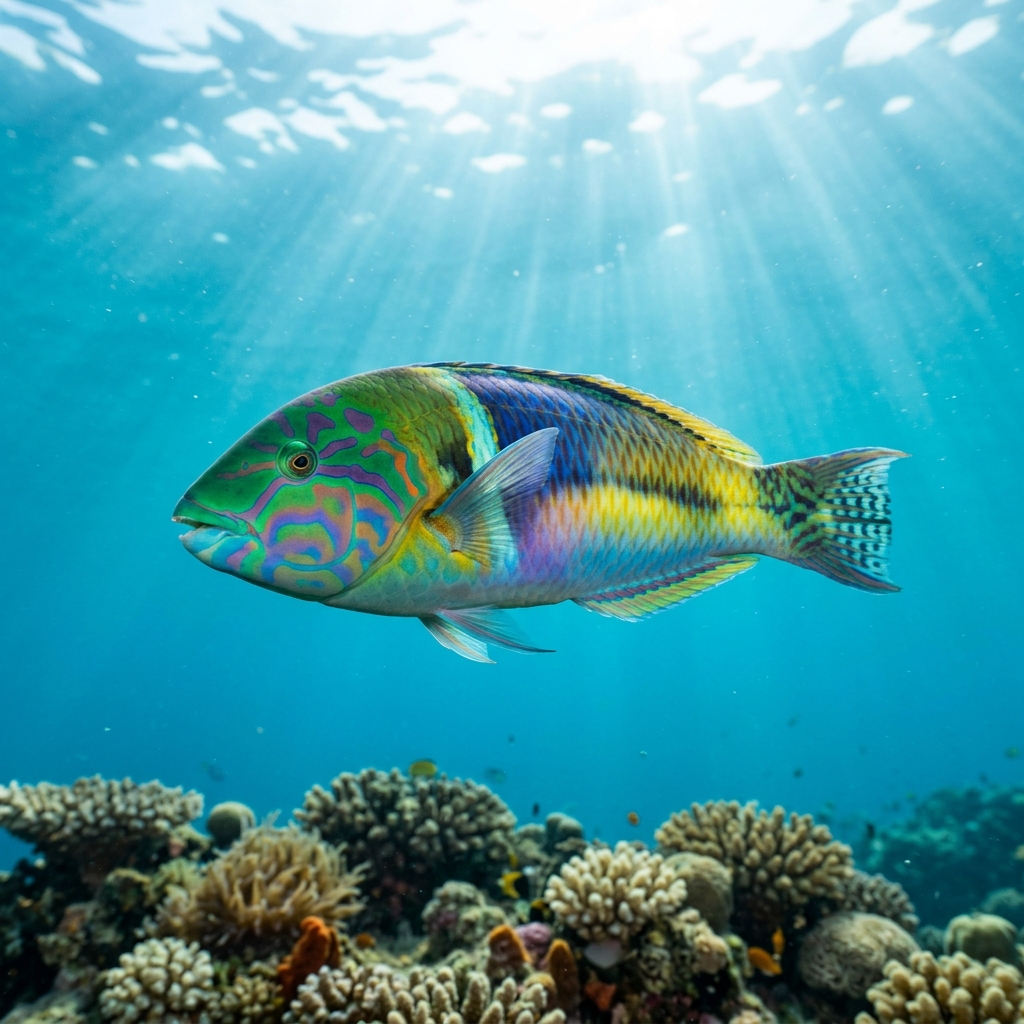
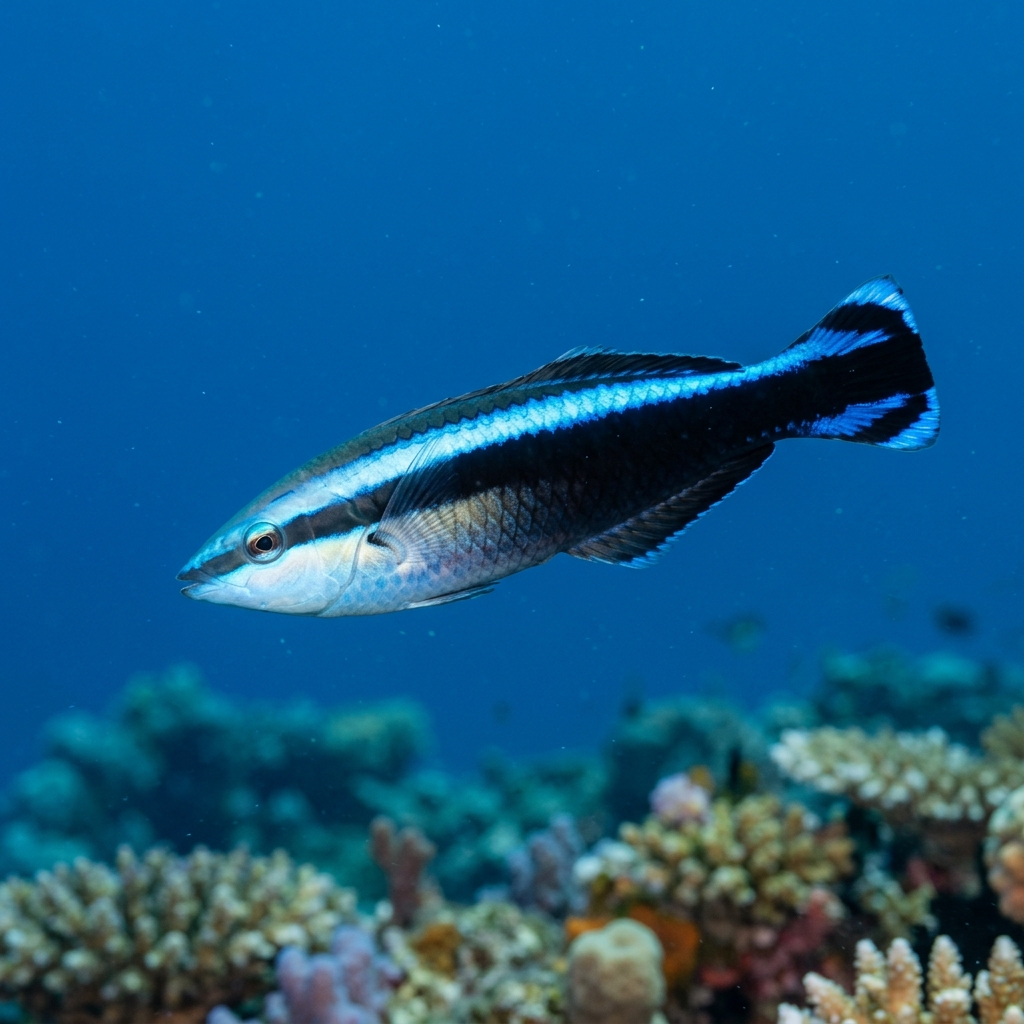
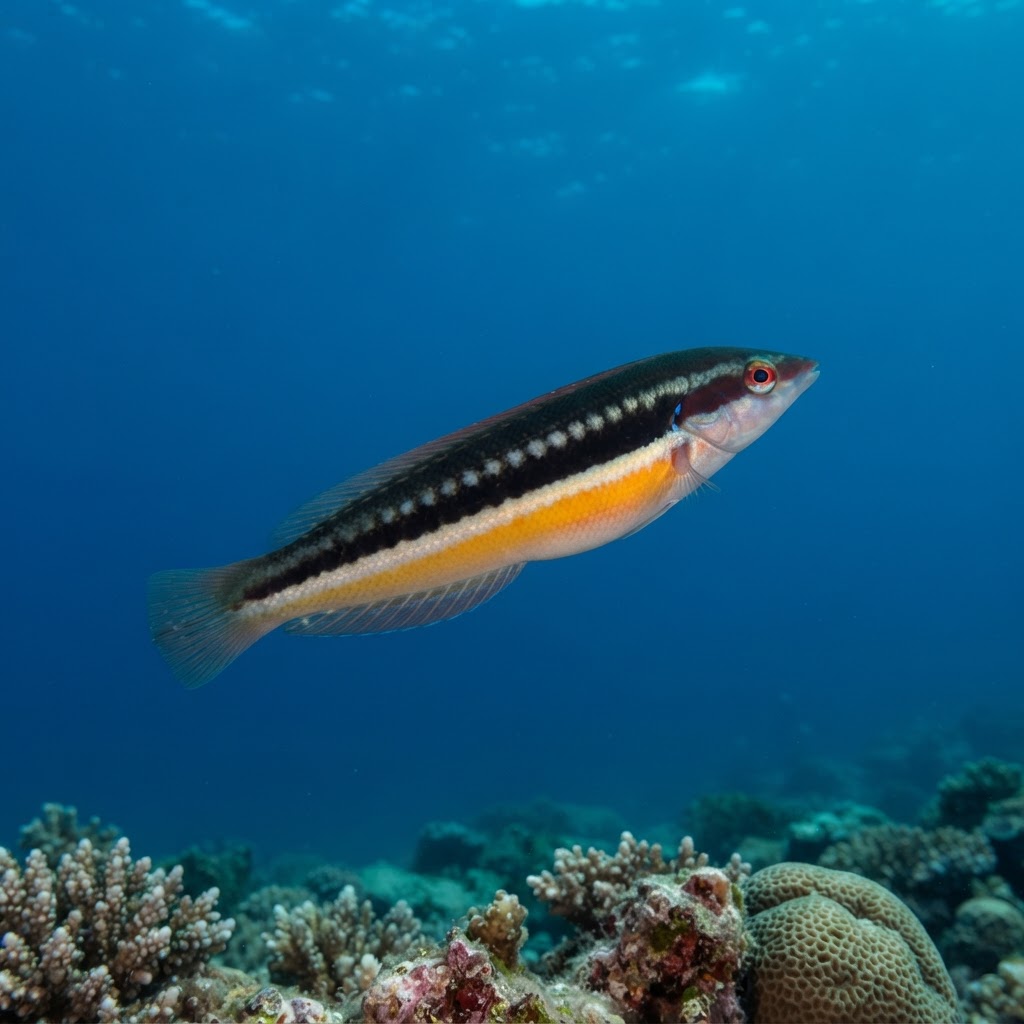
Reef neighbours a diver could mistake it for. Use the identification notes above to tell them apart.
Egypt is by far the strongest bet, with dense sightings across South Sinai, Marsa Alam and the Deep South, and the Red Sea Riviera. It also turns up reliably in Oman around the Daymaniyat Islands and Muscat, and features in Jordan's Aqaba and Israel's Eilat, with a smaller presence on the UAE's East Coast and in Saudi Arabia.
Mapping where Broomtail Wrasse is logged…
South Sinai and Marsa Alam in Egypt are the most reliable spots, alongside the Red Sea Riviera. Oman's Daymaniyat Islands and Muscat, plus Aqaba in Jordan and Eilat in Israel, are also solid options.
There is no strong season in the data, and warm Red Sea and Gulf water year-round keeps it present on the reef at any time you dive.
Look for a stocky, olive to brownish-grey wrasse around 35 cm with a blunt head, thick lips, and a squared-off tail. It moves slowly over reef flats rather than darting, which sets it apart from smaller reef wrasses nearby.
They typically reach about 35 cm in length, making them a mid-sized wrasse that is easy to spot but nowhere near the scale of their Napoleon wrasse relatives.
No, they pose no threat to divers and generally ignore people, sometimes holding their position calmly as divers pass close by.
Site and sighting data is aggregated from diver logs, iNaturalist and GBIF. For taxonomy and conservation status:
Bird Wrasses
3,632 sites