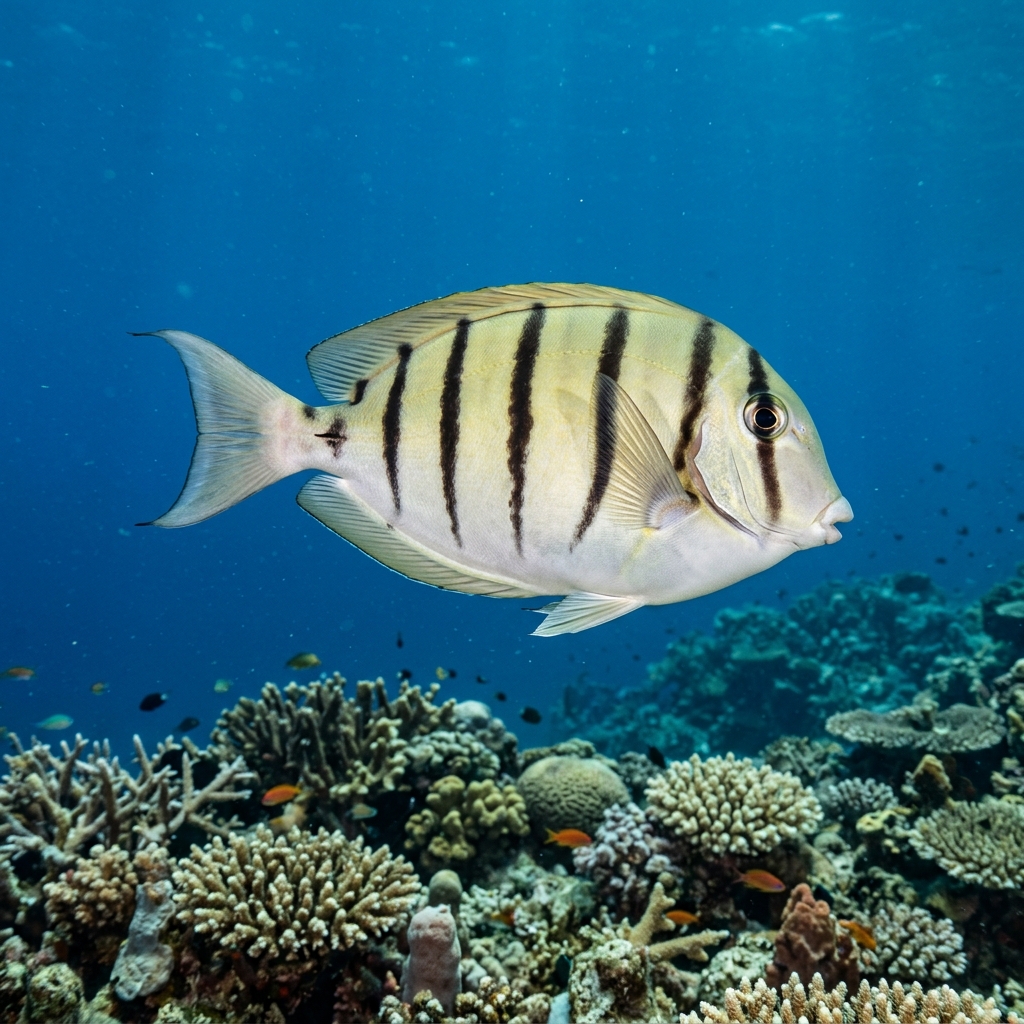
Ctenochaetus spp.
Small, drab-looking tangs grazing algae from coral in the Maldives and Seychelles year-round in 25-29C water. Here's how to spot the bristle teeth.
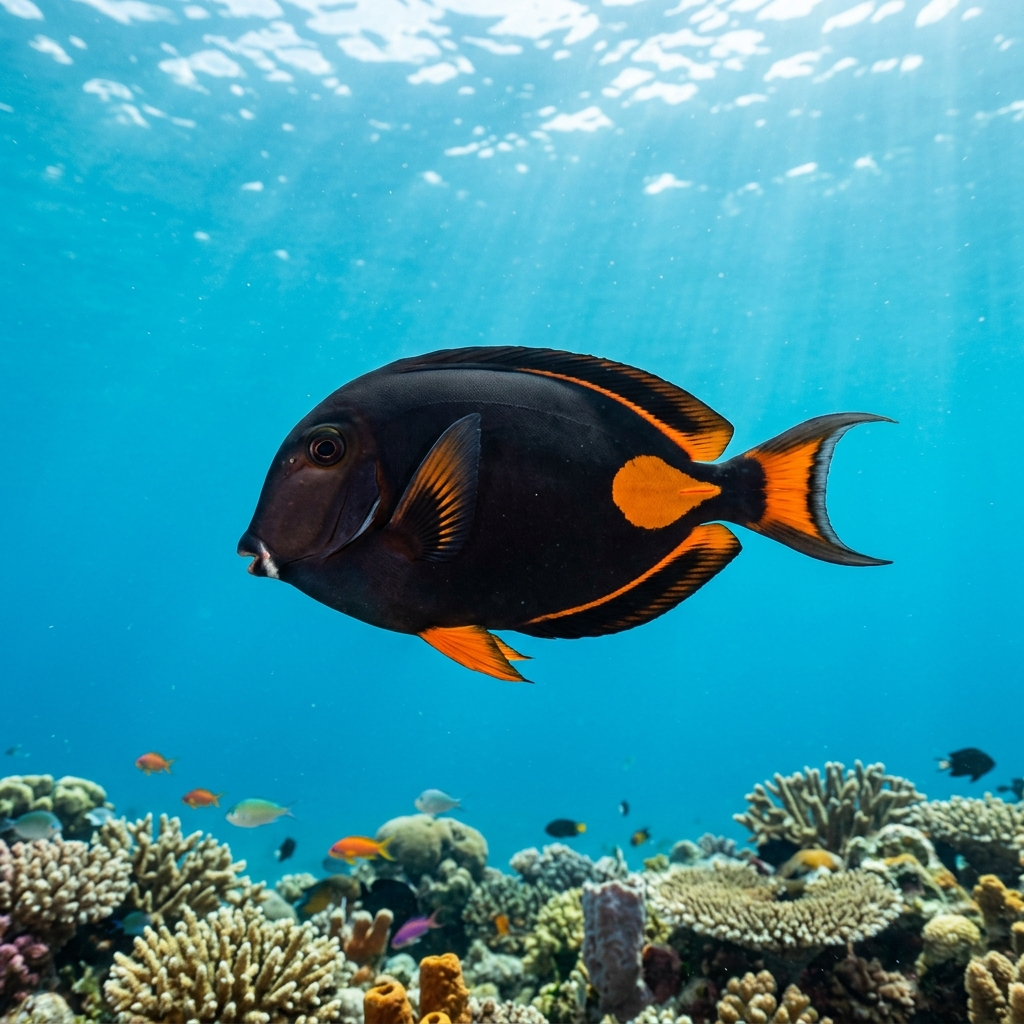
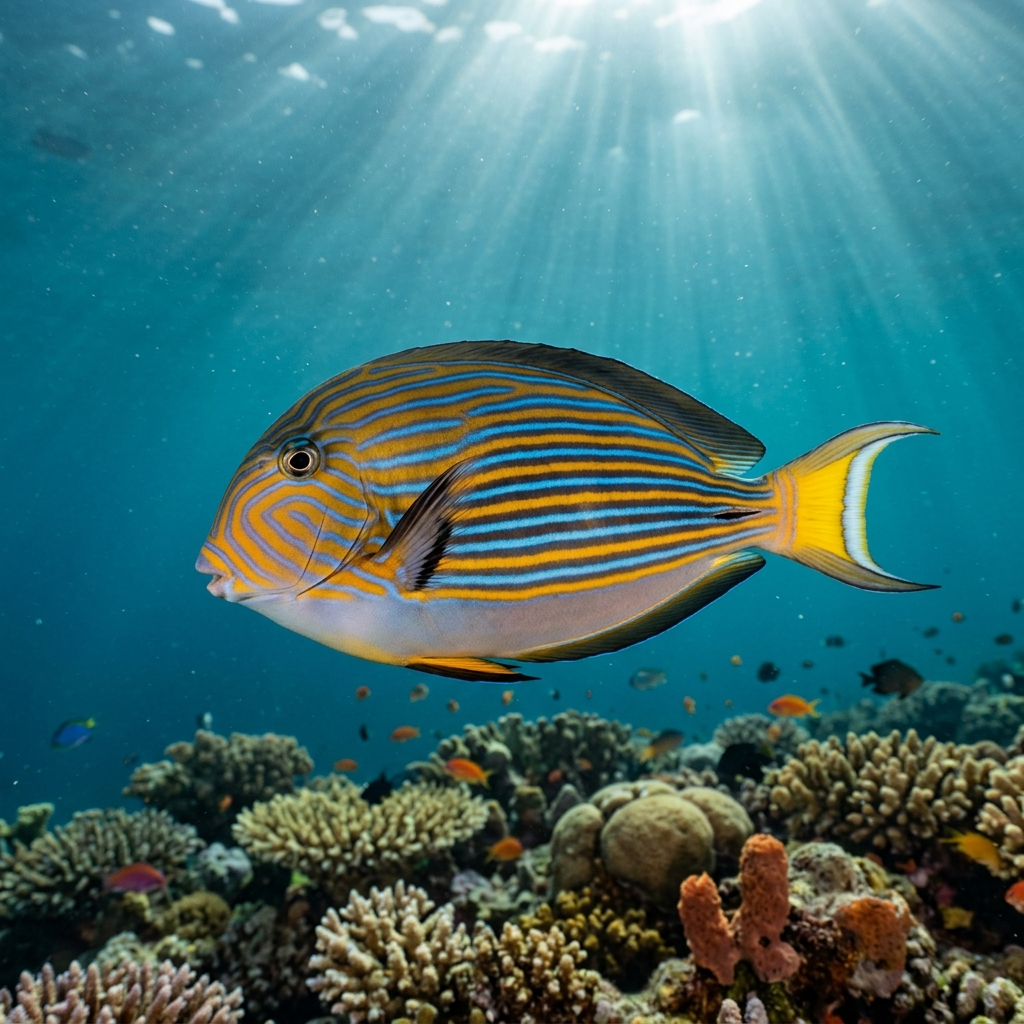
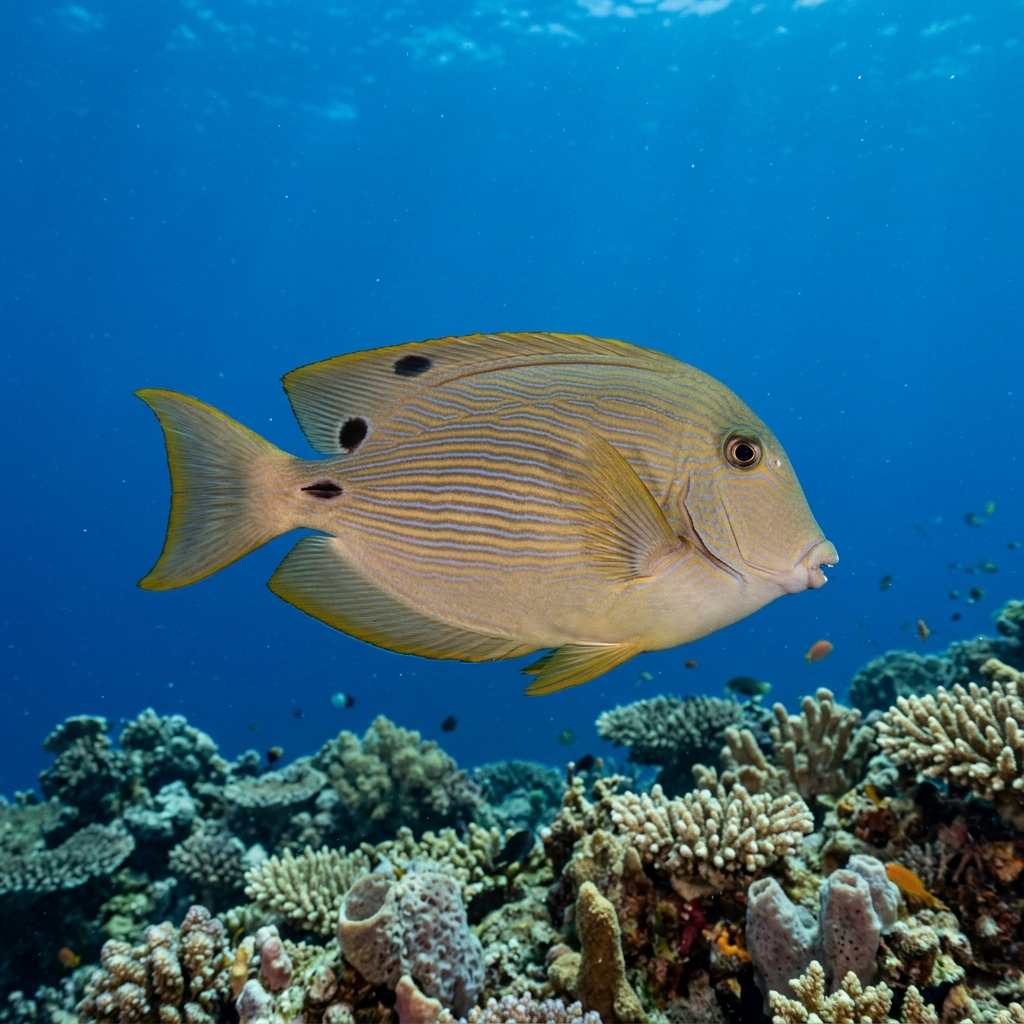
Small, oval-bodied tangs, generally brown, olive or grey with fine speckled or pinstriped patterning that varies a lot between the many species in this genus. Look for the small mouth set low on the face, built for combing algae off rock and coral, and the single sharp spine folded into a groove near the base of the tail (the feature that gives surgeonfish their name). Most individuals seen on a dive are adult-sized and unremarkable at a glance until you get close enough to see the fine detail in the skin pattern.
Spend most of the dive grazing, working over dead coral, rock and sand with quick nibbling bites to strip off the algal film and detritus that grows there. Usually seen alone or in loose, mixed groups picking over the same patch of reef rather than schooling tightly, and they carry on feeding largely unbothered by divers who keep a normal distance. Commonly spotted in the shallower, sunlit parts of the reef where algae growth is thickest.
That fine speckled pattern comes from a genus-wide trick: unlike most surgeonfish, Ctenochaetus species have comb-like flexible teeth (the 'bristletooth') adapted for raking detritus and fine algae off surfaces rather than biting chunks of weed, which is why you'll almost always see them grazing rather than chasing food in open water.
No clear seasonal pattern shows up in the sighting data, and with a comfortable range of roughly 25 to 29C these are reef residents you can expect on a dive at any time of year across their range.
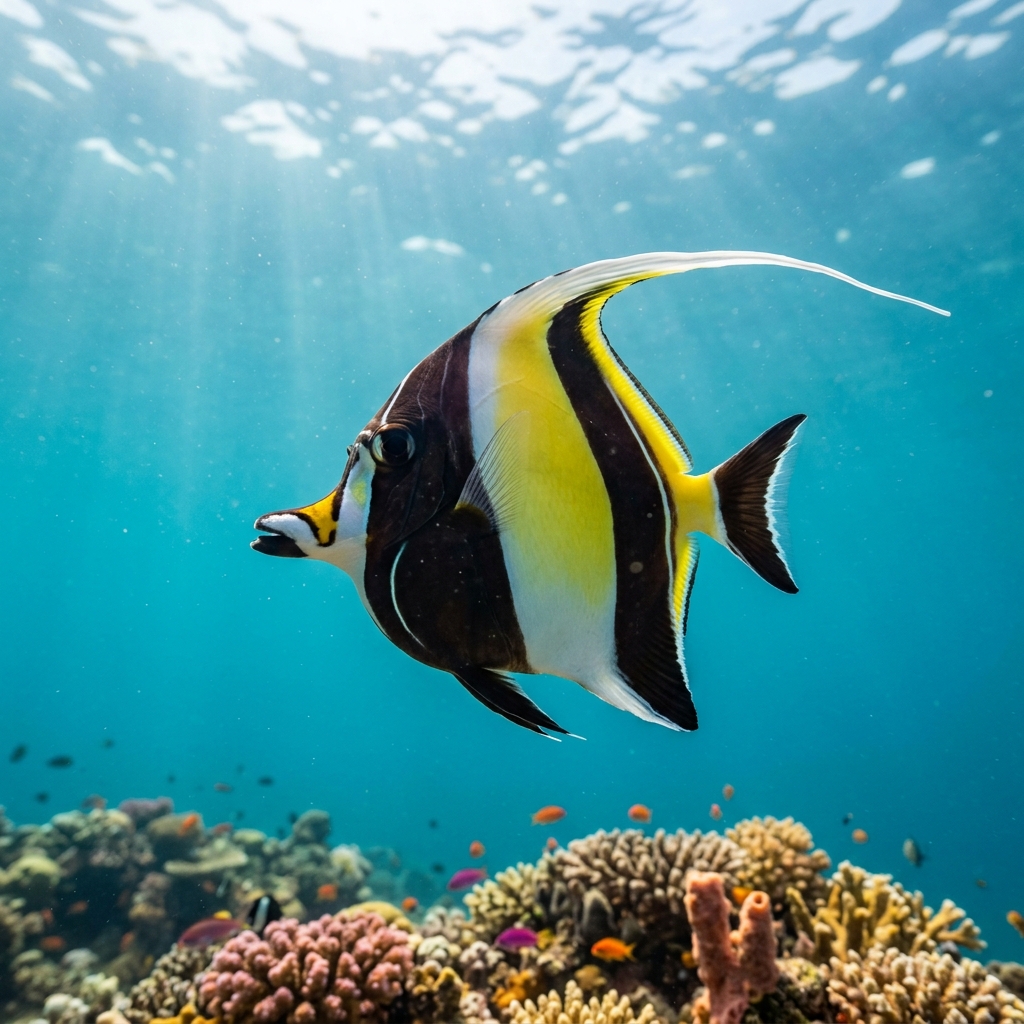
Reef neighbours a diver could mistake it for. Use the identification notes above to tell them apart.
Most reliably logged across the Maldives, especially the Northern, Central and Southern Atolls, where sightings are dense and consistent. Also a strong presence in the Inner Islands of Seychelles, the Tuamotu Islands of French Polynesia, along the Red Sea coast of Saudi Arabia and Egypt's Marsa Alam region, and around Zanzibar in Tanzania.
Mapping where Bristletooth Surgeonfish is logged…
Best odds are in the Maldives, across the Northern, Central and Southern Atolls, plus the Seychelles Inner Islands, the Red Sea coasts of Egypt and Saudi Arabia, and French Polynesia's Tuamotu Islands.
Any time of year works. Sighting data shows no strong season, and the species sits comfortably in 25 to 29C water year-round on tropical reefs.
Look for a small oval body with fine speckled or pinstriped brown, olive or yellow patterning, a small low-set mouth, and a single spine tucked near the tail base. The detailed skin pattern is the giveaway once you're close.
Sizes vary across the genus, but most species stay small to mid-sized reef fish, easily overlooked among busier, more colourful tangs on the same reef.
They're named for comb-like, flexible teeth used to rake fine algae and detritus off rock and coral, a different feeding style from the biting teeth of most other surgeonfish.
No. They're not considered a hazard to divers and go about grazing the reef largely ignoring anyone nearby.
Site and sighting data is aggregated from diver logs, iNaturalist and GBIF. For taxonomy and conservation status:
Striped Surgeonfish
3,289 sites