Thalassoma amblycephalum
Small blue-and-yellow wrasse darting over reef tops in the Maldives' Central Atolls and Sulawesi, in water around 25-29C year-round.
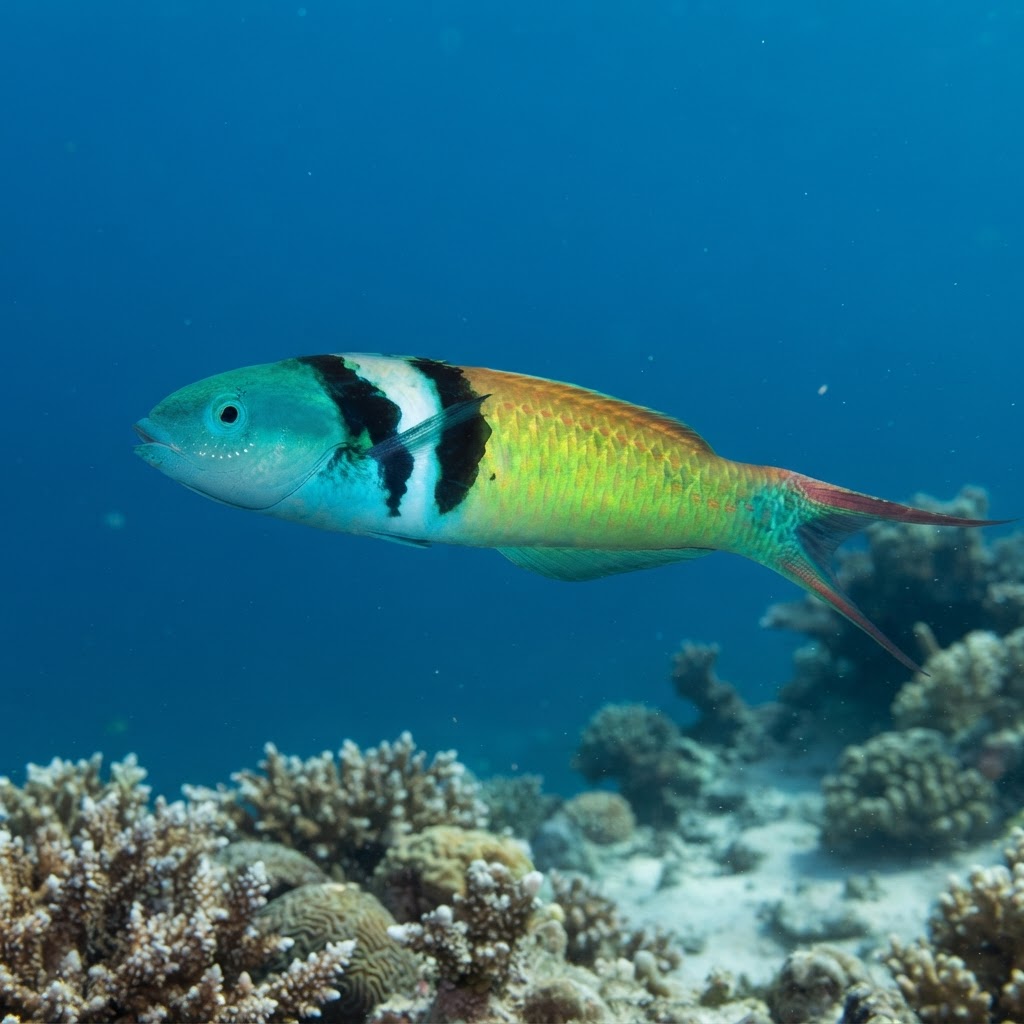
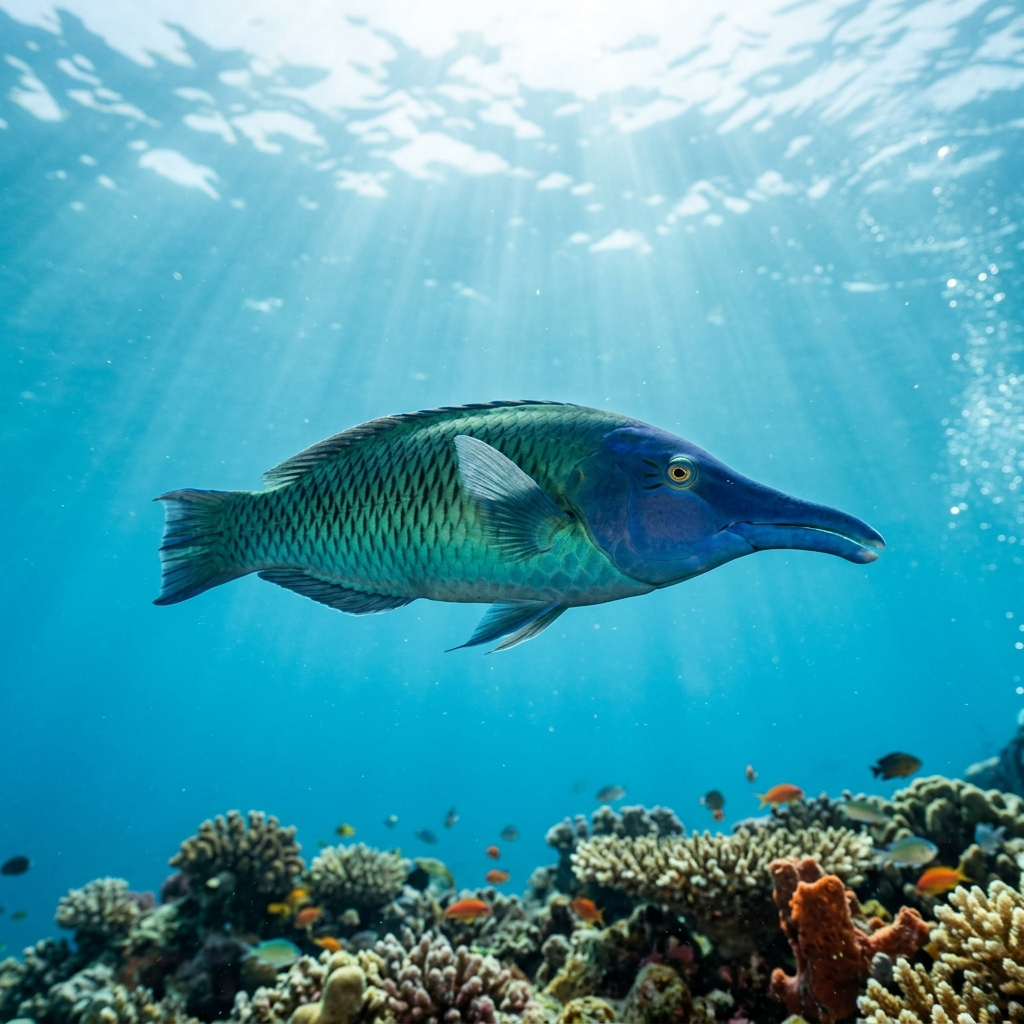
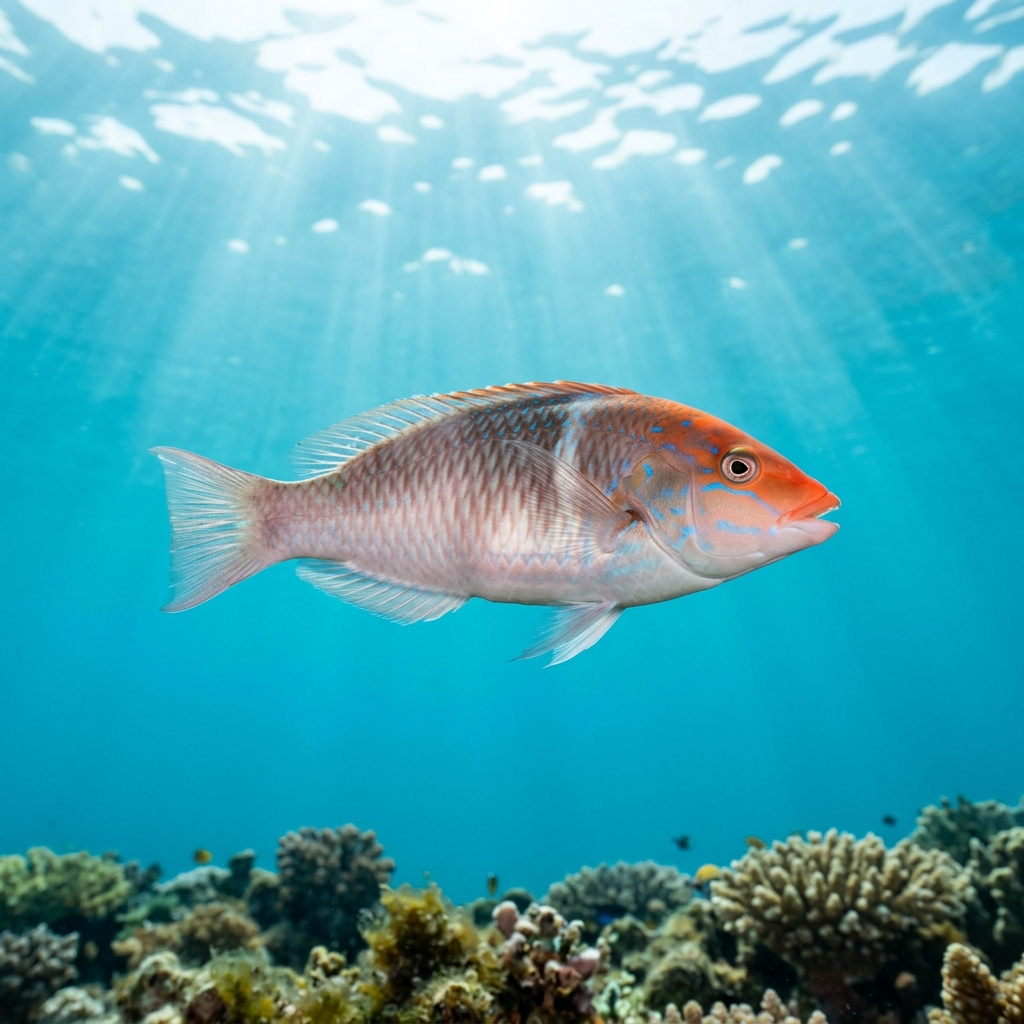
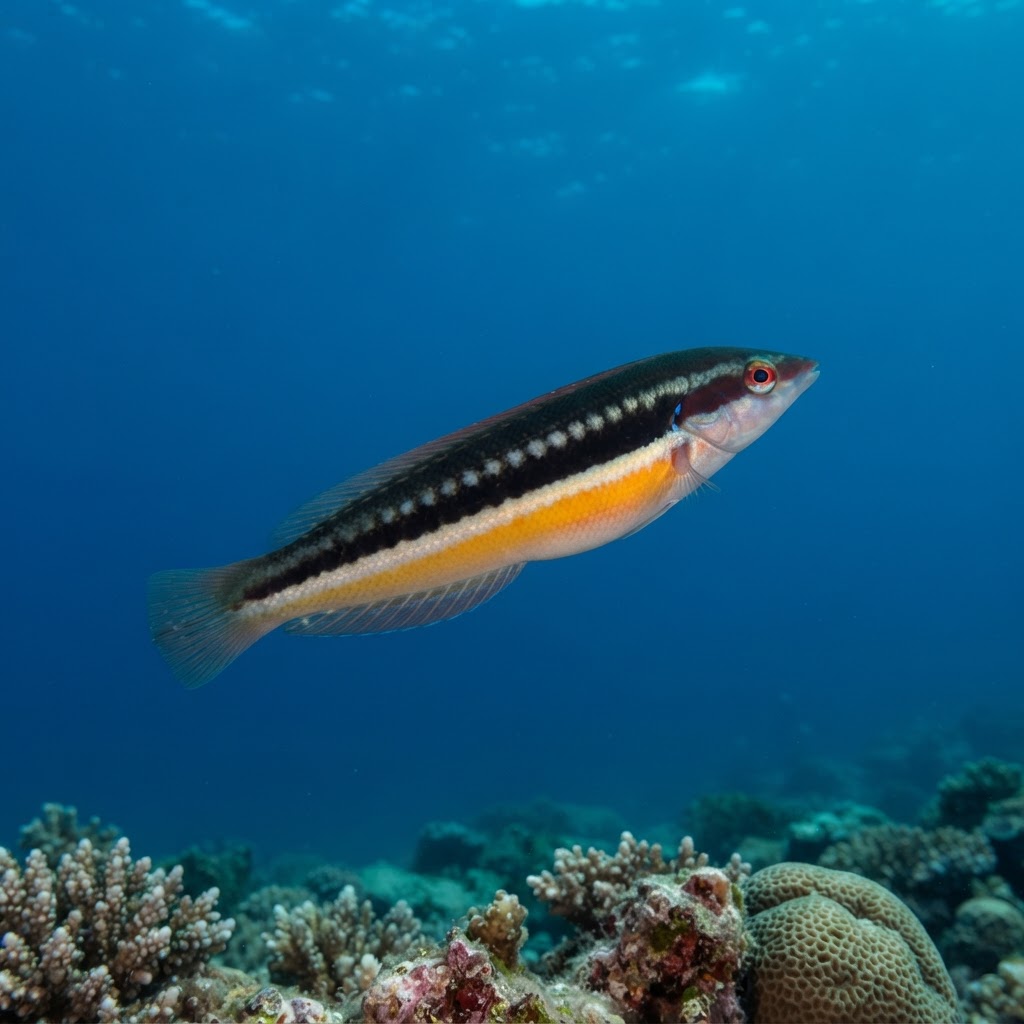
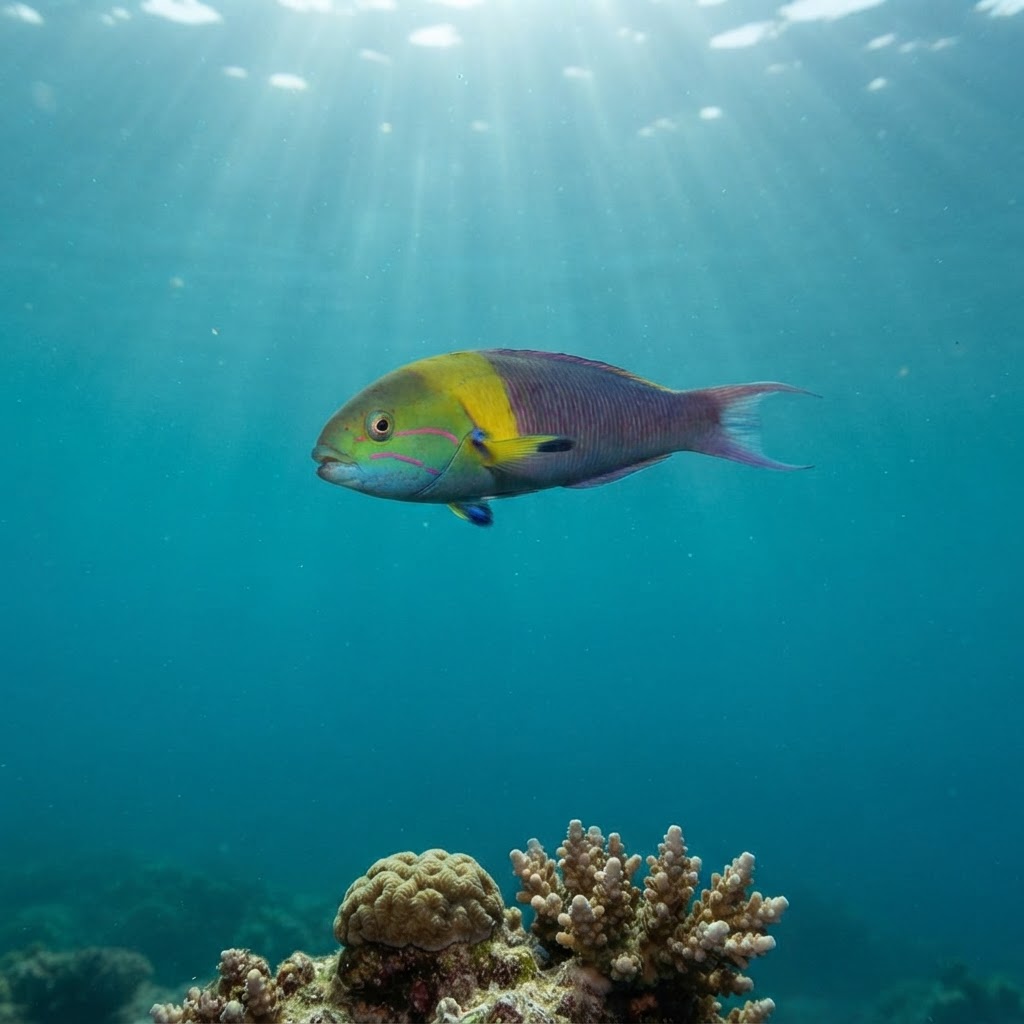
A small, slender wrasse at around 11 cm, usually seen zipping over the reef top in loose groups rather than sitting still. Adults show a yellow front half fading into a blue-green rear body and tail, with a blunt, rounded snout that gives the species its name. Colour can shift with mood and light, so look at the body shape and quick, darting swimming style as much as the pattern.
Look for it picking around the reef crest and upper slope in small, loose groups, often mixing with other wrasses as it hunts tiny invertebrates and zooplankton in the water column just above the coral. It keeps moving almost constantly and pays little attention to divers, making it an easy, if brief, ID rather than a fish that poses for photos. Most sightings come from shallow water, generally within 15 metres, in daylight hours when reef activity is highest.
Like many wrasses, this species is a protogynous hermaphrodite, meaning individuals can start life as females and later change into males, with the biggest, most dominant males taking on the brightest colours.
No clear seasonal pattern in the data, and its comfort range of roughly 25 to 29C matches tropical reef temperatures all year, so it is a year-round sighting wherever it occurs.
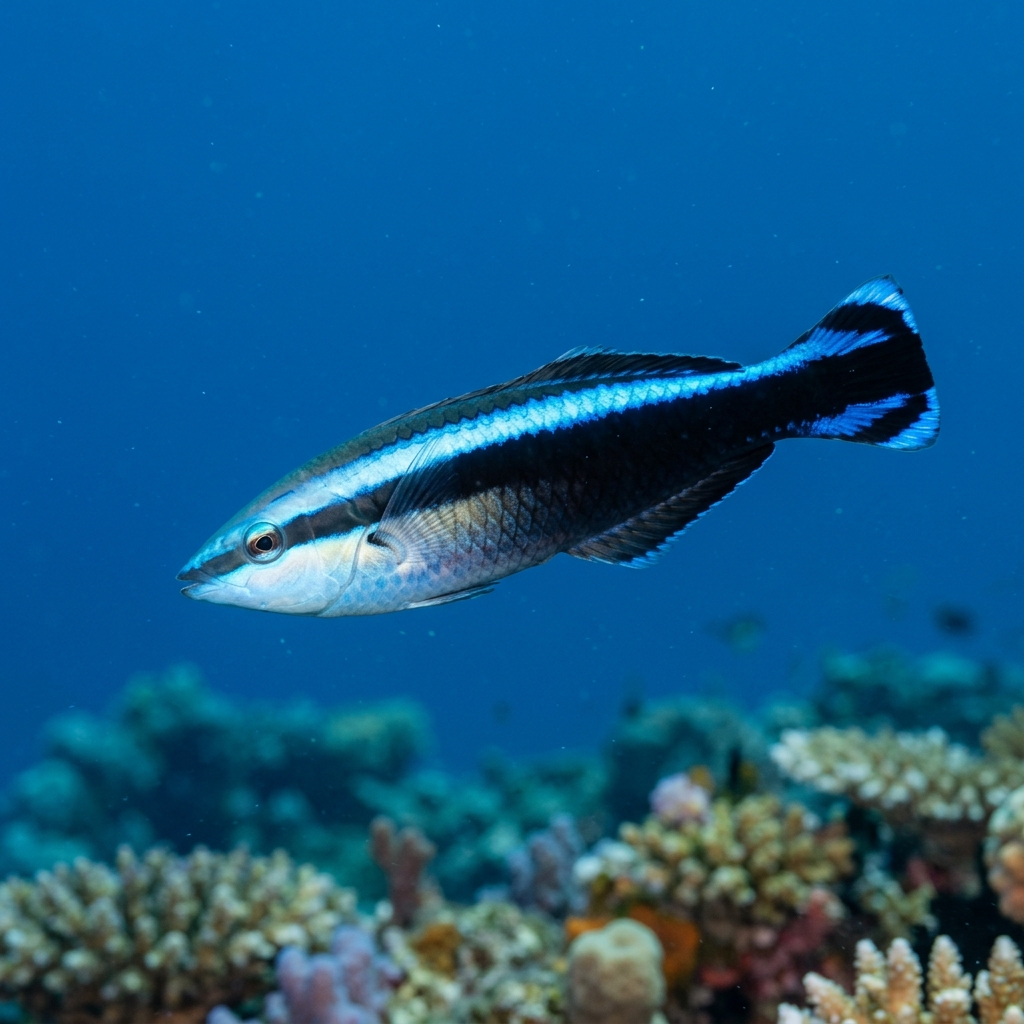
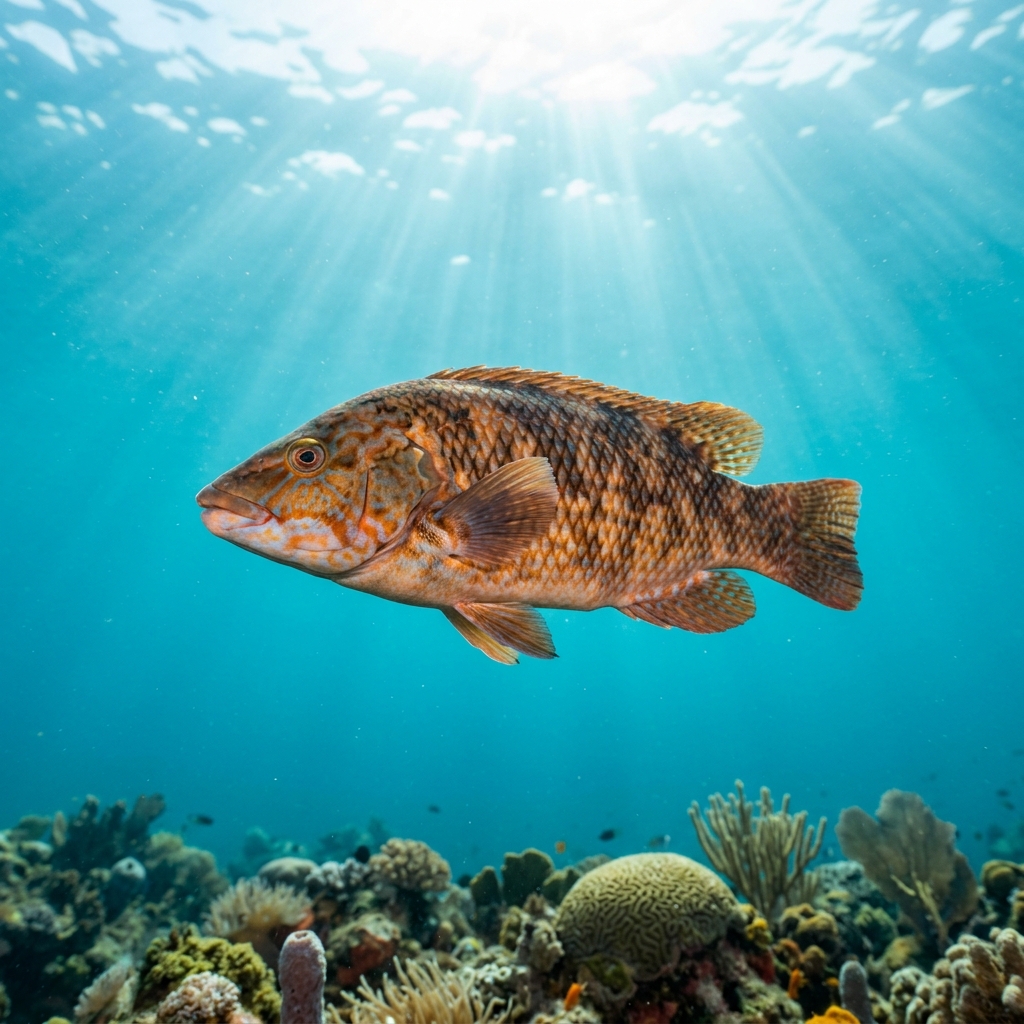
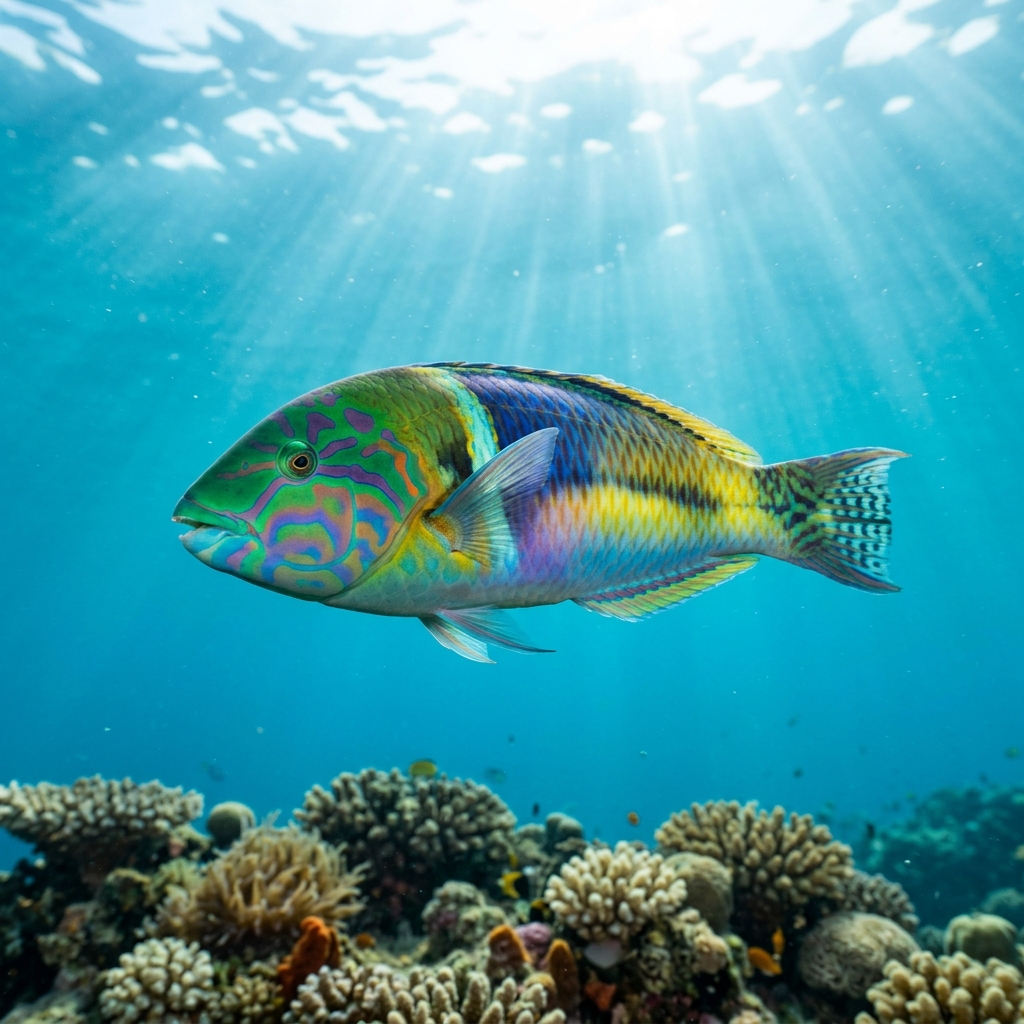
Reef neighbours a diver could mistake it for. Use the identification notes above to tell them apart.
Most reliably logged in the Maldives, especially the Central Atolls, and widespread across Indonesia in Sulawesi, Nusa Tenggara and Bali. Also a regular sighting in Queensland (Australia), French Polynesia's Tuamotu Islands, Palau's Rock Islands, Green Island in Taiwan, the Philippines and Timor-Leste.
Mapping where Bluntheaded Wrasse is logged…
They turn up on reefs right across the Indo-Pacific, with the strongest logged numbers in the Maldives' Central Atolls, Indonesia's Sulawesi, Nusa Tenggara and Bali, plus Queensland in Australia, French Polynesia's Tuamotu Islands and Palau's Rock Islands.
There is no strong seasonal pattern in sightings, and they favour reef water between about 25 and 29C, so divers see them across the year on tropical reefs rather than during a specific window.
Look for a small, fast-moving wrasse under 15 cm with a yellow front end blending into a blue-green rear body and a distinctly blunt, rounded snout. It is usually seen in loose groups darting over the reef top rather than resting.
They stay small, typically reaching around 11 cm, making them one of the more petite wrasses divers encounter on Indo-Pacific reefs.
Yes, they are protogynous hermaphrodites: many start out as duller females and some later transform into brighter, terminal-phase males with sharper yellow and blue contrast.
No, they pose no threat to divers and simply carry on feeding and moving around the reef regardless of who is watching.
Site and sighting data is aggregated from diver logs, iNaturalist and GBIF. For taxonomy and conservation status:
Bird Wrasses
3,632 sites