Scolopsis xenochrous
Uncommon reef fish logged across Bali, Visayas and Phuket at 26.9-29C, year-round on Indo-Pacific reefs.
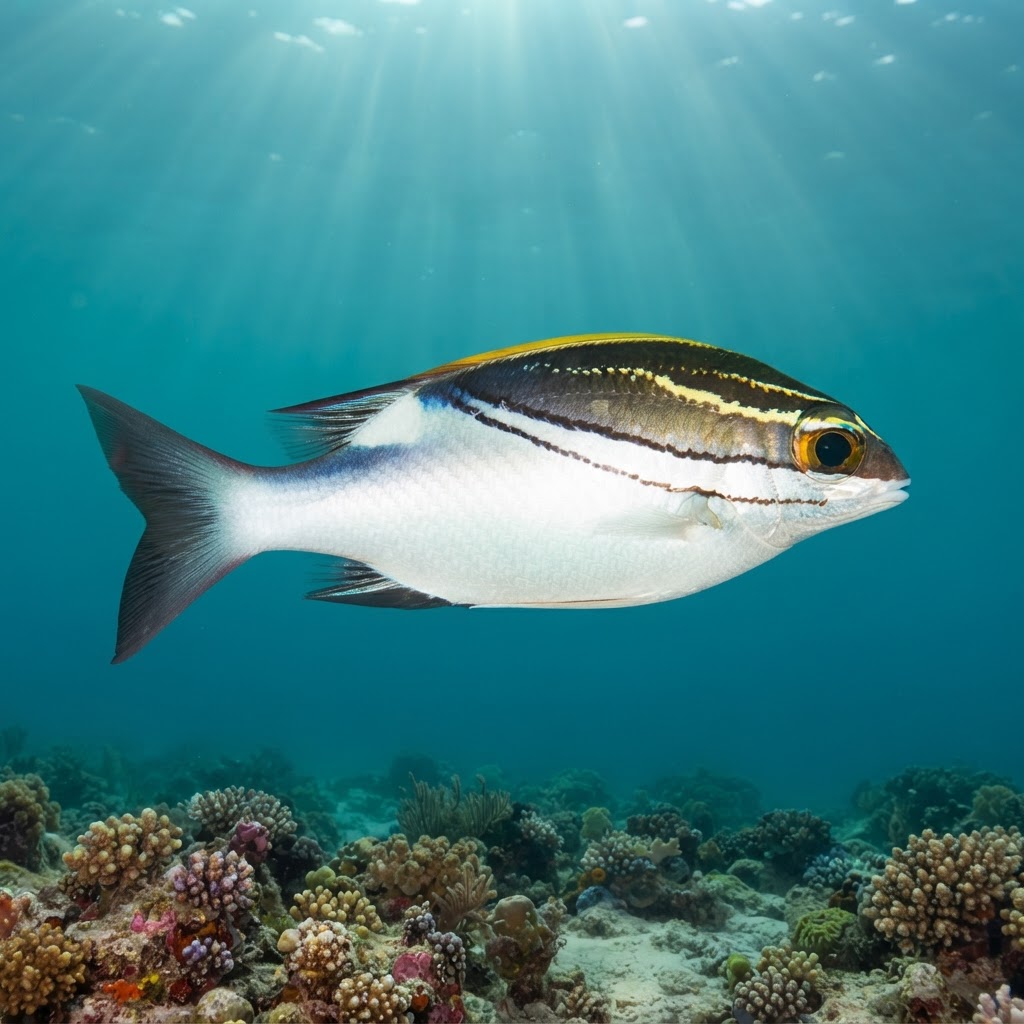
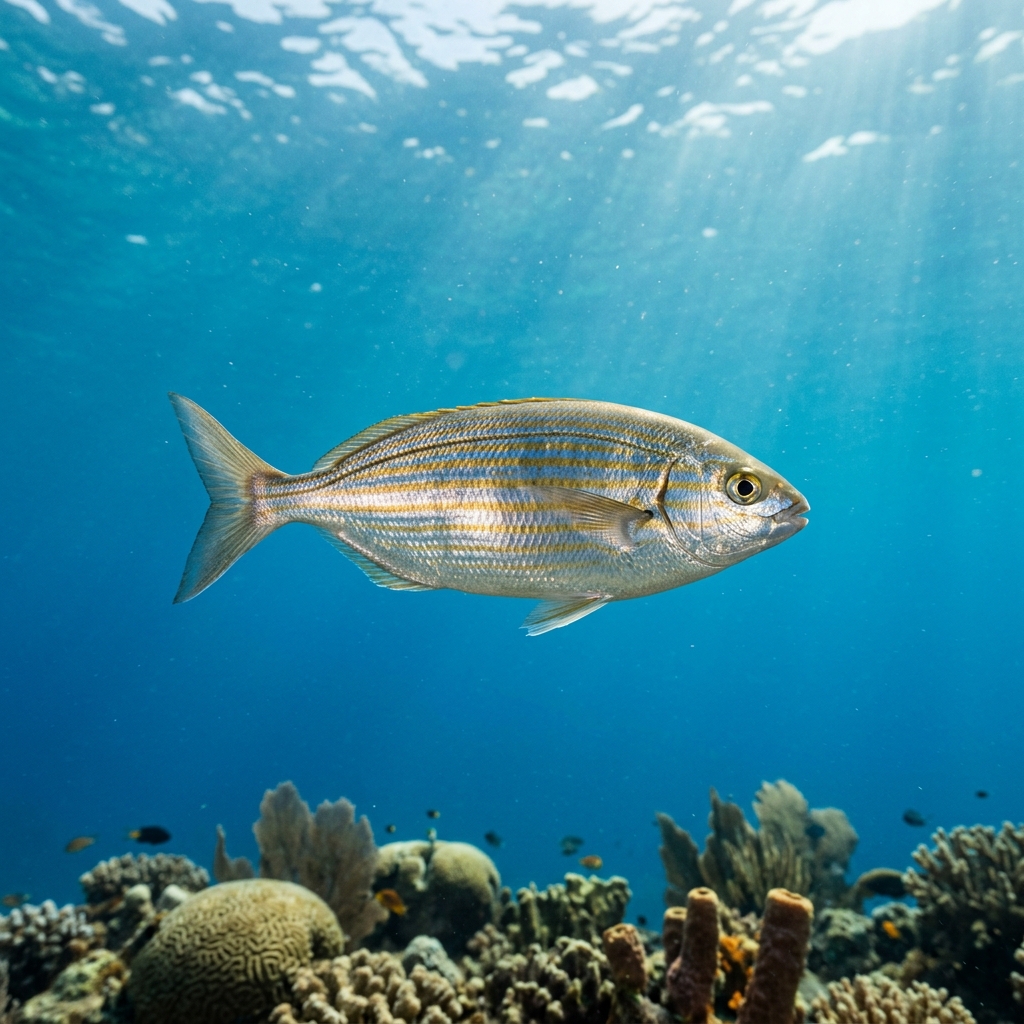
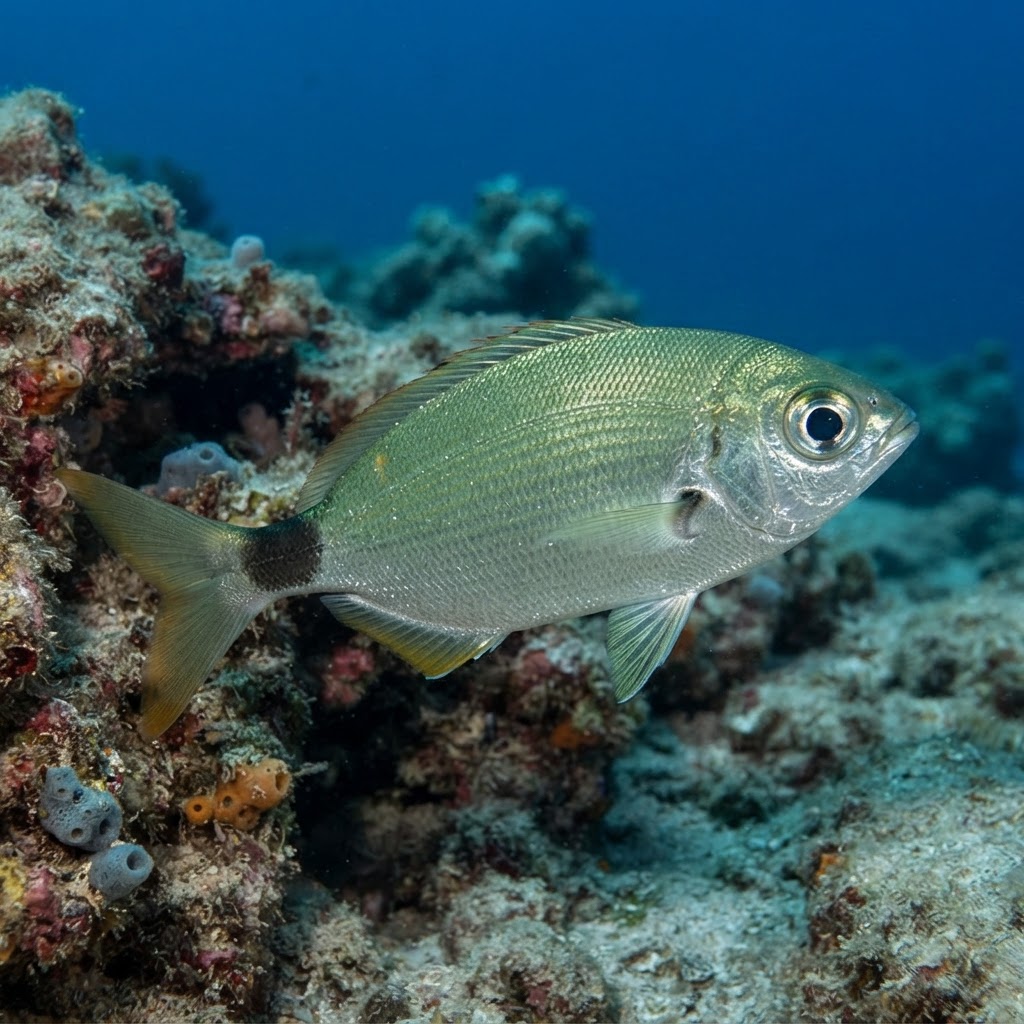
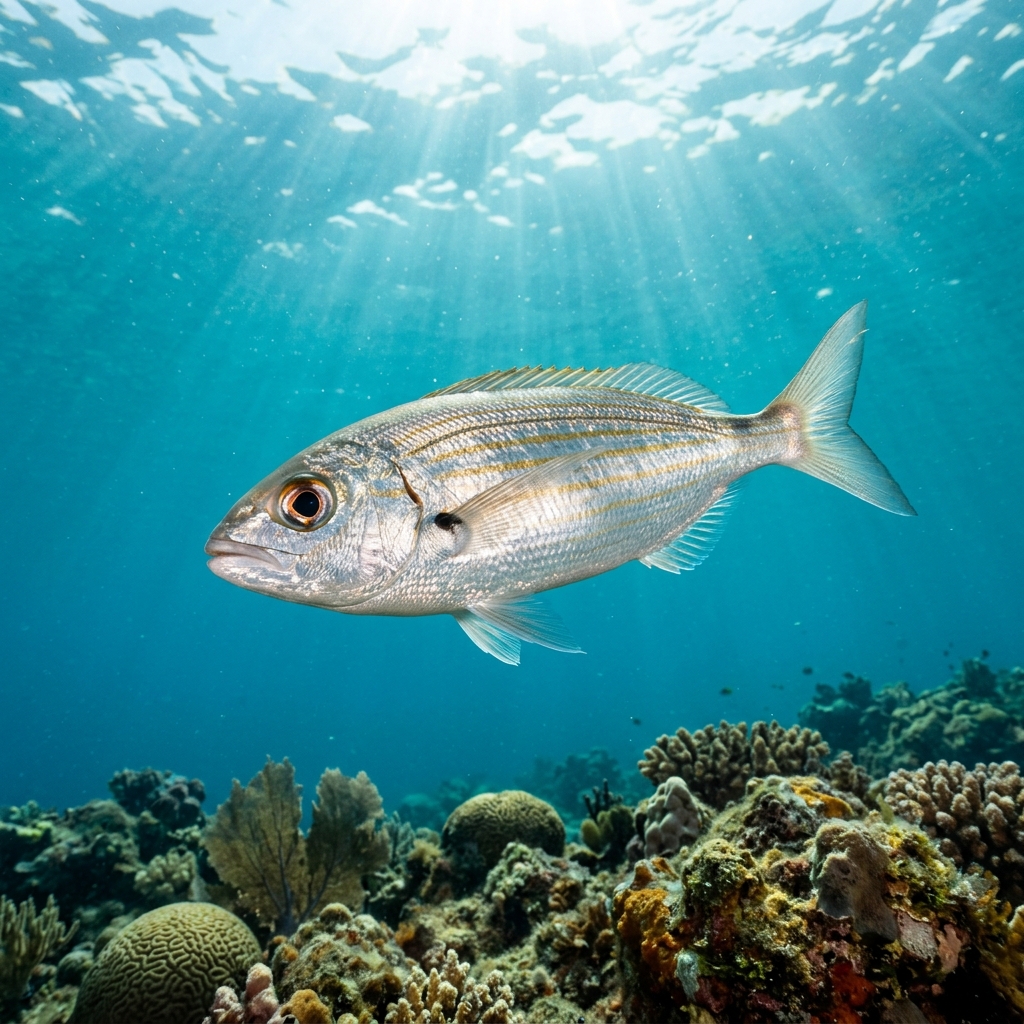
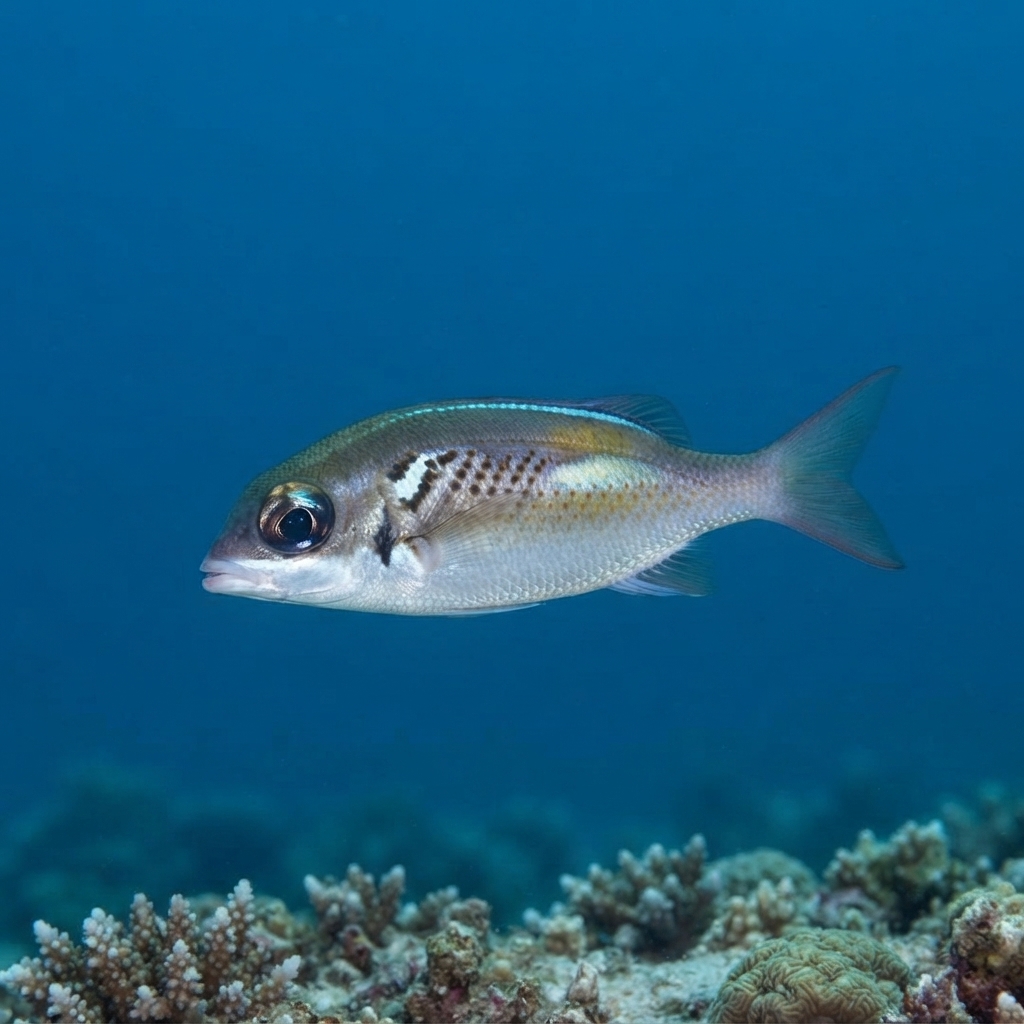
A slim, silvery reef fish to about 15 cm with a pointed snout typical of coral bream, keying divers into the family. Look for the pale blue horizontal stripe running below the eye across the cheek, which contrasts against the otherwise plain silvery-grey body. The fins are mostly translucent to pale yellow, and it holds a fairly streamlined, torpedo-like shape close to the substrate rather than out in open water.
Typically seen singly or in loose small groups hovering just above the reef or sand, picking at small invertebrates rather than chasing anything down. It tends to stay unhurried around divers, drifting off a short distance if approached too fast rather than bolting for cover. Most sightings come from mid-depth reef slopes and rubble patches rather than the shallowest fringing reef.
Coral bream in this genus are opportunistic bottom feeders, picking small crustaceans and worms out of sand and rubble rather than grazing coral directly, which is why you often spot them working the reef edge rather than sitting still.
Comfortable year-round in warm water between roughly 27 and 29 C, so there is no strong seasonal window to plan around based on current sightings. Any month diving Bali, the Visayas, or Phuket gives a fair shot, though it stays an uncommon find rather than a guaranteed one.
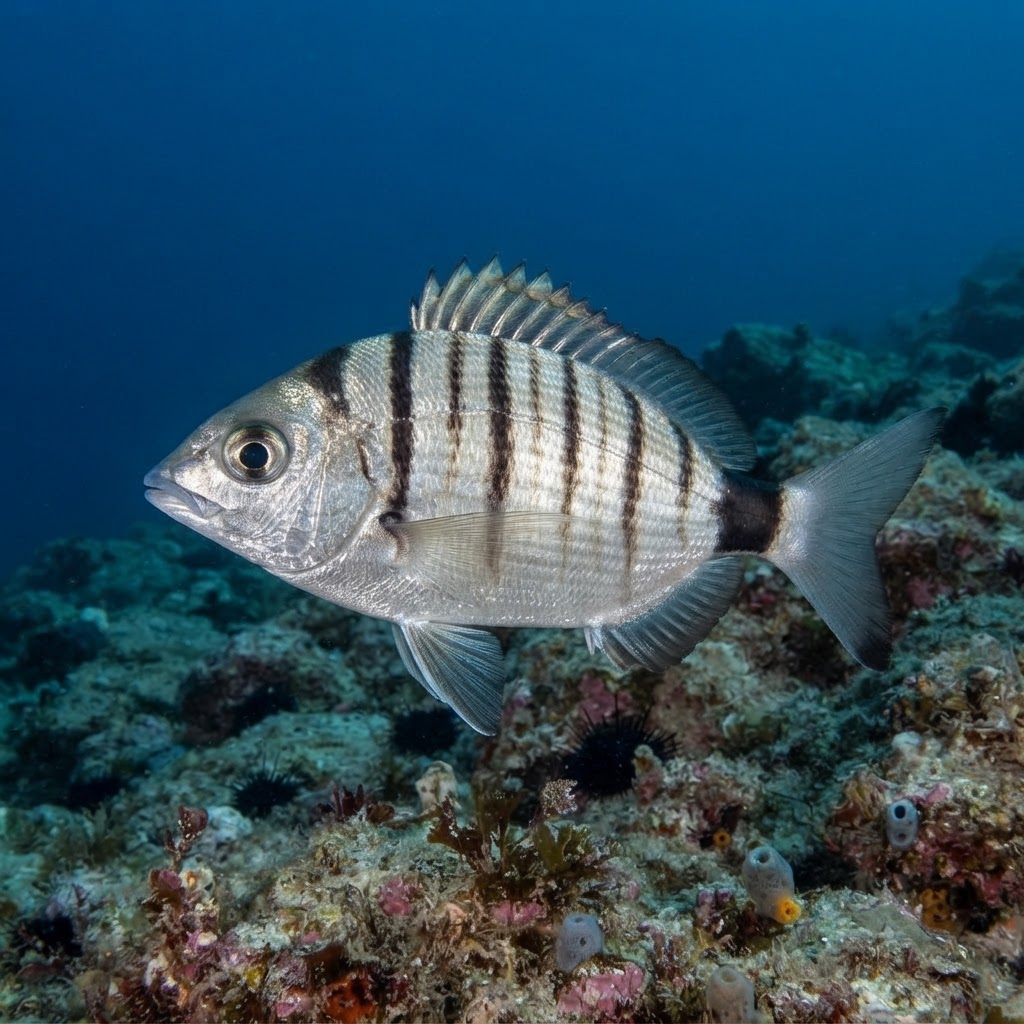
Reef neighbours a diver could mistake it for. Use the identification notes above to tell them apart.
Most reliably logged in the Philippines and Indonesia, with strong site counts in Bali and across the Visayas and Luzon regions of the Philippines. Phuket in Thailand also turns up sightings, though at lower numbers than the Indonesian and Philippine hotspots, and a handful of sites in Nusa Tenggara and Sulawesi round out the picture.
Mapping where Bluestripe Coral Bream is logged…
Best chances are in the Philippines and Indonesia, particularly around Bali, the Visayas, and Luzon. Phuket in Thailand also has recorded sightings, though less frequently than the Indonesian and Philippine sites.
There is no strong seasonal pattern in the data, and the species sits comfortably in warm water between about 27 and 29 C year-round. Any time of year diving the Visayas, Bali, or Phuket offers a reasonable chance.
Look for a slim, silvery fish around 15 cm with a pointed snout and a distinct pale blue stripe running below the eye across the cheek. The body is otherwise plain, and it stays low over reef or rubble rather than swimming in open water.
They typically reach around 15 cm in length, a modest size that keeps them easy to overlook against busier reef backdrops.
No, they pose no threat to divers and simply drift off if you get too close rather than showing any defensive behaviour.
Site and sighting data is aggregated from diver logs, iNaturalist and GBIF. For taxonomy and conservation status:
Saddled Bream
3,846 sites