Cephalopholis cyanostigma
Reddish-brown reef grouper with pale blue spots, logged widely off Peninsular Malaysia's east coast and Queensland's reefs year-round.
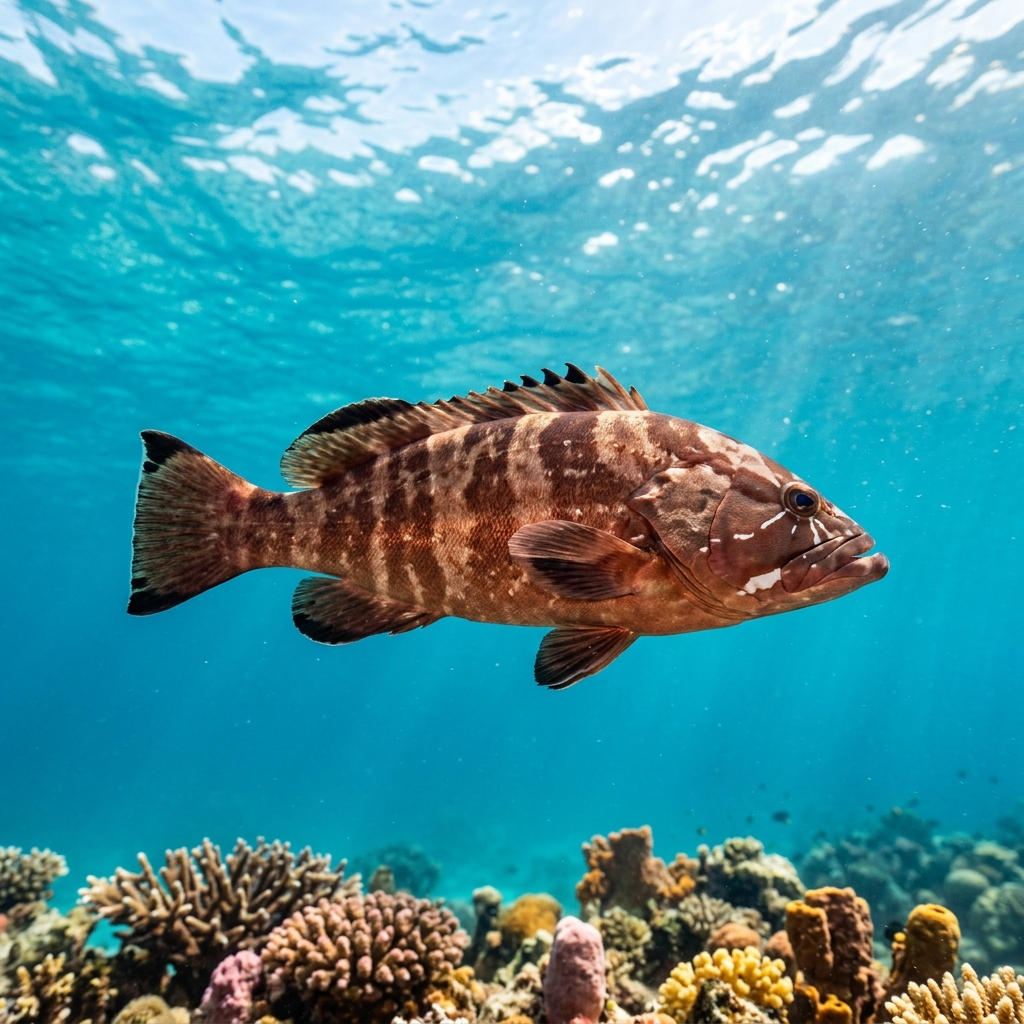
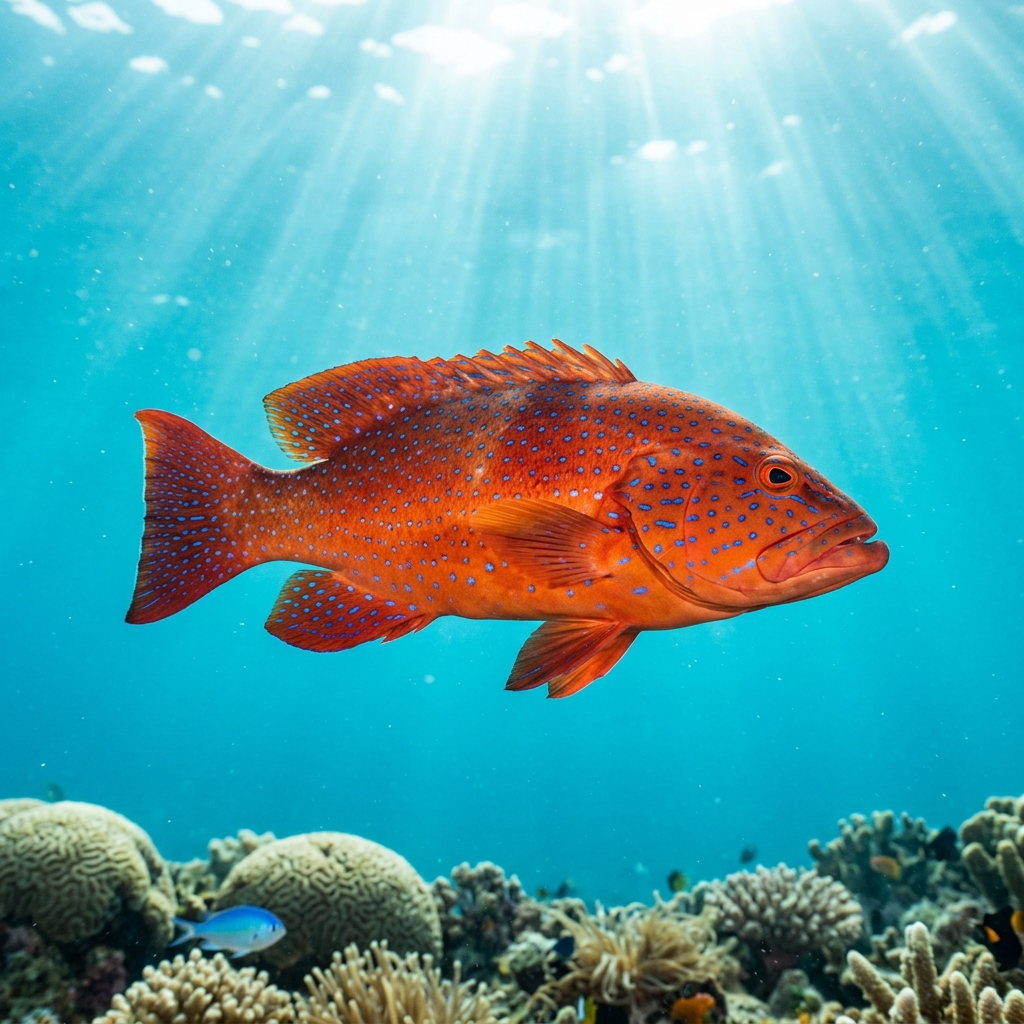
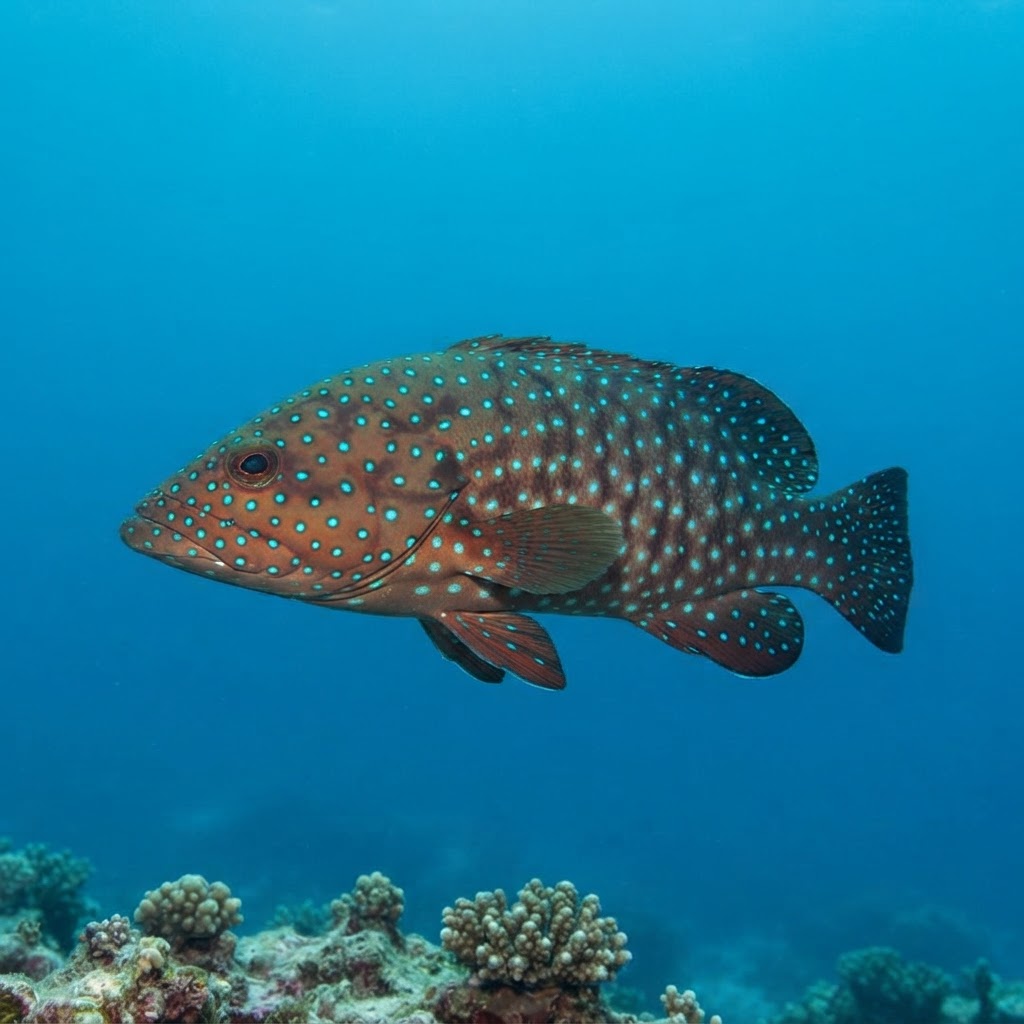
Small, stocky grouper up to about 38 cm, with a reddish-brown to olive body scattered all over with small pale blue spots. The tail often shows a darker or blackish margin, a useful cue when the body colour looks washed out under artificial light. It sits low and still on the reef rather than swimming in open water, with the classic thick-lipped, big-eyed grouper face.
Expect to find it perched low on coral or rubble, often tucked half under a ledge, watching the reef rather than patrolling it. It is not shy exactly but it is not bold either, usually holding position and letting divers pass rather than approaching, and it is logged as an uncommon-to-common find rather than a guaranteed tick on most dives.
Like most Cephalopholis groupers it is a protogynous hermaphrodite, meaning individuals start life as females and some later change into males as they grow.
No strong season shows up in the data, and with a comfortable range of roughly 25.6 to 29 C it sits happily on tropical reefs year-round, so any month at these sites works.
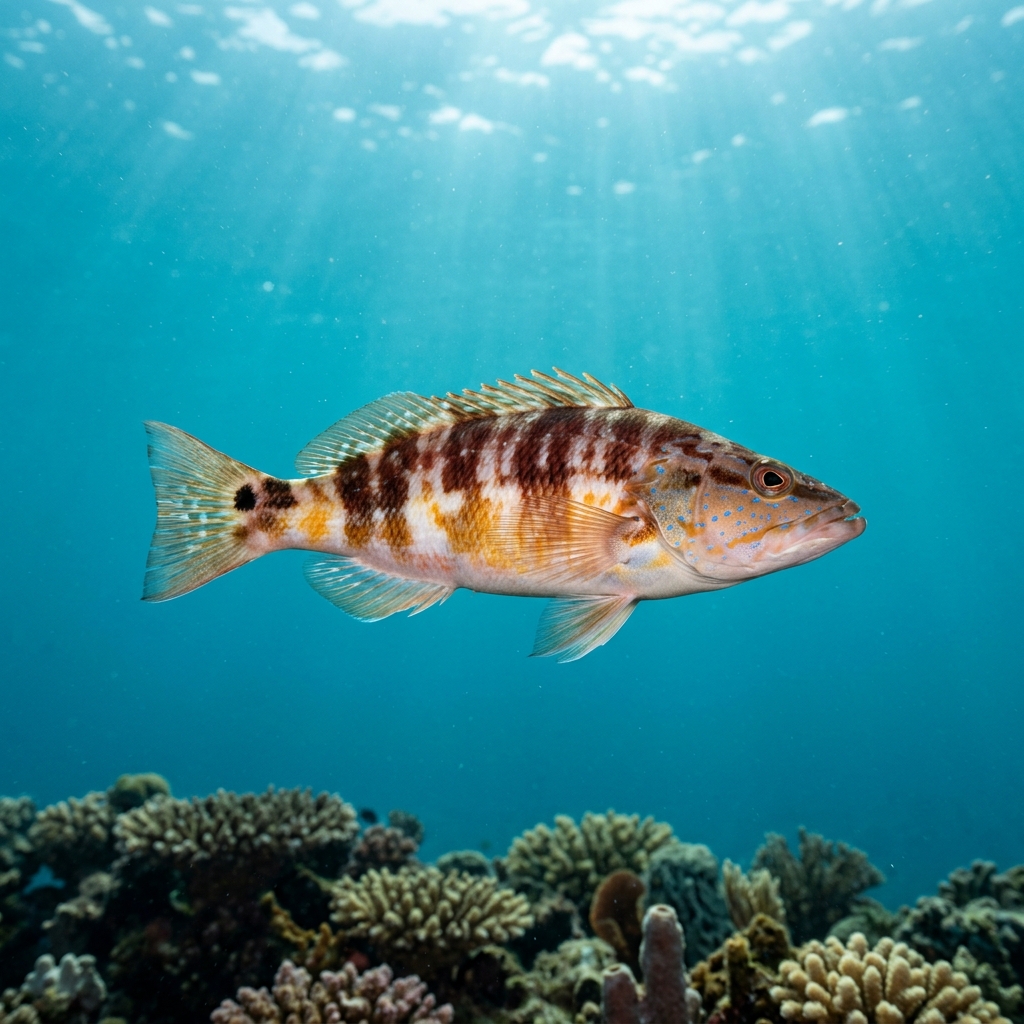
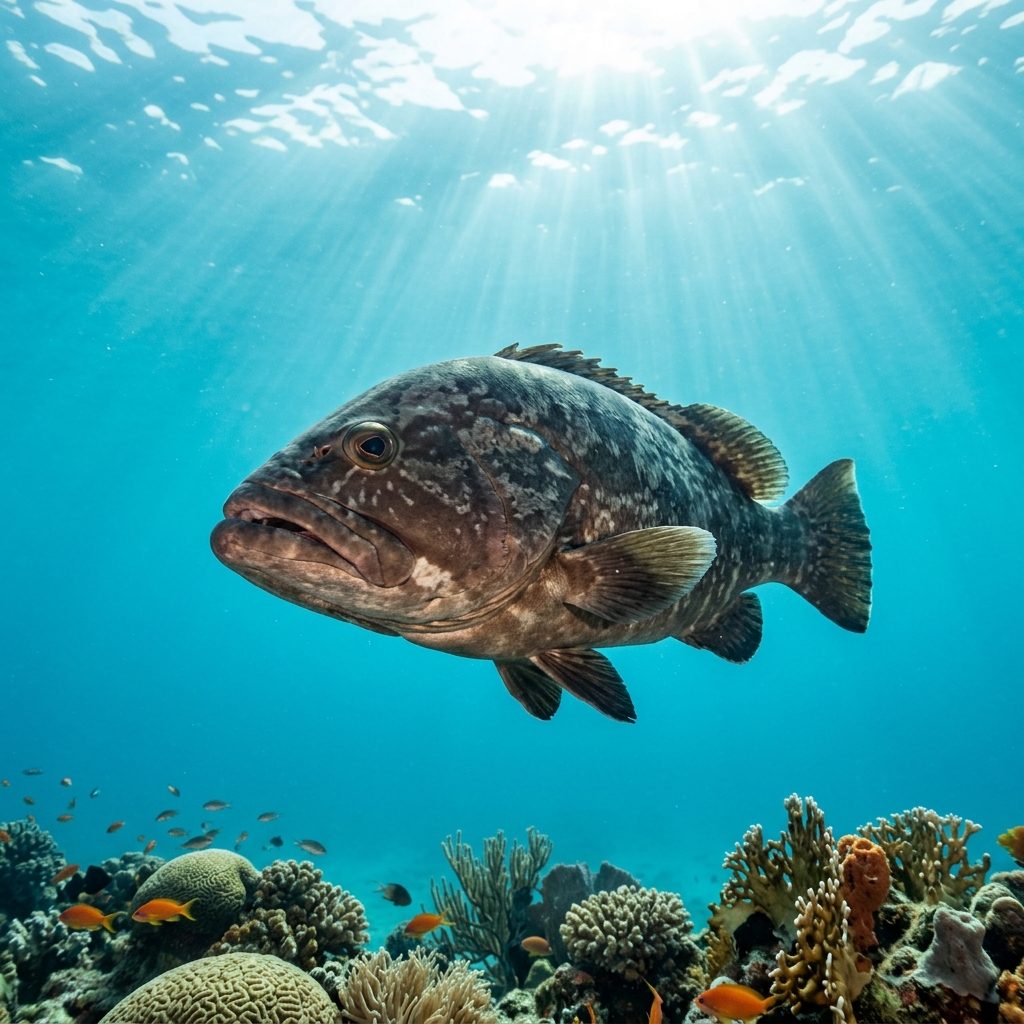
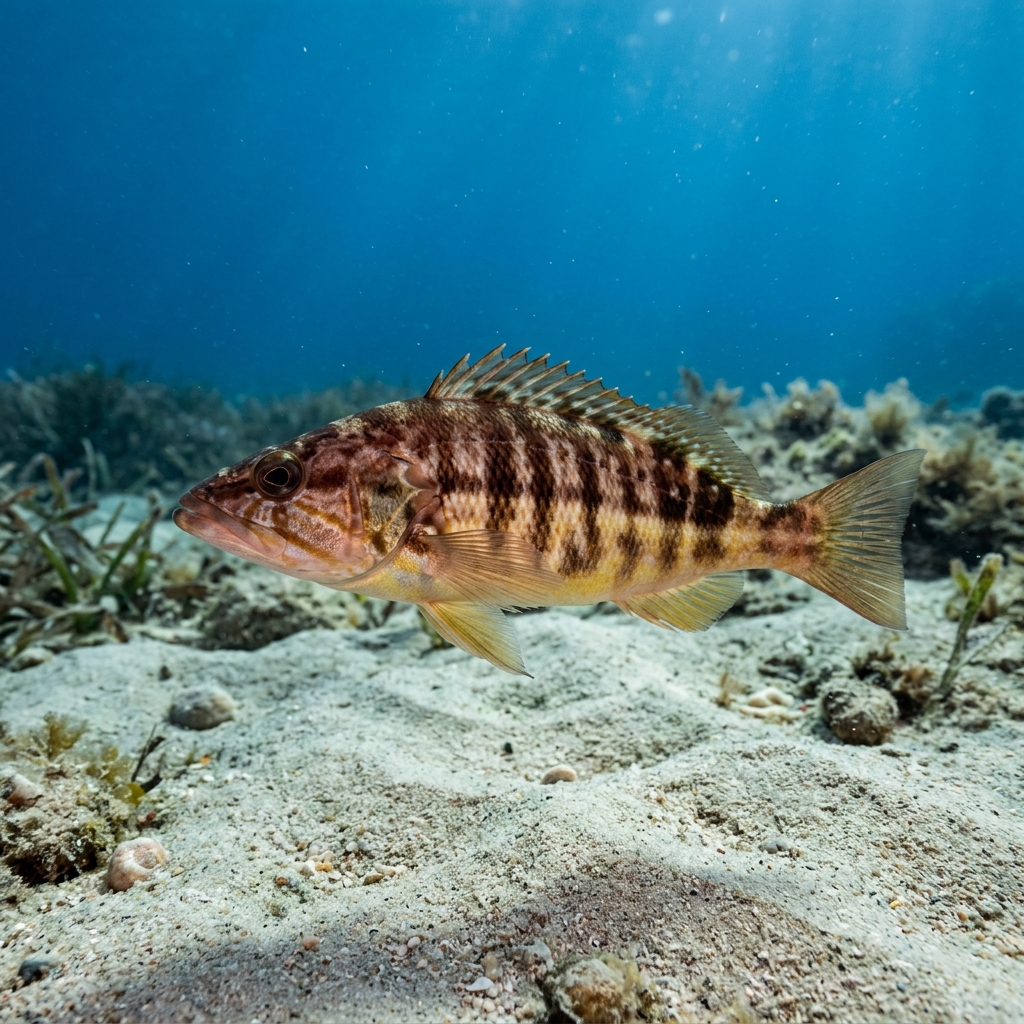
Reef neighbours a diver could mistake it for. Use the identification notes above to tell them apart.
Most reliably logged along Peninsular Malaysia's east coast and on reefs in Queensland, Australia, with strong numbers also coming out of Raja Ampat and Bali in Indonesia. Thailand's Koh Chang, Koh Tao and Koh Pha Ngan add regular sightings, and it also turns up off Palawan in the Philippines and around Papua New Guinea.
Mapping where Bluespotted Hind is logged…
It is most often logged on reefs along Peninsular Malaysia's east coast and around Queensland, Australia, with good numbers also reported from Raja Ampat and Bali in Indonesia.
There is no clear seasonal pattern in the sighting data, and it lives comfortably in water from about 25.6 to 29 C, so it is a year-round find on the reefs where it occurs.
Look for a compact, stocky grouper under 40 cm with a reddish-brown body covered in small pale blue spots, usually resting still on the reef rather than swimming past. A darker tail margin is a handy secondary check.
They typically reach around 38 cm, a modest size compared to many of their grouper relatives.
No, they are not considered dangerous to divers and simply hold their ground or retreat under a ledge when approached.
They are protogynous hermaphrodites, starting out as females and with some individuals later switching sex to become males as they mature, a trait shared across the Cephalopholis grouper genus.
Site and sighting data is aggregated from diver logs, iNaturalist and GBIF. For taxonomy and conservation status:
Blacktip Grouper
2,726 sites