Xanthichthys auromarginatus
Blue-lipped and gold-edged, this triggerfish shows up on deeper reef drop-offs in Hawaii and the Visayas year-round in warm water.
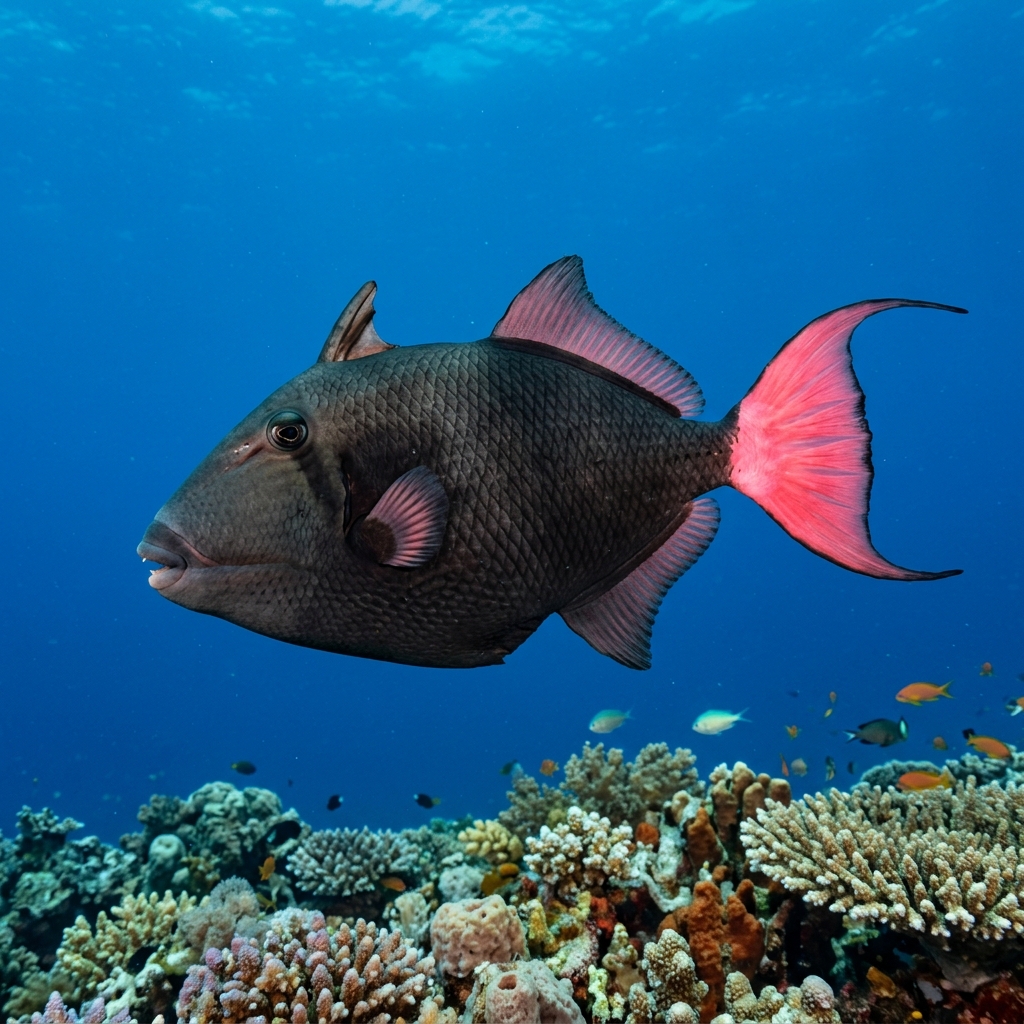
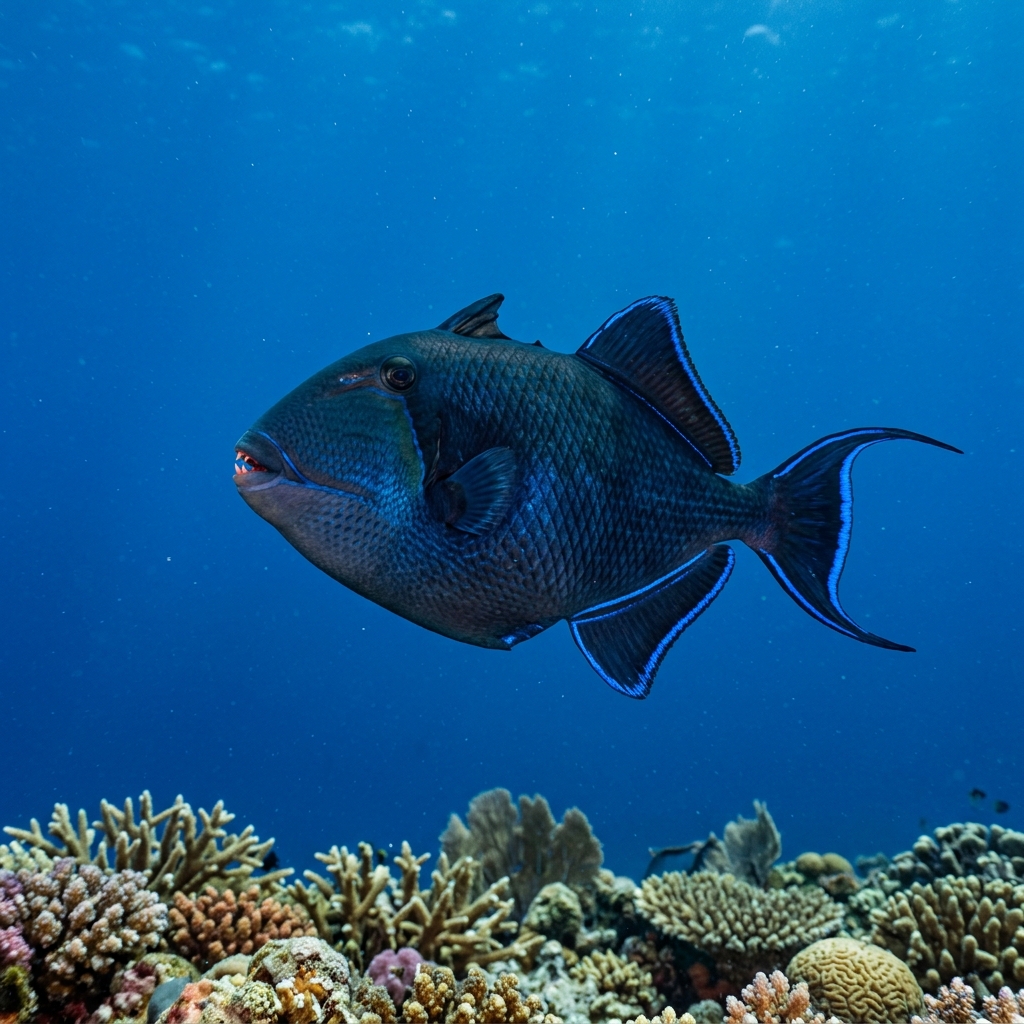
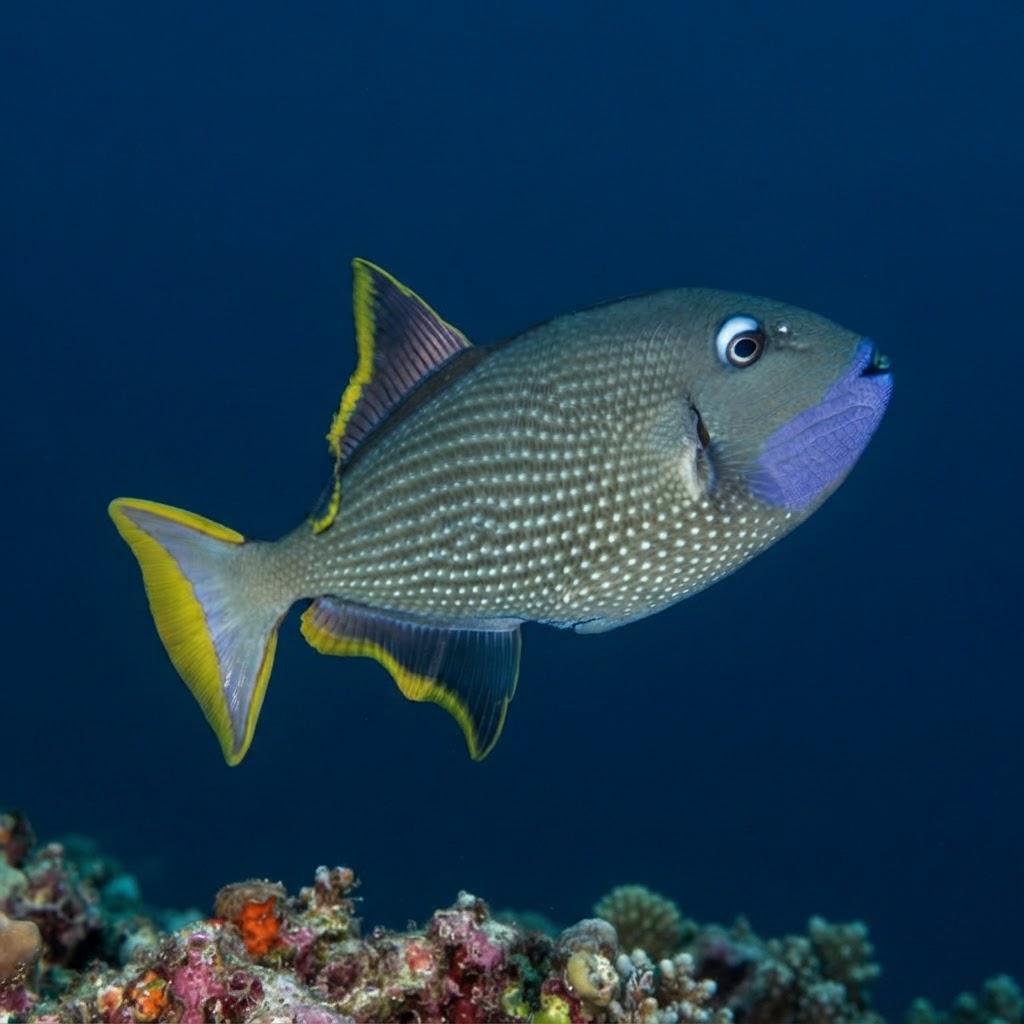
A stocky, oval-bodied triggerfish around 21 cm, grey-brown overall with a distinctive pale blue patch on the chin and lower lip. Look for fine gold or yellow trim along the edges of the dorsal and anal fins, which catches the light against the duller body. It tends to hang just off the reef in open water rather than tight against structure, which helps separate it from bottom-hugging triggerfish species.
Divers typically find it hovering a metre or two above the reef in open water, often in loose groups picking at plankton drifting past rather than grubbing in the sand like many of its relatives. It keeps a comfortable distance from divers and will usually just ease away rather than bolt, making it an easy, unhurried subject if you approach slowly. Most sightings come from mid to deeper reef slopes and drop-offs rather than shallow lagoons.
Unlike many triggerfish that root around the substrate for invertebrates, this species feeds mainly by picking zooplankton out of the water column, which is why you'll often spot it holding station over open reef rather than nosing into rubble.
Sighting data shows no clear seasonal pattern, and its comfortable range of 18.3 to 28.2 C spans most tropical and subtropical reef conditions year-round, so any month is worth a look at the sites above.
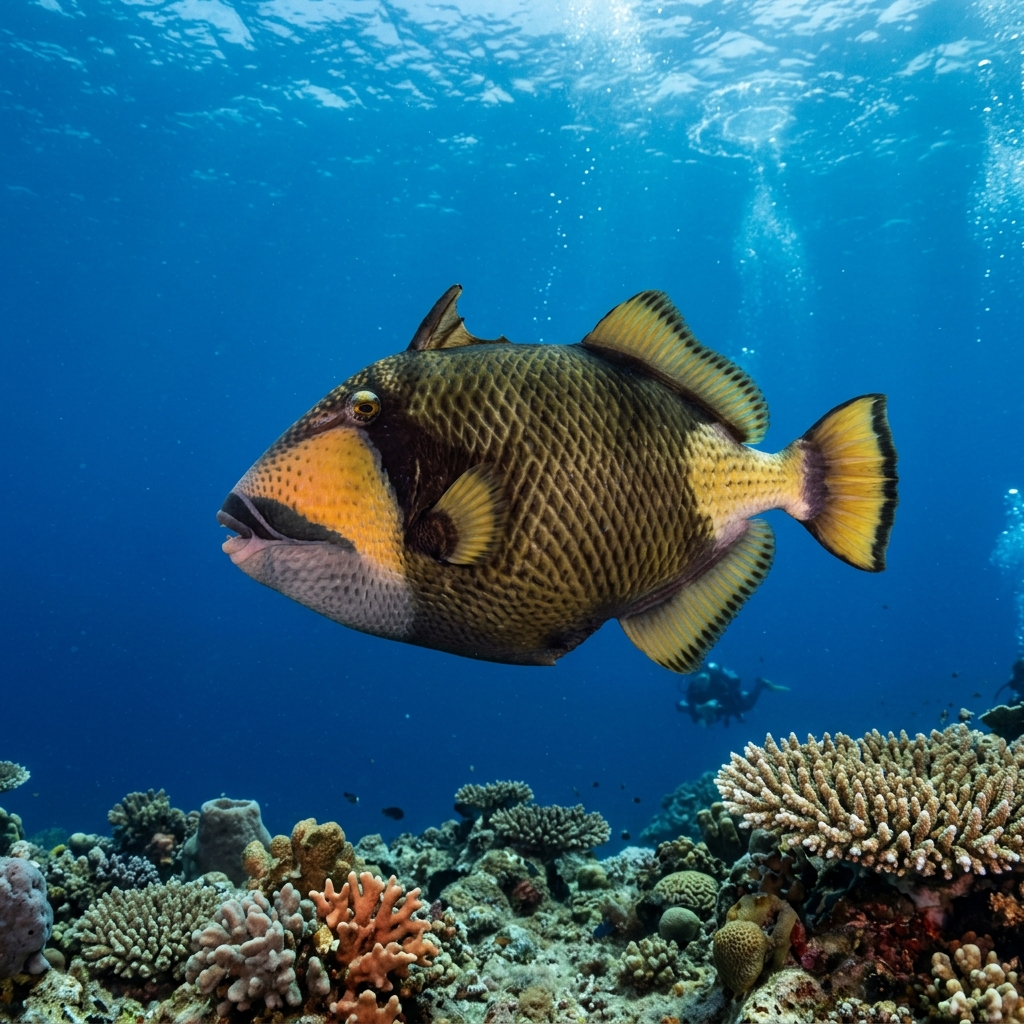
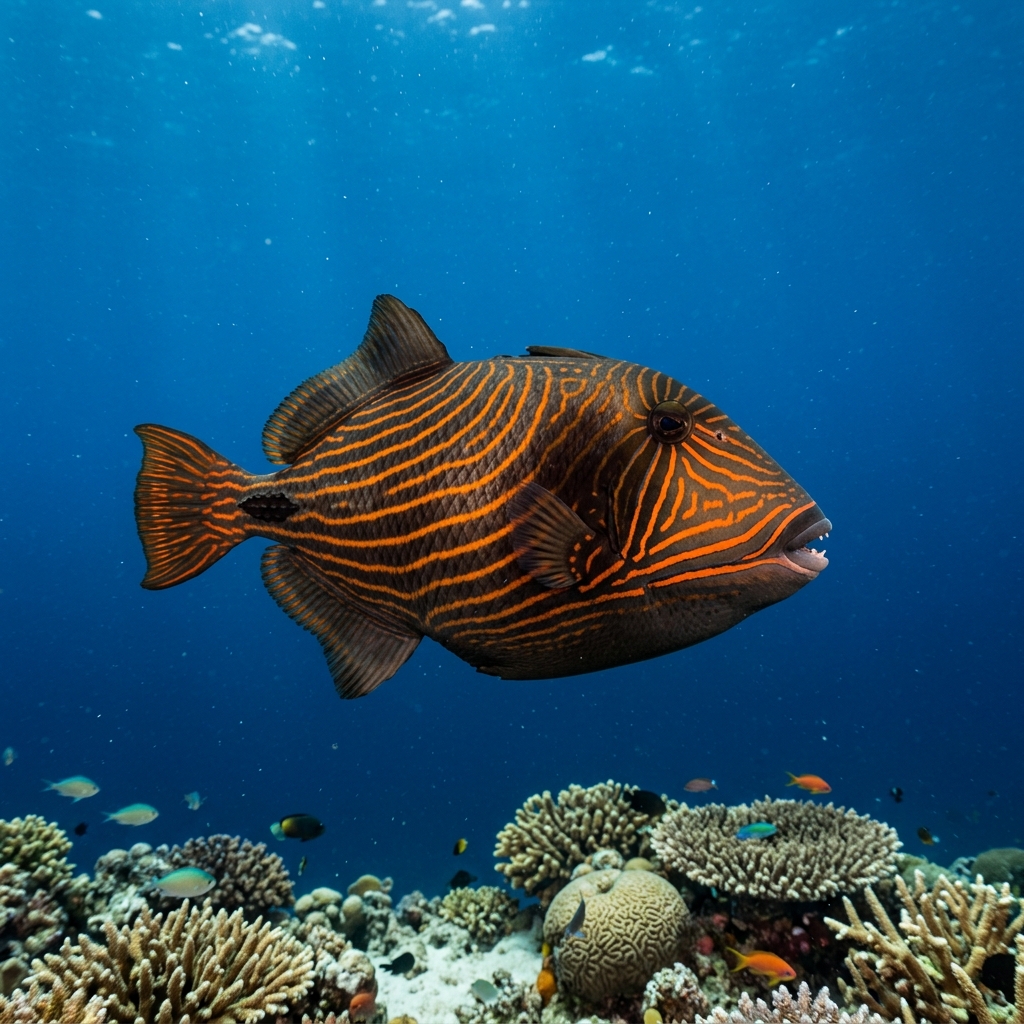
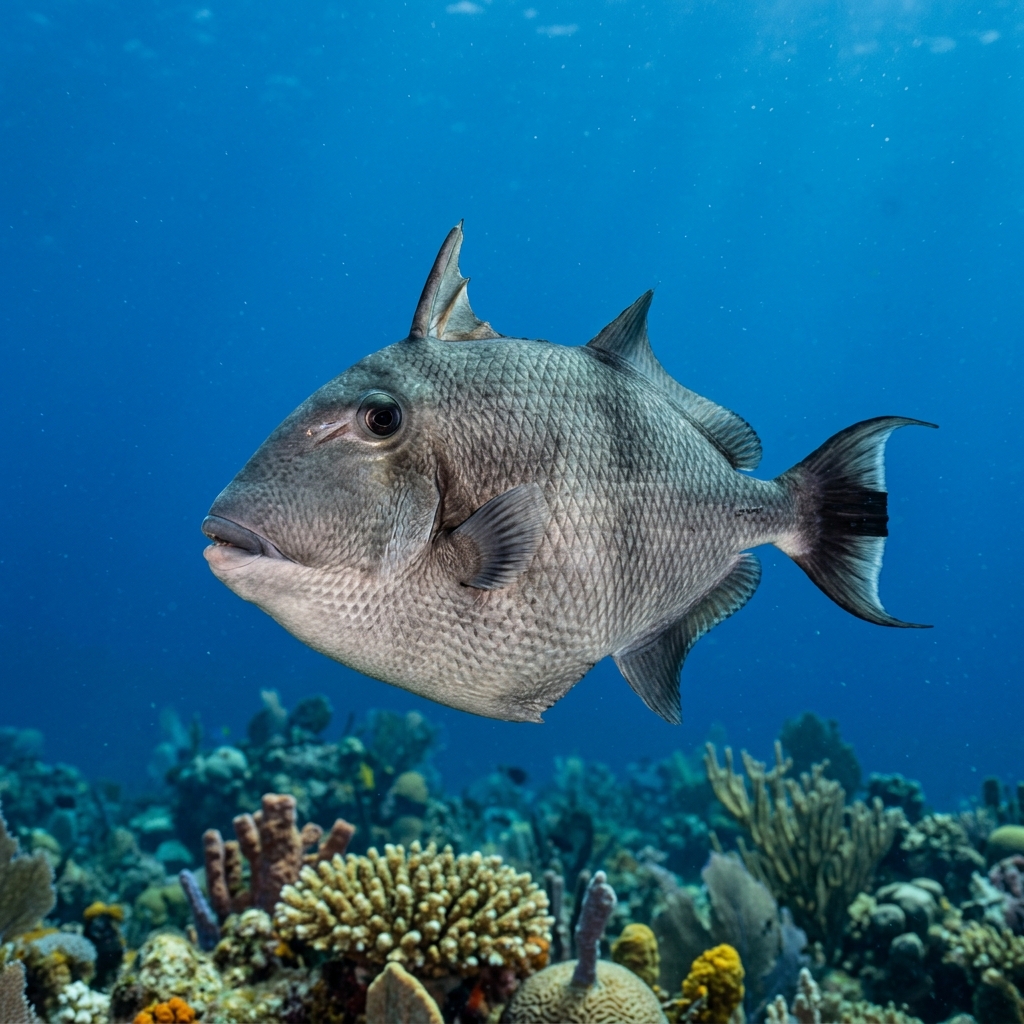
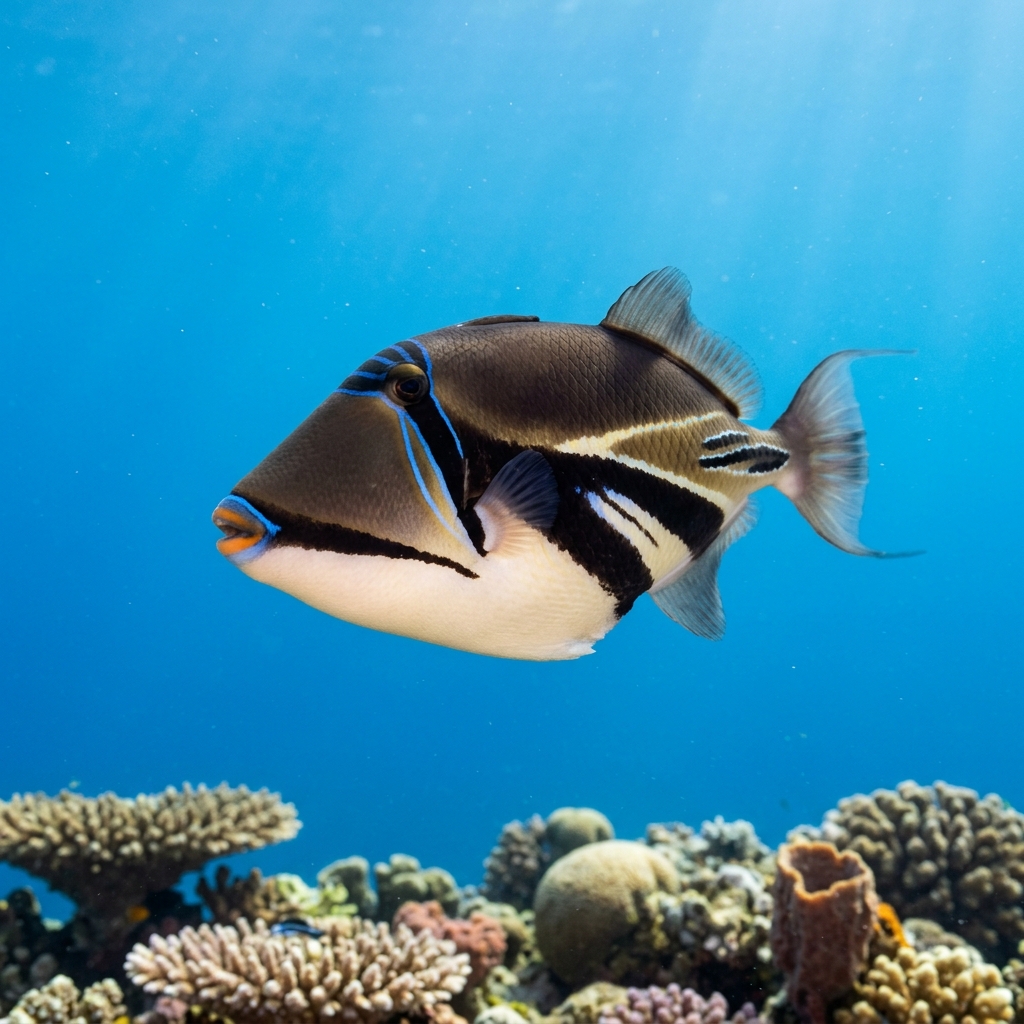
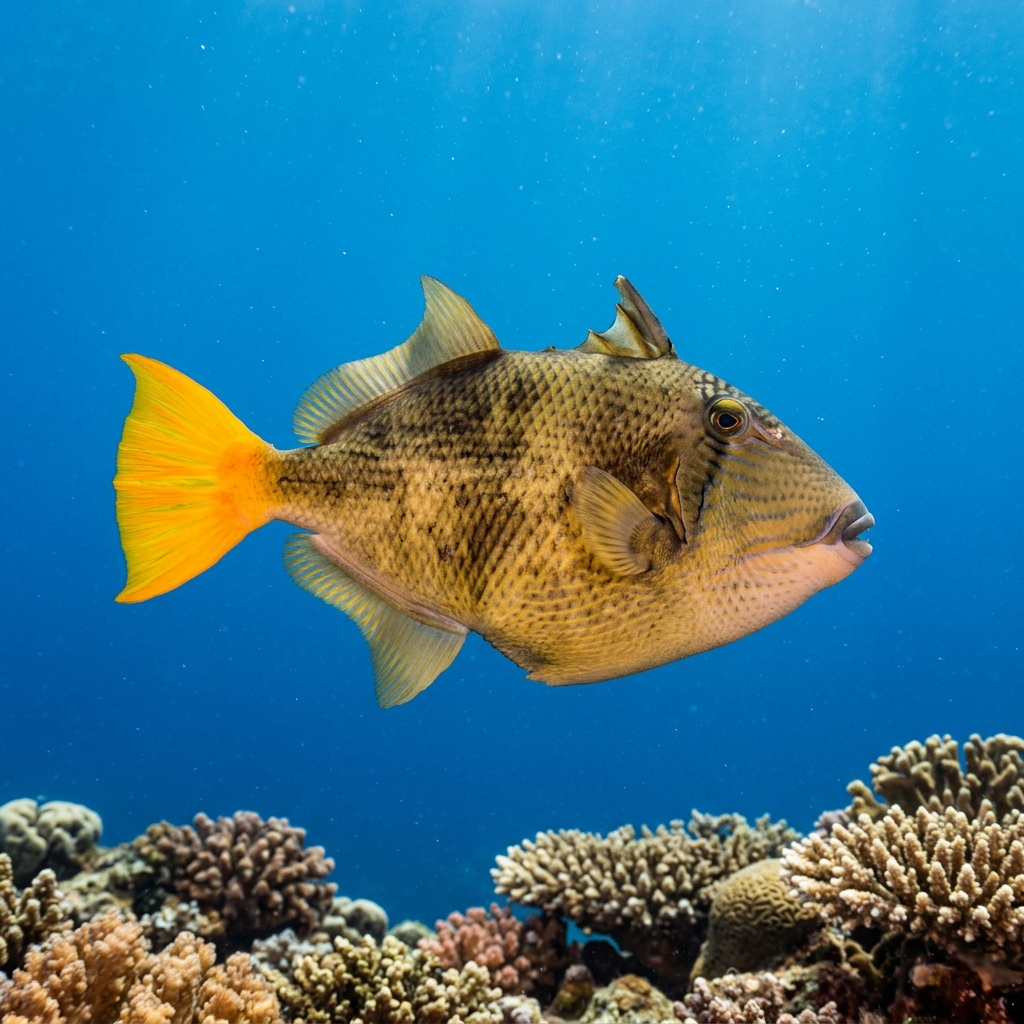
Reef neighbours a diver could mistake it for. Use the identification notes above to tell them apart.
Most reliably logged in Hawaii, United States, with a strong secondary population through the Visayas region of the Philippines. Smaller but consistent numbers turn up around Pemba in Mozambique, Dili in Timor-Leste, and Sulawesi in Indonesia, usually on deeper reef slopes and walls rather than shallow flats.
Mapping where Bluechin Triggerfish is logged…
Hawaii is the most consistent place to find them, with the Visayas region of the Philippines a close second. Smaller populations are also logged around Pemba in Mozambique, Dili in Timor-Leste, and Sulawesi in Indonesia.
There's no strong seasonal pattern in the sighting data, and its wide temperature tolerance of 18.3 to 28.2 C means it's present year-round wherever it's found, so timing your trip around the destination matters more than the month.
Look for a grey-brown, oval-bodied triggerfish about 21 cm long with a pale blue patch on the chin and gold trim along the dorsal and anal fins. It's usually seen hovering above the reef rather than sitting on the bottom.
They reach around 21 cm in length, making them one of the smaller members of the triggerfish family.
No, they're not considered dangerous to divers. They tend to keep their distance and move away calmly rather than approach or display aggressively.
Site and sighting data is aggregated from diver logs, iNaturalist and GBIF. For taxonomy and conservation status:
Lagoon Triggerfish
2,435 sites