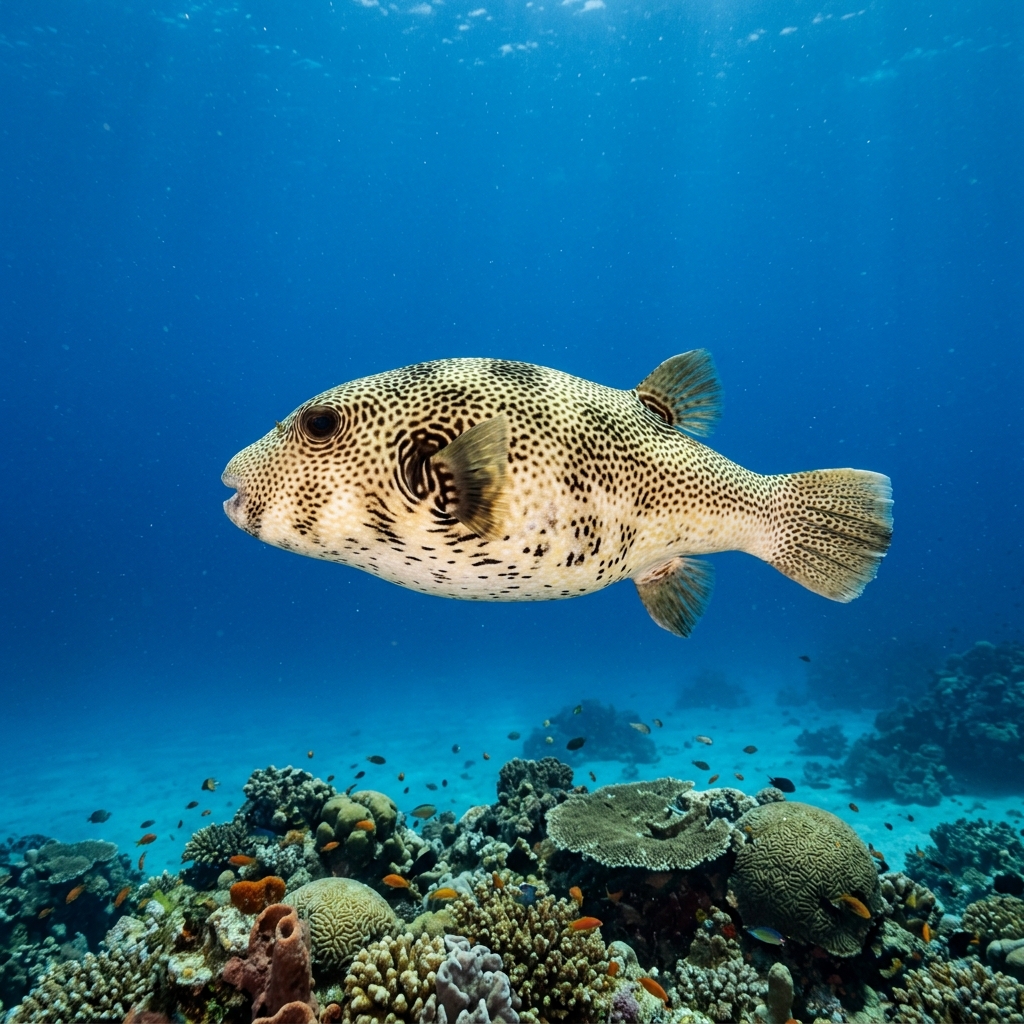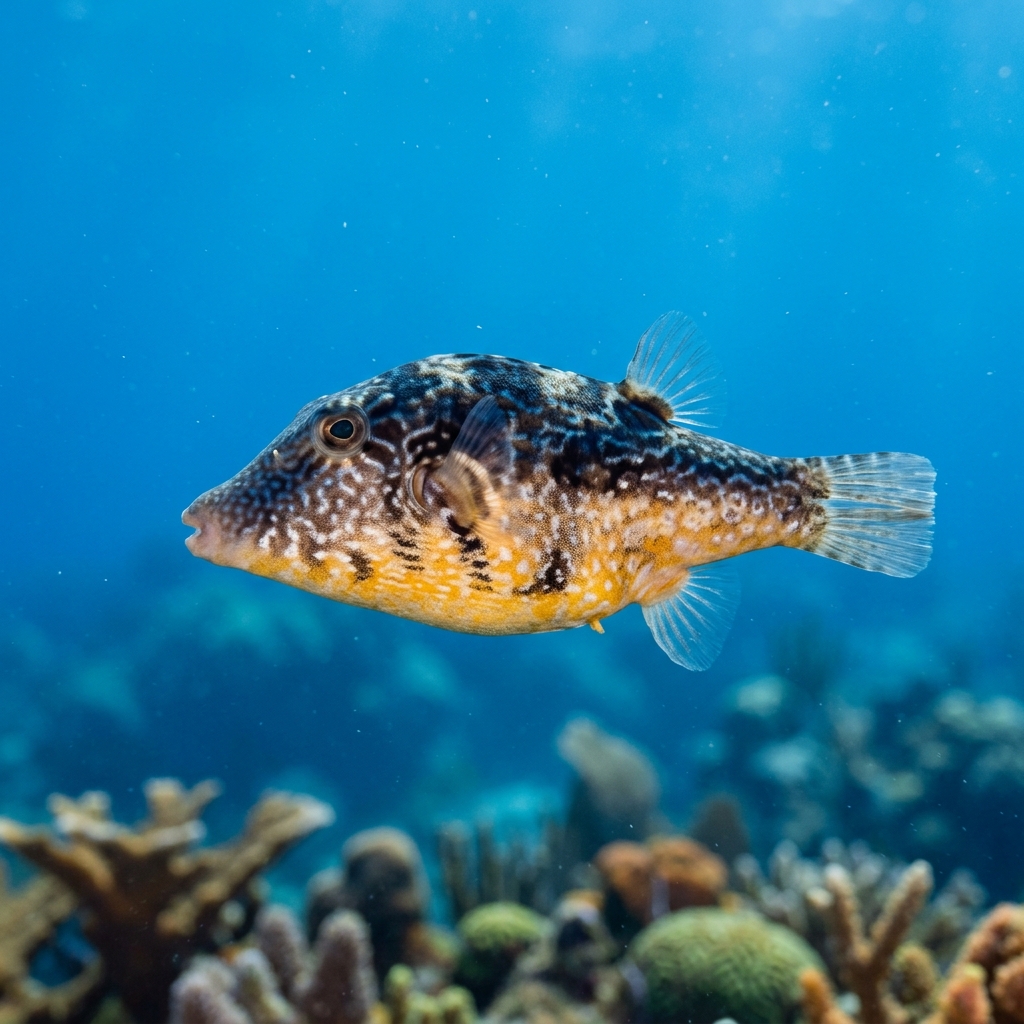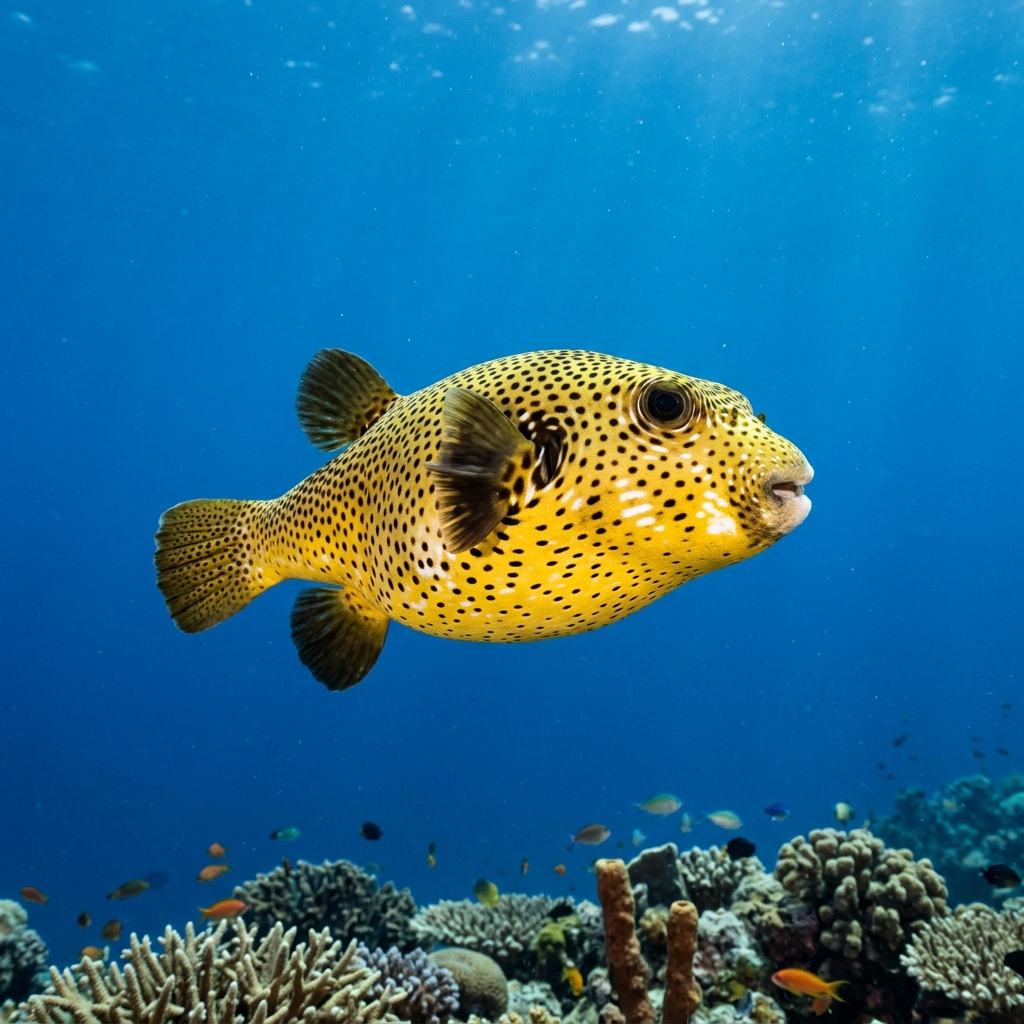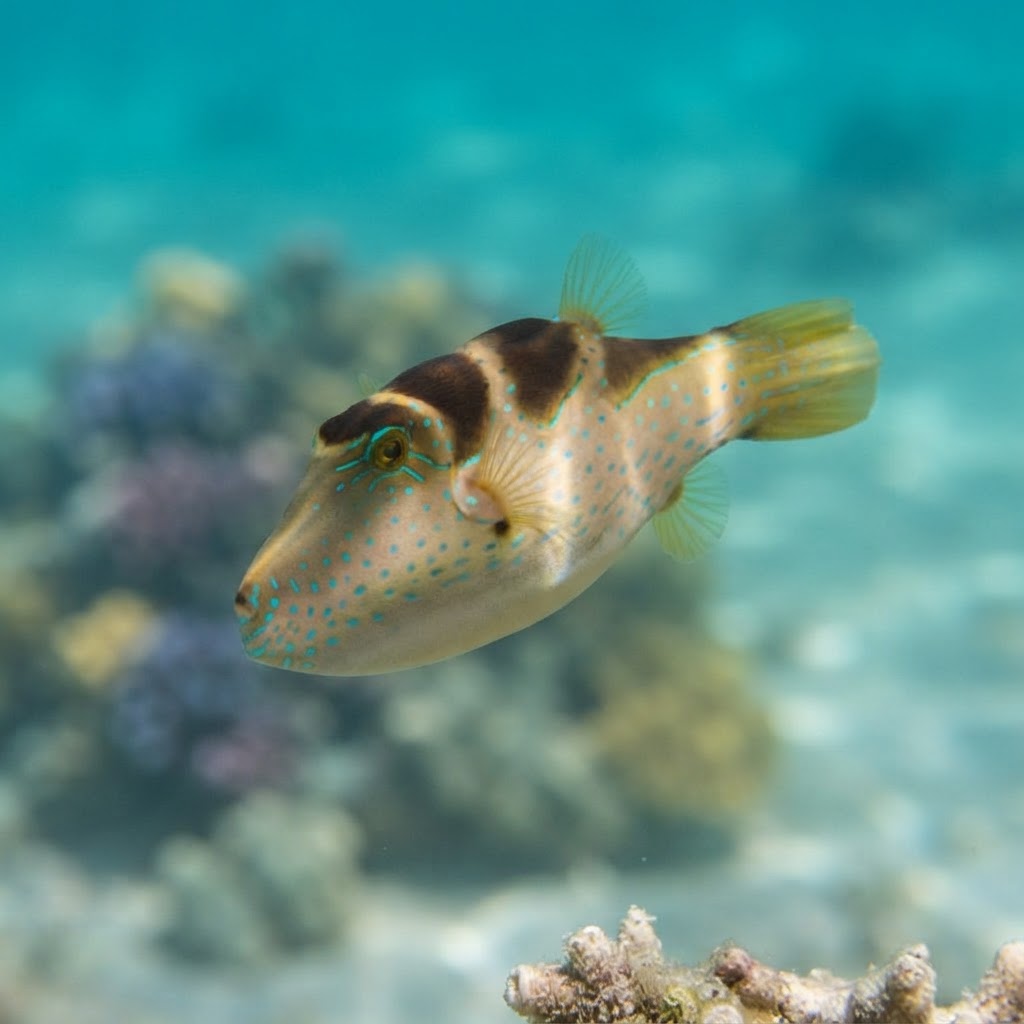
Canthigaster cyanospilota
A small, speckled puffer common on Red Sea reefs, especially South Sinai, in warm 24-29C water year-round.
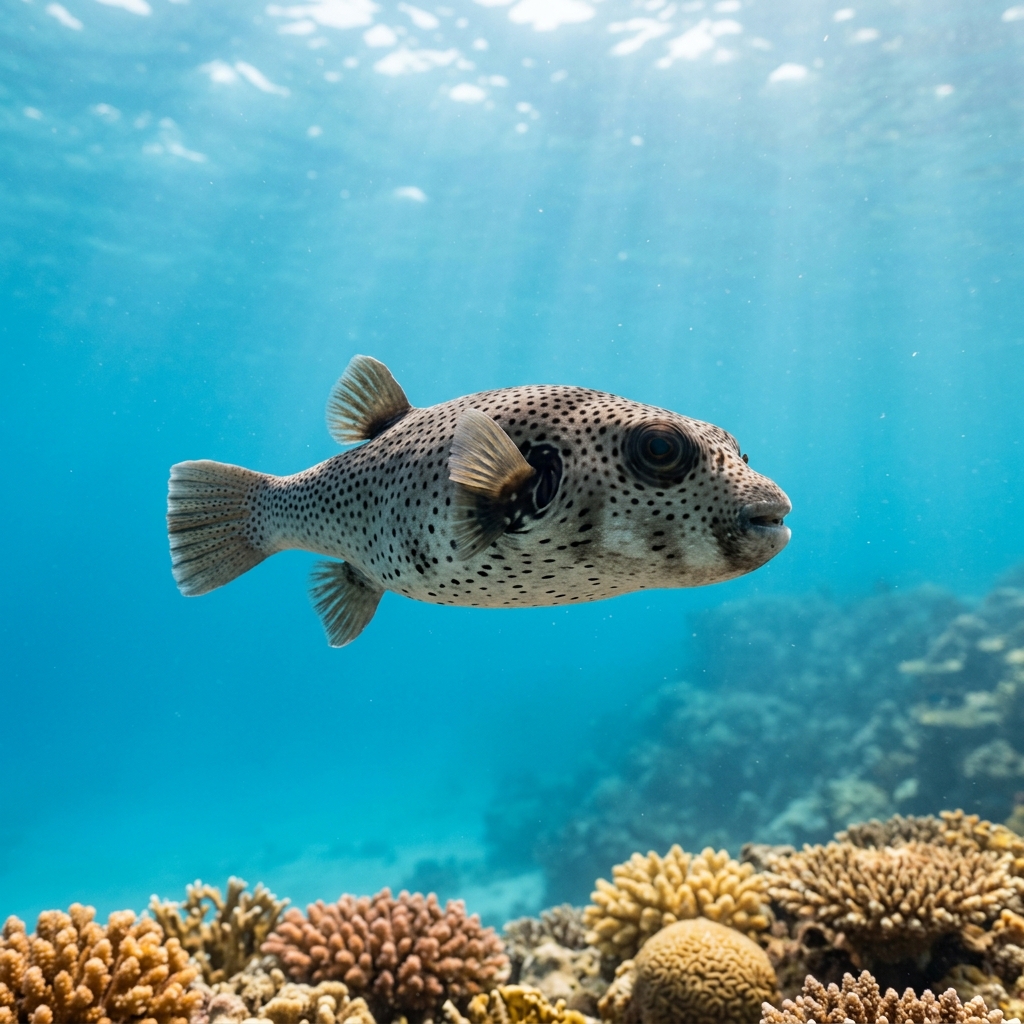
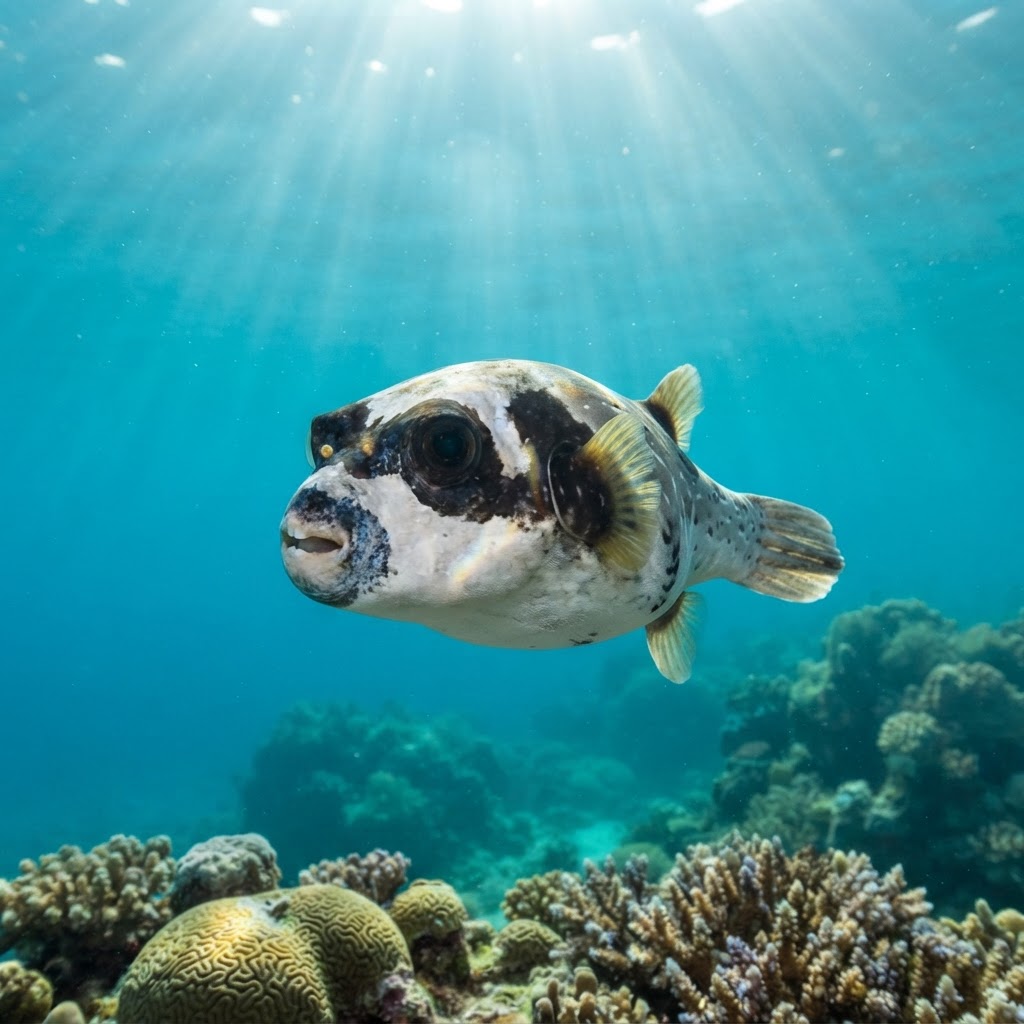
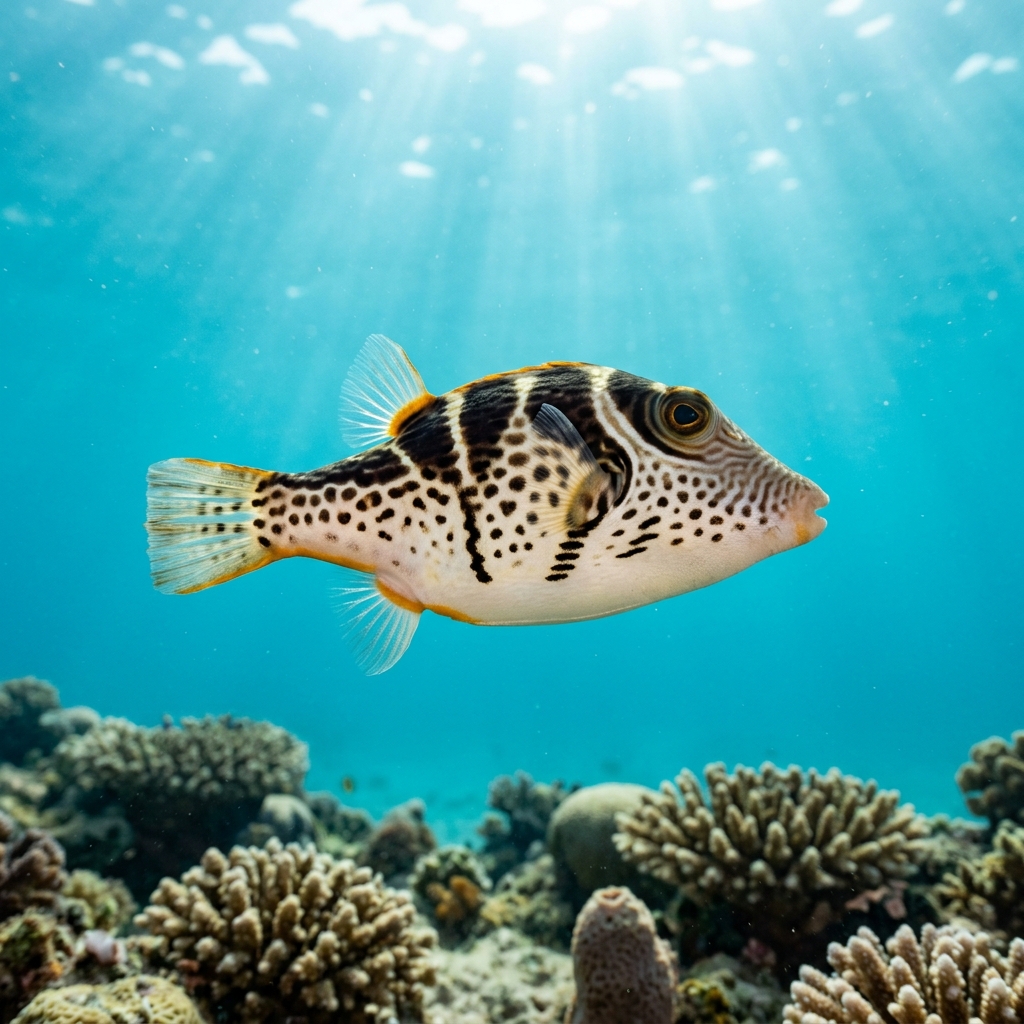
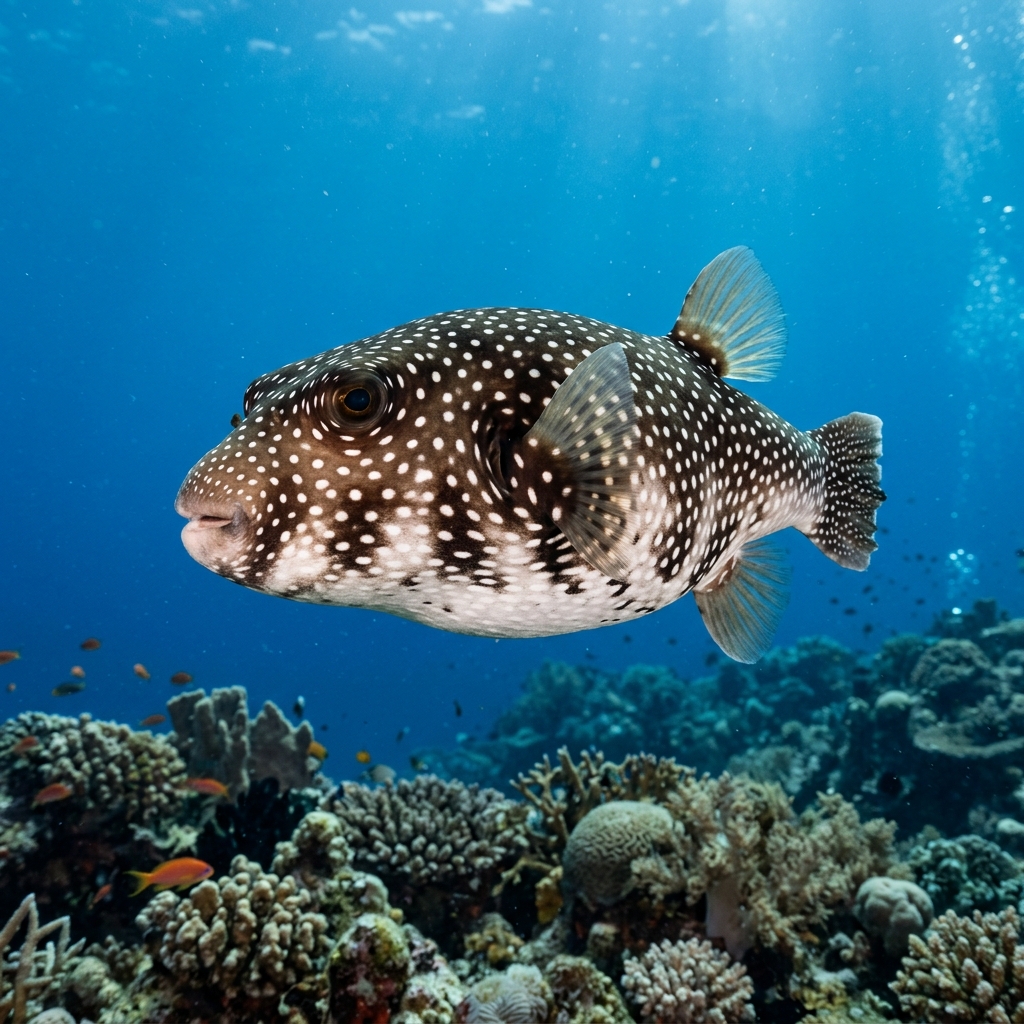
Small and stubby, topping out around 7 cm, with a rounded body that tapers to a small tail. Look for a brown to olive body scattered with fine electric-blue spots and lines, densest on the back and upper sides, fading to a pale, unmarked belly. It hovers close to the reef rather than swimming in open water, and the blunt, beaked mouth typical of pufferfish is easy to pick out at close range.
Divers most often find it picking around low reef structure and rubble patches rather than out in the open, moving in short unhurried bursts as it forages. It is not shy in the way many reef fish are, but it will duck for cover among coral heads if you crowd it, so a slow approach gets you the best look.
Like other tobies, it carries tetrodotoxin in its skin and organs as a defence against predators, so it has little to fear from most reef life and rarely bothers fleeing far from divers.
No clear seasonal pattern shows up in the data, and with a comfortable range of 24.2 to 29.3C, it is a year-round sighting on these reefs rather than a seasonal specialty.
Reef neighbours a diver could mistake it for. Use the identification notes above to tell them apart.
This is a Red Sea and Gulf regular, most reliably logged across South Sinai in Egypt, with strong numbers also in Eilat, Israel and Aqaba, Jordan. Smaller but consistent populations turn up around Coin de Mire in Mauritius, and it has been recorded as far as Western Australia.
Mapping where Blue-spotted Toby is logged…
South Sinai in Egypt is the standout region, with reliable sightings also in Eilat, Israel and Aqaba, Jordan. It also appears around Coin de Mire in Mauritius.
There is no strong seasonal pattern in the sighting data. It tolerates a wide temperature band of roughly 24 to 29C, so it turns up on Red Sea and Gulf reefs throughout the year.
Look for a small, rounded puffer around 7 cm long with a brown to olive body covered in fine blue spots and lines, densest on the back. It hovers near the reef rather than swimming in open water.
They stay small, typically reaching around 7 cm, making them one of the more compact pufferfish divers encounter on Red Sea reefs.
No, they pose no threat to divers and are not considered dangerous. They do carry tetrodotoxin internally as a natural defence, but this only matters if the fish is handled or eaten, not for observation while diving.
Site and sighting data is aggregated from diver logs, iNaturalist and GBIF. For taxonomy and conservation status:
Valentini Pufferfish
2,830 sites