Upeneichthys vlamingii
Pale pink-grey bottom-feeder with a dark blue spot, most reliably found off Western Australia and Victoria in cool temperate waters year-round.
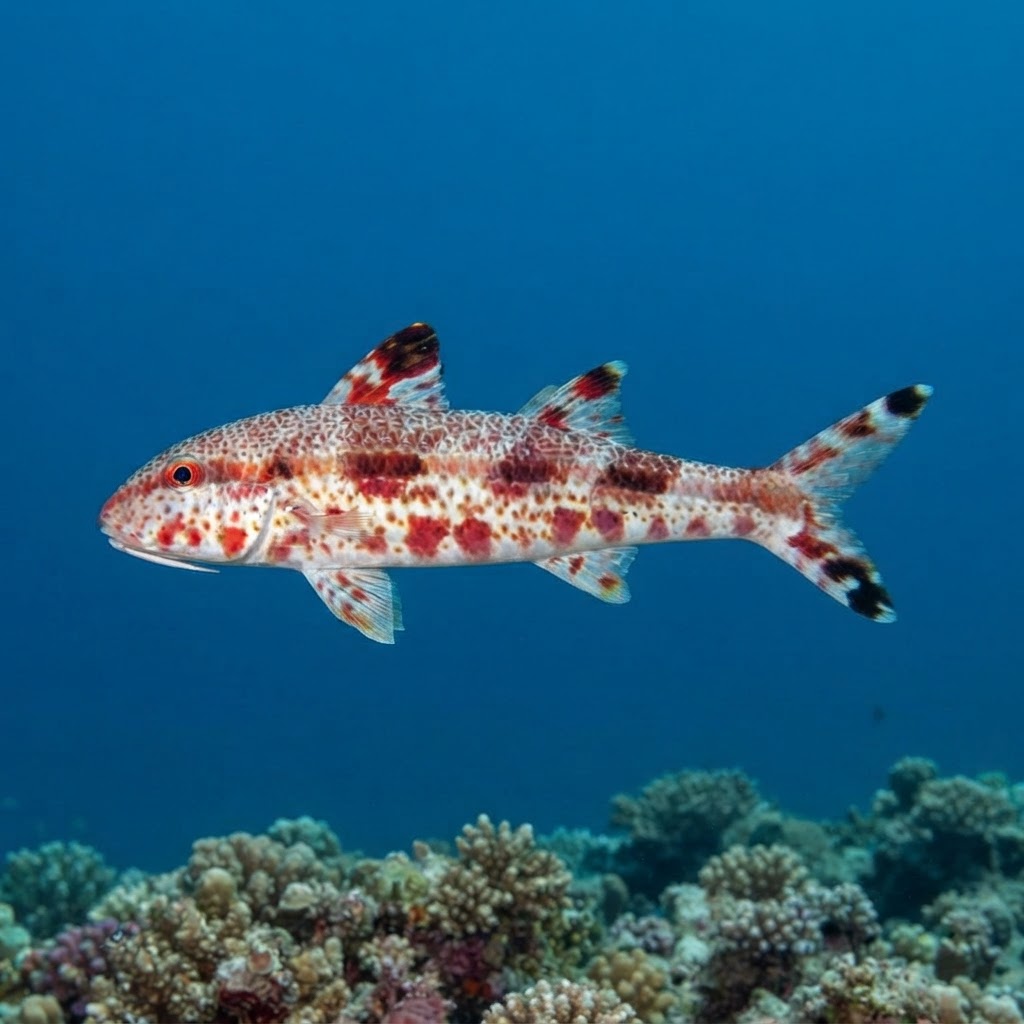
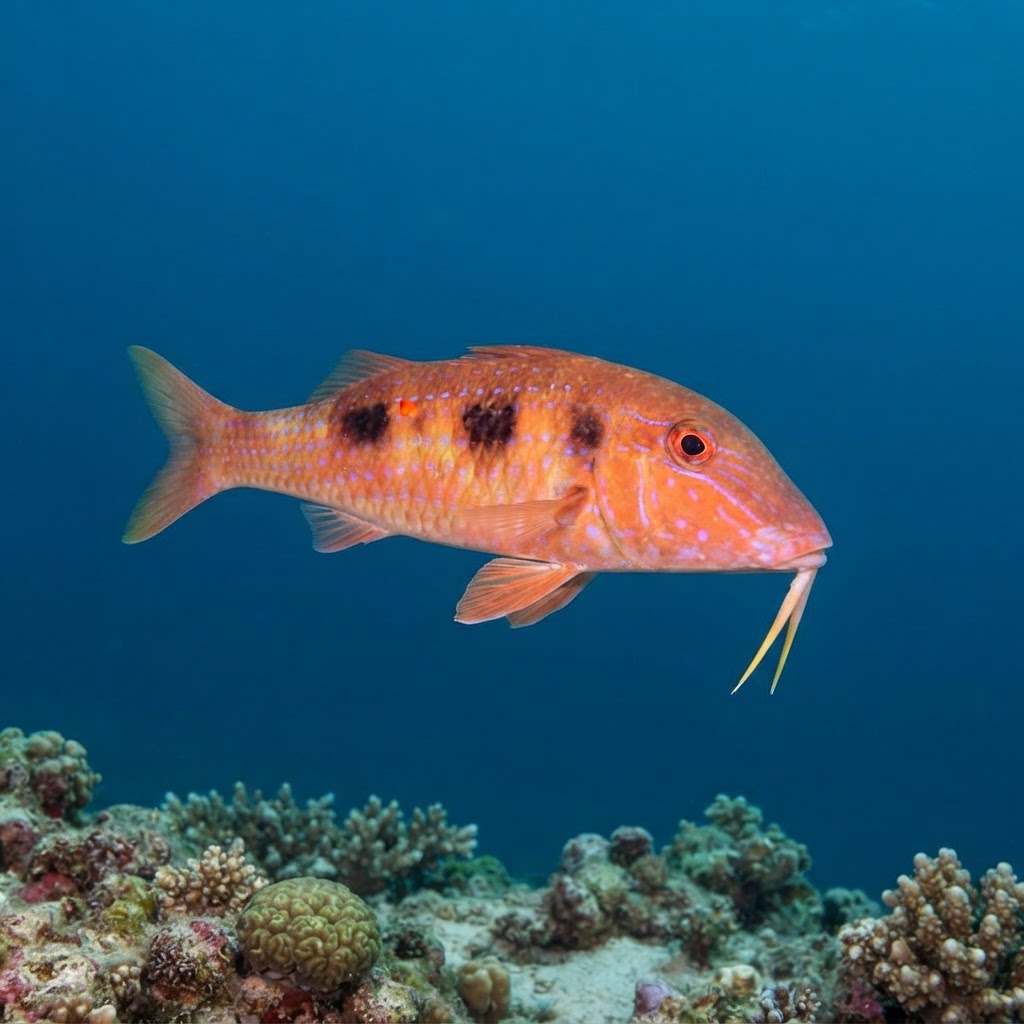
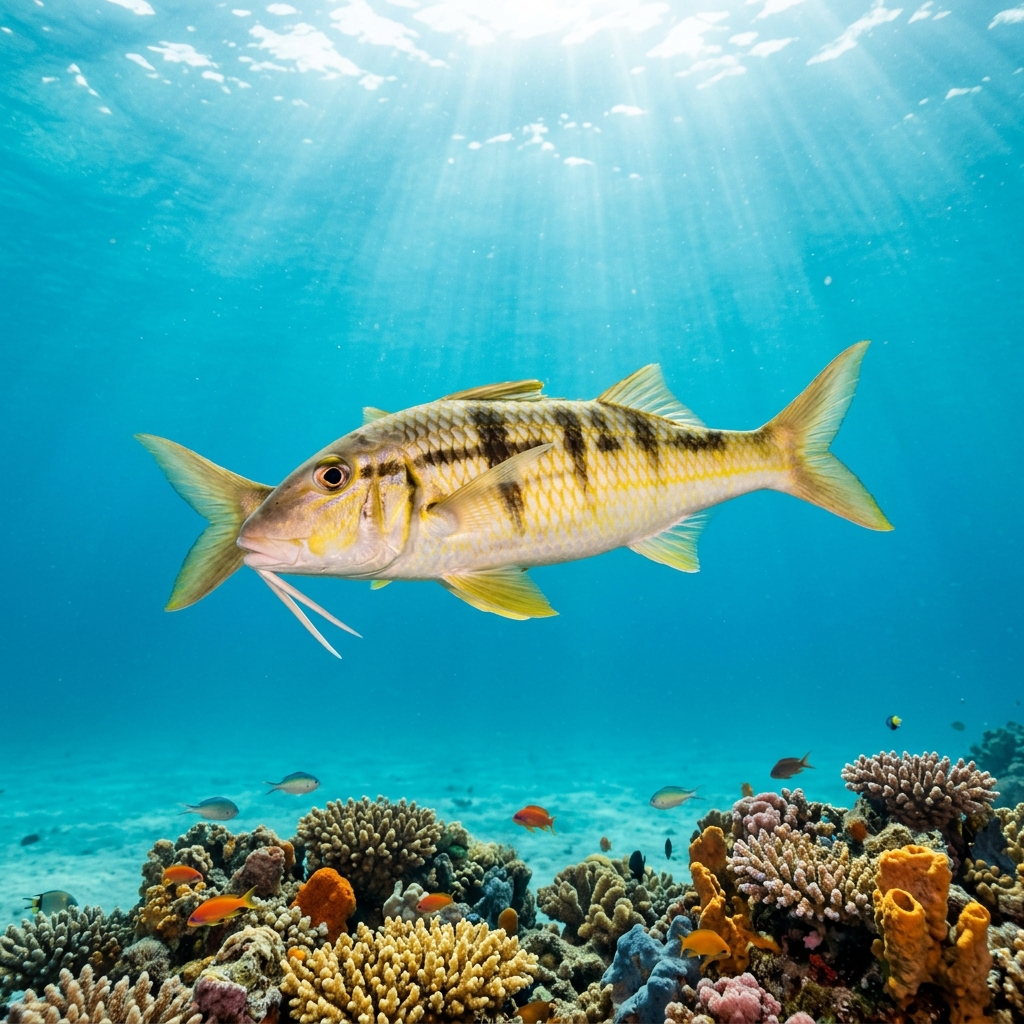
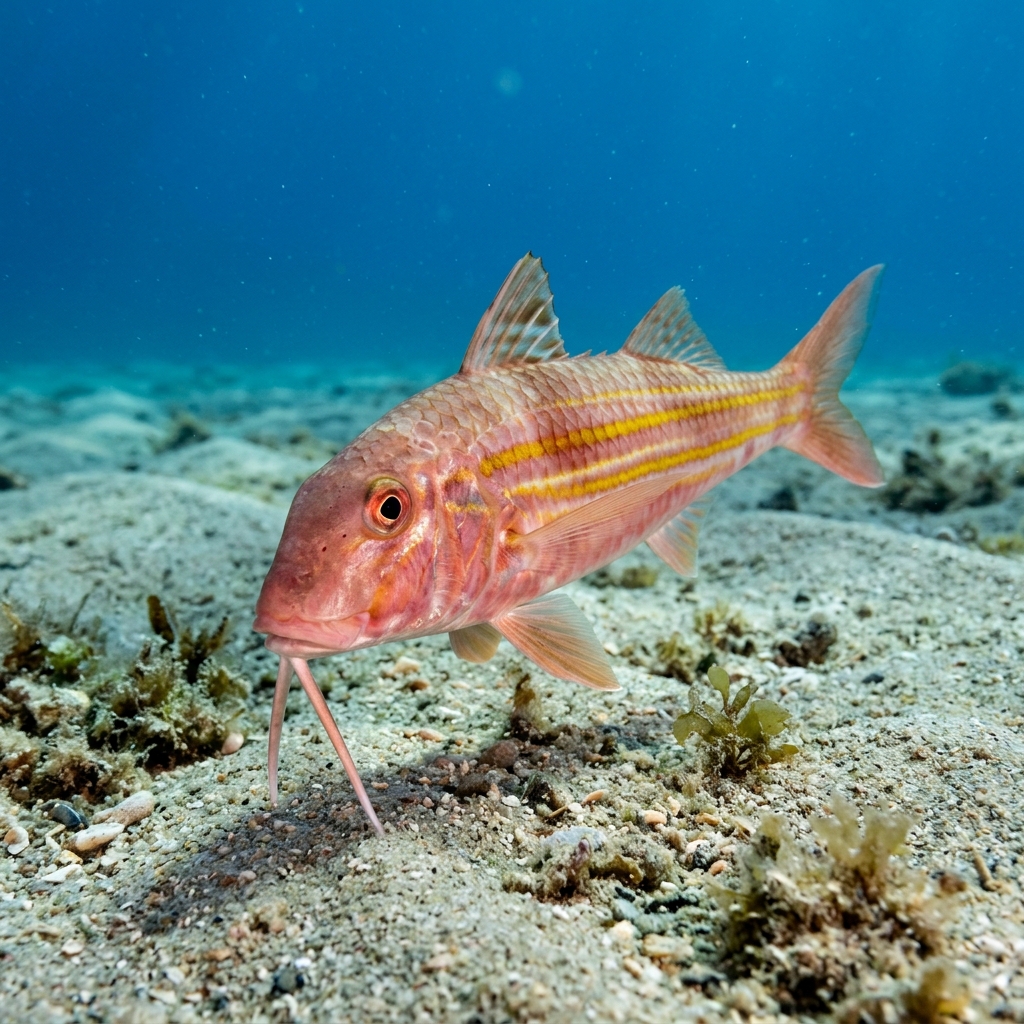
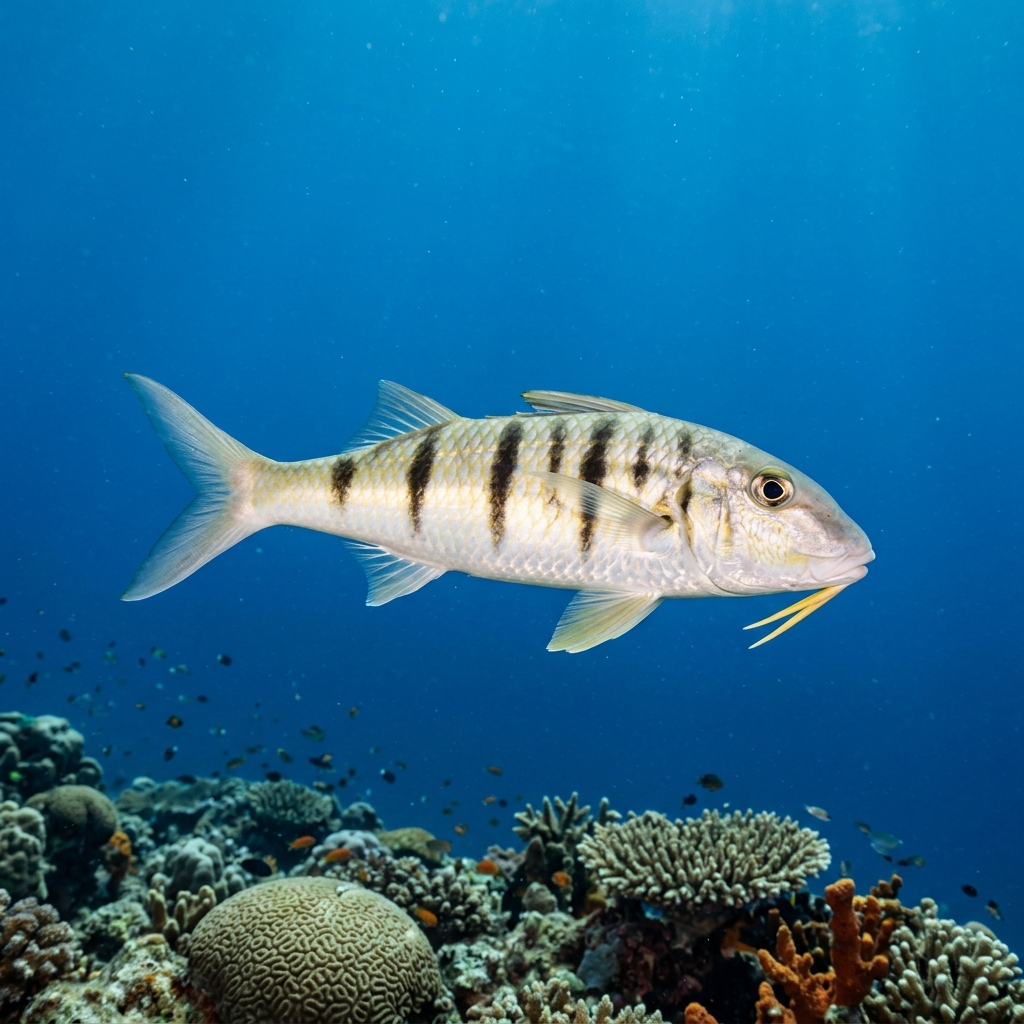
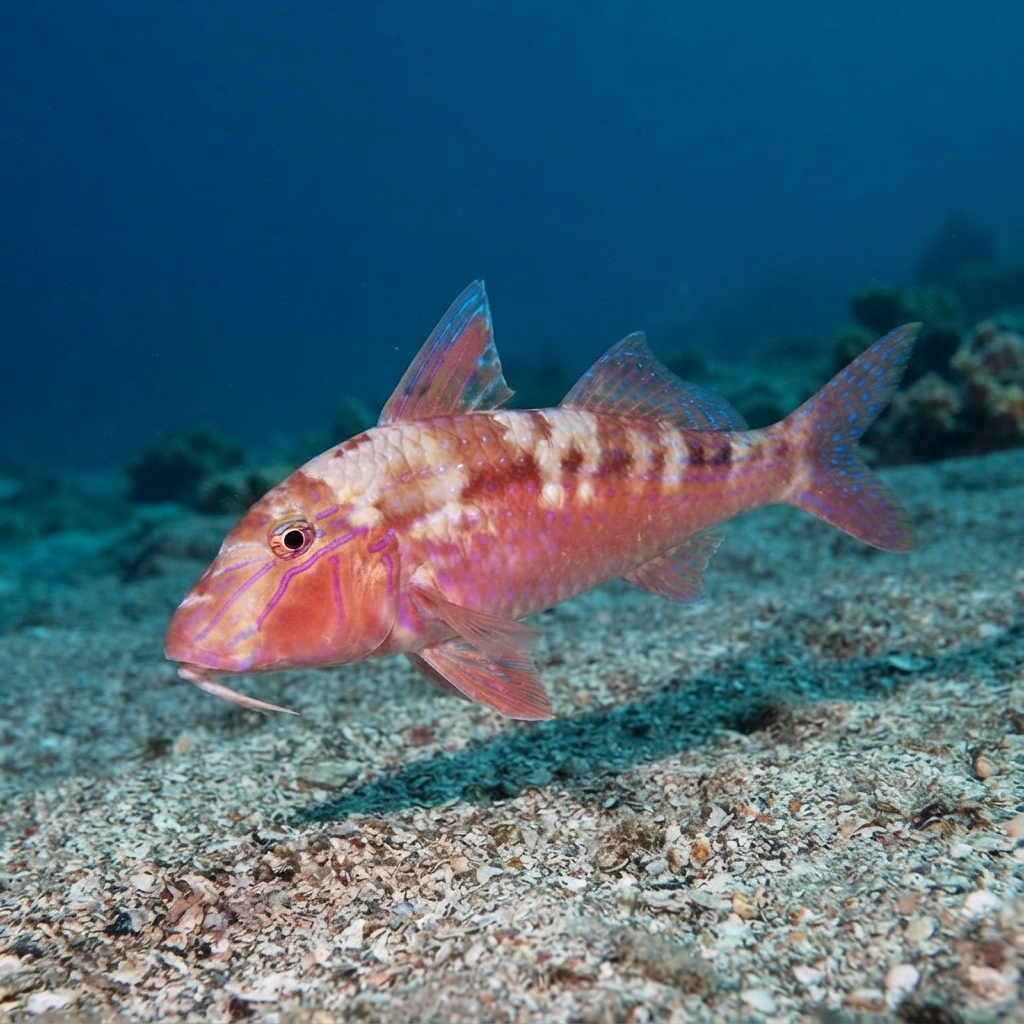
A slender, pale pinkish-grey fish around 24 cm with two long chin barbels it uses to probe the sand for food. The giveaway mark is a dark blue-black blotch low on the flank near the tail, which can fade or intensify depending on mood and background. It often hovers just above the bottom or rests on sand and rubble patches between reef structures.
Look for it working sandy patches and reef edges, barbels sweeping the substrate as it hunts small invertebrates by touch and smell rather than sight. It is generally unbothered by divers and will keep feeding or cruising slowly along the bottom rather than bolting, though it rarely lingers if approached too directly. Most logs describe it alone or in loose ones-and-twos rather than in schools.
Those chin barbels are packed with taste buds, letting it detect buried worms and crustaceans in sand it cannot see into, a feeding trick shared across the whole goatfish family.
Sightings are logged across the year with no strong seasonal pattern, which fits its wide temperature range of roughly 14.6 to 27.4 C. Plan around conditions and visibility for your chosen region rather than chasing a particular month.
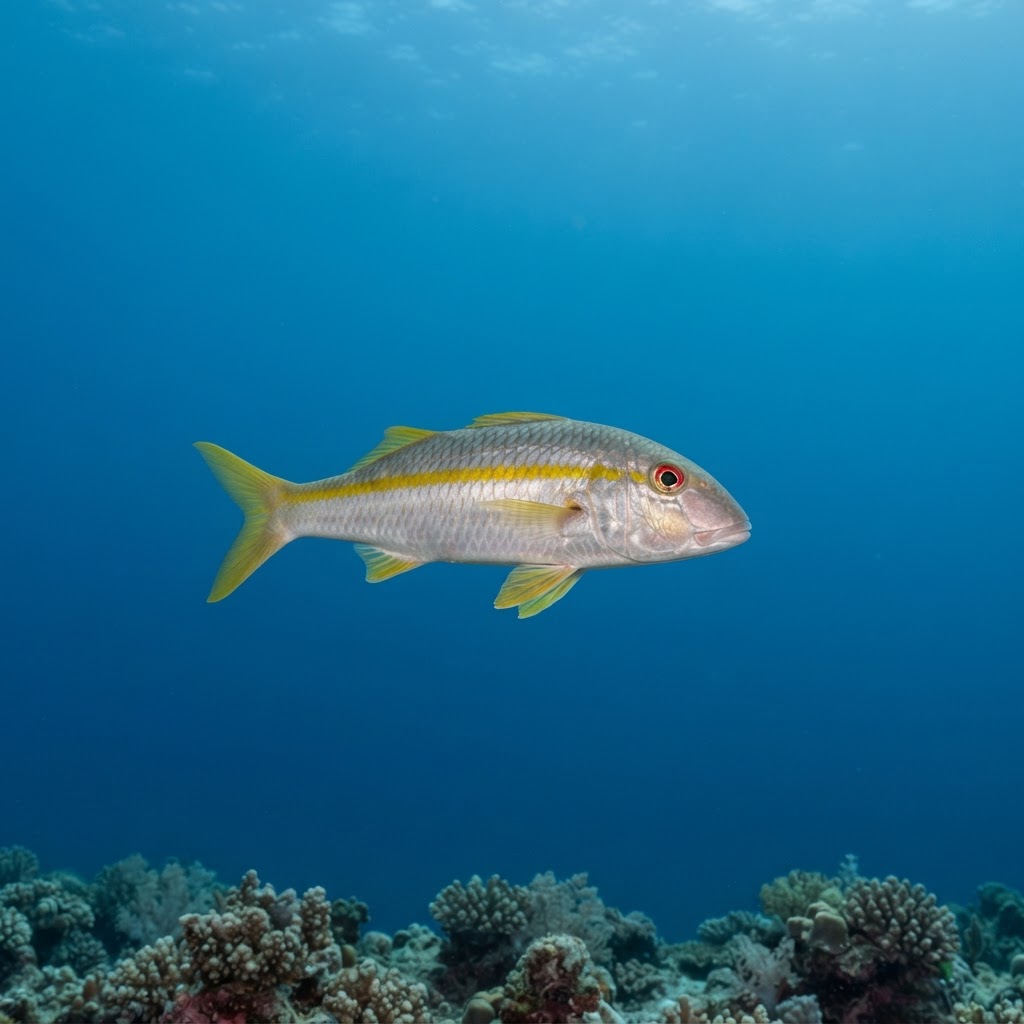
Reef neighbours a diver could mistake it for. Use the identification notes above to tell them apart.
This is very much an Australian species on the data, with the strongest logs coming from Western Australia and Victoria, followed by South Australia and Tasmania. It turns up on temperate reef and sand sites right around the southern coastline rather than on tropical reefs further north.
Mapping where Blue-spotted Goatfish is logged…
Western Australia and Victoria have the strongest sightings, with more reports also coming from South Australia and Tasmania. It is essentially a southern Australian temperate species rather than one found on tropical reefs.
There is no clear seasonal pattern in the sighting data, and it tolerates a wide temperature range from around 15 to 27 C, so it is logged throughout the year.
Look for a pale pinkish-grey fish about 24 cm long with two chin barbels and a dark blue-black spot near the tail. It is usually seen hovering or resting close to sand and rubble rather than swimming in open water.
They typically reach about 24 cm in length, a modest size that keeps them close to the substrate rather than roaming in open water.
No, they pose no threat to divers and simply go about feeding on the bottom, generally ignoring divers who keep a reasonable distance.
Their chin barbels are sensory organs loaded with taste receptors, letting them find buried prey in sand purely by touch, a feeding style shared by the whole goatfish family.
Site and sighting data is aggregated from diver logs, iNaturalist and GBIF. For taxonomy and conservation status:
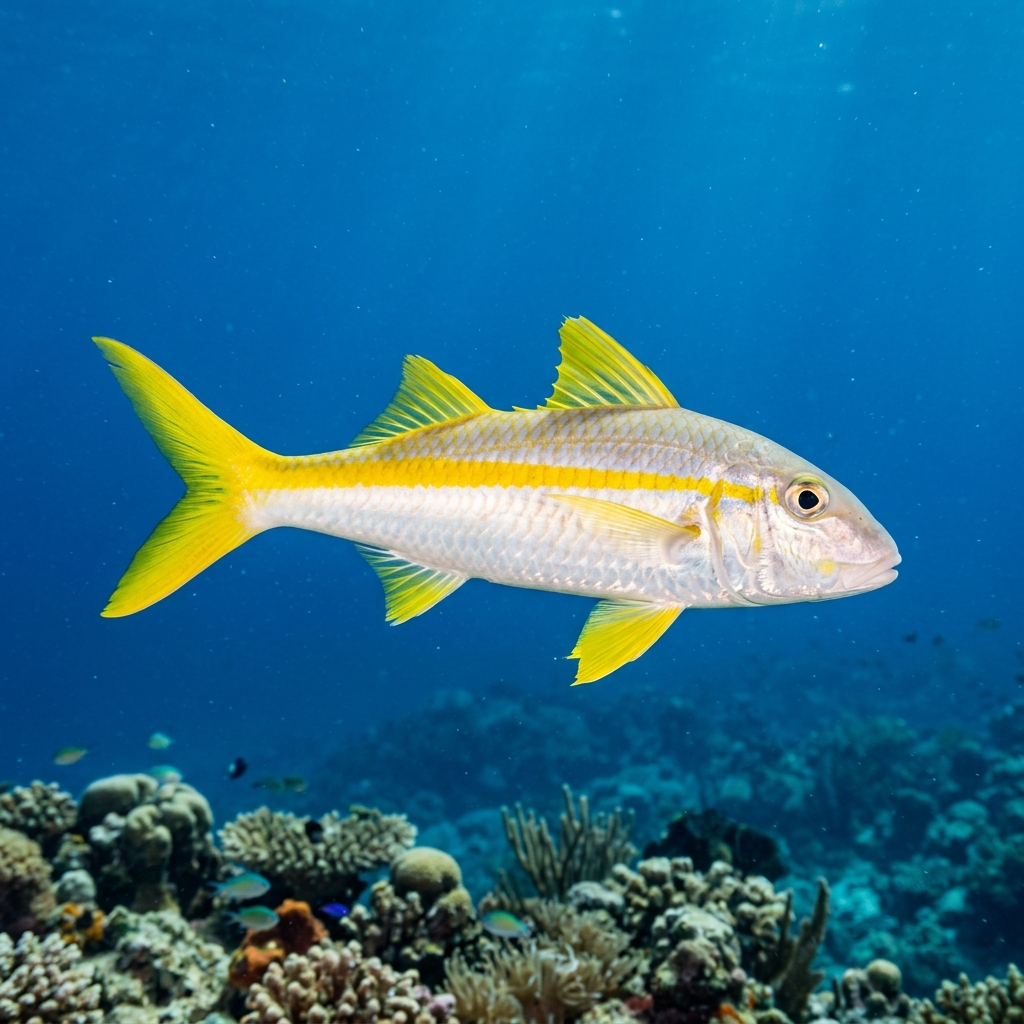
Yellowfin Goatfish
2,241 sites