Ctenochaetus marginatus
Small speckled surgeonfish grazing reefs from the Galápagos to Cocos Island year-round in 25.5-29.4C water.
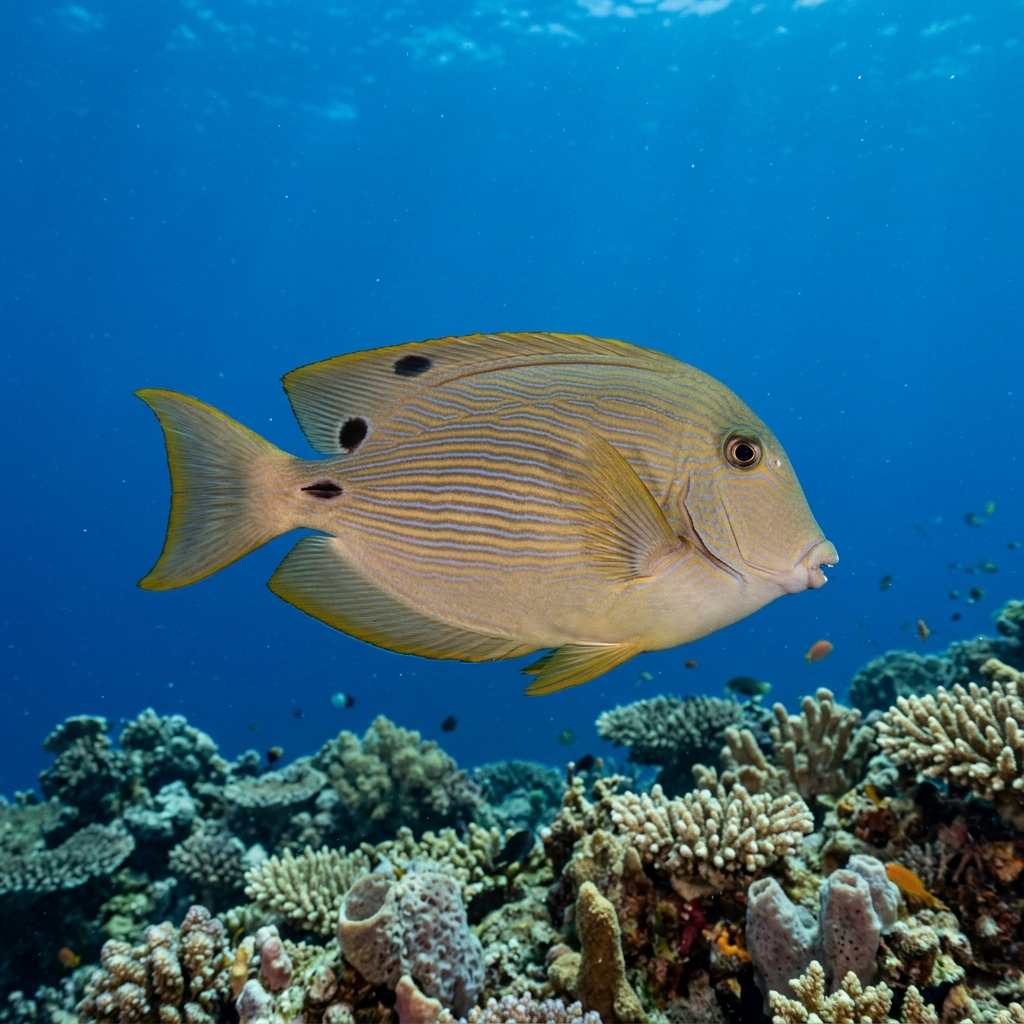
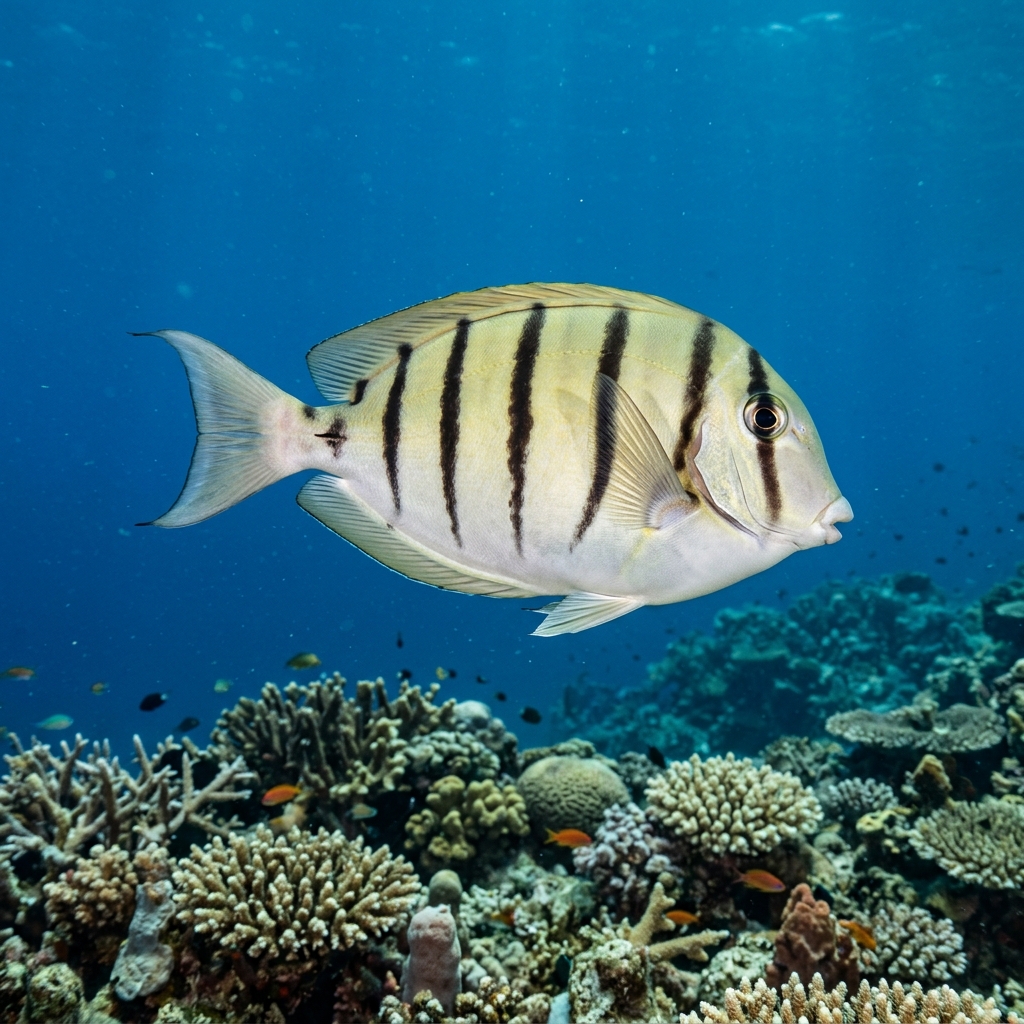
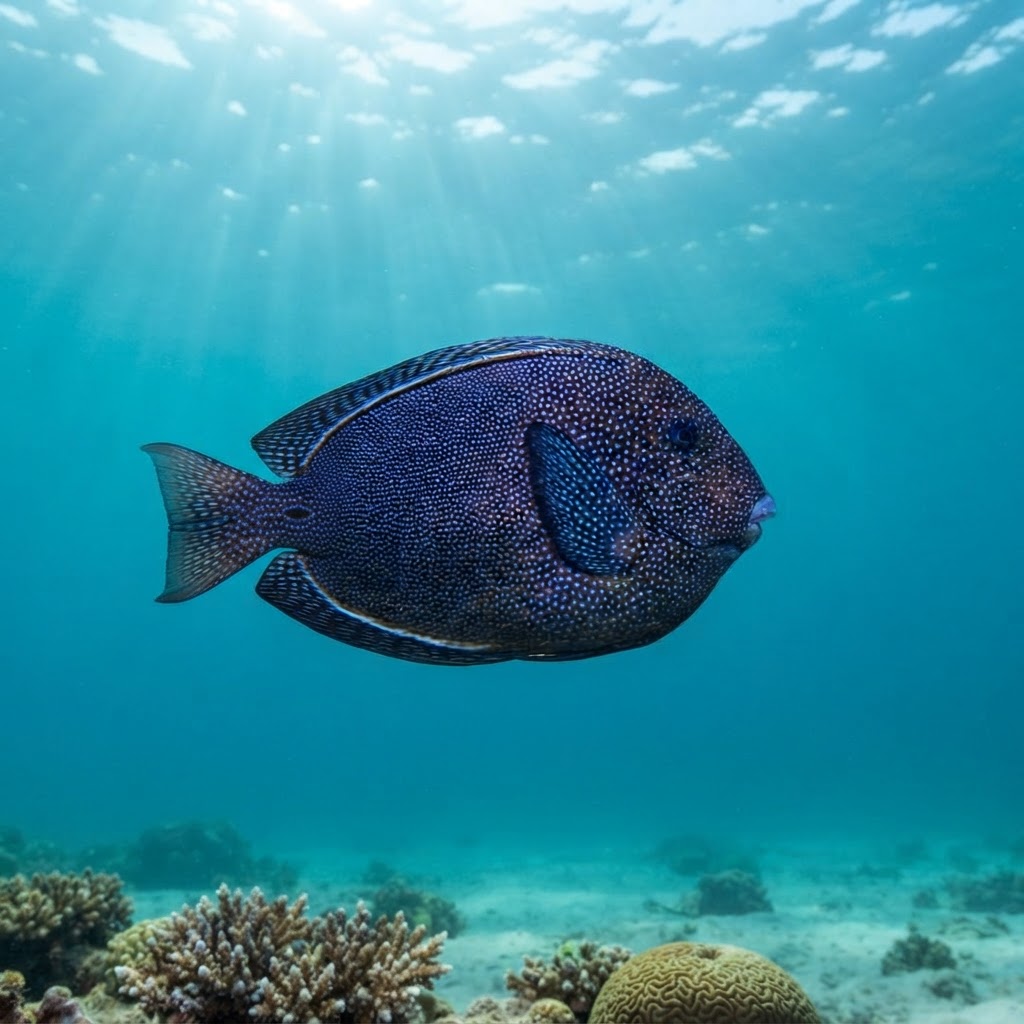
A slim, oval-bodied surgeonfish around 19 cm, olive to brownish overall with fine pale blue speckling scattered across the body and head. Look for the small, retractable spine at the base of the tail, the ID feature that gives the whole surgeonfish family its name, and a pointed snout it uses to pick algae off rock and rubble. The speckling is denser near the head and fades toward the tail, giving it a slightly dusty look rather than sharp spots.
Watch for it grazing low over rock, rubble, and dead coral, working the surface with quick pecking bites rather than holding still. It is usually solitary or loosely scattered rather than schooling, and it tends to ignore divers who keep a bit of distance, continuing to feed rather than bolting for cover. Most sightings come from daytime dives on the reef flats and slopes it favours for grazing.
Bristletooth surgeonfish, including this species, feed by using comb-like teeth to rake fine algae and detrital film off rock surfaces rather than biting off whole plants, which makes them useful reef groomers wherever they turn up.
No clear seasonal pattern shows up in the sightings, and its comfortable range of 25.5 to 29.4C matches these tropical Pacific sites all year, so any month is a reasonable bet. Plan the trip around the destination's general dive season rather than around this fish specifically.
Reef neighbours a diver could mistake it for. Use the identification notes above to tell them apart.
Most consistently logged around the Galápagos Islands in Ecuador and Cocos Island in Costa Rica, with a reliable presence along the Pacific coast of Panama and around the Marquesas Islands in French Polynesia. It shows up across a spread of sites in these four countries but tends to be uncommon rather than abundant at most of them, so treat any sighting as a nice find rather than a given.
Mapping where Blue-spotted Bristletooth is logged…
The strongest sightings come from the Galápagos Islands in Ecuador and Cocos Island in Costa Rica, with further records along Panama's Pacific coast and around French Polynesia's Marquesas Islands.
There is no strong season in the data, and its preferred water temperature of roughly 25.5 to 29.4C holds year-round at these Pacific sites, so sightings are possible on any visit.
Look for a small, slim surgeonfish around 19 cm with an olive-brown body covered in fine pale blue speckling, grazing close to rock or rubble with quick pecking bites.
They typically reach about 19 cm in length, making them one of the smaller members of the surgeonfish family.
No, they are not considered dangerous to divers and simply continue grazing when approached calmly.
Like other bristletooth surgeonfish, it uses comb-like teeth to scrape fine algae and detrital film from rock surfaces, acting as a small-scale reef groomer rather than a typical algae browser.
Site and sighting data is aggregated from diver logs, iNaturalist and GBIF. For taxonomy and conservation status:
Striped Surgeonfish
3,289 sites