Panulirus inflatus
Rare but rewarding find on night dives across Baja California, Mexico, in warm water from 22 to 29C.
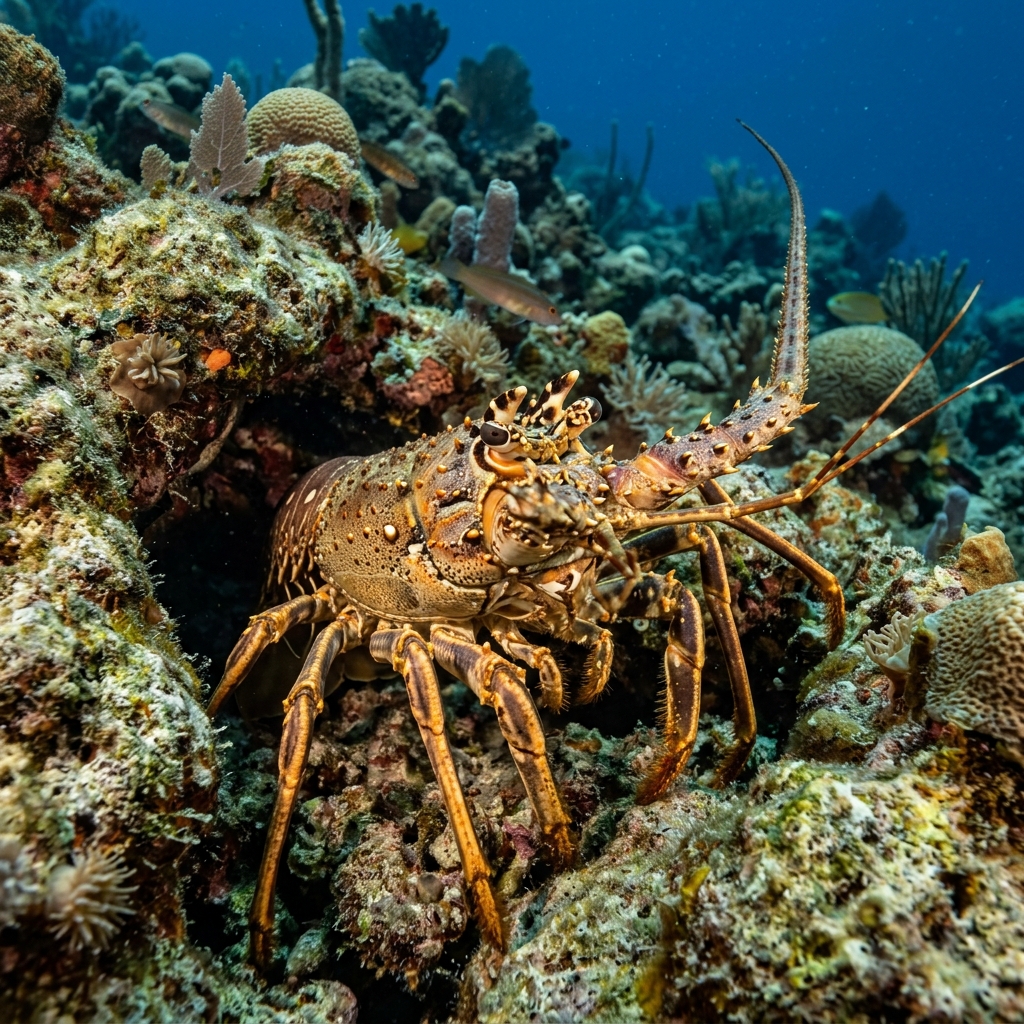
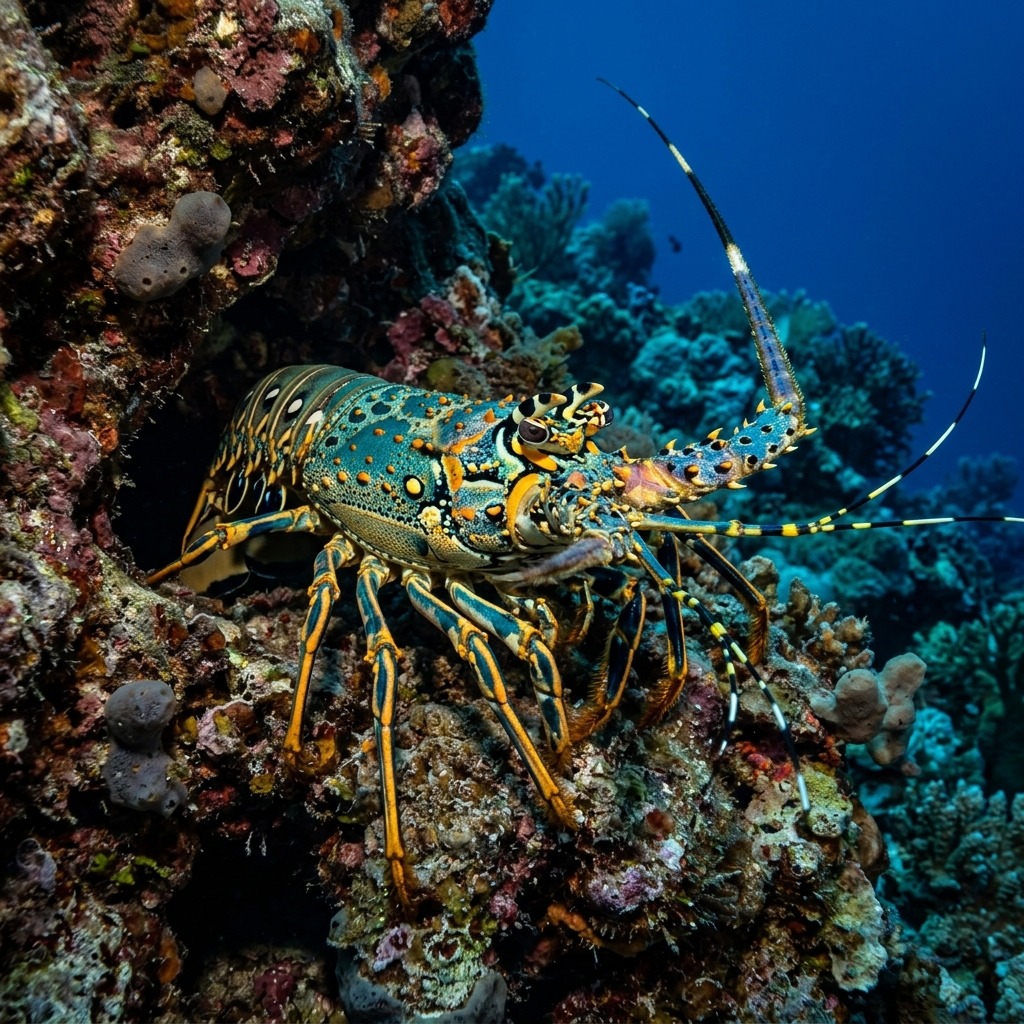
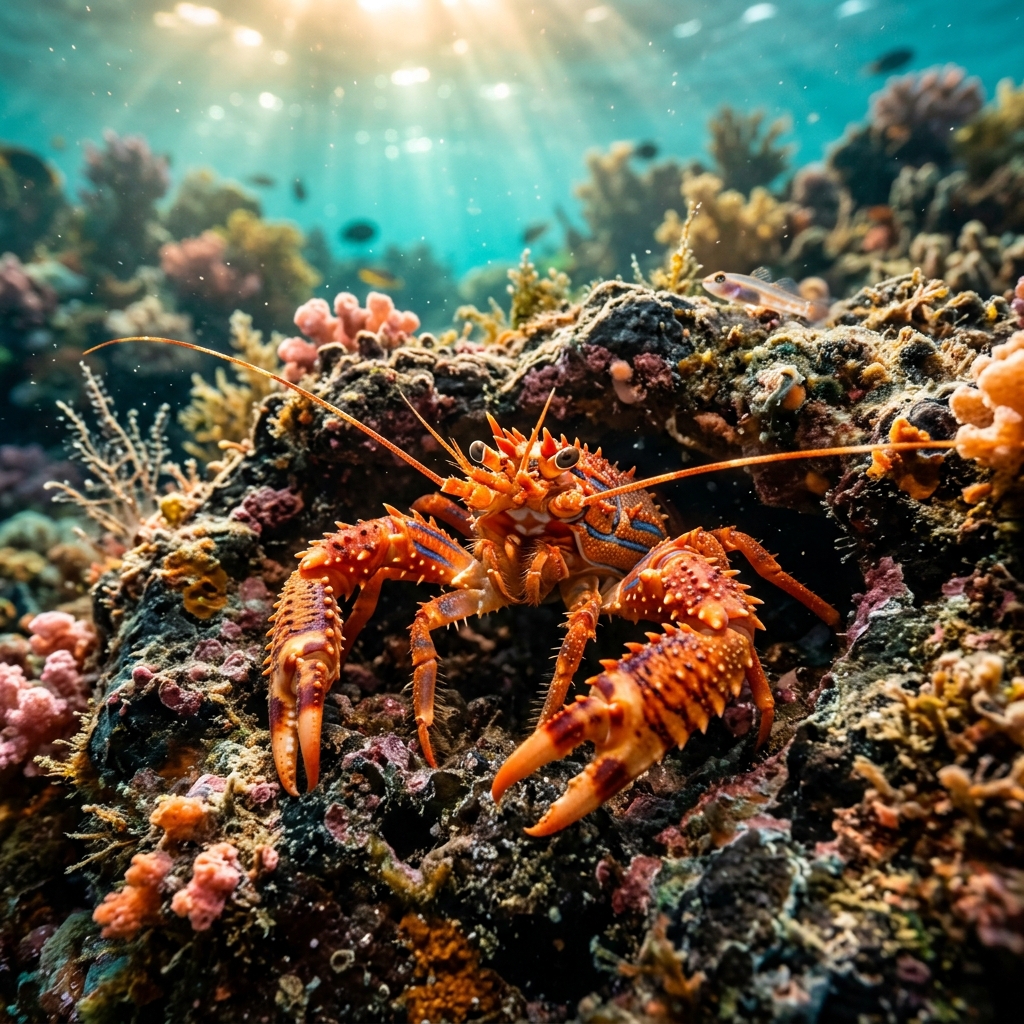
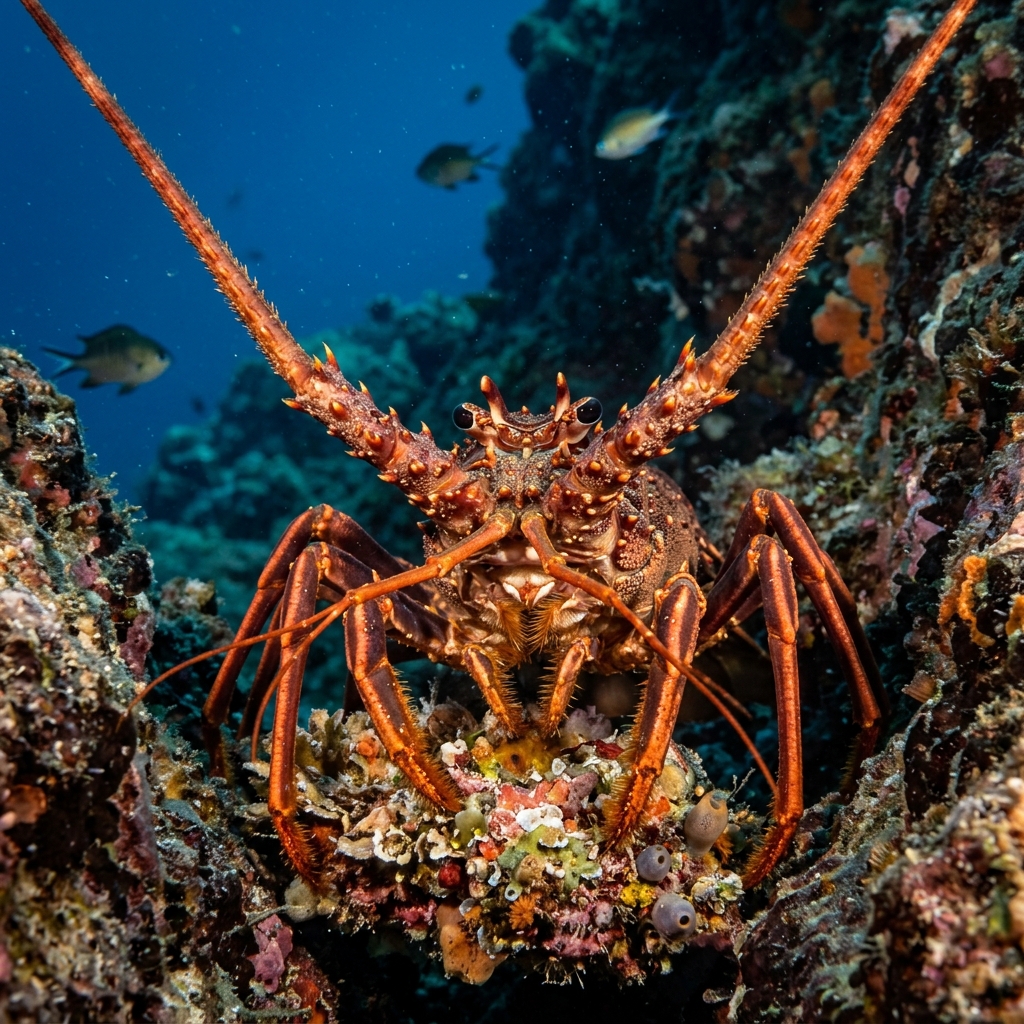
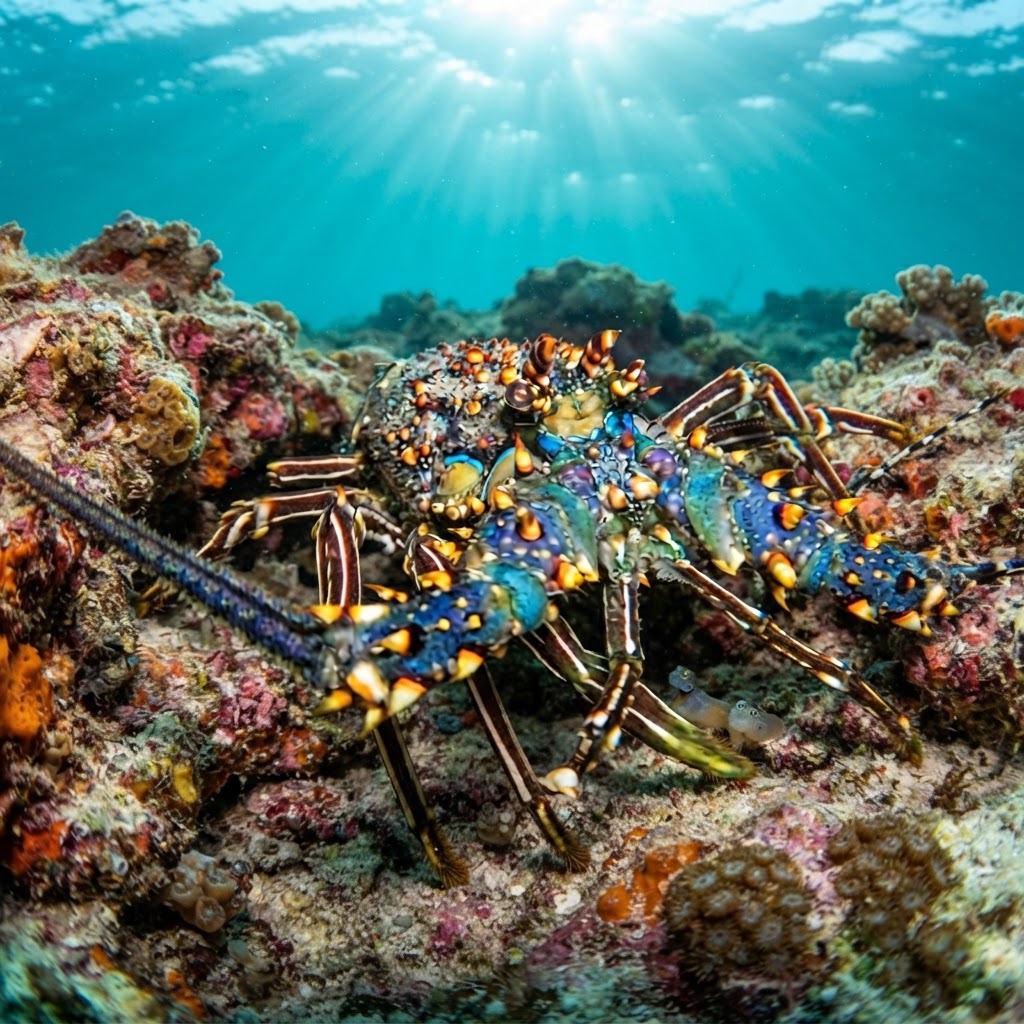
Chunky reef lobster with a spiny, blue-toned carapace that can shift toward olive or brown depending on light, paired with long, thick banded antennae. Look for the pale spots along the tail segments and the overall bulk, which sets it apart from slimmer, smooth-shelled crustaceans on the same reef. Most sightings are of one animal wedged into a crevice with just the antennae and eyestalks showing.
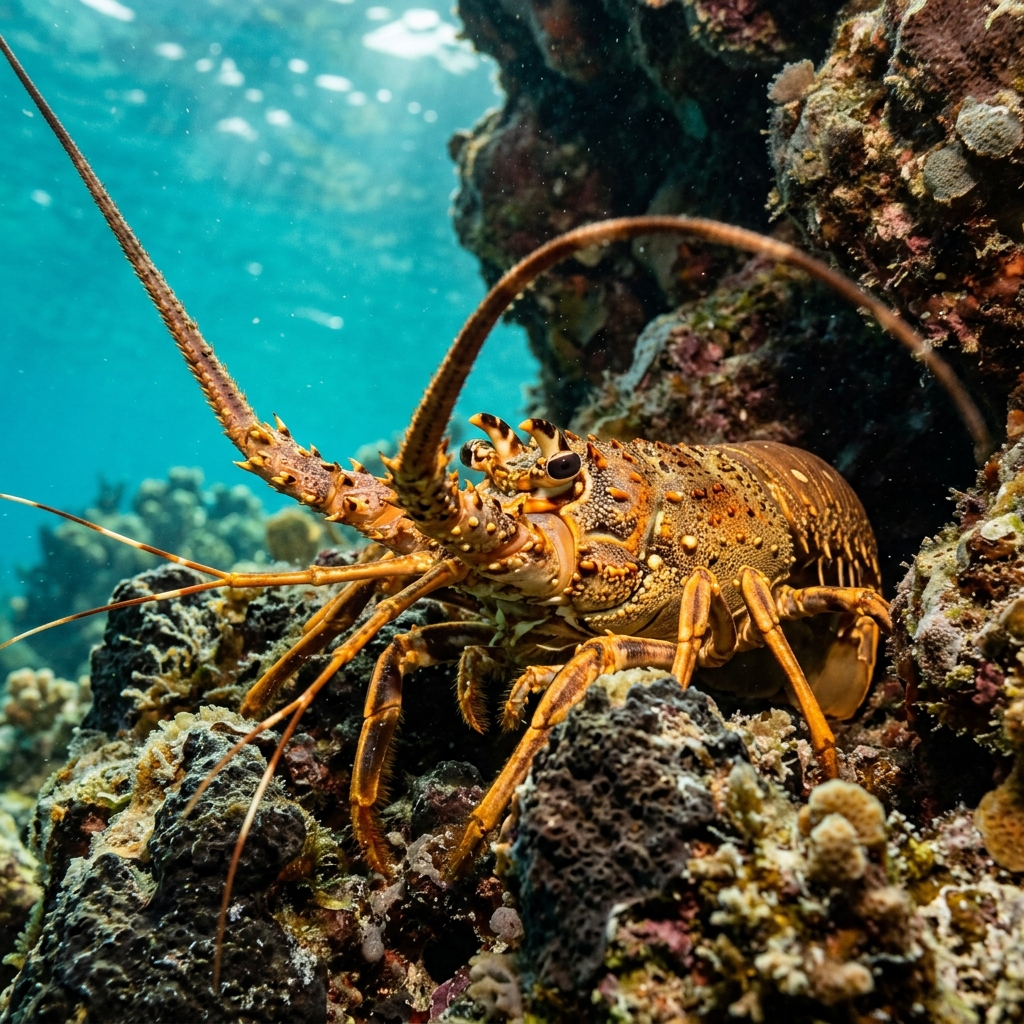
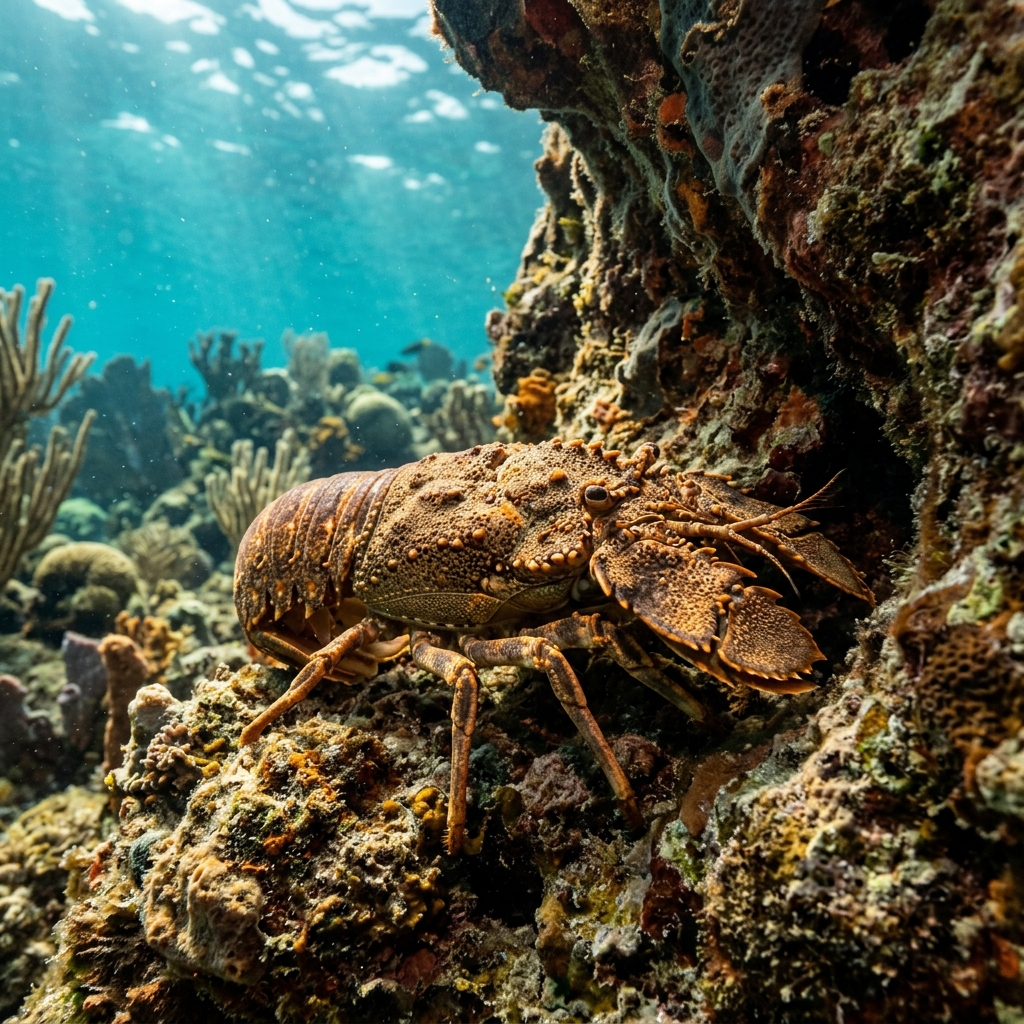
Expect to find it tucked into rocky crevices and under ledges by day, antennae probing out as the only giveaway of its presence. It becomes far more active and visible on night dives, when it moves out to forage over the reef floor, and it tends to hold its ground or back deeper into cover rather than bolt when a torch beam finds it.
Like other spiny lobsters, it has no claws and relies on its spiny carapace and a sharp flick of the tail to shoot backward away from danger rather than fighting it off.
Sightings are spread through the year with no clear seasonal peak in the data, and water temperatures of 22 to 29C on these Baja and Pacific coast sites stay within its comfort range year-round. Plan around good visibility and night diving conditions rather than a particular month.
Reef neighbours a diver could mistake it for. Use the identification notes above to tell them apart.
Almost every logged sighting comes from Mexico, with Baja California carrying the bulk of the records and the Pacific Coast of Mexico holding a smaller but steady share. Divers looking for it should focus on rocky reef and boulder terrain along these two regions rather than open sand or coral areas.
Mapping where Blue Spiny Lobster is logged…
Almost all logged sightings are from Mexico, concentrated in Baja California with a further cluster along the Pacific Coast of Mexico. Rocky reef habitat in these regions is the best bet.
There is no strong seasonal pattern in the sighting data, and it turns up year-round in water between 22 and 29C. Night dives generally offer a better chance of seeing one active and out of its crevice.
Look for a spiny, blue-tinted carapace, thick banded antennae, and pale spots along the tail. It usually shows only its antennae from within a rocky crevice during the day.
No. It has no claws and poses no threat to divers, relying instead on its spines and a backward tail-flick to escape rather than confront anything.
It is logged as rare at most sites where it occurs and uncommon at the rest, so sightings take a bit of searching in crevices and ledges. Night dives improve the odds since it forages more openly after dark.
Site and sighting data is aggregated from diver logs, iNaturalist and GBIF. For taxonomy and conservation status:
Caribbean Spiny Lobster
2,209 sites