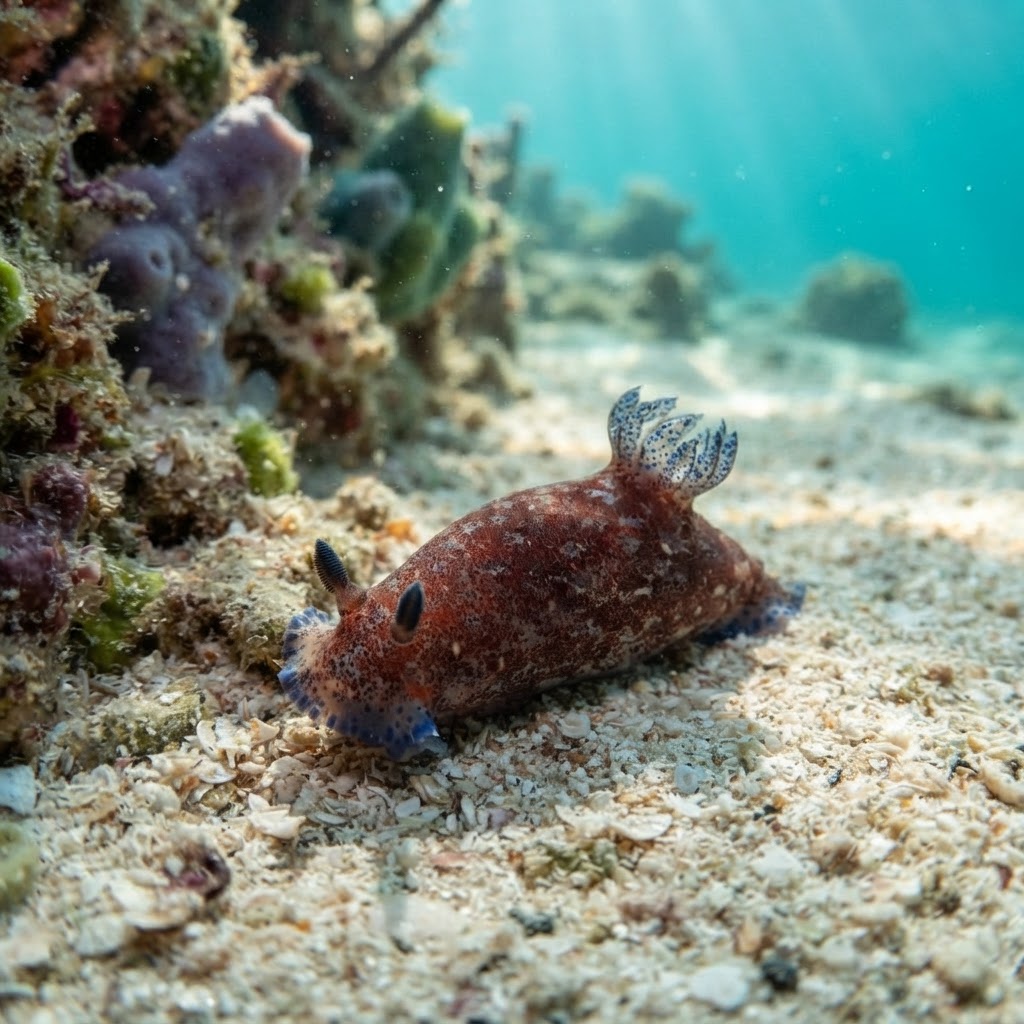
Dendrodoris caesia
Blue-speckled Sucking Dorid turns up as an uncommon find on cool Western Cape reefs, year-round, 13 to 19C water.
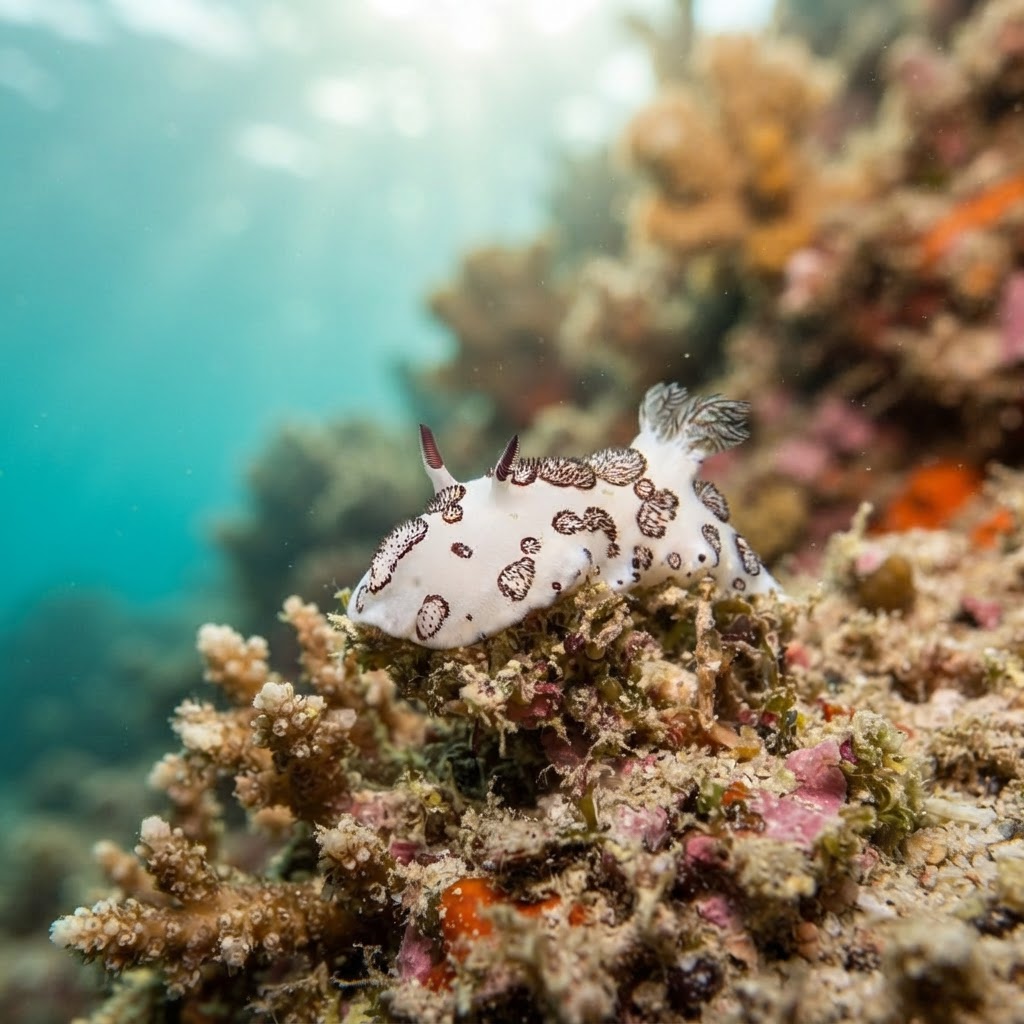
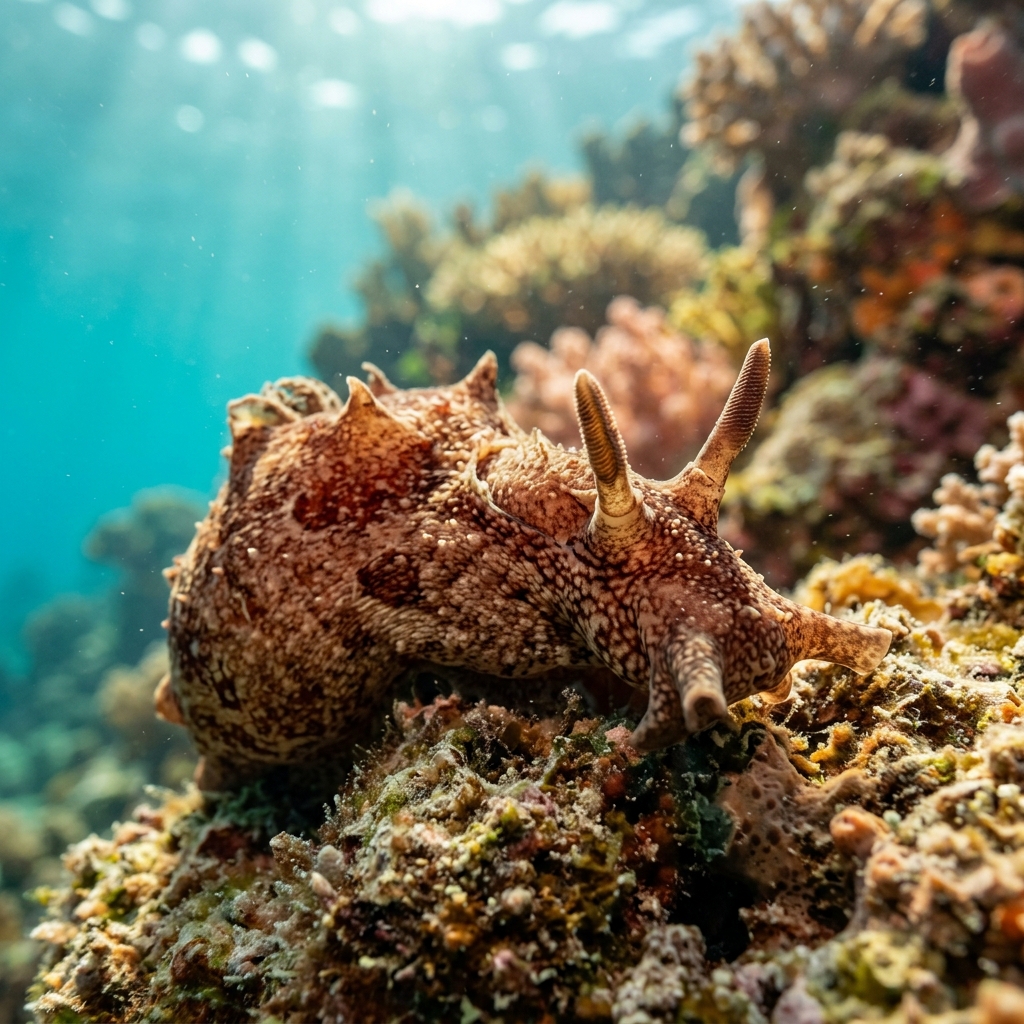
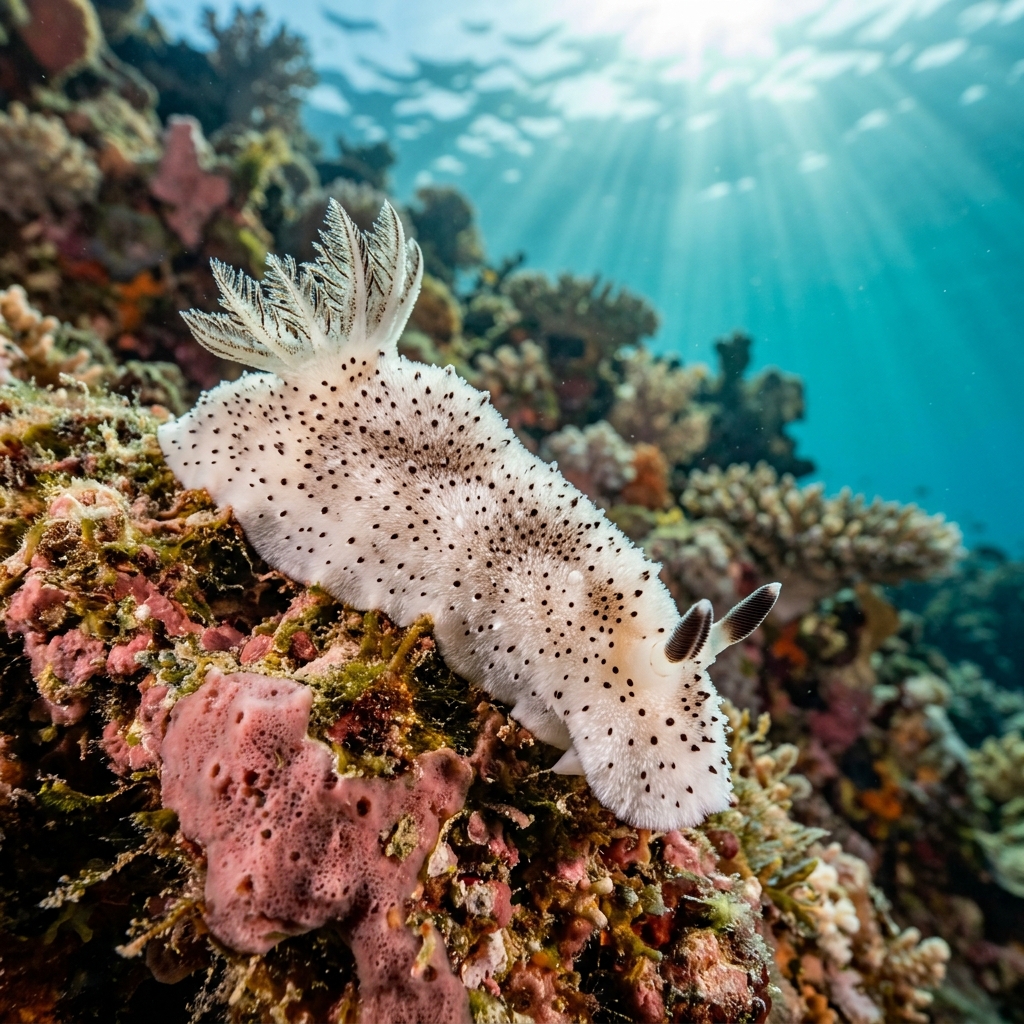
A soft-bodied sea slug with a smooth, rounded back scattered with fine blue-grey speckling over a darker base tone, no obvious spiky projections along the mantle edge. It sits low and slug-like on rock or reef, usually a few centimetres long, with a texture that looks slightly velvety rather than glossy underwater. The two small rhinophores (sensory horns) near the front and a feathery gill cluster near the rear are the parts most divers actually spot first.
Divers find it parked on rock and reef surfaces, moving slowly as it grazes rather than swimming or drifting in open water. It shows no reaction to divers beyond simply continuing its crawl, making it an easy subject to photograph up close without disturbing it. Most sightings come from typical Western Cape reef and rocky-bottom terrain rather than sand or wreck sites.
Like other Dendrodoris species, it lacks the hard shell of its snail relatives and instead relies on distasteful skin secretions to deter predators, which is part of why it can sit exposed on open rock without much cover.
No clear seasonal pattern shows up in the sightings, so treat it as a year-round find. It sits comfortably in the 13.4 to 19.4C range typical of Western Cape water, which stays cool enough for it across most months.
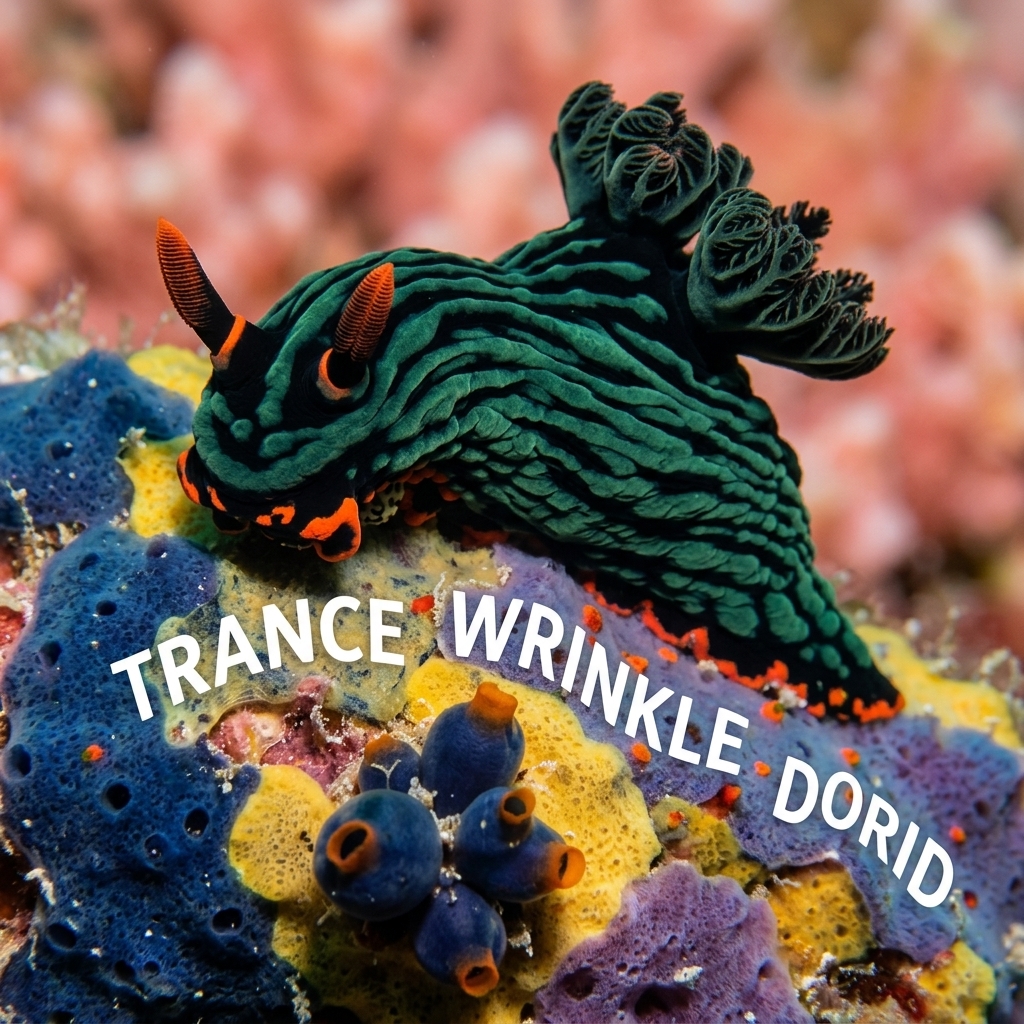
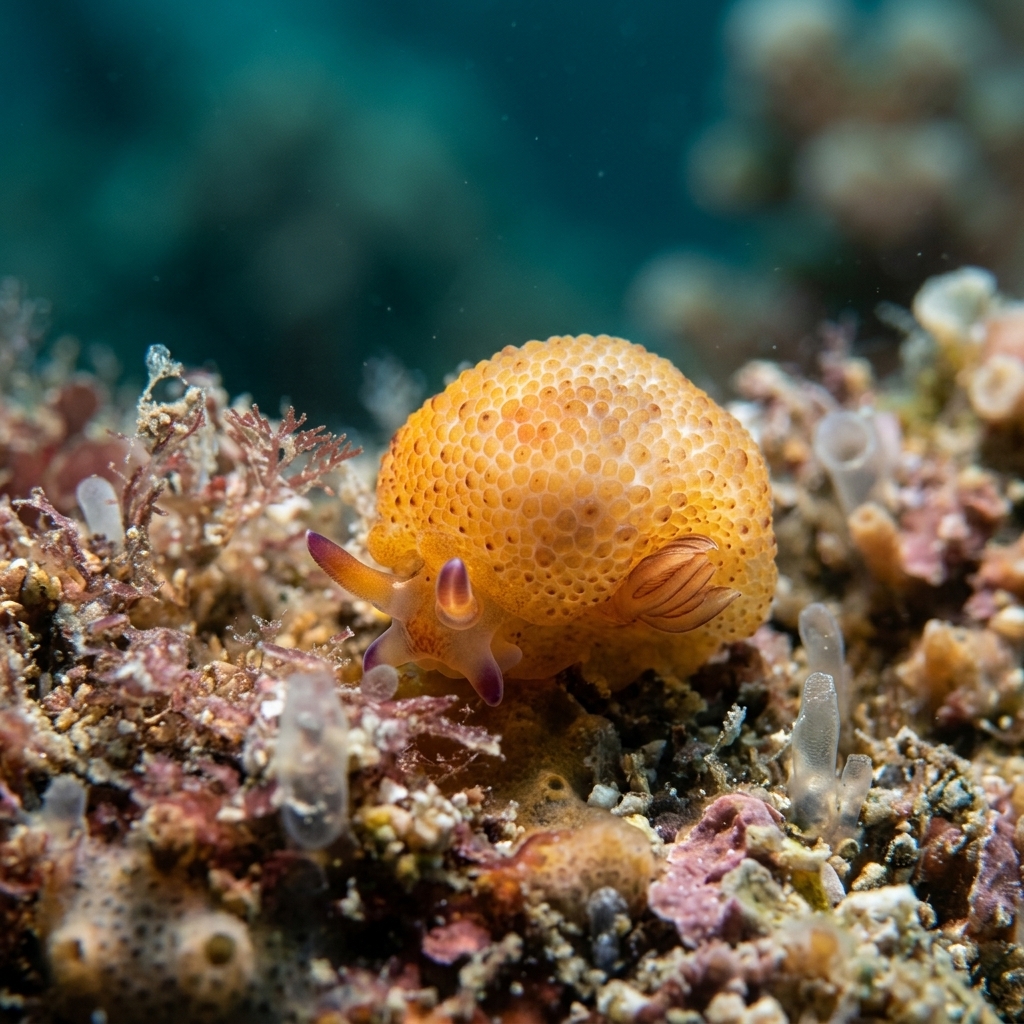
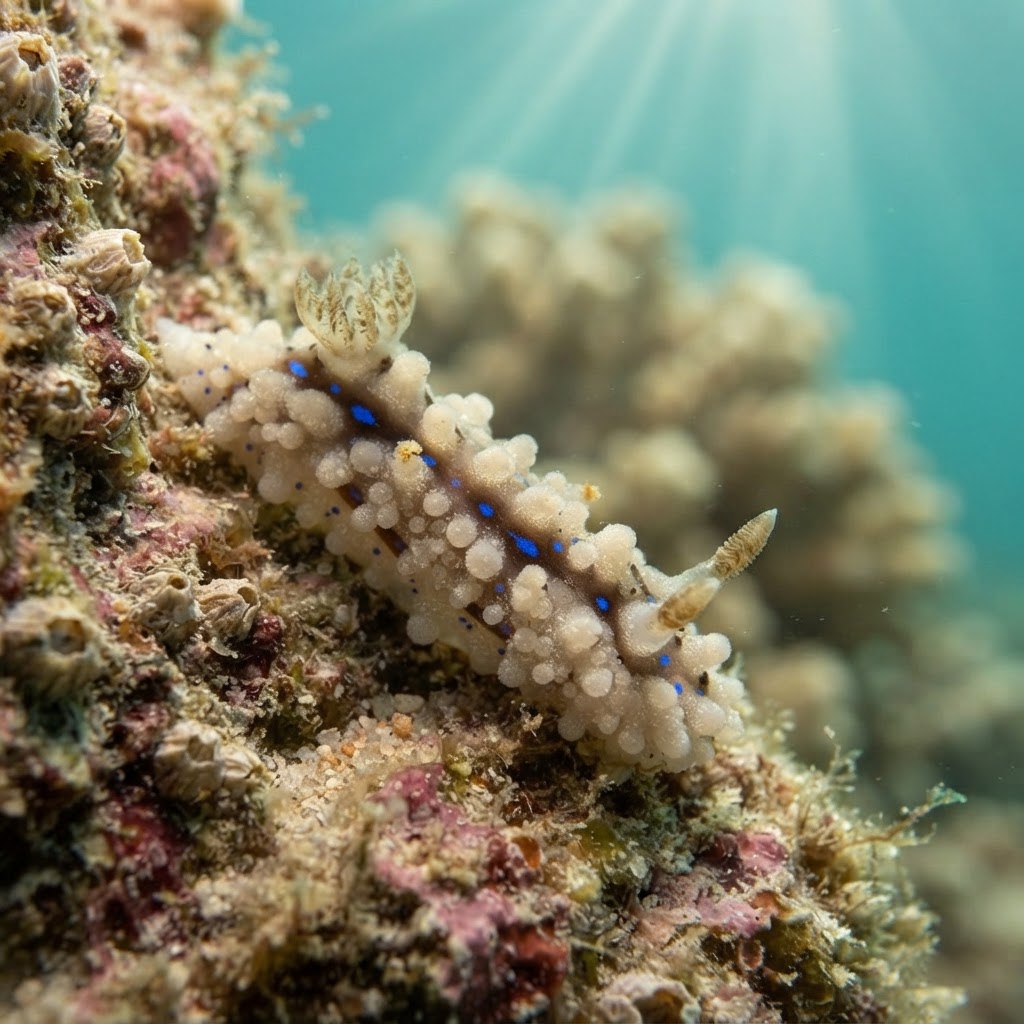
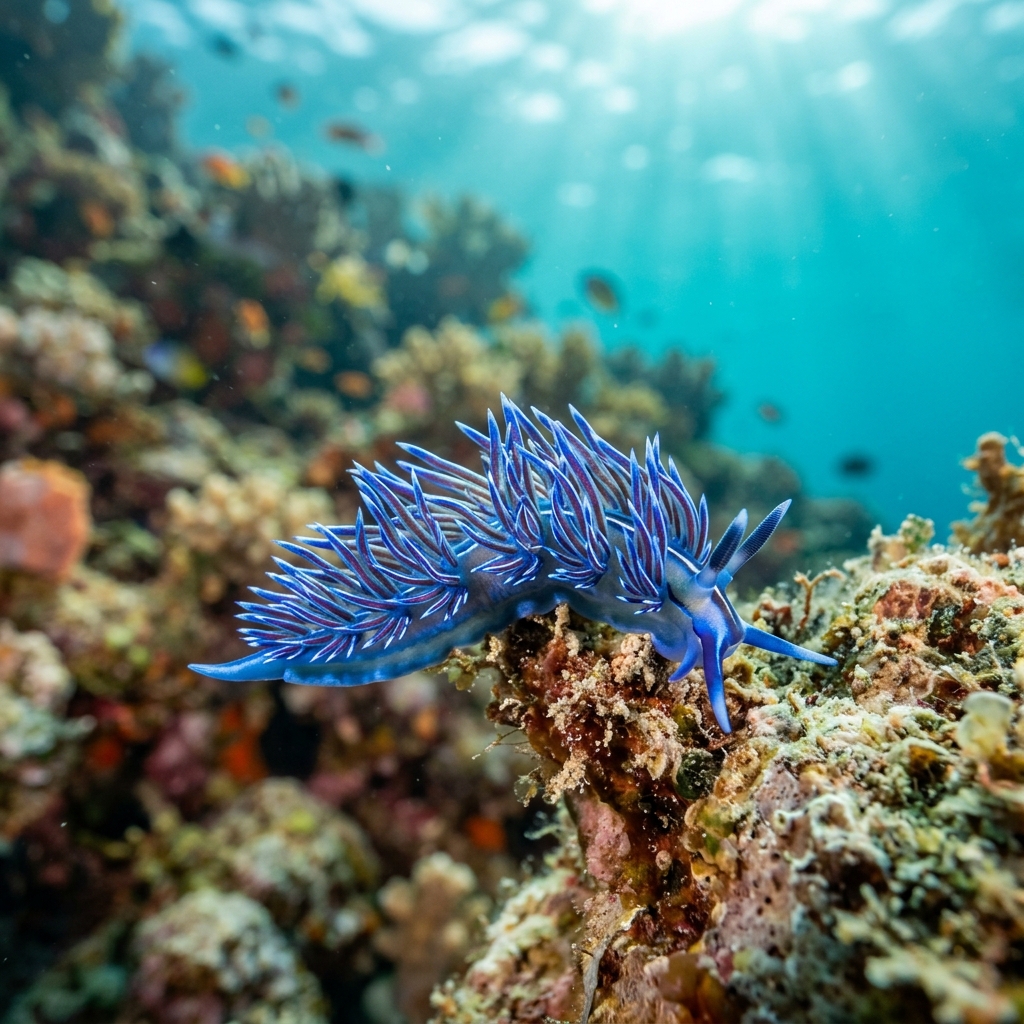
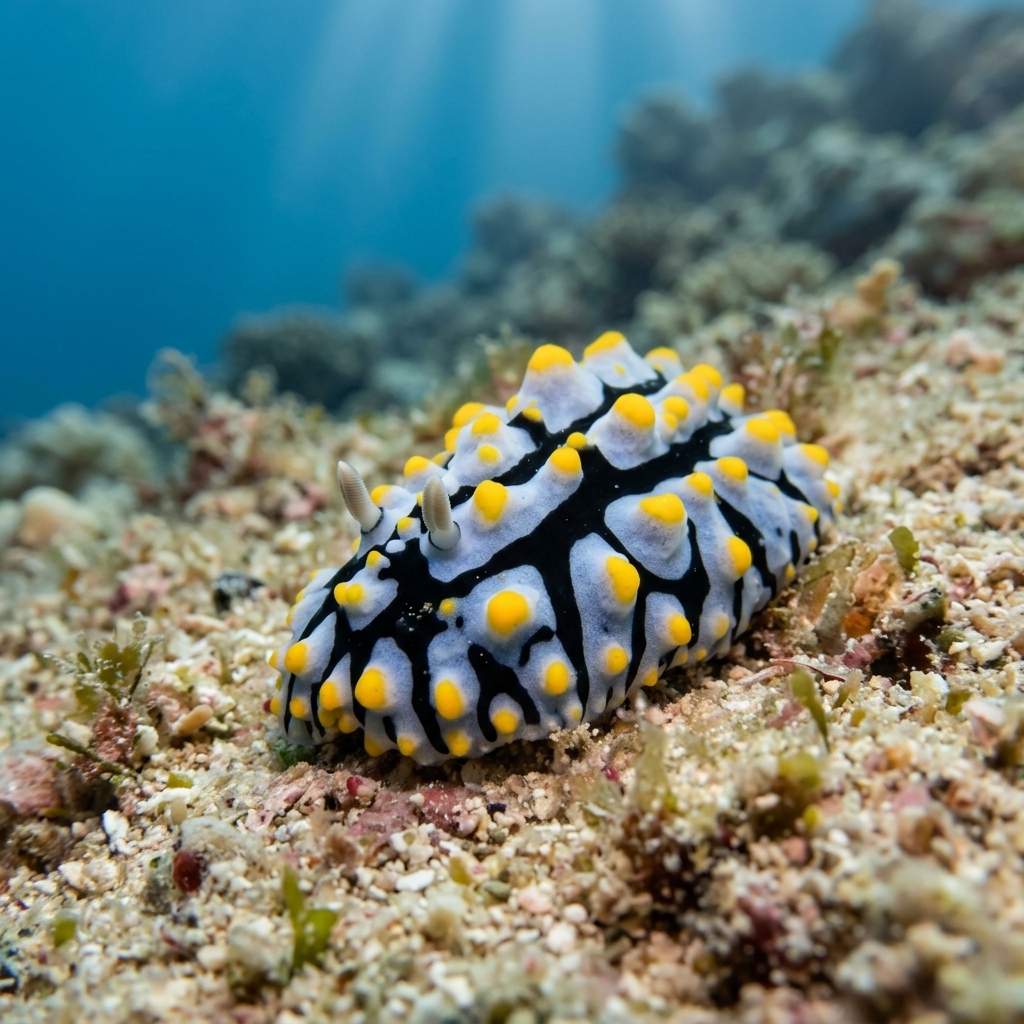
Reef neighbours a diver could mistake it for. Use the identification notes above to tell them apart.
This one is essentially a Western Cape speciality: every logged sighting in the data comes from South Africa, concentrated in Western Cape sites. If you are diving the cool reefs around Cape Town and the surrounding Western Cape coastline, this is the region to search.
Mapping where Blue-speckled Sucking Dorid is logged…
It is logged almost exclusively in South Africa's Western Cape, where divers find it as an uncommon but reliable presence across a good number of local reef sites.
There is no strong seasonal signal in the sightings, so it can be found year-round on Western Cape reefs within its usual 13 to 19C water range.
Look for a smooth-bodied slug with fine blue-grey speckling over a darker background, no spiny mantle edge, and a feathery gill tuft near the rear. It sits still or crawls slowly on rock rather than swimming.
Exact size data is not confirmed, but like most Dendrodoris nudibranchs it stays in the small, easy-to-overlook centimetre-scale range typical of the family.
No. It poses no threat to divers and can be observed closely without any risk.
Site and sighting data is aggregated from diver logs, iNaturalist and GBIF. For taxonomy and conservation status:
Light-spotted Aegires
3,168 sites