Chelidonura livida
A small, uncommon headshield slug most often logged in South Sinai, Egypt, on reefs between 22.8 and 28.8 C, year-round.
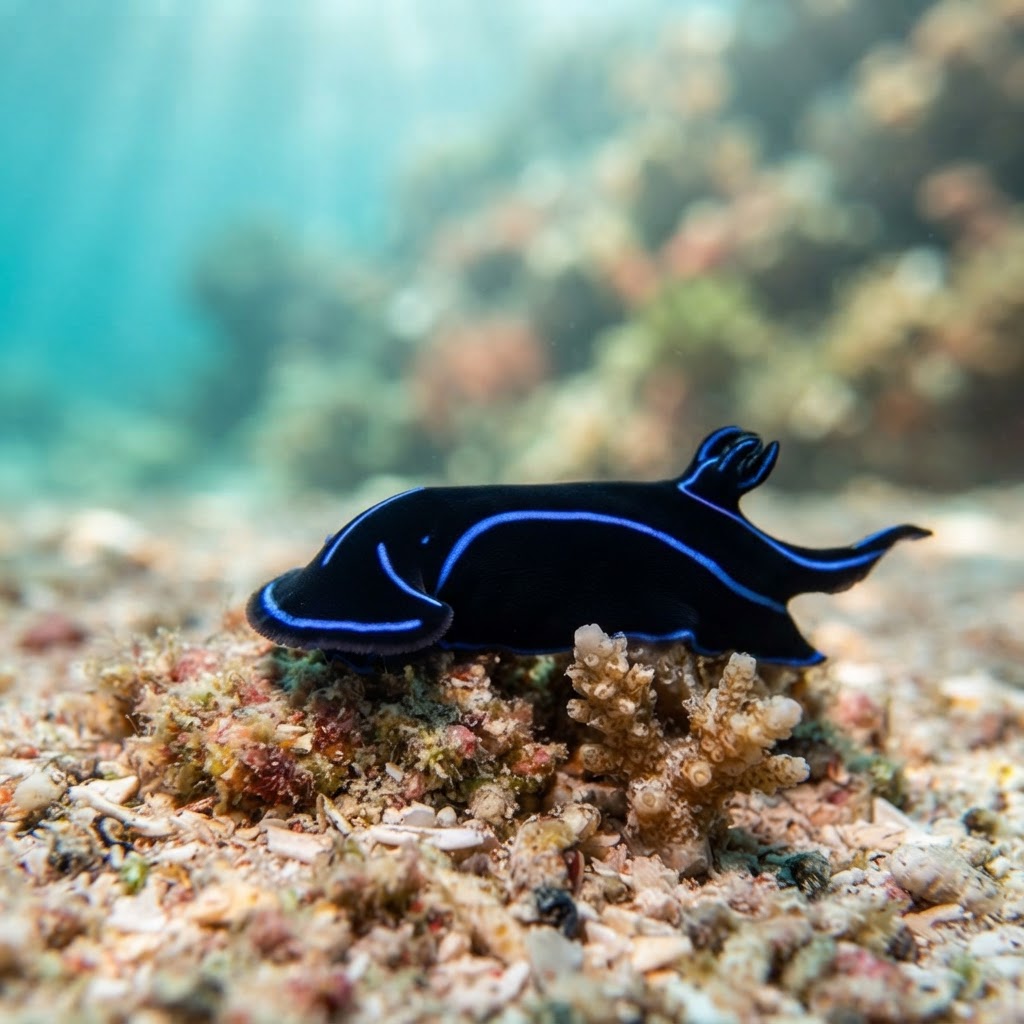
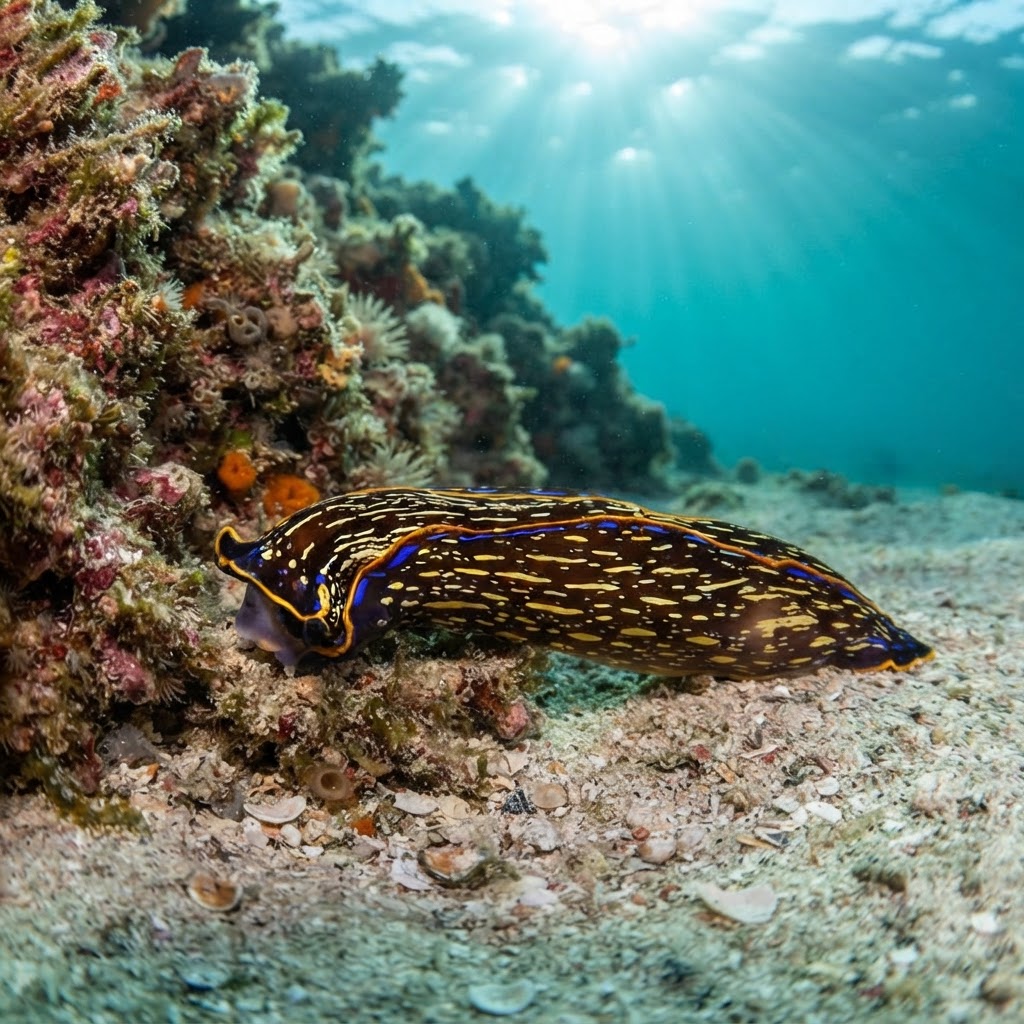
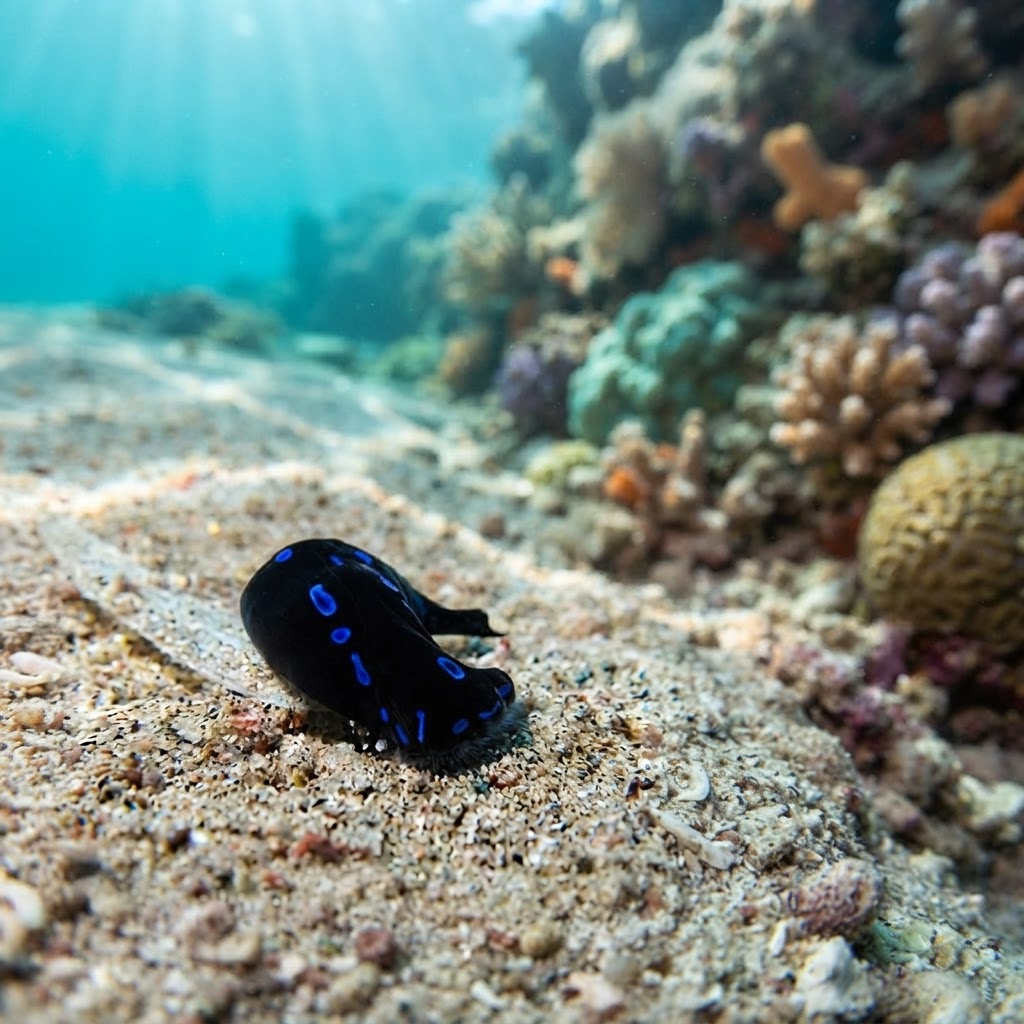
A slender, elongated slug reaching around 4 cm, with a smooth, headshield-type body (no obvious shell or tentacles) that tapers toward a forked tail resembling swallow tails. Body colour runs dark, often blackish or deep brown, with a pale or bluish edge tracing the margin of the foot and tail lobes. Divers key on the tail shape and the fine pale border rather than any bold pattern, since the overall look is subtle against dark sand or rubble.
Typically spotted cruising slowly over sand, rubble or low reef structure, often at night or during low-light dives when headshield slugs are most active. It moves deliberately and shows little reaction to divers, making it an easy subject for macro photography once found. Look for it in the same sandy patches and reef margins where other aglajid slugs hunt.
Like other members of the Aglajidae family, it is a predator that hunts smaller infaunal prey such as burrowing worms or other slugs, using its broad headshield to plough through sand while foraging.
No clear seasonal pattern shows up in the sightings, and its comfortable range of 22.8 to 28.8 C covers Red Sea and East African reef temperatures for most of the year, so it is best treated as a year-round find rather than a seasonal target.
Reef neighbours a diver could mistake it for. Use the identification notes above to tell them apart.
Most reliably found in South Sinai, Egypt, which accounts for the bulk of logged sightings, with further records from Marsa Alam and the Deep South further along the Egyptian Red Sea coast. Outside Egypt, it turns up in Zanzibar, Tanzania, along the Red Sea Coast of Saudi Arabia, and around Eilat, Israel.
Mapping where Blue-ringed Swallowtail is logged…
South Sinai in Egypt is the strongest area for sightings, with more records from Marsa Alam further south. It also shows up in Zanzibar, Tanzania, along Saudi Arabia's Red Sea coast, and near Eilat, Israel.
There is no strong seasonal pattern in the sightings, and it tolerates a wide temperature range of 22.8 to 28.8 C, so it can turn up on Red Sea and East African reefs at any time of year.
Look for a small, dark, elongated slug around 4 cm long with no shell, a smooth headshield body, and a forked tail edged in pale colour. It moves slowly over sand and rubble, usually seen during night or low-light dives.
They are small, typically reaching around 4 cm in length, so most divers rely on their tail shape and pale-edged margin rather than size to pick them out on the reef.
No, they pose no danger to divers. They have no stinging cells or bite of concern and simply move away slowly if disturbed.
As a member of the Aglajidae family, it hunts by ploughing through sand with its broad headshield to find and consume burrowing worms and other small slugs, a feeding style shared across the group.
Site and sighting data is aggregated from diver logs, iNaturalist and GBIF. For taxonomy and conservation status:
Light-spotted Aegires
3,168 sites