Upeneichthys lineatus
Common on temperate reefs from New South Wales to North Island NZ, in 15-24C water, year-round, look for pink barbels and blue stripes.
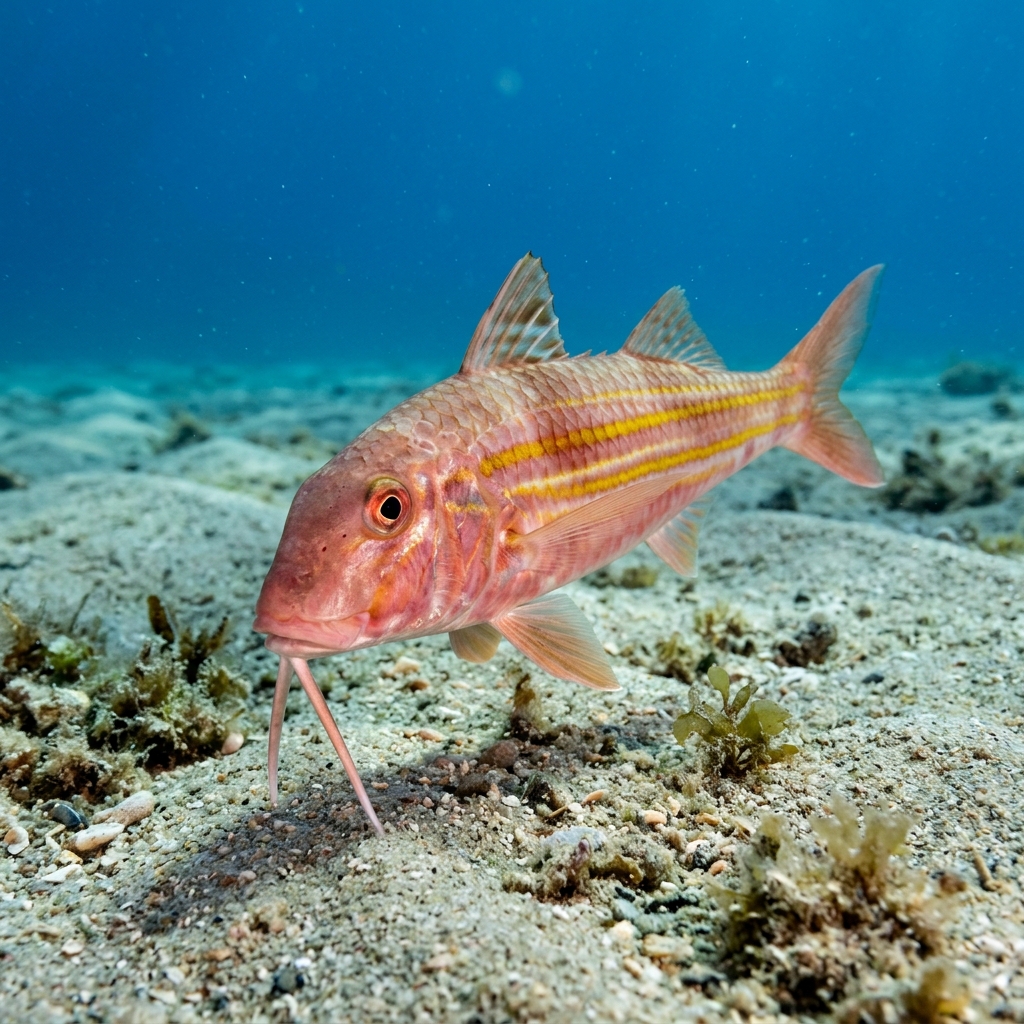
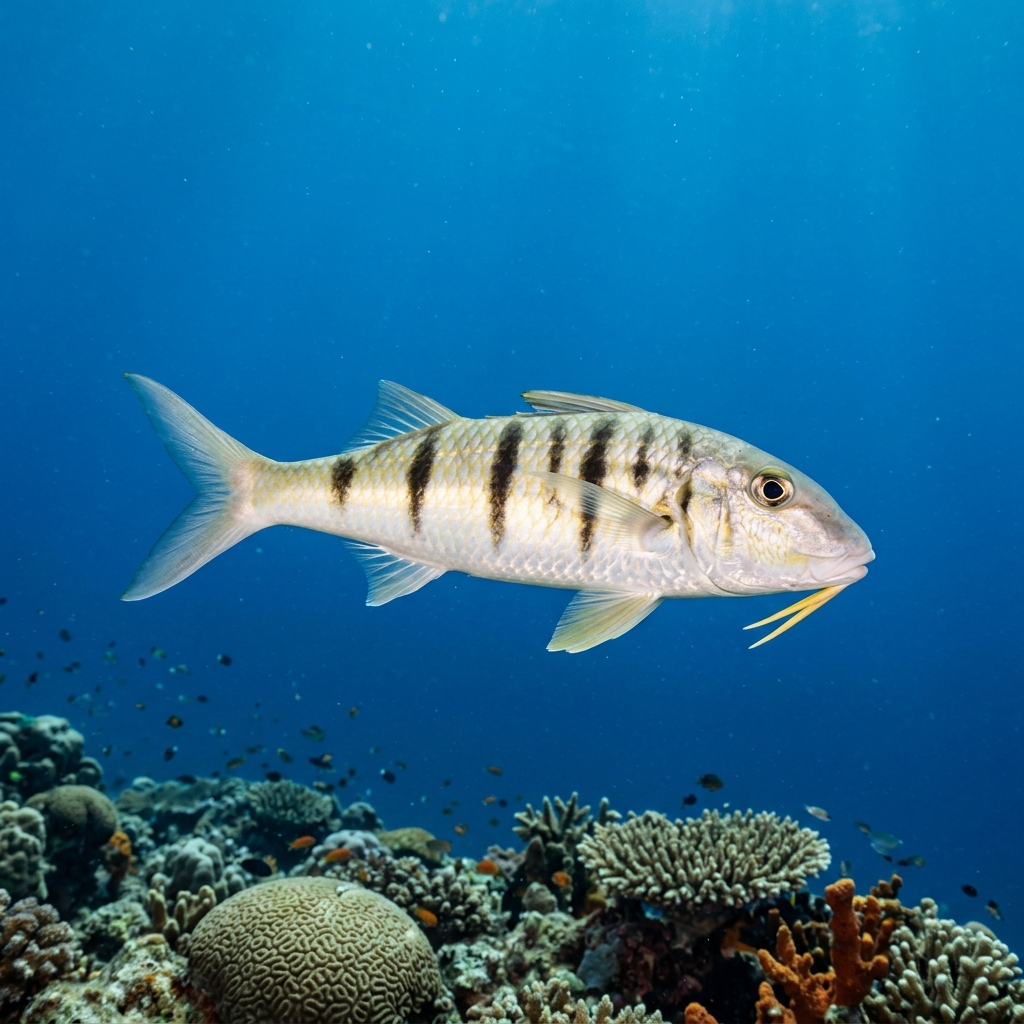
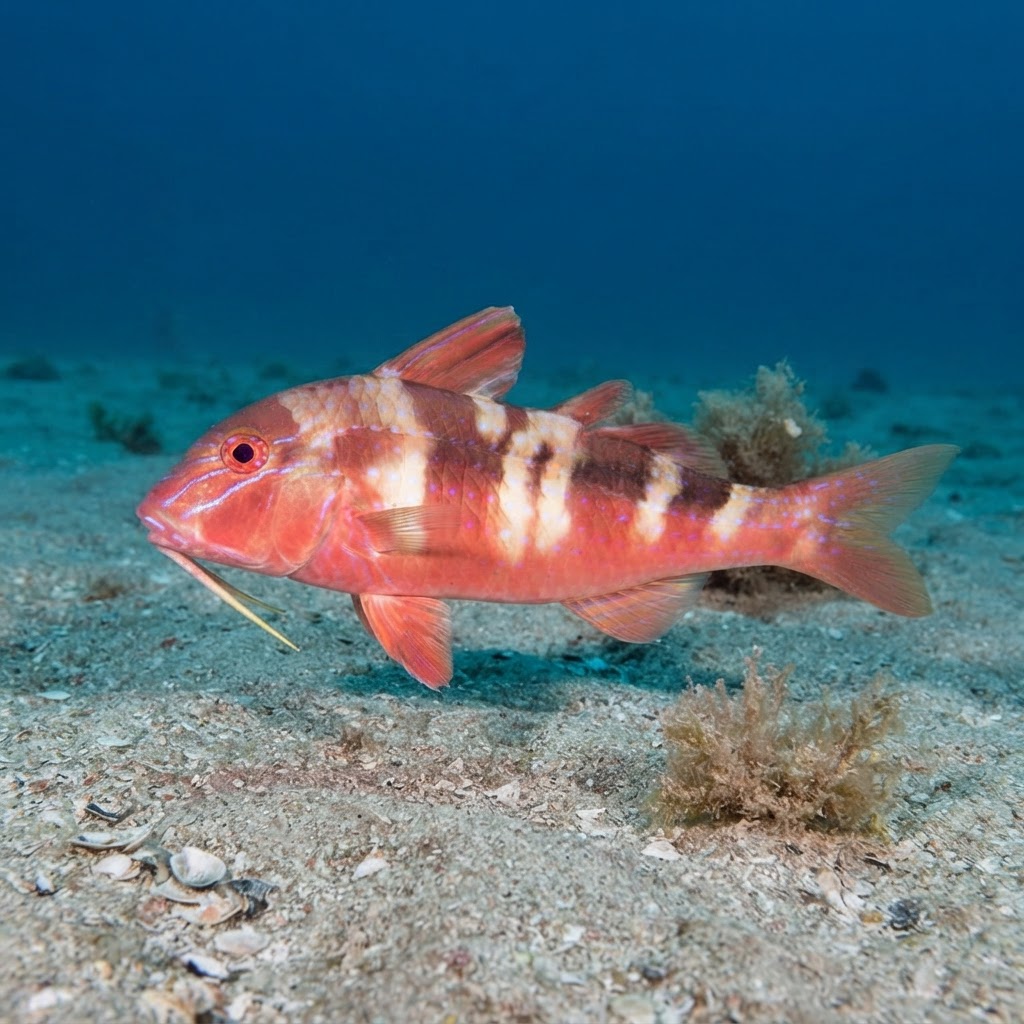
Grows to around 28cm, with a slender, pinkish-white body marked by two or three bright blue longitudinal stripes running from head to tail. Look for the pair of chin barbels (whisker-like feelers) it uses to probe the sand, tucked away when not feeding. The stripes can fade or brighten depending on mood and activity, but the barbels and elongated body shape are the reliable underwater cue.
Divers typically find it working the sand and rubble patches close to the reef, dragging its barbels through the substrate to root out buried invertebrates. It is generally unbothered by divers, continuing to forage at a steady pace rather than bolting for cover, and is often seen alone or in small loose groups over open bottom rather than tucked into structure. Most sightings happen during the day when its foraging activity is easiest to spot.
Those chin barbels are packed with taste receptors, letting it detect buried worms, crustaceans and molluscs in sand it cannot see into, a foraging trick shared by the whole goatfish family.
Sightings are spread across the year with no detected seasonal peak, consistent with its comfort range of 15 to 24C on temperate reefs. Plan around water temperature and visibility for your trip rather than a specific month.
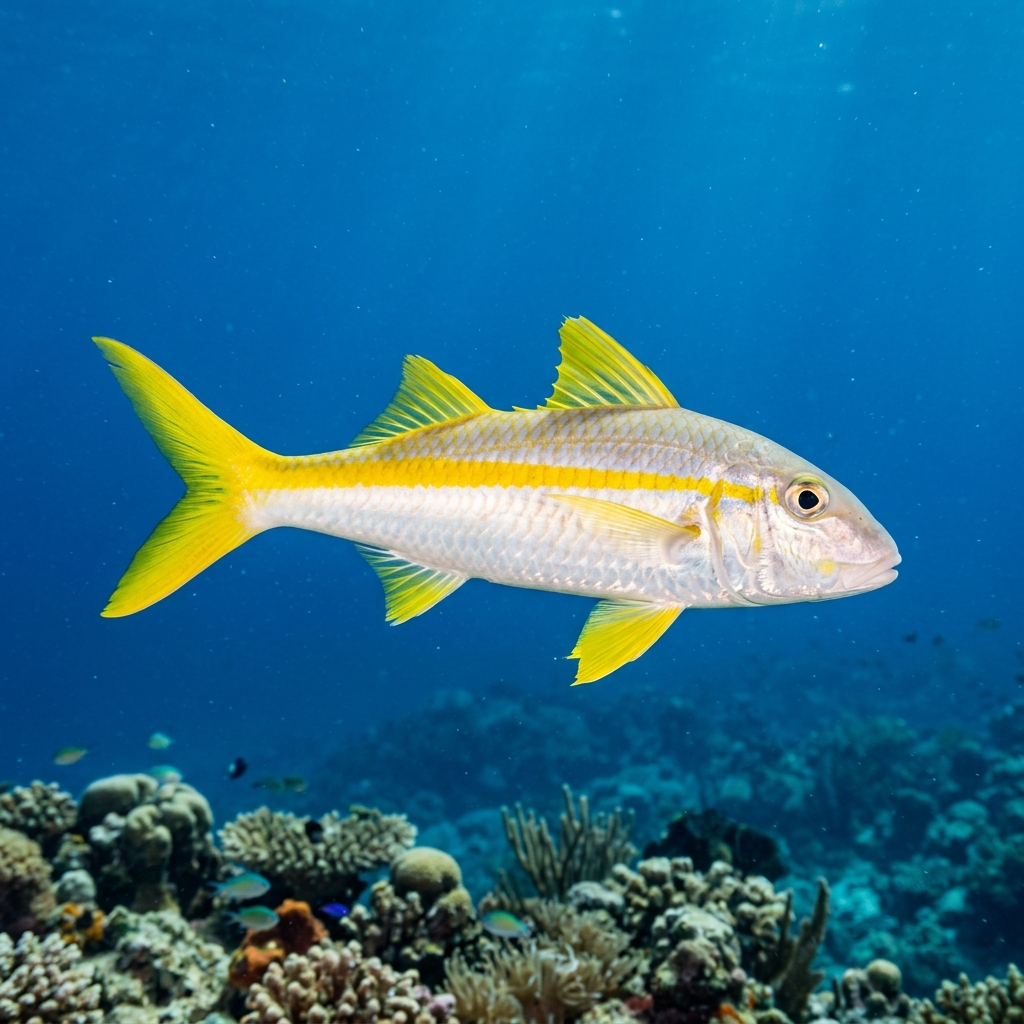
Reef neighbours a diver could mistake it for. Use the identification notes above to tell them apart.
Most reliably logged along New South Wales in Australia and North Island, New Zealand, which together account for the bulk of confirmed sightings. These temperate reef and rocky-shore sites suit its cooler-water preference, and it turns up as a common to very common find across a wide spread of locations in both regions.
Mapping where Blue-lined Goatfish is logged…
New South Wales in Australia and North Island in New Zealand are the strongholds, with the species logged as common to very common across a wide range of sites in both regions.
There is no strong seasonal pattern, sightings occur year-round wherever water temperature sits in its comfortable 15 to 24C range.
Look for a slim pinkish body with two or three blue stripes running head to tail and a pair of barbels under the chin used for foraging in sand. It grows to about 28cm and is usually seen close to the bottom.
They typically reach around 28cm in length, a modest size that keeps them easy to overlook against sand and rubble unless you spot the barbels moving.
Those chin barbels are sensory feelers packed with taste buds, letting it probe sand and rubble for hidden worms and small crustaceans without needing to see them.
Site and sighting data is aggregated from diver logs, iNaturalist and GBIF. For taxonomy and conservation status:
Yellowfin Goatfish
2,241 sites