Pentapodus paradiseus
A rare, slender reef fish with a blue-striped face, most reliably logged on New South Wales dive sites in 24.5 to 28C water.
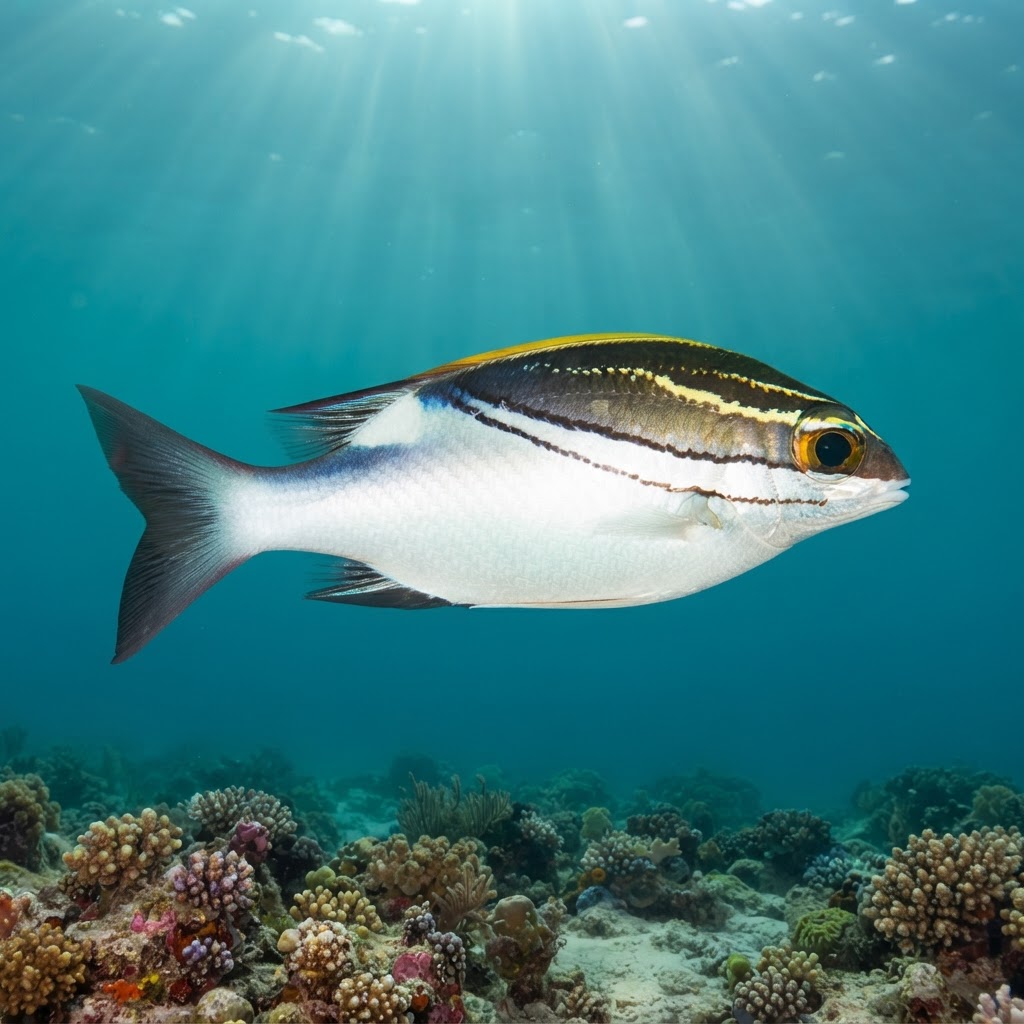
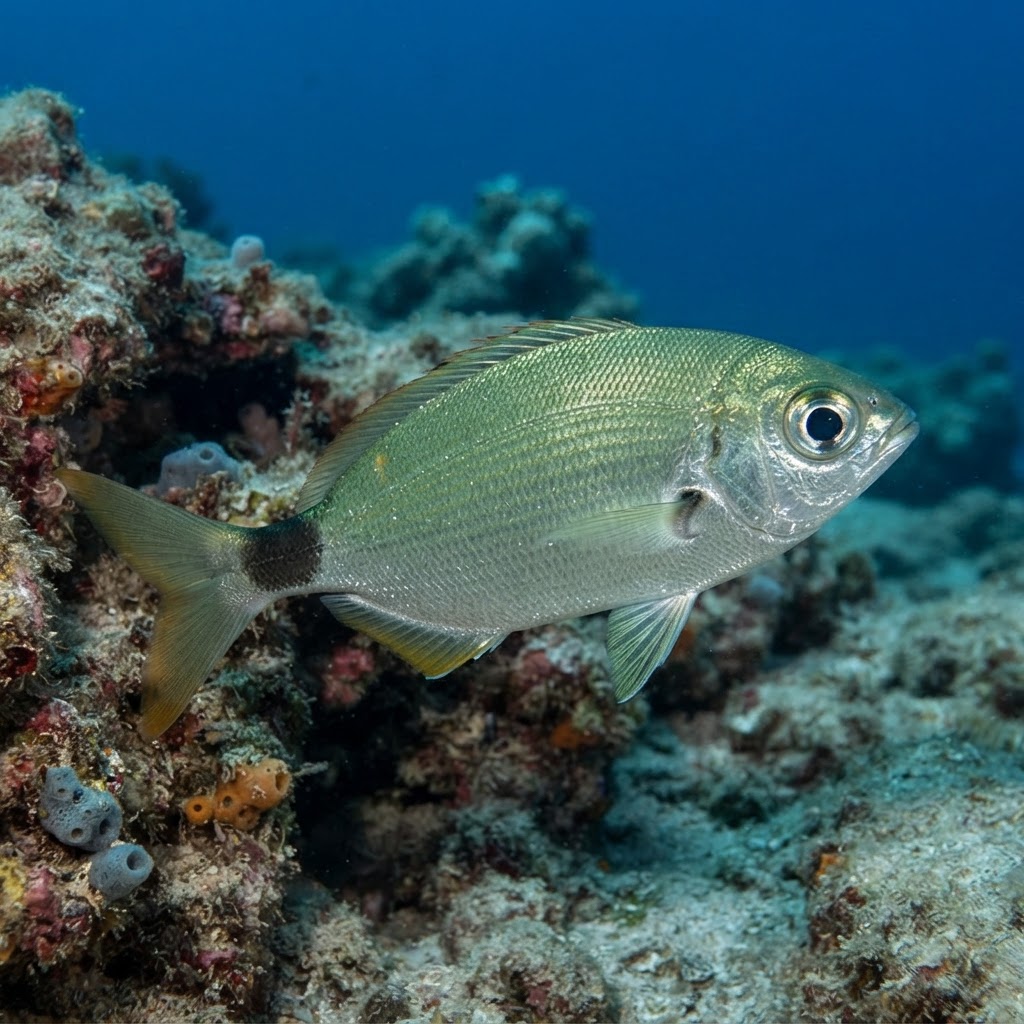
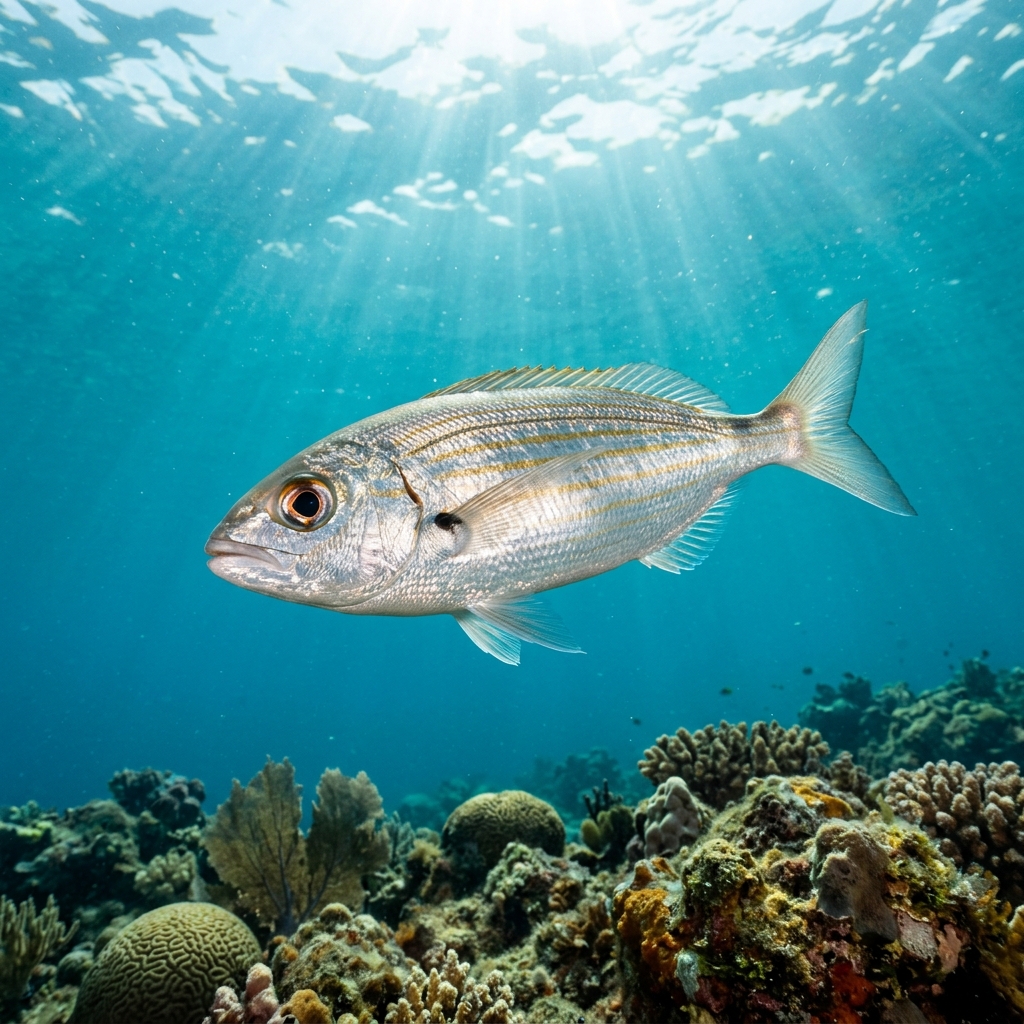
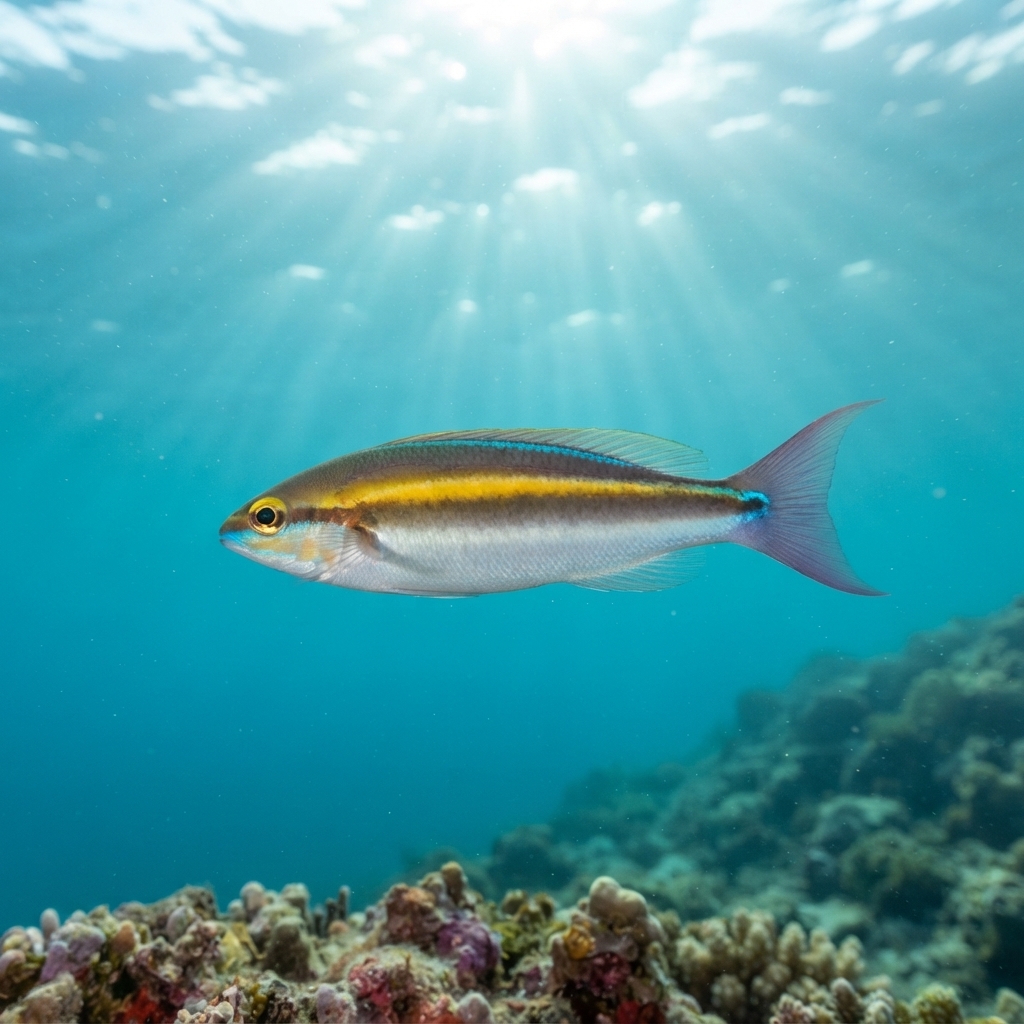
Slender, elongate body reaching around 21cm, silvery to pale grey with a row of blue stripes running across the face and head. The tail is drawn out into fine trailing filaments, which is where the whiptail name comes from. It swims with a steady, unhurried motion low over reef structure rather than schooling tightly in open water.
Divers typically find it hovering close to the reef or over sand and rubble patches rather than out in open water, moving with a slow, gliding style that keeps it low to structure. It doesn't appear to react strongly to divers, but its low sighting frequency means most encounters are brief and a little lucky. Look for it during daylight hours near the same kind of terrain where monocle breams and similar reef fish forage.
The trailing filaments on its tail are a giveaway feature shared by whiptail species in the Nemipteridae family, and they're often the first thing divers notice before the body pattern registers.
Sightings don't show a clear seasonal pattern, and the observed temperature range of 24.5 to 28C spans much of the NSW diving calendar, so it's best treated as a year-round possibility rather than a seasonal target.
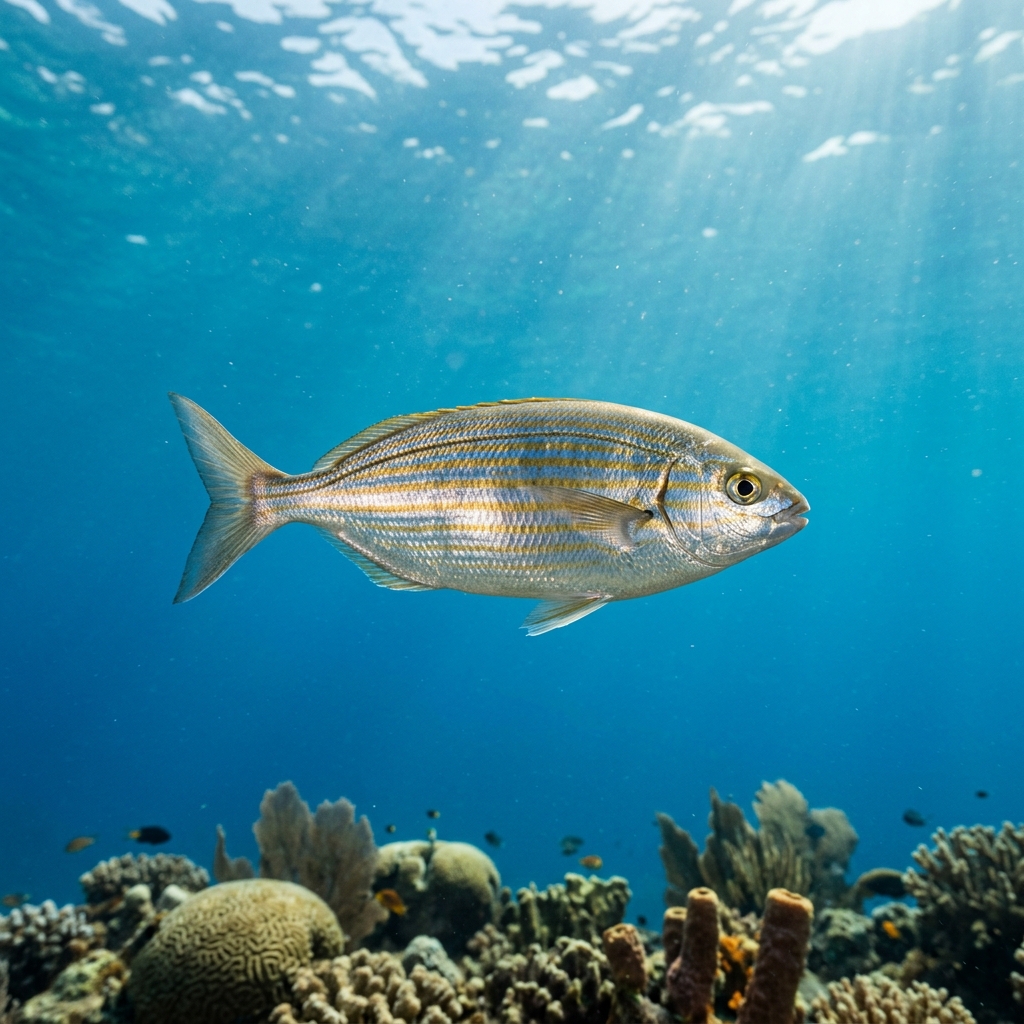
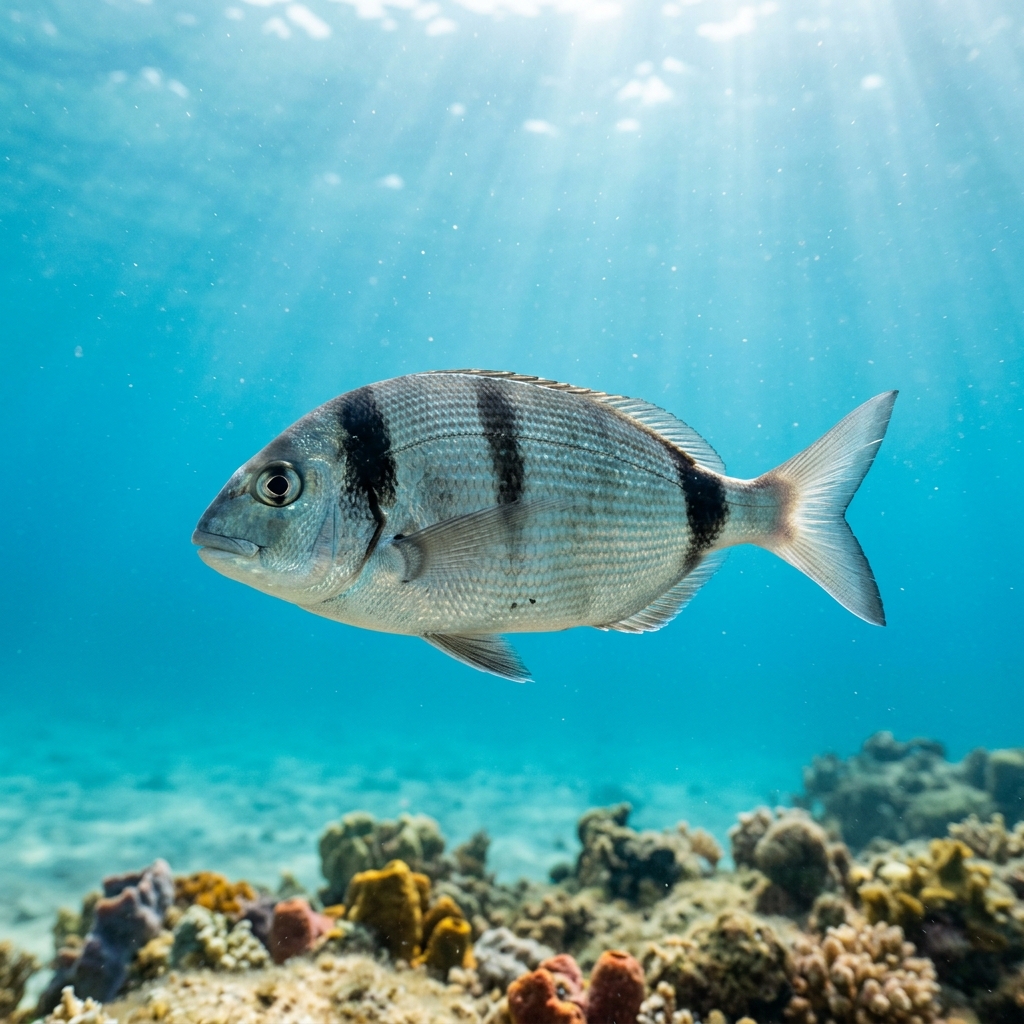
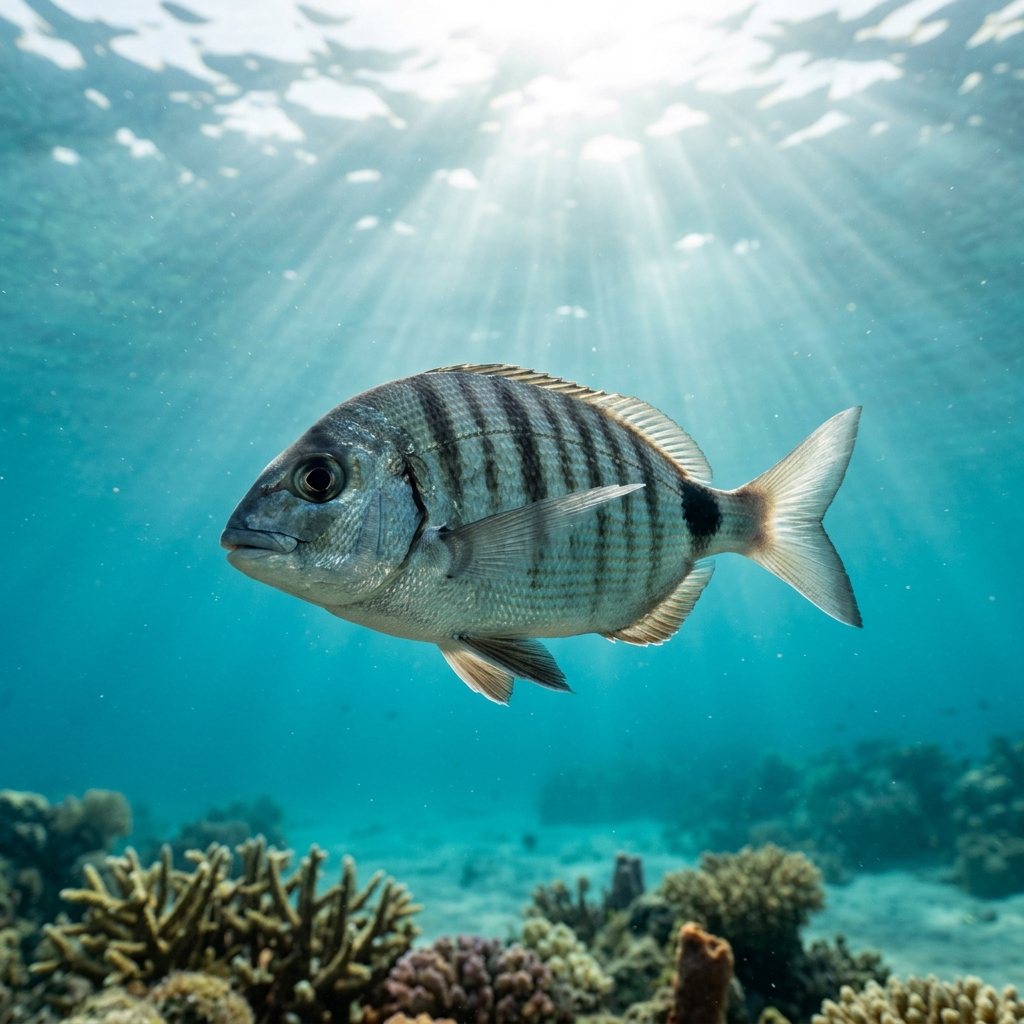
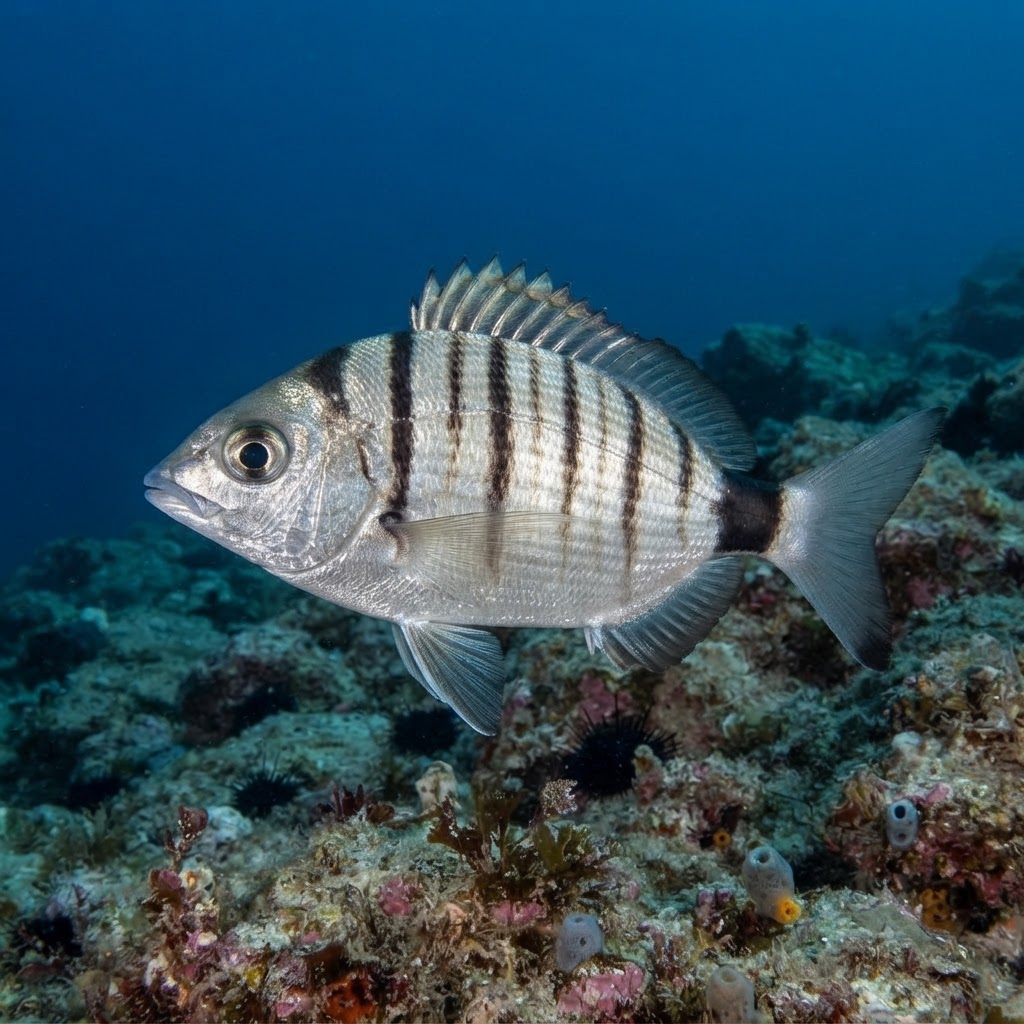
Reef neighbours a diver could mistake it for. Use the identification notes above to tell them apart.
Every logged sighting in the data comes from New South Wales, Australia, making it the only confirmed region for this species so far. It has been recorded at a handful of sites there, but always as a rare find rather than a guaranteed one, so treat any sighting as a bonus rather than the goal of the dive.
Mapping where Blue-banded Whiptail is logged…
The only confirmed sightings so far come from dive sites in New South Wales, Australia. It hasn't been logged in other regions yet, so NSW is currently the place to look.
There isn't a detected season in the sighting data, and its temperature range of 24.5 to 28C covers much of the year in NSW waters, so it's considered a year-round possibility.
Look for a slender, silvery fish around 21cm long with blue stripes across the face and long filament-like extensions trailing off the tail. It moves slowly and stays close to reef structure rather than schooling in open water.
They typically reach about 21cm in length, making them a slim, mid-sized reef fish rather than anything bulky.
Yes, at every site where it has been recorded it's logged as a rare sighting, so spotting one is more of a lucky bonus than a reliable target on a dive.
Site and sighting data is aggregated from diver logs, iNaturalist and GBIF. For taxonomy and conservation status:
Saddled Bream
3,846 sites