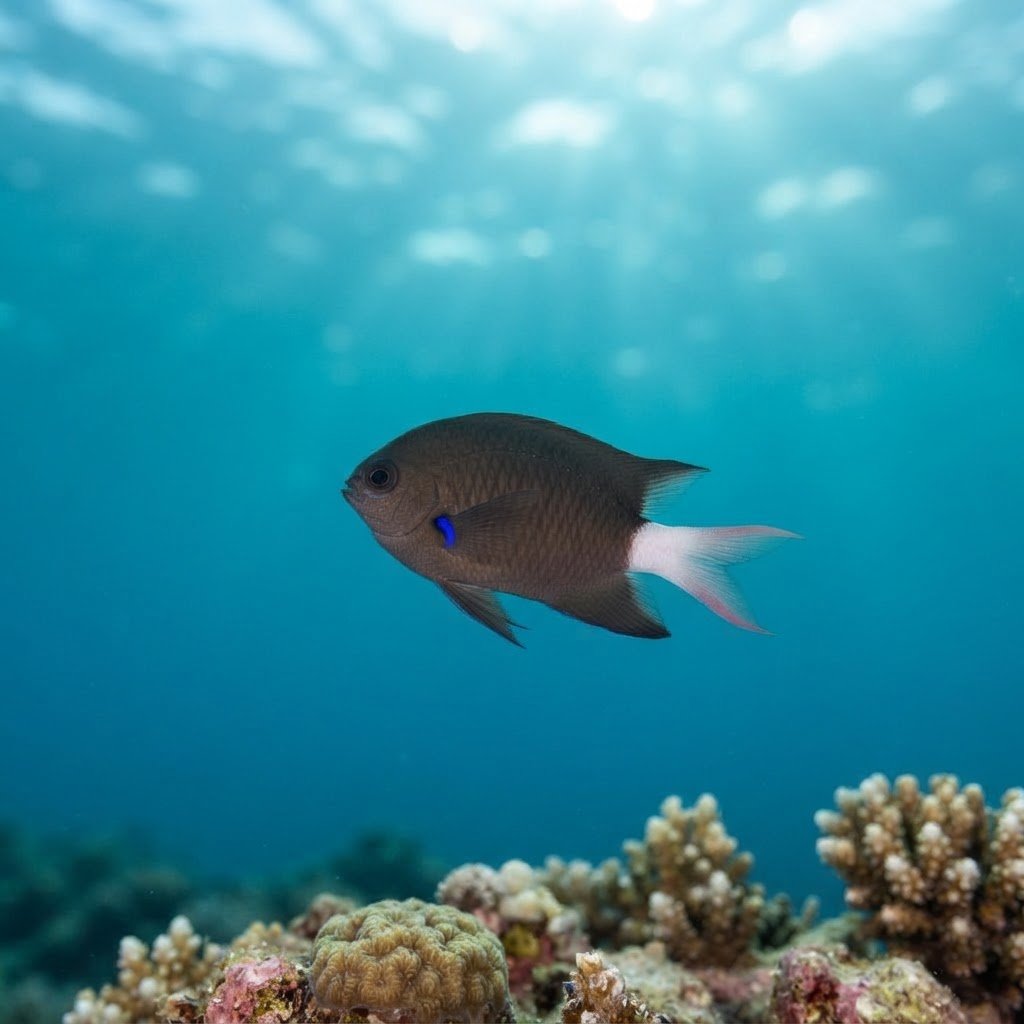
Pycnochromis caudalis
Small blue-grey damselfish reliably logged in Maluku and Sulawesi, Indonesia, and Dili, Timor-Leste in warm 27-29C reef water.
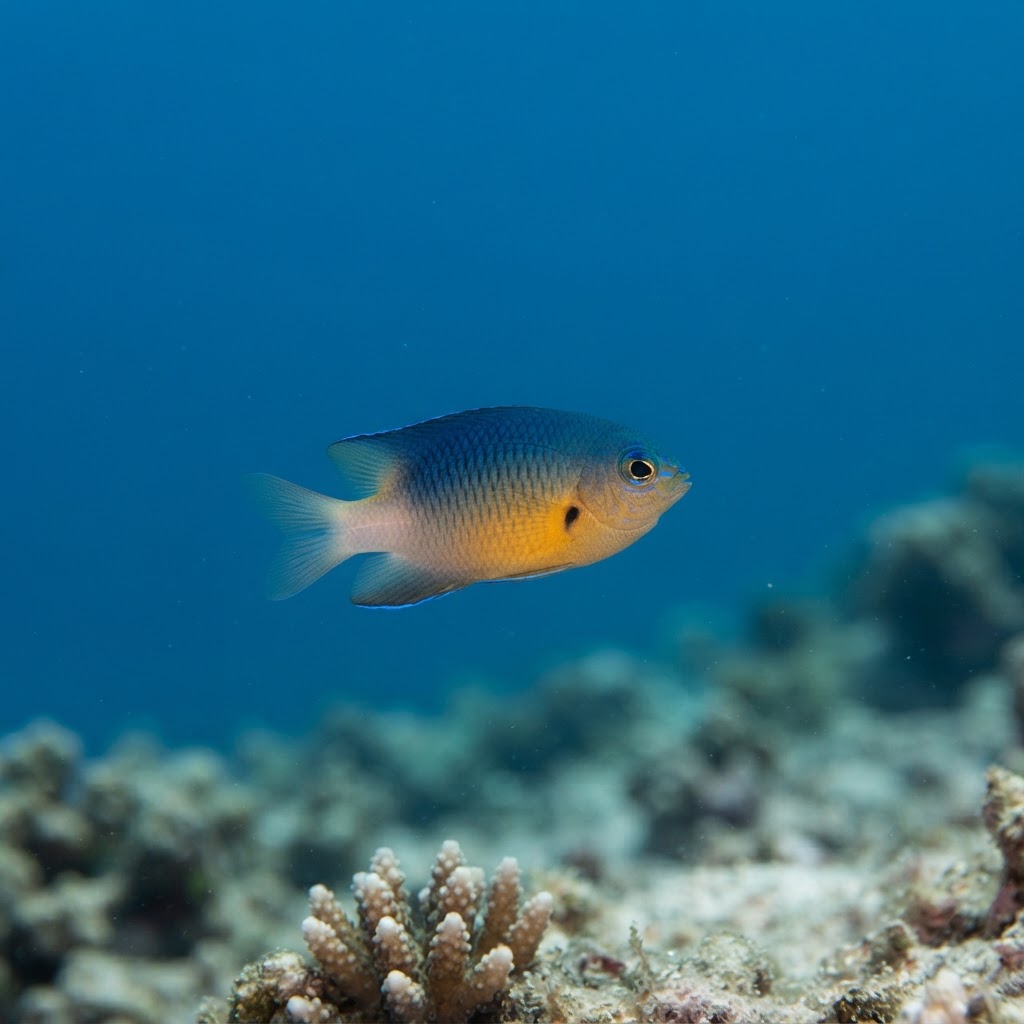
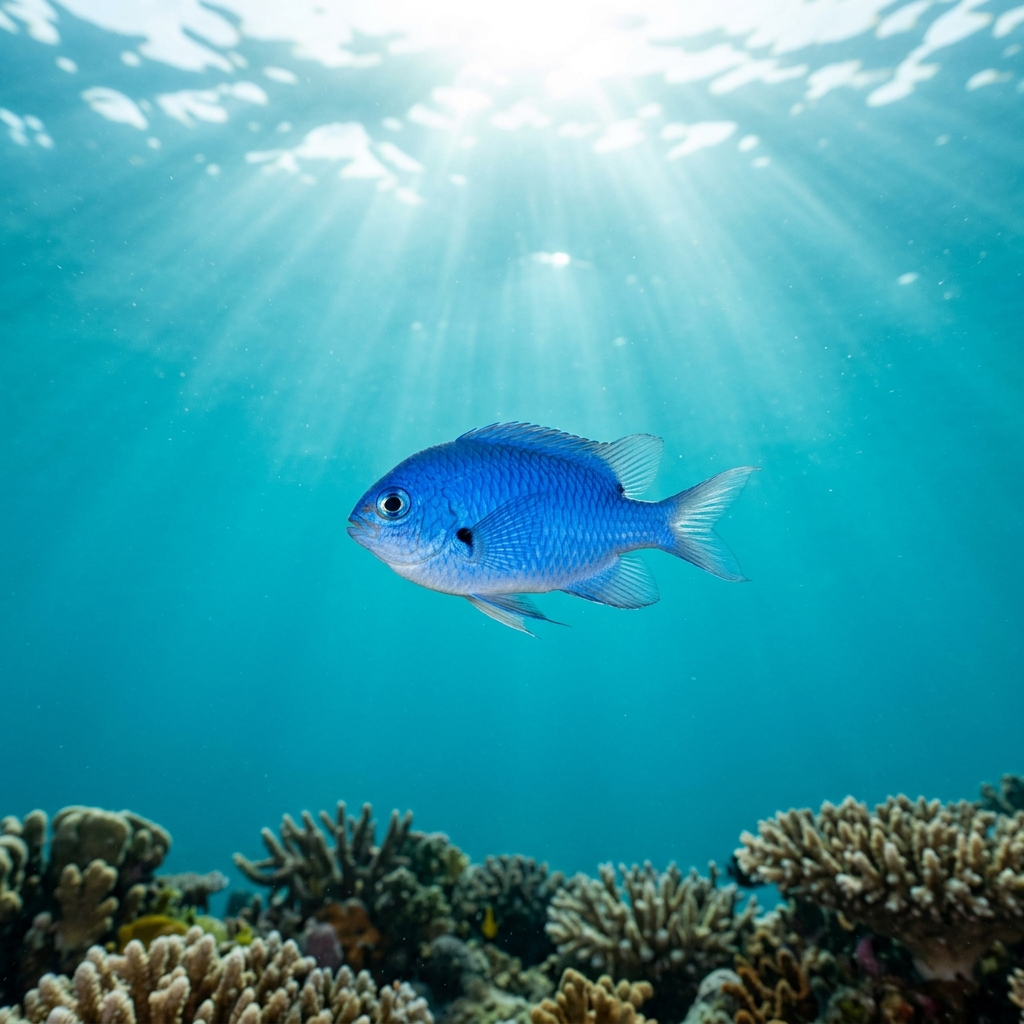
A small, slender damselfish topping out around 6 cm, with a soft blue-grey body that fades to a pale, translucent tail. Look for the faint dark mark at the base of the pectoral fin (the 'axil') that gives this fish its name, best seen when it turns side-on in open water. It swims in a fairly upright, hovering posture rather than darting tight to the reef like many of its relatives.
Typically seen hovering in loose groups a short distance off the reef structure, picking plankton out of the water column rather than sticking close to a single bommie. It shows the usual damselfish caution around divers, drifting back into cover if approached too fast but generally holding its position if you keep a slow, steady pace. Most sightings come from open reef slopes rather than tight crevice habitat.
Like other Pycnochromis species, it feeds mainly by picking zooplankton from the water above the reef, which is why you'll usually spot it hanging in midwater rather than grazing the substrate.
No clear seasonal pattern shows up in the data, and with water sitting between 26.9 and 29.0C year-round across its range, it's a fish you can look for on any dive, any month.
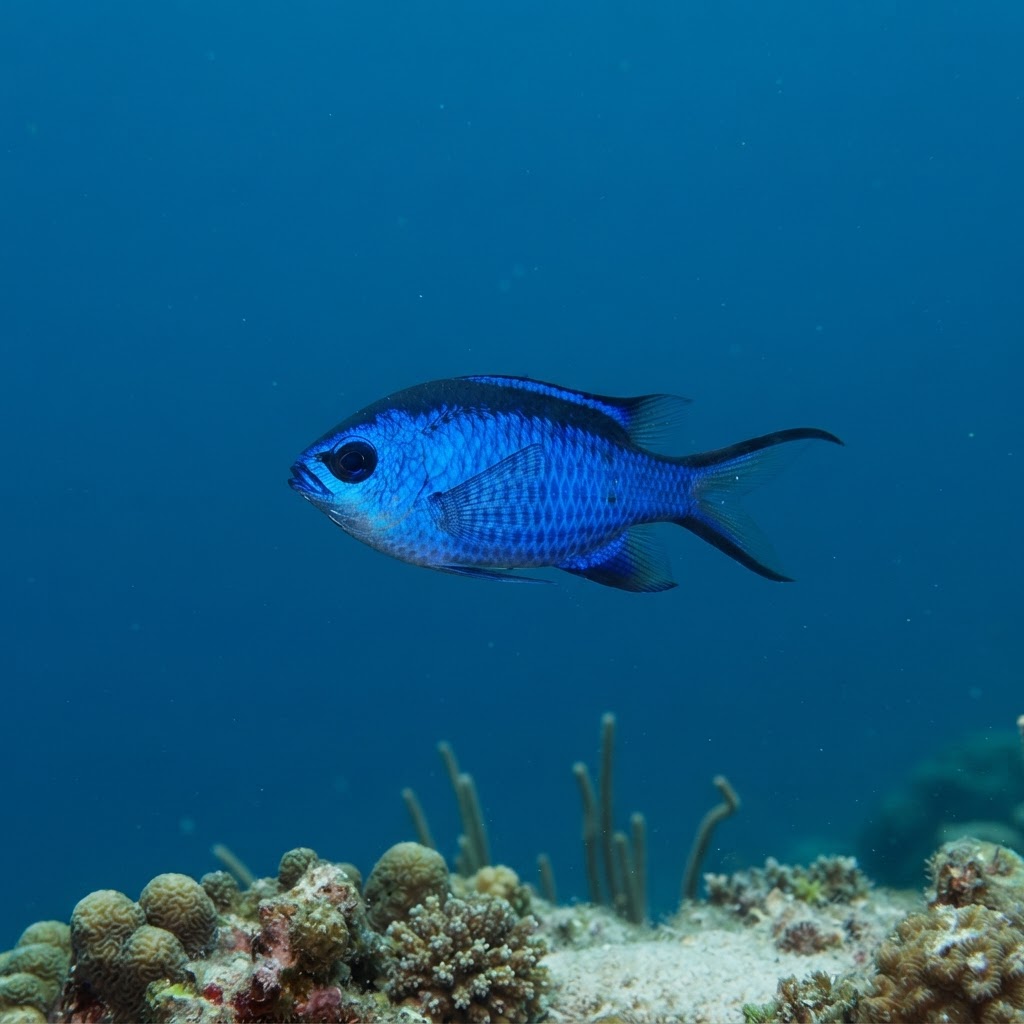
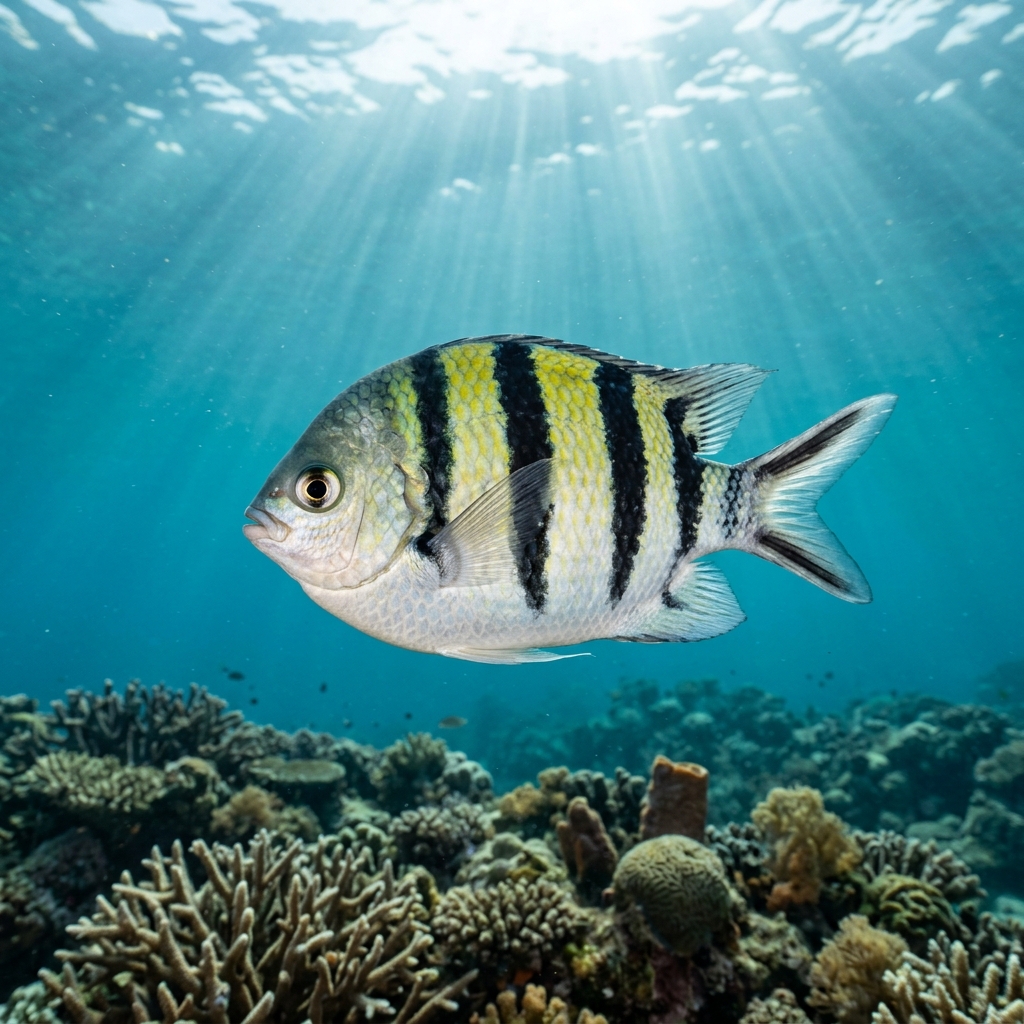
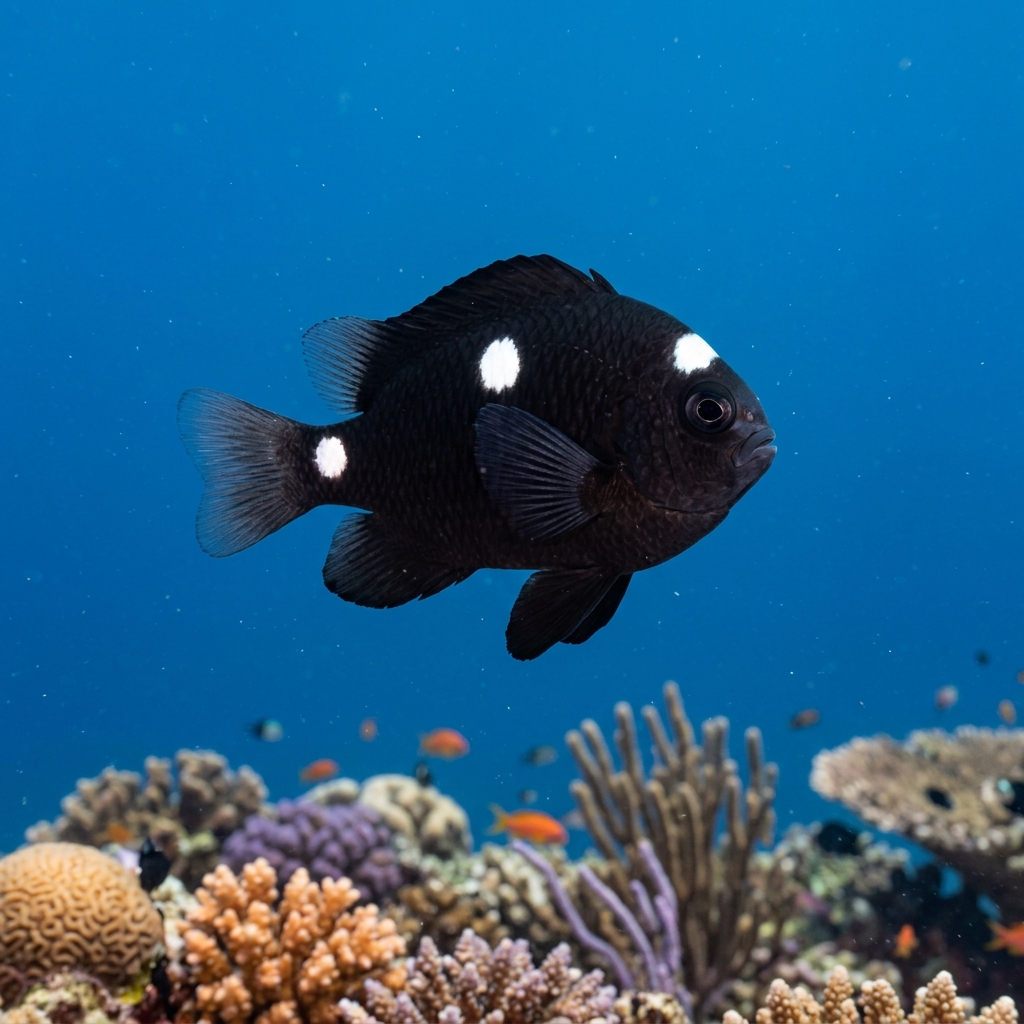
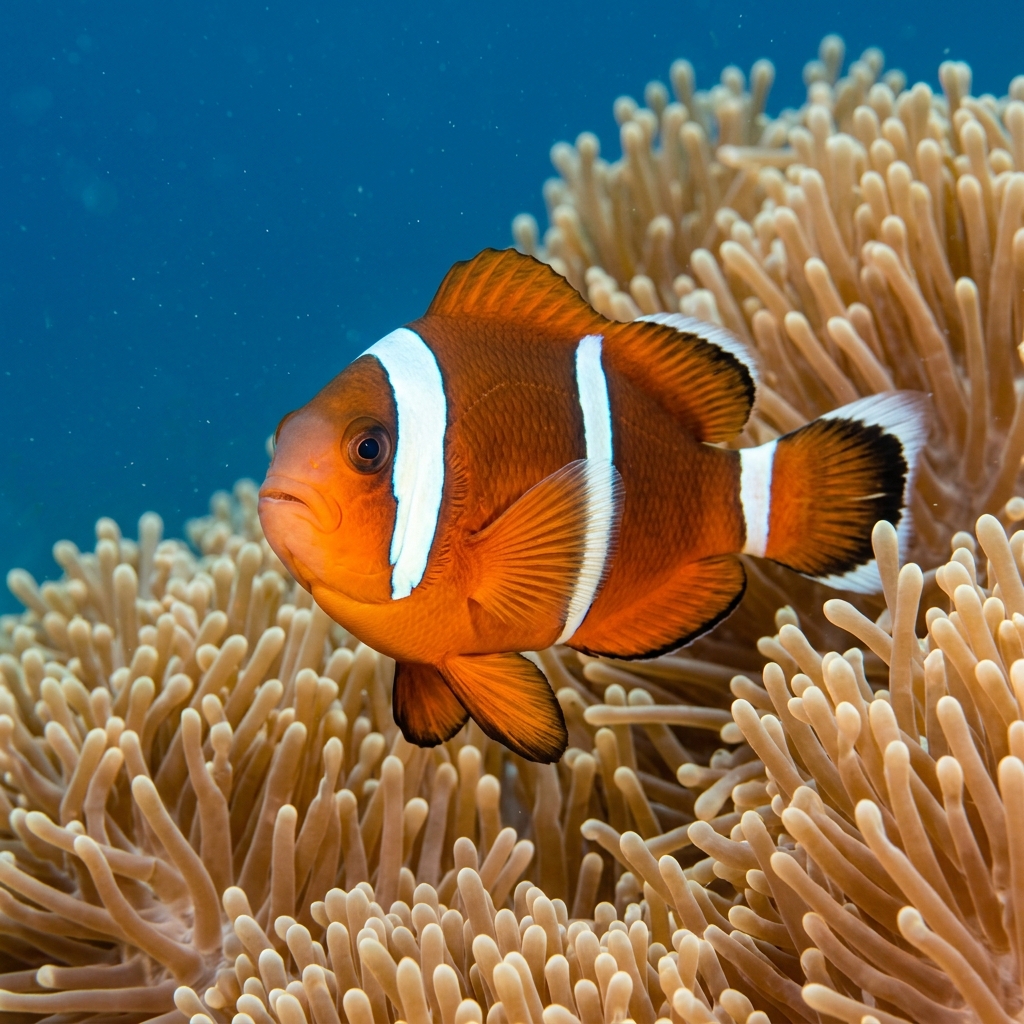
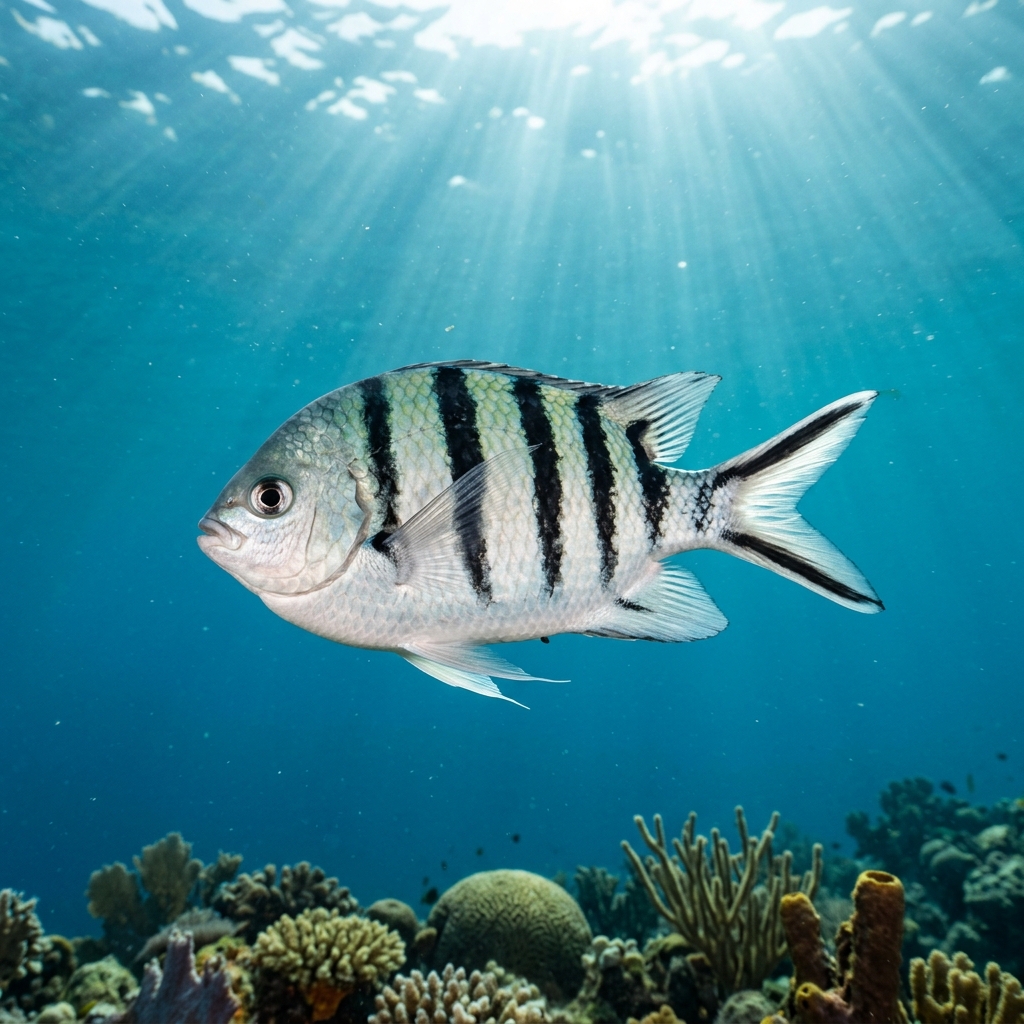
Reef neighbours a diver could mistake it for. Use the identification notes above to tell them apart.
Most reliably logged in Indonesia, particularly around Maluku and Sulawesi, with a solid secondary population off Dili in Timor-Leste. Sightings across the region are consistently uncommon rather than guaranteed, so treat it as a nice bonus find on Indo-Pacific reef dives rather than a target species.
Mapping where Blue-axil Chromis is logged…
It turns up most consistently in Indonesia, especially Maluku and Sulawesi, with additional sightings around Dili in Timor-Leste. It's an uncommon find at most of these sites rather than a guaranteed one.
There's no strong seasonal pattern in the sighting data, and the water it's found in stays a fairly stable 27 to 29C year-round, so any month is a reasonable time to look for it.
It's a small blue-grey damselfish around 6 cm with a pale tail and a subtle dark mark at the base of the pectoral fin. It tends to hover upright in loose groups over the reef rather than darting into crevices.
They're small, reaching around 6 cm in length, typical for damselfish in the Chromis group.
No, they pose no danger to divers. They're a small plankton-feeding damselfish that keeps its distance and has no defensive behaviour toward humans.
Site and sighting data is aggregated from diver logs, iNaturalist and GBIF. For taxonomy and conservation status:
Dascyllus
3,697 sites