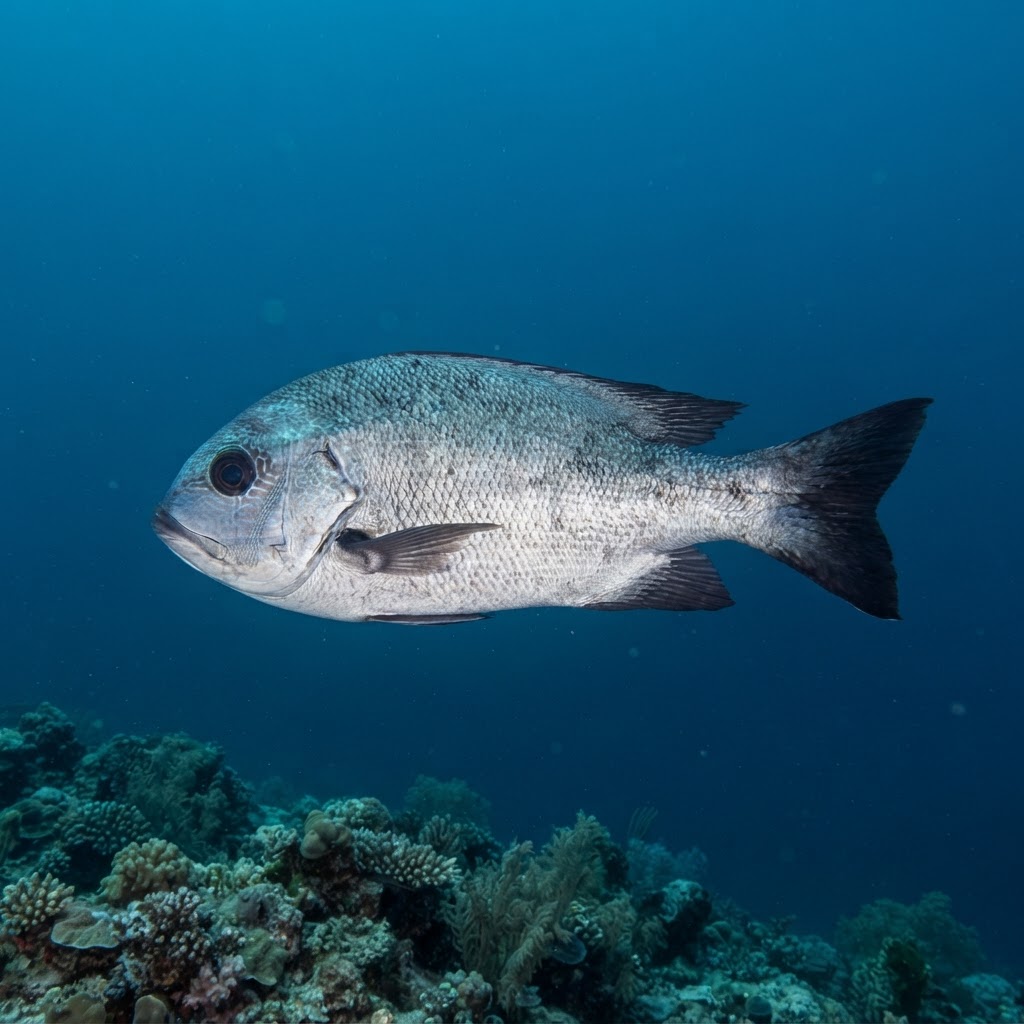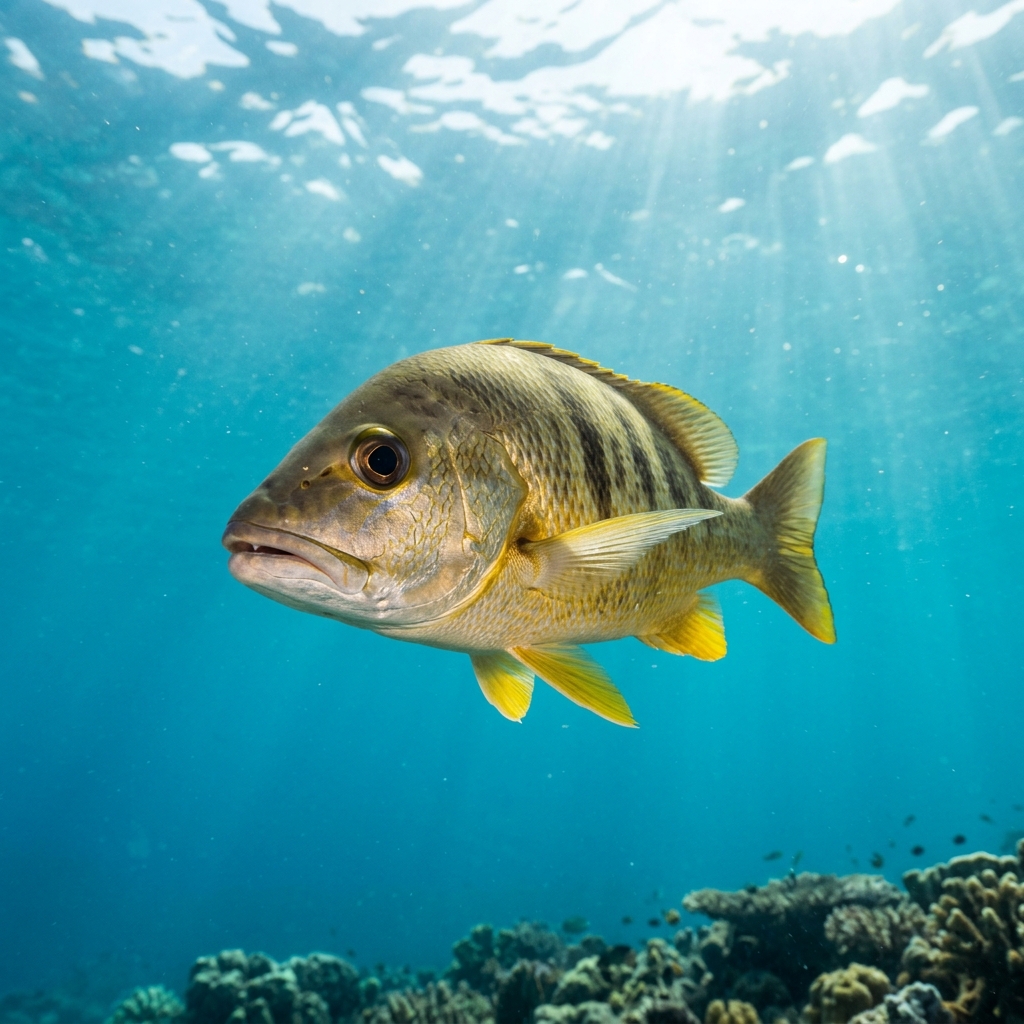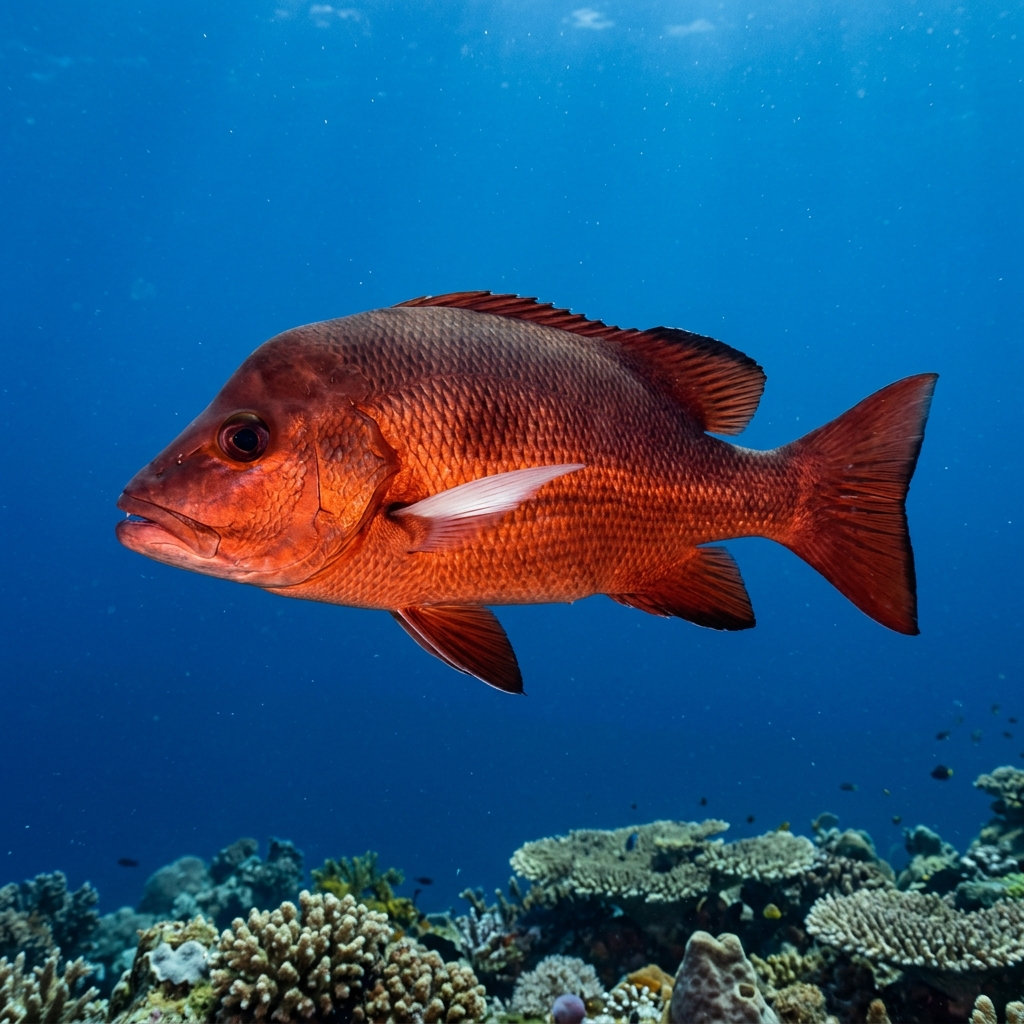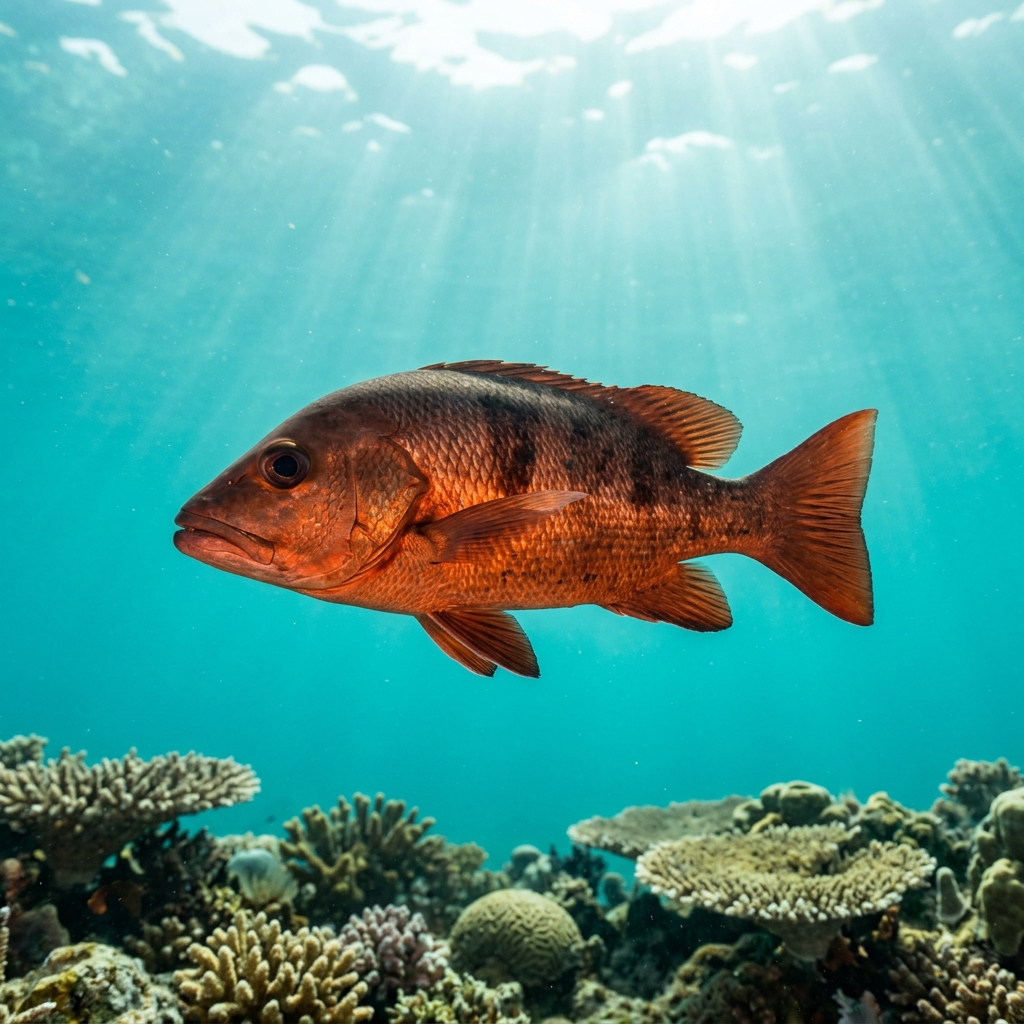
Lutjanus viridis
Bright yellow-and-blue schooling snapper turning up on reefs from Baja California to the Galápagos, year-round in 23-29C water.
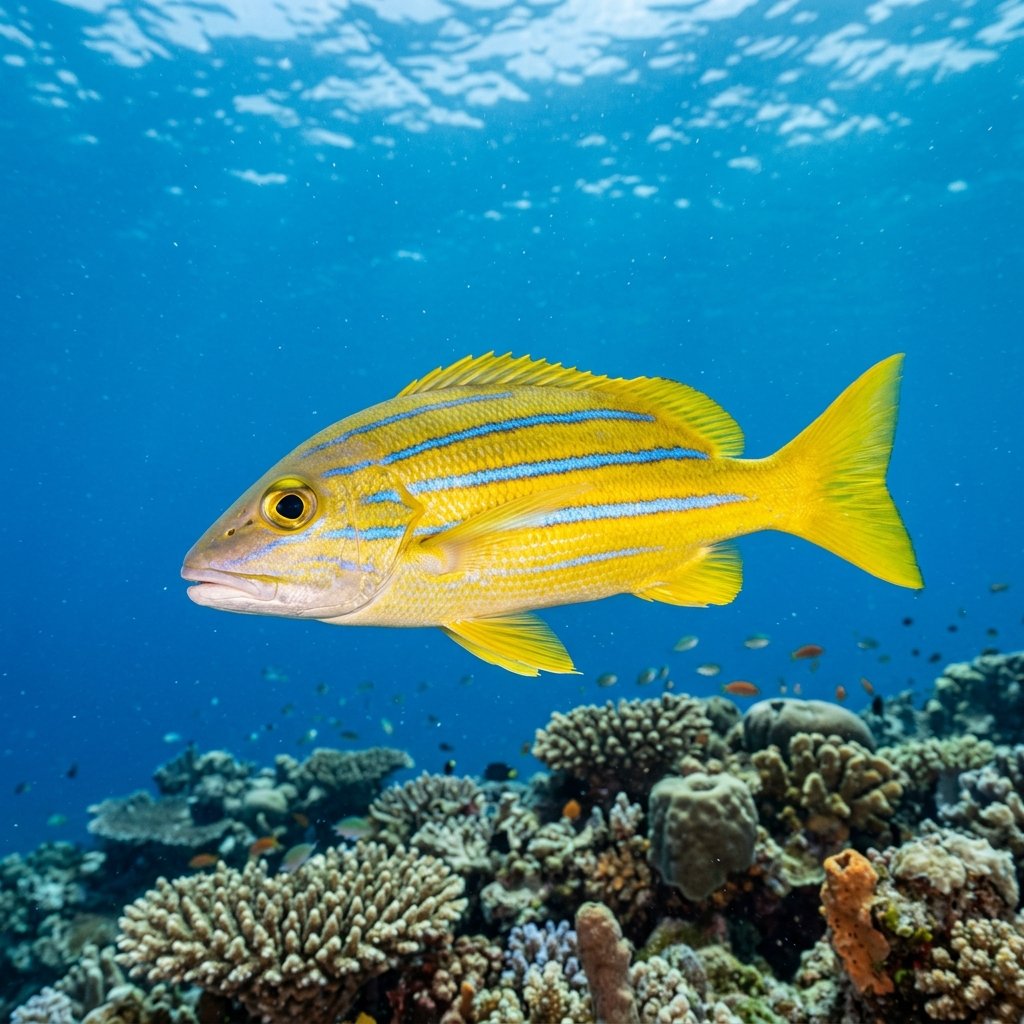
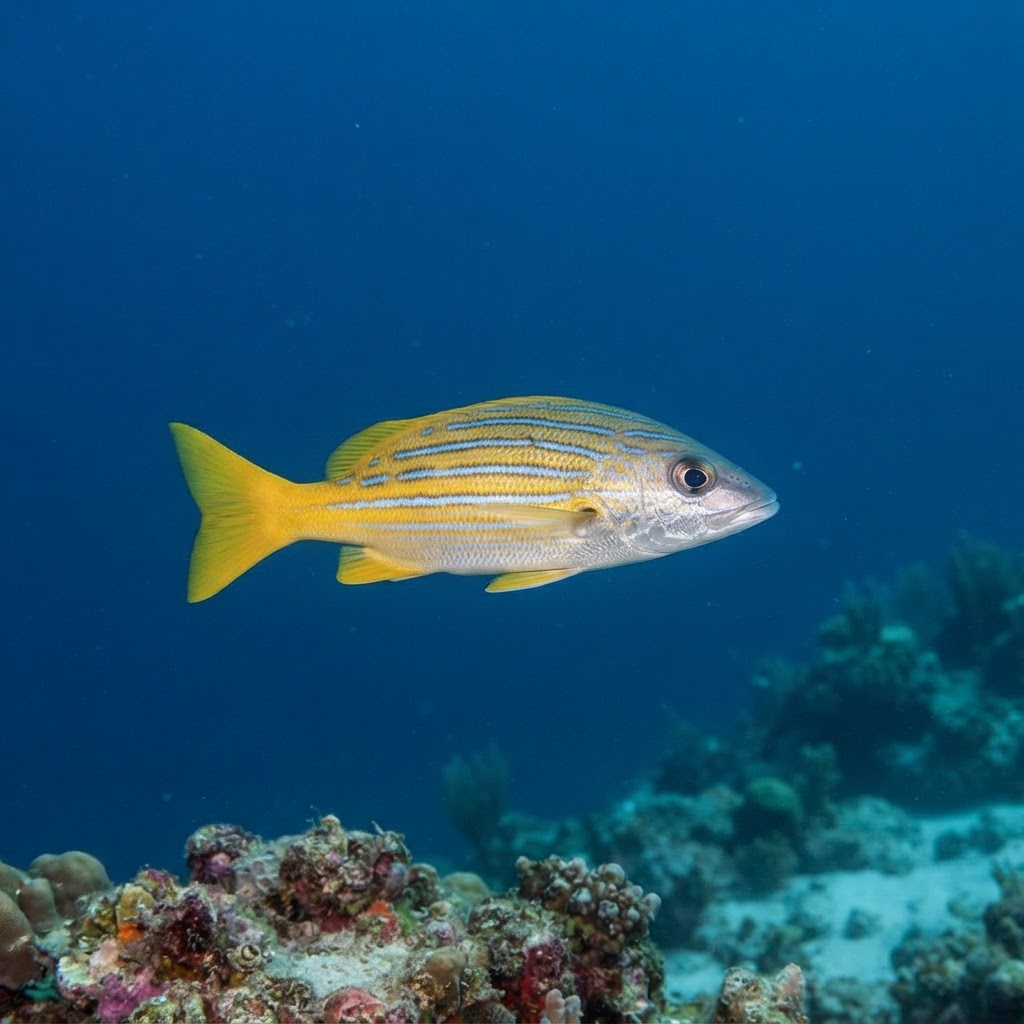
Small, deep-bodied snapper around 21 cm, easy to pick out by its golden-yellow body cut through with electric blue horizontal stripes running head to tail. The blue lines are sharpest along the upper body and face, fading slightly toward the tail fin. Usually seen in loose groups hovering over reef structure rather than as solitary fish.
Divers typically find it hovering in small, loose groups around rocky reef structure and drop-offs, staying close to cover rather than out in open water. It is generally unbothered by divers, holding position or drifting off at an easy pace rather than bolting, which makes it a reliable subject for photos once you spot the group.
Its bold blue-and-gold pattern is thought to help these fish recognise each other and hold loose schools together over structure, a common trick among reef snappers that gather in mixed-size groups for safety in numbers.
No clear seasonal pattern shows up in sighting data, and with a comfortable range of 23.2 to 28.9C it is present on these Pacific reefs all year round. Plan around good conditions at your chosen site rather than a particular month.
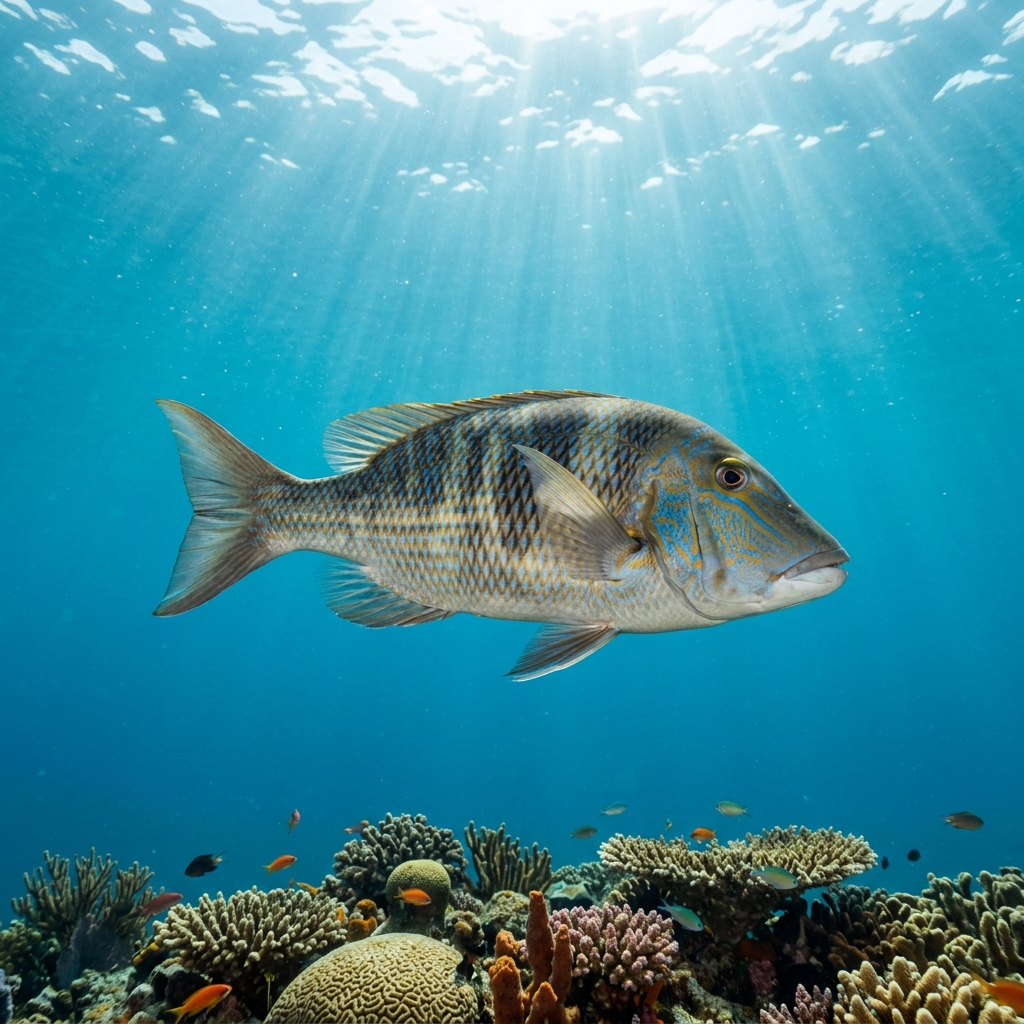
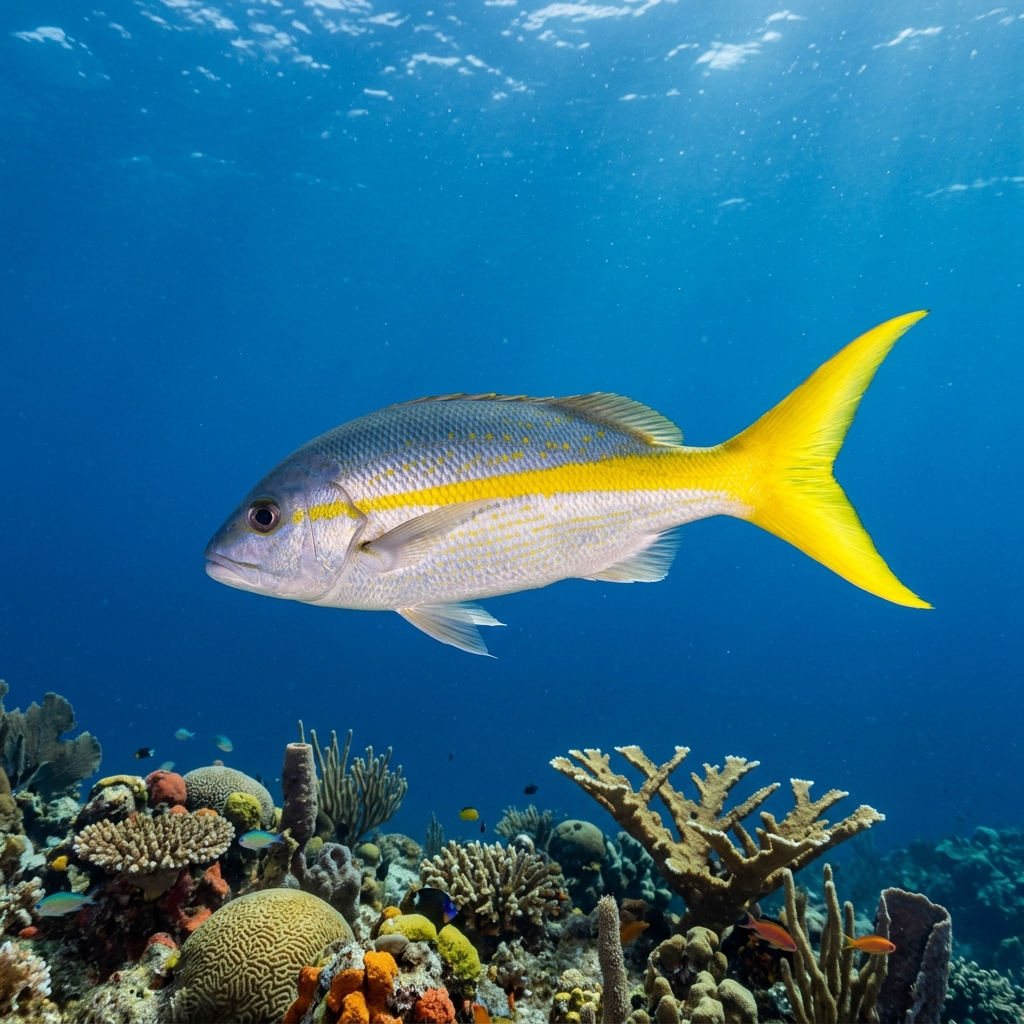
Reef neighbours a diver could mistake it for. Use the identification notes above to tell them apart.
This is an Eastern Pacific species, most reliably logged along Baja California in Mexico and around the Galápagos Islands in Ecuador, with strong numbers also reported off the Pacific coast of Panama, in Costa Rica's South Pacific and around Cocos Island, and at Gorgona in Colombia. Across its range it shows up more as a steady, uncommon-to-common sighting than a guaranteed one, so check multiple sites in a region rather than betting on a single dive.
Mapping where Blue-and-gold Snapper is logged…
Best chances are along Baja California in Mexico and around the Galápagos Islands in Ecuador, with good numbers too off Pacific Panama, Costa Rica's South Pacific coast and Cocos Island, and at Gorgona in Colombia.
There is no strong seasonal pattern in sightings, and the species tolerates a wide 23 to 29C range, so it is seen on these Pacific reefs throughout the year.
Look for a small, chunky reef fish about 21 cm long with a yellow body crossed by bright blue horizontal stripes, usually hanging in loose groups near rocky reef structure.
They reach around 21 cm in length, making them one of the smaller members of the snapper family typically seen on Eastern Pacific reef dives.
No, they pose no threat to divers and are generally calm around people, often letting divers approach fairly close before moving off.
Site and sighting data is aggregated from diver logs, iNaturalist and GBIF. For taxonomy and conservation status:
Bluestriped Snapper
2,054 sites