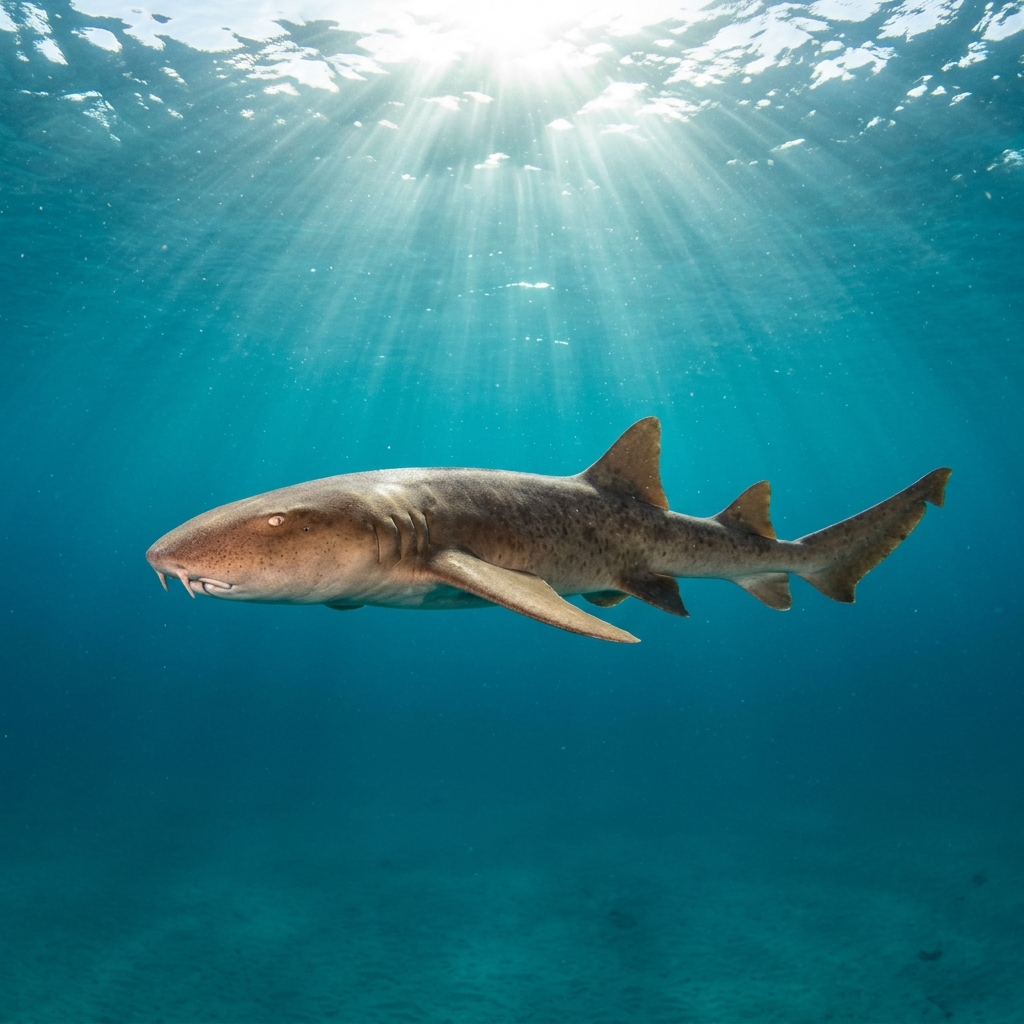
Brachaelurus waddi
Spot blind sharks in New South Wales and coastal Australia, most active Dec, Apr. Here's how to find and recognise this nocturnal carpet shark.
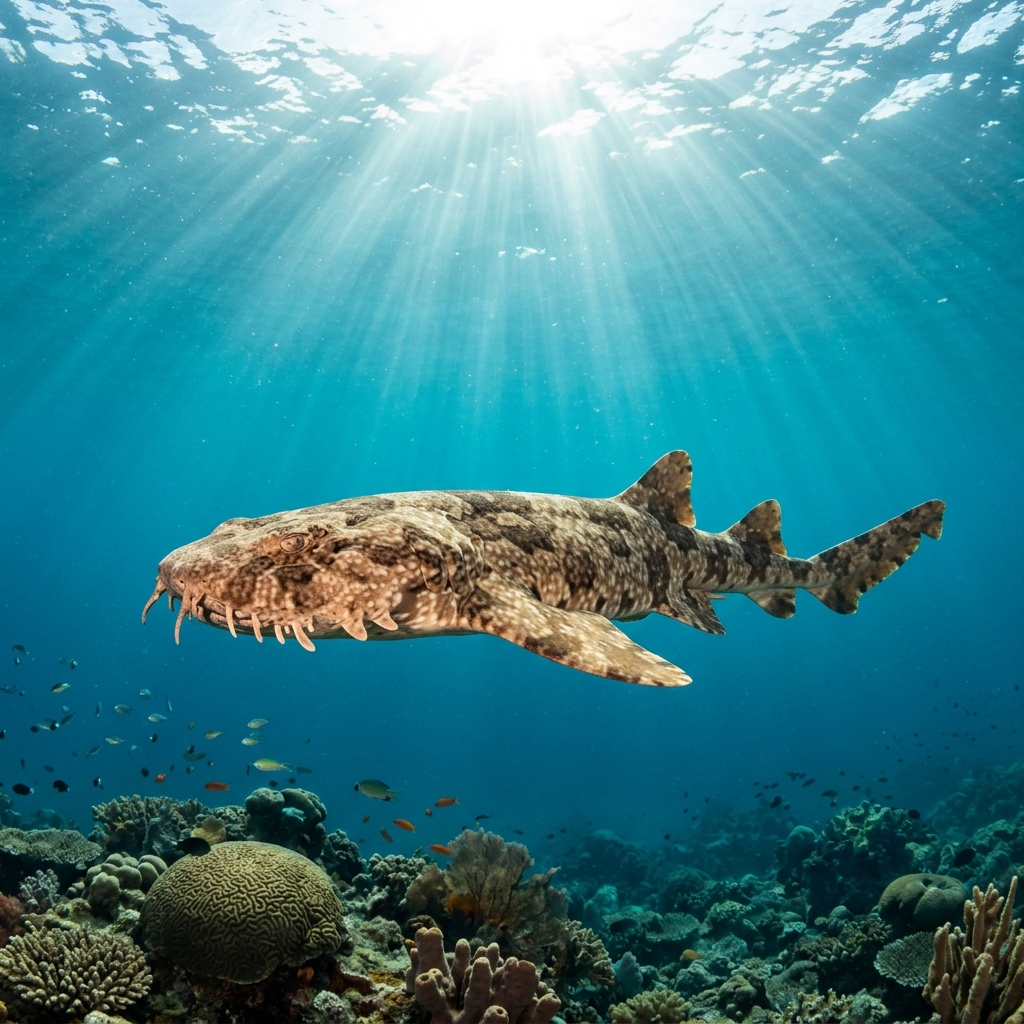
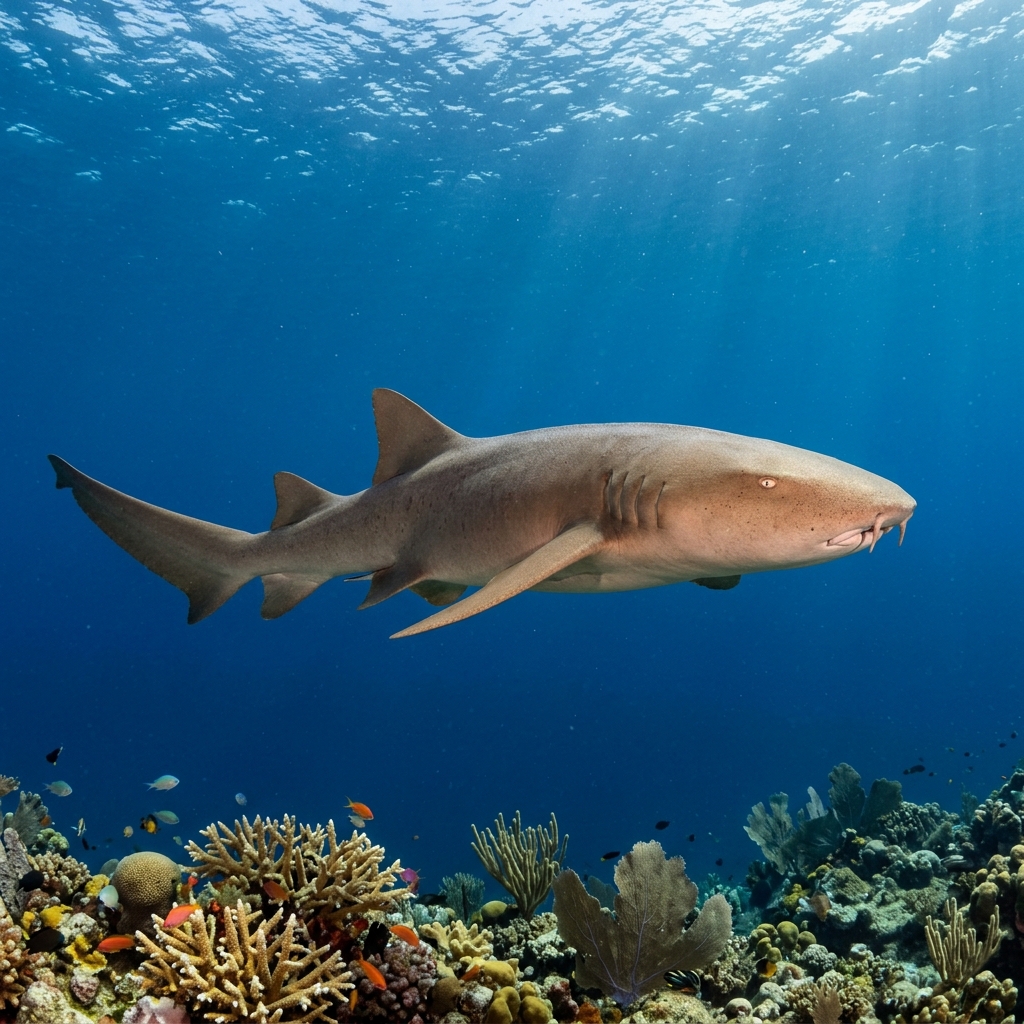
A small, stocky carpet shark with a distinctly blunt, rounded snout and a habit of resting motionless on the reef. Colouration is warm brown with scattered pale spots and darker brown saddles across the back, making it blend well against rocky substrates. The body is stout with a short, broad head that sets it apart from sleeker reef sharks. Look for that flattened, bulldog-like head profile as your first identification cue.
Blind sharks are nocturnal hunters that spend daylight hours wedged into rock crevices, ledges, and rubble piles on shallow reefs, this is typically how divers find them. They are sluggish when resting and generally ignore divers, making close observation straightforward if you move slowly. Their common name comes from a defensive behaviour of closing their nictitating membranes (a protective inner eyelid) when brought out of the water, giving the appearance of being blind.
Despite looking quite delicate, blind sharks are remarkably tough survivors: they can remain out of water for an extended period without apparent harm, which is unusual even among carpet sharks.
Sightings in the Southern Hemisphere concentrate between December and April, which aligns with the warmer end of the species' observed temperature range (up to around 26 °C). Aim for late summer and autumn on the New South Wales coast.
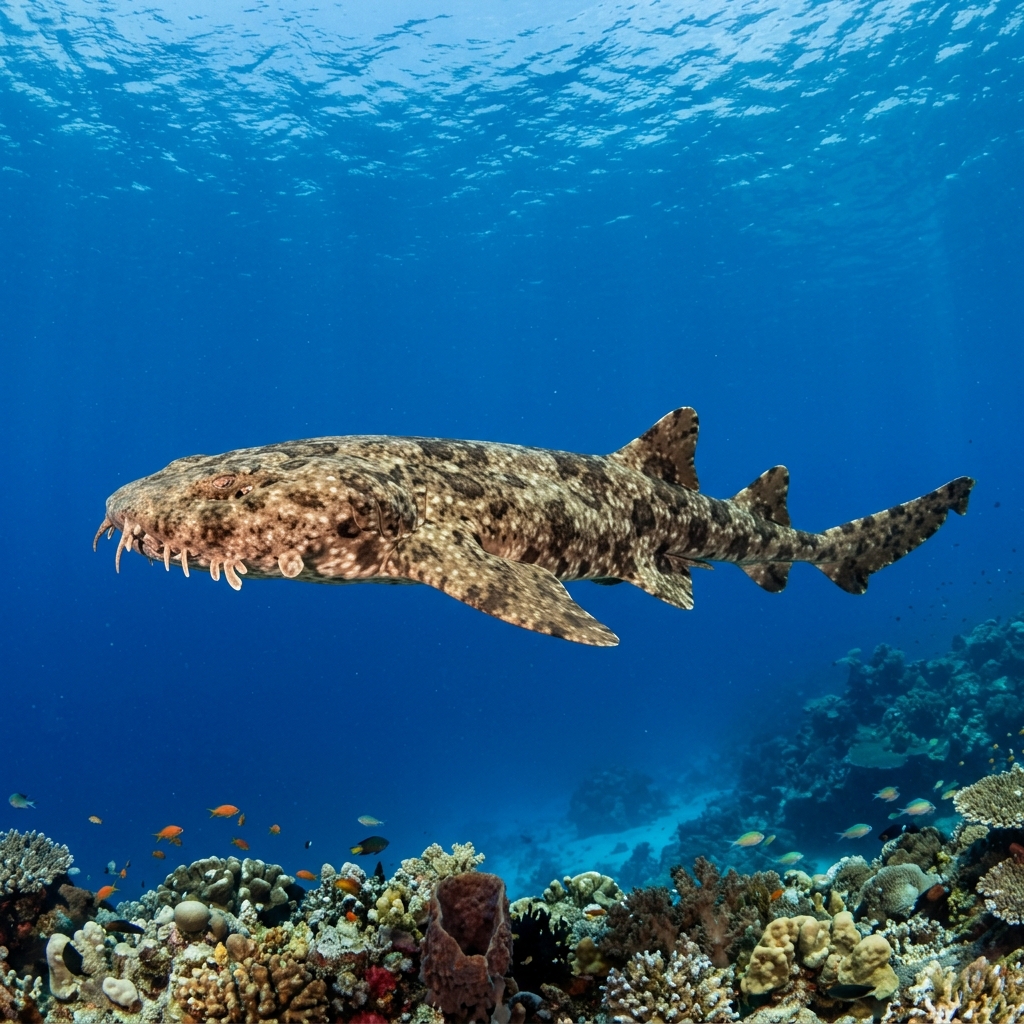
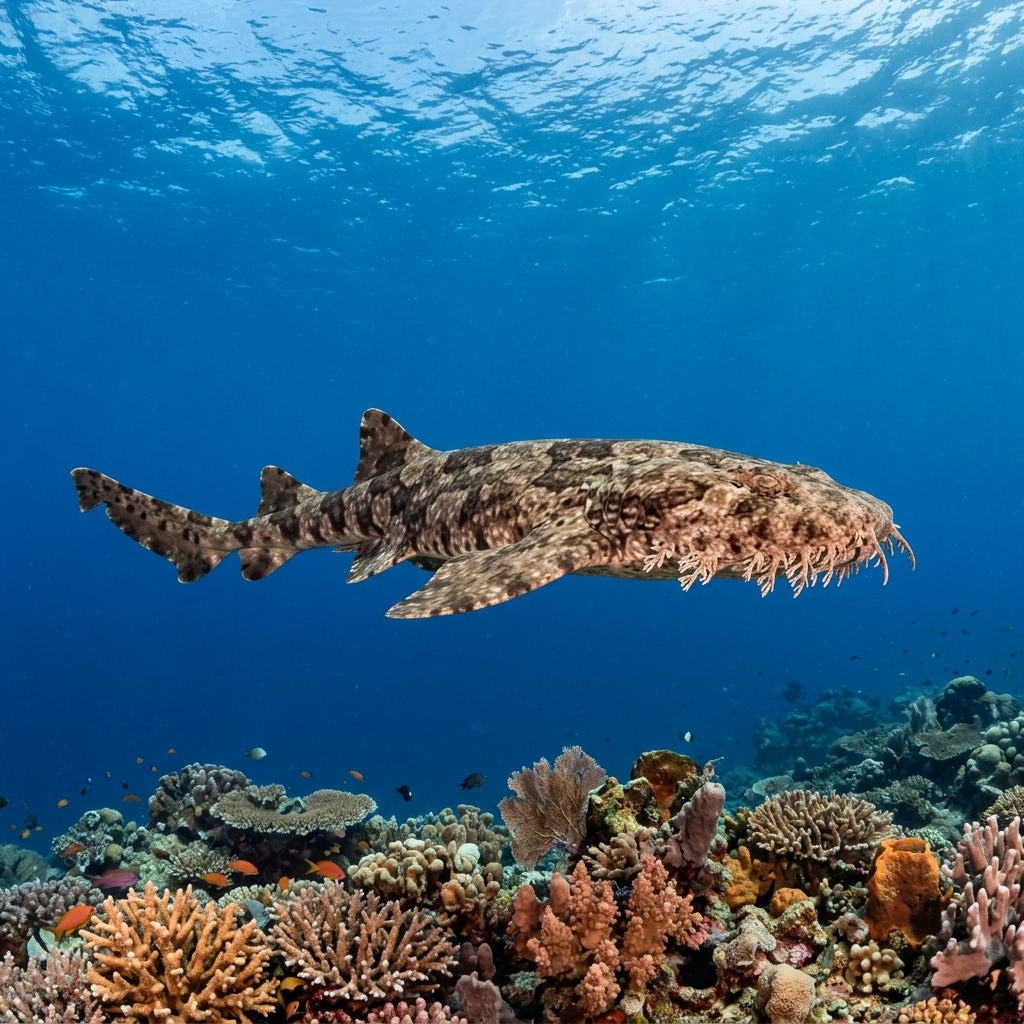
Reef neighbours a diver could mistake it for. Use the identification notes above to tell them apart.
Almost entirely an Australian species, with the strongest sighting record by far concentrated along New South Wales. Smaller numbers are logged from Western Australia and Queensland. If you're targeting this shark, the New South Wales coast is your best bet, as it accounts for the overwhelming majority of known dive sites.
Mapping where Blind Shark is logged…
Blind sharks are found almost exclusively in Australia, with New South Wales being by far the most productive region for sightings. Western Australia and Queensland also have records, but the bulk of logged encounters come from NSW's rocky inshore reefs and kelp beds.
Sightings peak between December and April in the Southern Hemisphere, corresponding with warmer coastal water temperatures. Targeting late summer and autumn dives along the New South Wales coast gives you the best odds.
Key in on the very blunt, rounded snout and stocky body shape. The brown colouration with pale spots and darker saddle markings is characteristic. Unlike the more flattened wobbegongs, blind sharks have a rounder cross-section and that distinctive bulldog-short head.
No. Blind sharks pose no threat to divers. They are small, slow-moving, and reclusive. They may nip if actually handled, but under normal dive conditions they simply rest and ignore you.
The name comes from behaviour observed when they are removed from the water: they close their nictitating membranes, a protective inner eyelid, making them appear sightless. Underwater and in their normal habitat they see perfectly well.
Site and sighting data is aggregated from diver logs, iNaturalist and GBIF. For taxonomy and conservation status:
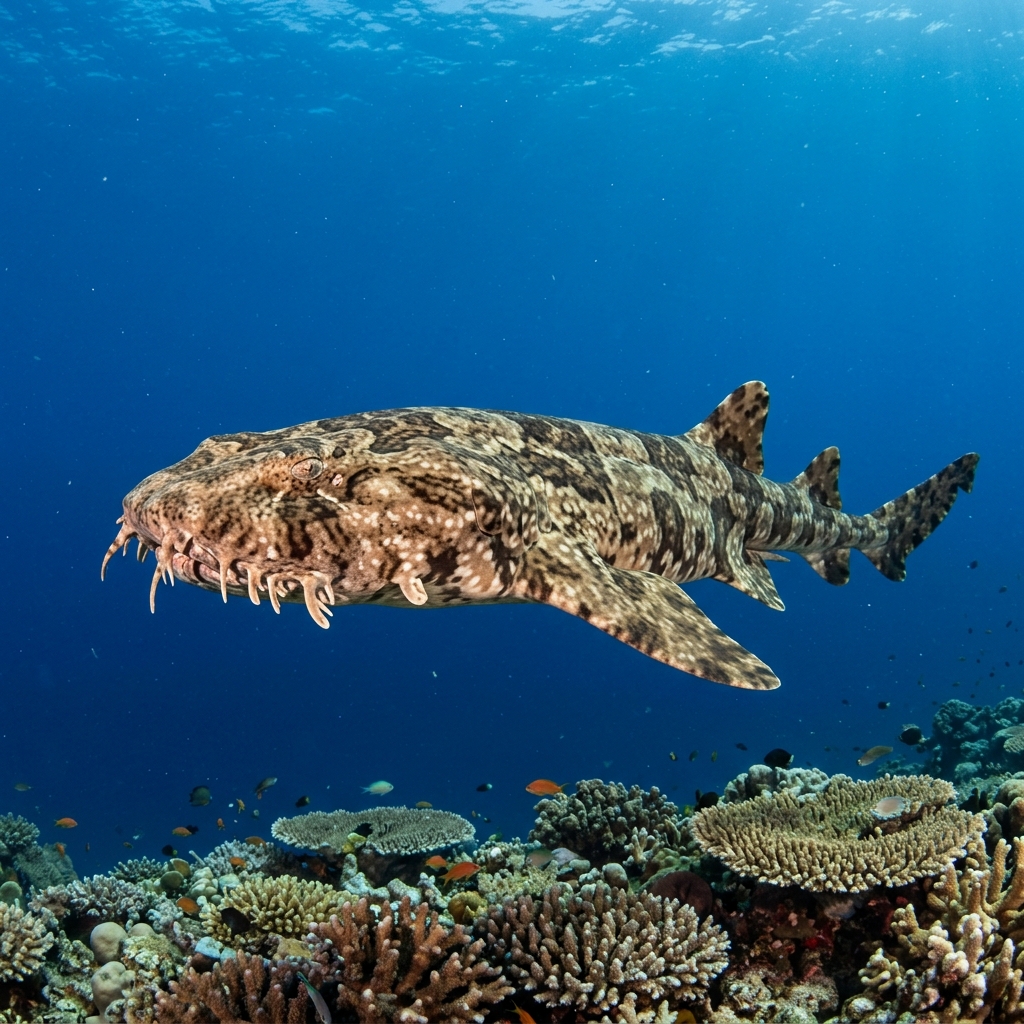
Ornate Wobbegong
291 sites