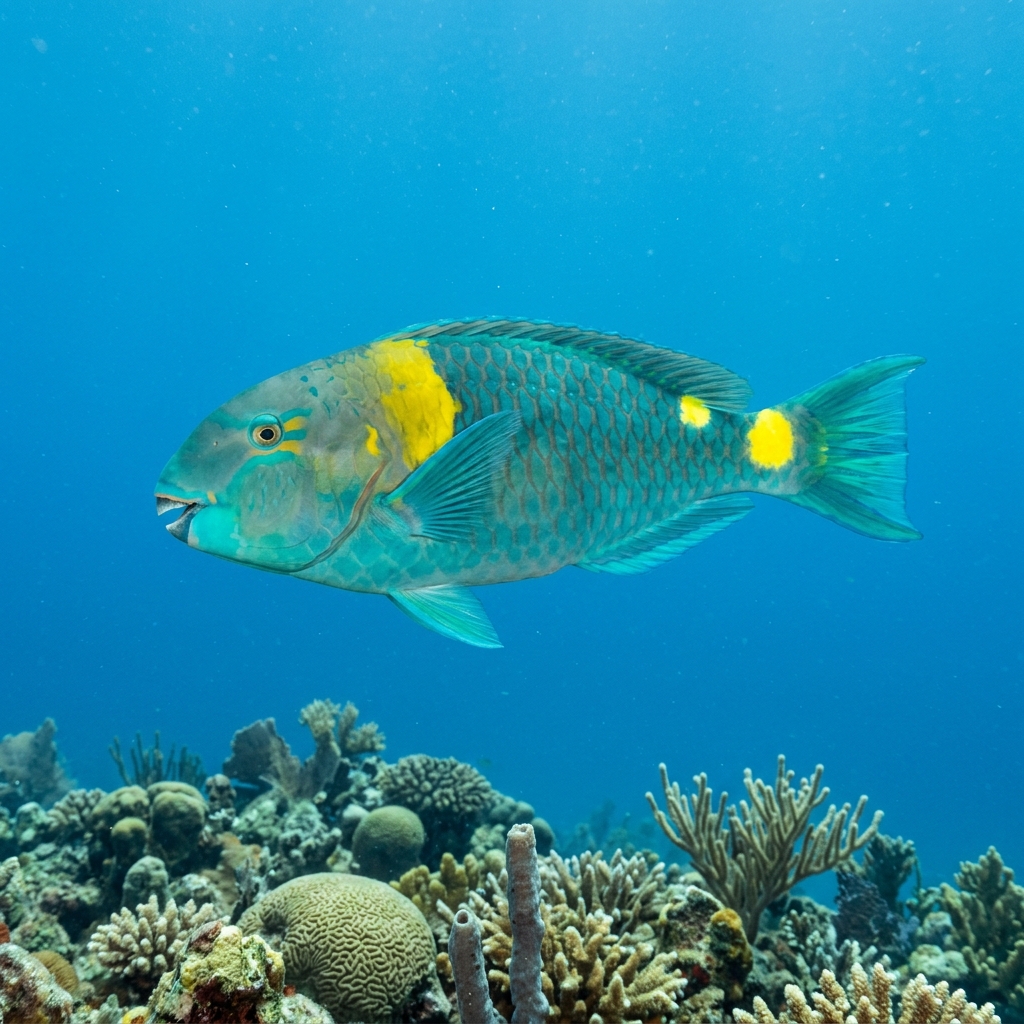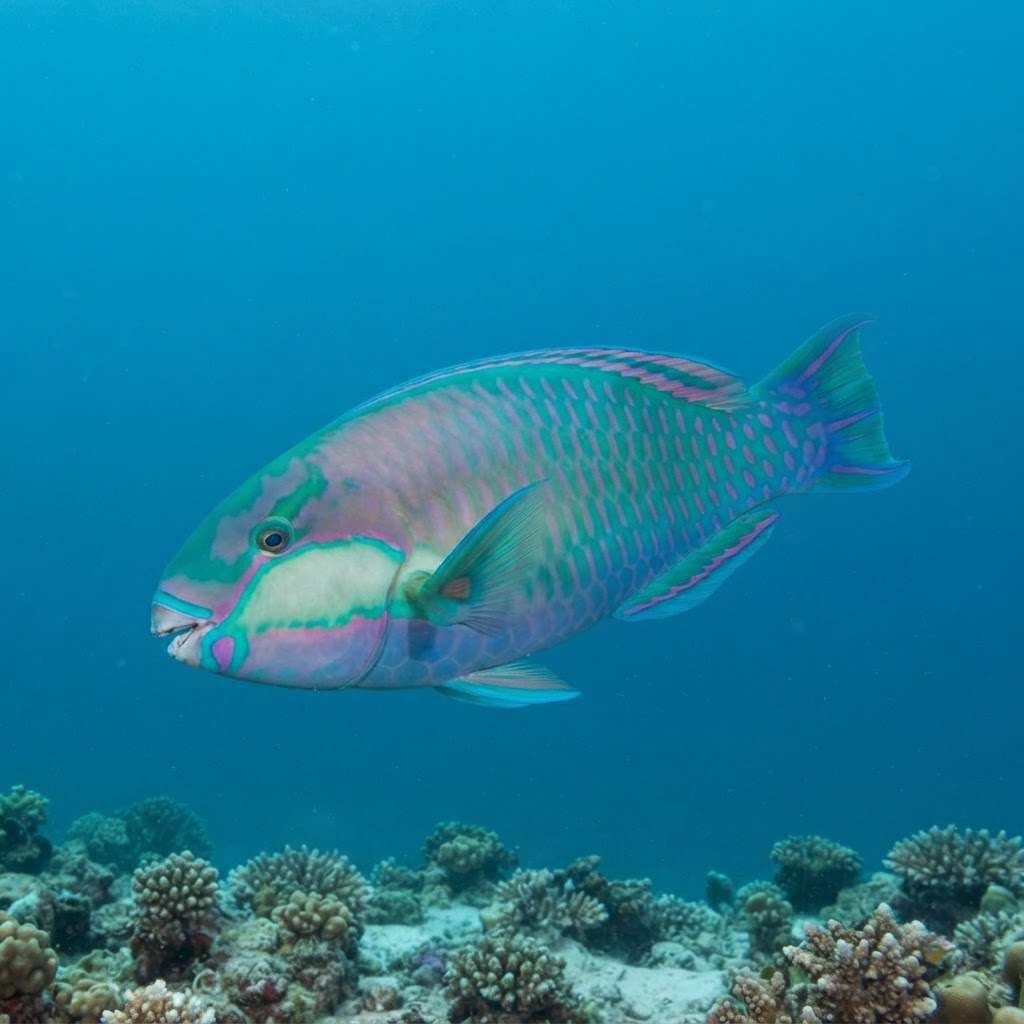
Chlorurus bleekeri
A reef regular across Sulawesi and Raja Ampat, seen year-round in 26-29C water. Here's how to pick it out among the reef's grazers.
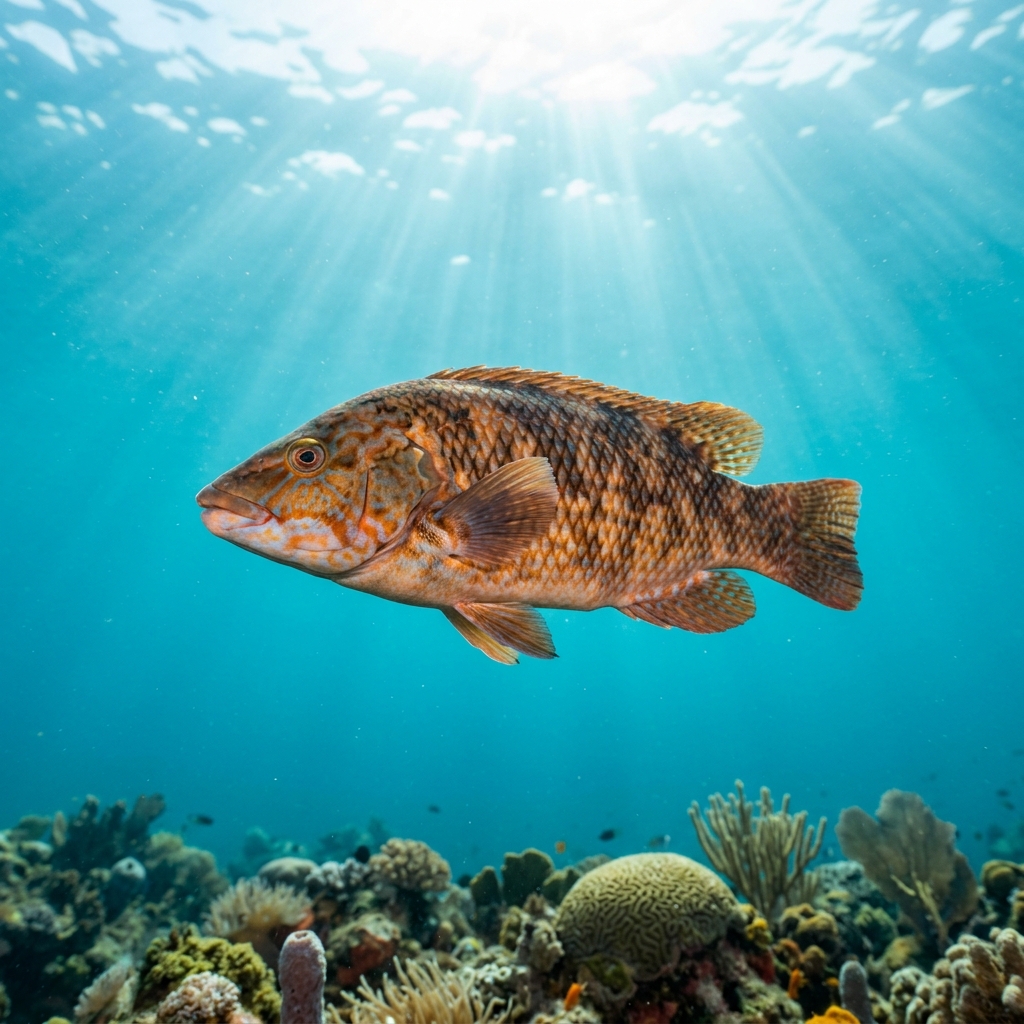
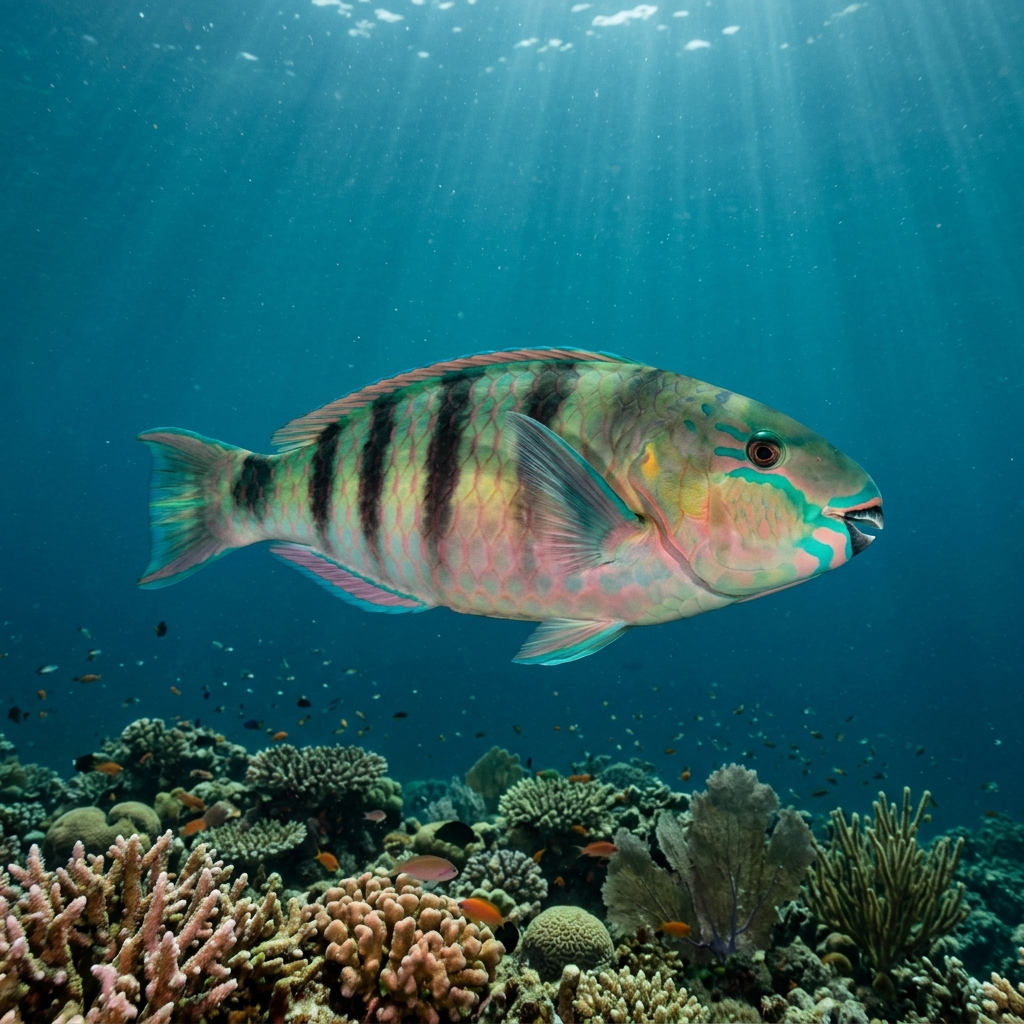
Grows to around 34 cm, with a chunky, oval body typical of parrotfish and a fused, beak-like set of teeth used for scraping algae off coral rock. Colouring runs green to blue-green with pink or orange highlights along the scale edges and fins, giving it a mottled, patchwork look rather than one bold stripe or patch. Look for it hovering close to the reef surface, head-down, rasping at the substrate rather than swimming in open water.
Spends most of its time grazing over reef flats and slopes, working the surface with its beak in short, deliberate bites rather than cruising. It's an uncommon-to-common find at most sites rather than something you'll trip over on every dive, and it tends to hold its ground or drift off slowly rather than bolt when divers approach. Most sightings come from daytime reef dives at moderate depth, where it blends into the general grazing traffic of wrasses and other parrotfish.
Like other parrotfish, it grinds up mouthfuls of coral rock while feeding on the algae coating it, and the fine sand that passes through its gut is a real contributor to the white sand found on tropical reefs.
No clear seasonal pattern in the data, and with a comfort range of roughly 26 to 29C it's a year-round resident on the tropical reefs where it's found. Plan around your destination's general dive season rather than a specific month for this fish.
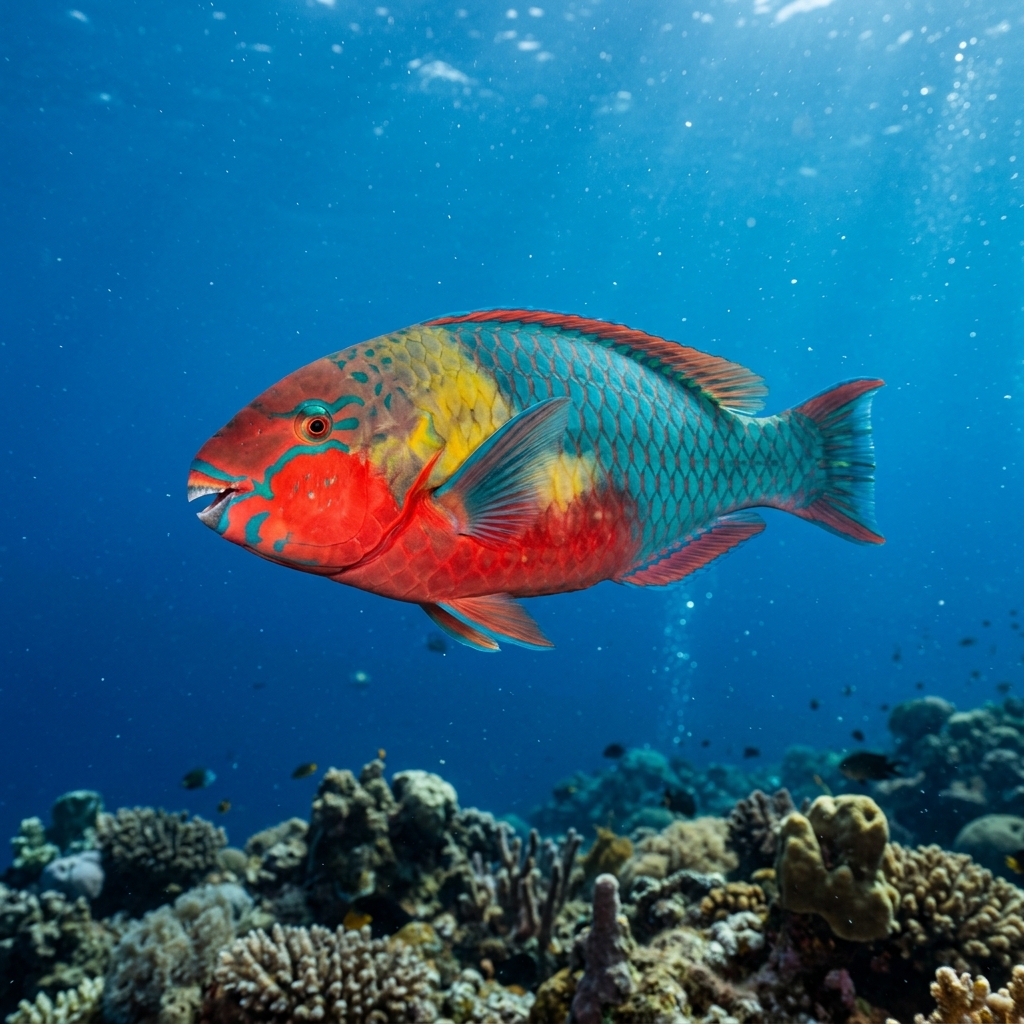
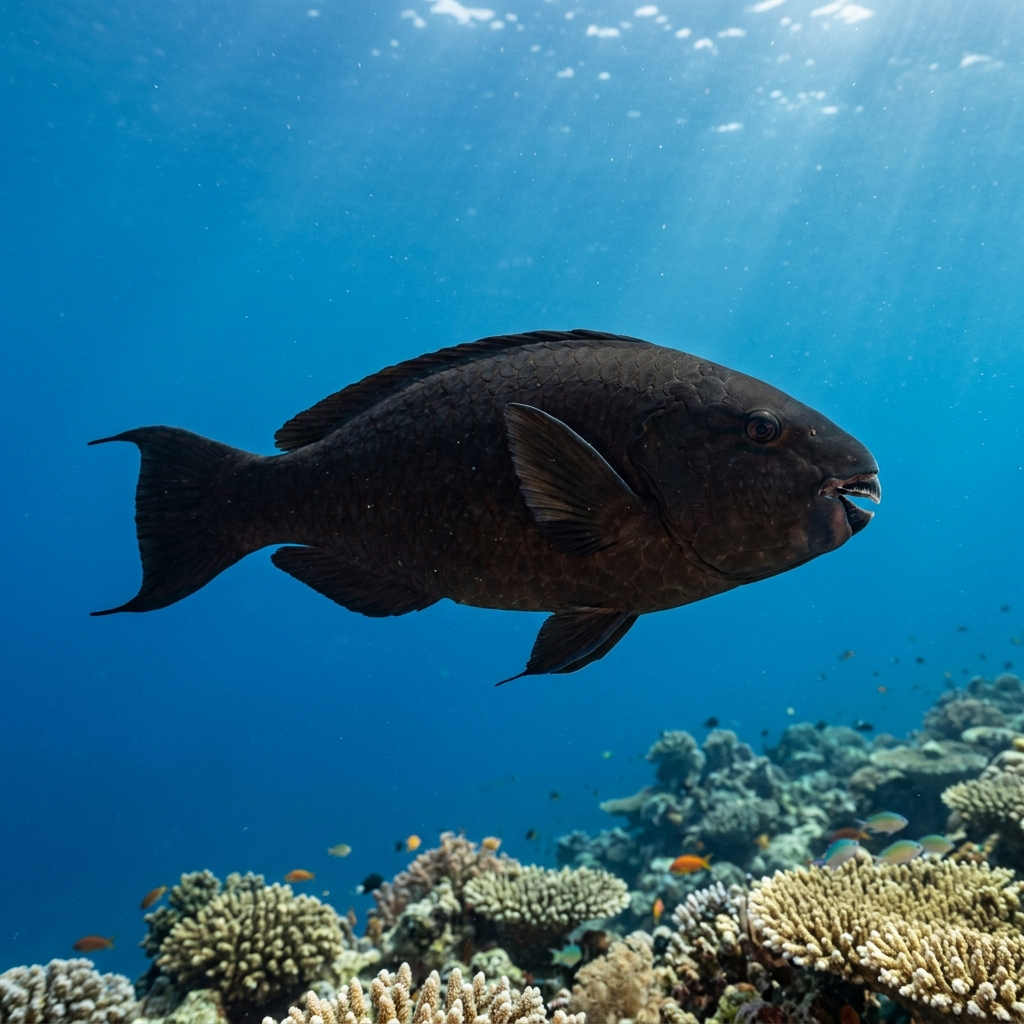
Reef neighbours a diver could mistake it for. Use the identification notes above to tell them apart.
Most reliably logged across Indonesia, especially Sulawesi and Raja Ampat, and the Philippines, with strong numbers in the Visayas and Palawan. Also a regular sighting in Palau around Koror and Malakal, and turns up on reefs in Australia's Queensland, Vanuatu, Fiji, Malaysia's Sabah, and Timor-Leste.
Mapping where Bleeker's Parrotfish is logged…
Best logged across Indonesia, particularly Sulawesi and Raja Ampat, and the Philippines' Visayas and Palawan regions. It's also a steady find in Palau, Queensland in Australia, Vanuatu, Fiji, and Sabah in Malaysia.
There's no strong seasonal pattern in sightings, so it's considered a year-round species on the tropical reefs it inhabits, comfortable in water from about 26 to 29C.
Look for a stocky, 30-plus cm fish grazing head-down on the reef, with a green-blue body edged in pink or orange and the fused beak-like teeth typical of parrotfish. It's usually found working the reef surface rather than swimming in open water.
They typically reach around 34 cm, a mid-sized reef parrotfish rather than one of the giants of the family.
Most divers log it as an uncommon sighting, though it turns up as a common or even very common fixture at some sites, so it's worth watching the reef surface rather than expecting it on every dive.
Site and sighting data is aggregated from diver logs, iNaturalist and GBIF. For taxonomy and conservation status:
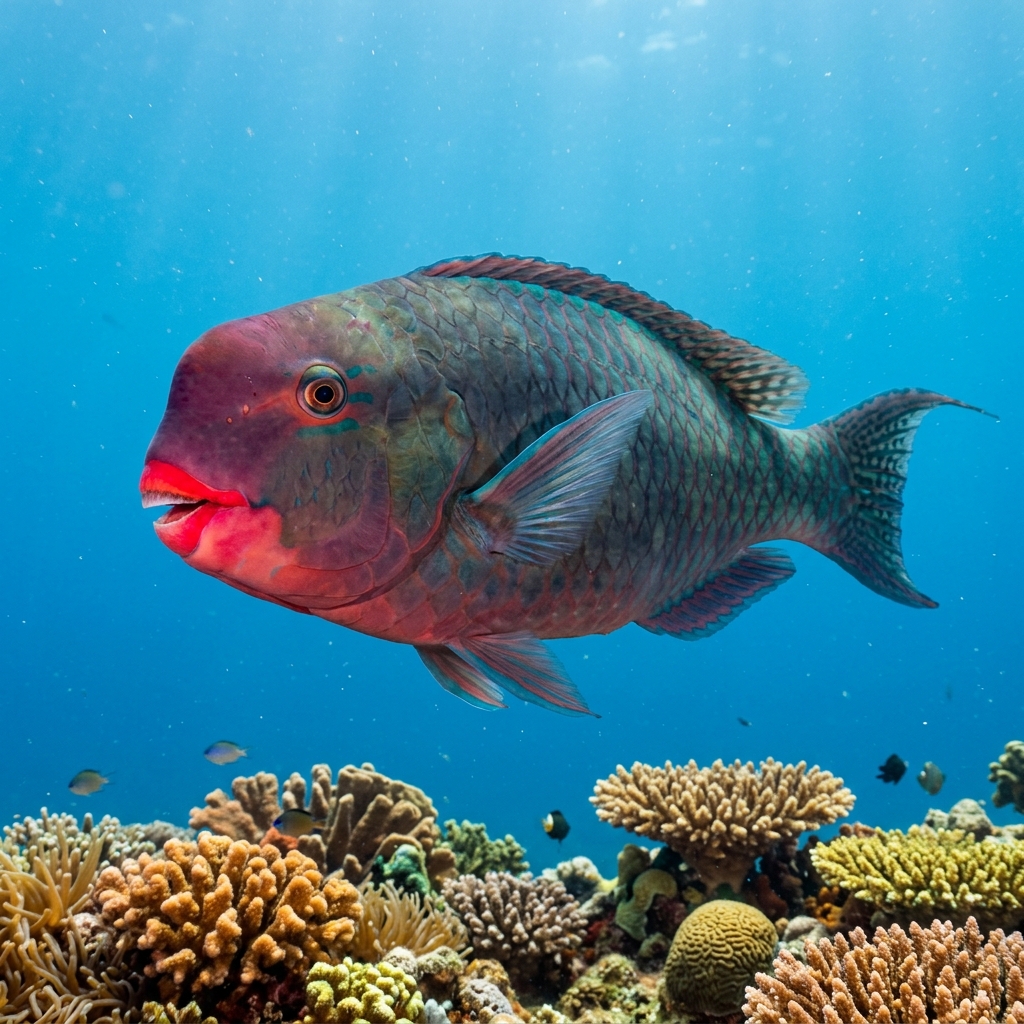
Redlip Parrotfish
2,789 sites