Fusigobius melacron
A tiny reef goby found across the Visayas and Raja Ampat, sitting still on sand and rubble in warm 25-29 C water year-round.
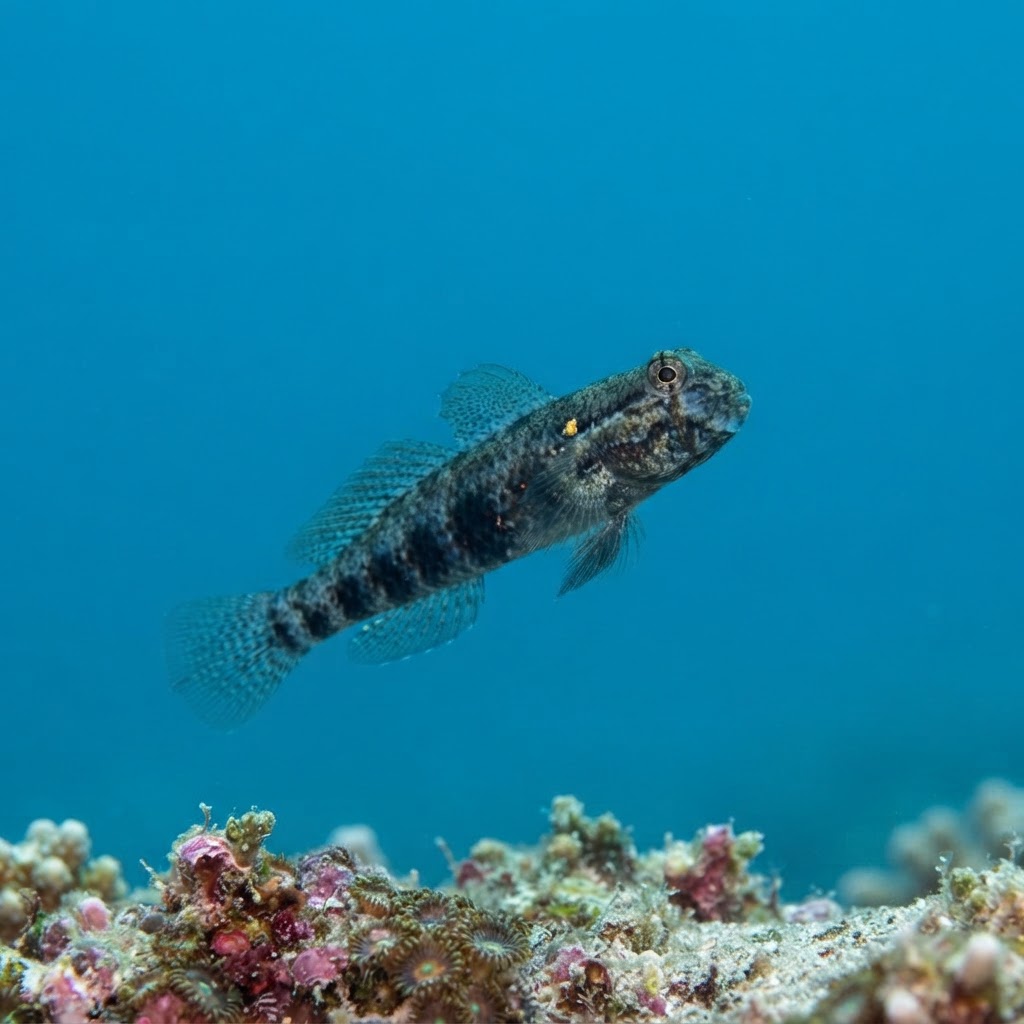
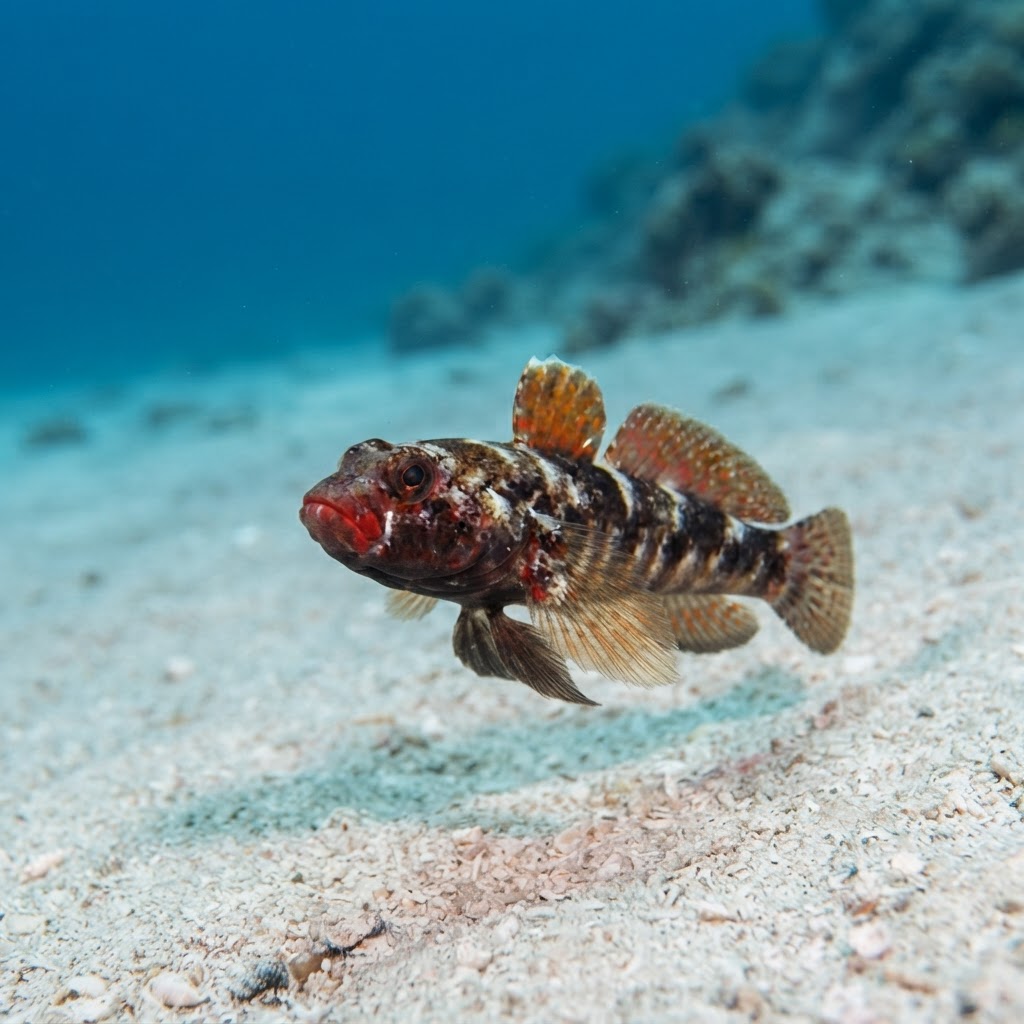
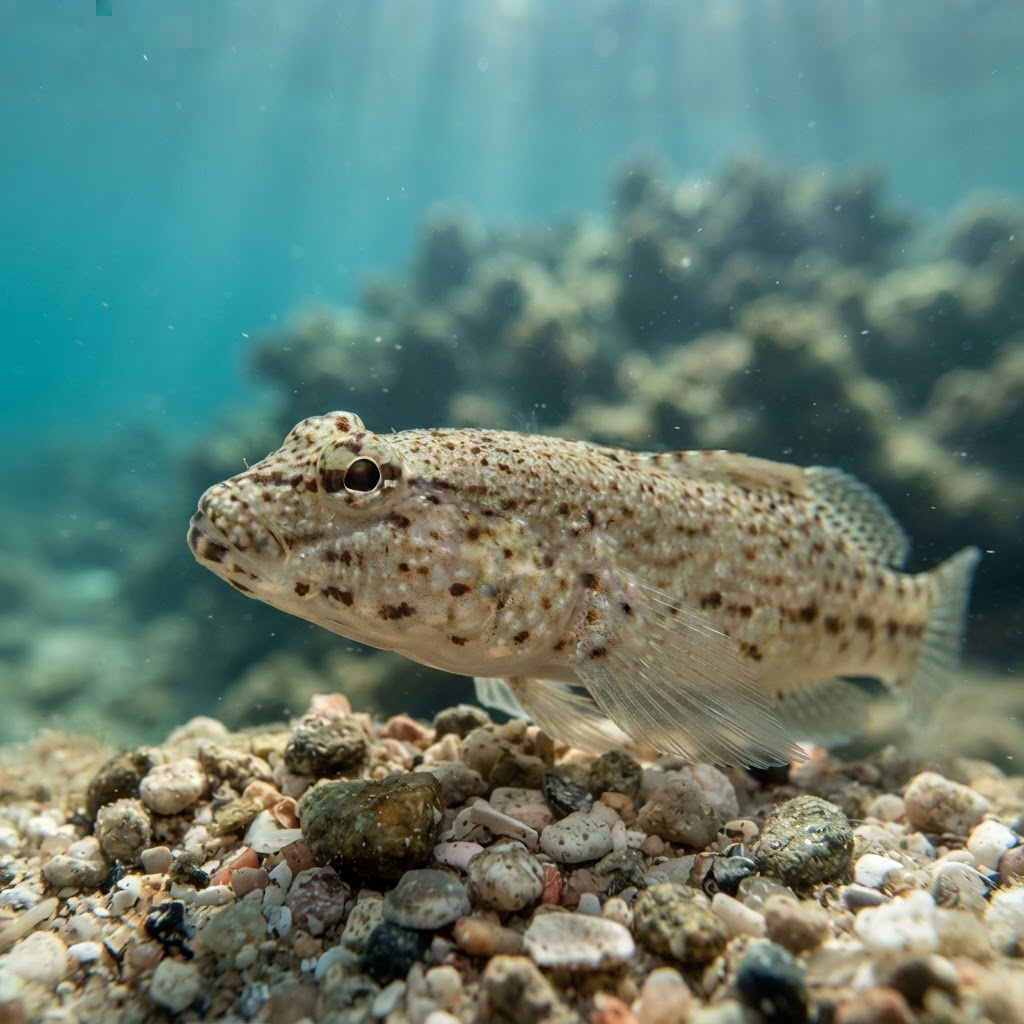
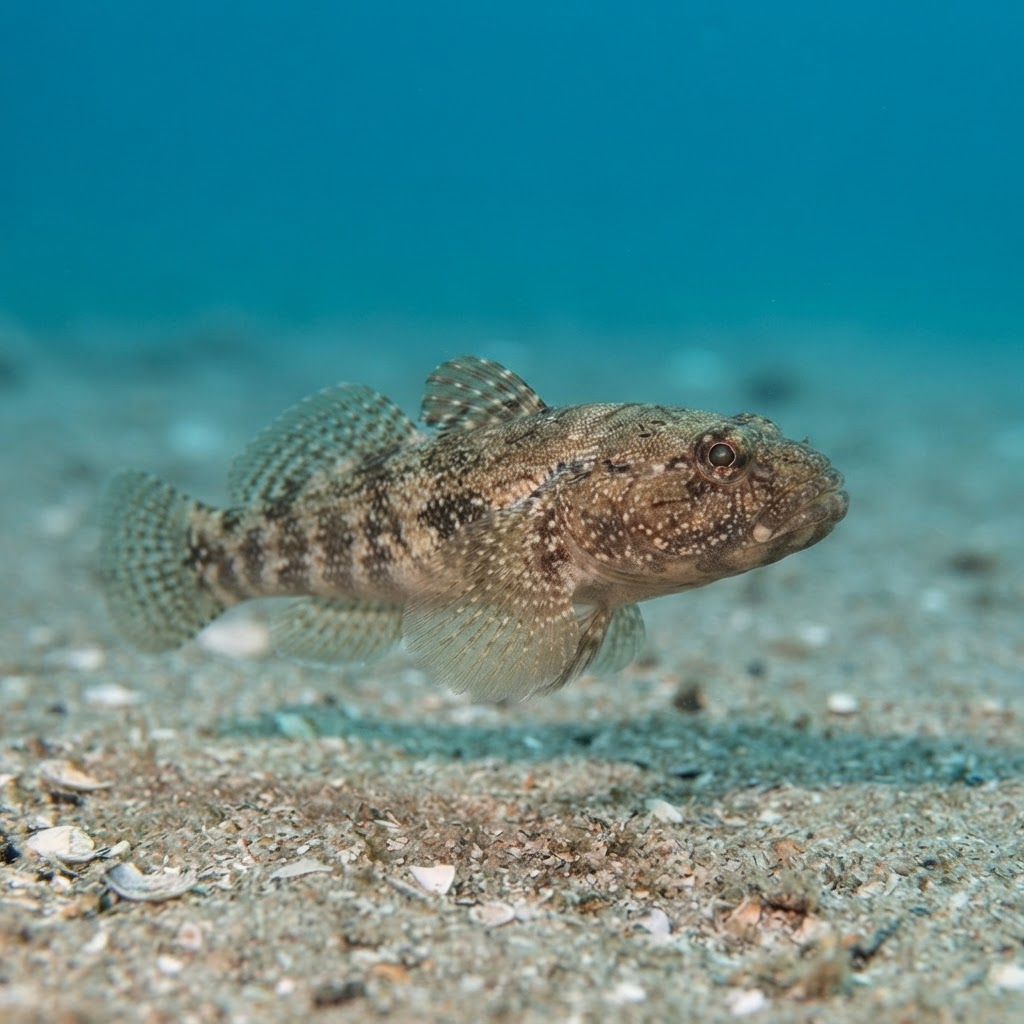
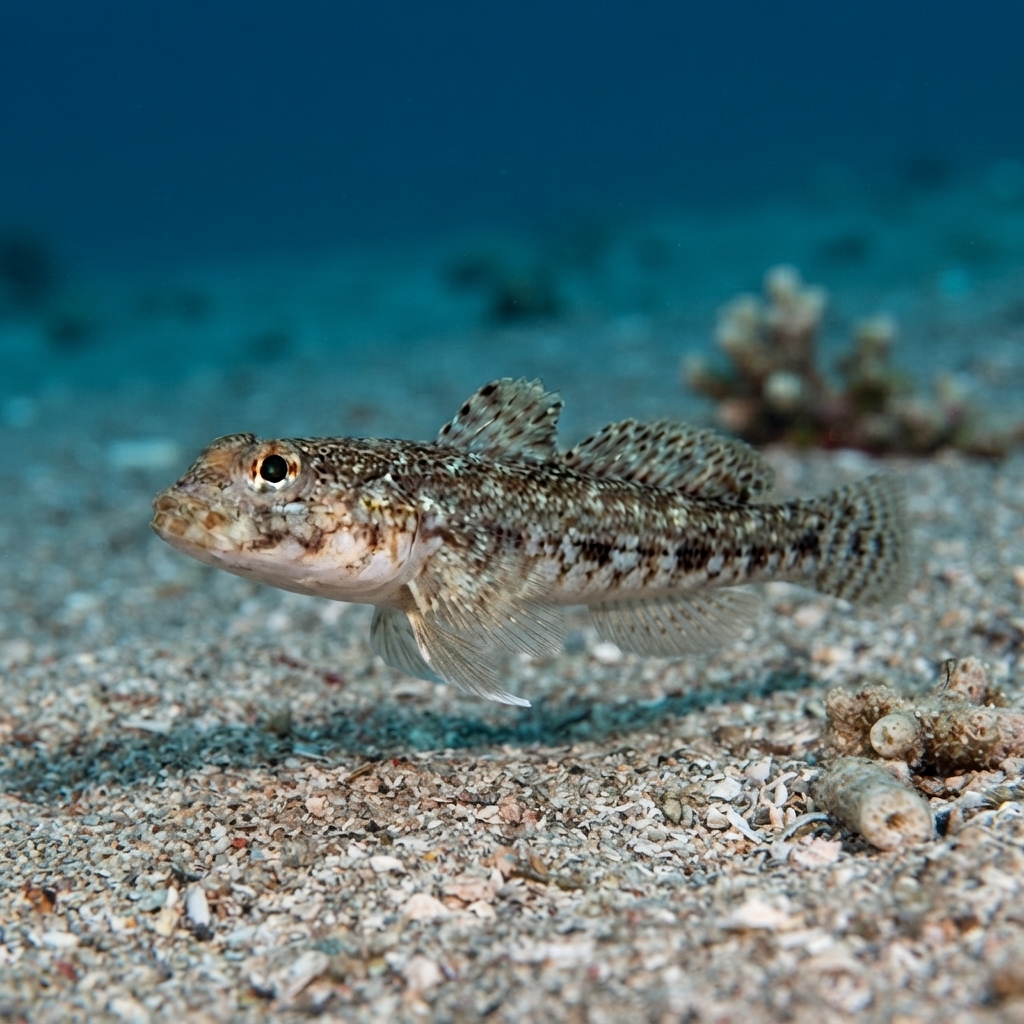
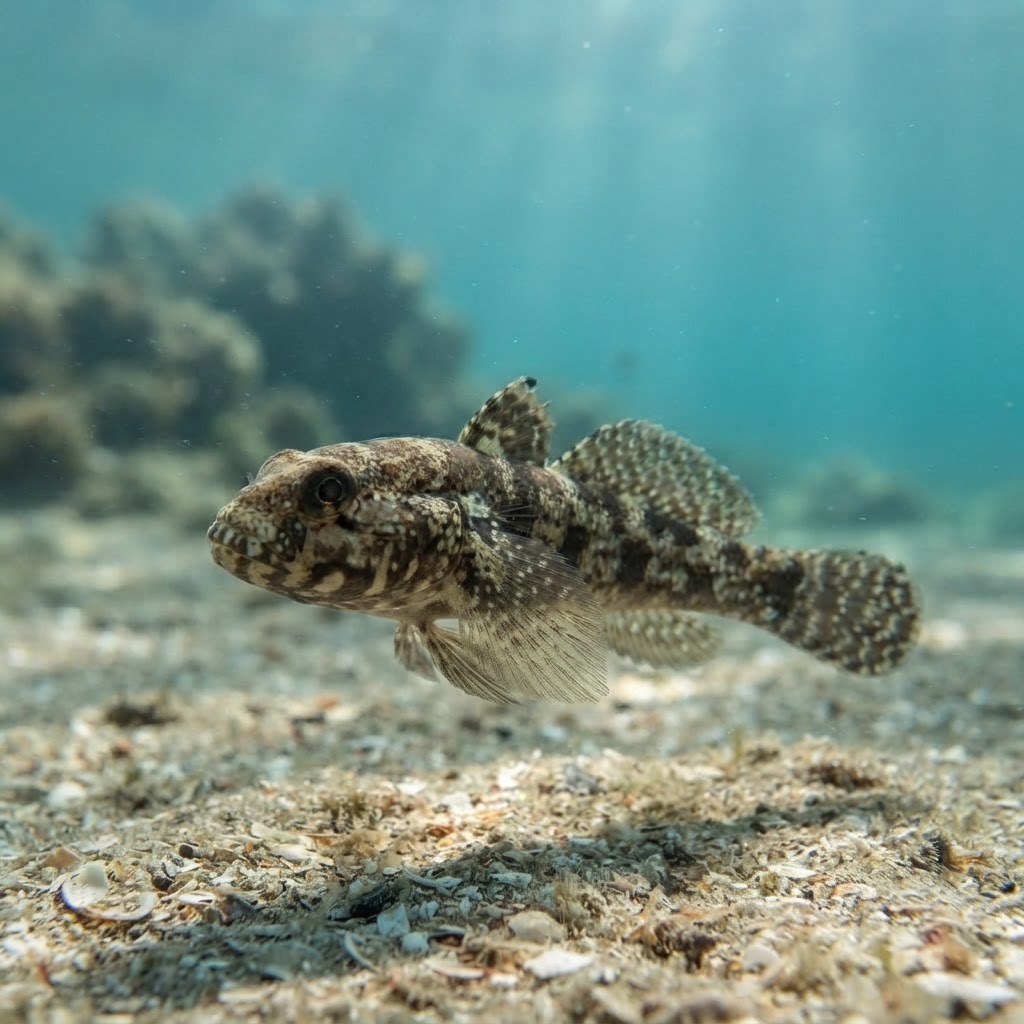
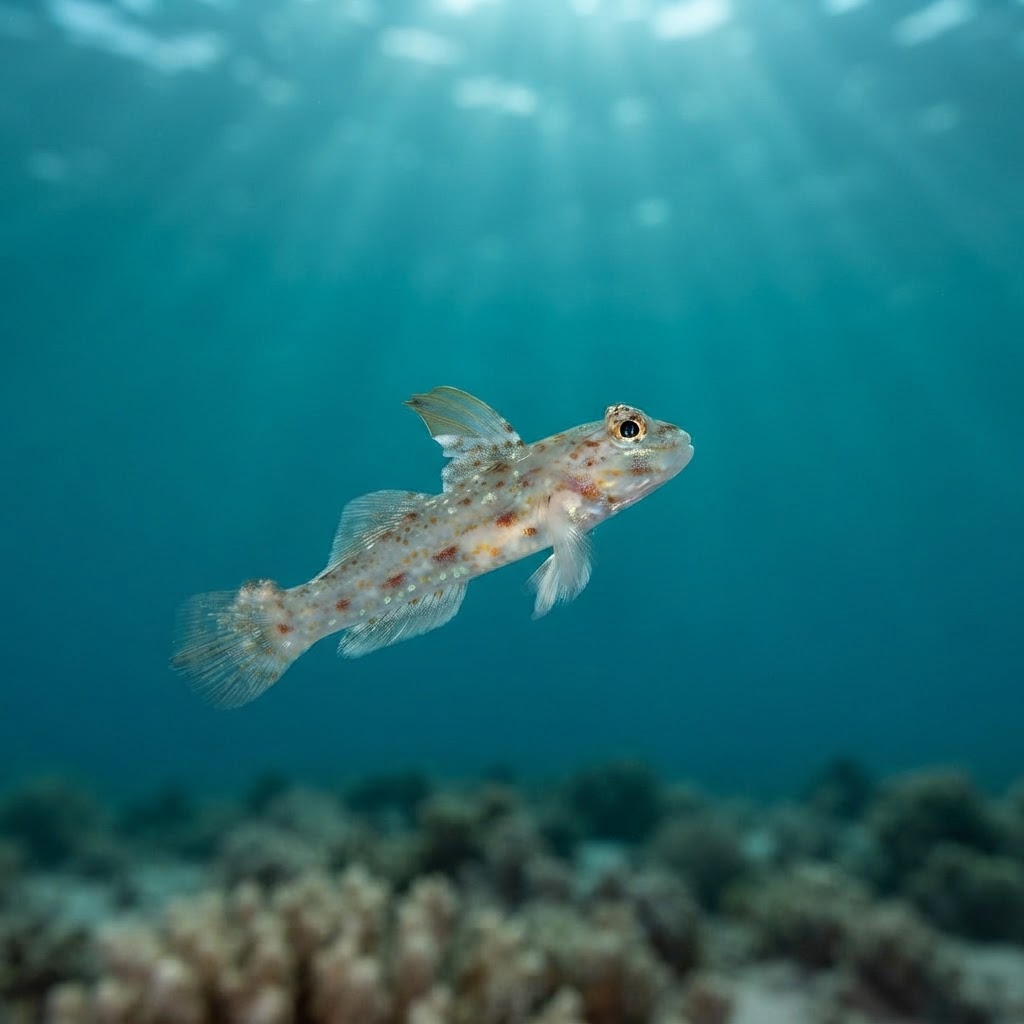
A tiny goby, rarely more than 3 cm, that perches propped on its pelvic fins rather than swimming freely. Look for a pale, sandy-grey body scattered with dark speckles and blotches, with a darker mark near the base of the tail that gives the tail-tip its dark cast. Body shape is classic goby: elongated, blunt-headed, with a slightly upturned face angled to watch the sand in front of it.
Spends most of its time resting propped on the sand or rubble, darting a short distance when approached rather than fleeing the area entirely. Divers usually spot it hovering just above its chosen patch, ready to dip back down at the first sign of a fin or torch beam. It is most often noticed by macro-focused divers scanning sand and rubble slopes rather than by anyone looking up at the reef.
Like most small gobies, it likely relies on a home patch of sand or rubble that it returns to repeatedly, which is why patient macro divers often relocate the same individual on a second pass over a site.
No clear seasonal pattern shows up in the data, and with a comfortable range of 24.9 to 29 C it is present on Philippine and Indonesian reefs all year round. Plan around good visibility and calm conditions rather than any particular month.
Reef neighbours a diver could mistake it for. Use the identification notes above to tell them apart.
Most reliably logged across the Visayas in the Philippines, with a further scattering of sightings in Raja Ampat and Sulawesi, Indonesia. It turns up on sand and rubble patches at reef edges and slopes rather than on open coral, so muck-diving and rubble-strewn house reef sites in these regions are your best bet.
Mapping where Blacktip Sandgoby is logged…
It is most commonly logged across the Visayas region of the Philippines, with additional sightings in Raja Ampat and Sulawesi in Indonesia. Look on sand and rubble patches near reef edges rather than on the coral itself.
There is no strong season in the sighting data, and it tolerates a wide warm-water range of roughly 25 to 29 C, so it is present on tropical reefs year-round.
Look for a tiny, sandy-grey goby around 3 cm long, propped on its fins on sand or rubble with dark speckling over its body and a darker mark near the tail base. It rests still rather than swimming in open water, which helps separate it from more active reef fish nearby.
They stay small, topping out at around 3 cm, so a torch and a slow, patient scan of sandy patches is the best way to find one.
No, they pose no danger to divers. They are small, sit still on the substrate, and simply dart a short distance away if approached too closely.
Site and sighting data is aggregated from diver logs, iNaturalist and GBIF. For taxonomy and conservation status:
Slender Goby
806 sites