Abudefduf lorenzi
Damselfish with a black rear half, most reliably logged around Sabah, Palau and Palawan in 26-29C water year-round.
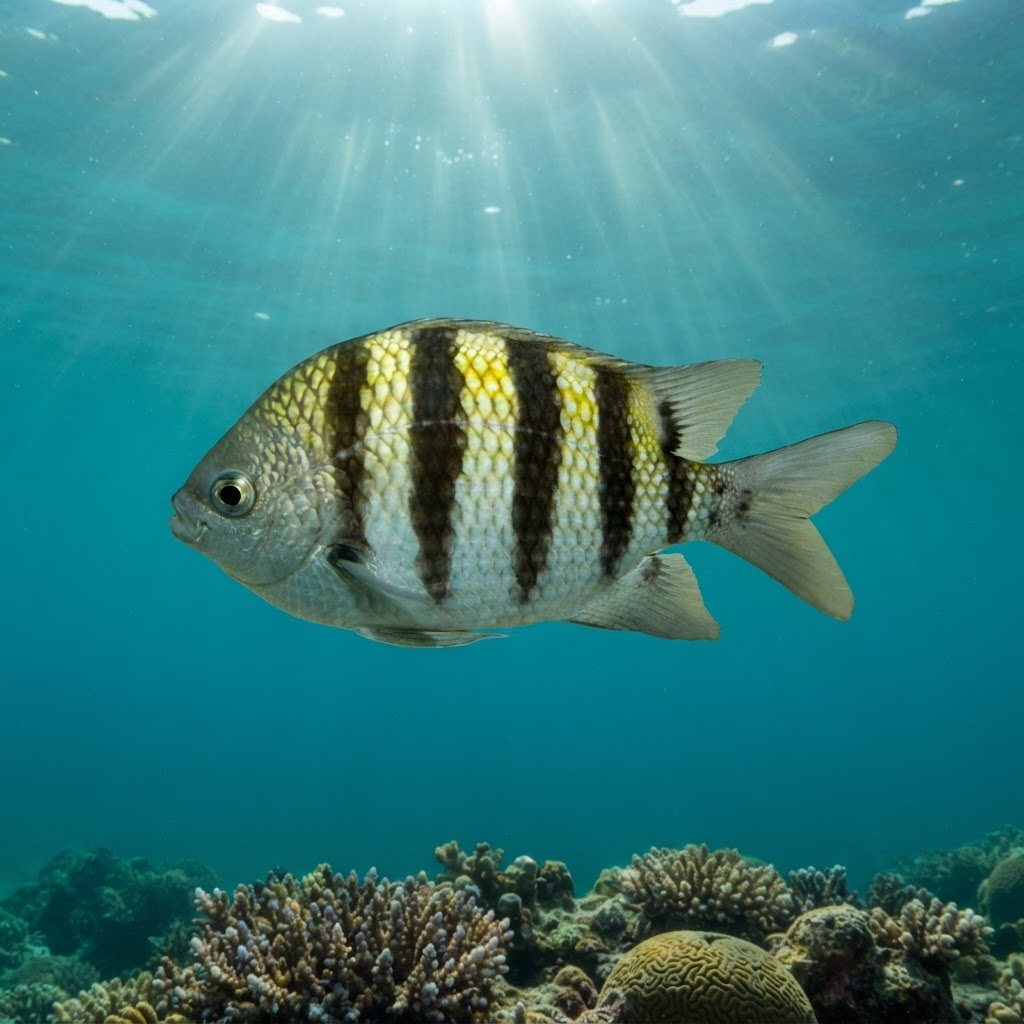
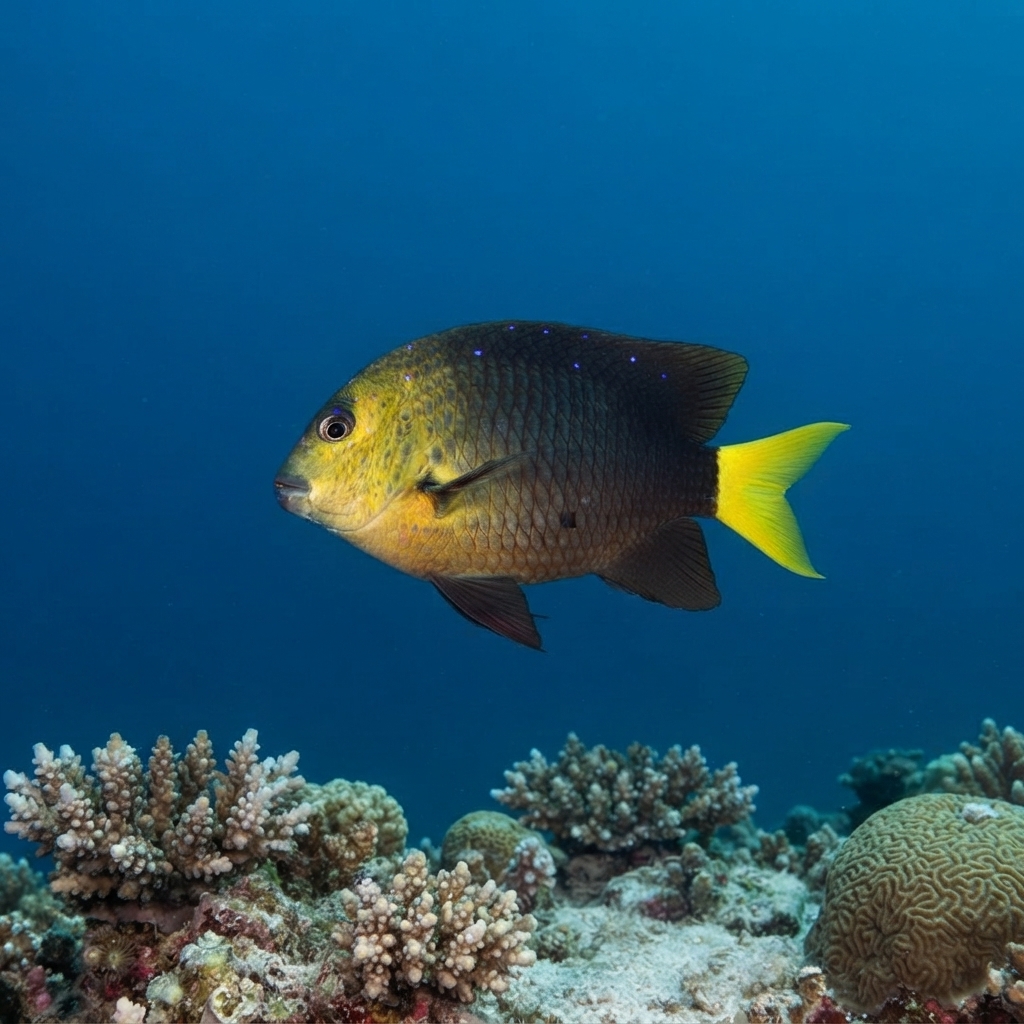
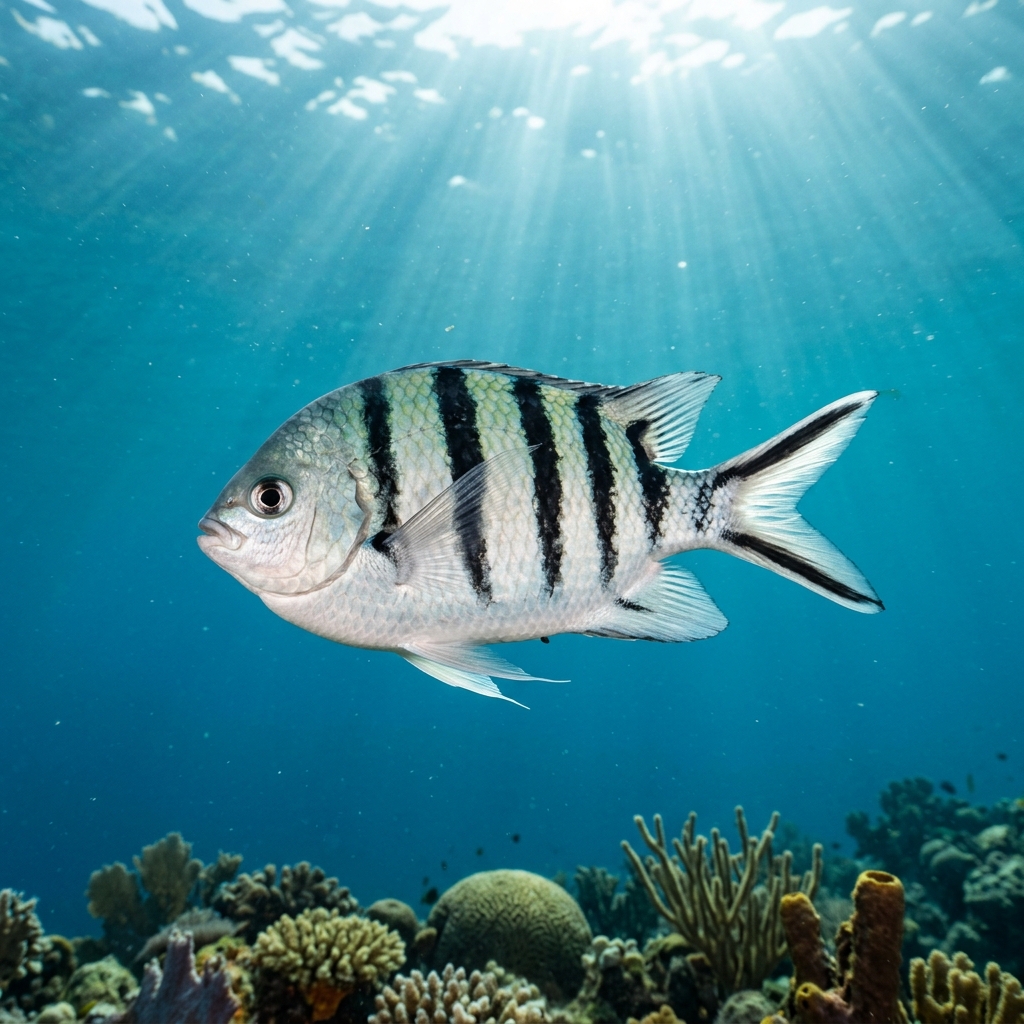
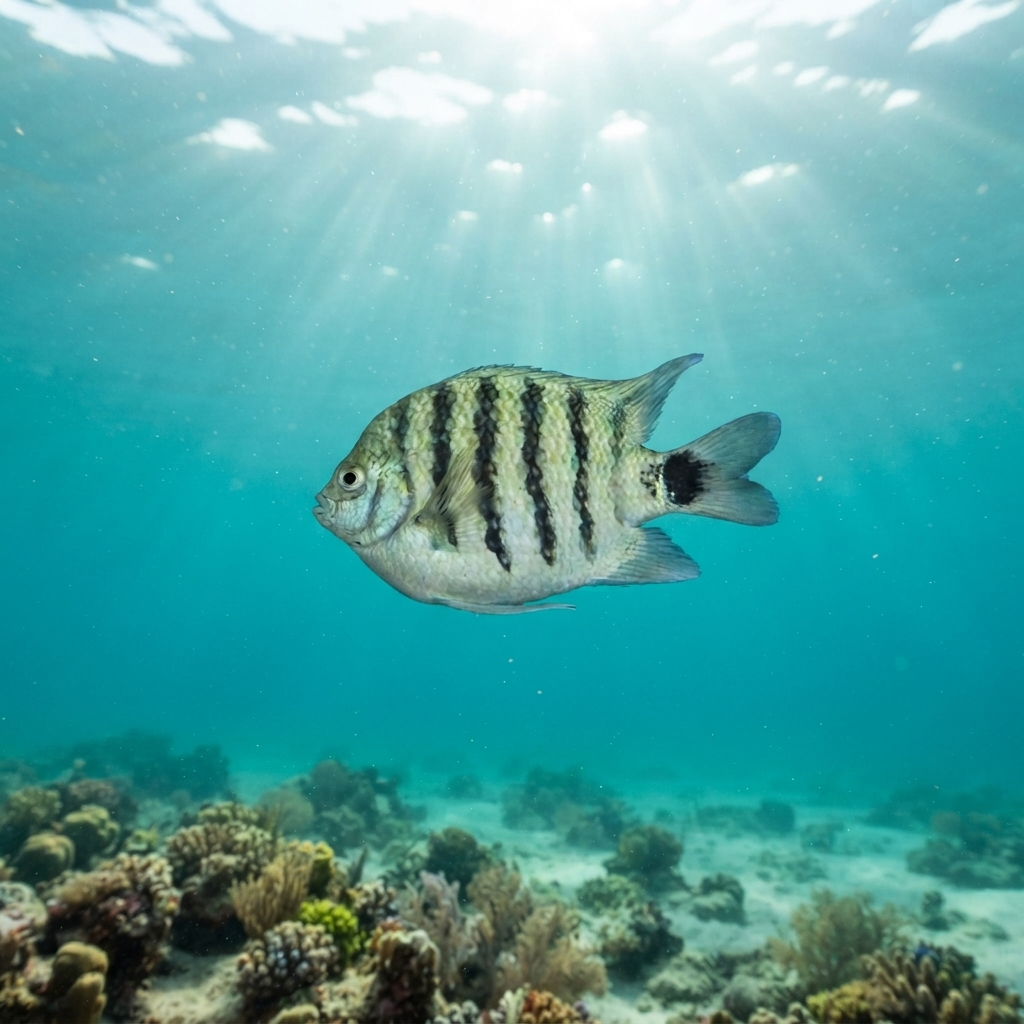
A stocky, oval damselfish around 13 cm with a body split roughly in two: pale silvery-white to yellowish up front and a solid blackish-grey rear half and tail, unlike the vertical bar pattern of most sergeants. A dark spot often sits at the base of the pectoral fin, and the split-colour effect is the single fastest cue at a glance. It swims in loose clusters over reef flats and rubble rather than hugging one coral head.
Usually seen in loose, mixed-size groups drifting over shallow reef flats, rubble patches and lagoon edges rather than picking a single territory. They pick at plankton and algae in the water column and along the substrate, and generally ignore passing divers, scattering only briefly if approached too fast. Commonly spotted on the same shallow sections where other damselfish and sergeants gather, especially in the upper few metres of the reef.
Like other Abudefduf sergeants, breeding males turn much darker and guard a patch of eggs laid on bare rock or dead coral, chasing off anything that comes near the nest.
No clear seasonal pattern shows up in the data, and with a comfortable range of 26 to 29.4C it is present on these reefs year-round. Plan around the destination's general dive season rather than a specific month for this fish.
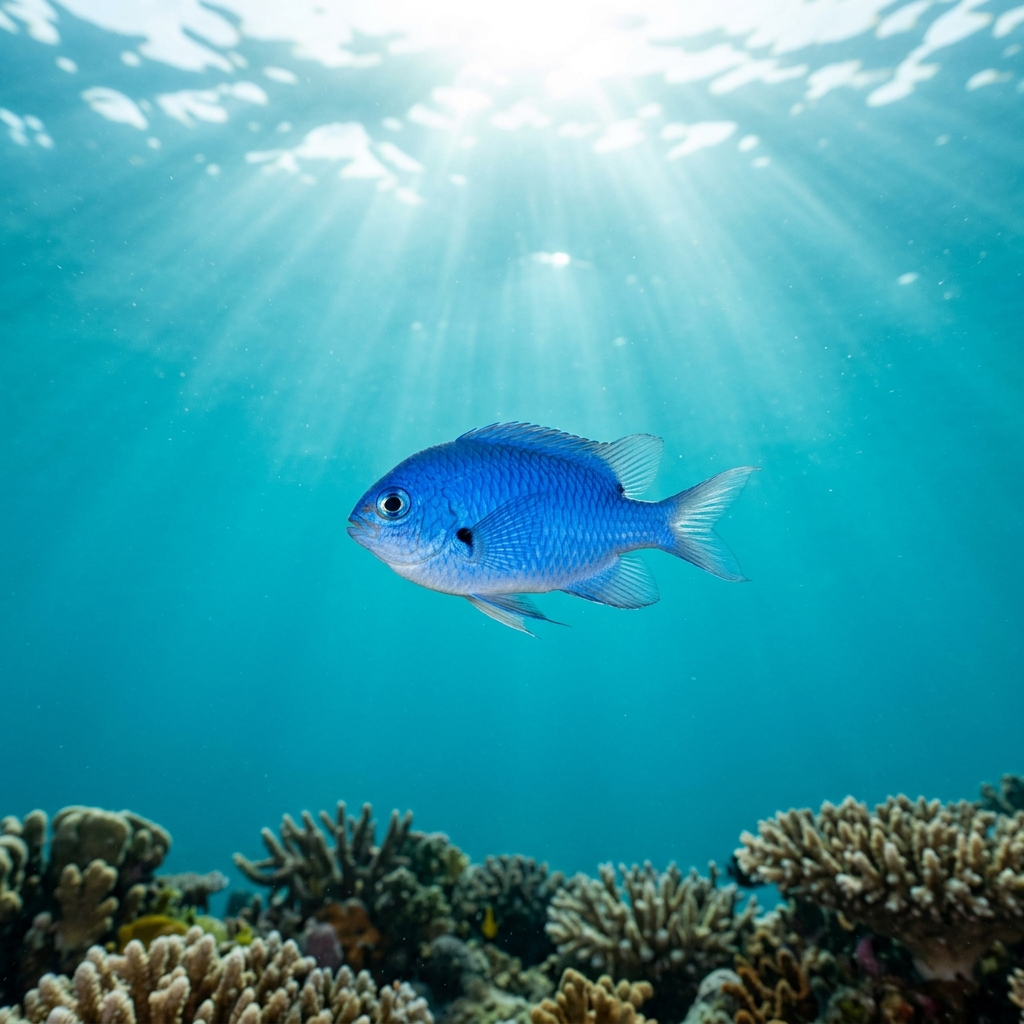
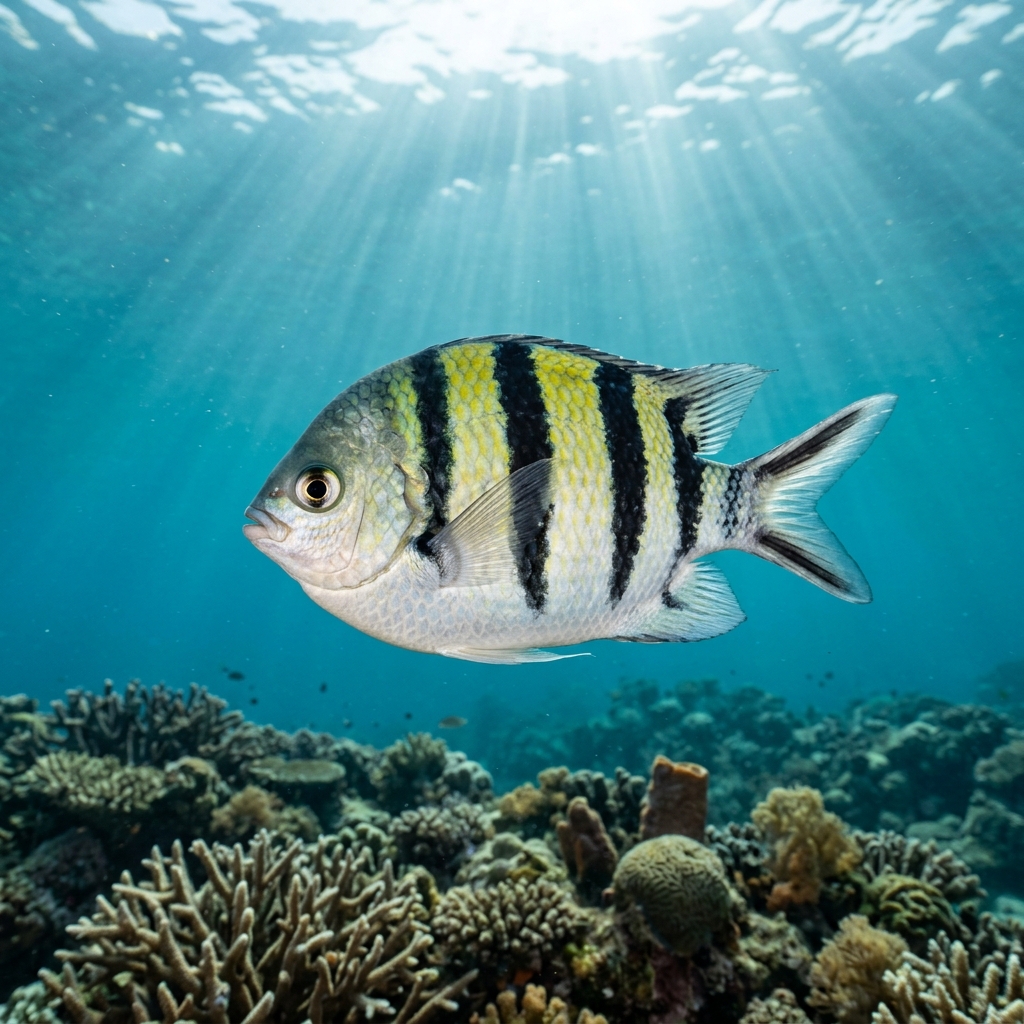
Reef neighbours a diver could mistake it for. Use the identification notes above to tell them apart.
Most consistently logged around Sabah in Malaysia, with strong numbers also out of Koror & Malakal in Palau and across Palawan in the Philippines. Smaller numbers turn up in the Visayas, in Raja Ampat and Bali in Indonesia, so Sabah and Palau are the surest bets for a dedicated sighting.
Mapping where Blacktail Sergeant is logged…
Sabah in Malaysia is the strongest region for sightings, followed by Koror & Malakal in Palau and Palawan in the Philippines. Smaller numbers are logged in the Visayas, Raja Ampat and Bali.
There's no strong seasonal pattern in the sightings, and the water temperature range it's found in (26 to 29.4C) holds year-round on these reefs, so it can turn up on any dive trip to Sabah, Palau or Palawan.
Look for a roughly 13 cm damselfish with a pale front half and a solid dark grey to black rear half and tail, swimming in loose groups over shallow reef flats and rubble. That two-tone split, rather than vertical stripes, is what separates it from other sergeants.
They reach around 13 cm, a typical size for damselfish in the Abudefduf group, and are usually seen at or near that adult size in loose reef-flat groups.
No. They're a small, harmless reef damselfish that generally ignores divers and poses no risk beyond the usual reef-etiquette of not touching or crowding any fish guarding eggs.
Site and sighting data is aggregated from diver logs, iNaturalist and GBIF. For taxonomy and conservation status:
Dascyllus
3,697 sites