Cephalopholis nigripinnis
Small maroon grouper tucked into reef crevices across the Maldives' Central Atolls, in warm 26-29C water year-round.
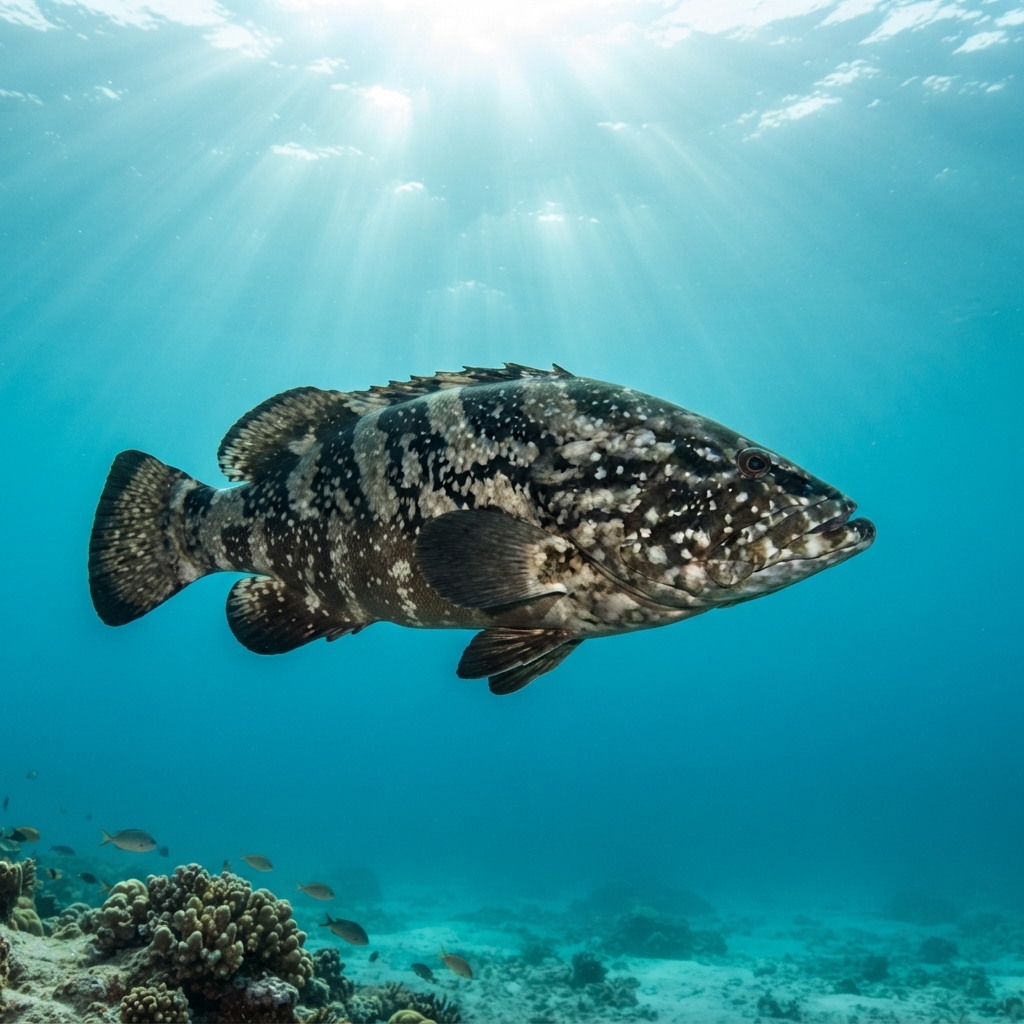
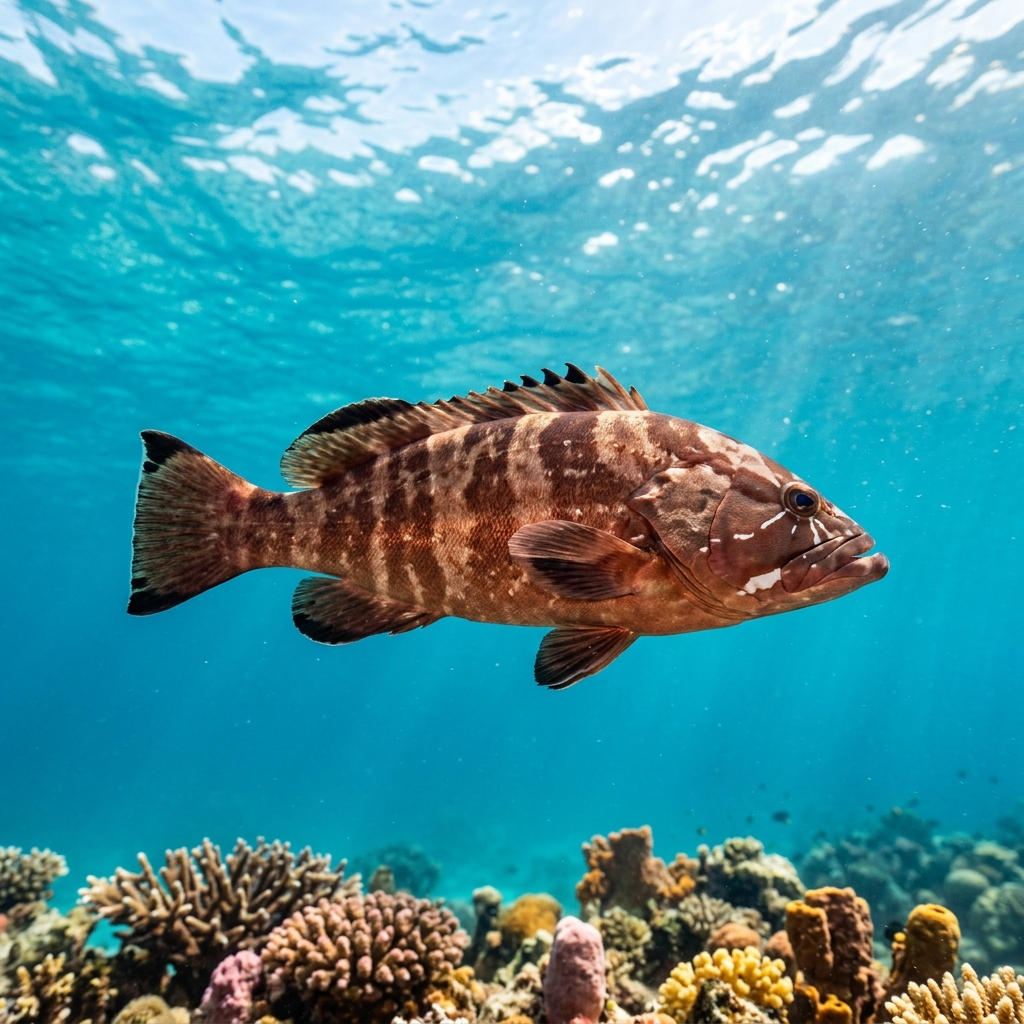
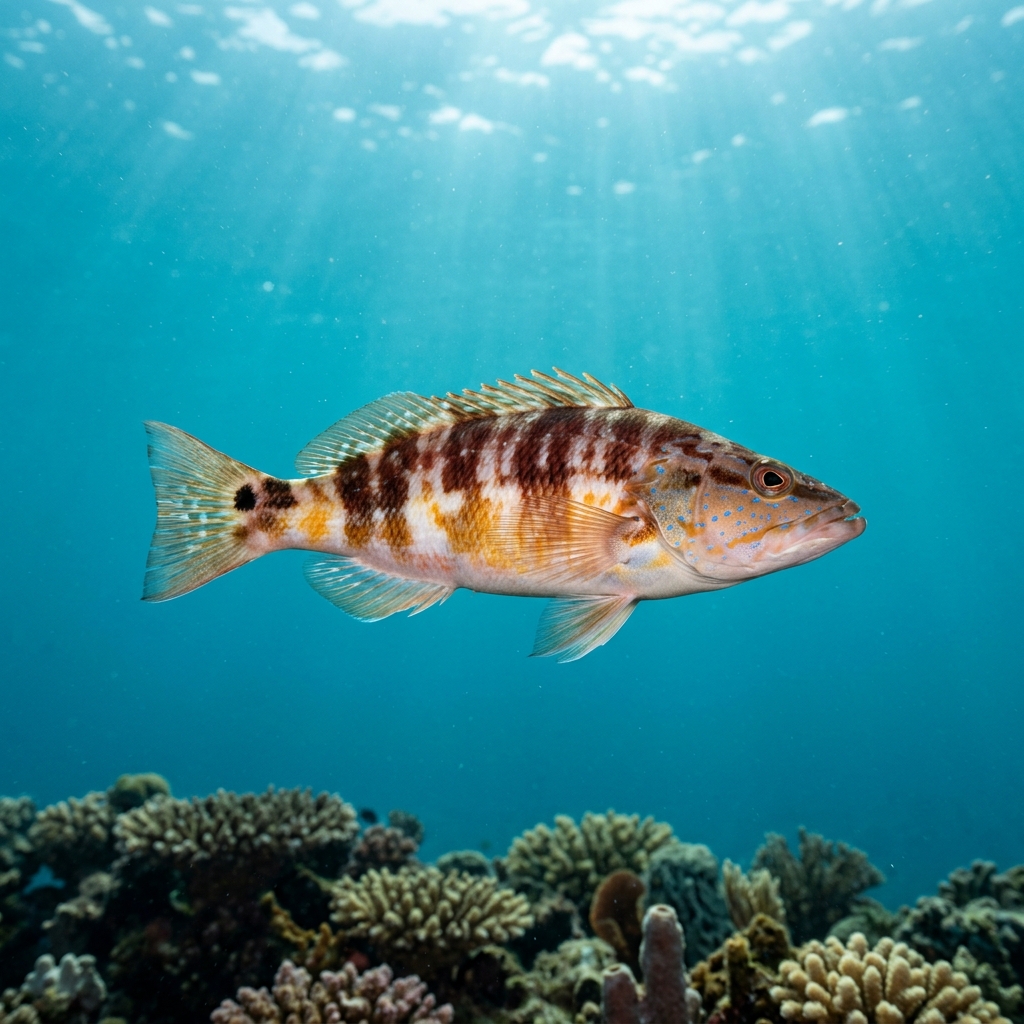
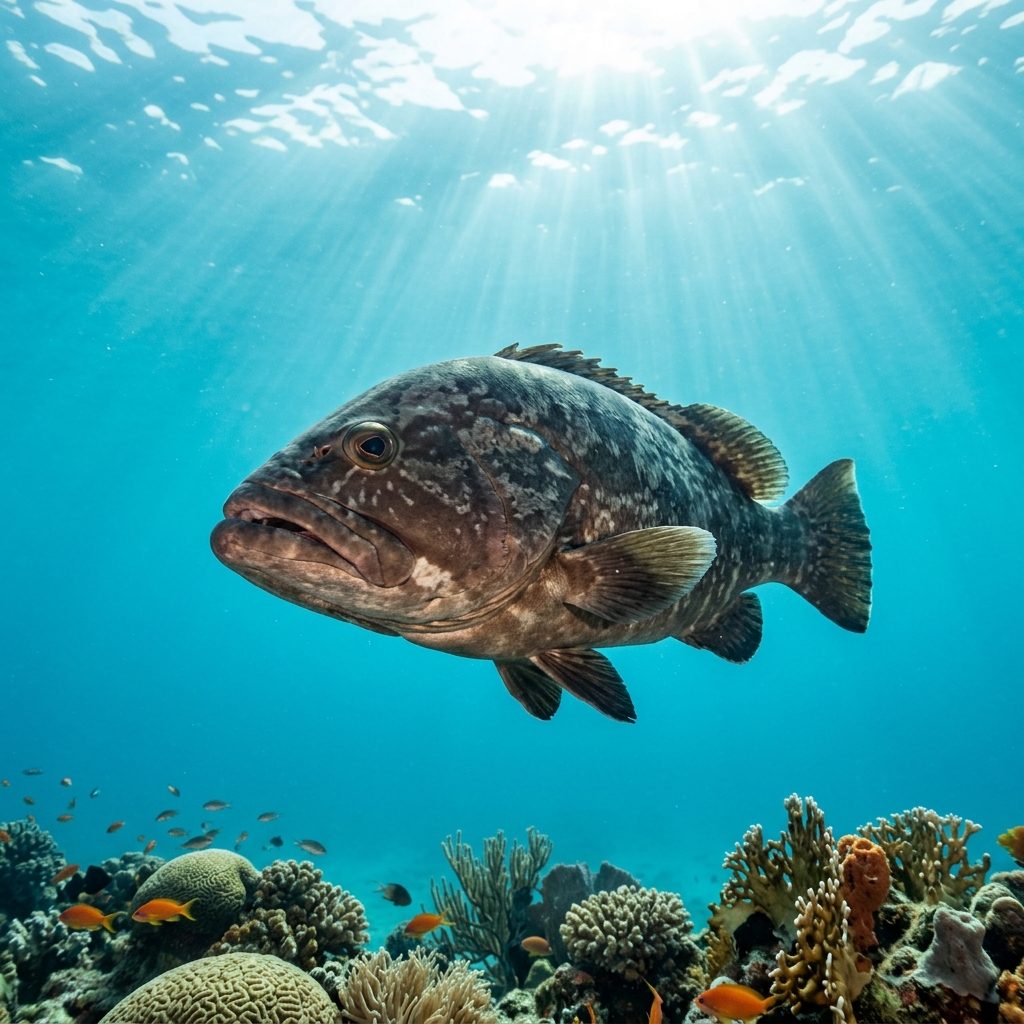
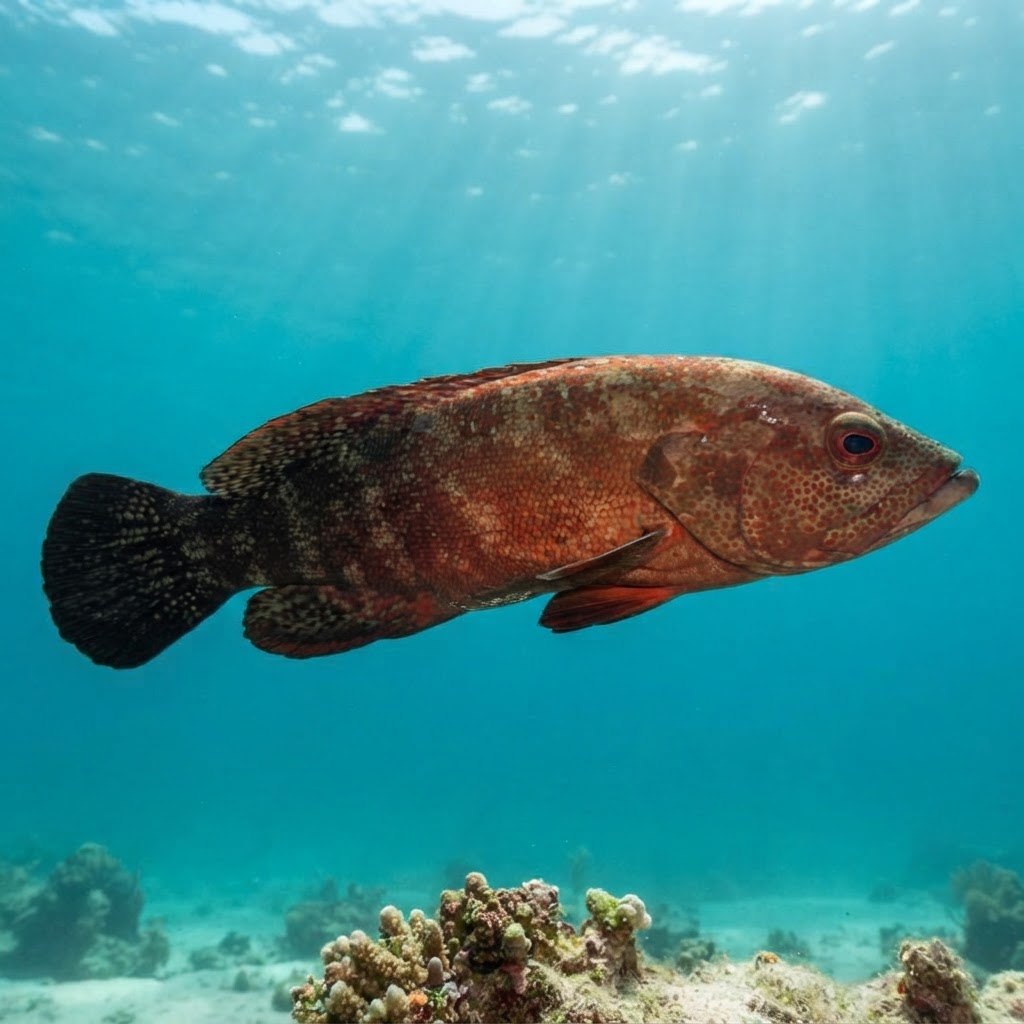
A small, chunky grouper that tops out around 20cm, easy to overlook against a reef wall. Body colour ranges from deep maroon to blackish-brown, often with faint darker mottling, and the fins carry a noticeably darker, almost black wash that gives the species its name. It has the classic grouper build, thick-set with a broad head and large mouth, but at a fraction of the size of its reef-dwelling cousins.
Divers most often spot it holding a fixed position tucked into a crevice, ledge, or small cave mouth rather than out cruising the open reef. It tends to sit still and let divers pass rather than bolt, which makes for an easy, unhurried look if you slow down and check the shadowed spots on a wall or coral head. Most sightings are logged as uncommon at a given site, so it rewards divers who deliberately peer into reef nooks rather than just scan open water.
Like many groupers in the genus Cephalopholis, it is a protogynous hermaphrodite, meaning individuals start life as females and some later change sex to male as they grow.
No clear seasonal pattern shows up in the sightings, and its comfortable range of 26.1 to 29.2C matches the water temperature on Indian Ocean reefs all year, so any month works for a dive trip aimed at this species.
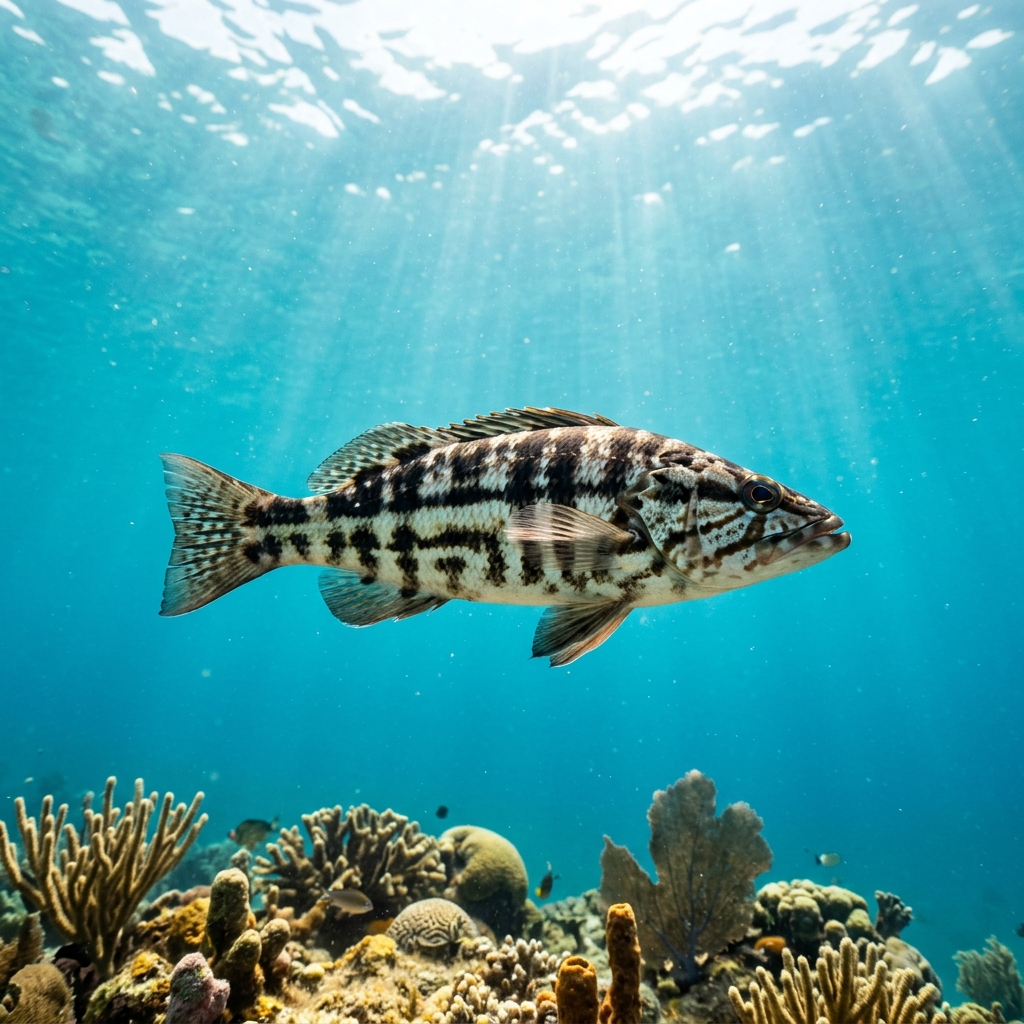
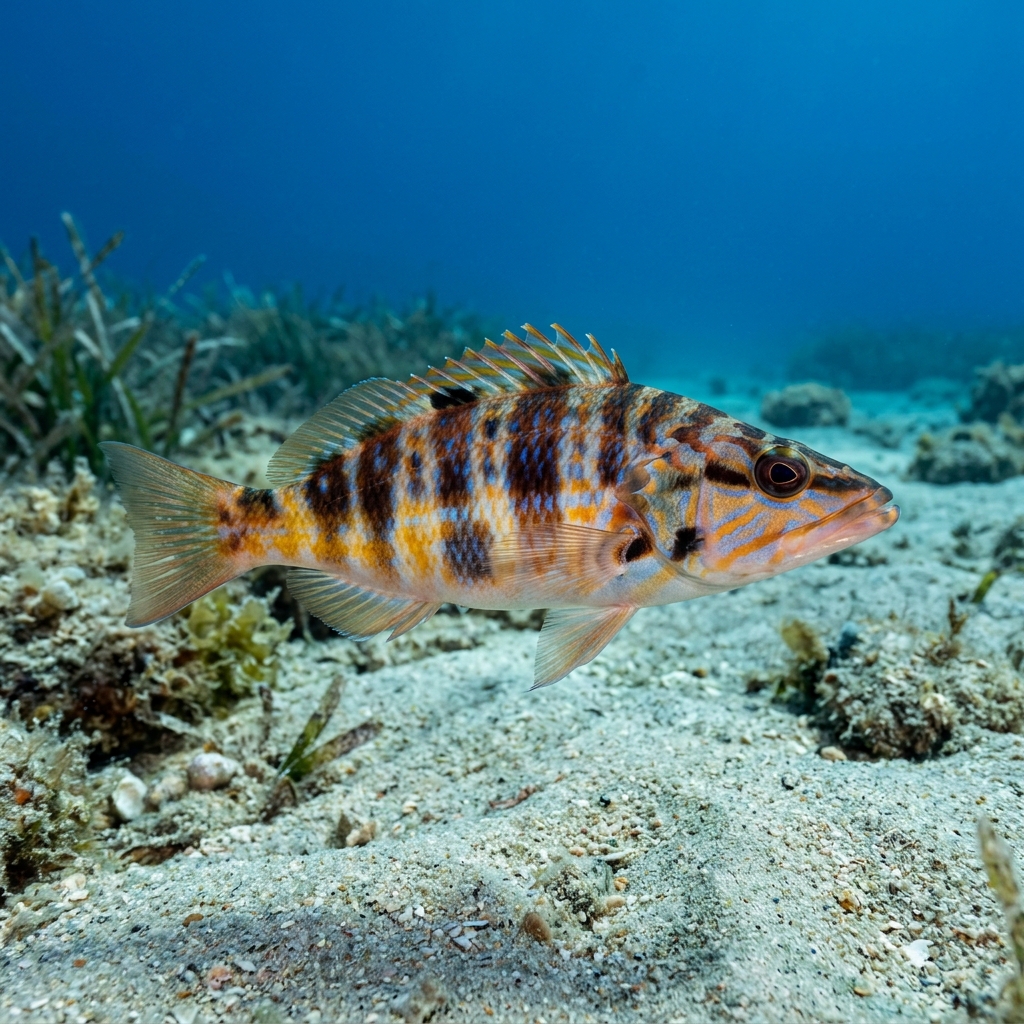
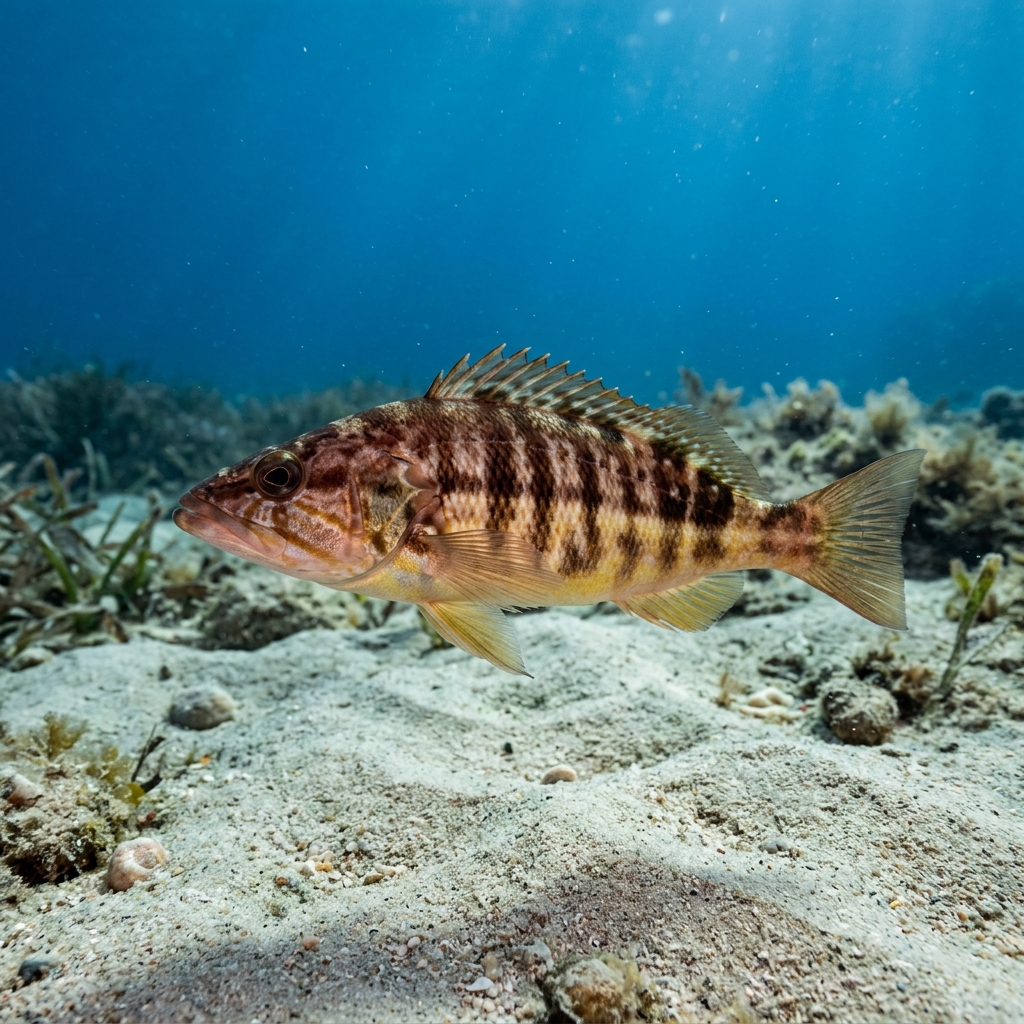
Reef neighbours a diver could mistake it for. Use the identification notes above to tell them apart.
This is very much a Maldives fish first: it turns up across the Central Atolls more than anywhere else logged, making it the most reliable place to find one. Outside the Maldives, it has a smaller but steady presence in the Inner Islands of Seychelles and around Coin de Mire and Grand Baie in Mauritius, with a single logged sighting in Bali, Indonesia.
Mapping where Blackfin Grouper is logged…
The Central Atolls of the Maldives are by far the most reliable spot, with additional sightings in the Inner Islands of Seychelles and around Coin de Mire and Grand Baie in Mauritius.
There is no detected season for this species, and it sits comfortably in 26 to 29C water year-round, so it can be seen on any month's dive trip to its core range.
Look for a small grouper, only around 20cm, with a maroon to blackish-brown body and darker, almost black fins. It is usually found tucked into a crevice or ledge rather than swimming in open water.
They stay small for a grouper, typically reaching about 20cm in length, which helps separate them from the much larger grouper species divers often confuse them with.
No, they pose no threat to divers. They are small, reef-dwelling fish that tend to hold still in crevices rather than react defensively to divers nearby.
Site and sighting data is aggregated from diver logs, iNaturalist and GBIF. For taxonomy and conservation status:
Blacktip Grouper
2,726 sites