Dischistodus melanotus
Common on reefs across Queensland, the Visayas and East Coast Malaysia, this stocky little damselfish turns up in the shallows at nearly every reef stop.
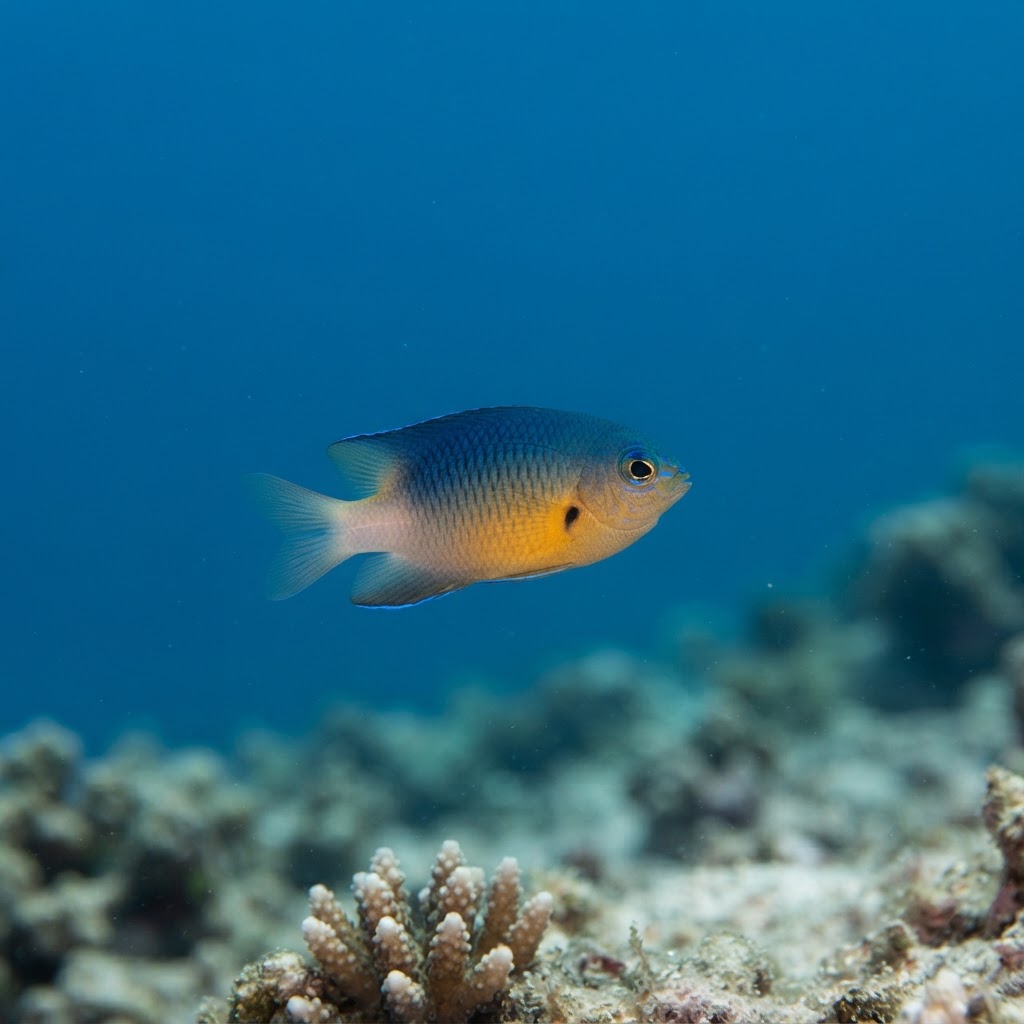
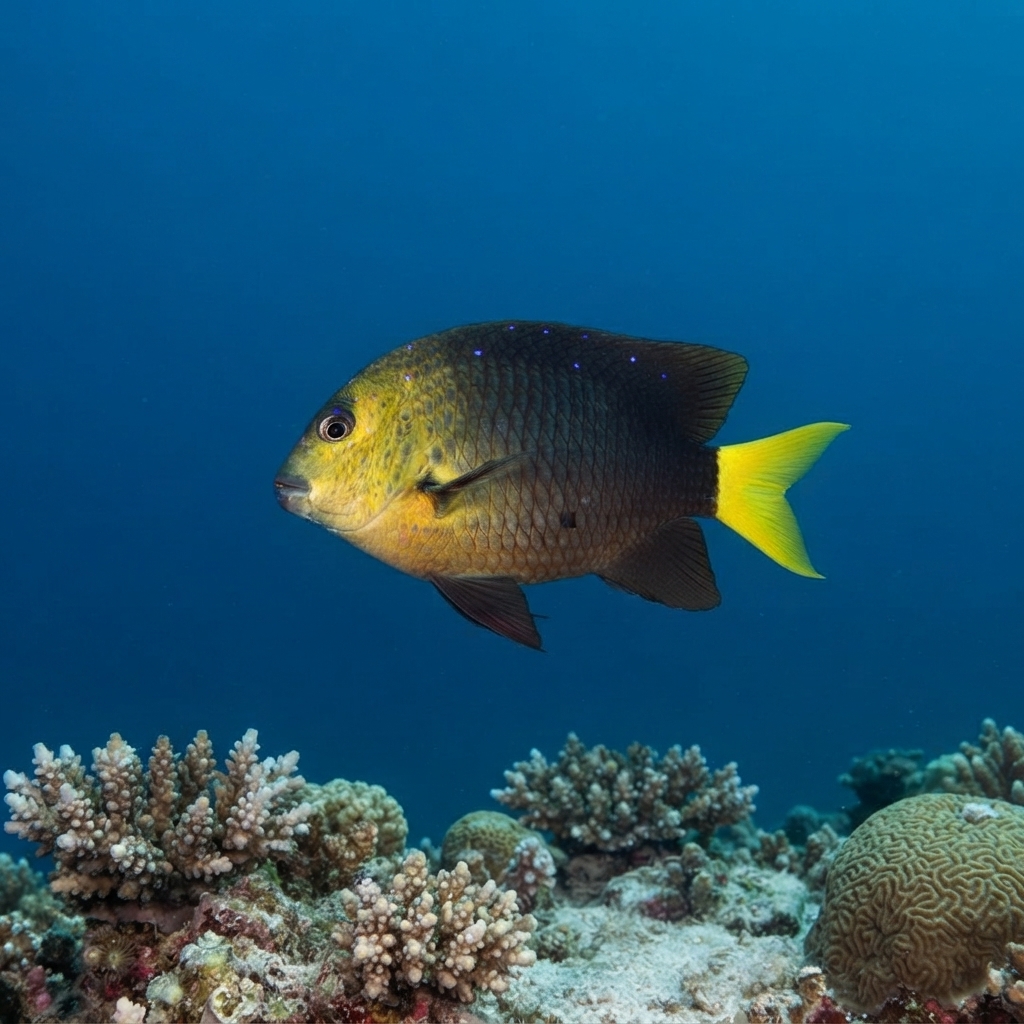
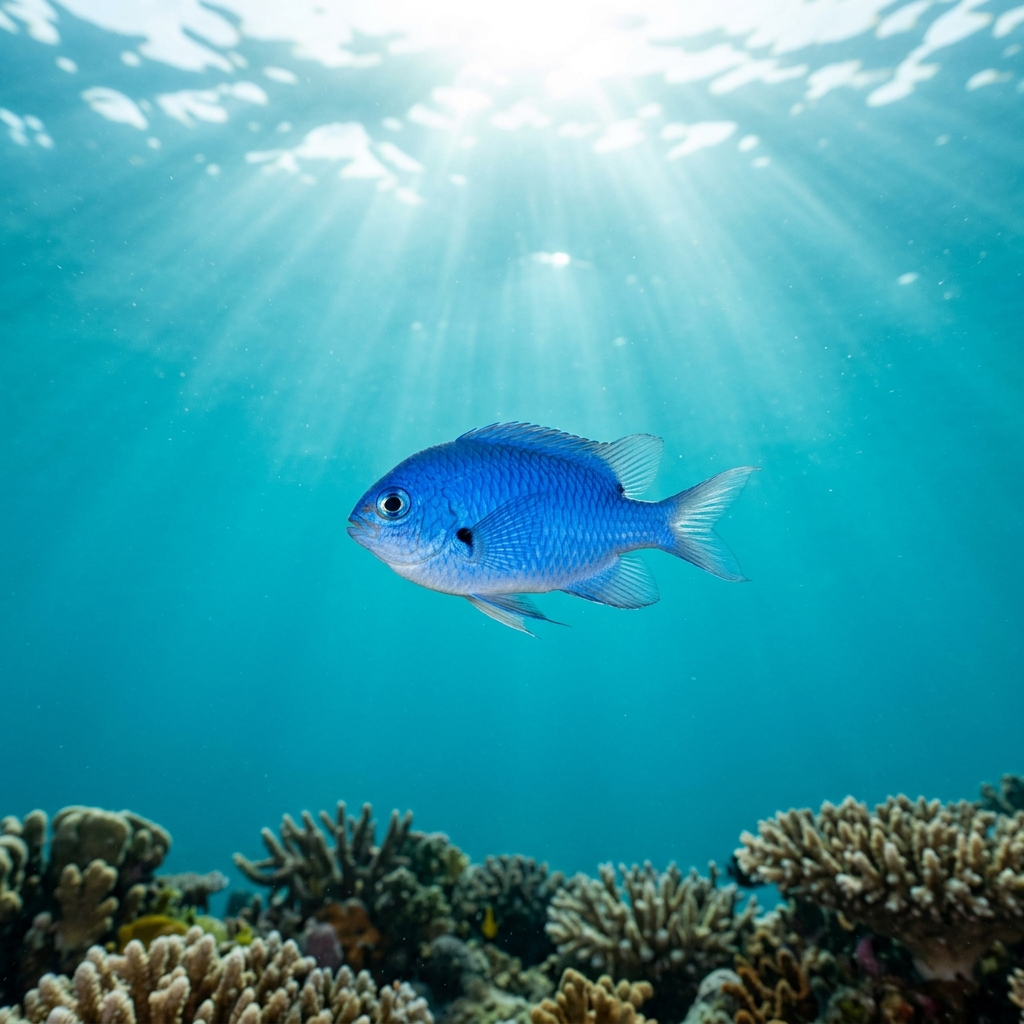
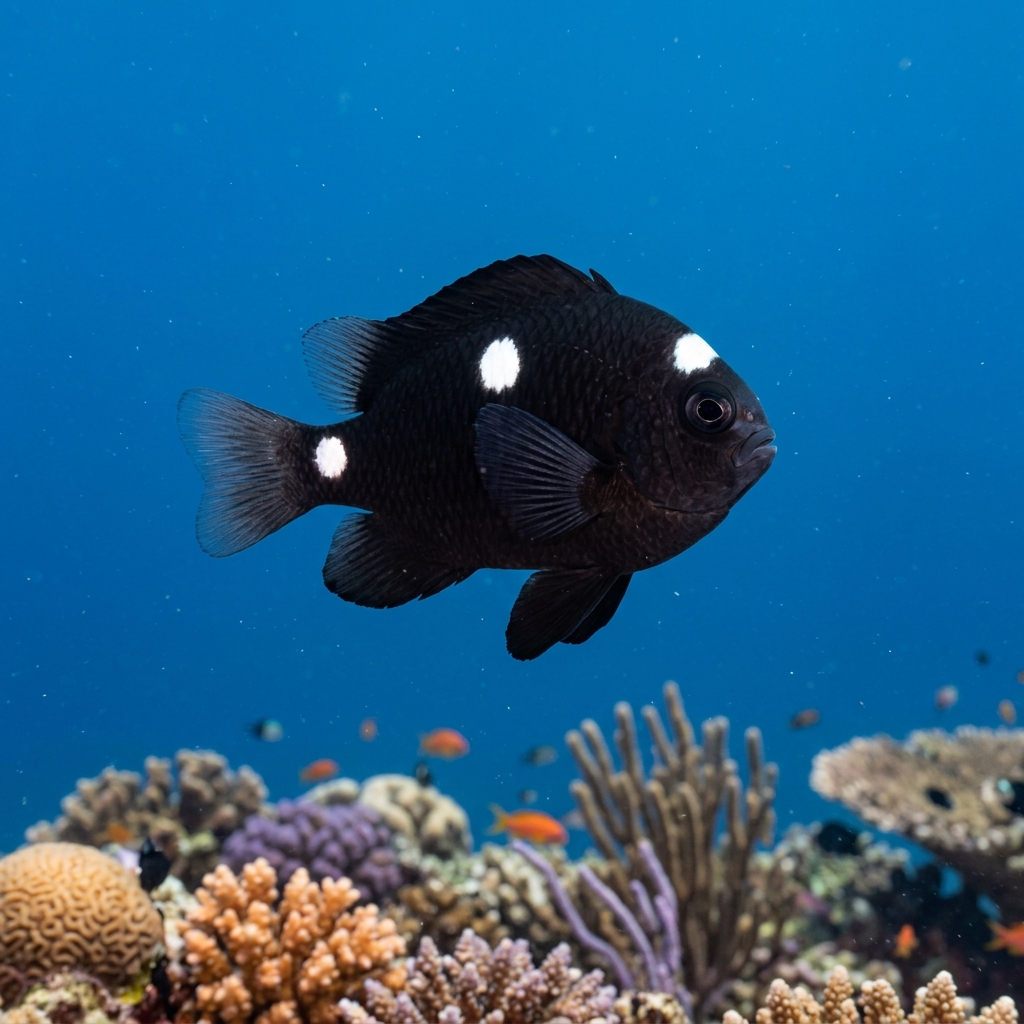
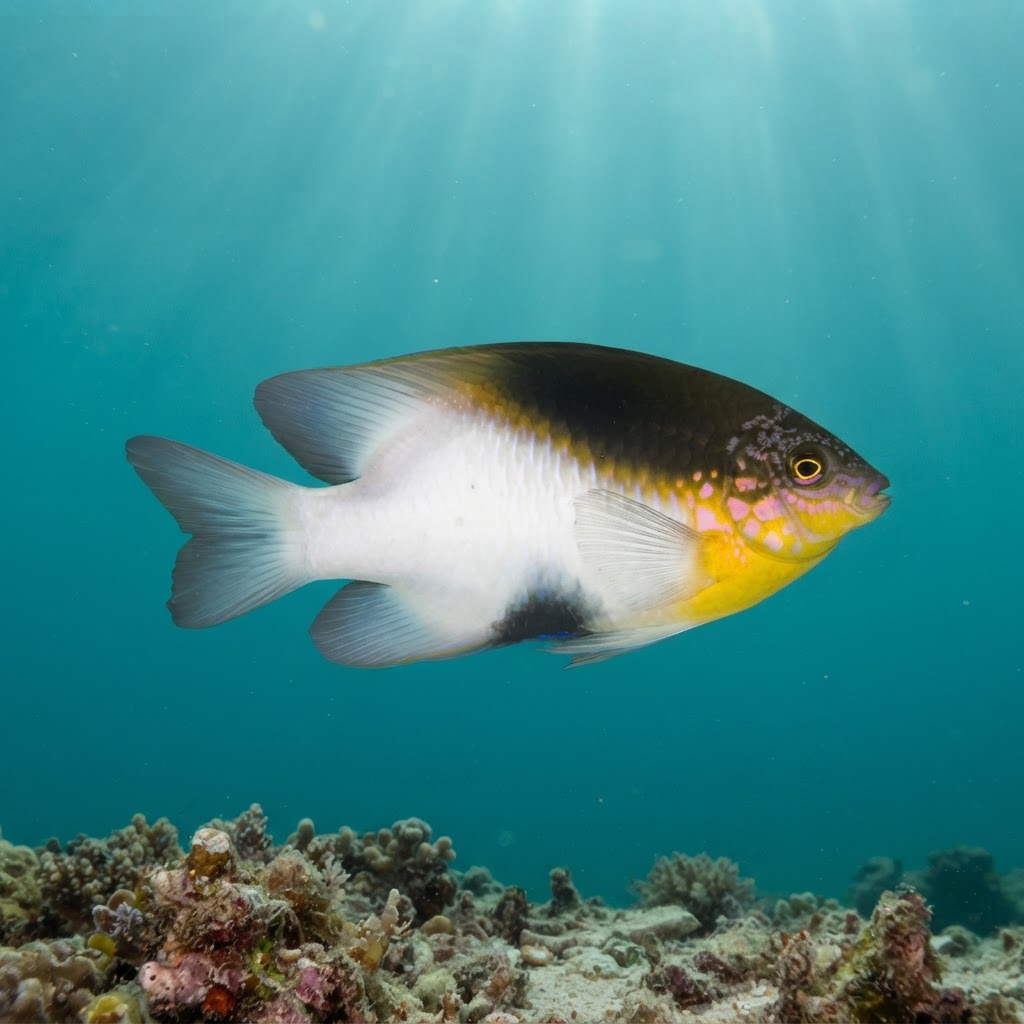
A stocky, oval-bodied damselfish around 11 cm, usually pale grey to brownish with a darker saddle toward the tail and a distinctive dark smudge at the base of the anal fin (the 'vent' mark that gives it its name). It sits low over reef flats and rubble patches rather than schooling in open water, and its body shape is noticeably deeper and more rounded than the slimmer damselfish you see darting mid-water.
Look for it patrolling a patch of rubble or dead coral on the reef flat, grazing algae off the substrate in short, deliberate passes rather than schooling. It tends to hold its ground over a home patch and gives a mild territorial nudge toward divers who linger too close, but it is not aggressive and mostly just goes back to feeding once you move on. Most sightings are in the shallows, from the surface down to around 12 m, making it an easy fish to find on a snorkel or a safety stop.
Like other Dischistodus damselfish, it actively tends and defends small algae patches on the reef floor, effectively farming its own grazing turf against other herbivores.
No clear seasonal pattern shows up in the data, and with a comfortable range of roughly 25 to 29 C it stays on the reef year-round across its range, so any month works for a sighting.
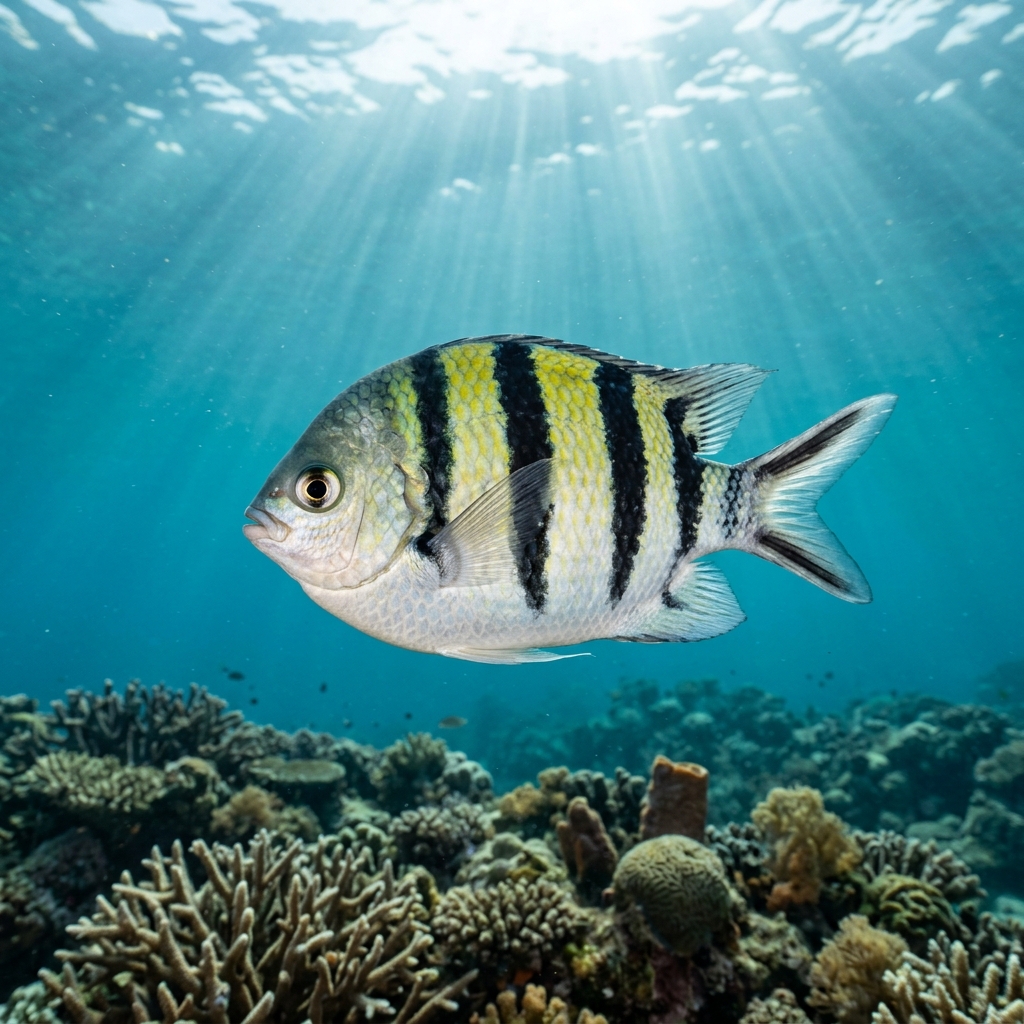
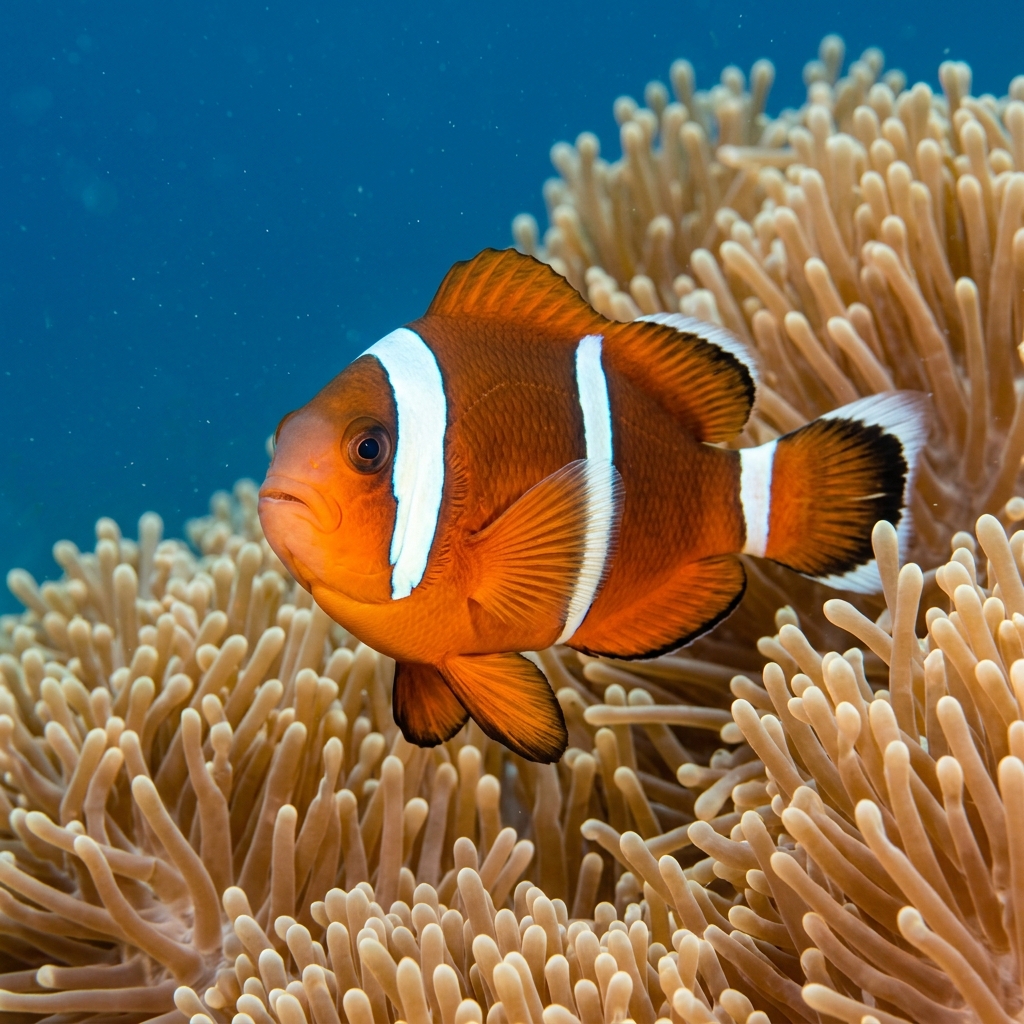
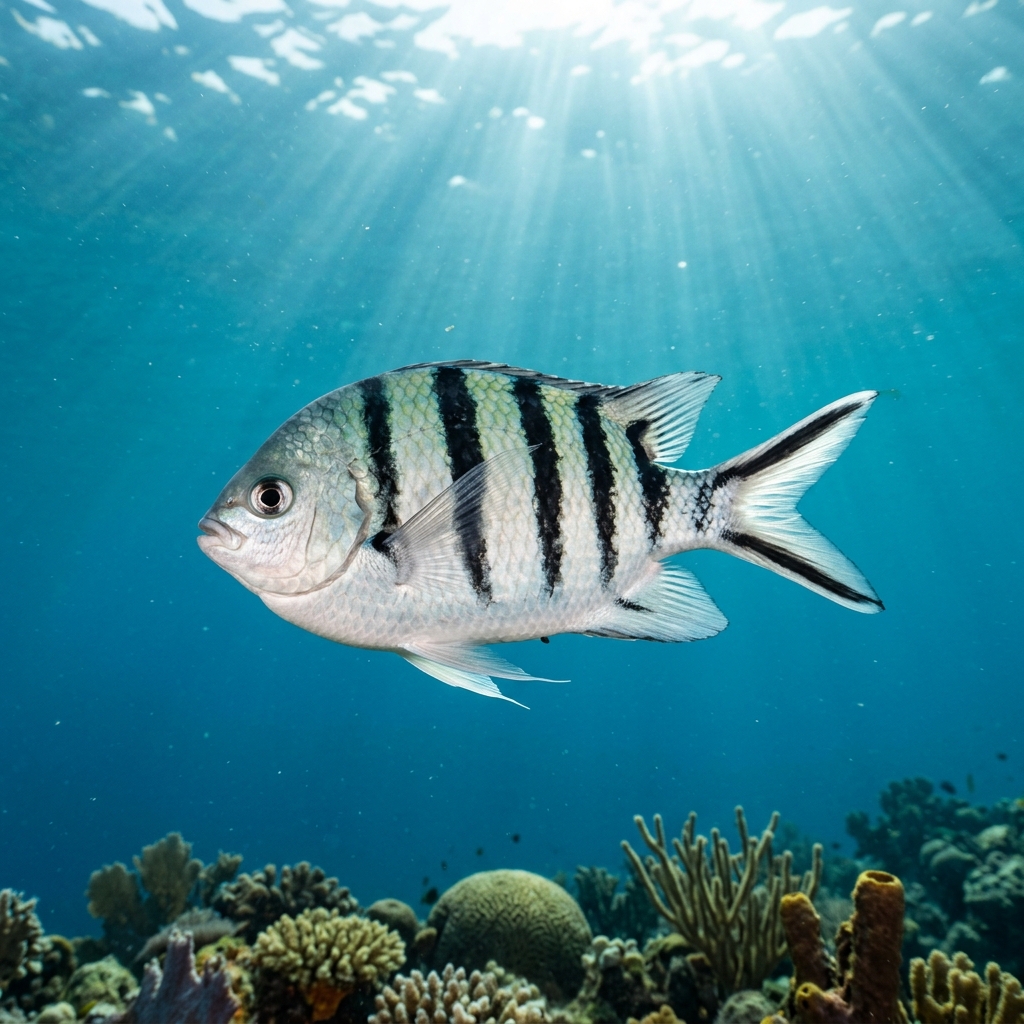
Reef neighbours a diver could mistake it for. Use the identification notes above to tell them apart.
Most reliably logged on reefs in the Philippines, especially the Visayas and Palawan, and on Queensland's reefs in Australia, with strong numbers also coming out of East Coast Peninsular Malaysia and Indonesia's Nusa Tenggara, Sulawesi and Bali. Smaller but consistent counts come from Timor-Leste's Atauro Island, making it a fish you can expect on shallow reef flats right across the Coral Triangle and the western Pacific.
Mapping where Black-vent Damselfish is logged…
They turn up most often on reefs in the Philippines, particularly the Visayas and Palawan, and across Queensland in Australia. East Coast Peninsular Malaysia and Indonesia's Nusa Tenggara, Sulawesi and Bali also have strong numbers.
There is no strong seasonal pattern in sightings, and the species tolerates a warm 25 to 29 C range comfortably, so it is present on tropical reefs throughout the year.
Look for a small, deep-bodied, oval damselfish around 11 cm, grey to brown overall with a dark patch at the base of the anal fin. It usually hovers close to rubble or reef flats rather than schooling in open water.
They max out at around 11 cm, a typical size for a damselfish, and are usually seen alone or in loose pairs over a patch of reef rather than in large groups.
No. They are harmless herbivores that may give a mild territorial nudge if you hover too close to their feeding patch, but there is no real risk to divers.
Yes, they actively guard a patch of algae-covered rubble against other grazing fish, effectively farming their own feeding turf on the reef floor.
Site and sighting data is aggregated from diver logs, iNaturalist and GBIF. For taxonomy and conservation status:
Dascyllus
3,697 sites