Spondyliosoma cantharus
Silvery-grey shoals with a dark saddle mark, most reliably logged along the French Riviera and Catalonia in cool Mediterranean water.
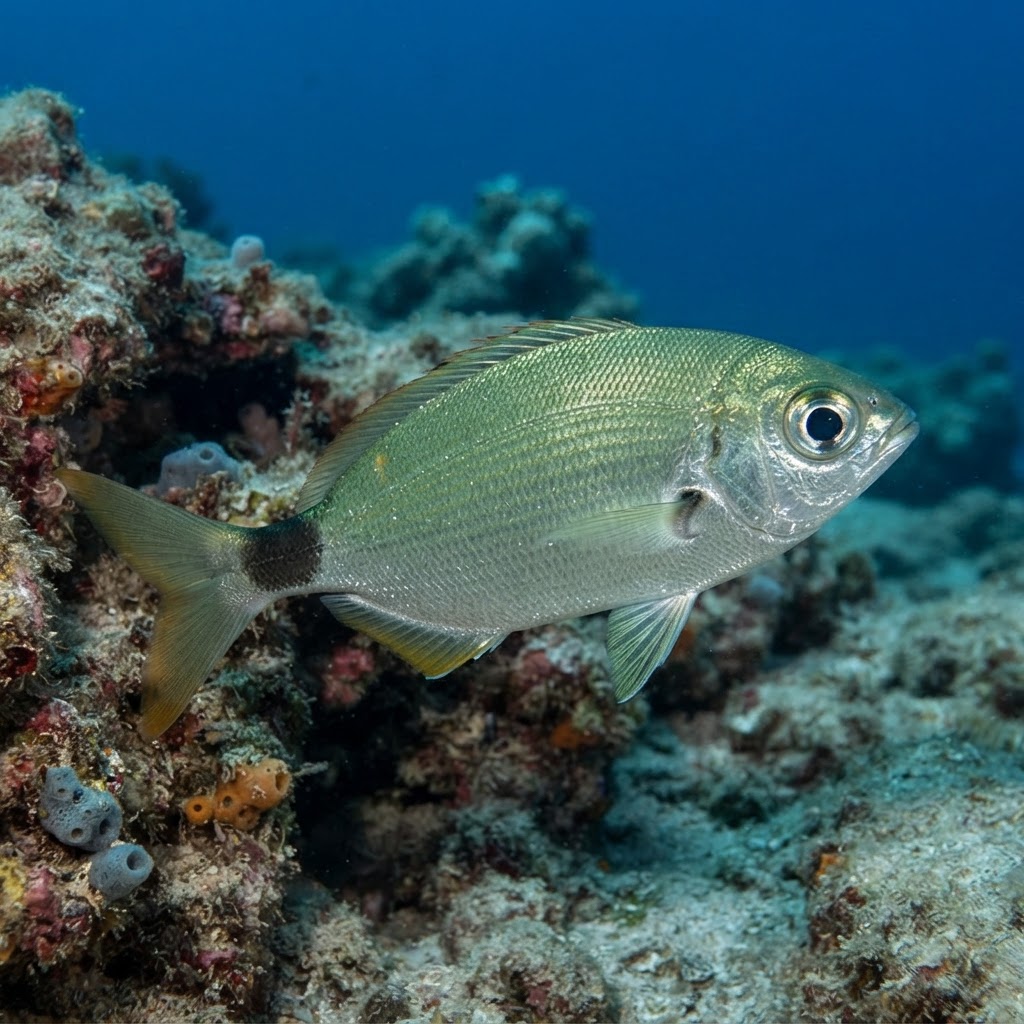
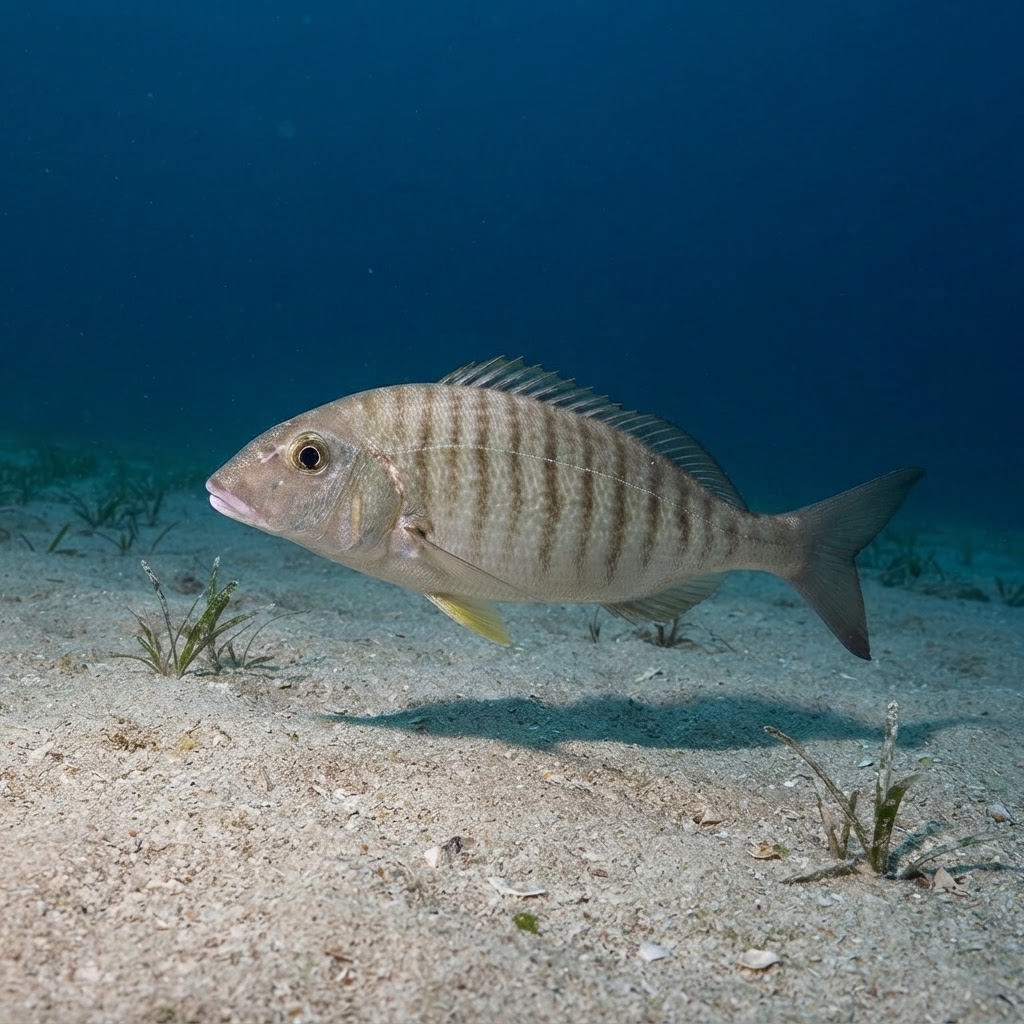
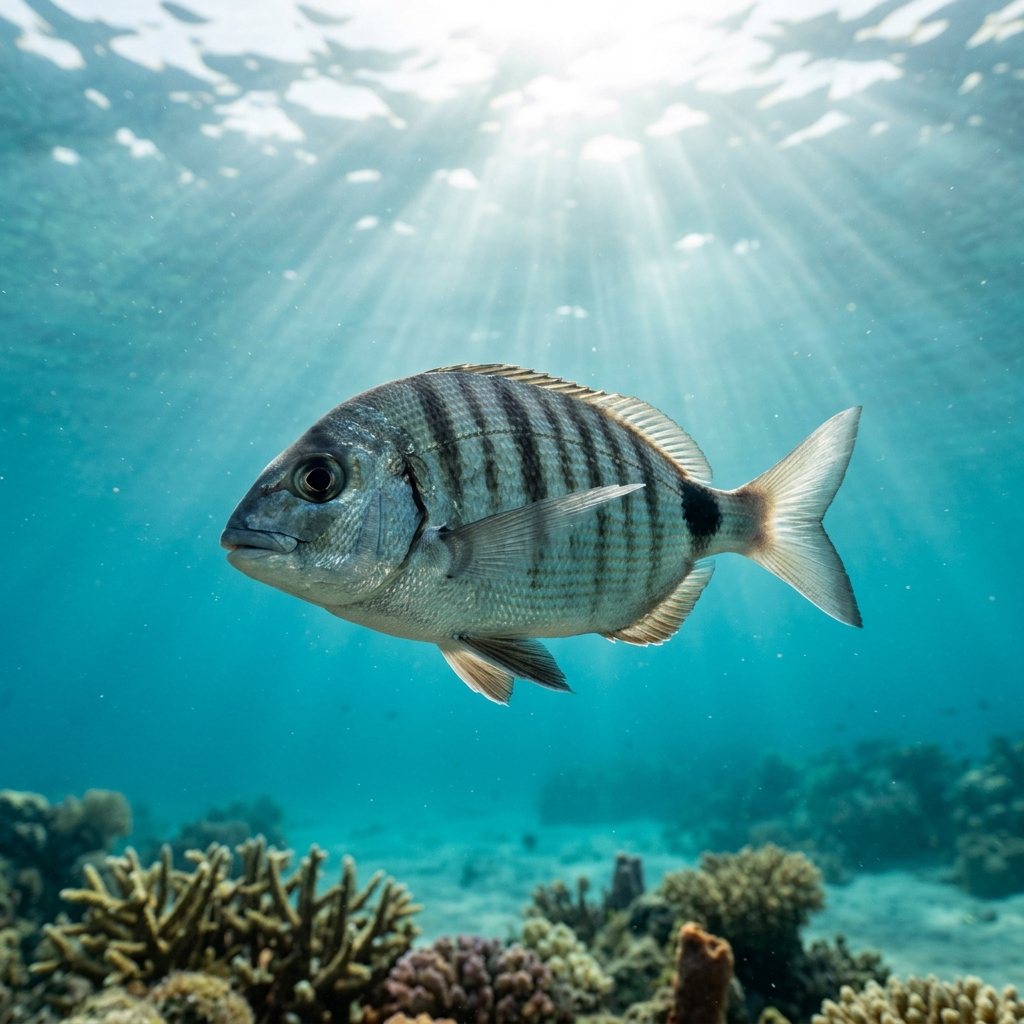
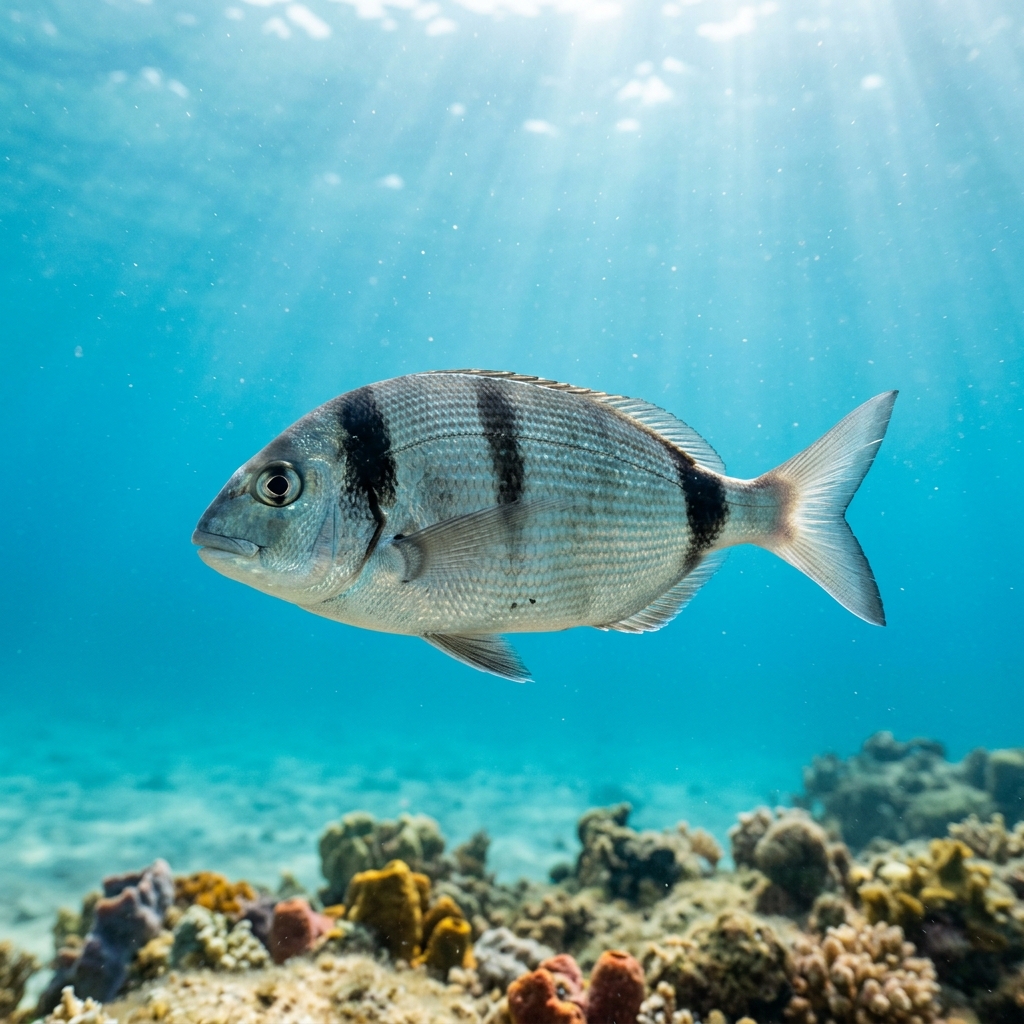
A deep-bodied, silvery-grey fish with faint vertical bars and a dark blotch (saddle) near the base of the tail that's the quickest giveaway underwater. It grows to around 42 cm, has a slightly humped forehead profile, and often shows a dark smudge above the pectoral fin too. Breeding males can darken noticeably, taking on a blacker head and front half of the body, which is where the common name comes from.
Usually seen in loose shoals hanging over rocky reef and seagrass edges rather than tight to cover, often at mid-depth in that benthopelagic zone between the bottom and open water. They're generally unbothered by divers, holding position or drifting off at an easy pace rather than bolting, which makes for calm, unhurried encounters. Most logs describe them as uncommon to rare at any given site, so a shoal is a nice bonus rather than a guaranteed sighting.
Black seabream are protogynous hermaphrodites: many individuals start life as females and some later switch to male, with breeding males also darkening in colour and building simple nests on the seabed that they guard.
Sightings show no strong seasonal pattern in the data, so treat this as a year-round fish on the sites where it occurs. Its recorded temperature niche runs from about 7 to 17 C, cooler than most reef fish, which fits its habit of turning up on temperate rocky reefs through the colder months as well as summer.
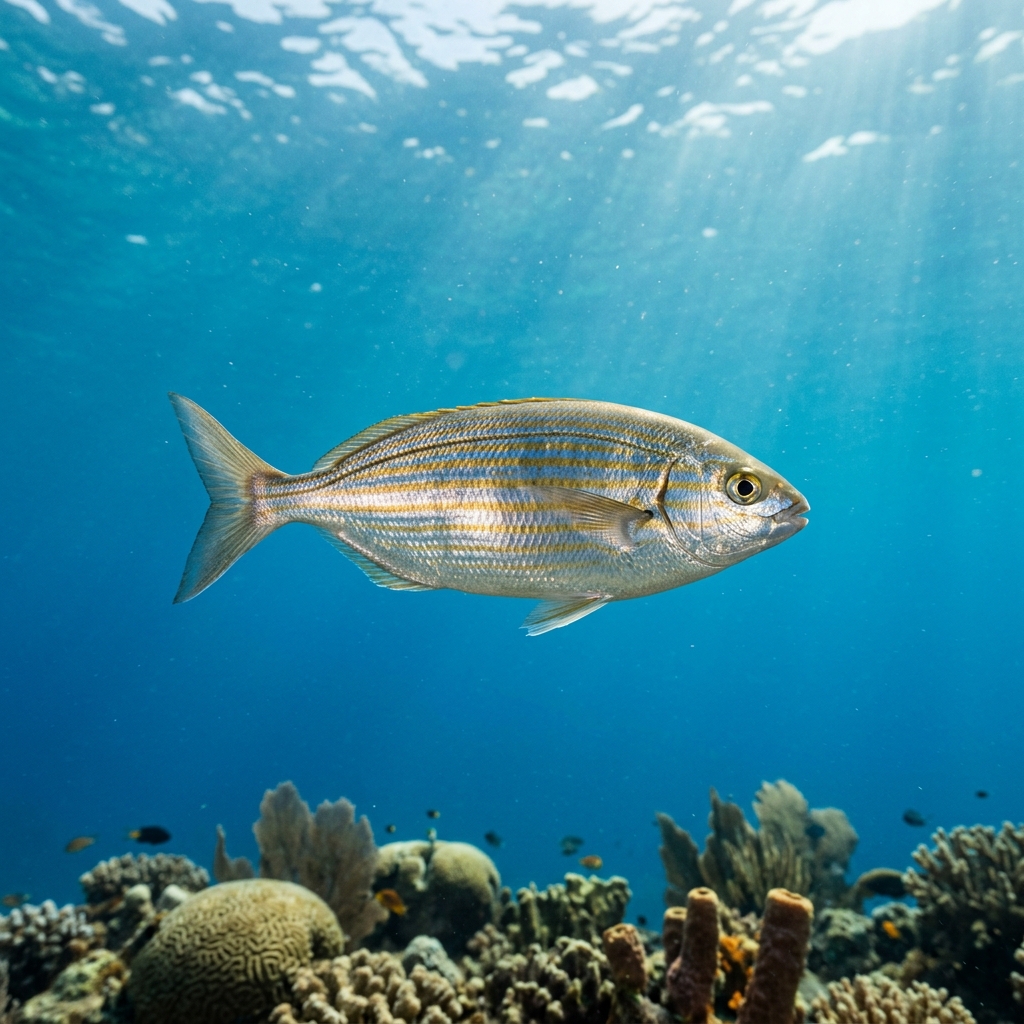
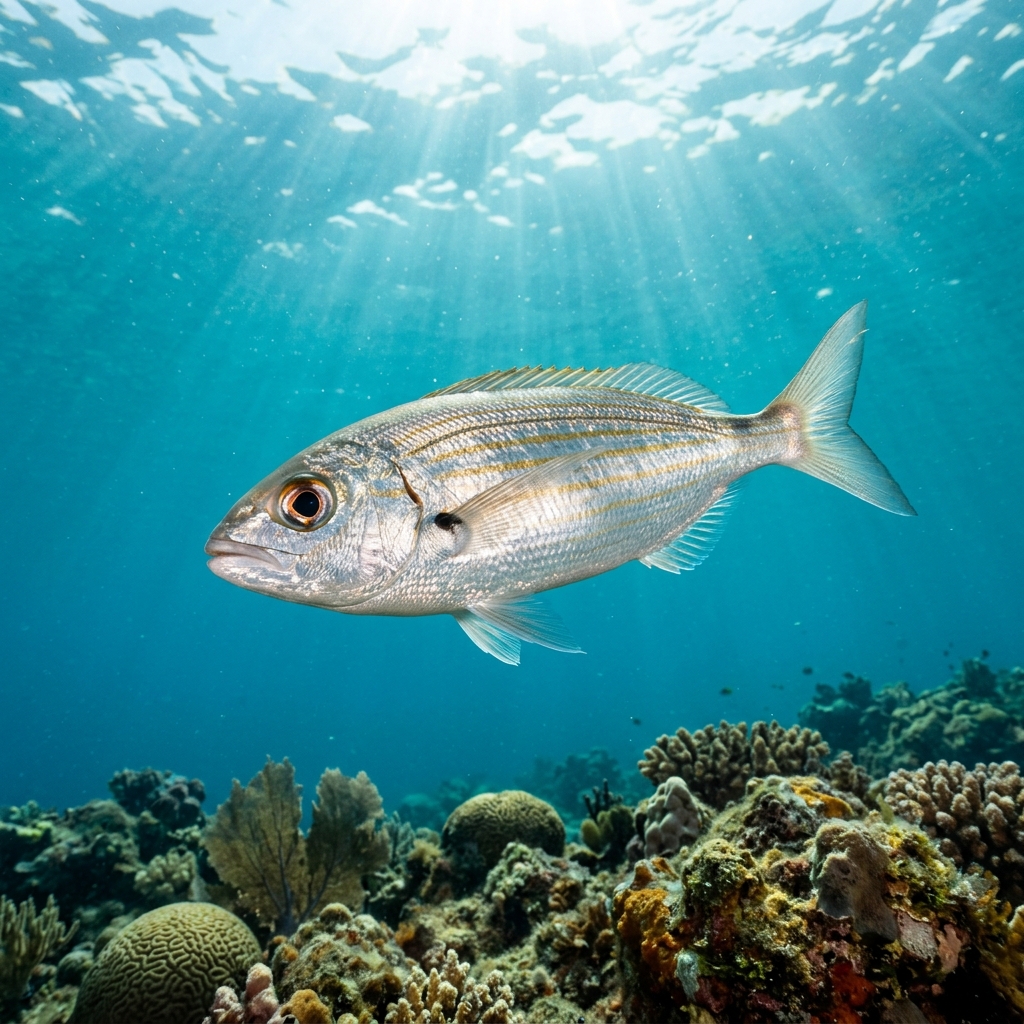
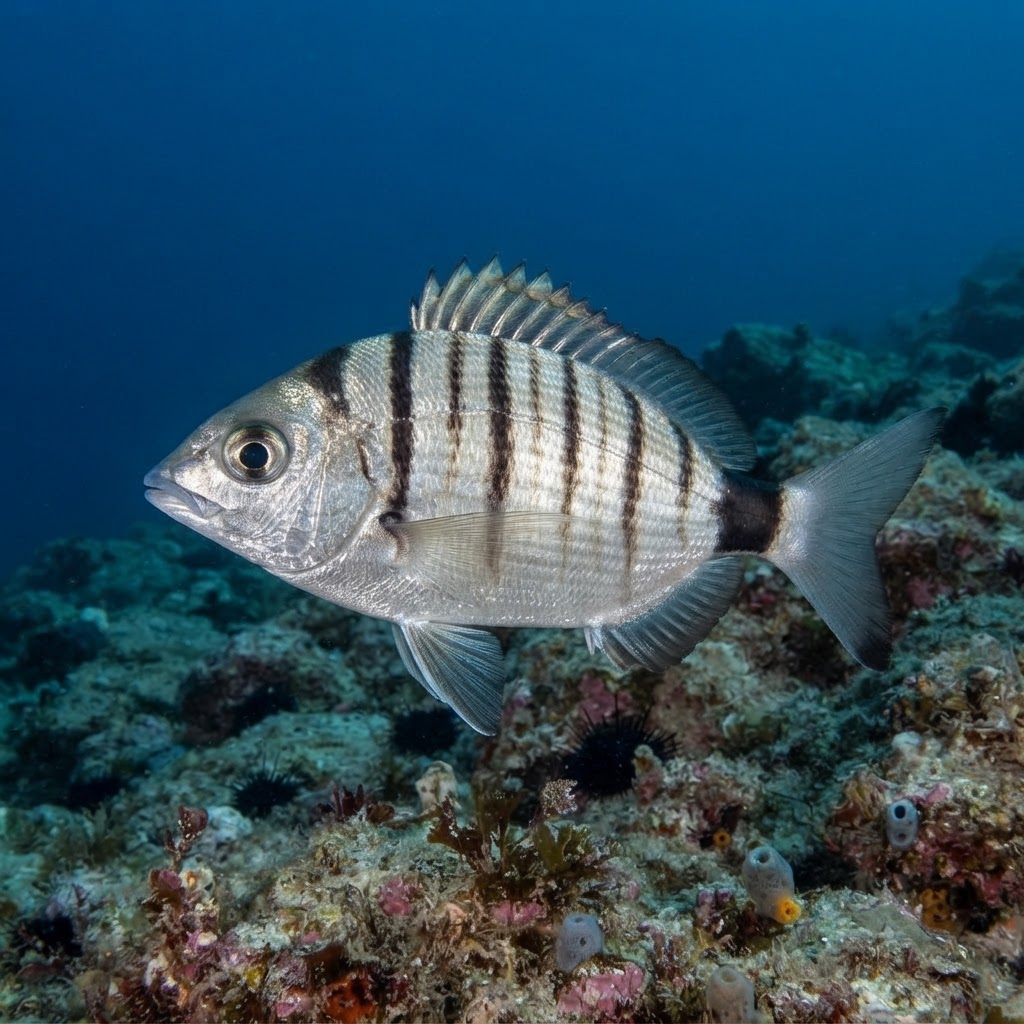
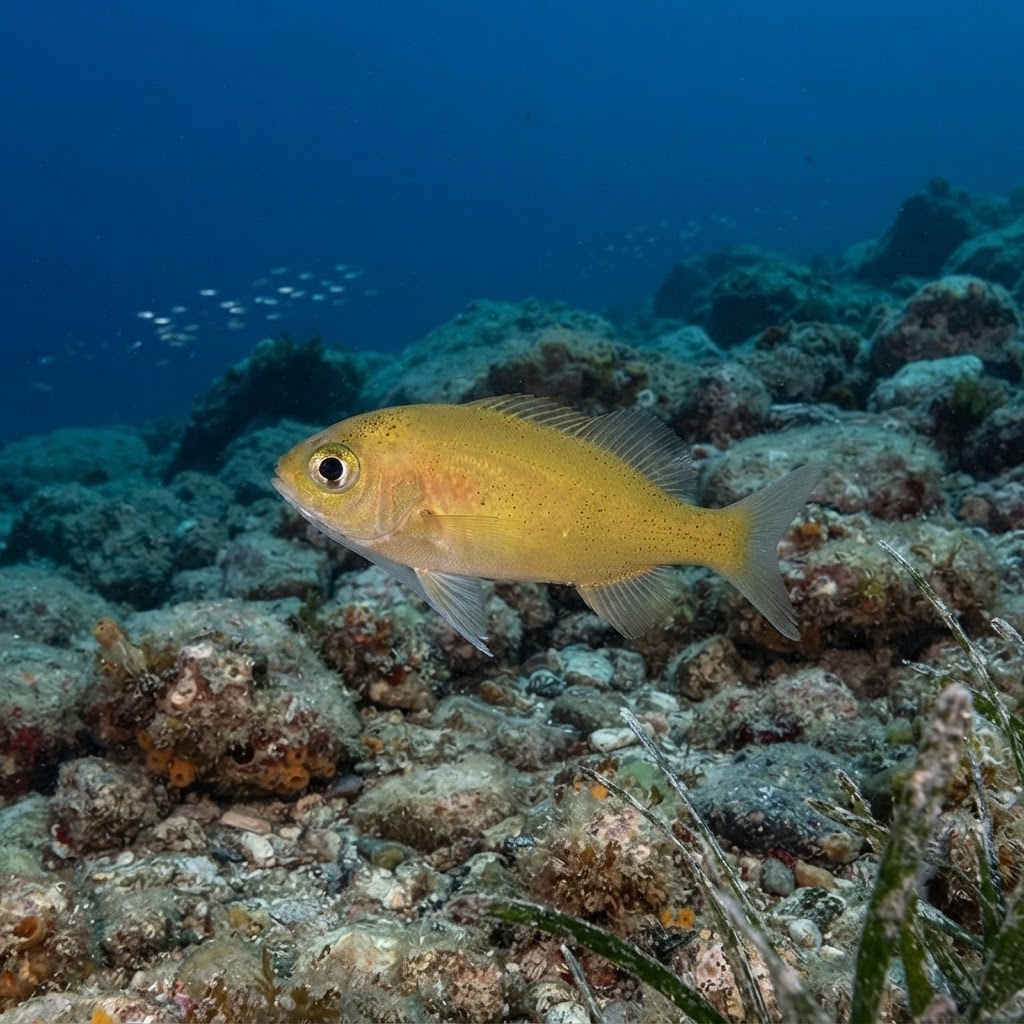
Reef neighbours a diver could mistake it for. Use the identification notes above to tell them apart.
France carries the bulk of sightings, especially the French Riviera & Provence and Corsica, making it one of the most dependable Mediterranean sparids to find on French rocky reefs. Spain is strong too, particularly Catalonia and Valencia, with further reliable populations in Portugal's Lisbon Coast, Italy's Liguria, the Canary Islands (notably Tenerife) and Croatia's Istria.
Mapping where Black Seabream is logged…
France is the strongest region, particularly the French Riviera, Provence and Corsica, followed by Catalonia and Valencia in Spain. Portugal's Lisbon Coast, Italy's Liguria and Tenerife in the Canary Islands also produce regular sightings.
There's no clear seasonal pattern in the sighting data, so they're logged year-round wherever they occur. Their recorded temperature range of roughly 7 to 17 C means they tolerate cooler water than many reef fish, so cold months aren't a barrier.
Look for a silvery-grey, deep-bodied fish with faint vertical bars and a distinct dark blotch near the tail base. Breeding males turn noticeably darker on the head and front body, which is the feature behind the common name.
They typically reach around 42 cm, a solid mid-size sparid you'll usually see as adults in loose shoals over rocky or seagrass-edged reef.
They're protogynous hermaphrodites, meaning many fish begin life as females before some switch to male. Breeding males also darken in colour and build and guard simple nests on the seabed, a behaviour not typical of most sparids.
Site and sighting data is aggregated from diver logs, iNaturalist and GBIF. For taxonomy and conservation status:
Saddled Bream
3,846 sites