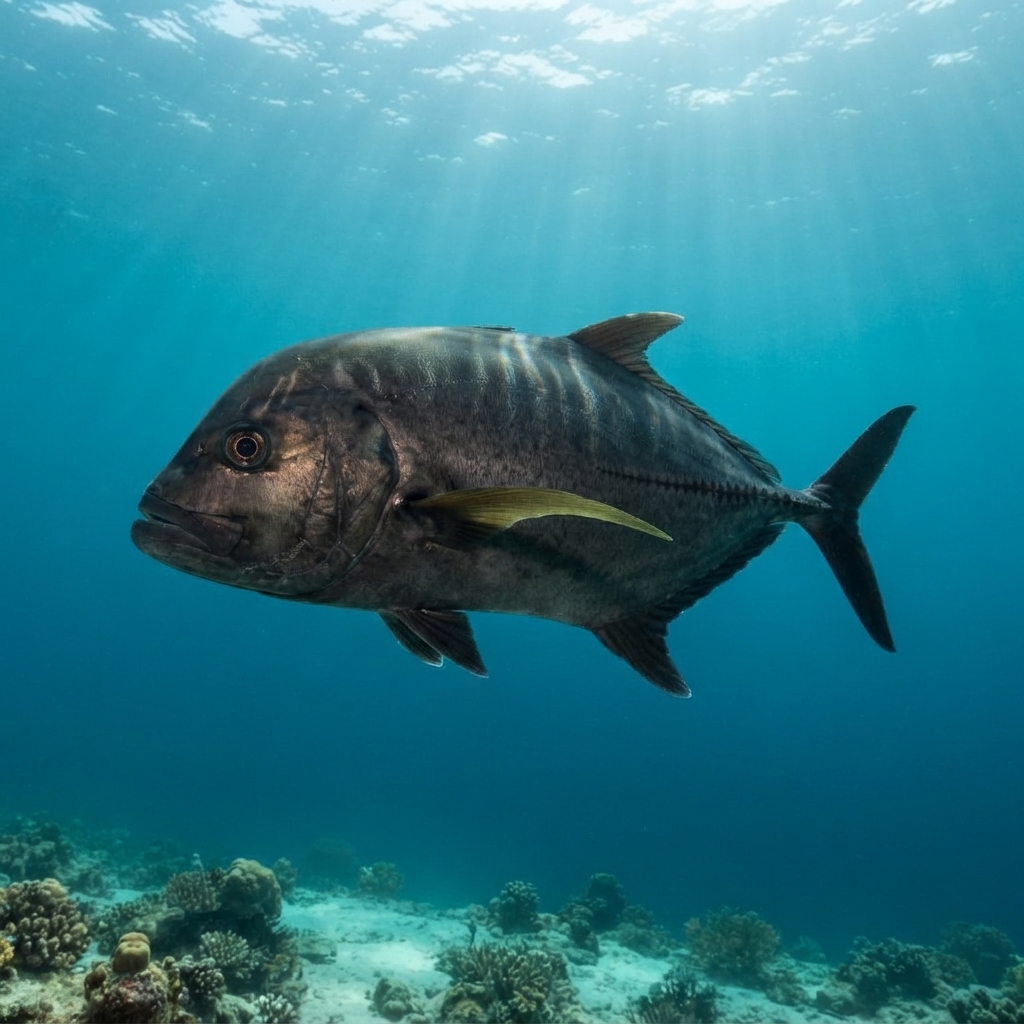
Caranx lugubris
Dark, chunky jacks patrolling reef edges from Sint Eustatius to the Galápagos in 21 to 28°C water, year-round and often in loose schools.
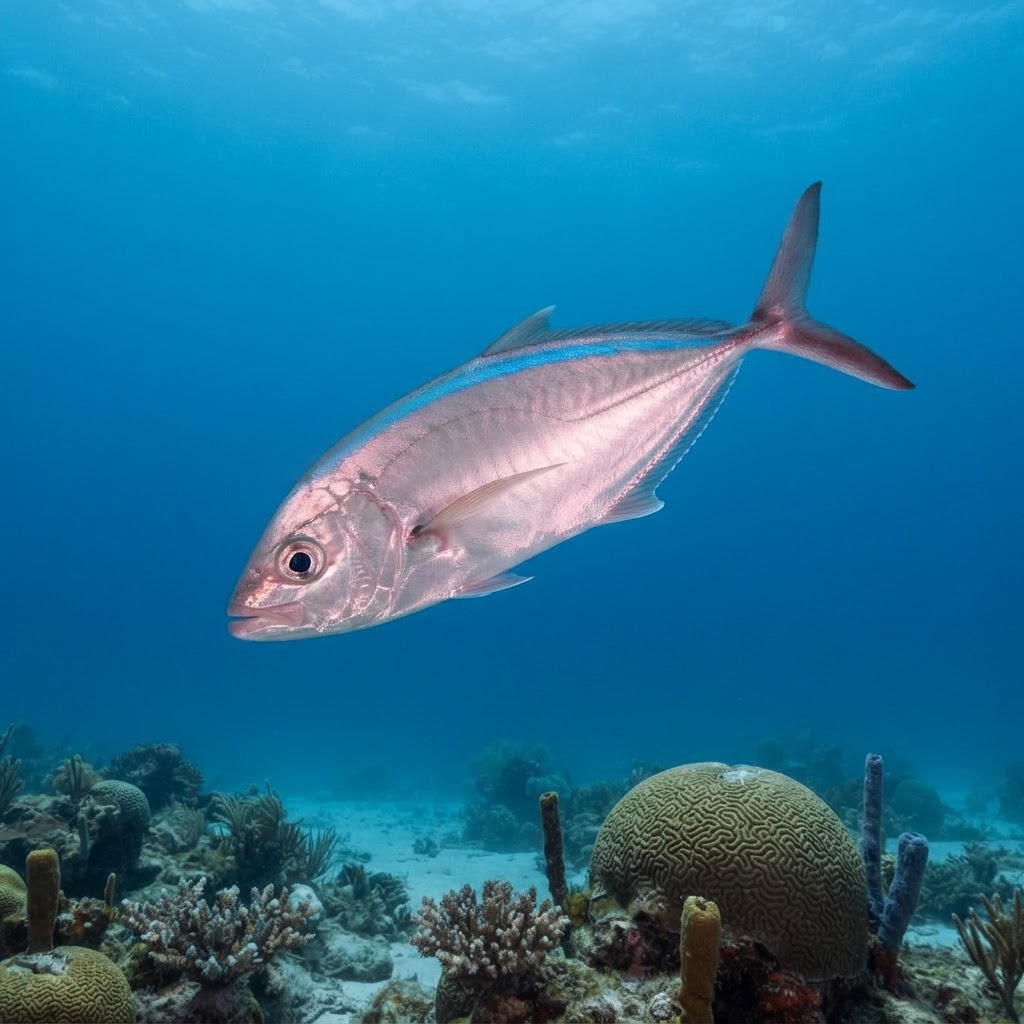
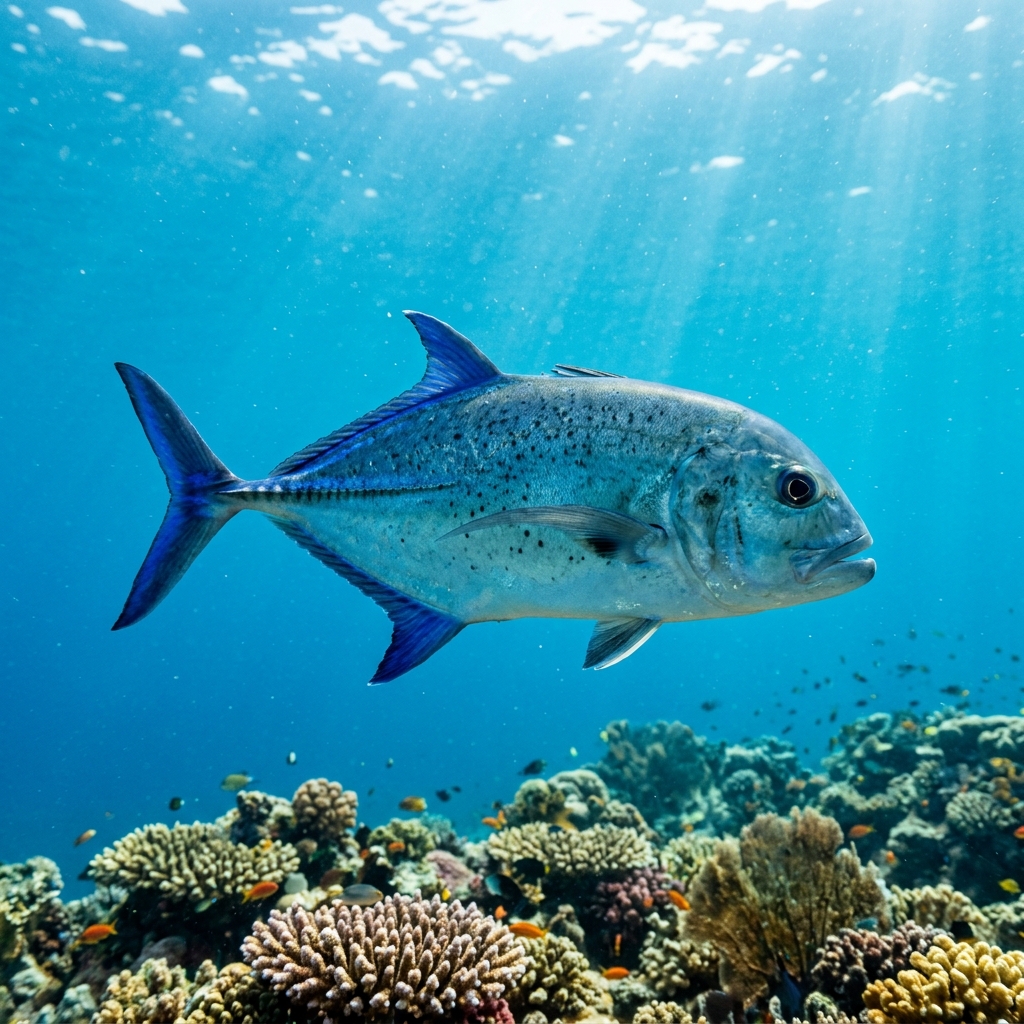
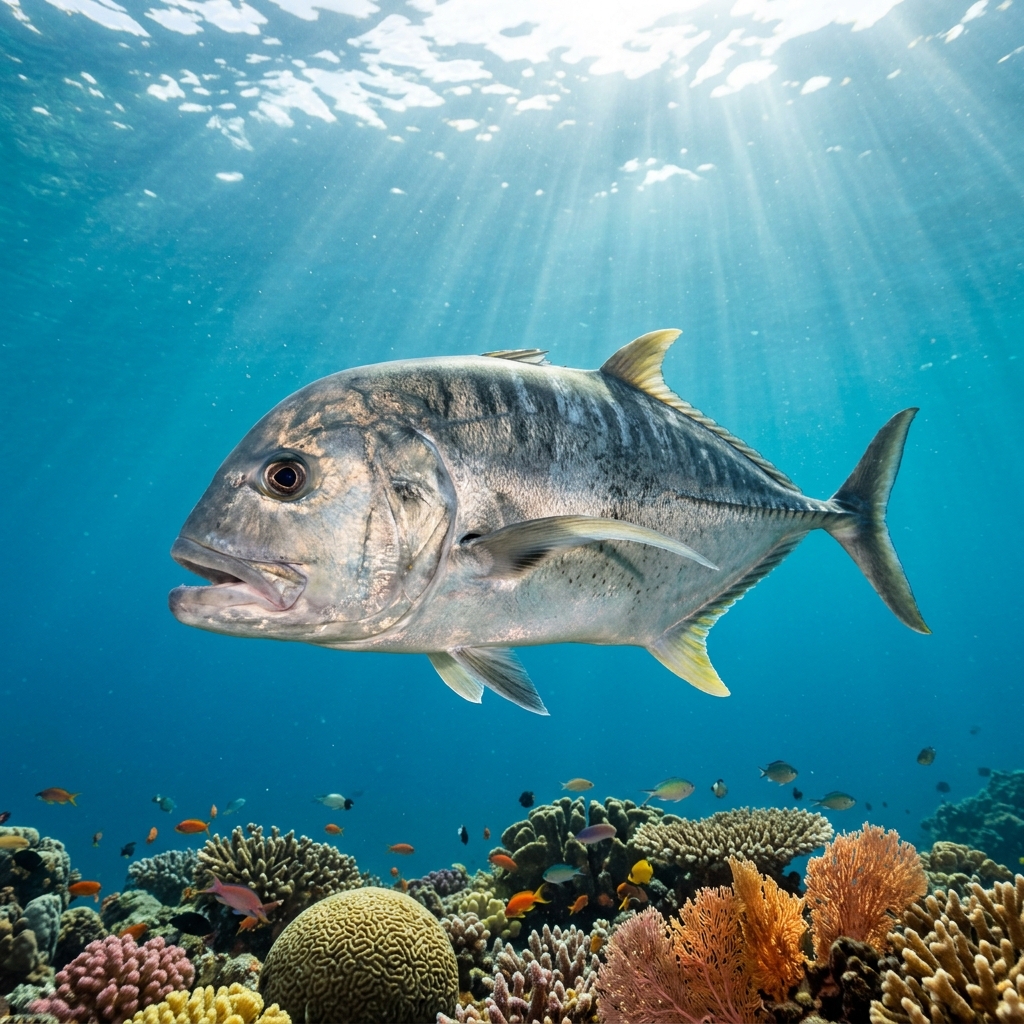
A deep-bodied, almost entirely dark grey to charcoal-black jack with a steep, blunt forehead and a strongly forked tail. Grows to around 70 cm, noticeably chunkier through the shoulders than most reef jacks, with no bright markings to key on aside from the near-uniform dark colouring itself. Often seen holding position in current at reef edges rather than darting through open water.
Usually spotted holding steady in current along steep reef walls and drop-offs, facing into the flow rather than swimming hard against it. Divers most often see it solo or in small loose groups rather than the tight schools some jacks form, and it tends to keep a respectful distance rather than investigating divers closely. Sightings lean toward current-exposed points and seamounts such as those at Cocos and in the Galápagos, where the flow concentrates baitfish.
Big current-swept sites like Cocos Island and the Galápagos owe part of their reputation to exactly this kind of jack aggregating at cleaning stations and current points, making them a reliable marker that a site has the kind of flow larger pelagics favour.
Sightings show no detected seasonal pattern, and the 21 to 28.4°C range it's logged in covers tropical reef conditions year-round, so there's no strong reason to time a trip around it specifically.
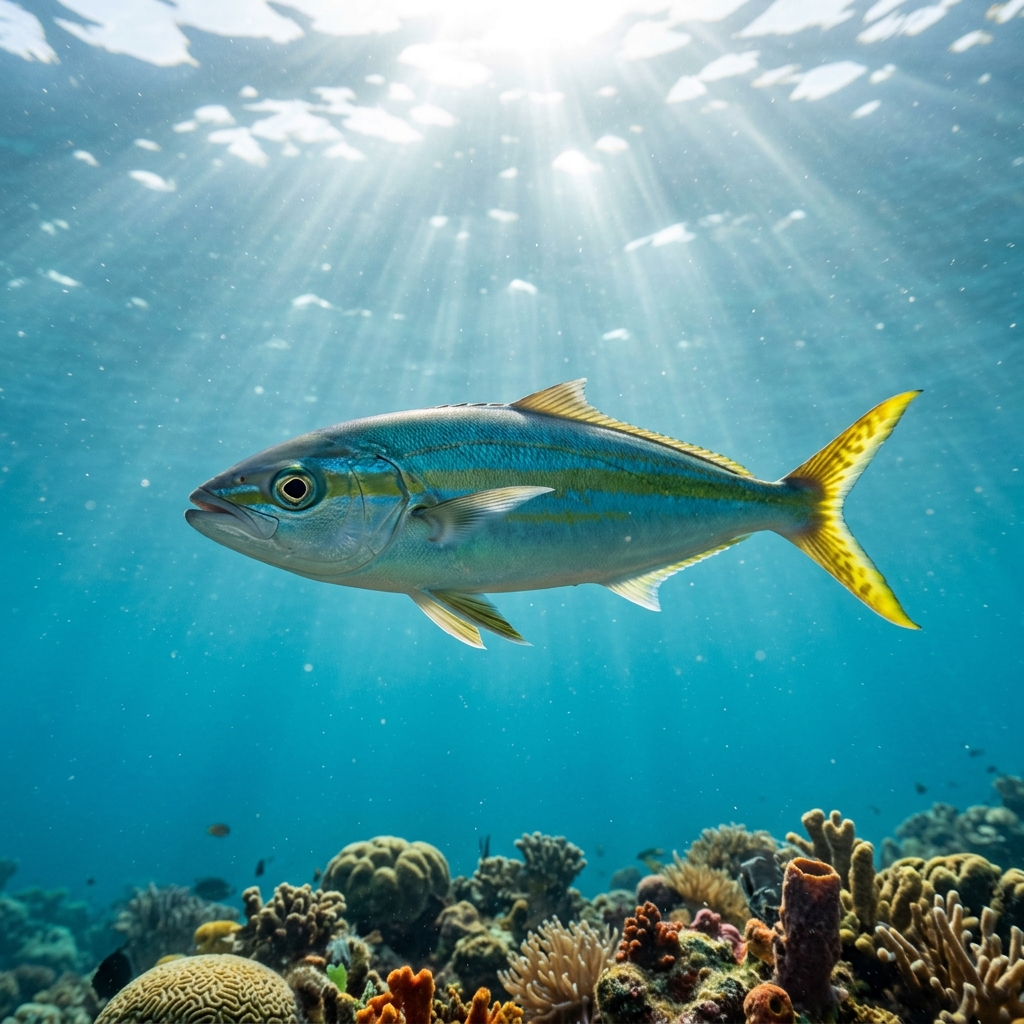
Reef neighbours a diver could mistake it for. Use the identification notes above to tell them apart.
Most reliably logged around Sint Eustatius in the Caribbean, at Cocos Island off Costa Rica, and in the Galápagos Islands, Ecuador, with a further strong showing in the Maldives' Central Atolls. Smaller but consistent numbers turn up on Cayman Brac in the Cayman Islands and at Grand Turk in the Turks and Caicos, usually as an uncommon but expected encounter on current-swept reef points.
Mapping where Black Jack is logged…
Sint Eustatius has the strongest showing in the Caribbean, alongside Cocos Island in Costa Rica and the Galápagos Islands, Ecuador. It's also a steady sighting in the Maldives' Central Atolls and on Cayman Brac.
There's no clear season in the sighting data, and the species is logged across a 21 to 28.4°C range, so it's realistically a year-round encounter on the reefs where it occurs.
Look for a deep-bodied, near-uniform dark grey to black jack with a steep forehead and forked tail, usually holding steady in current rather than schooling tightly. It lacks the bright markings of many other trevallies, which is itself a useful clue.
They typically reach around 70 cm, making them a solidly built mid-size jack rather than one of the true giants of the family.
No, they're not considered dangerous to divers and generally keep a cautious distance rather than approaching closely.
Site and sighting data is aggregated from diver logs, iNaturalist and GBIF. For taxonomy and conservation status:
Bigeye Trevally
2,591 sites