Choerodon zosterophorus
Uncommon Visayas reef find: spot the Black-blotch Tuskfish's dark saddle blotch on Philippine reefs in warm 27-29C water year-round.
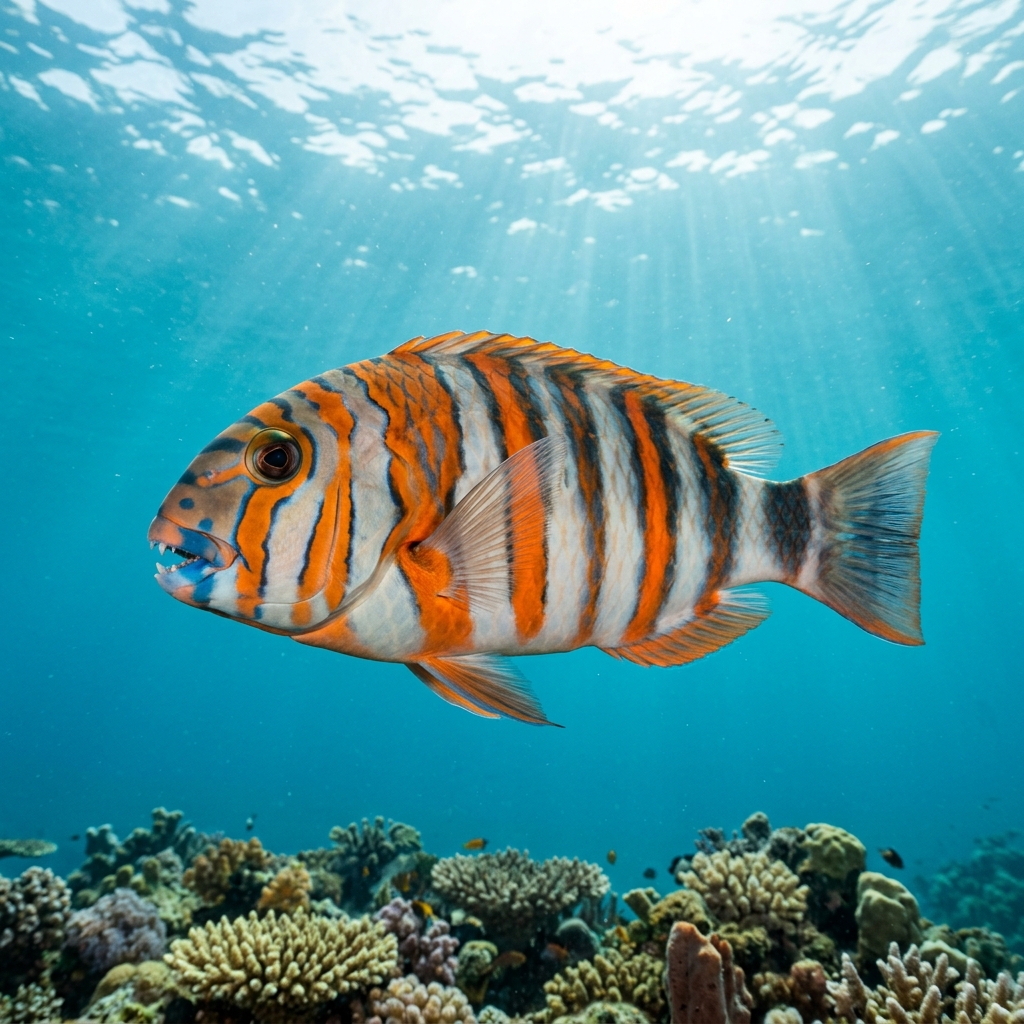
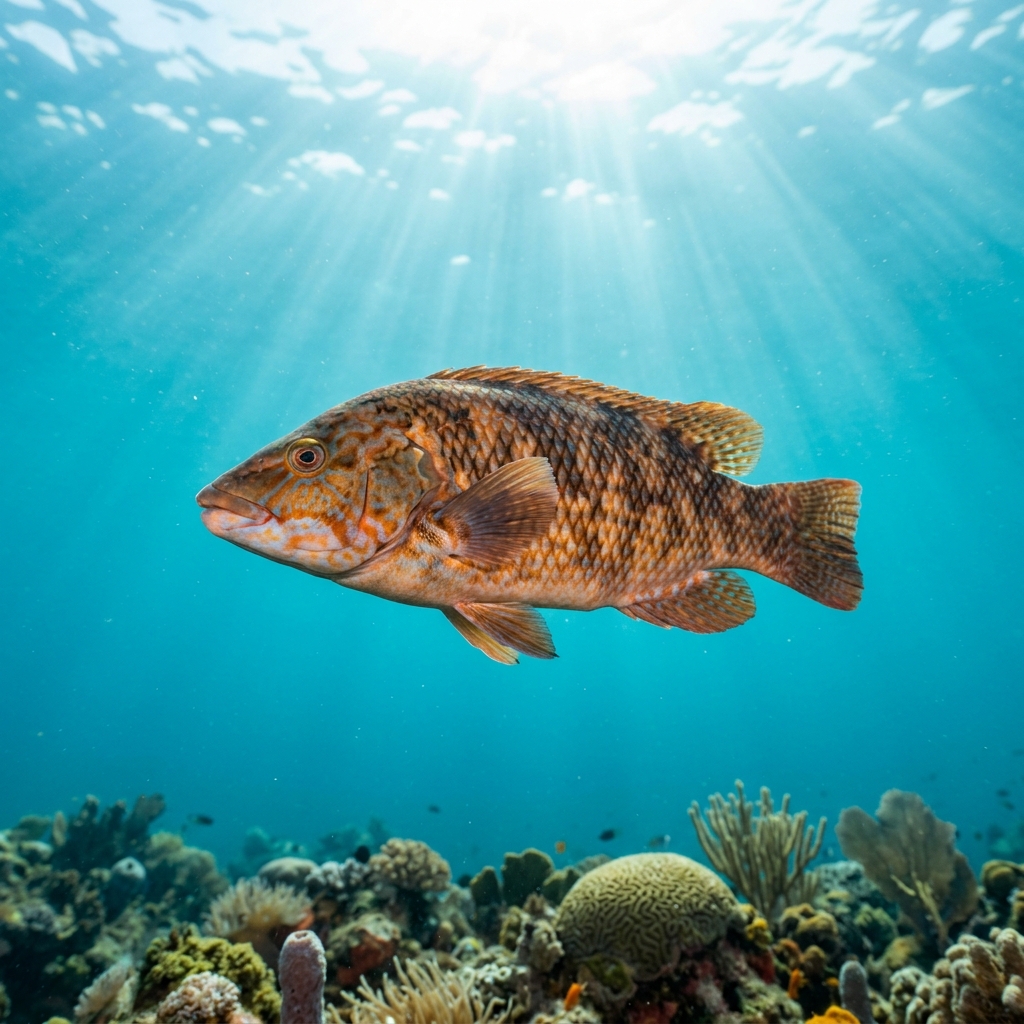
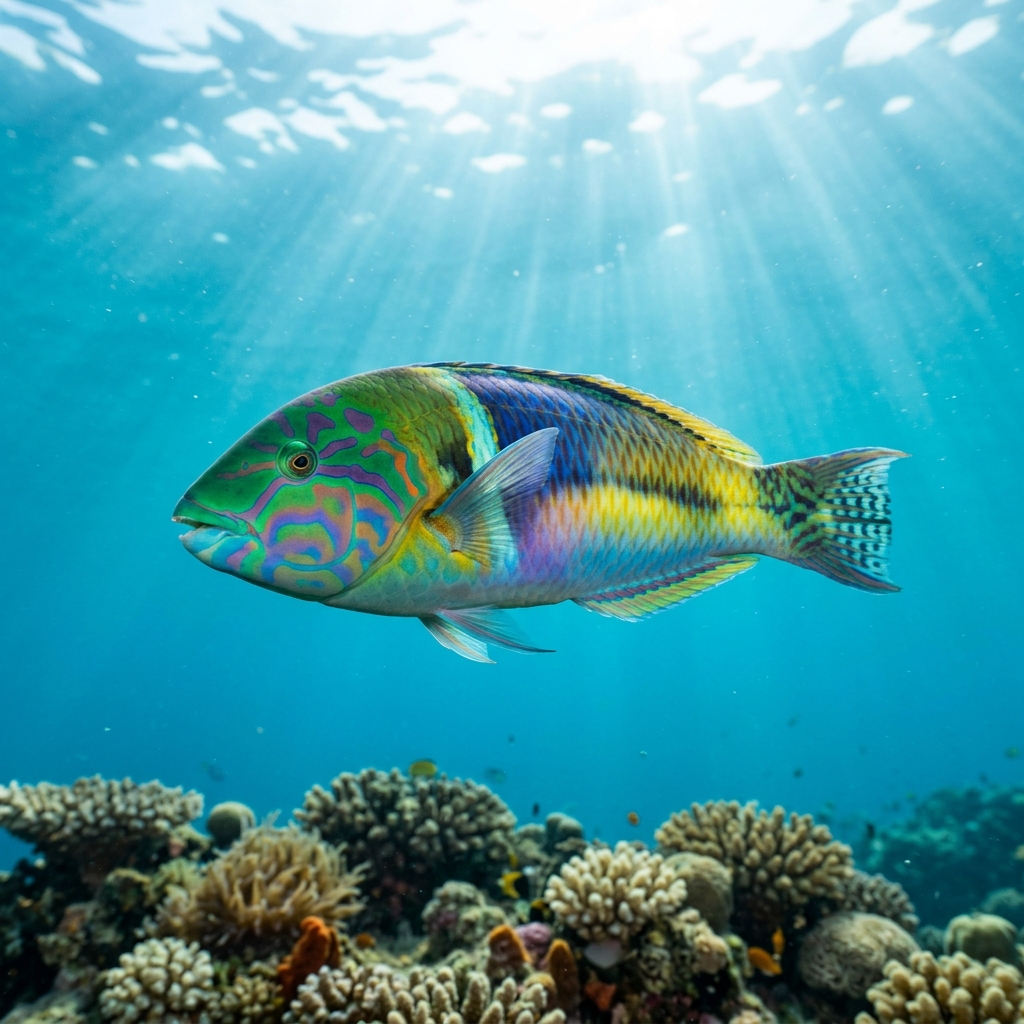
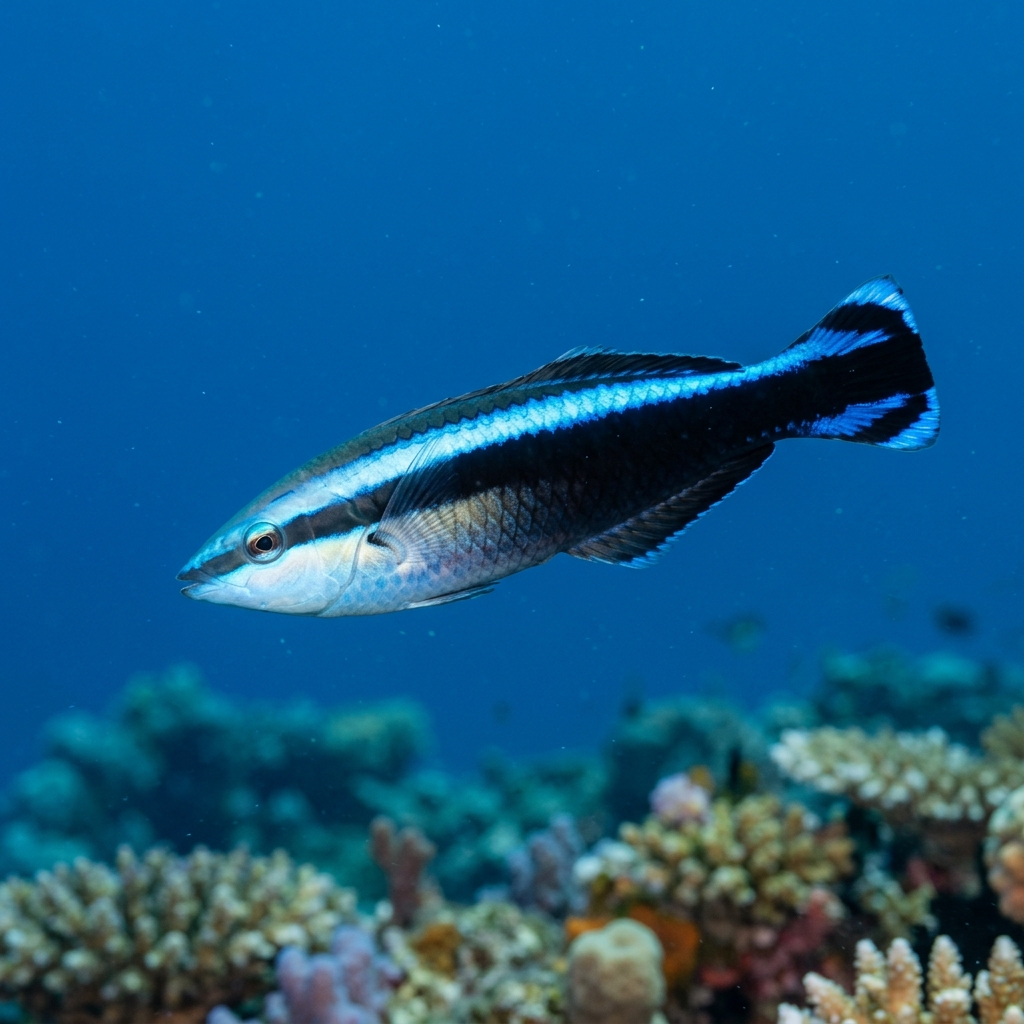
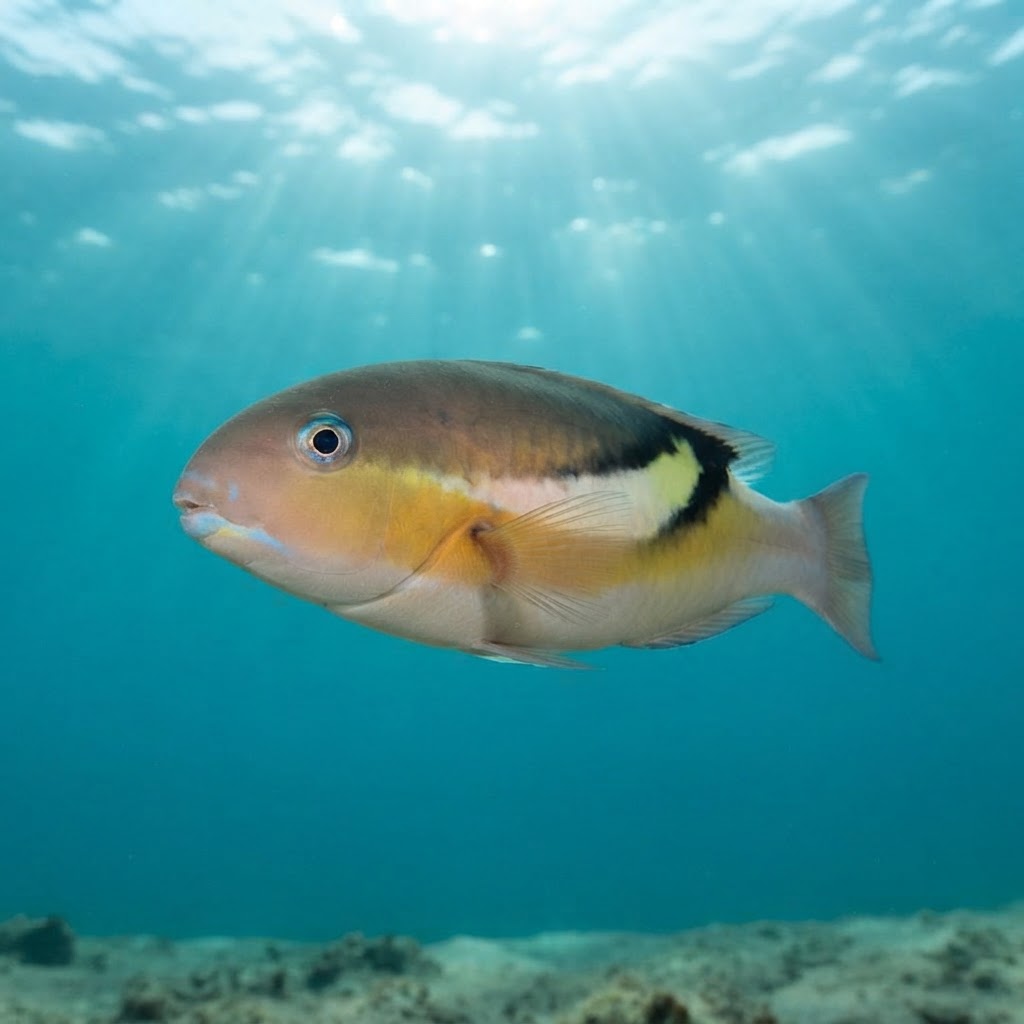
A small, elongated wrasse reaching around 18 cm, easiest to pick out by the bold dark blotch saddled across its upper back and dorsal fin. The rest of the body runs pale to greenish with fine barring, and it swims with the quick, low, darting motion typical of tuskfish working the reef bottom. Its chunky head and forward-set eyes give it the blunt-faced look shared by other tuskfish species.
Divers typically find this one picking around low coral rubble and reef crevices, foraging alone rather than in groups. It tends to keep a cautious distance, ducking toward cover if approached too directly, so a slow, low approach gives the best chance of a close look. Sightings are logged as uncommon even at sites where it turns up, so don't expect it on every dive.
Like other tuskfish, it likely uses strong jaws and protruding front teeth to crack open hard-shelled invertebrates wedged in the reef, a feeding style that shapes its stocky head profile.
Sightings don't show a clear seasonal pattern, and with a comfortable 26.9 to 29.0C water-temperature niche it's plausible year-round on these tropical reefs. Plan around good visibility and calm conditions rather than a particular month.
Reef neighbours a diver could mistake it for. Use the identification notes above to tell them apart.
Most reliably logged across the Visayas region of the Philippines, where the large majority of recorded sightings come from, with a scattering of records from Indonesia including Sulawesi, Raja Ampat, and Nusa Tenggara. If you're chasing this fish specifically, Philippine reef sites in the Visayas give you the strongest odds.
Mapping where Black-blotch Tuskfish is logged…
The strongest sightings come from the Visayas region of the Philippines, with occasional records from Indonesian regions including Sulawesi, Raja Ampat, and Nusa Tenggara. The Philippines is by far the more reliable destination for this species.
There's no detected seasonal pattern, and it sits comfortably in 27 to 29C water, so it's considered a year-round sighting on the reefs where it occurs rather than tied to a specific month.
Look for a small, pale wrasse around 18 cm with a distinctive dark blotch saddled over its back and dorsal fin. It has the blunt, tuskfish-typical head and moves in quick, low darts near the reef bottom.
They typically reach around 18 cm, making them one of the smaller and more easily overlooked tuskfish species on the reef.
Site and sighting data is aggregated from diver logs, iNaturalist and GBIF. For taxonomy and conservation status:
Bird Wrasses
3,632 sites