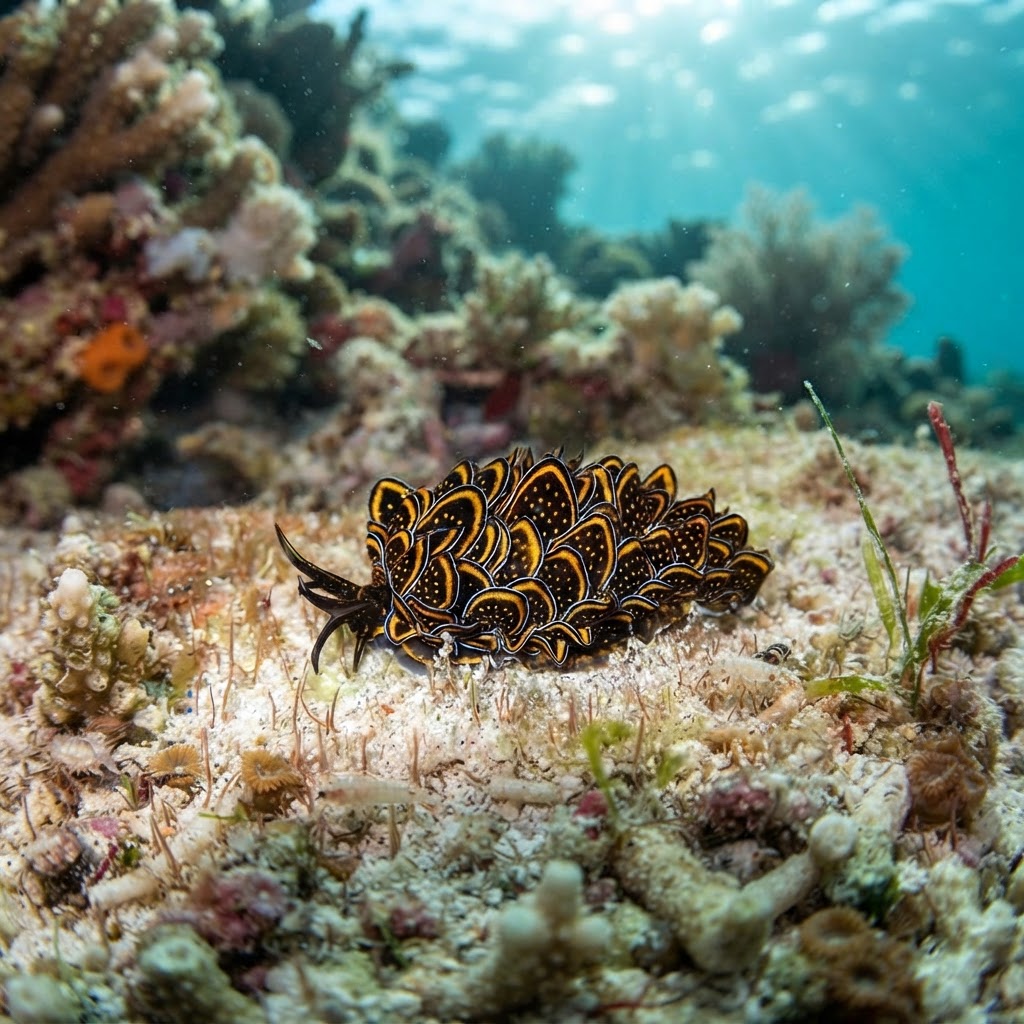
Cyerce nigricans
A rare 1cm find logged at Mayotte's Passe en S and off New South Wales, in warm 22-28°C reef water.
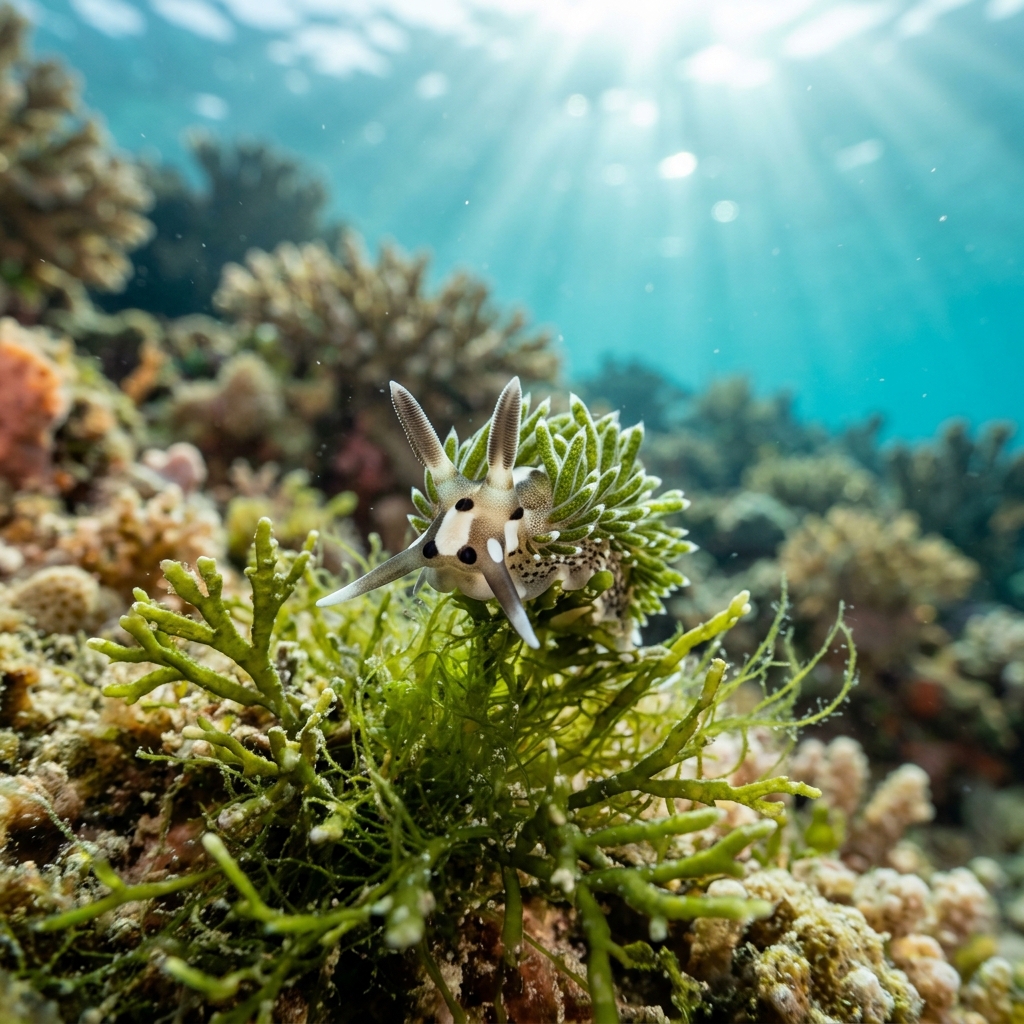
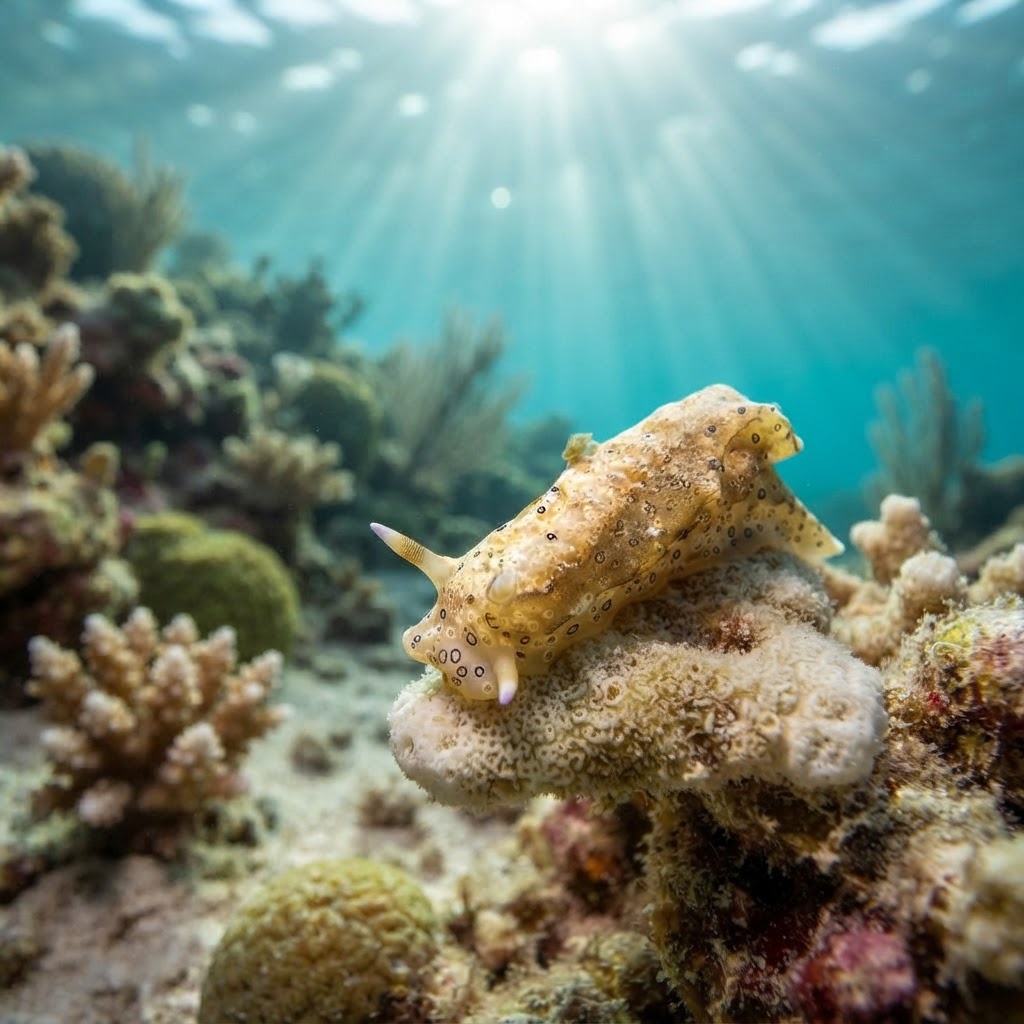
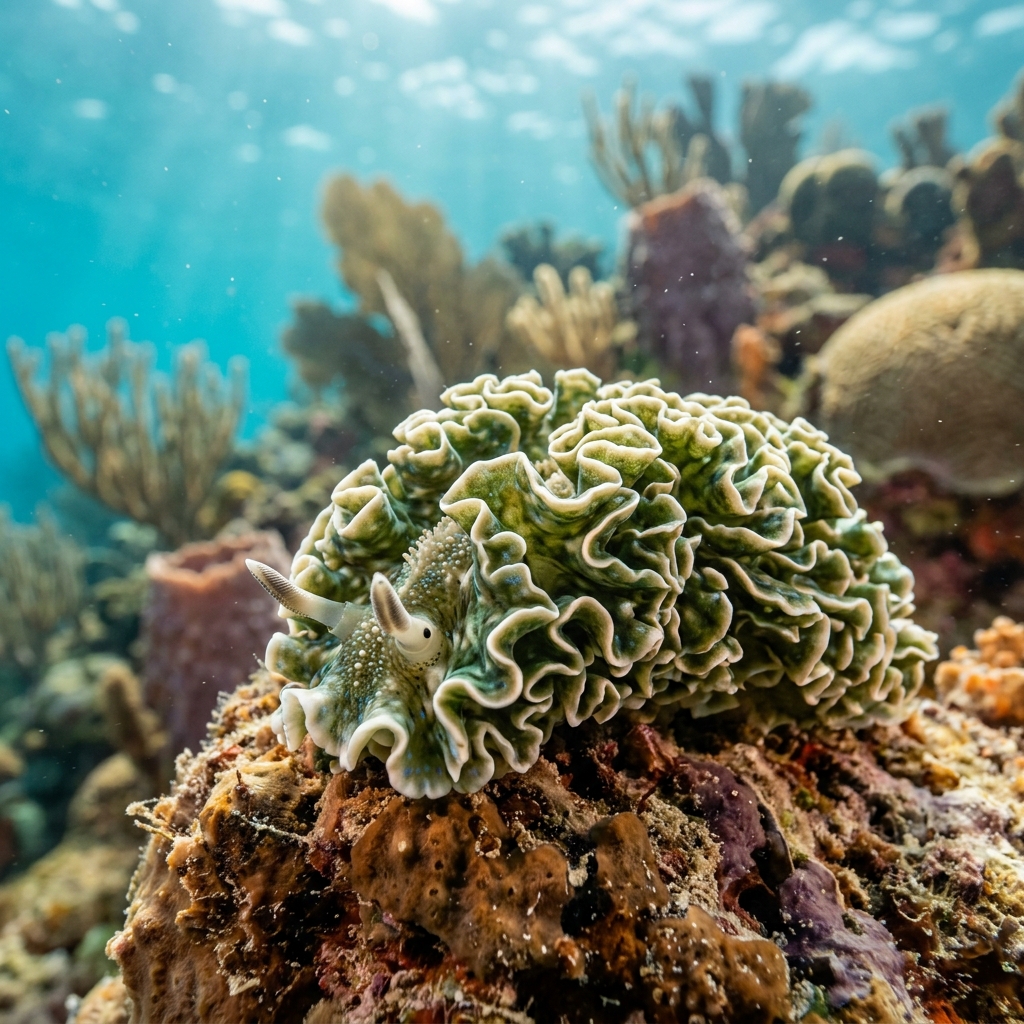
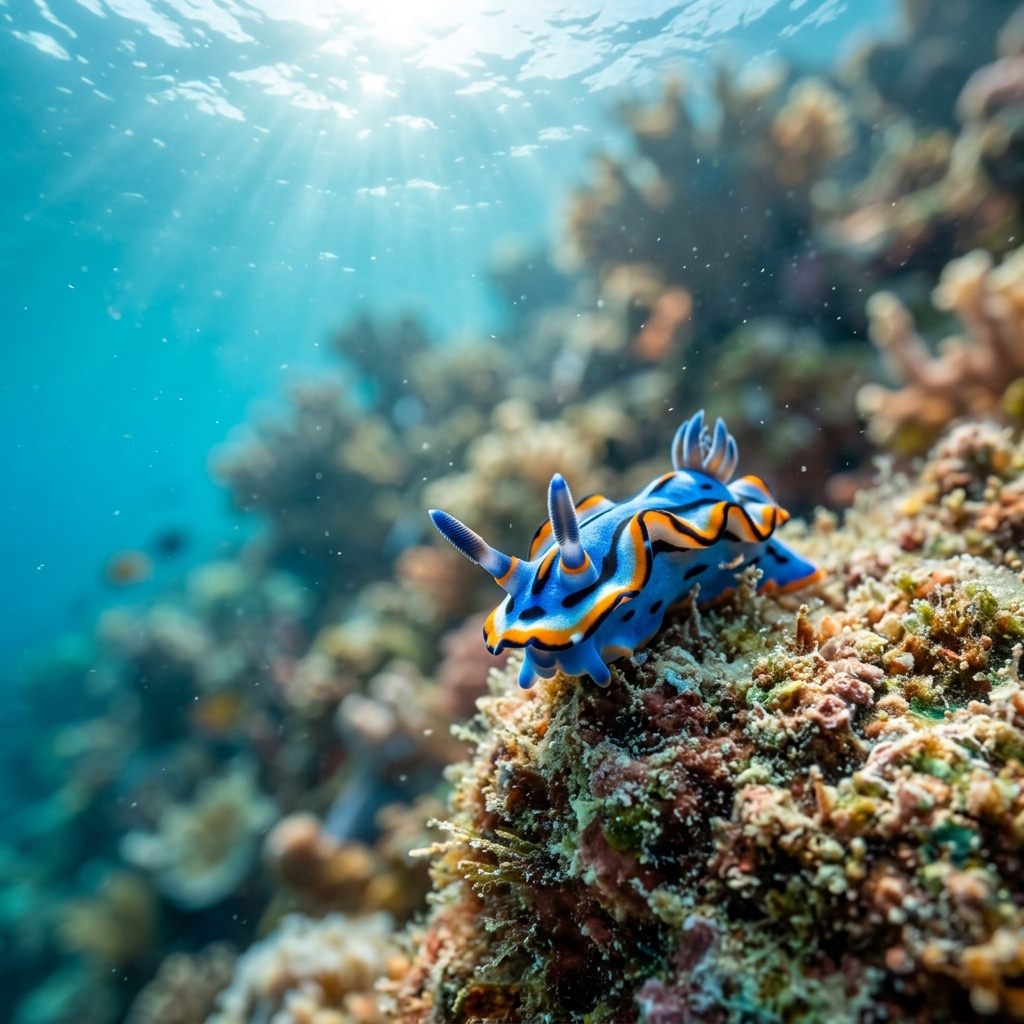
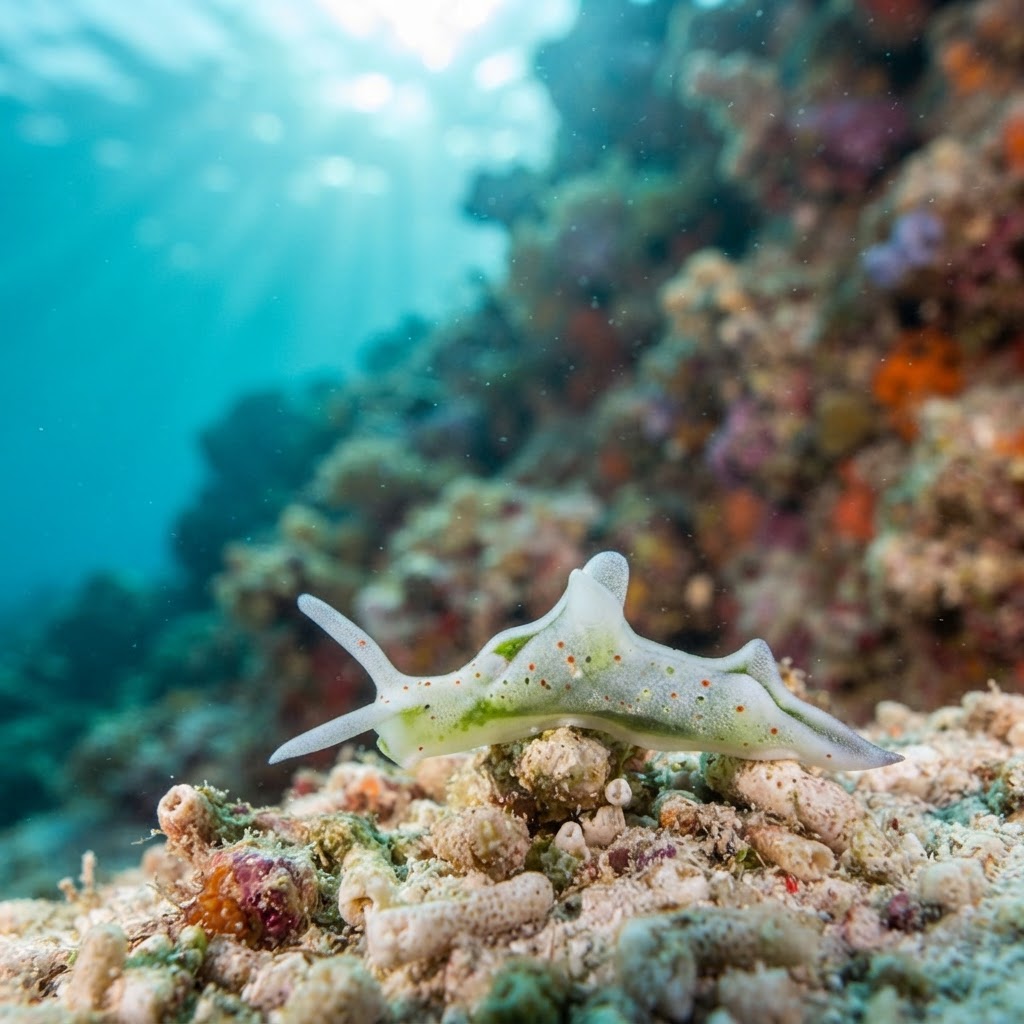
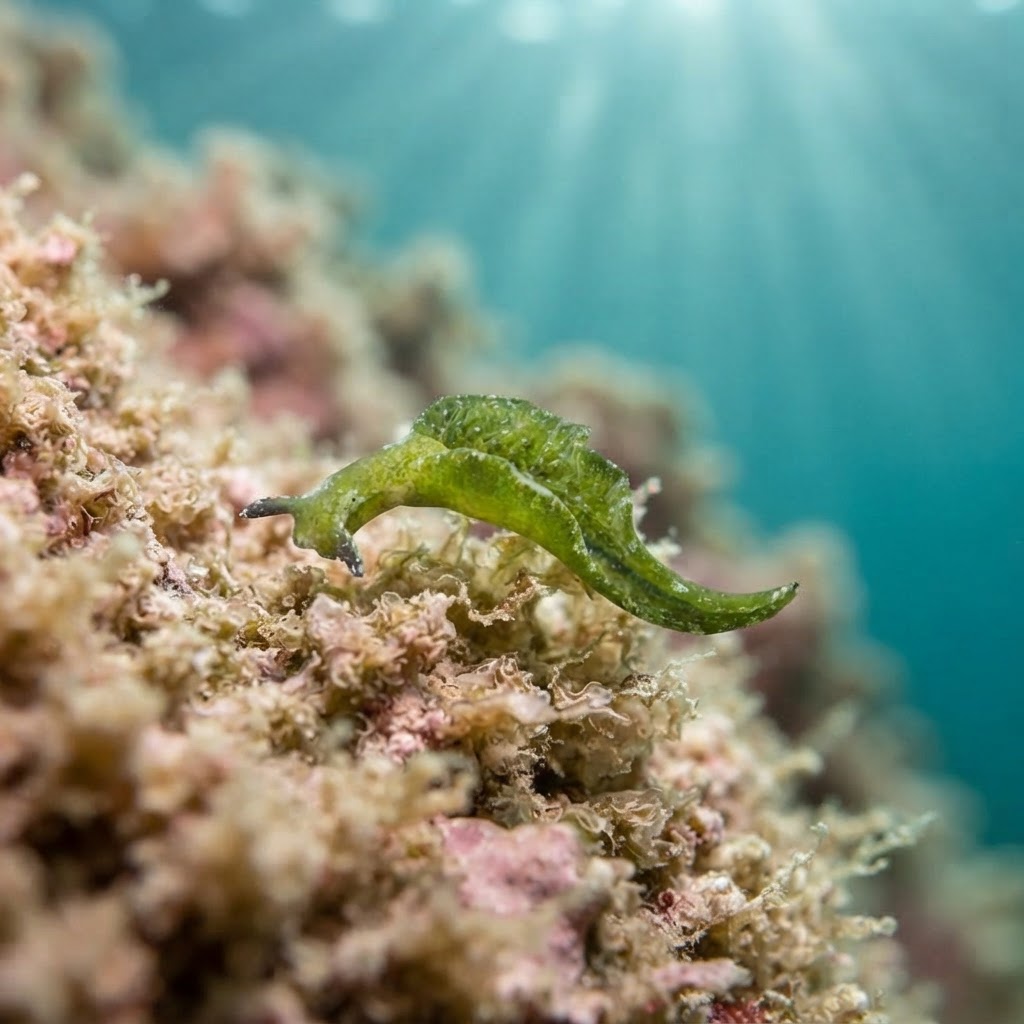
A tiny slug, barely a centimetre long, with rows of flattened, leaf-like paddles (cerata) covering its back rather than a smooth or spiky body. The cerata are black edged with gold or iridescent blue-green, giving it a striped, almost feathered look against the reef. Its small size and paddle-shaped appendages are the giveaway; you need a sharp eye or a guide pointing a torch at the right patch of algae to spot one at all.
Divers find it grazing slowly over algae-covered rock and rubble, where it feeds on the same green algae it borrows its colour and even some of its stinging defences from. It moves at a typical sea slug crawl, showing no reaction to divers beyond the occasional retraction of its cerata if disturbed. Best looked for during a slow macro-focused dive rather than spotted in open water.
Those gold-edged cerata aren't just decoration: they store both algal chloroplasts and stinging cells lifted from its food, letting the slug photosynthesise a little and sting potential predators using weapons it never made itself.
No clear seasonal pattern shows up in the sightings logged so far, and with a comfortable range of roughly 22 to 28°C it has no obvious reason to disappear in any particular month. Treat it as a year-round possibility if you're diving Mayotte or New South Wales and searching macro habitat closely.
Reef neighbours a diver could mistake it for. Use the identification notes above to tell them apart.
Sightings so far come from just two spots: Passe en S in Mayotte and a site in New South Wales, Australia, making this one a real specialist search rather than a reliable reef fixture. Mayotte's Indian Ocean reefs and the temperate-to-subtropical waters off New South Wales represent two very different habitats, so encounters likely depend more on careful macro searching than on picking a particular region.
Mapping where Black And Gold Sap Sucking Slug is logged…
Confirmed sightings are limited to Passe en S in Mayotte and a site in New South Wales, Australia. It's a scarce find at both, so success depends on a slow macro search rather than the dive site itself.
There's no detected season in the sightings logged so far. With a warm-water niche of roughly 22 to 28°C, it's considered a year-round possibility on the reefs where it's been found.
Look for a slug about 1cm long covered in flattened, paddle-shaped cerata edged in gold or iridescent colour against a black body. The paddle-like back appendages, rather than spikes or a smooth mantle, are the key ID feature.
It stays tiny, reaching around 1cm in length, so it's a dedicated macro subject rather than something you'll spot from a distance.
It steals both photosynthetic chloroplasts and stinging cells from the algae it eats, using borrowed biology for extra energy and defence instead of making its own.
No. It poses no threat to divers and is harmless to approach and photograph, though its tiny size means it's easy to miss entirely.
Site and sighting data is aggregated from diver logs, iNaturalist and GBIF. For taxonomy and conservation status:
Elysia Timida
573 sites