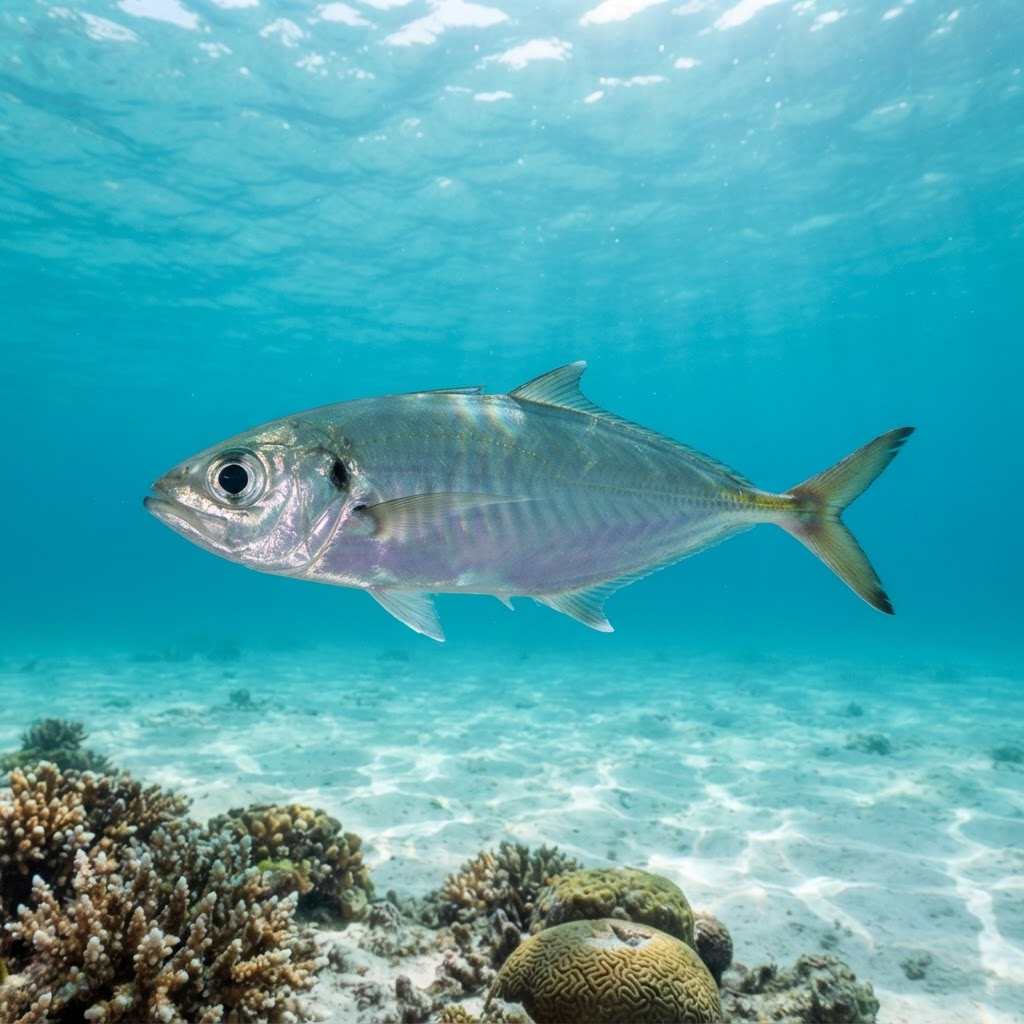
Selar crumenophthalmus
Dense schools of bigeye scad swirl over Cape Verde's Sal and São Vicente reefs in 20-29C water, year-round.
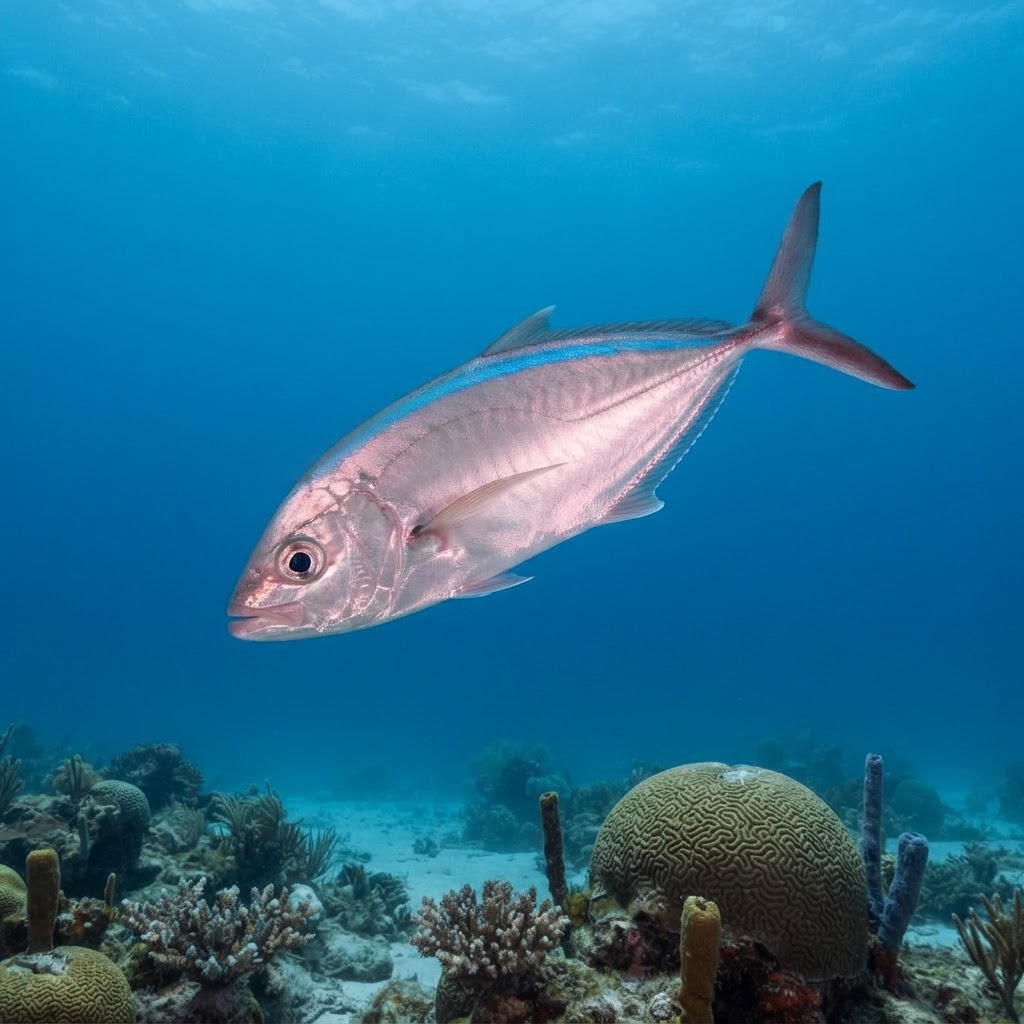
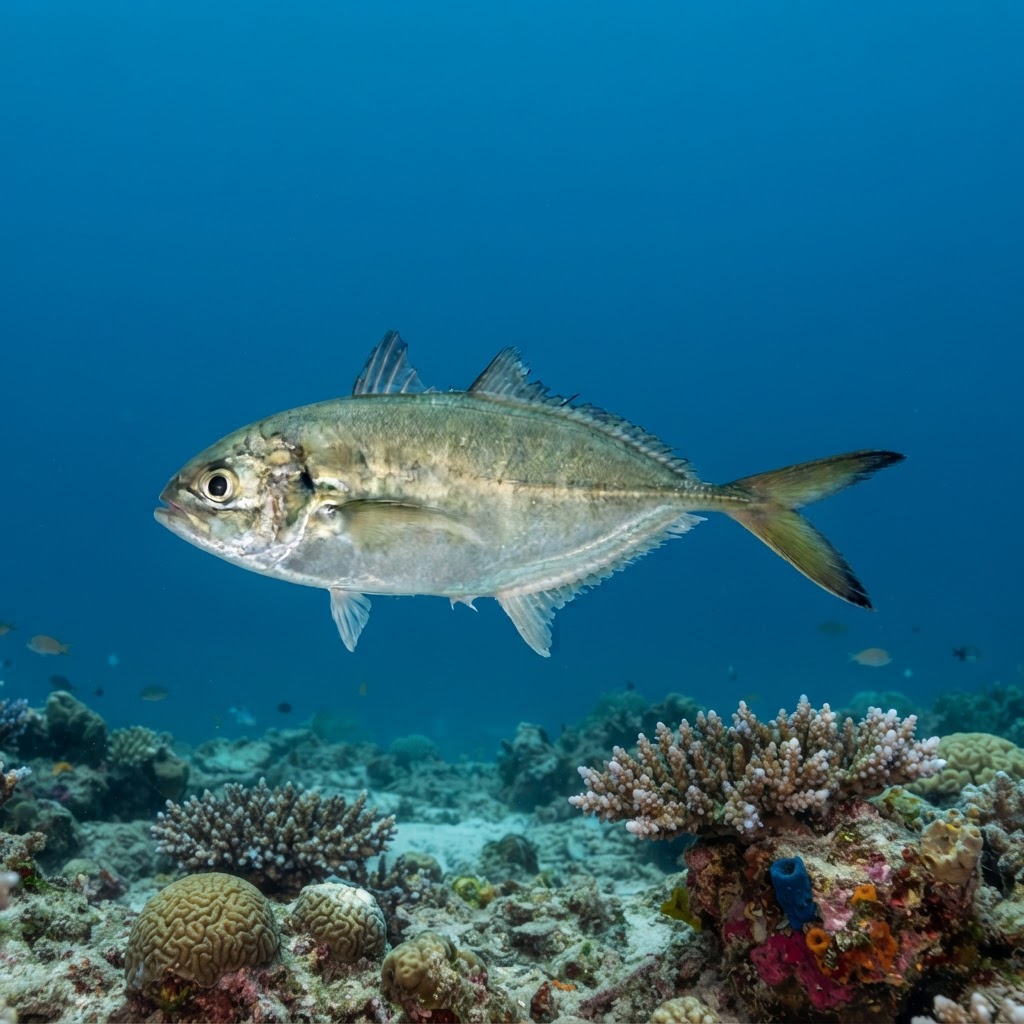
Look for a tight, swirling ball of silvery fish with an unmistakably large eye set into a compact, torpedo-shaped body, reaching up to about 49cm though most divers see smaller schooling adults. The body flashes pale yellow to olive along the back with a faint dark spot near the gill cover, and a row of enlarged scales (the lateral line) runs low along the flank. Schools often bunch so tightly they move as a single shifting curtain rather than as individual fish.
Expect a dense, wheeling school hugging mid-water over reef or rocky structure, often near current-swept points or drop-offs where they can filter passing plankton. They tend to hold formation and part around approaching divers rather than scatter, which makes them a reliable subject for wide-angle shots. Sightings lean toward uncommon or rare at most logged sites, so a big encounter is more luck of timing than a guaranteed show.
Schooling this tightly is a defence strategy: a wall of identical, large-eyed fish makes it harder for predators like jacks or tuna to lock onto any single target.
No clear seasonal pattern shows up in the sightings, and with a comfortable range of 20 to 29.2C, schools seem to hang around Cape Verde and Caribbean reefs through the year rather than on a tight migration window.
Reef neighbours a diver could mistake it for. Use the identification notes above to tell them apart.
Most reliably logged around Sal and São Vicente in Cape Verde, which together account for the bulk of sightings, making the Cape Verde archipelago the strongest bet for this species. Divers also report them, less frequently, in Hawaii, around Tobago and Grenada Island in the southern Caribbean, and off Mexico's Pacific coast and Fiji's Lomaiviti islands.
Mapping where Bigeye Scad is logged…
Cape Verde is the standout destination, especially the sites around Sal and São Vicente. Smaller but reliable sightings also come from Hawaii, Tobago, and Grenada Island.
There is no strong seasonal signal in the sightings, so they turn up year-round on Cape Verde and Caribbean reefs where water sits between 20 and 29C.
Look for a tight, silvery school of torpedo-shaped fish with notably large eyes and a faint dark gill spot. They move as one shifting mass rather than darting off individually.
They can reach around 49cm, though most schools you encounter while diving are made up of smaller adults.
No, they are harmless and simply part around divers who swim into a school.
Site and sighting data is aggregated from diver logs, iNaturalist and GBIF. For taxonomy and conservation status:
Bigeye Trevally
2,591 sites