Pycnochromis margaritifer
Small black-and-white damselfish drifting over reef slopes in Bali and the Society Islands, comfortable year-round in warm tropical water.
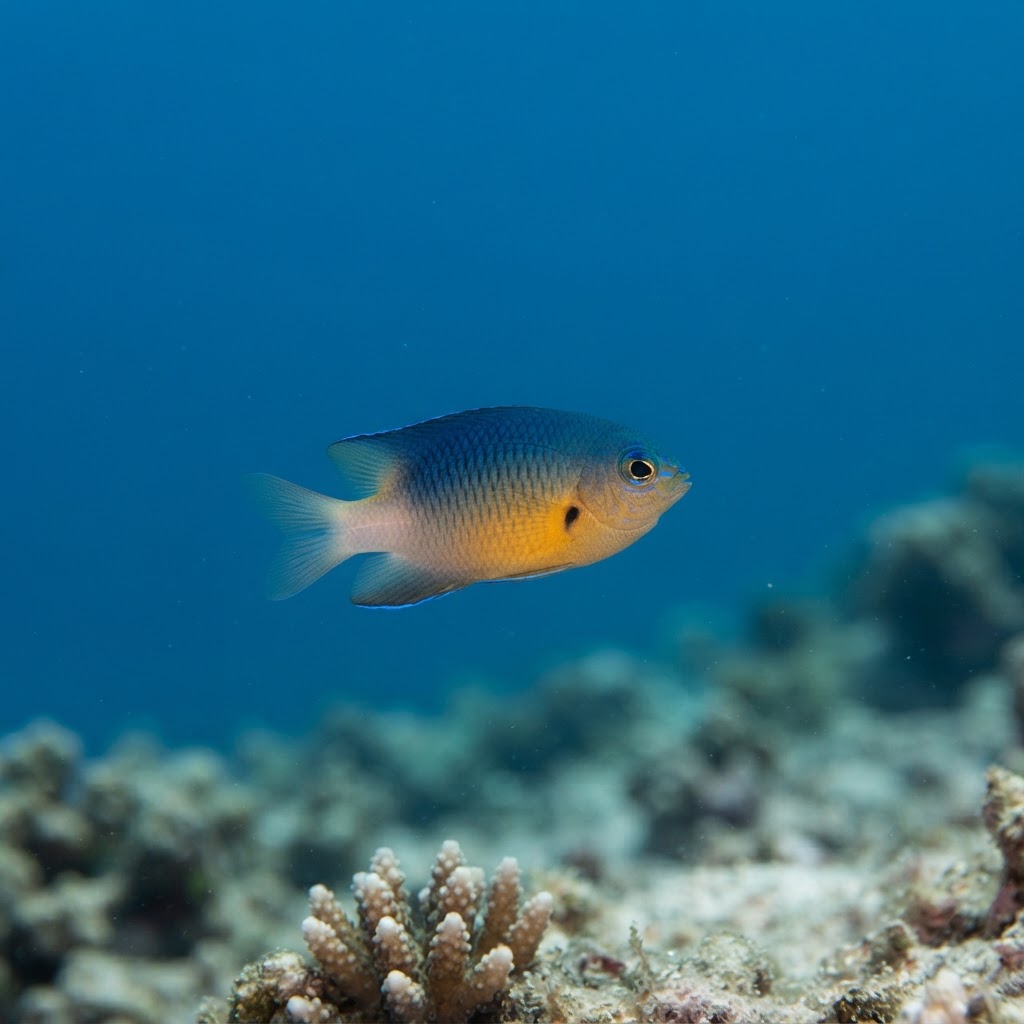
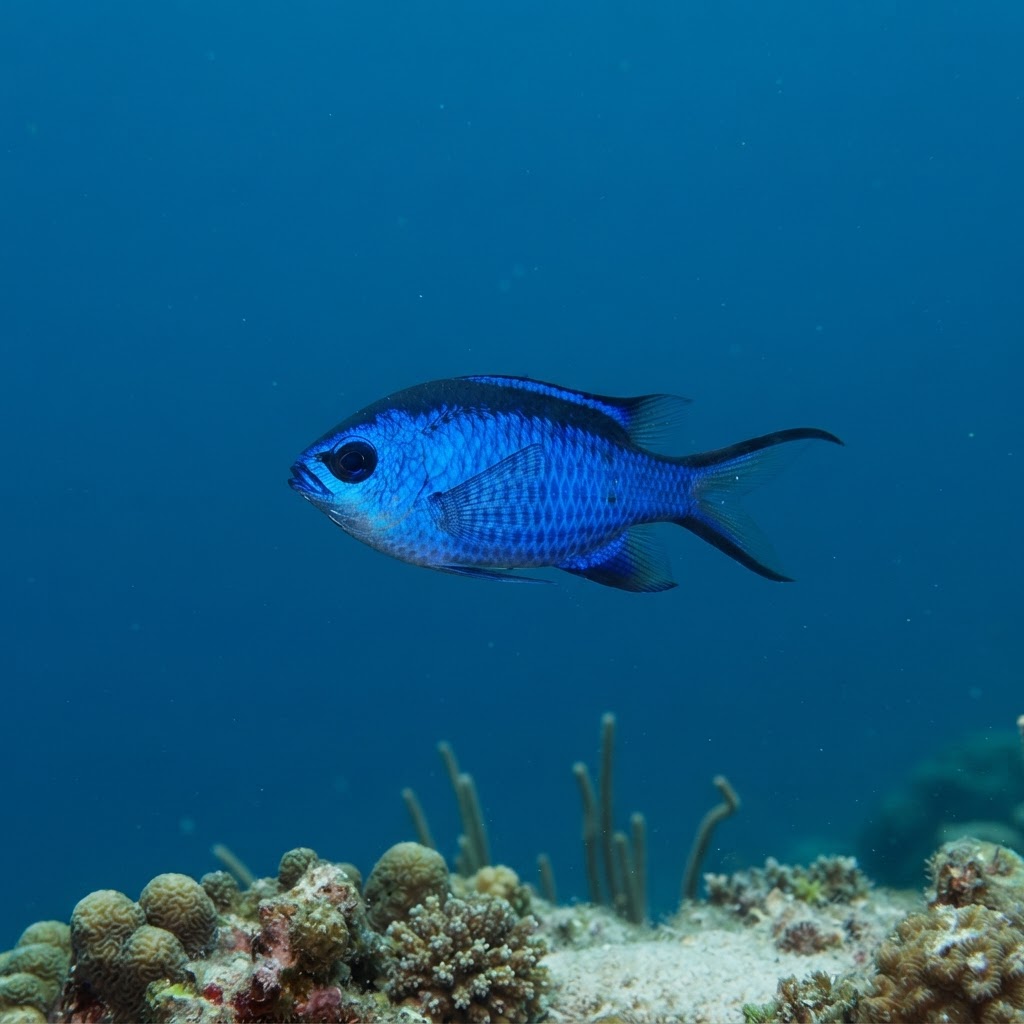
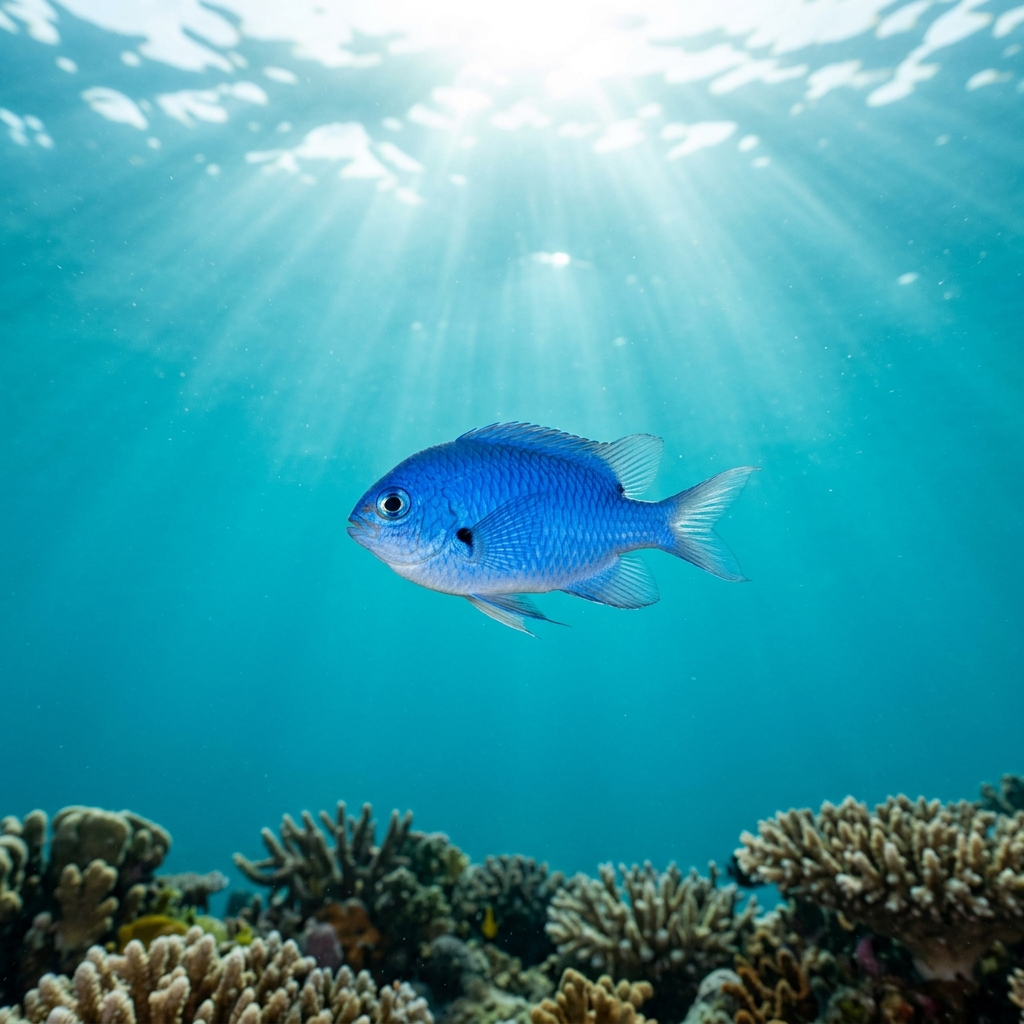
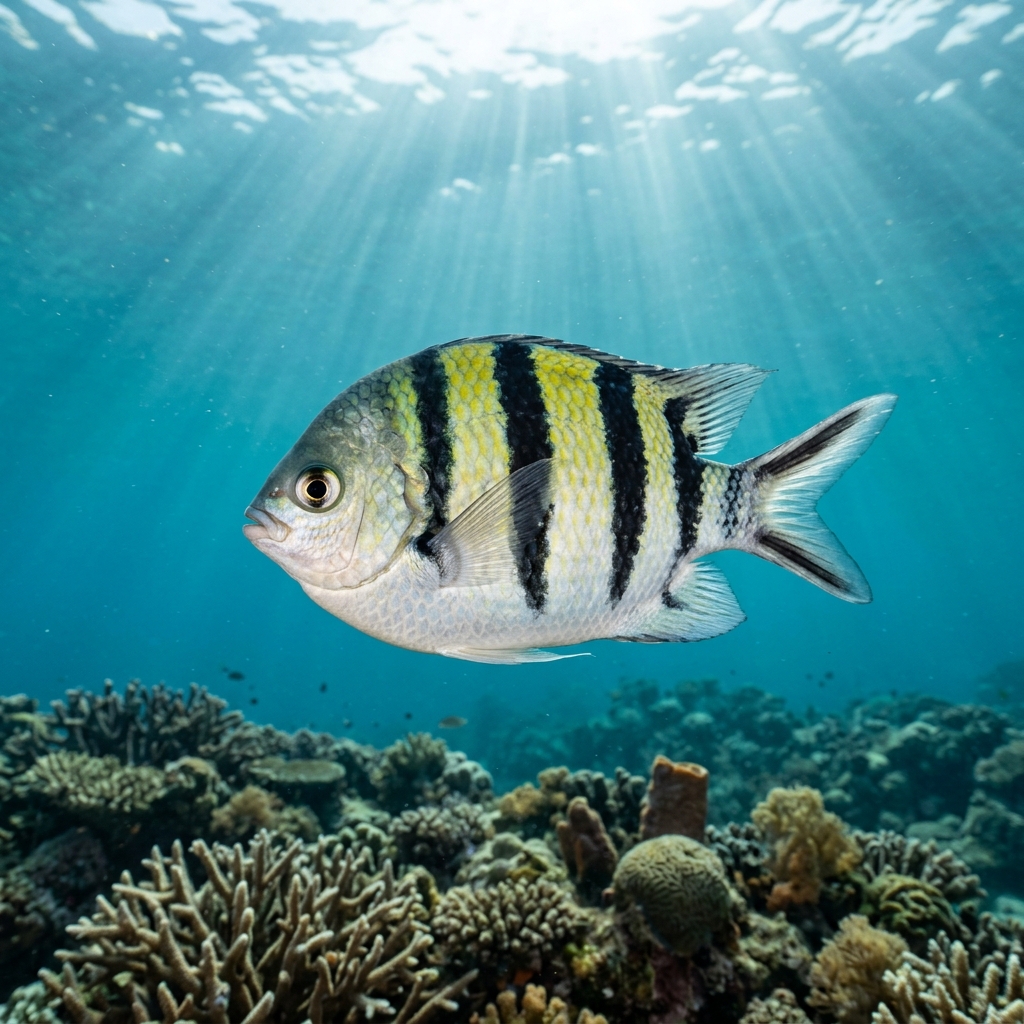
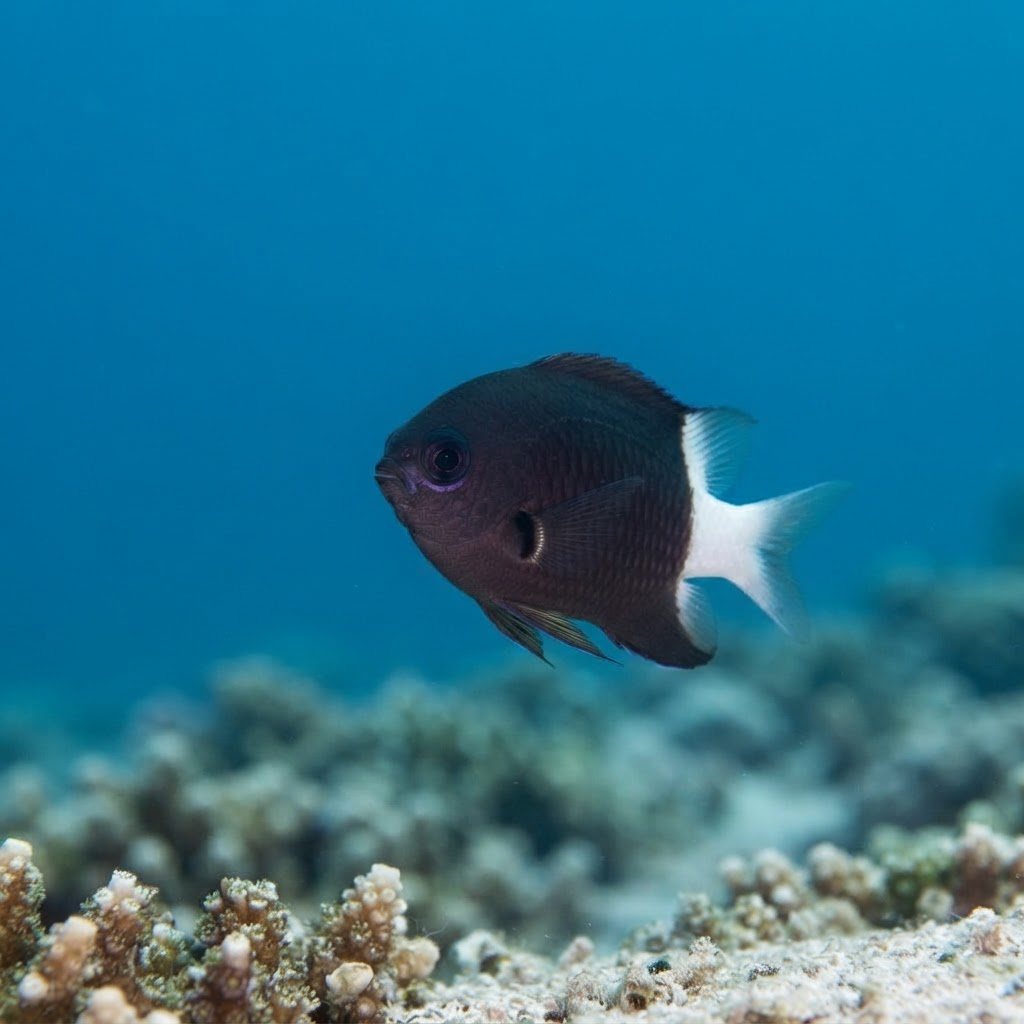
A small, oval-bodied damselfish around 7 cm, split almost cleanly down the middle: the front two-thirds is dark grey to blackish, the back third and tail are pale white to translucent. That sharp two-tone divide is the giveaway, along with a slightly forked tail and the habit of hovering in loose groups just above the reef rather than sitting on it.
Look for it hanging in loose, drifting clusters over reef slopes and drop-offs, feeding on plankton in the water column rather than picking at the substrate. It barely reacts to divers, holding its position or dispersing only slightly as you pass, which makes it an easy, unhurried subject for wide-angle reef shots. Most sightings are logged as uncommon, so expect a scattered few rather than a dense school on any given dive.
That stark black-and-white split isn't just decorative: in plankton-feeding damselfish like this, the contrasting pattern helps individuals track each other's position while feeding in loose, moving groups over the reef.
No clear seasonal pattern shows up in the sightings, and with a comfortable range of 25 to 29.3 C it stays active on tropical reefs all year, so any month you're diving these regions is a fair bet.
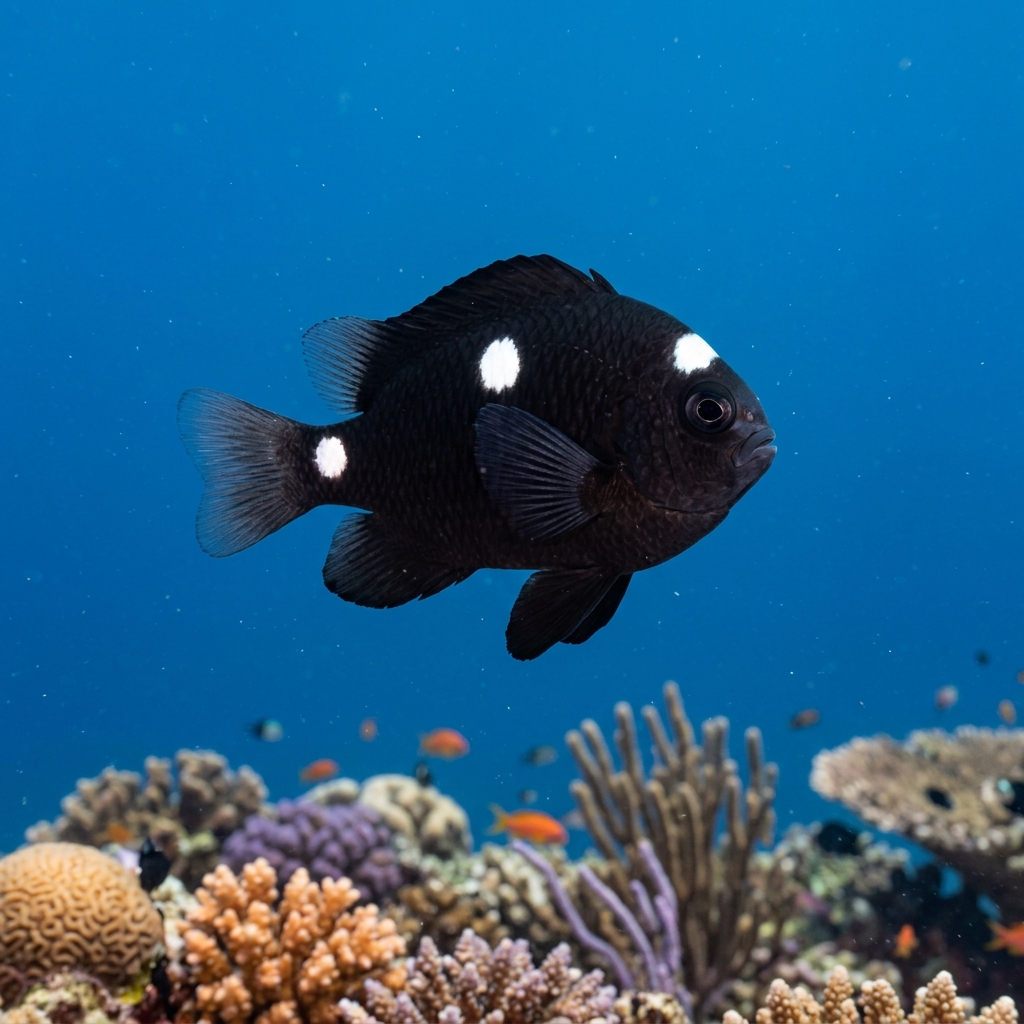
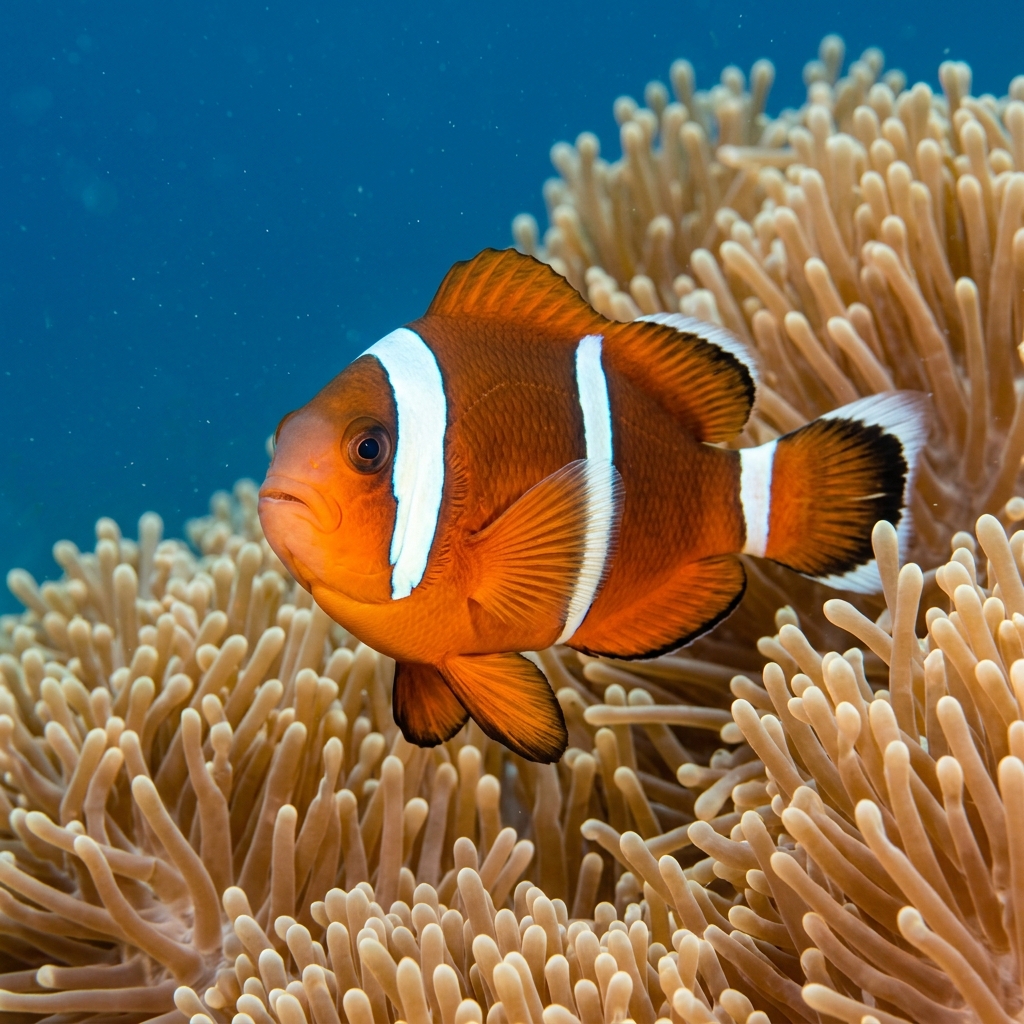
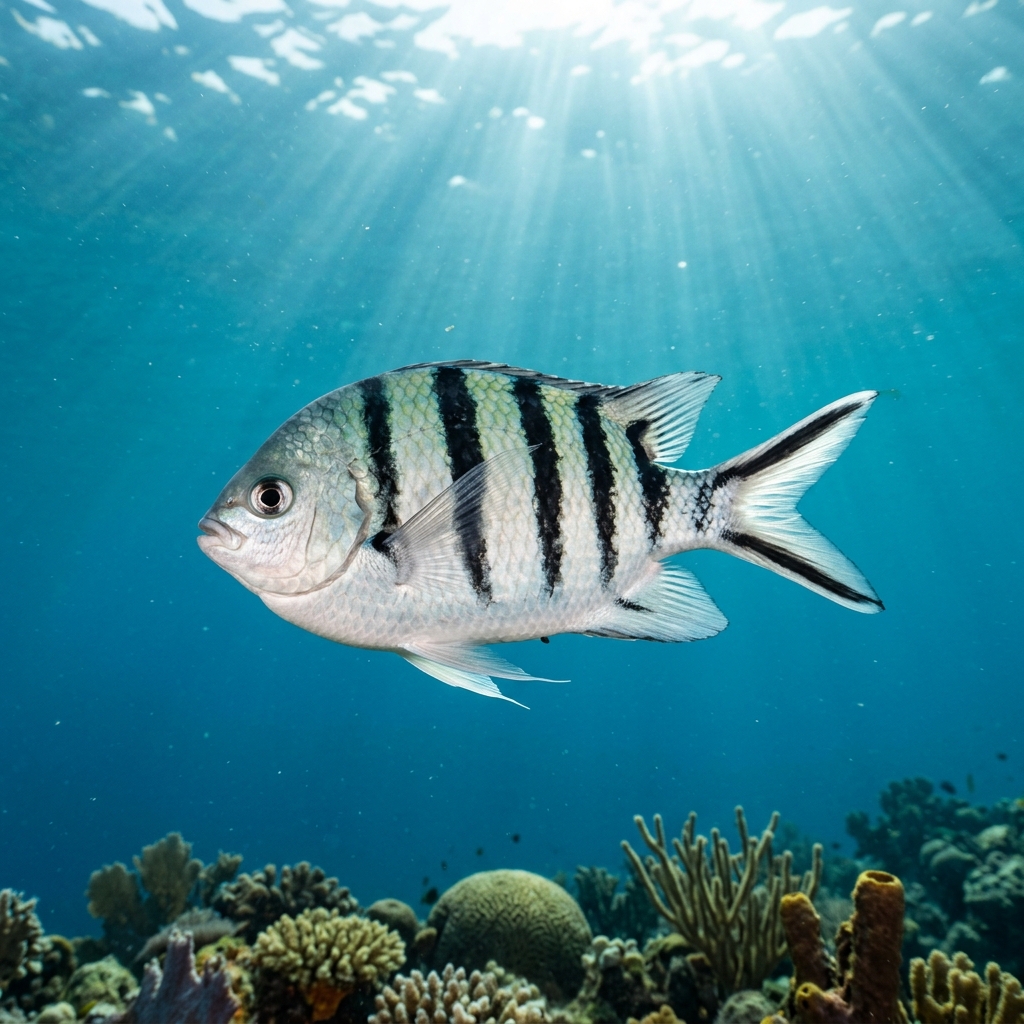
Reef neighbours a diver could mistake it for. Use the identification notes above to tell them apart.
Most reliably logged in Indonesia, especially around Bali, Nusa Tenggara and Sulawesi, and in French Polynesia across the Society Islands and Tuamotu Islands. Also a solid find on reefs in Queensland, Australia, Palau's Rock Islands and Green Island, Taiwan, with fewer but confirmed sightings in Timor-Leste, the Philippines and Papua New Guinea.
Mapping where Bicolor Chromis is logged…
Bali, Nusa Tenggara and Sulawesi in Indonesia are strong spots, as are the Society Islands and Tuamotu Islands in French Polynesia. Queensland, Palau's Rock Islands and Green Island in Taiwan also produce regular sightings.
There's no detected season, and its warm-water comfort range of 25 to 29.3 C means it's present on tropical reefs throughout the year, so timing your trip around the season isn't necessary.
Check for a small oval damselfish, roughly 7 cm, with a dark front half and a pale white back half and tail. That clean two-tone split is the easiest feature to key on, and it's usually seen hovering in loose groups above the reef.
They top out at around 7 cm, making them one of the smaller damselfish you'll spot on a typical reef dive.
No. They're harmless, small reef fish that barely react to divers and pose no threat whatsoever.
Site and sighting data is aggregated from diver logs, iNaturalist and GBIF. For taxonomy and conservation status:
Dascyllus
3,697 sites