Pagurus beringanus
Cold-water crab logged on cool British Columbia dives at 8.5-14.5C, year-round and usually uncommon rather than abundant.
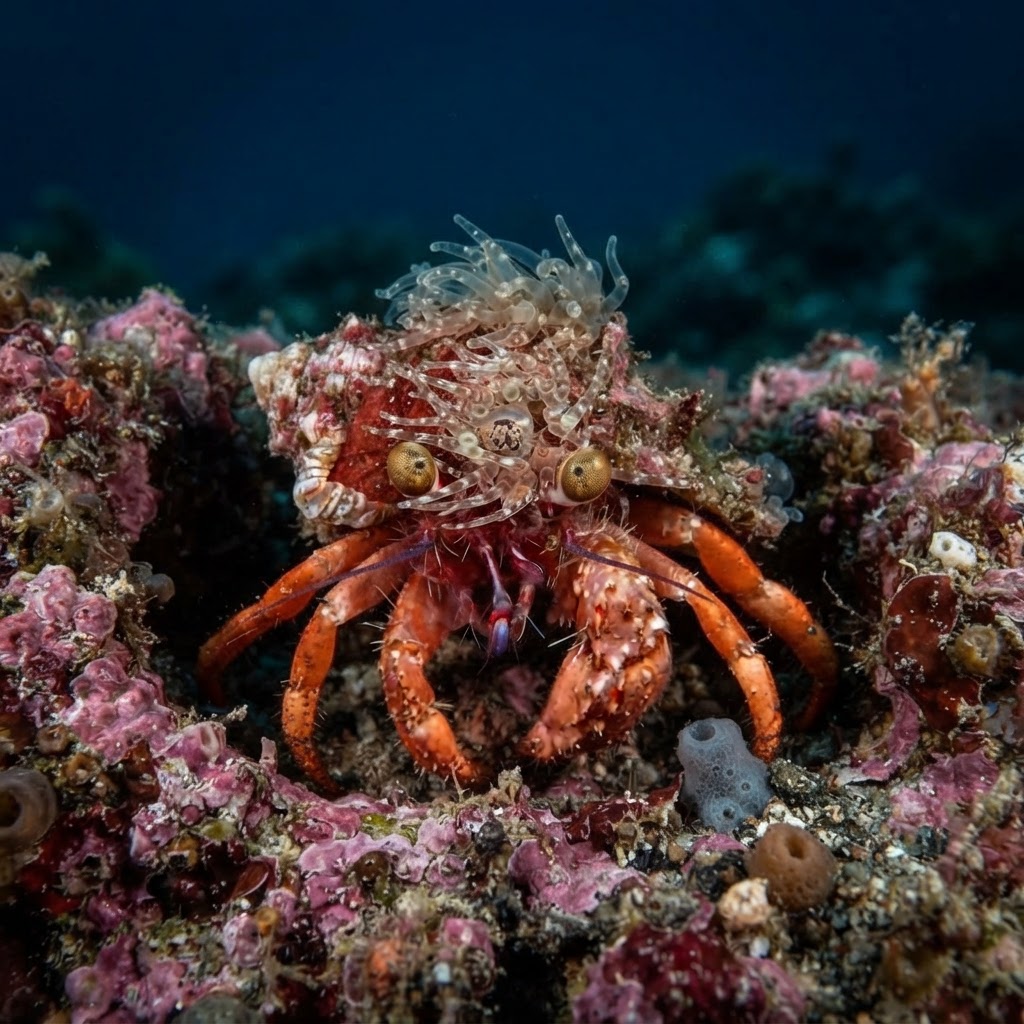
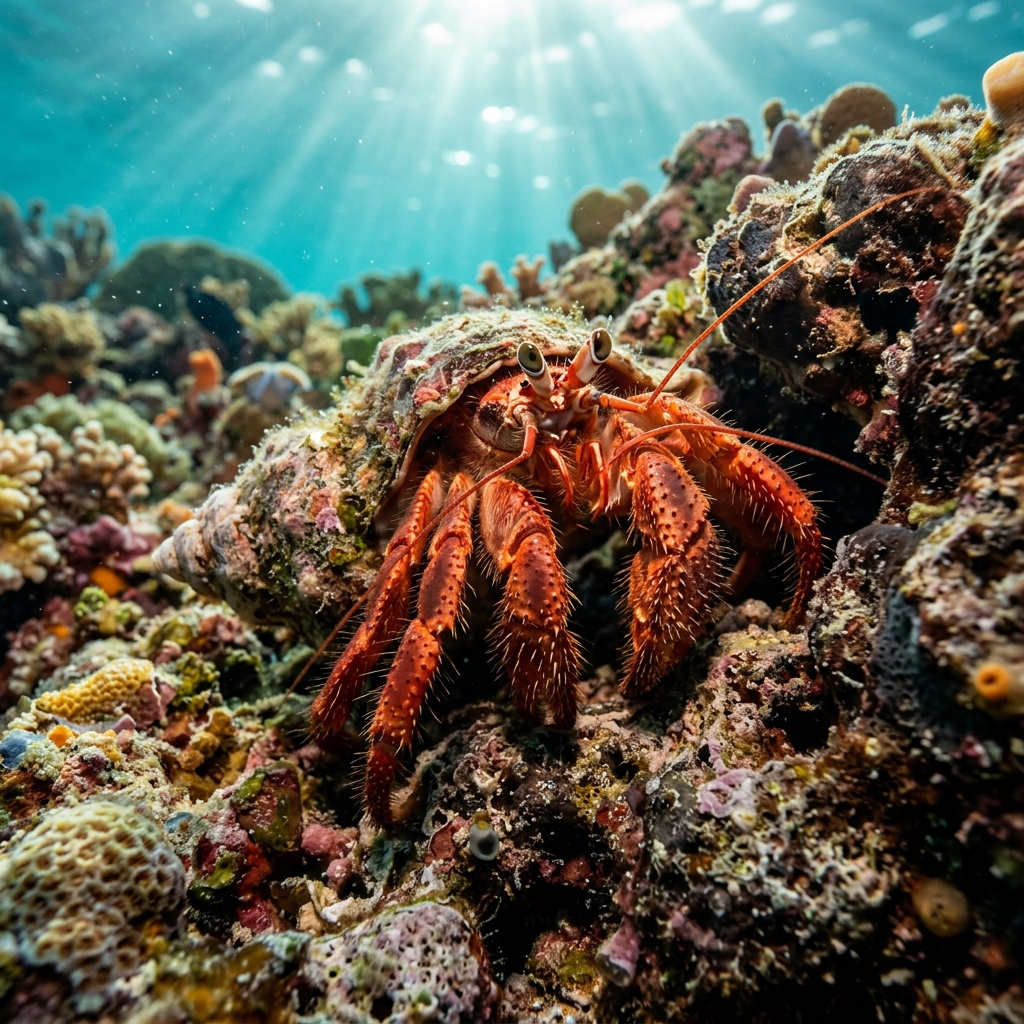
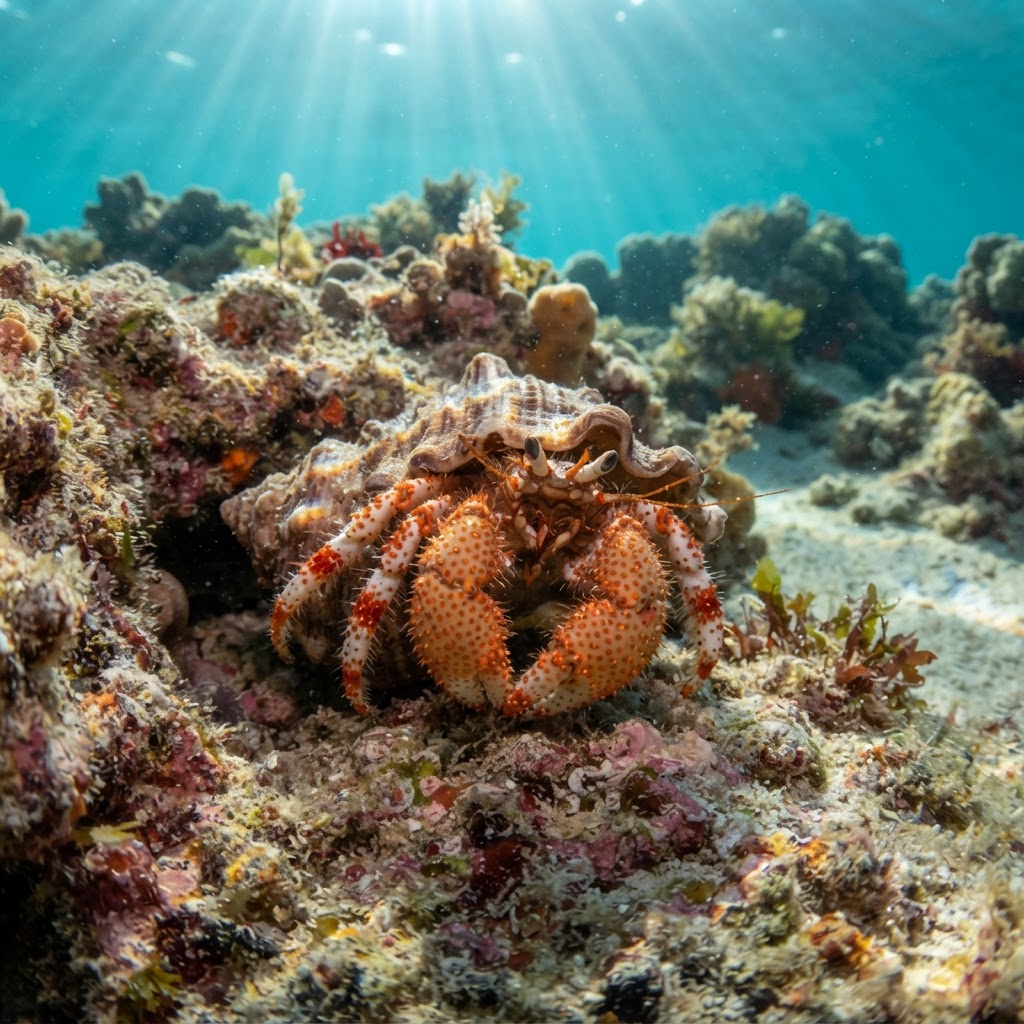
Small crab living inside a scavenged snail shell, with reddish to orange banded legs and a pair of eyestalks poking out over the shell opening. The claws are uneven in size and finely speckled, and the visible body parts are the legs, claws and eyestalks rather than a hard carapace. Look for it walking slowly across rock, gravel or shell rubble on the bottom rather than swimming or clinging to structure.
Divers usually find it ambling across sand, gravel or rocky patches on the bottom, dragging its borrowed shell along as it forages. It tends to withdraw into its shell when a torch or hand gets close, then re-emerges once left alone. Most logs describe it as an uncommon but steady find rather than something that turns up in numbers, so it rewards divers who slow down and scan the substrate closely.
Like all hermit crabs, it does not grow its own protective shell; it occupies empty snail shells and has to find and move into a larger one as it grows, which is why you sometimes see individuals in shells that look slightly too big or too small for them.
Sightings are spread across the year with no clear seasonal peak in the data, and its comfortable range of 8.5 to 14.5C matches typical Pacific Northwest and British Columbia dive temperatures most months. Treat it as a year-round find rather than a seasonal target.
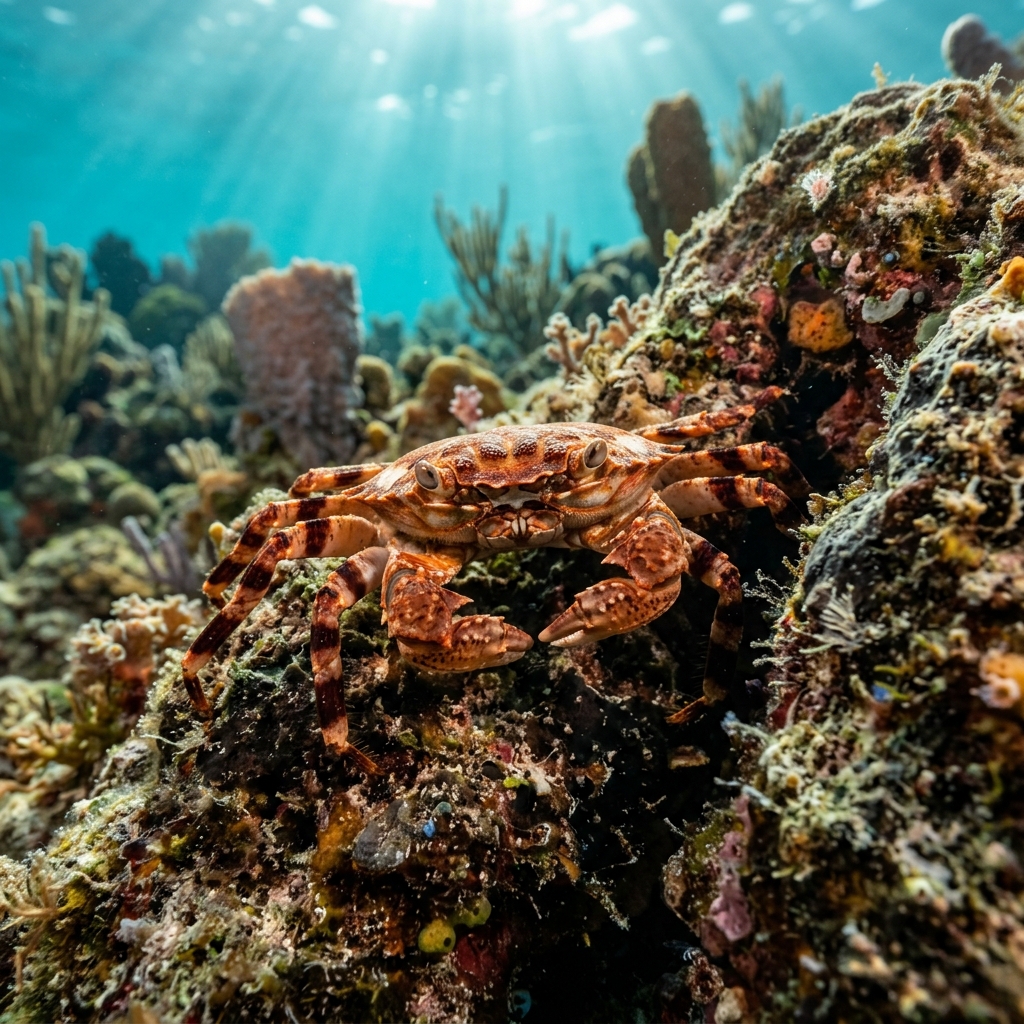
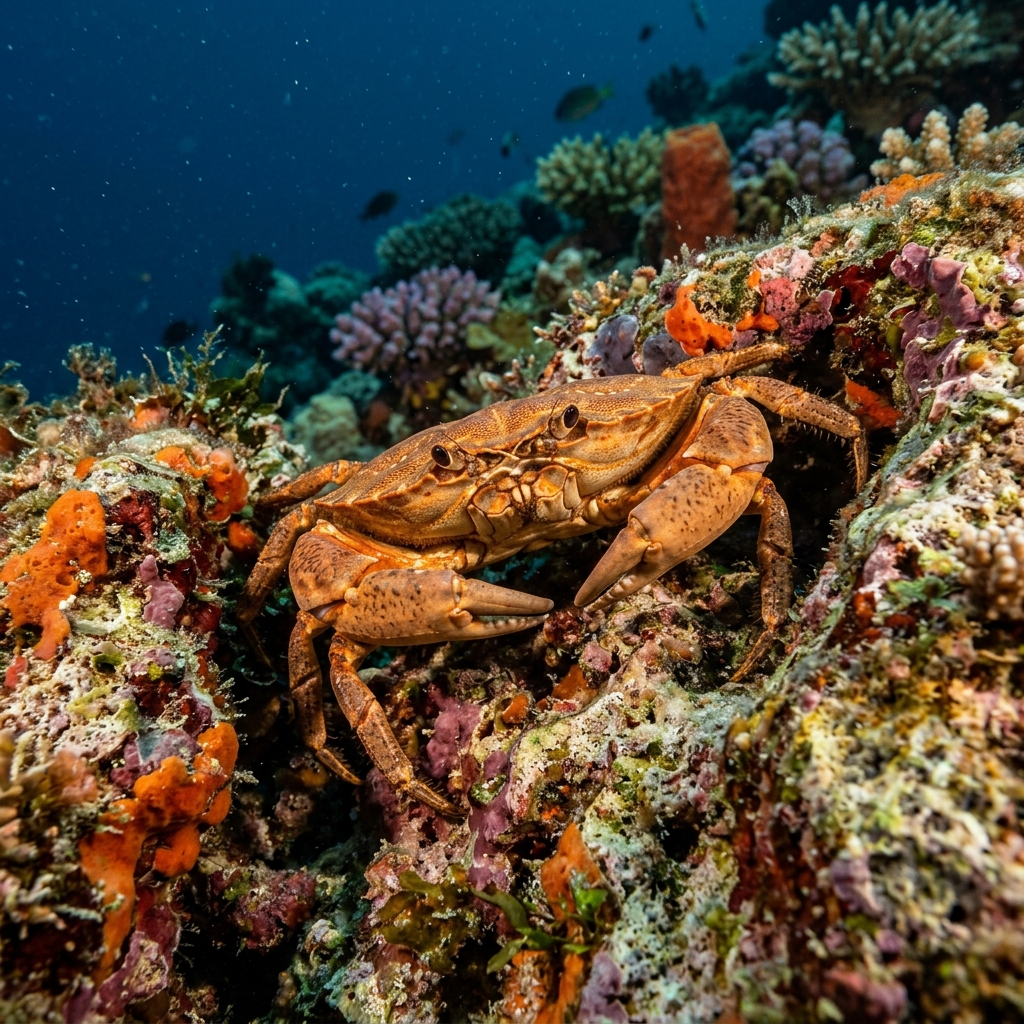
Reef neighbours a diver could mistake it for. Use the identification notes above to tell them apart.
Most reliably logged in British Columbia, Canada, which accounts for the bulk of recorded sites, with further sightings in the Pacific Northwest and Alaska in the United States. It is a cold-water species of the north Pacific coast, so look for it on temperate rock and gravel dive sites rather than tropical reefs.
Mapping where Bering Hermit Crab is logged…
British Columbia in Canada is by far the strongest area for sightings, with additional records from the Pacific Northwest and Alaska in the United States. It is a north Pacific cold-water species, so it is not found on tropical dive trips.
There is no strong seasonal pattern in the sighting data, and its temperature niche of 8.5 to 14.5C covers most of the diving year in the Pacific Northwest, so it can turn up on any dive in the region.
Look for a small crab riding in a snail shell, with banded reddish-orange legs, uneven speckled claws, and eyestalks projecting from the shell opening. It moves slowly over rock, gravel or shell rubble and withdraws into its shell if disturbed.
No, it poses no risk to divers. It is a small, shy benthic crab that retreats into its shell rather than reacting aggressively to a diver's presence.
It has no shell of its own, so it lives inside an empty snail shell for protection and has to move into a bigger one as its body grows. This shell-swapping habit is shared across all hermit crab species.
Site and sighting data is aggregated from diver logs, iNaturalist and GBIF. For taxonomy and conservation status:
European Green Crab
2,469 sites